KitGuru KitGuru.net – Tech News | Hardware News | Hardware Reviews | IOS | Mobile | Gaming | Graphics Cards


We are currently at Distree EMEA in France to get a sneak peek at some upcoming tech ahead of Computex later this year. While roaming around this afternoon we had the chance to catch up with Arctic, where we were shown two upcoming CPU coolers. The Arctic Liquid Freezer II is a 360mm AIO unit and the Arctic Freezer 50 TR is a beastly aircooler designed to tame Threadripper.
Both air cooler and the AIO unit are still being finalised, so some design elements could change before launch later this year. However, we were able to get pictures to give us an idea of what to expect:
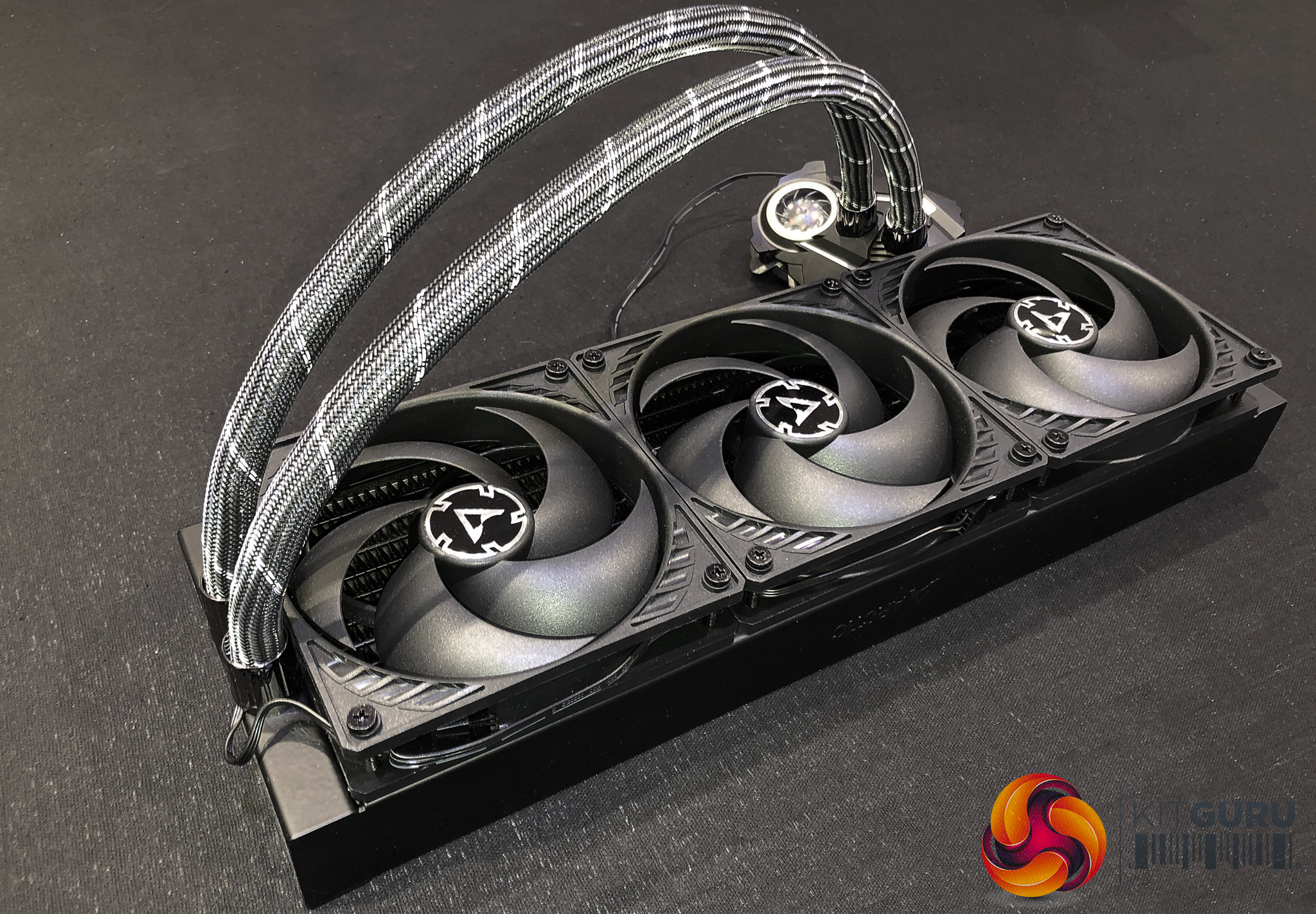
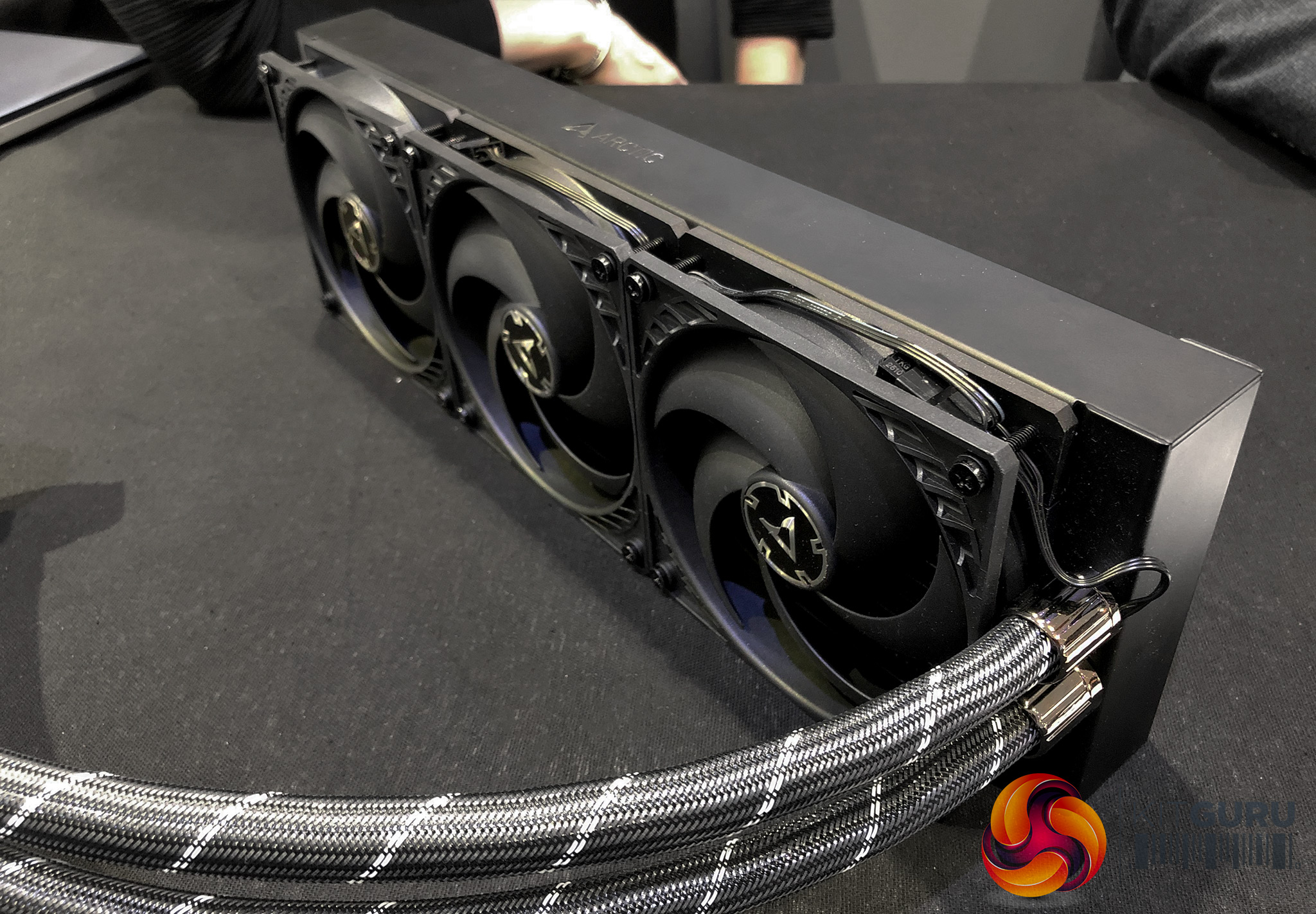
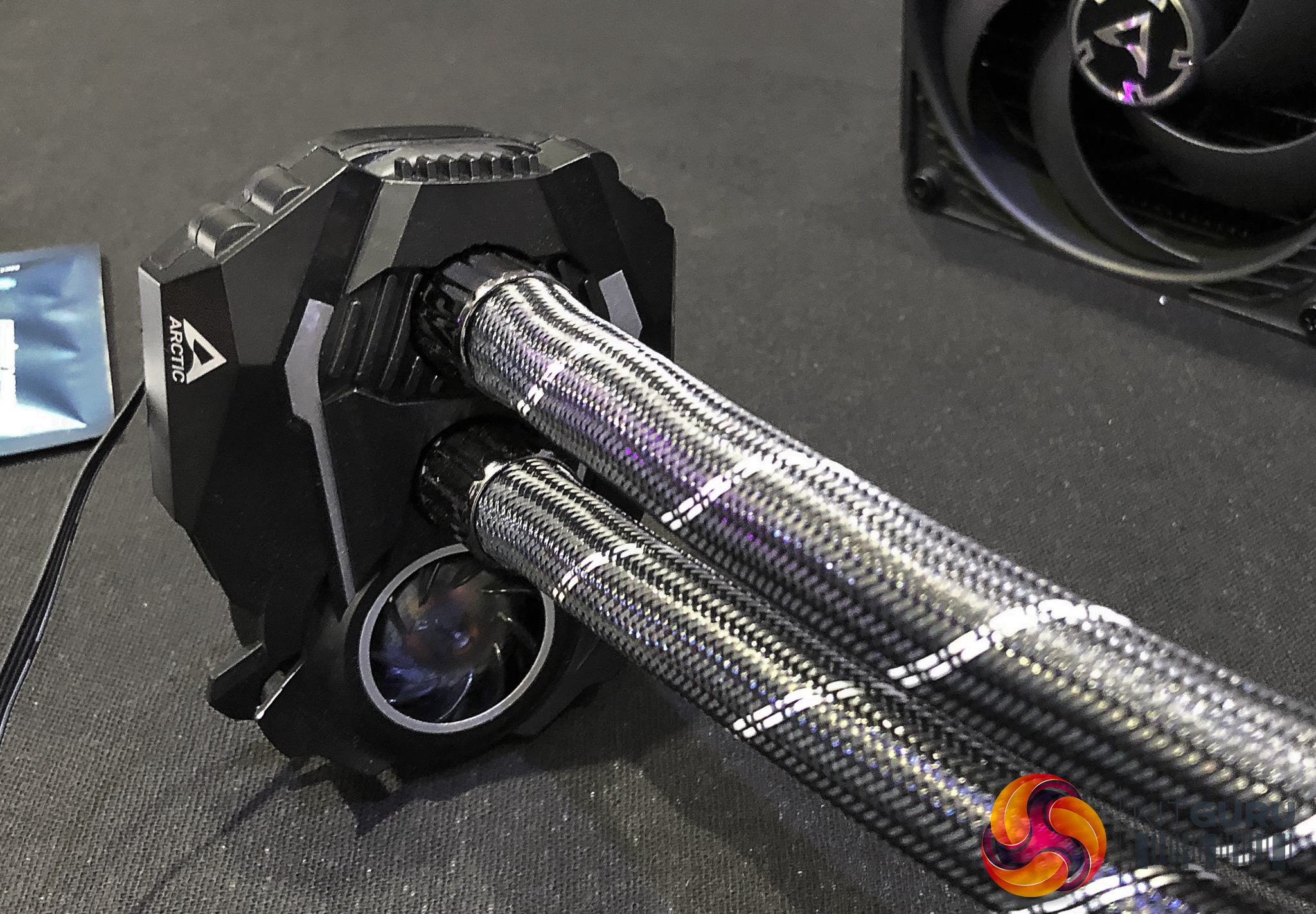
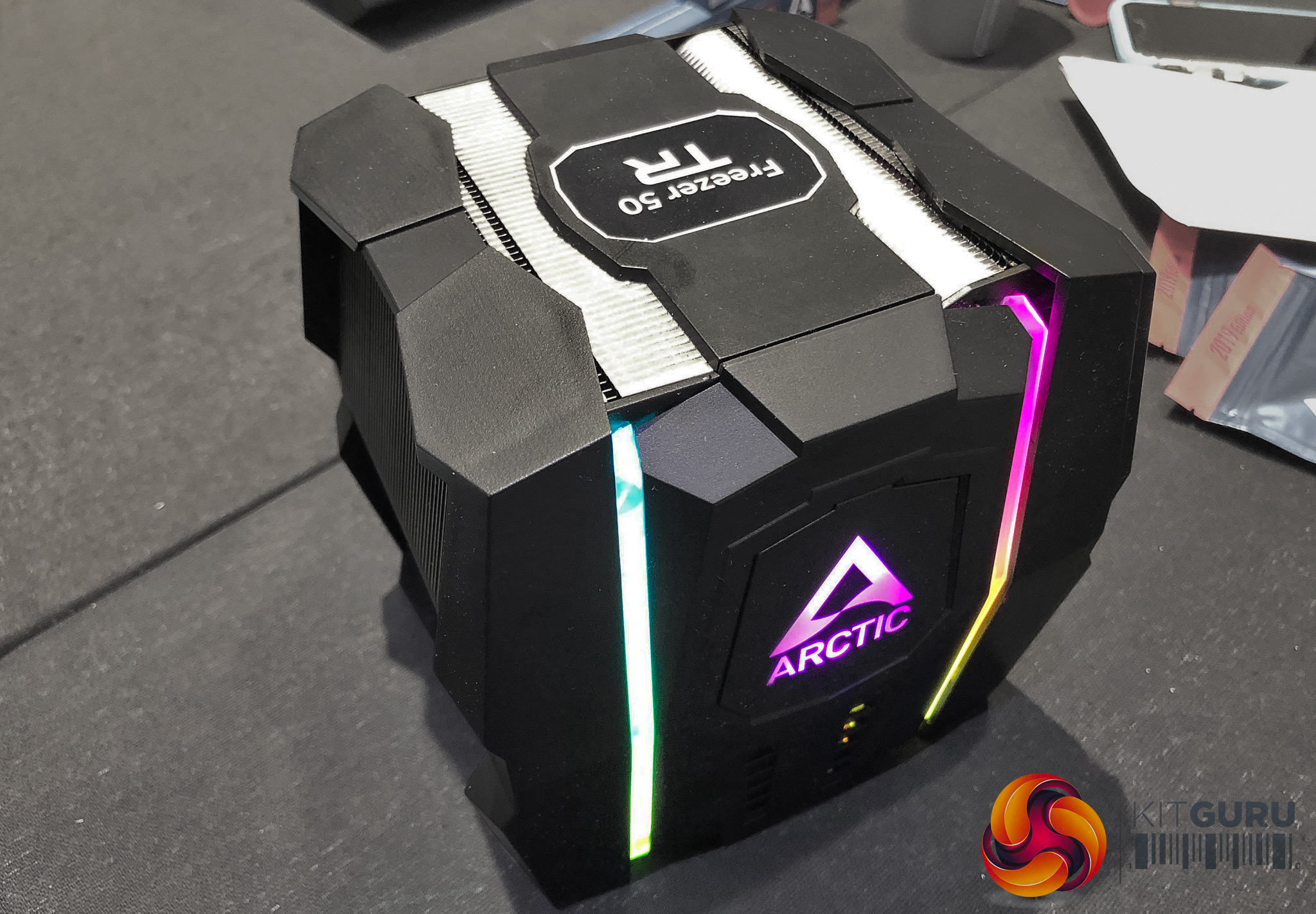
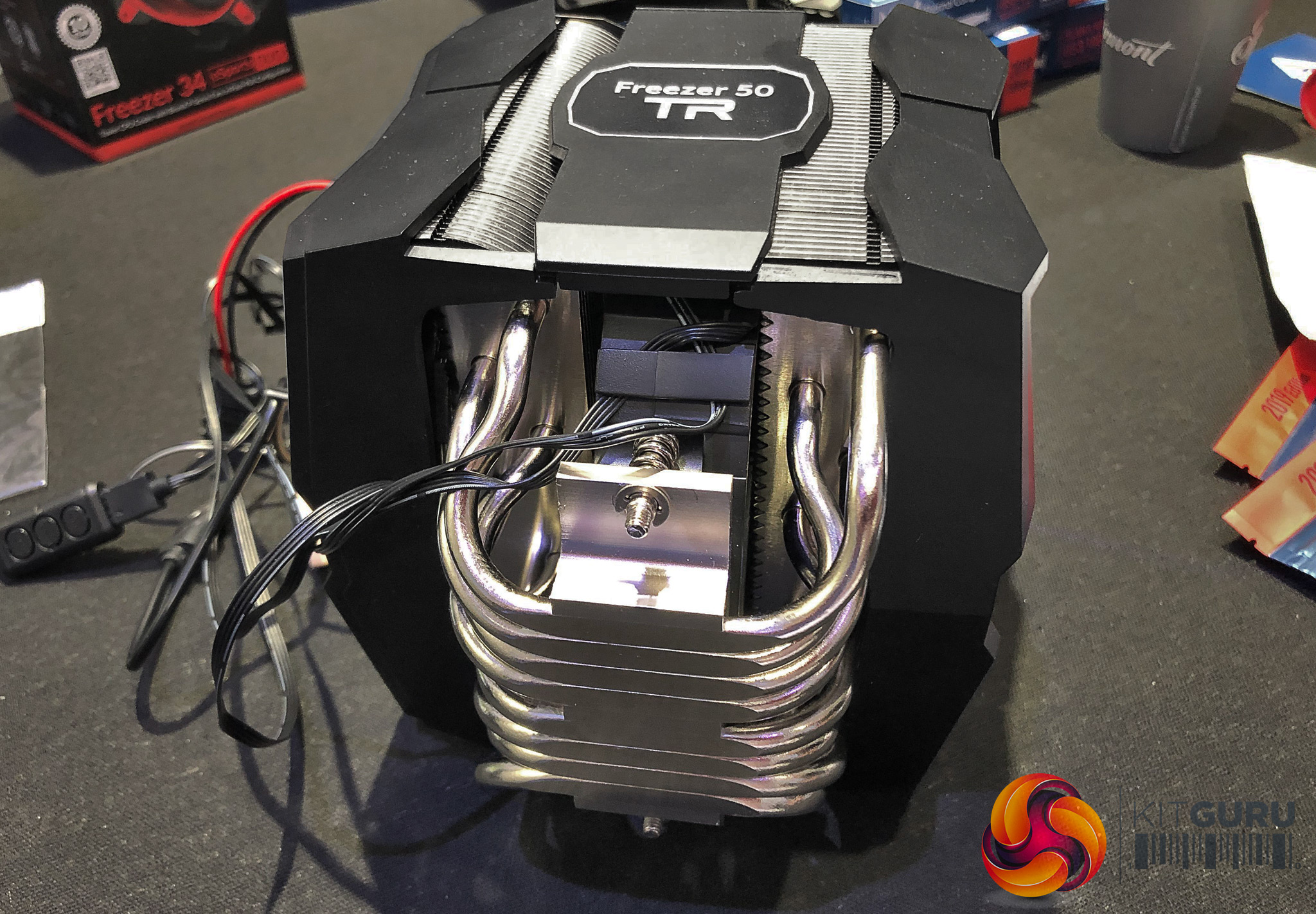
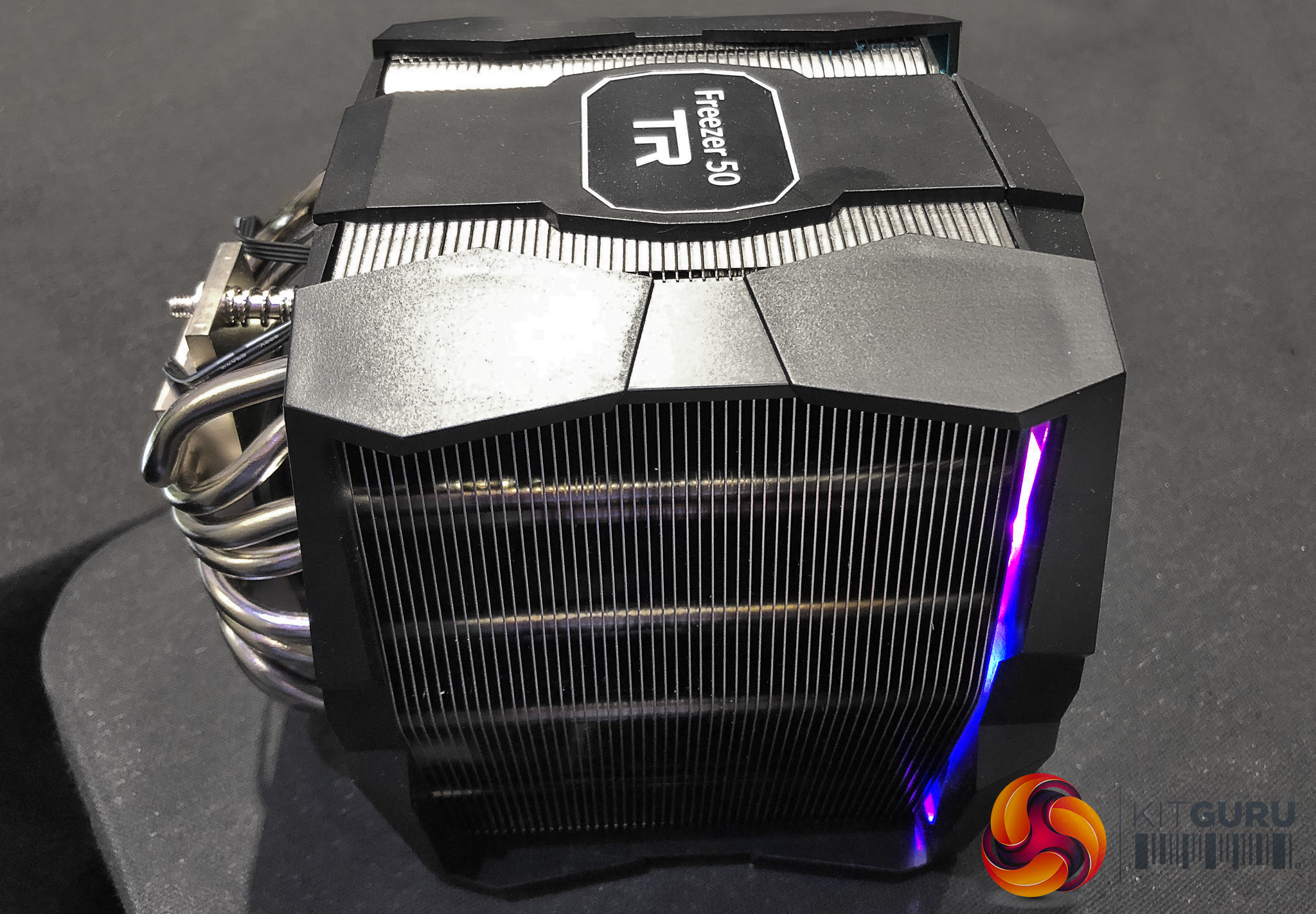
From what we were told by the Arctic reps, the Liquid Freezer II is aiming to dethrone Corsair for the performance crown, while entering the market at a much lower price. Meanwhile, the Freezer 50 TR boasts eight direct contact heatpipes and a huge, RGB-lit heatsink design.
We won't be able to share more details on specs until we get our next look at Computex later in the year. Currently, from what we are told, the plan is to have these become available at the same time as Ryzen 3000, which AMD briefly announced earlier this year and is expected to launch in June.
KitGuru Says: We weren't able to find out much in the way of specs but we'll know more on that front in a few months time. Still, from the looks of it, these should be decent performers. We'll be looking forward to being able to put both coolers through their paces.