KitGuru KitGuru.net – Tech News | Hardware News | Hardware Reviews | IOS | Mobile | Gaming | Graphics Cards


Today we take a look at one of the freshest power supplies to ship from FSP, their new Mega TI 1650W. This fully modular power supply has achieved Titanium certification, adopts high quality Japanese capacitors and ships with a full 10 year warranty. Is the new platform any good? Today we aim to find out.
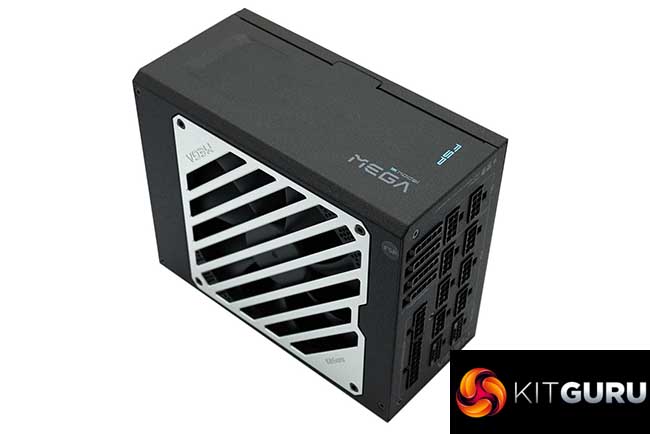
FSP are one of the few brands, like Seasonic, who create their own designs and they are in effect an OEM for many companies, including the likes of ASRock. FSP designs in recent years have improved over some of their earlier units we tested and I have high hopes today that this Mega Ti will perform well. With a name like ‘MEGA' we would certainly hope so anyway …
For those interested, FSP has also released a 1350 W version of this flagship unit.
Features:
- Efficiency ≧ 94% @ typical load
- 80 PLUS® titanium certified
- Supports 2 x native PCIe 12V-2×6 connectors and cables
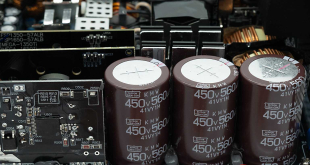
- 105°C Japanese bulk capacitor
- Eco semi-fanless fan control switch
- Off-Wet, Off-Dust and Off-Stain conformal coating
- Top-notch topology of full-bridge & LLC converter and synchronous rectifier & DC-DC converters
- Fully modular cabling design
- Complete protections: OCP, OVP, SCP, OPP, UVP, OTP