KitGuru KitGuru.net – Tech News | Hardware News | Hardware Reviews | IOS | Mobile | Gaming | Graphics Cards


Maxon has officially released Cinebench 2026, the latest version of its cross-platform benchmarking suite. Building on the foundation of Cinebench 2024, the new iteration transitions to the latest Redshift rendering engine, offering a more accurate reflection of modern 3D production workloads while adding day-one support for next-generation hardware from Nvidia, AMD, and Apple.
The most significant update in this release is the expansion of hardware compatibility. Cinebench 2026 is fully optimised for Nvidia's Blackwell (RTX 50-series) and AMD's Radeon 9000-series GPUs. It also supports data centre hardware, including Nvidia Hopper and Blackwell enterprise chips. On mobile and Mac, the benchmark now natively supports Apple's M4 and M5 silicon.
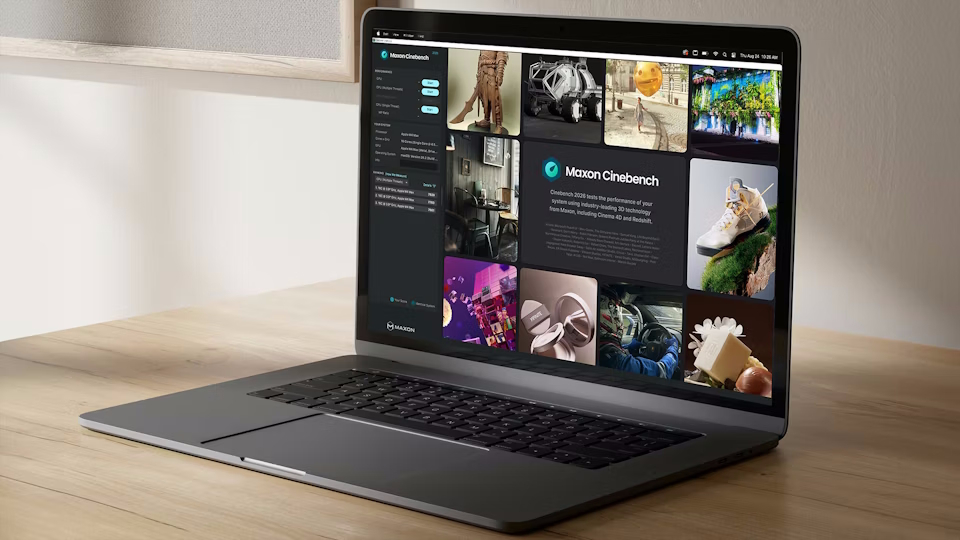
Cinebench 2026 also introduces a more granular approach to CPU evaluation. For the first time, Maxon has included a dedicated SMT (Simultaneous Multithreading) performance test. This allows users to benchmark a single physical core with and without its virtual threads active, providing a direct “MP Ratio” for single-core efficiency. This feature will be handy for comparing architectures, such as Intel's E-cores, with traditional high-performance cores.
As with previous major version jumps, Maxon warns that Cinebench 2026 scores are not comparable to Cinebench 2024. The update utilises a newer version of the Redshift engine and updated compilers (Clang 19), which fundamentally change how the scene is rendered. To ensure stability during testing, the benchmark retains its 10-minute minimum runtime by default, though an “Advanced Benchmark” mode remains available for those who wish to perform longer thermal stress tests.
System requirements have also seen a slight bump. To run the GPU benchmark, Windows users will need a card with at least 8 GB of VRAM, while Mac users on Apple Silicon will require at least 16 GB of unified memory for GPU acceleration. The benchmark is available for free from the official Maxon website for Windows and macOS.
KitGuru says: The addition of an SMT test is a nice touch, especially as we see more “hybrid” CPU architectures hitting the market.