KitGuru KitGuru.net – Tech News | Hardware News | Hardware Reviews | IOS | Mobile | Gaming | Graphics Cards


Today we review one of Corsair's new power supplies from their updated HX series. Corsair are releasing three models in this range – the HX1000i Shift, the HX1200i Shift and the one we are looking at today, the HX1500i Shift. These modular units have achieved Cybenetics Platinum certification which is reassuring to see.
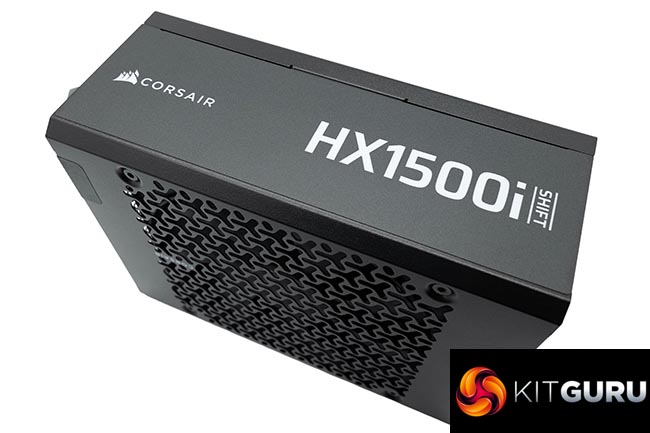
These new units are the first HXi series power supplies with a side mounted Shift interface. We covered these power supplies recently in our news stories along with seeing them at Computex earlier in the year. They also ship with a built in iCUE LINK system hub to ease system building and aid cable management.
This built in iCUE LINK System hub is not designed as a passthrough system, as it is external to the power supply, so iCUE LINK systems do not need to mount a system hub inside the case. The benefits of this are obvious as system builders will no longer need a six pin PCIe connector for power. This System Hub supports up to 24 devices across two channels, so it is just as capable as the other model.
While Corsair are still selling the standard HXi models, the Shift versions have the following updates:
- HXi Shift has side-mounted connectors.
- HXi Shift has a built-in iCUE LINK System Hub.
- HXi Shift has a native 12V-2×6 connector/cable, with 2x connectors on HX1500i Shift. HXi uses standard Type 4 connectors and Type 4 to 12V-2×6 cables.
- HXi Shift has outlines around the connectors to reduce confusion about connector types.
- The HX1500i Shift includes dual 12V-2×6 connectors for multi-GPU builds.
- HXi Shift uses flexible Type-5 cables, and HXi uses Type-4 cables.
Key Features:
- Integrated iCUE LINK System Hub – The first power supply with an embedded iCUE LINK System Hub makes it easier than ever before to configure an iCUE LINK cooling system. You can attach iCUE LINK devices directly to the power supply, which can control and synchronize a total of 24 devices.
- Fully Modular Cabling: Connect only the cables your system needs, making clean and tidy builds easy.
- ATX 3.1 and PCIe 5.1 Ready.
- Dual EPS12V Connectors: For full compatibility with modern motherboards.
- 140mm Fluid Dynamic Bearing (FDB) Fan: Delivers extremely quiet and long-lasting fan performance.
- Powerful CORSAIR iCUE Software: Create custom fan speed, monitor power settings, and toggle between single and multi-rail overcurrent protection (OCP) on-the-fly.
- Zero RPM Fan Mode: At low and medium loads the cooling fan switches off entirely for near-silent operation.
- Cybenetics Platinum Certified: Up to 91% overall efficiency for low power consumption and cooler temperatures.
- 100% Japanese 105°C Electrolytic Capacitors: Premium internal components ensure reliable power delivery and long-term reliability.
- Fully Digital Platform: Resonant LLC topology and DC-to-DC conversion provides clean, consistent power and minimizes coil whine and noise for quiet operation.
- Ten-Year Warranty: Your guarantee of reliable operation that will last across several system builds.
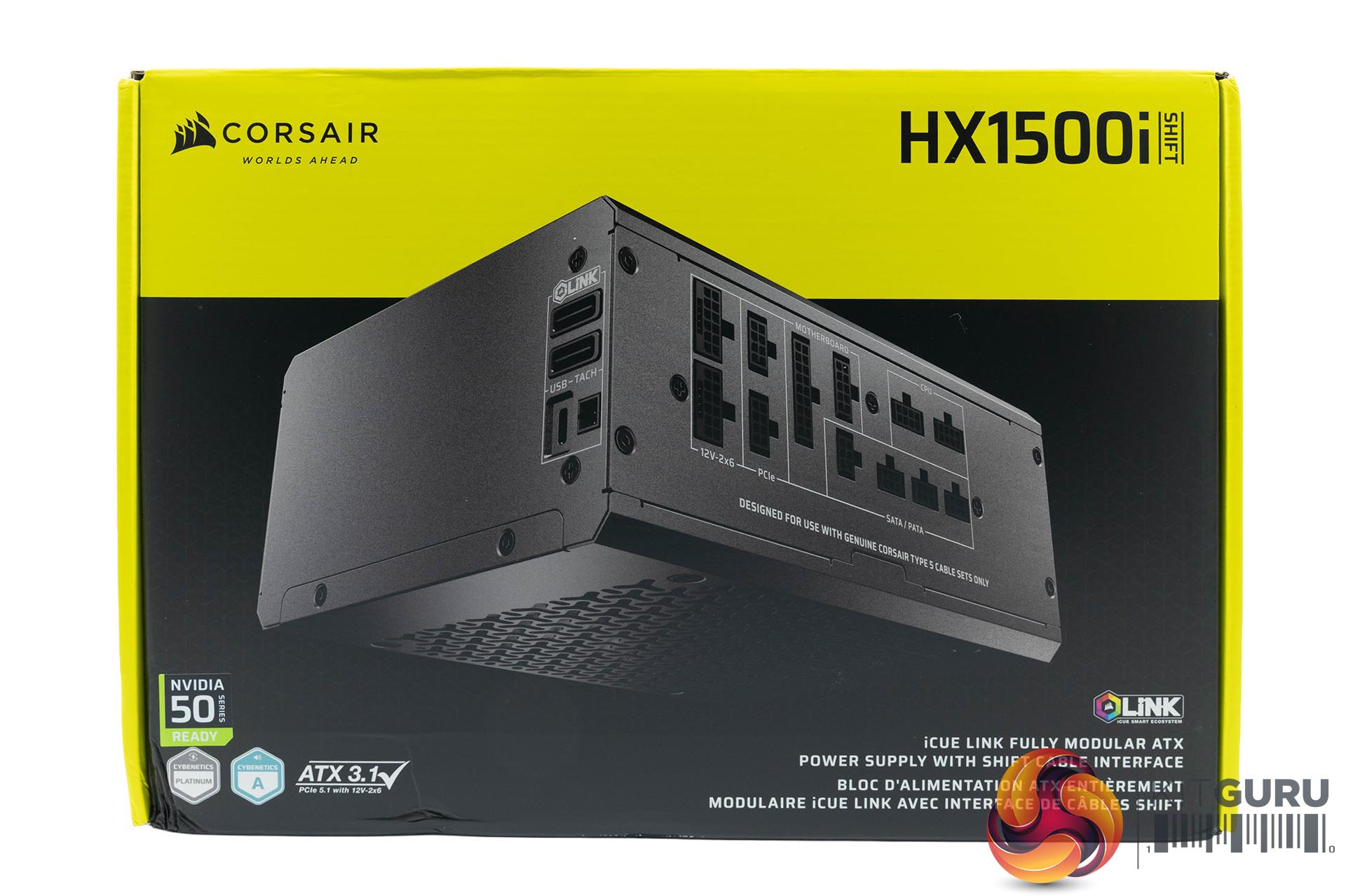
Corsair ship the HX1500i in one of their famous yellow accented boxes. The name of the product is listed top right, and they include a photograph of the supply in the center with a logo showing support for Nvidia 50 series, as well as two Cybenetics certification badges.
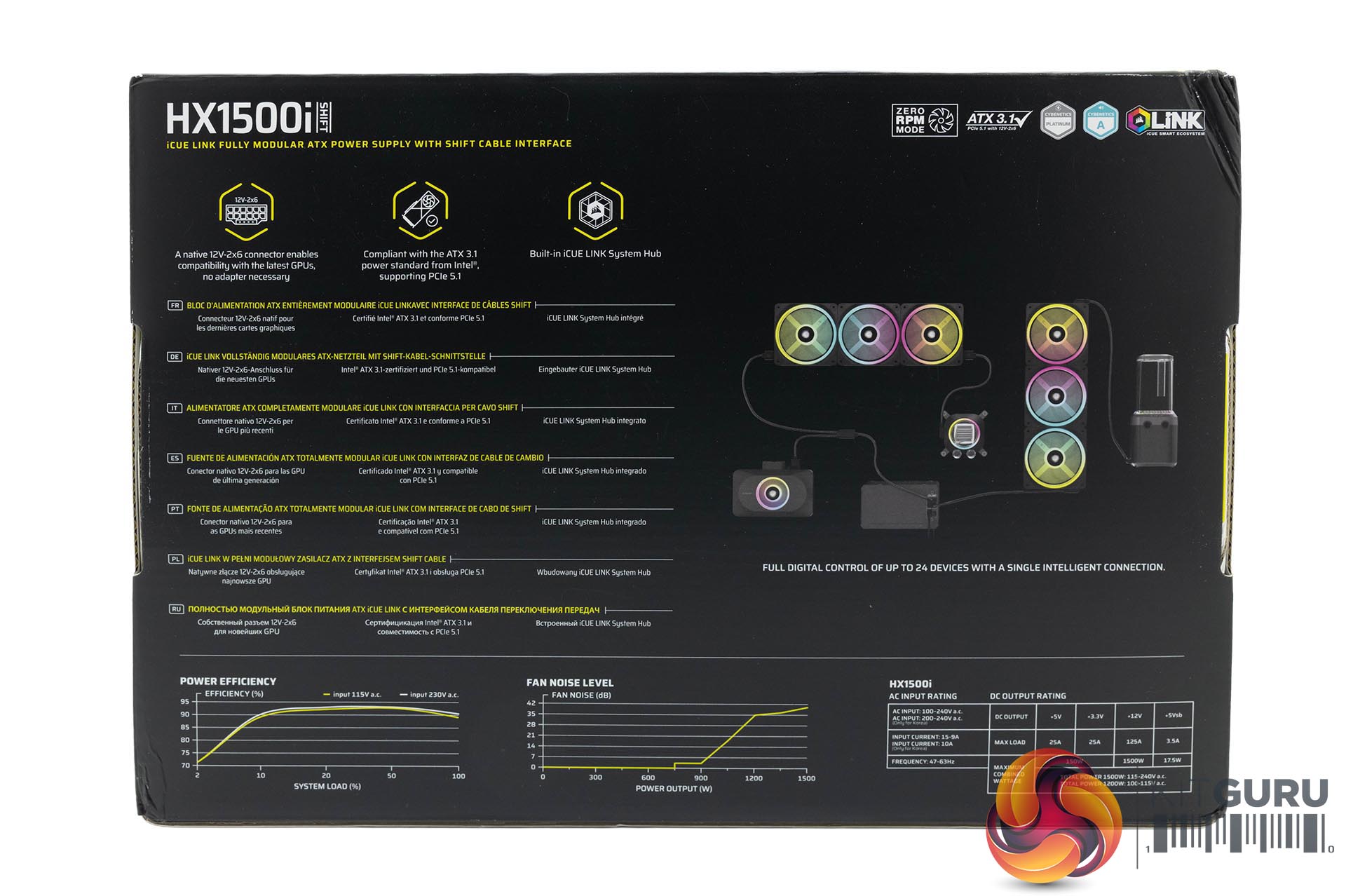
The rear of the box gives a lot of focus to the LINK support, showing fans, AIO coolers, pumps and radiators attached. Along the bottom are graphs highlighting power efficiency and fan noise levels under various load conditions.
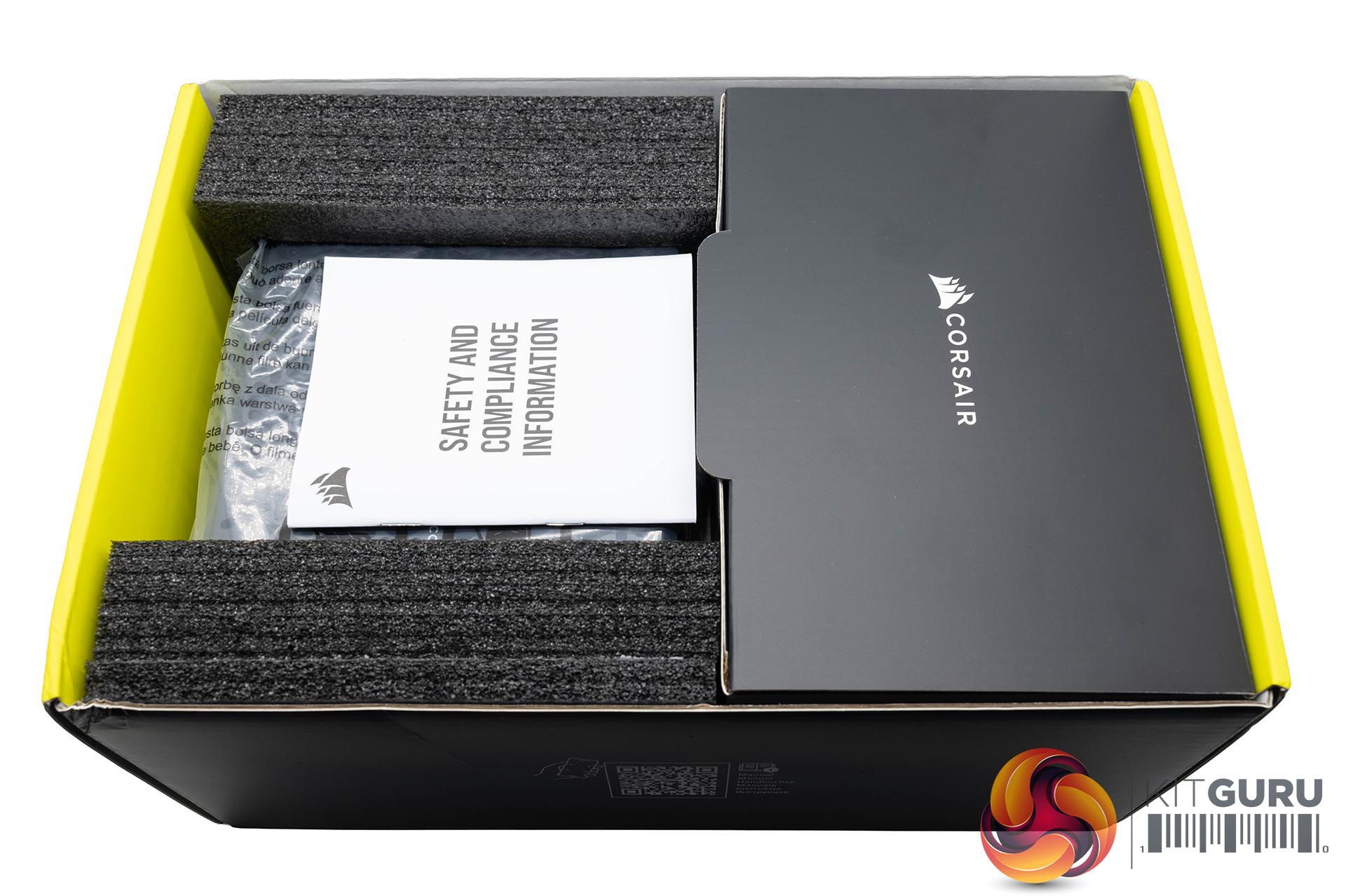
Inside the main box we find two sections. One with the power supply itself sandwiched between foam panels and the other home to the cables and accessories.
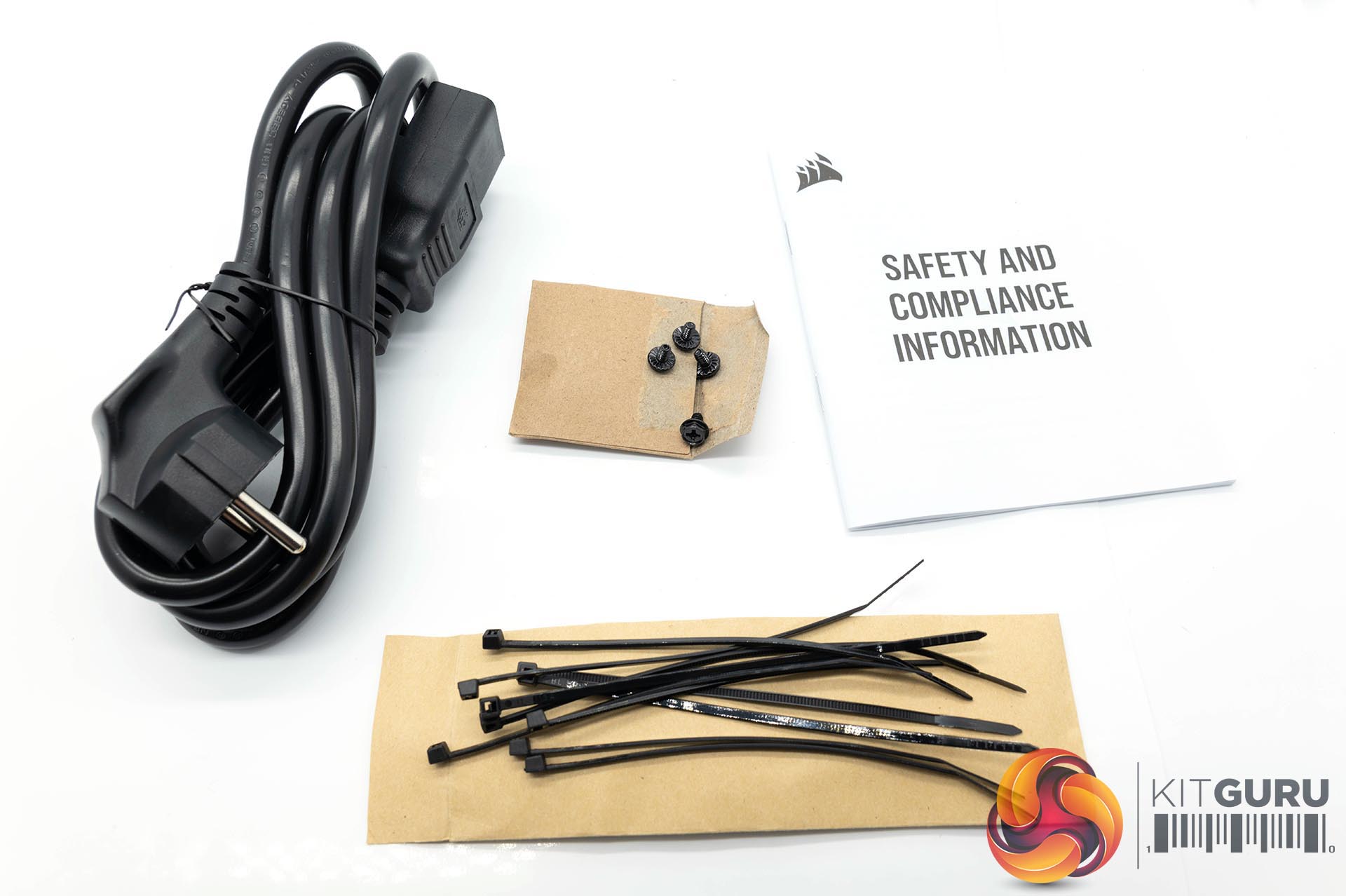
Corsair include a regional specific power connector, some user documentation, 10x cable ties and some mounting screws.
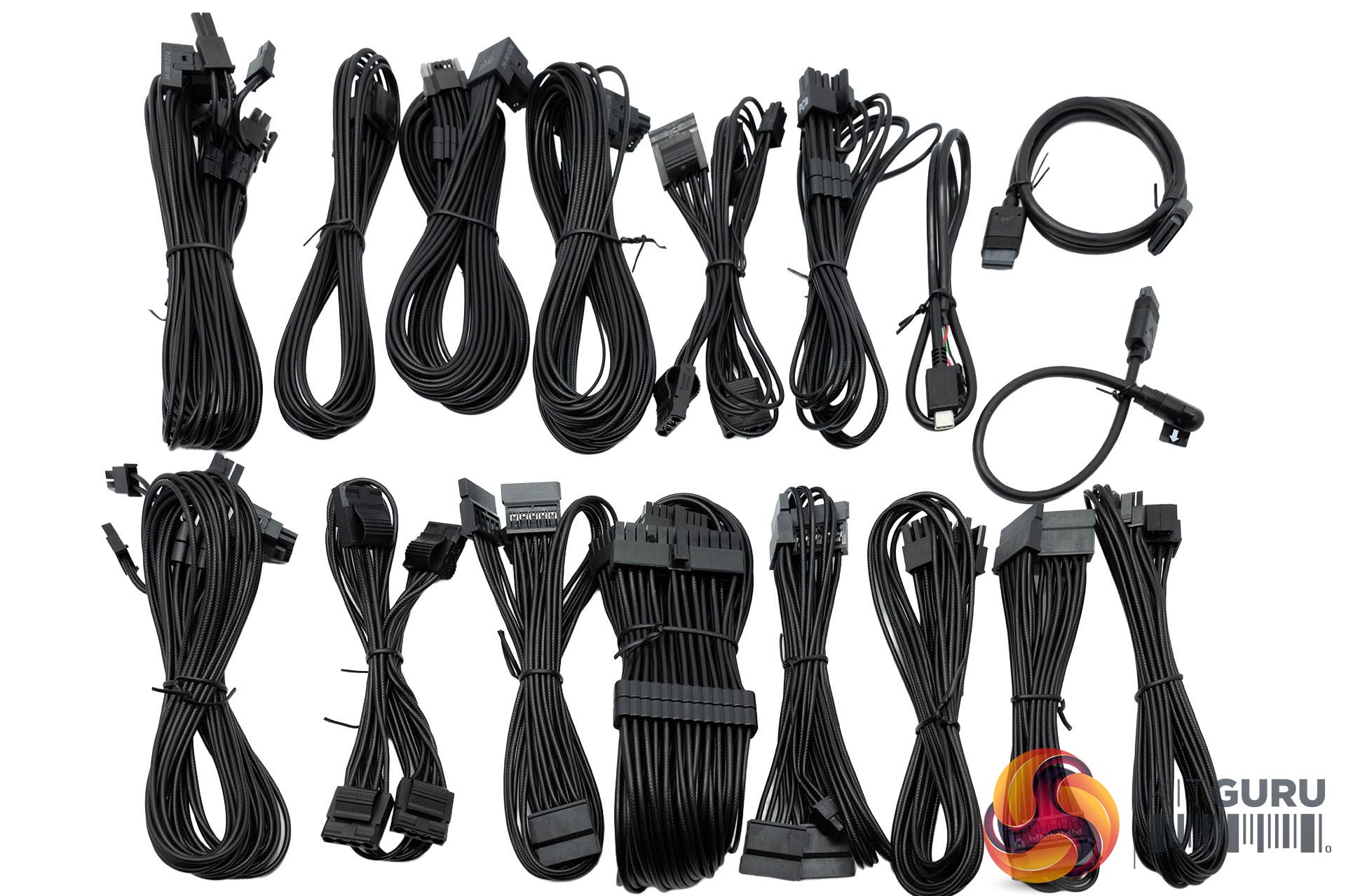
The quality of the cabling is very high, they are all individually sleeved (debossed). Corsair also include some iCUE LINK / USB cables and connectors.
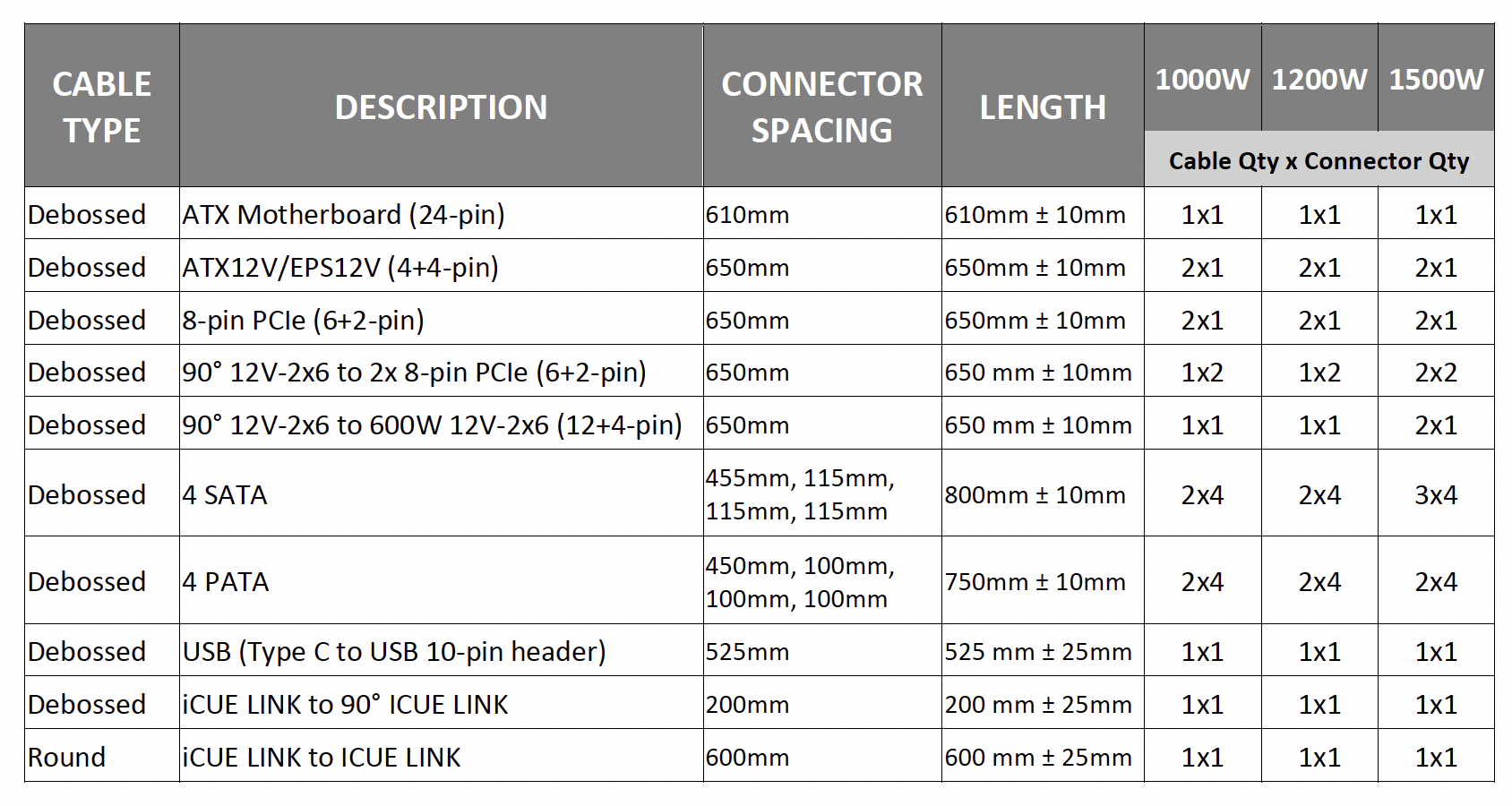
The table above shows all the cabling between the three power output capacities of the HXi Shift power supplies. Length and connector spacing on all the cables is perfectly fine. The primary cables are all 16-18AWG.
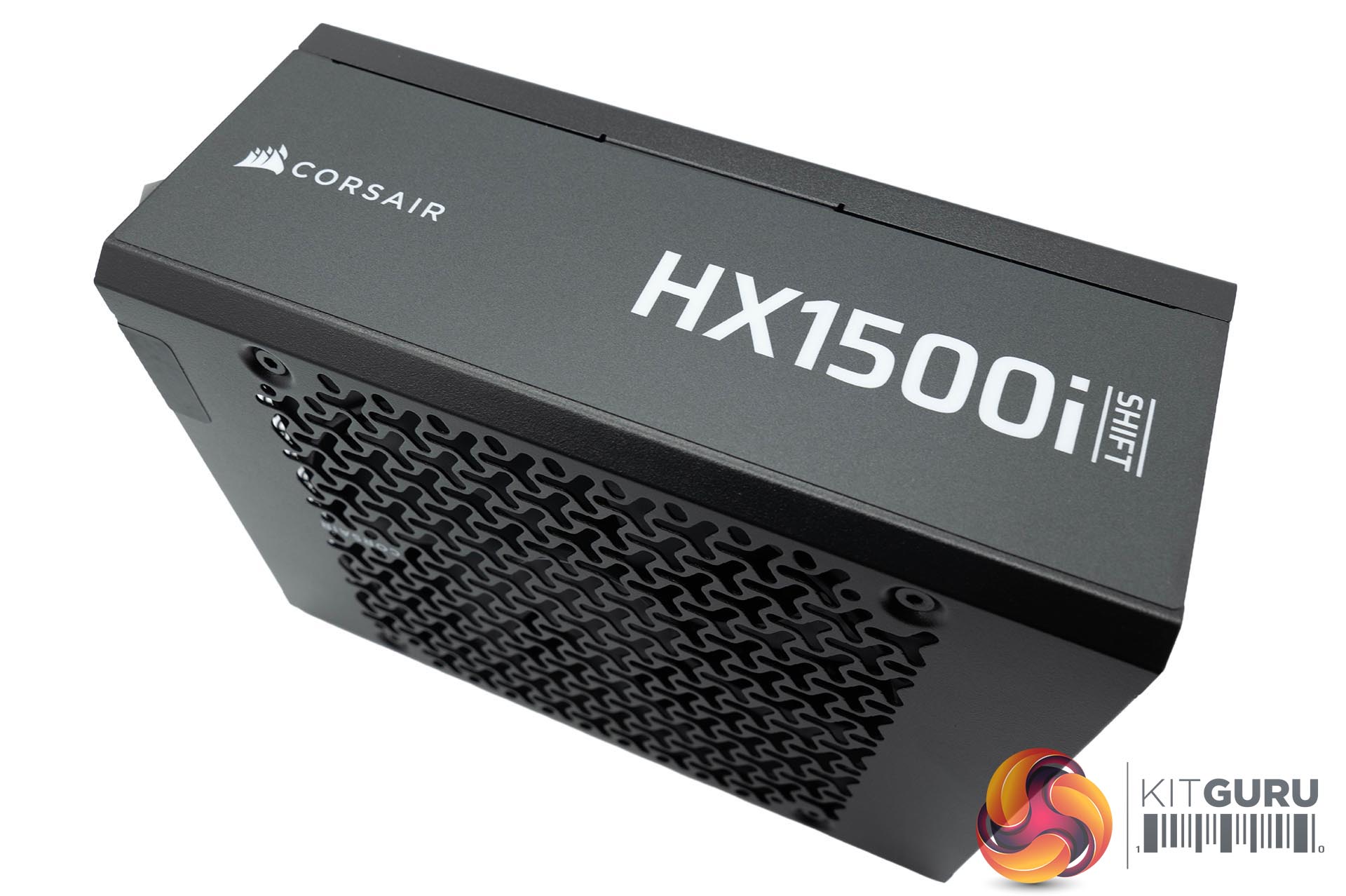
The Corsair HX1500i Shift is nicely finished and is very colour-neutral to suit a variety of system builds, if on show. The sticker is almost identical to the HX1500i we reviewed back in June, but there is a vertical ‘Shift' stamp at the end of it.
Product dimensions are 150mm x 85mm x 200mm. It weighs 2.36kg.
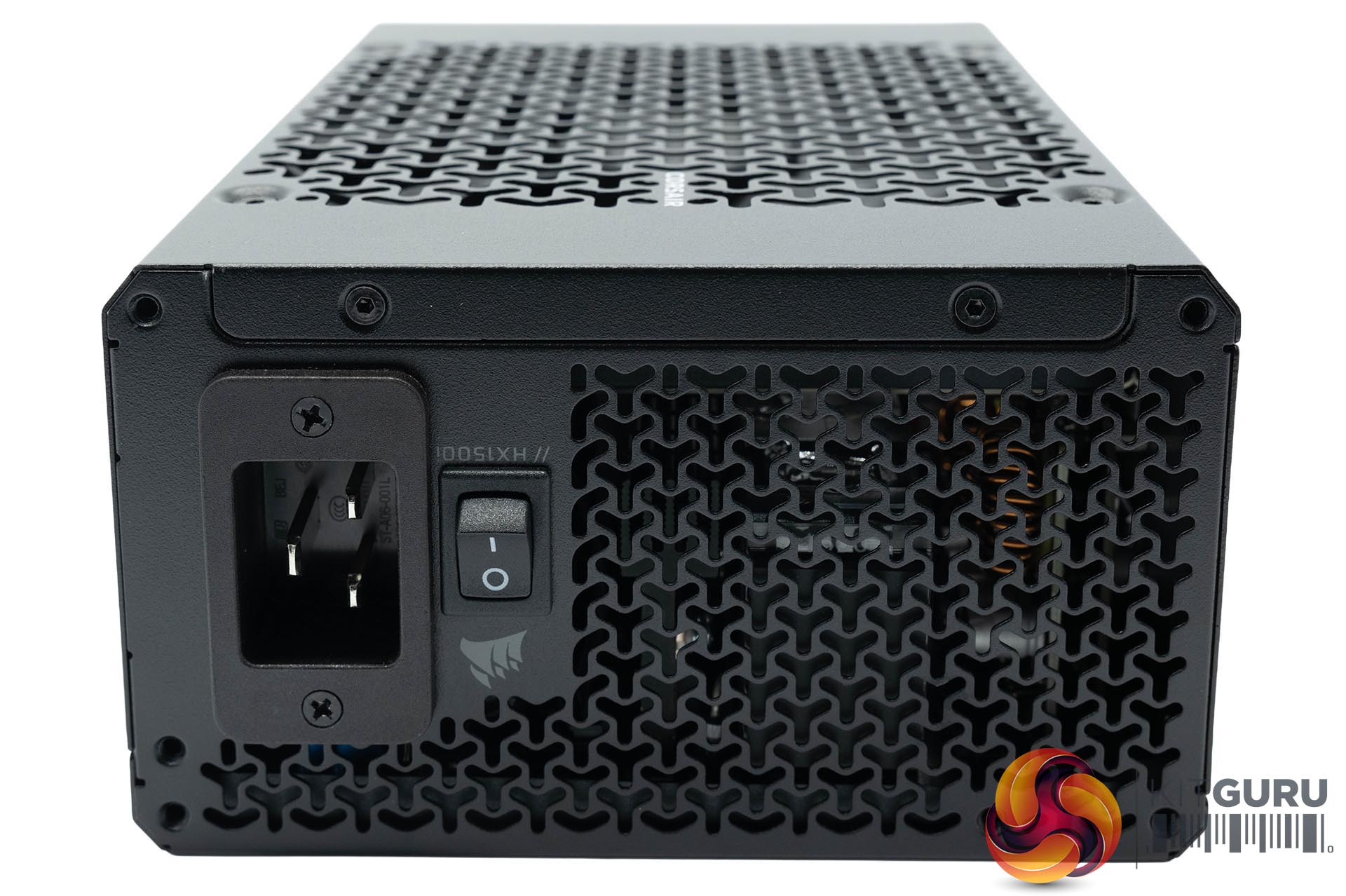
The power side of the unit is home to the power switch and connector. Due to the power of this specific supply, it requires a C19 power cable. C13 is a standard connector for low-power devices like PCs and TVs, while the C15 is a “hot condition” version of the C13 with a higher temperature rating and a notch for secure connection. The larger C19 is built for higher power-draw equipment like servers and industrial machines, handling more current and featuring a more robust design.
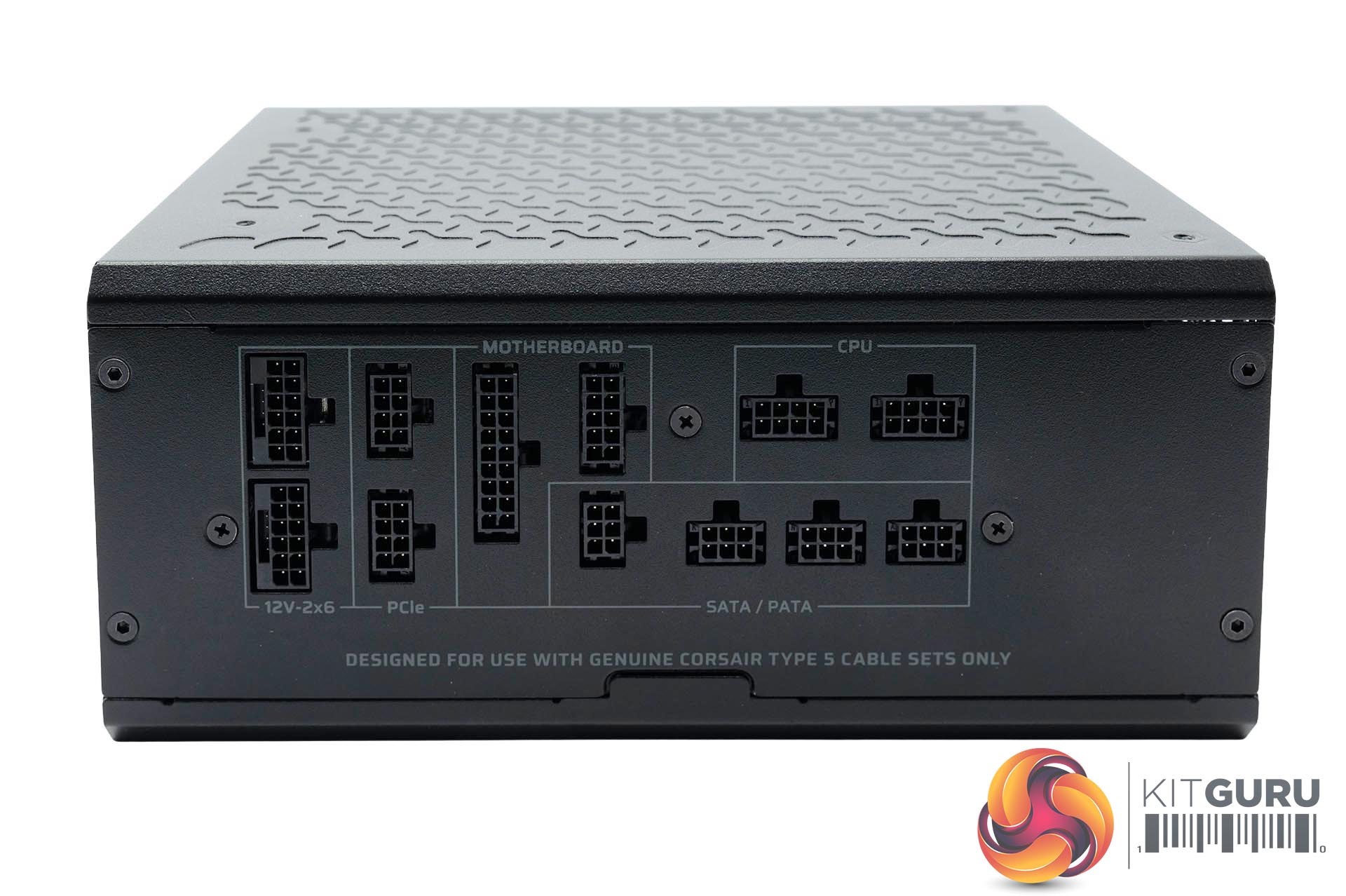
The modular bay is split across two rows on the ‘long' side of the power supply (hence the ‘Shift' moniker), as shown above. Each section is clearly labelled for ease of use during the build phase. There are two 12V-2×6 H++ connectors on the far left as well.
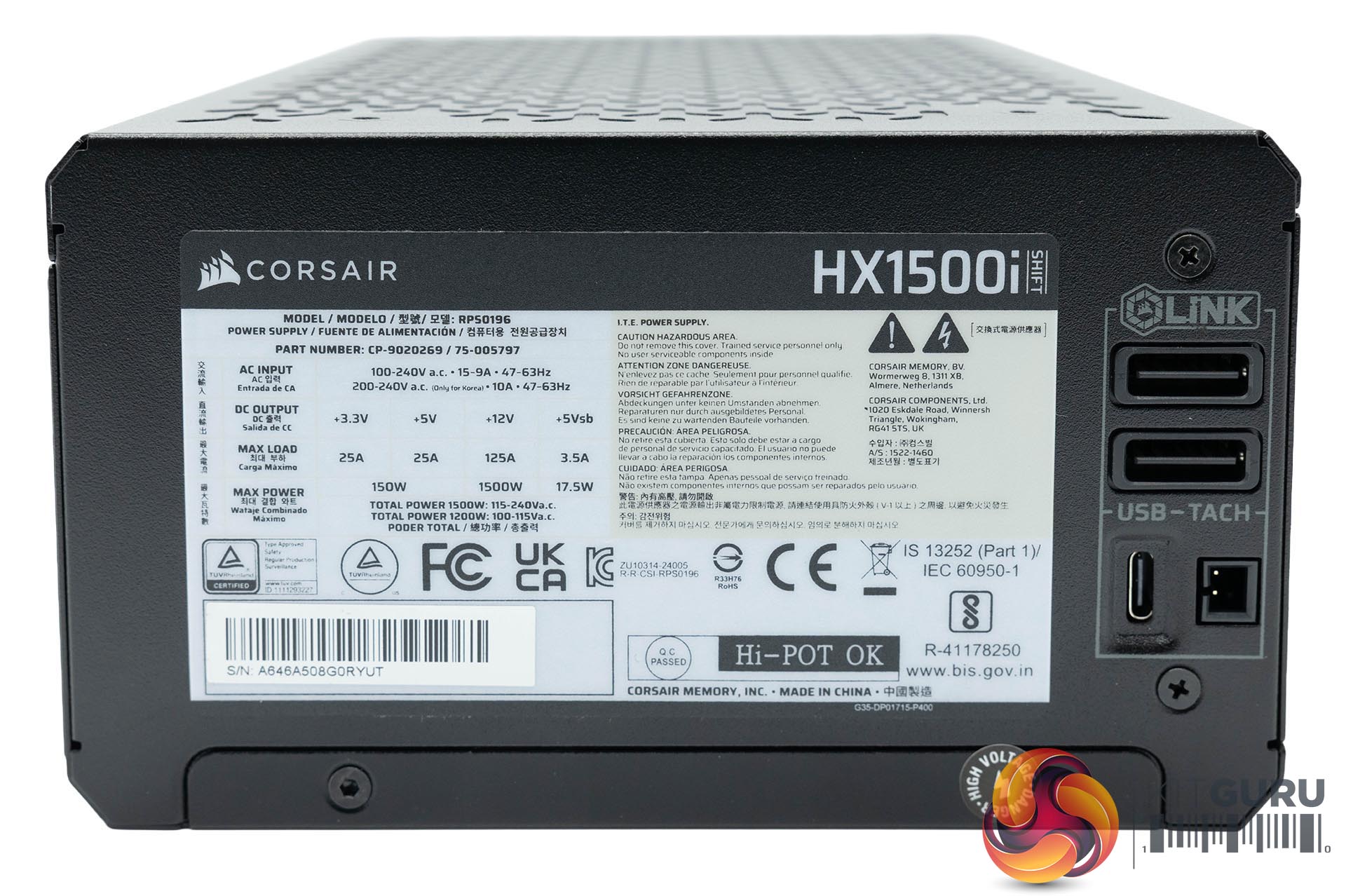
It is weird seeing the power sticker on the side of the power supply usually home to the modular bay. As the figures above verify, the power supply can deliver 25A via both the +3.3V and +5V minor rails. The +12 rail can handle 125A.
On this side you will see a USB-C port, an iCUE RS 485 port and a Tachometer output.
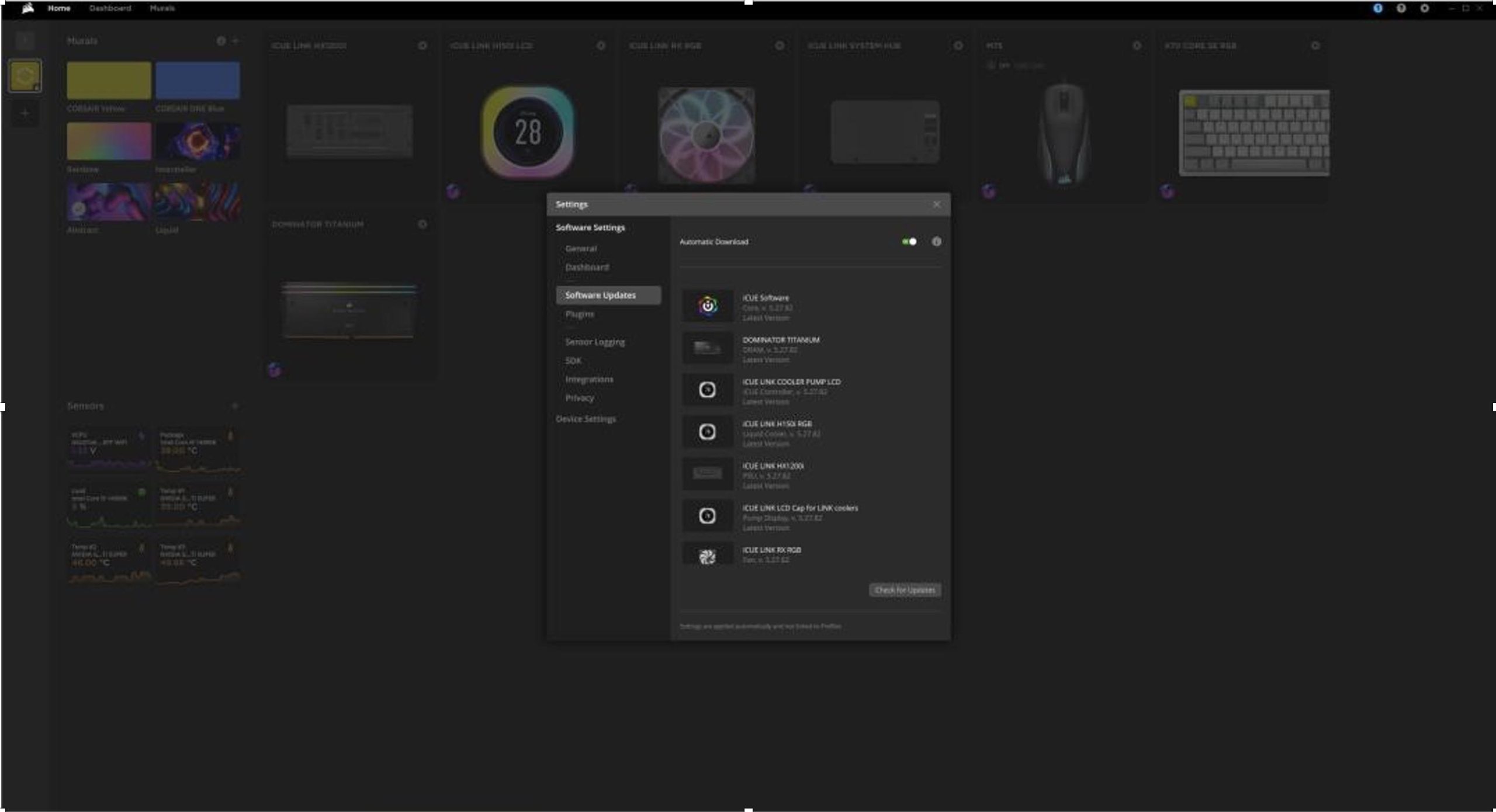
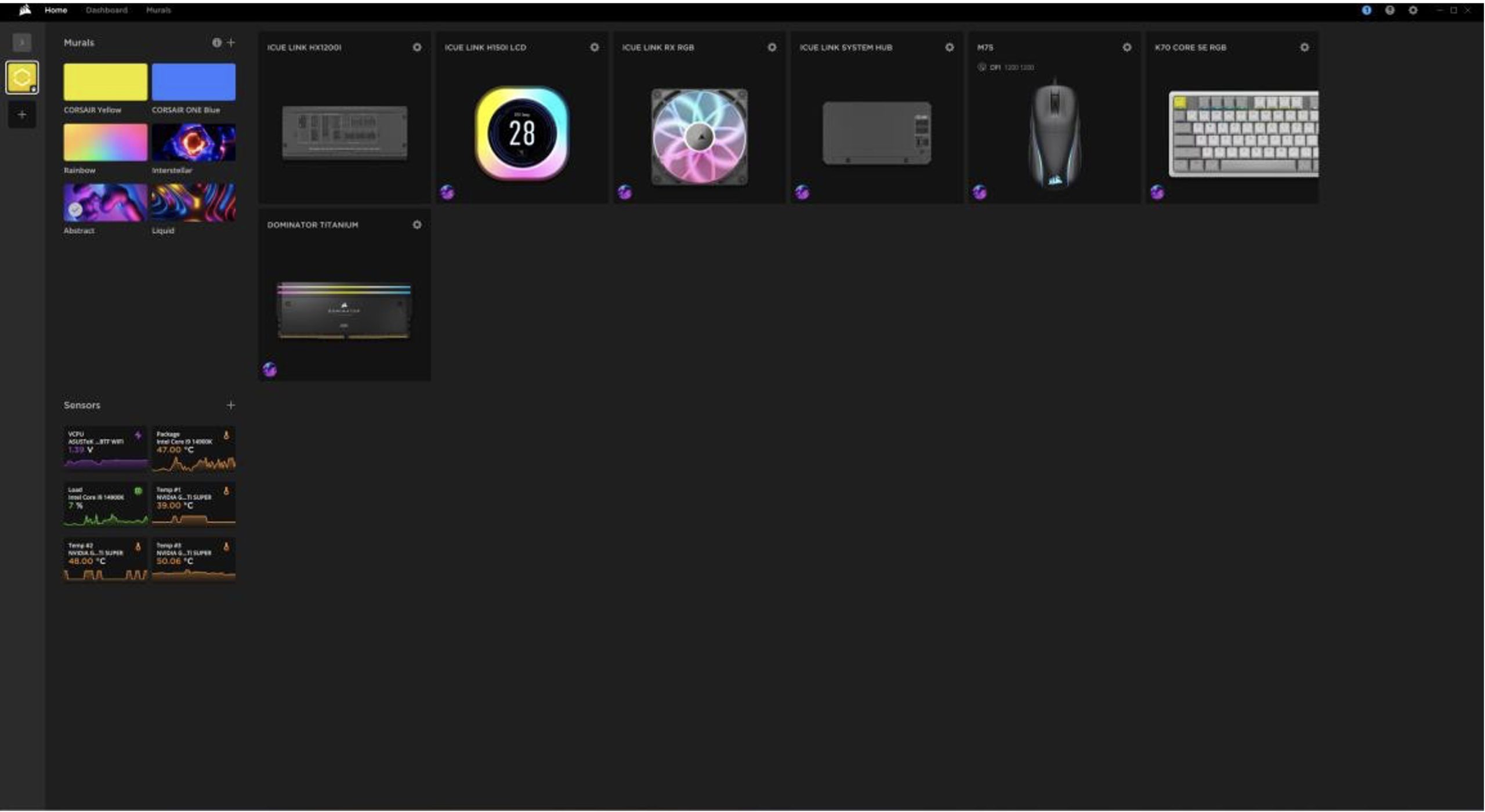
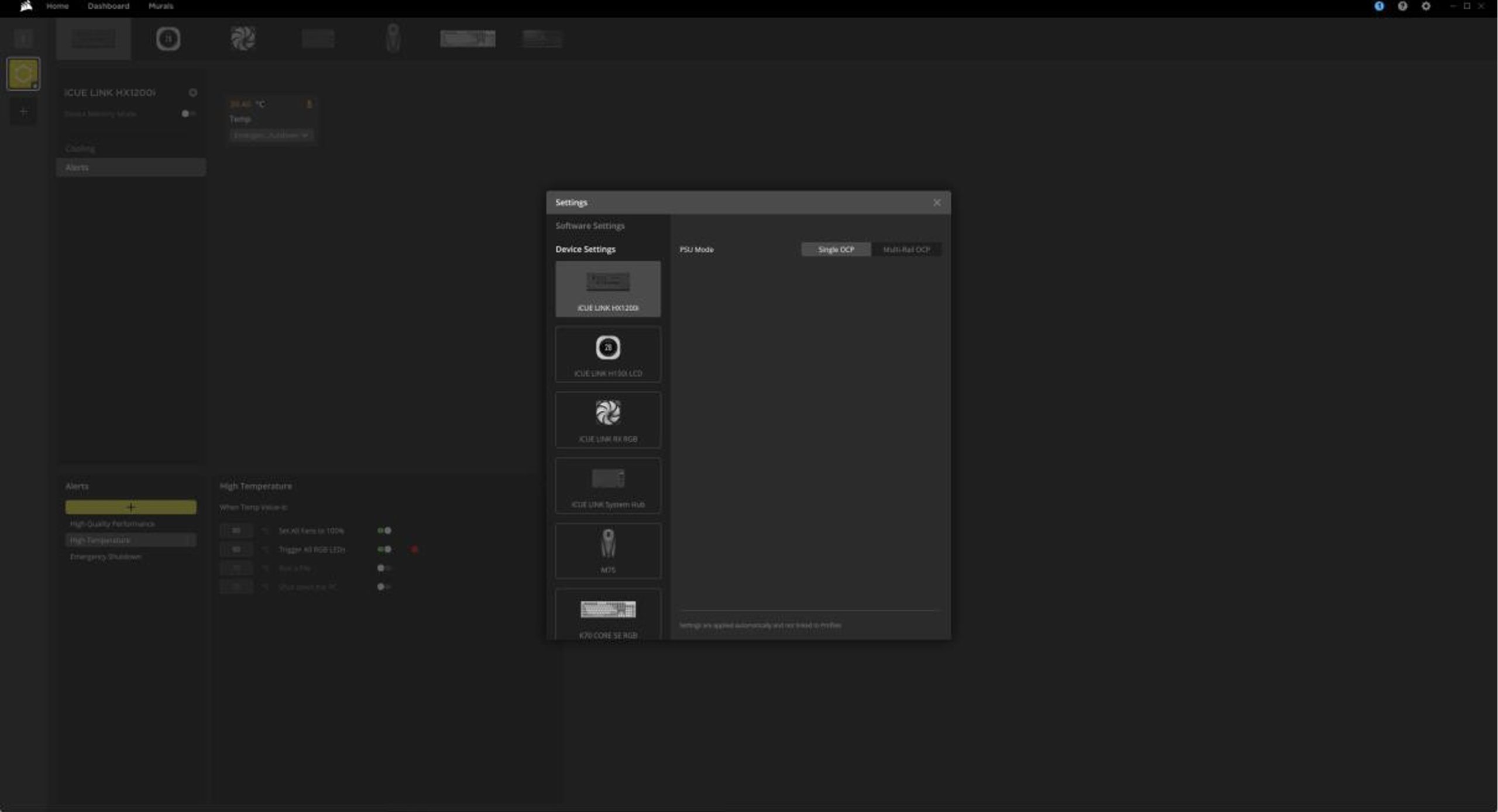
The HXi Shift can use iCUE software to monitor power settings, toggle between single and multi rail overcurrent protection (OCP) on the fly, or to create custom fan profiles.

The HX1500i Shift can deliver 125A on the primary +12V rail, and 25A on both +3.3V and +5V rails.
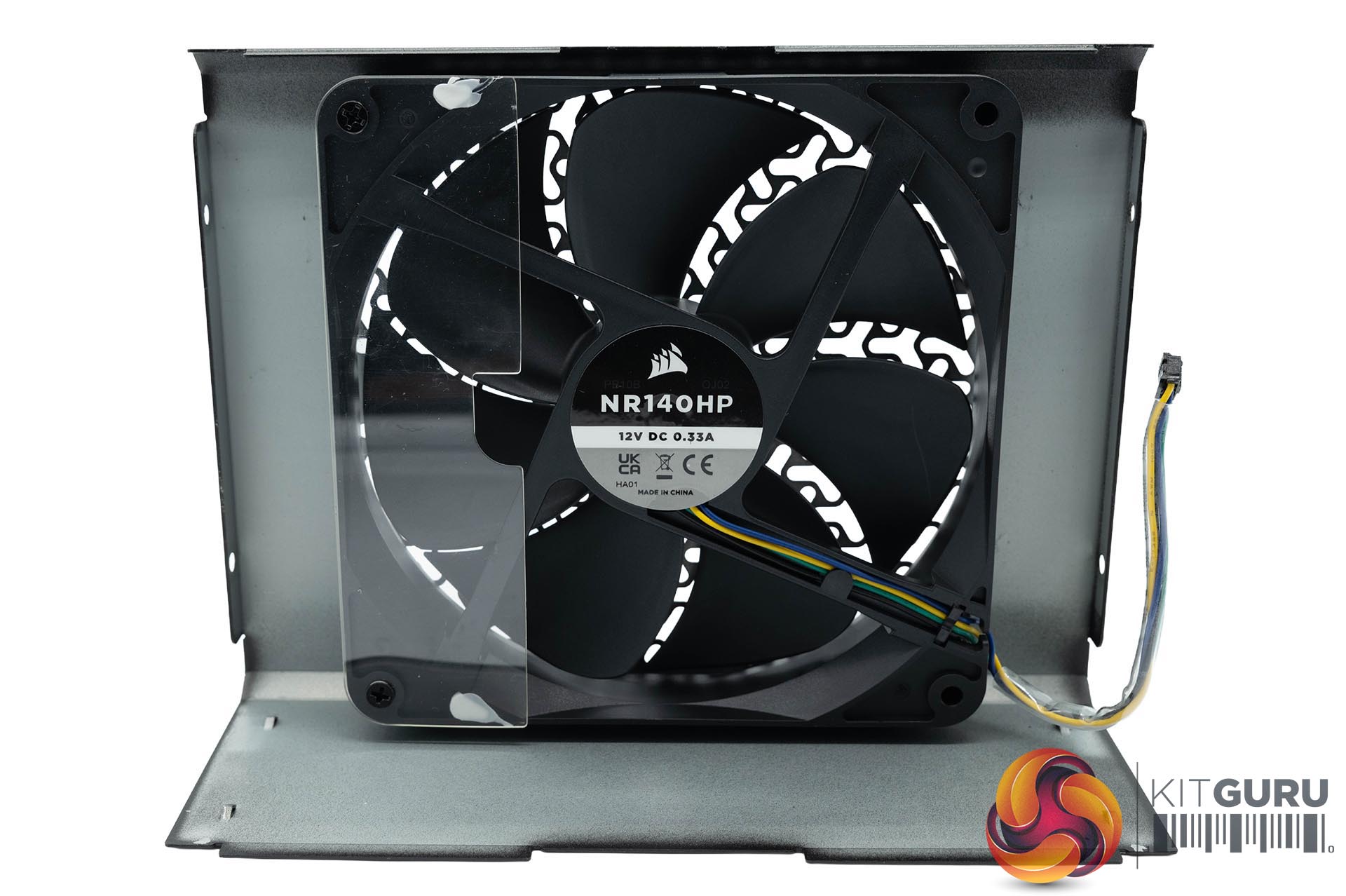
Corsair are using one of their 140mm NR140HP fans in this unit, rated 12V 0.33A. This is a fluid dynamic bearing (FDB) fan. Cybenetics gave this unit an A+ Noise classification for 230V operation, and slightly lower for 115V operation (‘A' rating). We test all our power supplies at 230V. The fan in the previous HX1500i (non-Shift) is the NR140P (no ‘H'), a slightly older fan that operates at 0.22A. For the most part however, they seem very closely matched from what we can tell in testing.
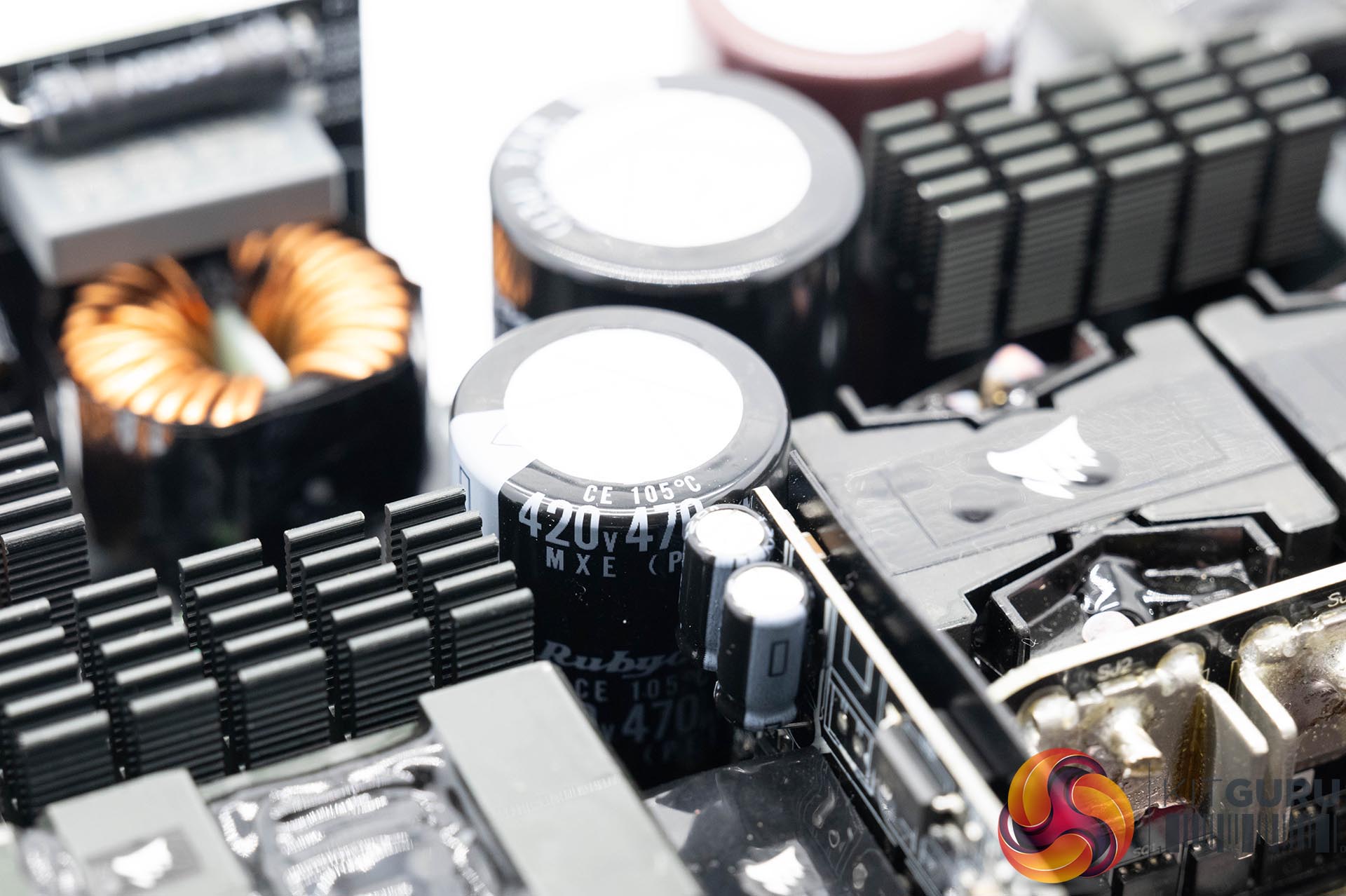
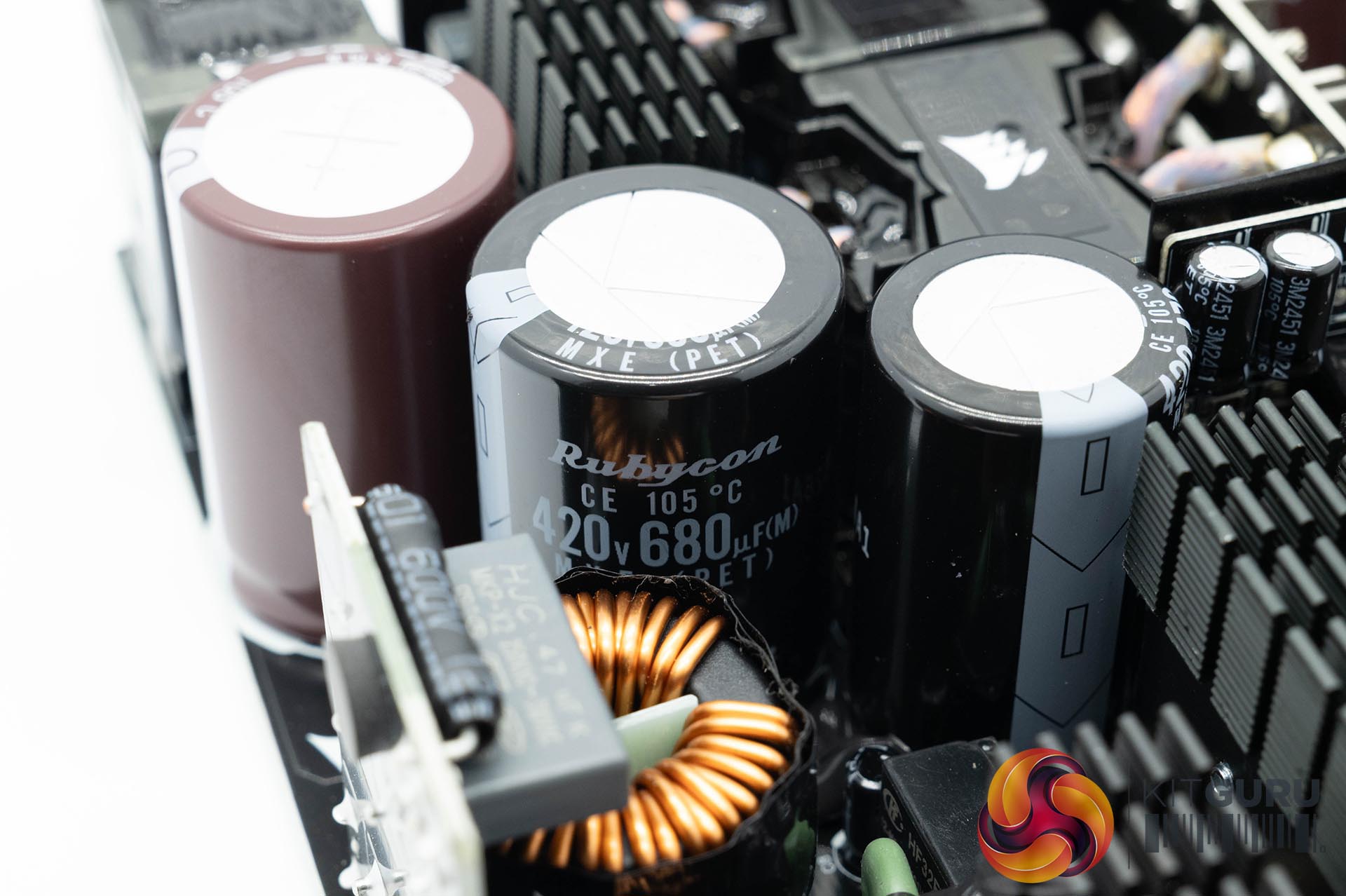
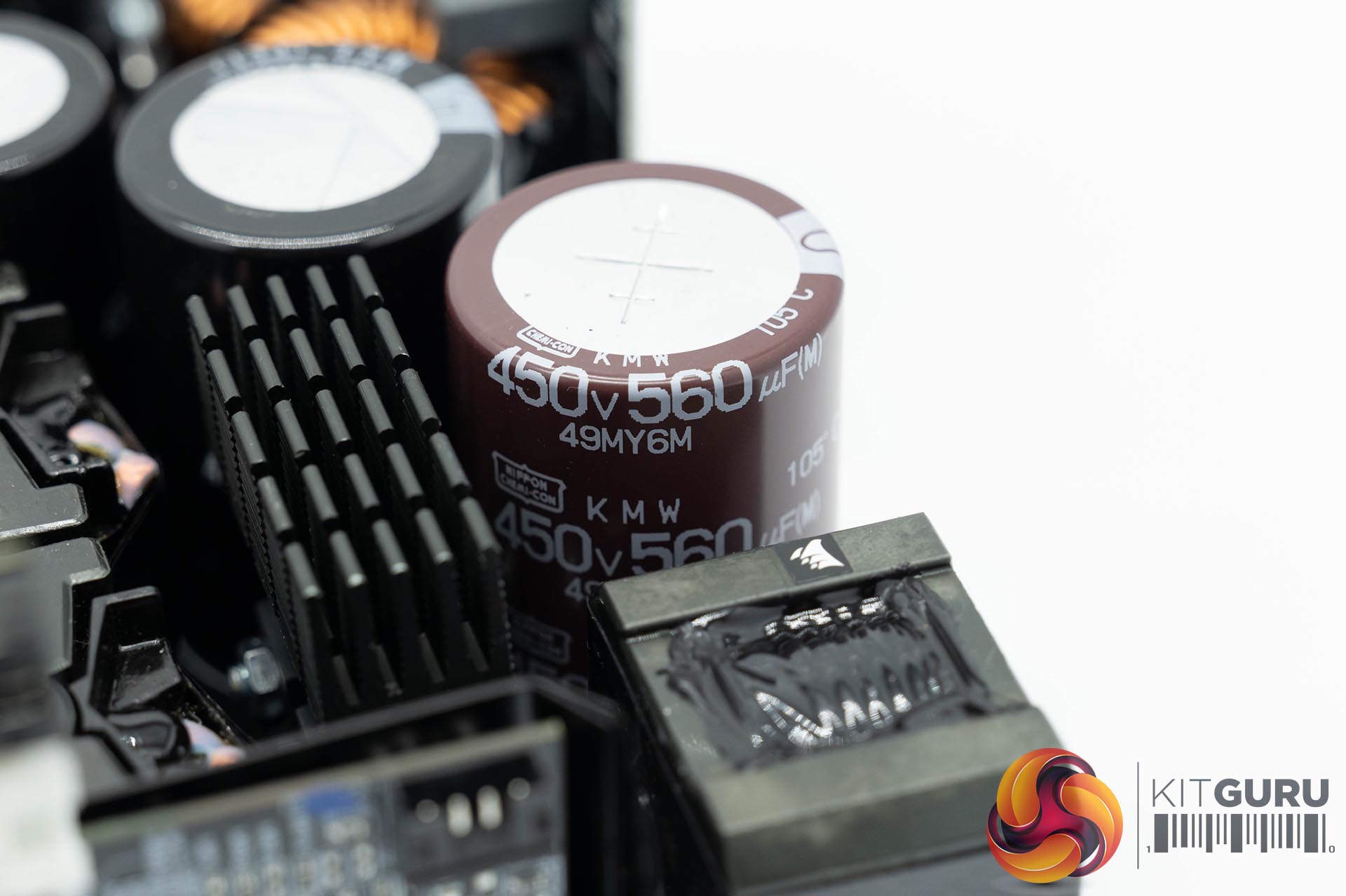
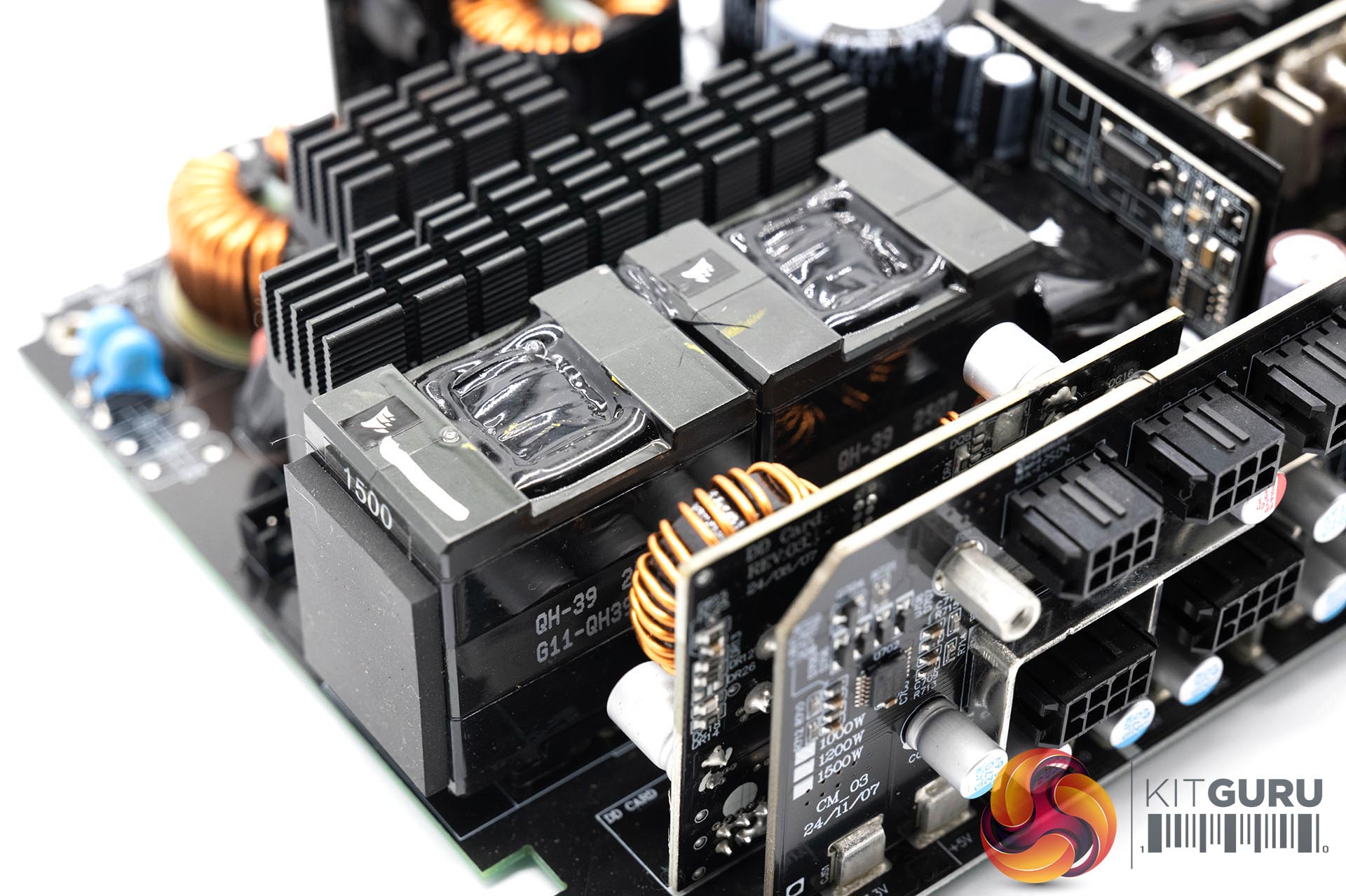
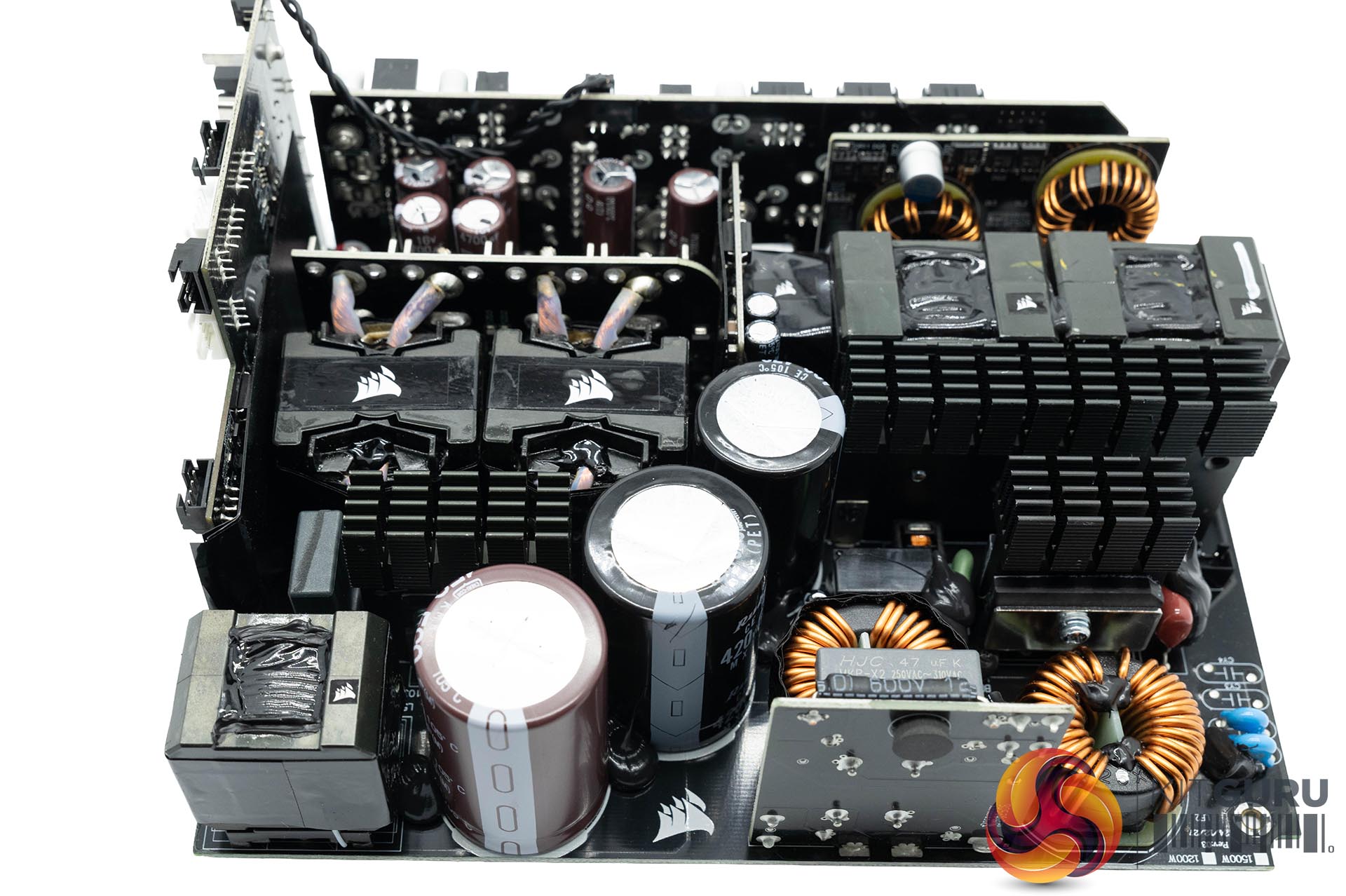
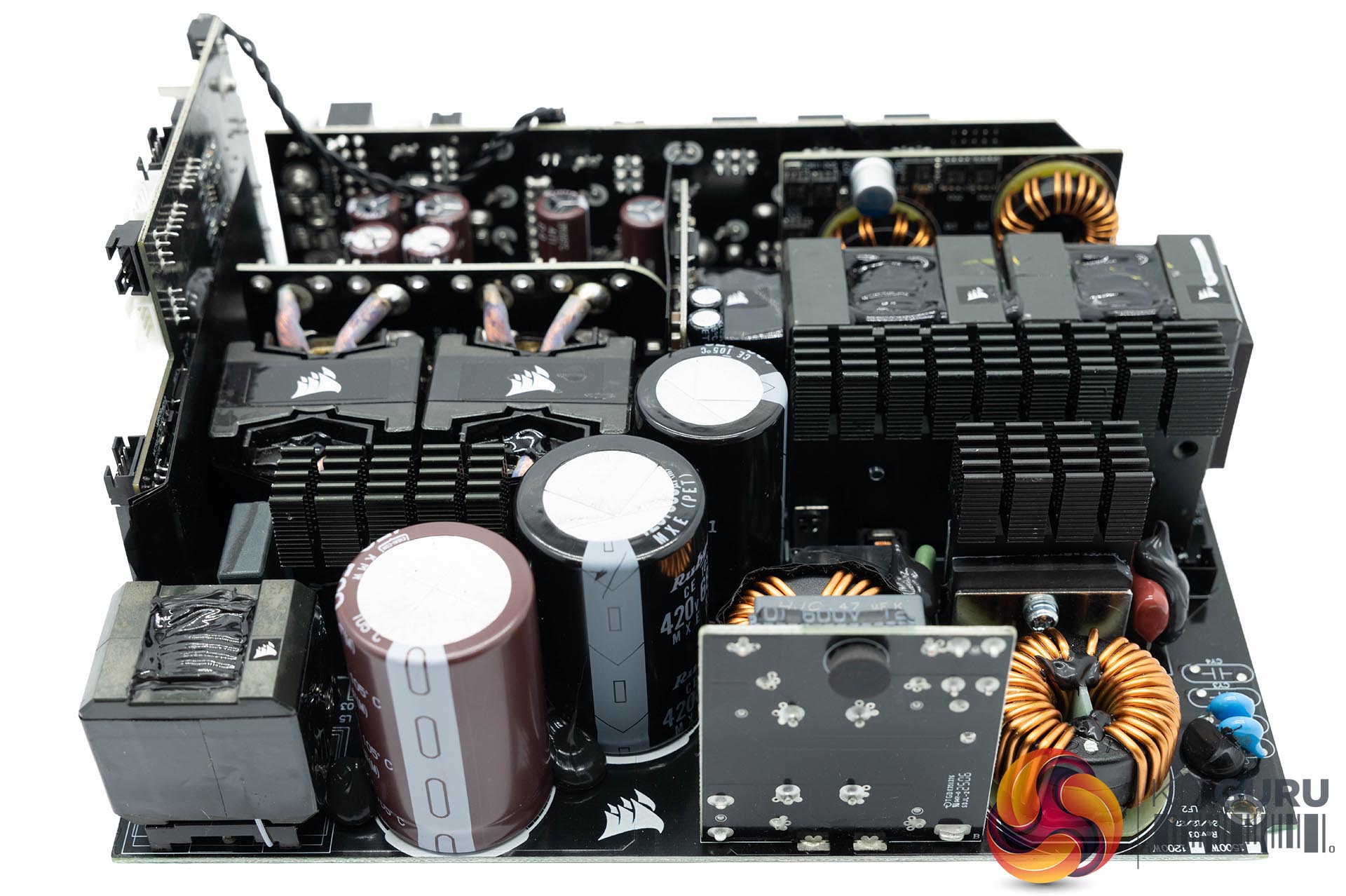
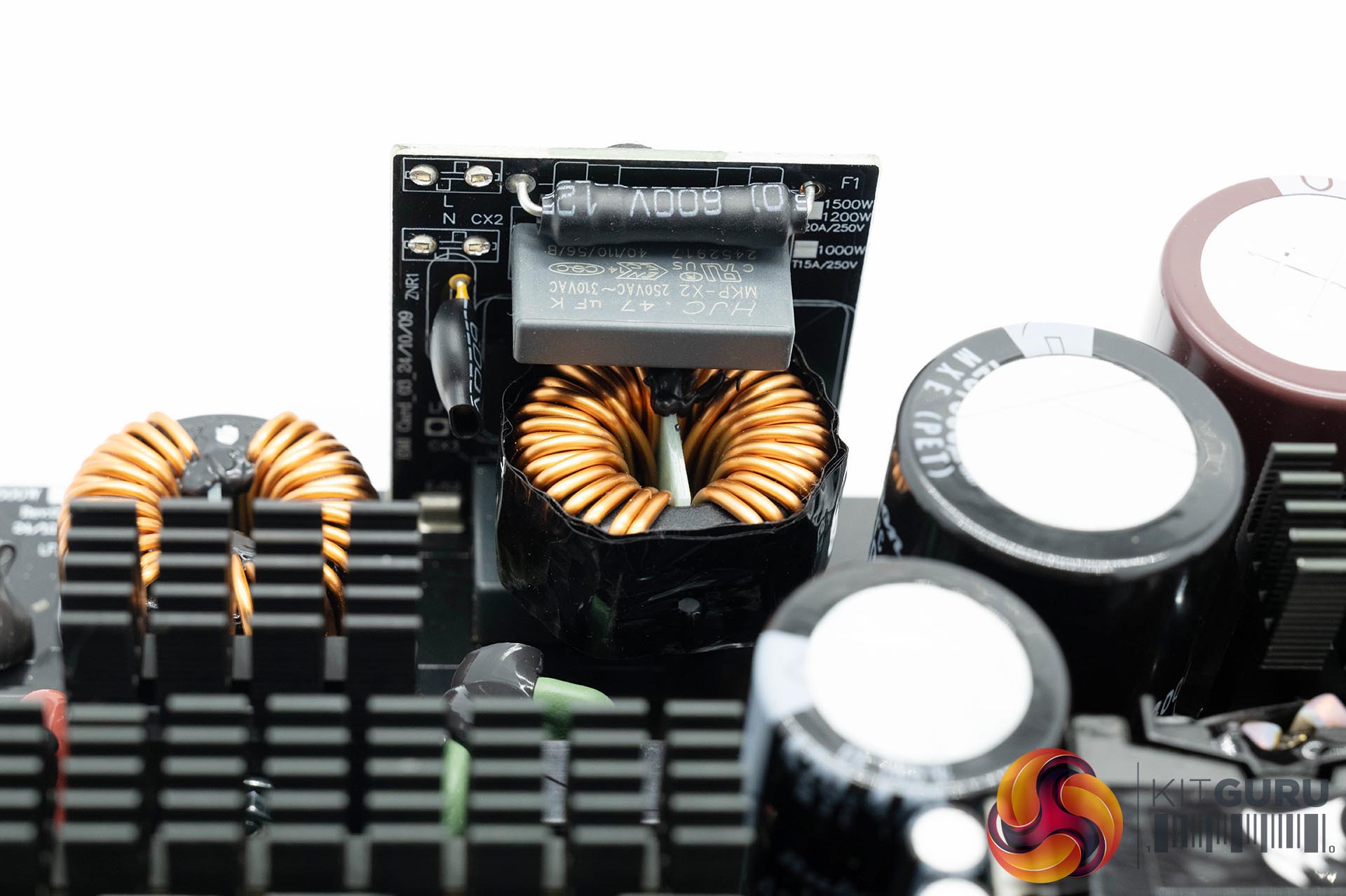
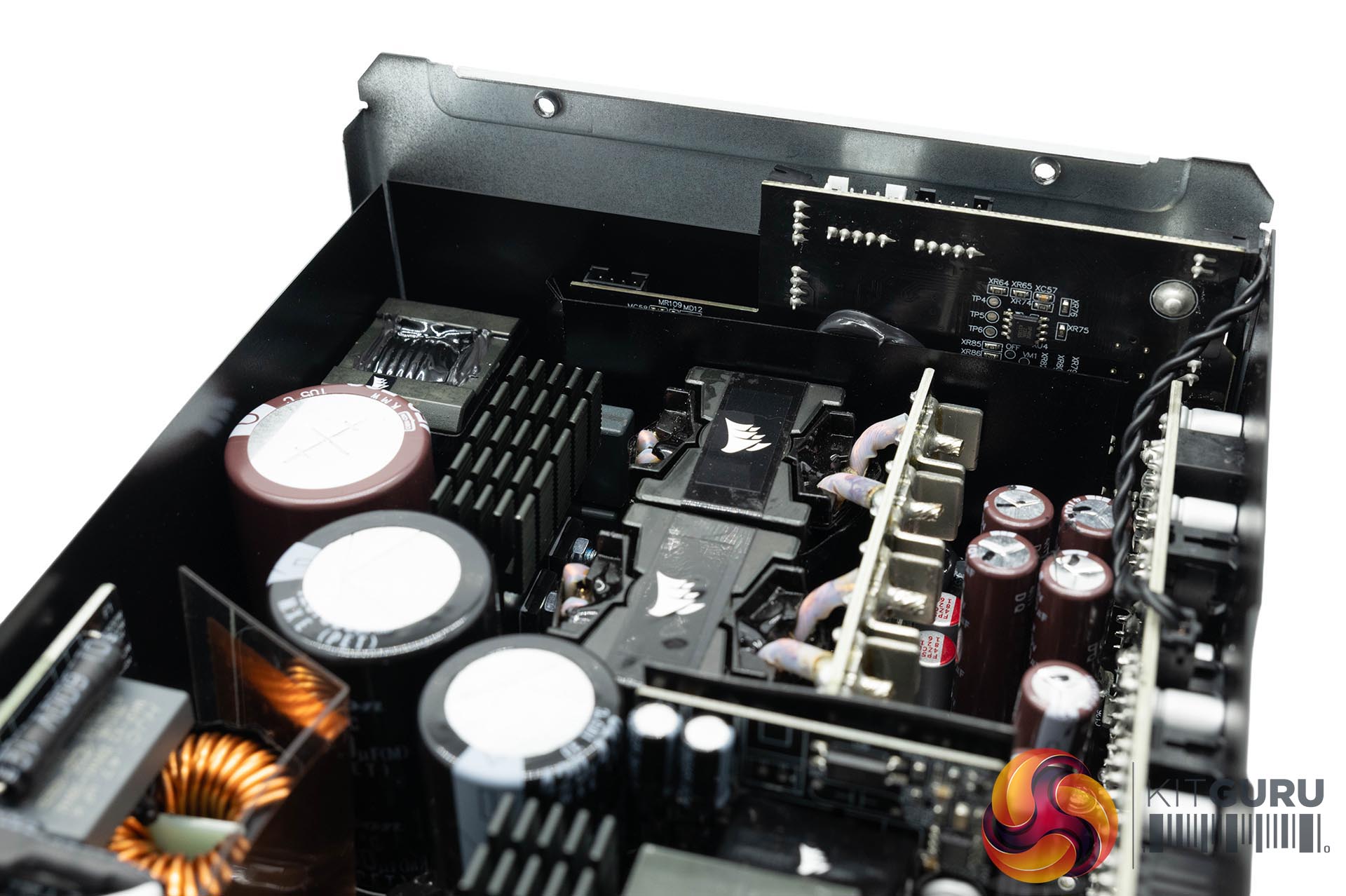
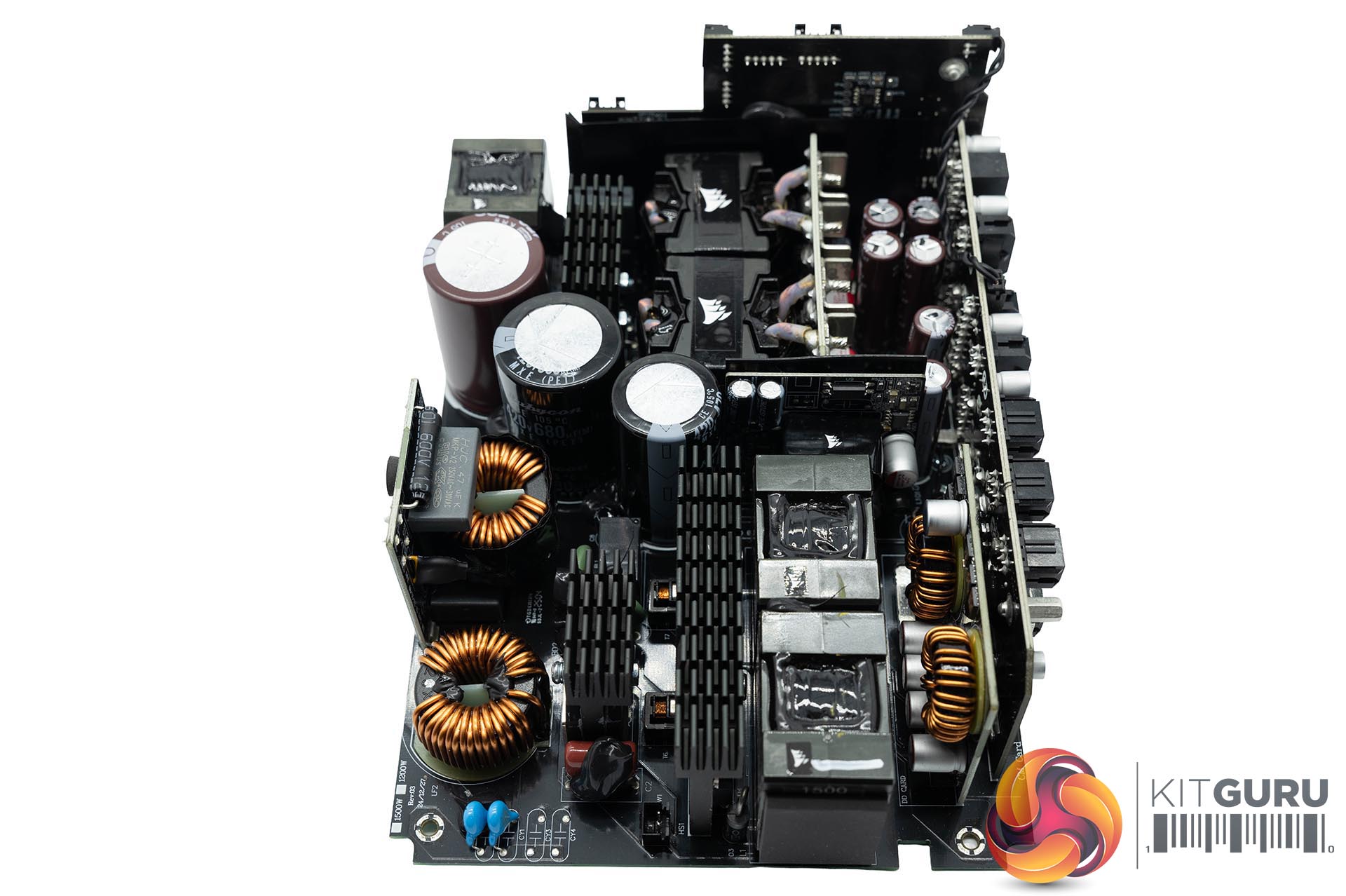
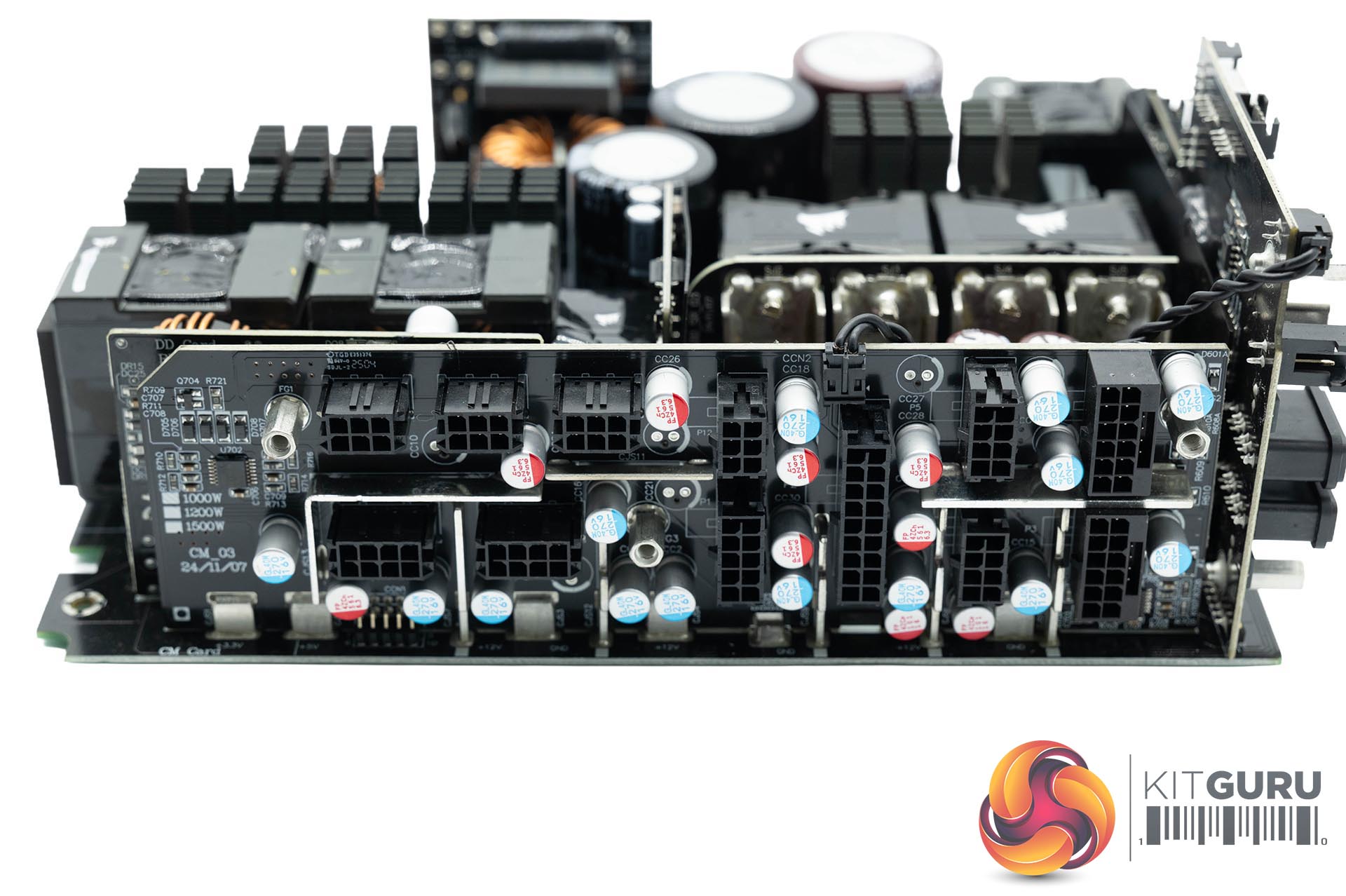
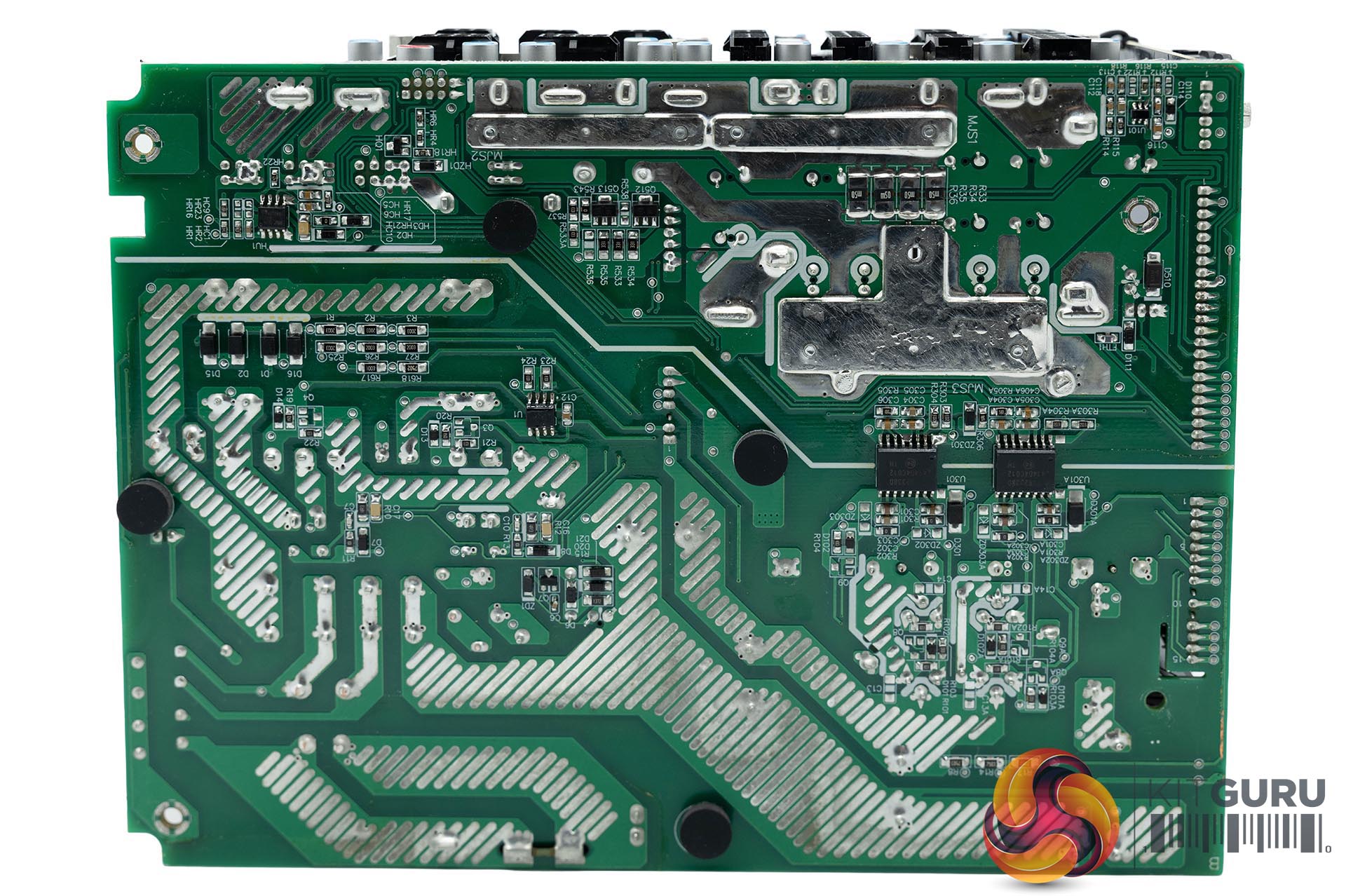
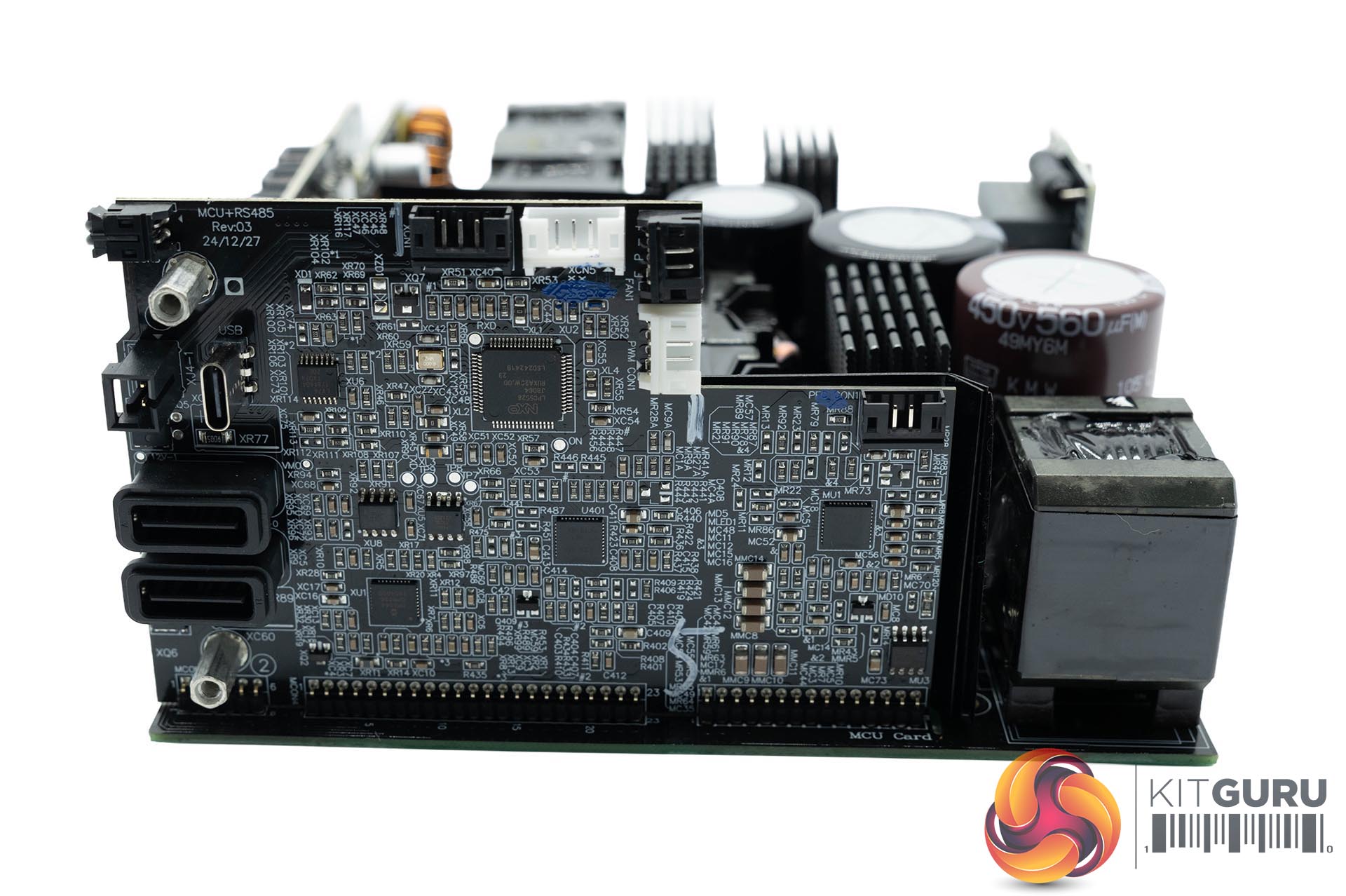
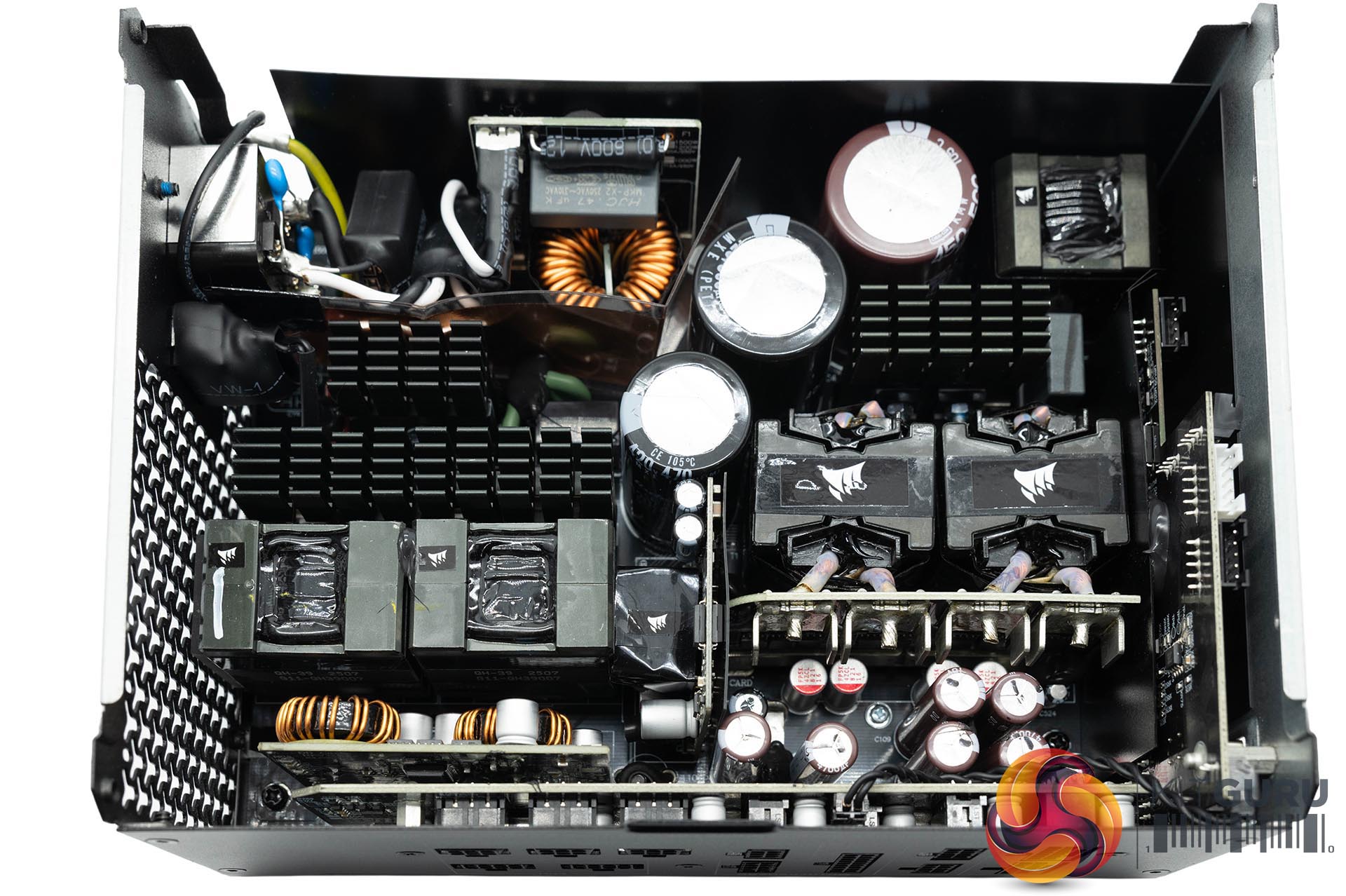
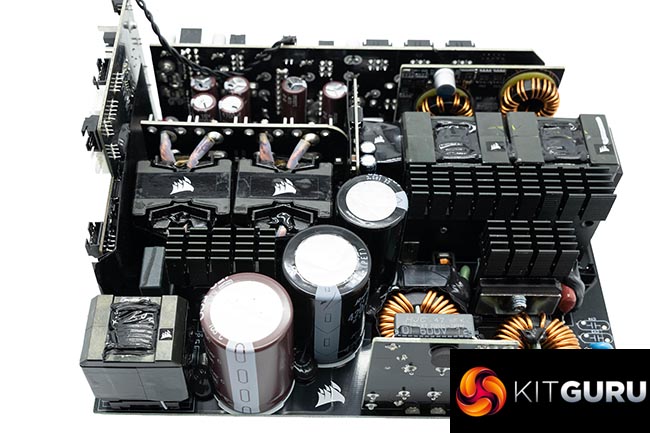
Corsair didn't tell us the OEM for this power supply, but we can see that it is a CWT (Channel Well Technology) design, in cooperation with Corsair. The primary side of this unit is full bridge topology – it has an APFC and a LLC resonant converter. On the secondary side a synchronous rectification scheme is used for 12V with a pair of DC to DC converters generating the minor rails.
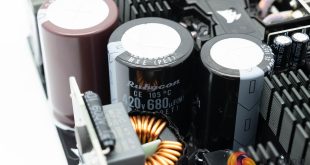
Soldering and build quality is excellent throughout. Component selection hasn't cut any corners either. Primary capacitors are a mixture of Nippon Chemi Con and Rubycon – both quality Japanese brands. The three primary 105c rated Japanese caps are rated 450v 560uF (Nippon Chemi Con KMW), 420V 680uF (Rubycon) and 420V 470uF (Rubycon). This totals 1710uF. The older unit actually had 3x Japanese capacitors, two 680uF caps with a single 470uF – for a total of 1830uF.
The unit ships with OCP, OPP, OTP, SCP and OVP protections.
Correctly testing power supplies is a complex procedure and KitGuru have configured a test bench which can deliver up to a 2,000 Watt DC load. Due to public requests we have changed our temperature settings recently – previously we rated with ambient temperatures at 25C, we have increased ambient temperatures by 10c (to 35c) in our environment to greater reflect warmer internal chassis conditions.
We use combinations of the following hardware:
• SunMoon SM-268
• CSI3710A Programmable DC load (+3.3V and +5V outputs)
• CSI3711A Programmable DC load (+12V1, +12V2, +12V3, and +12V4)
• Extech Power Analyzer
• Extech MultiMaster MM570 digital multimeter
• Extech digital sound level meter
• Digital oscilloscope (20M S/s with 12 Bit ADC)
• Variable Autotransformer, 1.4 KVA
12V output is single rail for our testing.
|
DC Output Load Regulation
|
||||||||||
|
Combined DC Load |
+3.3V
|
+5V
|
+12V
|
+5VSB
|
-12V | |||||
|
A
|
V
|
A
|
V
|
A
|
V
|
A
|
V
|
A | V | |
|
150W
|
0.90
|
3.34
|
0.84
|
5.02
|
11.65
|
12.05
|
0.5
|
5.01
|
0.20 | -12.00 |
|
300W
|
1.63
|
3.34
|
1.65
|
5.01
|
23.75
|
12.05
|
1.0
|
5.01
|
0.20 | -12.01 |
|
750W
|
3.01
|
3.33
|
3.02
|
5.02
|
59.66
|
12.03
|
1.5
|
5.00
|
0.30 | -12.00 |
| 1125W | 4.05 | 3.33 | 4.05 | 5.02 | 90.00 | 12.01 | 2.0 | 5.01 | 0.30 | -12.01 |
|
1500W
|
15.56
|
3.32
|
15.55
|
5.02
|
113.30
|
11.98
|
2.5
|
5.01
|
0.50 | -12.01 |
Load regulation is very tight on all the rails. A great set of results.
Next we want to try Cross Loading. This basically means loads which are not balanced. If a PC for instance needs 500W on the +12V outputs but something like 30W via the combined 3.3V and +5V outputs then the voltage regulation can fluctuate badly.
| Cross Load Testing | +3.3V | +5V | +12V | -12V | +5VSB | |||||
| A | V | A | V | A | V | A | V | A | V | |
| 1150W | 3.0 | 3.34 | 2.0 | 5.03 | 92.0 | 12.02 | 0.2 | -12.02 | 0.50 | 5.01 |
| 250W | 20.0 | 3.33 | 24.0 | 5.02 | 5.0 | 12.05 | 0.2 | -12.01 | 0.50 | 5.01 |
The power supply did very well in our Cross Load tests, indicating a very stable design.
We then used an oscilloscope to measure AC ripple and noise present on the DC outputs. We set the oscilloscope time base to check for AC ripple at both high and low ends of the spectrum.
ATX12V V2.2 specification for DC output ripple and noise is defined in the ATX 12V power supply design guide.
|
ATX12V Ver 2.2 Noise/Ripple Tolerance
|
|
|
Output
|
Ripple (mV p-p)
|
|
+3.3V
|
50
|
|
+5V
|
50
|
|
+12V1
|
120
|
|
+12V2
|
120
|
|
-12V
|
120
|
|
+5VSB
|
50
|
Obviously when measuring AC noise and ripple on the DC outputs, the cleaner it is (less ripple recorded) means we have a better end result. We measured this AC signal amplitude to see how closely the unit complied with the ATX standard.
| AC Ripple (mV p-p) | ||||
| DC Load | +3.3V | +5V | +12V | 5VSB |
| 500W | 12 | 11 | 13 | 10 |
| 750W | 12 | 12 | 17 | 12 |
| 1000W | 13 | 13 | 21 | 14 |
| 1250W | 15 | 14 | 23 | 16 |
| 1500W | 17 | 14 | 28 | 18 |
Ripple results are excellent, falling within the top 10% of units tested.
|
Efficiency (%)
|
|
|
500W
|
93.17
|
|
750W
|
94.46
|
|
1000W
|
93.71
|
|
1250W
|
92.67
|
| 1500W | 91.85 |
The efficiency ratings are excellent, peaking around 94.5% between 45-50% and dropping to around 91.9% at full load.
We take the issue of noise very seriously at KitGuru and this is why we have built a special home brew system as a reference point when we test noise levels of various components. Why do this? Well this means we can eliminate secondary noise pollution in the test room and concentrate on components we are testing. It also brings us slightly closer to industry standards, such as DIN 45635.
Today to test the power supply we have taken it into our acoustics room environment and have set our Digital Sound Level Noise Decibel Meter Style 2 one meter away from the unit. We have no other fans running so we can effectively measure just the noise from the unit itself.
As this can be a little confusing for people, here are various dBa ratings in with real world situations to help describe the various levels.
KitGuru noise guide
10dBA – Normal Breathing/Rustling Leaves
20-25dBA – Whisper
30dBA – High Quality Computer fan
40dBA – A Bubbling Brook, or a Refrigerator
50dBA – Normal Conversation
60dBA – Laughter
70dBA – Vacuum Cleaner or Hairdryer
80dBA – City Traffic or a Garbage Disposal
90dBA – Motorcycle or Lawnmower
100dBA – MP3 Player at maximum output
110dBA – Orchestra
120dBA – Front row rock concert/Jet Engine
130dBA – Threshold of Pain
140dBA – Military Jet takeoff/Gunshot (close range)
160dBA – Instant Perforation of eardrum
|
Noise (dBA)
|
|
|
500W
|
<28.0
|
|
750W
|
30.7
|
|
1000W
|
32.4
|
|
1250W
|
34.7
|
| 1500W | 36.2 |
The power supply remains quiet at sub 1000 watt demands and once demand exceeds 1100 watts the fan starts to spin up to compensate for rising temperatures inside. At full load the PSU is clearly audible but never too intrusive. It is a very quiet power supply overall with a very relaxed fan profile in place, aided by the high efficiency levels throughout. These are similar results to the HX1500i we tested earlier in 2025.
We didn't record any coil whine either throughout the range of power delivery.
|
Temperature (c)
|
||
|
Intake
|
Exhaust
|
|
|
500W
|
36
|
37
|
|
750W
|
38
|
40
|
|
1000W
|
40
|
45
|
|
1250W
|
42
|
50
|
|
1500W
|
44
|
55
|
Due to the high efficiency level of this unit, it never runs hot, even when delivering huge amounts of power. These are a very good set of results.
The new Corsair HX1500i Shift builds on previous models and brings new features to the table. It supports the latest ATX 3.1 and PCIe 5.1 platforms and the side-mounted connectors and built-in iCUE LINK System Hub offer more options for enthusiast system builders.
Technically, this CWT OEM partner design has already proven itself very capable with the previous HX1500i (non-Shift) model. Ripple suppression is excellent and it scores in the top 10% of units we have tested in recent years. Efficiency is also fantastic, hitting over 94% at around 50% load. Load regulation is tight and we appreciate that the unit has the same wide array of protection features sometimes missing on other units in the same class.
Again, we rate noise levels as some of the best we have recorded and the power delivery is smooth, even at loads up to 1200 watts. The unit remains almost inaudible at high loads from a few meters away. The latest NR140HP fluid dynamic bearing fan is just as good a performer as the earlier NR140P unit in the previous range. These fans are quite expensive to buy (around £20-£25 a fan) and I have bought a few myself for personal projects, that's how highly I rate them. One of the NR140P fans I have used has been running in a server now for more than 4 years, 24 hours a day.
It is good to see Corsair and CWT using high grade 105c Japanese capacitors from brands such as Nippon Chemi Con and Rubycon in these units. Build quality is extremely high quality across the PCB and component selection is reassuring.
A power supply of this quality doesn't come cheap, however, and Corsair told me the price will be £279.99 at launch. This is actually £20 less than the previous HX1500i that we reviewed back in June as it launched at £299.99. We do feel for the niche audience interested in a unit like this, that the quality justifies the price point.
Pros:
- Delivers a sustained 1,500 watts without a problem.
- 10-year warranty.
- Zero RPM fan mode.
- Highest grade 105c rated Japanese Nippon Chemi Con and Rubycon capacitors.
- Extremely efficient.
- High quality cables.
- Very quiet, even at high loads.
- Excellent default fan profile.
- Cybenetics Platinum and A+ certifications.
- Tight load regulation.
- Fully modular.
- Built-in iCUE LINK system hub.
- iCUE support.
- USB-C connector.
- Shift design aids system builds.
- ATX 3.1 and PCIe 5.1 compliant.
- Super high grade FDB fan.
- Expensive, but not super expensive like some we have reviewed recently around £500.
Cons:
- It is not cheap, as you would expect.
KitGuru says: The Corsair HX1500i Shift takes the previous generation and improves on it with additional functionality such as the embedded iCUE Link System Hub and Shift side mounting connectors. The fully modular design is extremely efficient and the build quality is at the highest level.