KitGuru KitGuru.net – Tech News | Hardware News | Hardware Reviews | IOS | Mobile | Gaming | Graphics Cards



Today we take a look at a new budget power supply from Endorfy, the Vero L6 750W. Despite being a budget unit, priced at only 69.90 euros, it has received 80 Plus Bronze and Cybenetics Silver certifications. It also offers the latest PCIe 5.1 compatibility. Today we will take a look at this PSU and figure out if it is worth the money for a new low-cost system build.
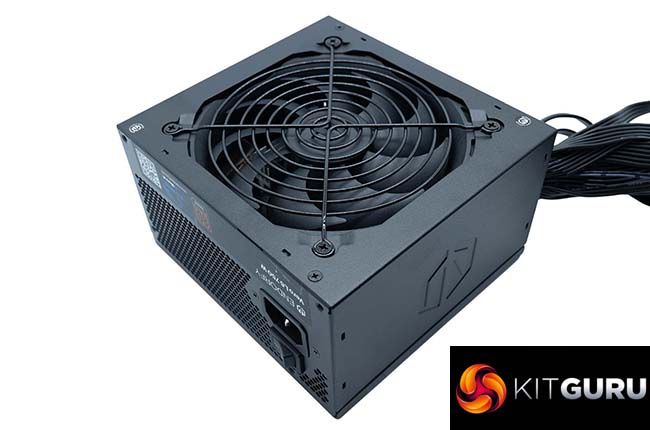
This power supply is not modular and it only has a 5 year warranty as well, but at the price we wouldn't expect more anyway. Availability right now seems limited, but Endorfy are currently working on distribution in Europe – we will assume they may update their homepage over HERE when that happens.
Product Features:
- ATX 3.1 / PCIe 5.1 Ready.
- Cybenetics Silver Certified @ 230V.
- 80 Plus Bronze Certified.
- High Quality Capacitors.
- Stratus Fan.
- 5 Year Warranty.
- OVP, UVP, OPP, OCP, SIP, SCP and OTP protections.

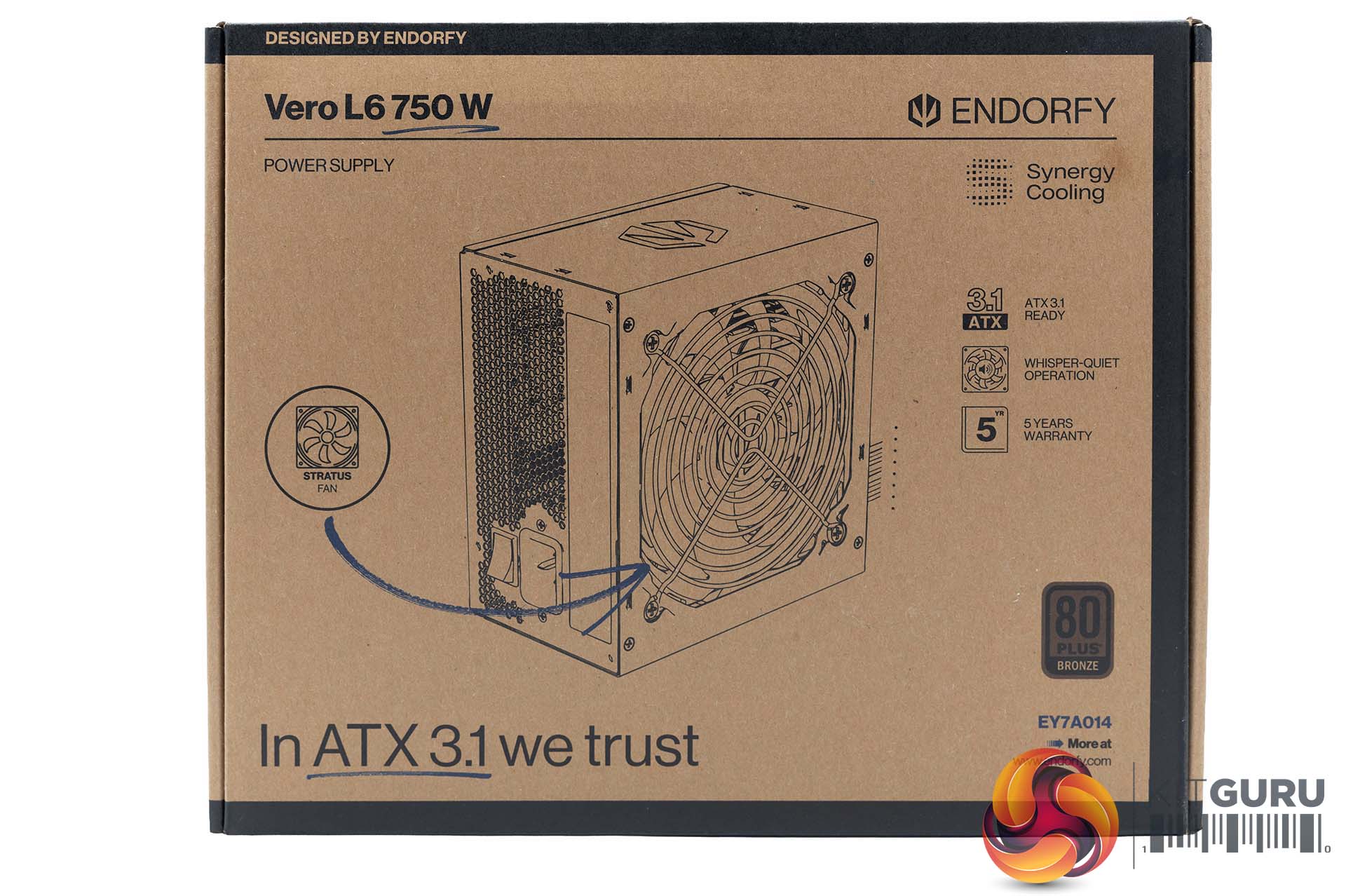
Endorfy are keeping the box artwork minimalistic, with line art style artwork of the unit on the front. There is an 80 Plus Bronze badge on the front, but no Cybenetics logos, which is strange.
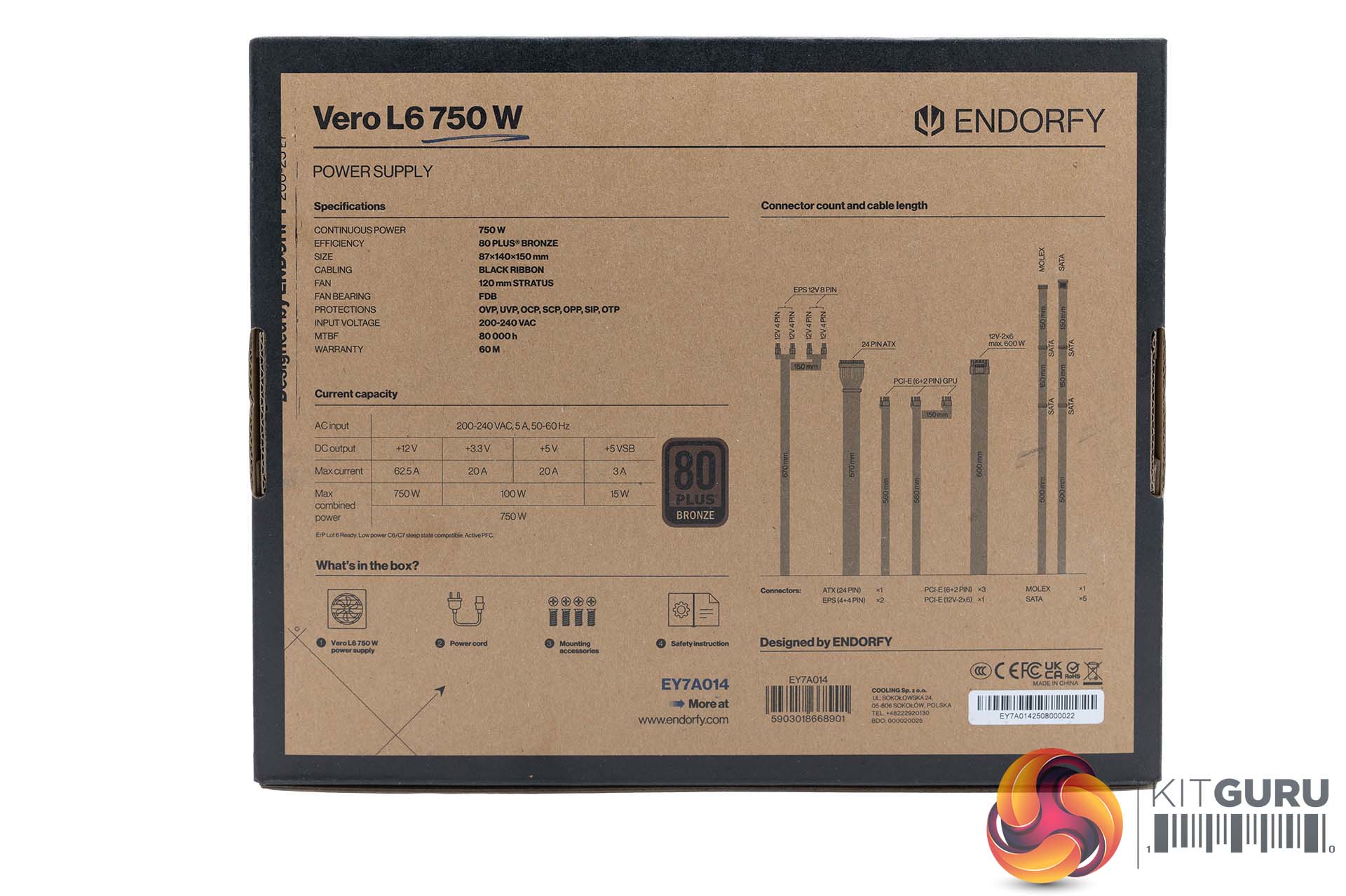
The rear of the box shows the main specifications and wattage capacity along with an overview of the cabling. A list of accessories is depicted along the bottom on the left.
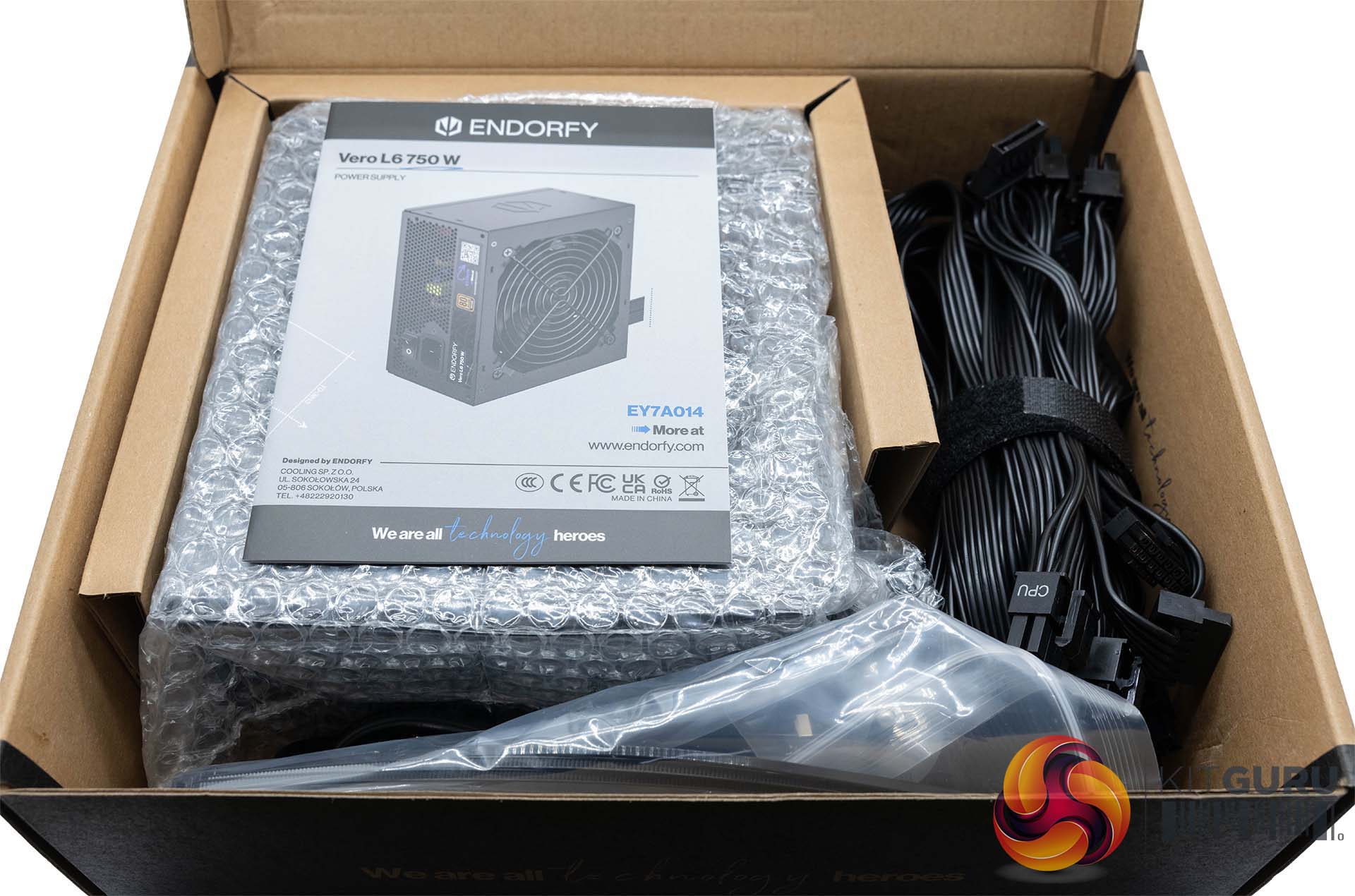
Inside the box is the PSU between two thin pieces of cardboard and a protective wrap. A user manual is placed above.
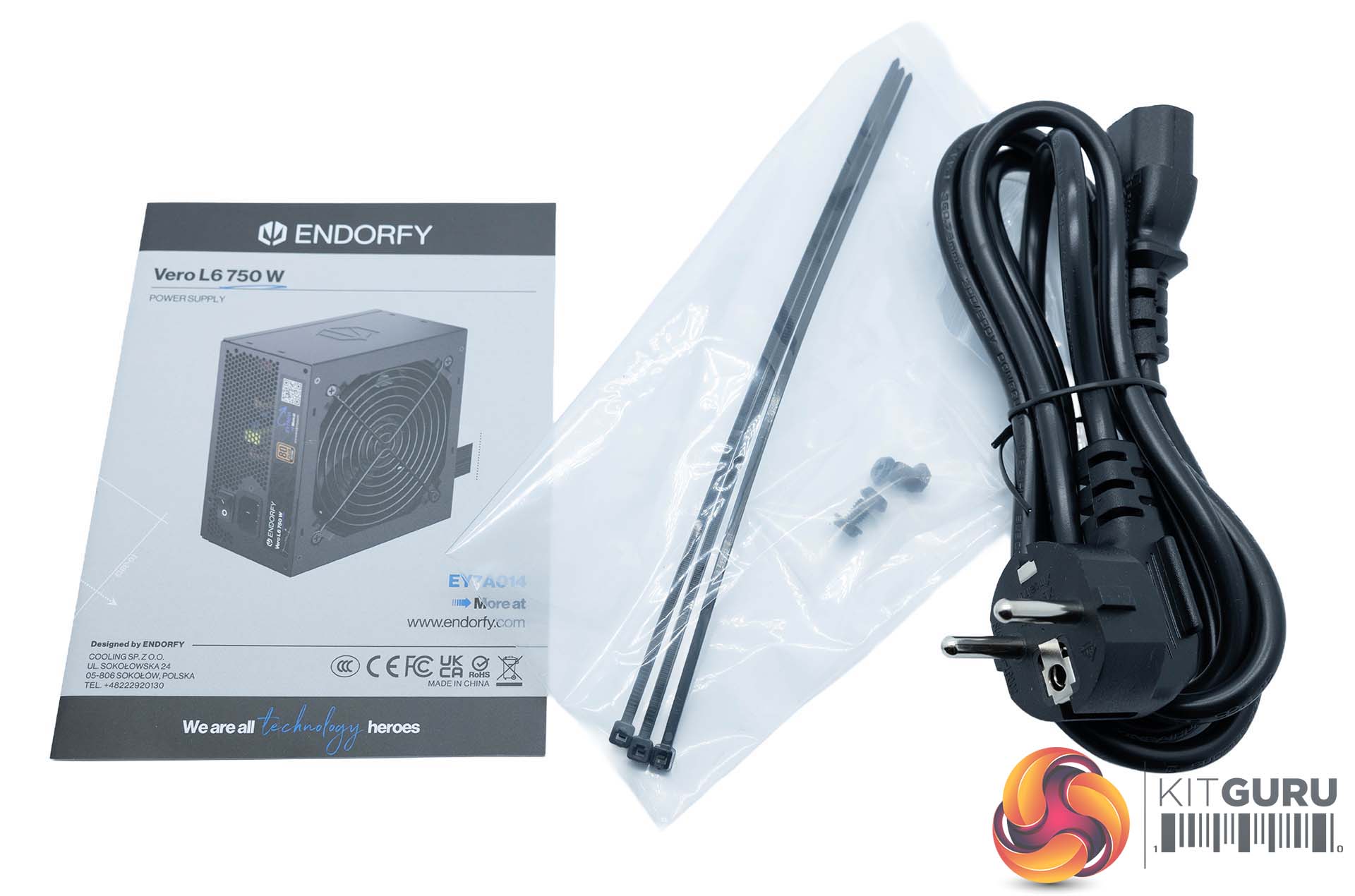
A user manual, cable ties, mounting screws and a power cable are included. Our sample came from Endorfy in Europe, hence the European power cable. We assume if you buy in the UK when stock becomes available they will supply a UK power cable.
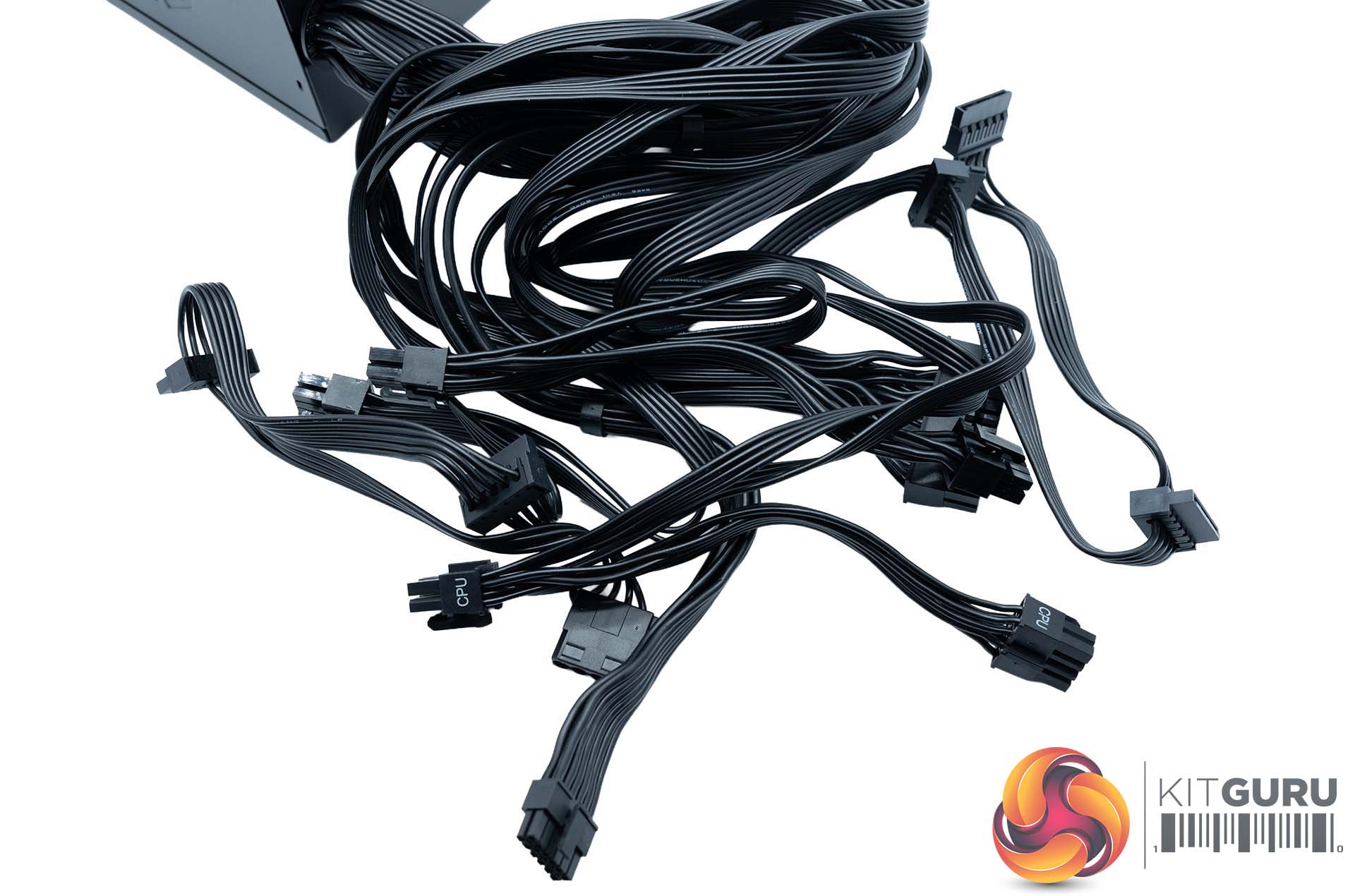
It's to get a clear photo of the cables when they are running hardwired from the unit itself.
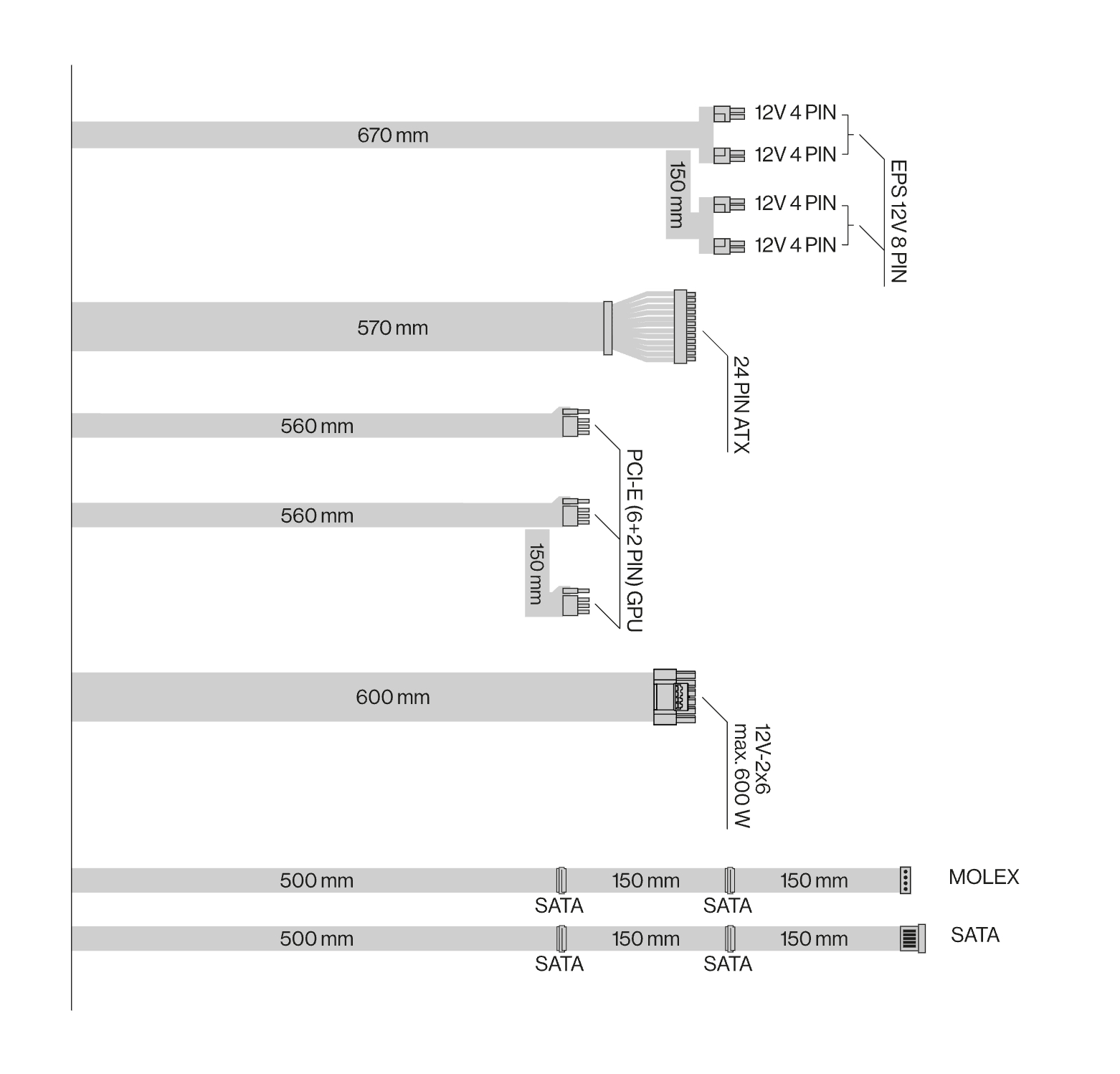
The cabling length and quality is fine considering the budget sector this unit is targeting, this PSU is designed for lower cost to low-mid priced systems.
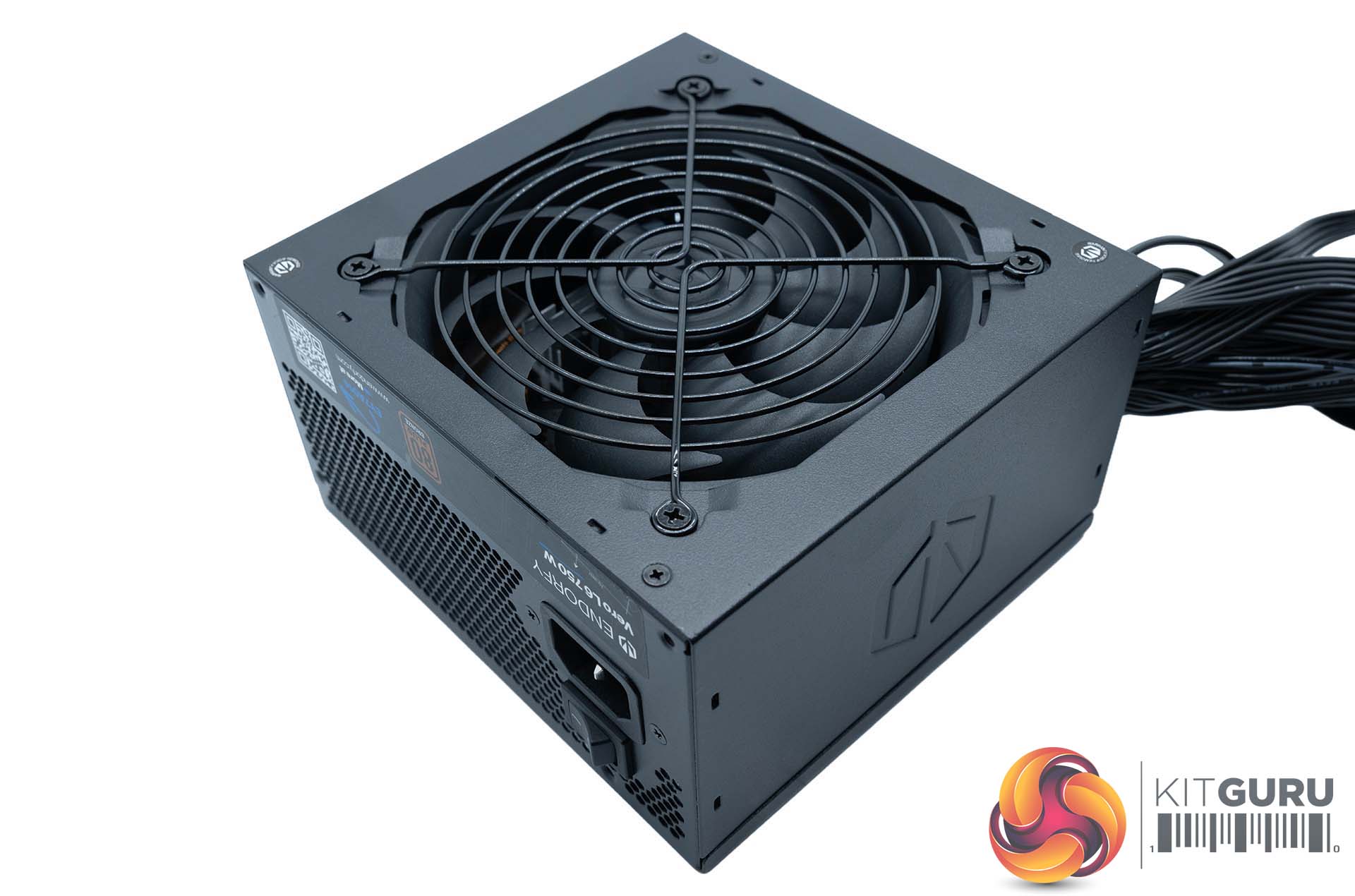
The Vero L6 is an unremarkable looking power supply, but it is compact, measuring 87 mm x 140 mm x 150 mm.
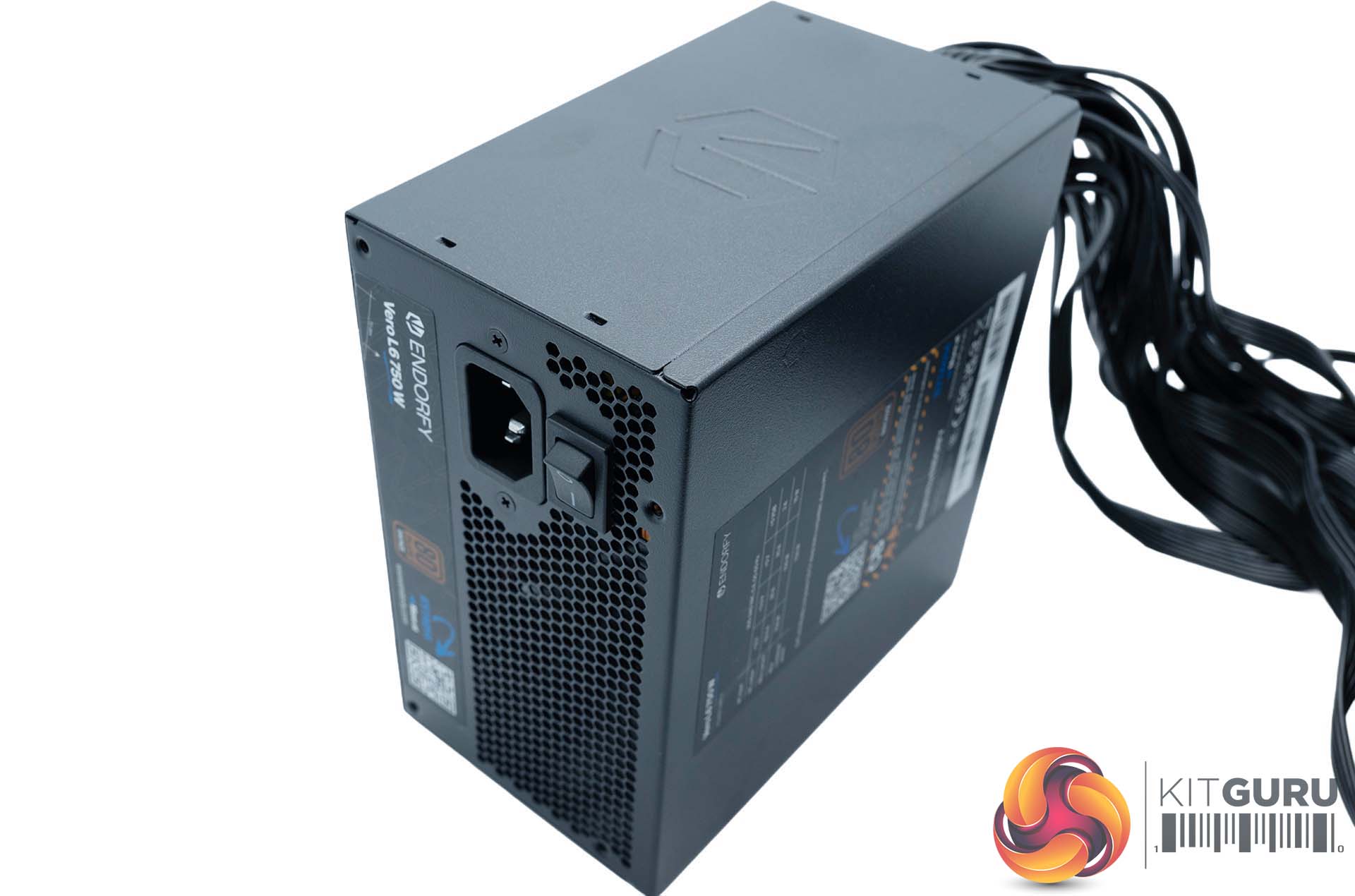
As previously mentioned, the cables are hardwired into the unit, a cost saving process.
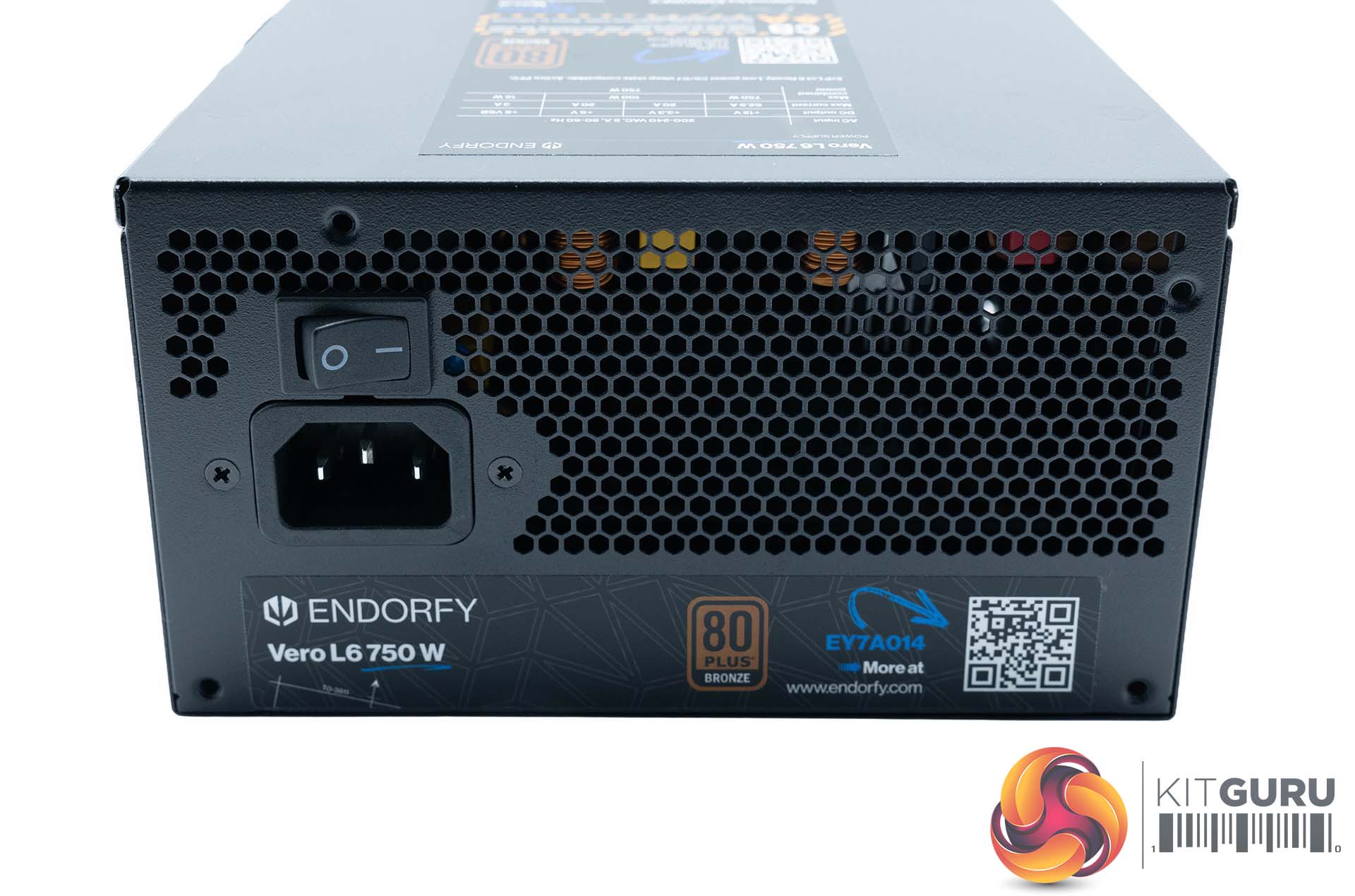
The power side of the unit is home to the power connector port and switch, and a vented panel to aid airflow.

The power supply can deliver 62.5A via the +12V rail. Both secondary +3.3V and +5V rails are rated at 20A for a total of 100W.

Cooling in this unit is down to a 120mm Endorfy Stratus Fan (Model 10-1111). This is a fluid dynamic bearing (FDB) fan rated 12V / 0.25A. It is codeveloped with Synergy cooling and used across the range of Endorfy units. In theory this should be a good fan as the specs are impressive, but we will find out shortly when we get the unit tested thoroughly.
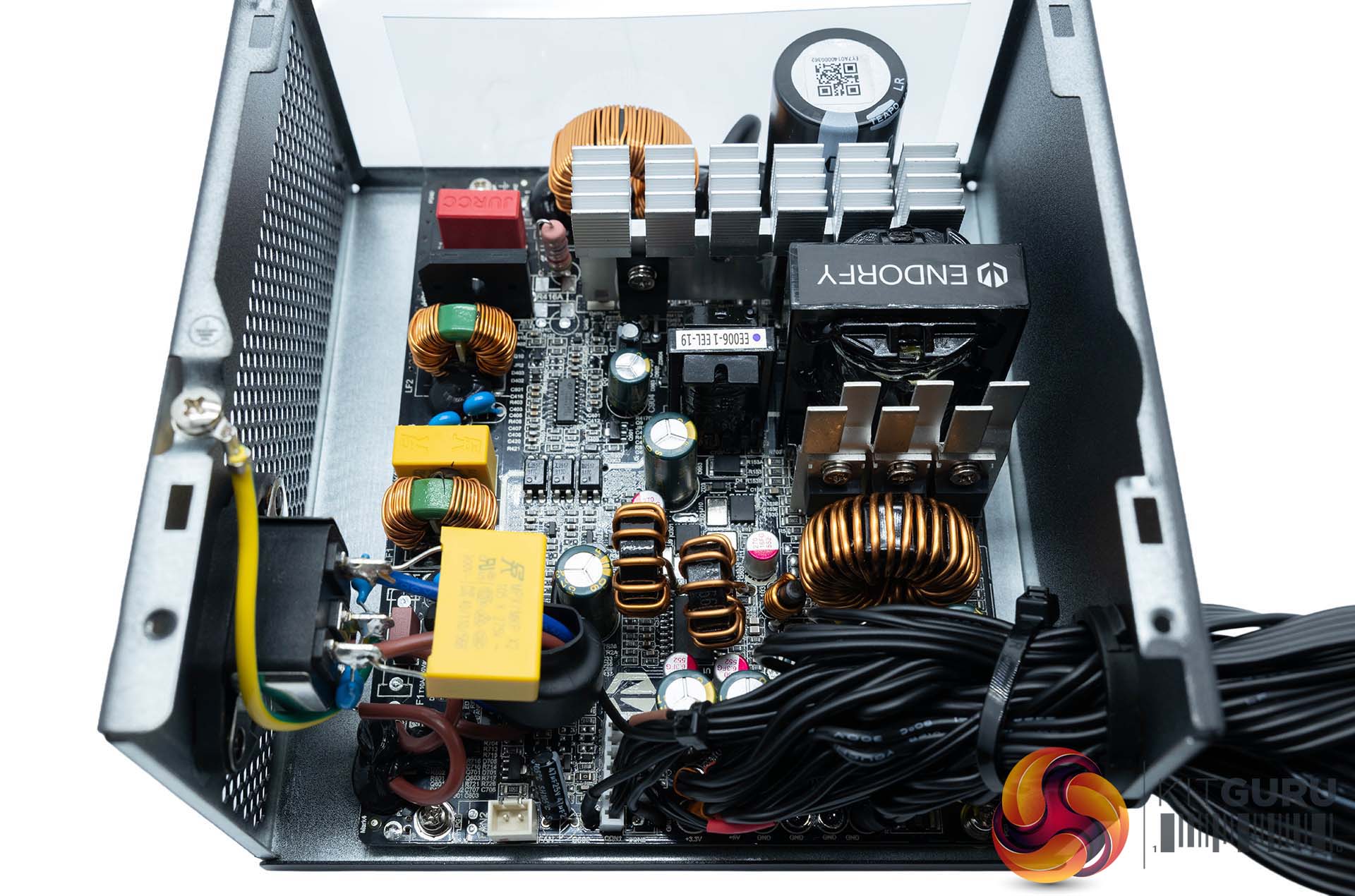
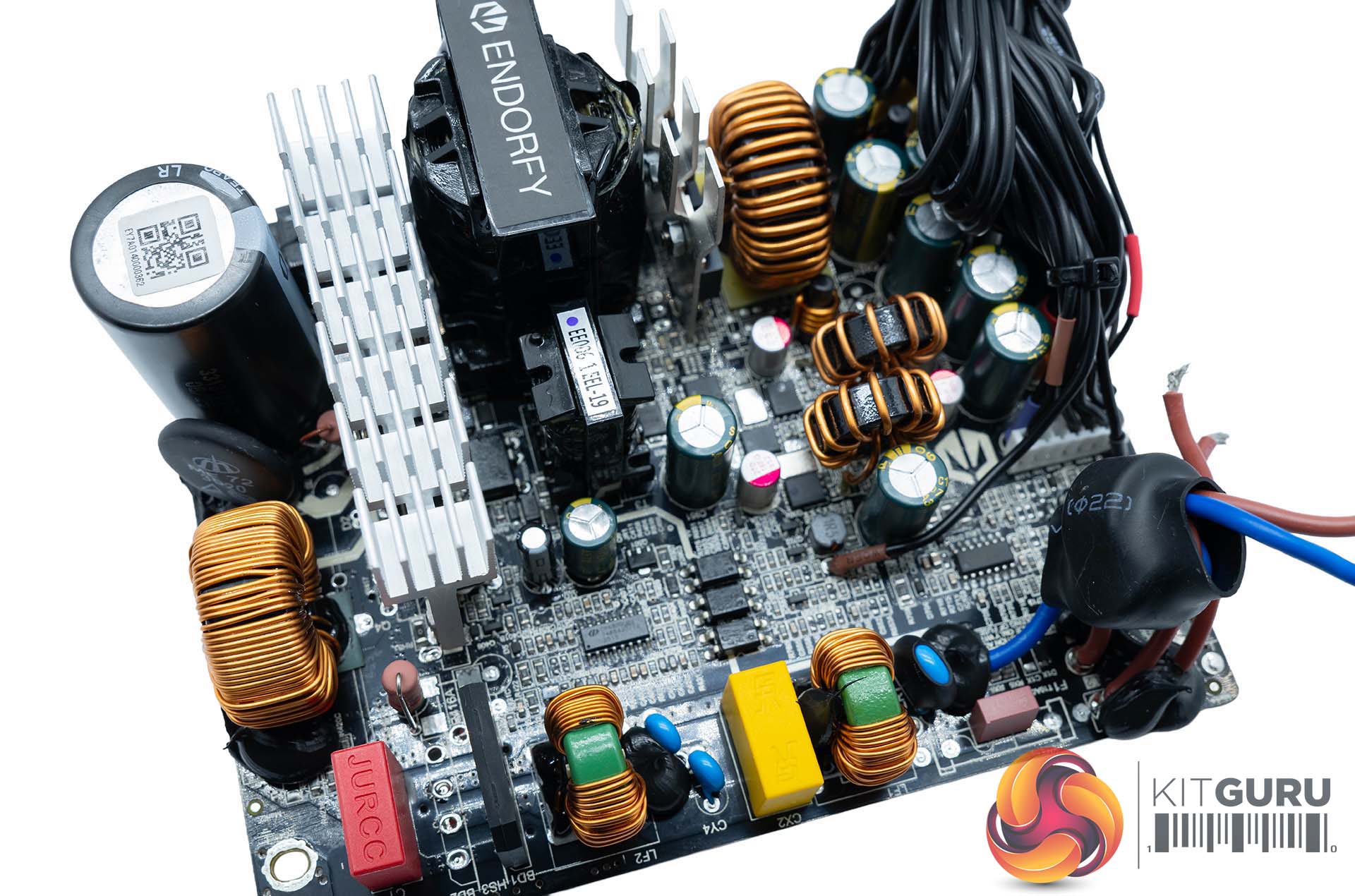
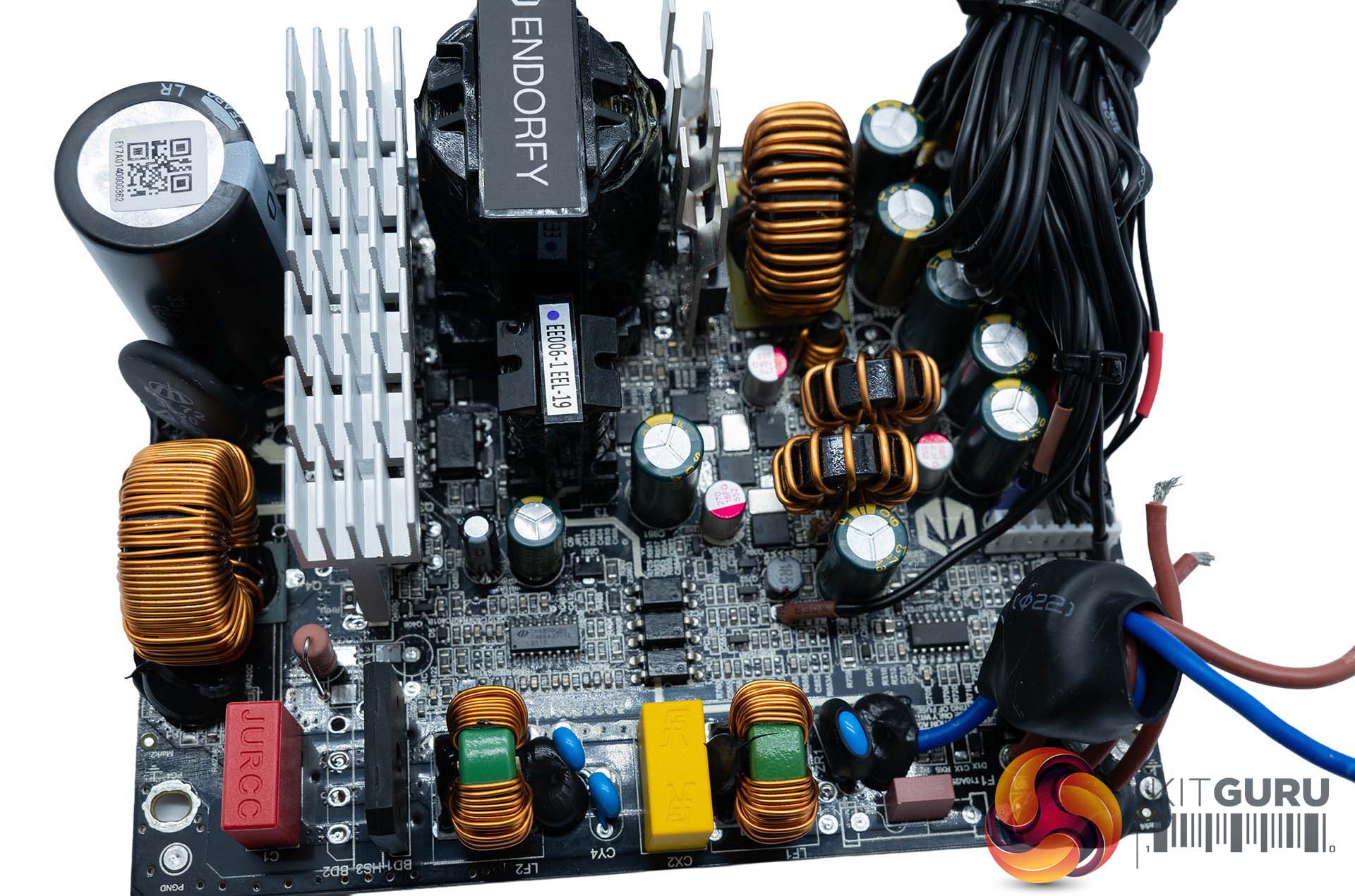

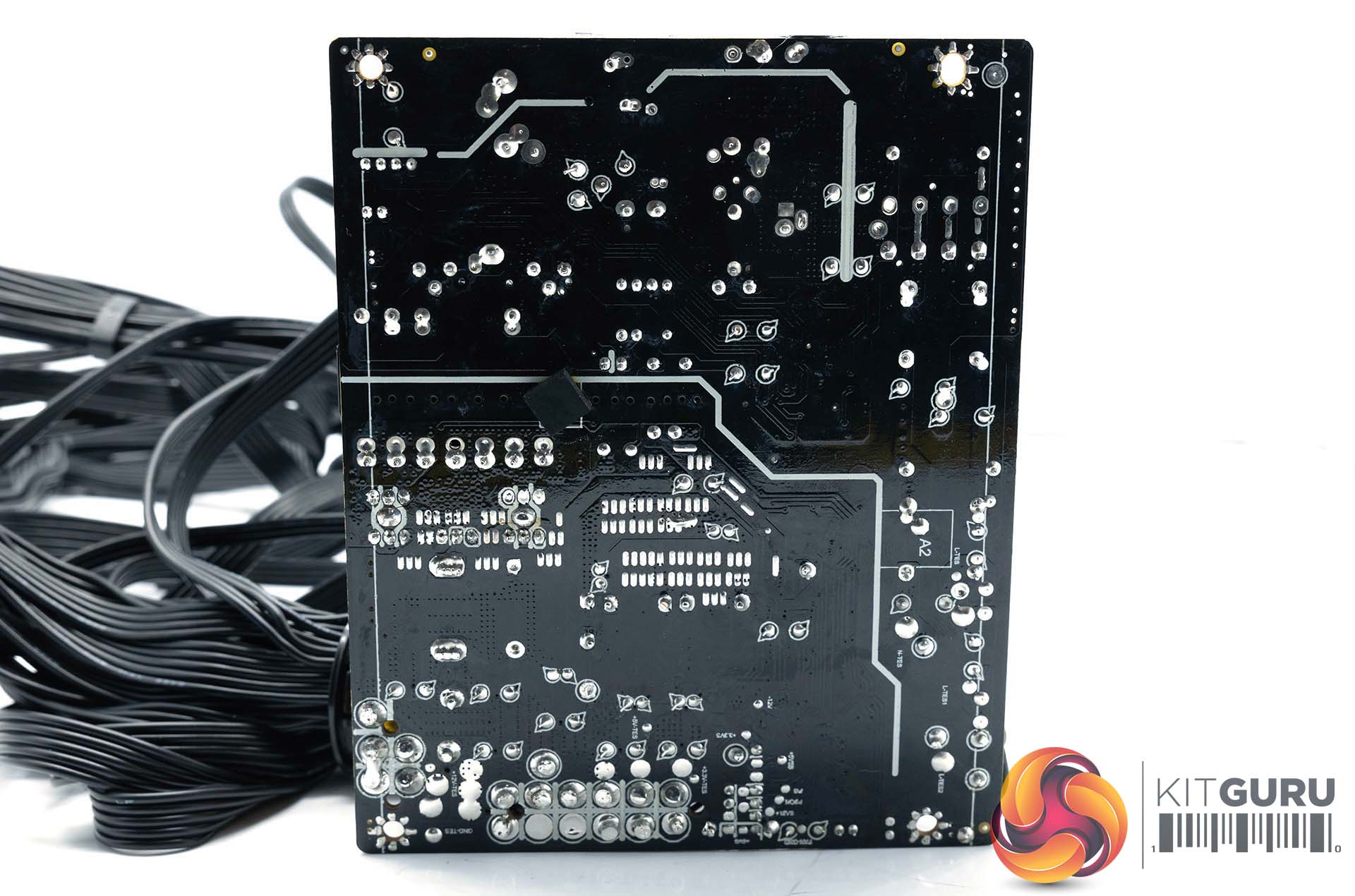
The OEM manufacturer of this power supply is Jiumeng. It is a double sided PCB and the topology is APFC double forward on the primary and the secondary is a synchronous rectification with minor rails generated from DC-DC converters. Juimeng are a name we don't often hear about, but from what I have been able to find out they have 19+ years industry experience and 400+ R&D engineers. They also have over 100 national and international patents. They do sell units under their own name, but mainly in Asia. We know they made a few units for Zalman in recent years, too.
The primary capacitor is from Teapo, a Taiwanese brand. It is rated 105C 400V 470uF. Most power supplies in this price bracket will have Chinese or Taiwanese capacitors, it is a way to save some costs. That said, the budget Sharkoon Rebel P15 750W that we reviewed recently at the same price did ship with a 105C-rated Japanese Nippon Chemi Con capacitor… but that is unusual.
Electrolytic filtering capacitors are from Teapo and it is good to see they are all 105C-rated for peace of mind. Soldering quality is ok.
The unit ships with OVP, UVP, OPP, OCP, SIP, SCP and OTP protections.
Correctly testing power supplies is a complex procedure and KitGuru have configured a test bench which can deliver up to a 2,500 Watt DC load. This has recently been upgraded to accommodate a higher power output.
Due to public requests we have changed our temperature settings recently – previously we rated with ambient temperatures at 25C, we have increased ambient temperatures by 10c (to 35c) in our environment to greater reflect warmer internal chassis conditions. We test at 230V.
We use combinations of the following hardware:
• SunMoon SM-268
• CSI3710A Programmable DC load (+3.3V and +5V outputs)
• CSI3711A Programmable DC load (+12V1, +12V2, +12V3, and +12V4)
• Extech Power Analyzer
• Extech MultiMaster MM570 digital multimeter
• Extech digital sound level meter
• Digital oscilloscope (20M S/s with 12 Bit ADC)
• Variable Autotransformer, 1.4 KVA
|
DC Output Load Regulation
|
||||||||||
|
Combined DC Load |
+3.3V
|
+5V
|
+12V
|
+5VSB
|
-12V | |||||
|
A
|
V
|
A
|
V
|
A
|
V
|
A
|
V
|
A | V | |
|
75W
|
0.95
|
3.30
|
0.93
|
5.01
|
5.13
|
12.10
|
0.50
|
5.07
|
0.20
|
-12.05
|
|
150W
|
1.65 |
3.30
|
1.66
|
5.01
|
10.61
|
12.08
|
1.00
|
5.07
|
0.20
|
-12.05
|
|
375W
|
3.00
|
3.30
|
3.02
|
5.01
|
28.11
|
12.07
|
1.50
|
5.06
|
0.30
|
-12.04
|
| 565W |
4.05
|
3.30
|
4.07
|
5.00
|
42.94
|
12.05
|
2.00
|
5.05 |
0.30
|
-12.02
|
|
750W
|
4.90
|
3.30
|
5.24
|
5.00
|
57.48
|
12.02
|
2.50
|
5.03
|
0.50
|
-12.04
|
Load regulation is not bad across all rails. Not the best results we have seen, but nothing ugly reared its head during the testing.
Next we want to try Cross Loading. This basically means loads which are not balanced. If a PC for instance needs 500W on the +12V outputs but something like 30W via the combined 3.3V and +5V outputs then the voltage regulation can fluctuate badly.
| Cross Load Testing | +3.3V | +5V | +12V | -12V | +5VSB | |||||
| A | V | A | V | A | V | A | V | A | V | |
| 734W | 1.0 | 3.30 | 1.0 | 5.01 | 60.0 | 12.02 | 0.2 | -12.02 | 0.50 | 5.06 |
| 154W | 15.0 | 3.27 | 15.0 | 4.97 | 2.0 | 12.11 | 0.2 | -12.01 | 0.50 | 5.06 |
The unit passes the cross load tests – not the greatest results, but it performed within spec. When hit with 60A the +12V rail held at 12.14.
We then used an oscilloscope to measure AC ripple and noise present on the DC outputs. We set the oscilloscope time base to check for AC ripple at both high and low ends of the spectrum.
ATX12V V2.2 specification for DC output ripple and noise is defined in the ATX 12V power supply design guide.
|
ATX12V Ver 2.2 Noise/Ripple Tolerance
|
|
|
Output
|
Ripple (mV p-p)
|
|
+3.3V
|
50
|
|
+5V
|
50
|
|
+12V1
|
120
|
|
+12V2
|
120
|
|
-12V
|
120
|
|
+5VSB
|
50
|
Obviously when measuring AC noise and ripple on the DC outputs the cleaner (less recorded) means we have a better end result. We measured this AC signal amplitude to see how closely the unit complied with the ATX standard.
| AC Ripple (mV p-p) | ||||
| DC Load | +3.3V | +5V | +12V | 5VSB |
| 75W | 8 | 16 | 15 | 7 |
| 150W | 11 | 18 | 18 | 12 |
| 375W | 13 | 20 | 22 | 15 |
| 565W | 15 | 22 | 27 | 17 |
| 750W | 18 | 24 | 35 | 19 |
Ripple suppression is pretty good, falling well within industry rated tolerances, peaking at 18mV and 24mV respectively on the +3.3V and +5V lines and 35mV on the +12V line.
|
Efficiency (%) 230V
|
|
|
75W
|
83.8
|
|
150W
|
88.2
|
|
375W
|
89.5
|
|
565W
|
88.6
|
|
750W
|
86.5
|
As this is basically an 80 Plus Bronze rated unit, efficiency levels are fine – peaking at 89.5% efficiency and dropping to 86.5% efficiency at full load.
We take the issue of noise very seriously at KitGuru and this is why we have built a special home brew system as a reference point when we test noise levels of various components. Why do this? Well this means we can eliminate secondary noise pollution in the test room and concentrate on components we are testing. It also brings us slightly closer to industry standards, such as DIN 45635.
Today to test the power supply we have taken it into our acoustics room environment and have set our Digital Sound Level Noise Decibel Meter Style 2 one meter away from the unit. We have no other fans running so we can effectively measure just the noise from the unit itself.
As this can be a little confusing for people, here are various dBa ratings in with real world situations to help describe the various levels.
KitGuru noise guide
10dBA – Normal Breathing/Rustling Leaves
20-25dBA – Whisper
30dBA – High Quality Computer fan
40dBA – A Bubbling Brook, or a Refrigerator
50dBA – Normal Conversation
60dBA – Laughter
70dBA – Vacuum Cleaner or Hairdryer
80dBA – City Traffic or a Garbage Disposal
90dBA – Motorcycle or Lawnmower
100dBA – MP3 Player at maximum output
110dBA – Orchestra
120dBA – Front row rock concert/Jet Engine
130dBA – Threshold of Pain
140dBA – Military Jet takeoff/Gunshot (close range)
160dBA – Instant Perforation of eardrum
|
Noise (dBA)
|
|
|
75W
|
<28.0
|
|
150W
|
<28.0
|
|
375W
|
33.4
|
|
565W
|
37.4
|
| 750W | 41.3 |
At lower load demands, the fan spins very slowly and is not audible to our meter (over ambient noise) or the human ear. When load reaches around 500W the fan starts to spin up rapidly to help deal with rising heat levels. At full load the fan was spinning at around 1,800 rpm.
|
Temperature (c)
|
||
|
Intake
|
Exhaust
|
|
|
75W
|
36
|
41
|
|
150W
|
38
|
45
|
|
375W
|
39
|
53
|
|
565W
|
45
|
59
|
|
750W
|
47
|
64
|
Temperatures are well maintained through the range.
In recent months we have been receiving a lot of emails about reviewing more budget-oriented products, likely due to the current climate. The Endorfy Vero L6 750W is the third budget power supply we have reviewed in recent months and in all honesty, it is not bad at all.
Initial impressions indicate that this is a more affordable unit, given the box artwork is simple line art style without any flashy packaging. This all makes sense considering the 70 euro price point, Endorfy want this to be as competitively priced as possible. It is also reasonably compact (87 x 140 x 150mm) so will fit into a variety of smaller chassis designs, targeting a wide audience.
Technically the Vero L6 is a solid performer for the money. Load regulation is not bad at all, and it passed the cross load test without a problem. Ripple suppression was another plus point, peaking at 18mV and 24mV respectively on the +3.3V and +5V lines, and 35mV on the +12V line, well within industry specifications.

The Stratus 120mm fluid dynamic bearing fan also performed very well and it was only when it sped up to a maximum rotational speed of 1,800 rpm it became clearly audible. Most people buying this power supply will likely have around 400 watt system load, so it remains perfectly quiet at this demand. It is only at around 500 watts load does the fan make its presence known.
The use of Taiwanese capacitors is never something I really like to see, but I get it – at this price point some compromises have to be made. Endorfy are offering a 5 year warranty with this unit so it gives some peace of mind for a prospective customer.
To be totally honest, however, the recent release of the Sharkoon Rebel P15 750W which we reviewed two weeks ago sours this review a little. Sharkoon achieved a higher grade Cybenetics Gold certification with their Andyson OEM design and they managed to use superior Nippon Chemi Con 105C Japanese capacitors in the unit as well.
This only leaves the price now to discuss, and while 69.90 euros is a very competitive price point, the Sharkoon Rebel P15 750W is 5 euros less, and it also has an extra 2 years of warranty, up to 7 years. This makes the Endorfy Vero L6 750W a tough sell. If they dropped the price to 60 euros, then it would undercut the Sharkoon Rebel P15 750W and justify the use of inferior Teapo capacitors, 2 years less warranty and lower rated Silver/Bronze Certifications.
Pros:
- Competitively priced.
- Good ripple suppression.
- Well made.
- Cybenetics Silver certification.
Cons:
- Not modular.
- Not Japanese capacitors.
- Limited availability.
- Gets loud at full load.
KitGuru says: For around 70 euros the Endorfy Vero L6 is a capable power supply for the budget sector. Technically it performs very well, though Sharkoon's Rebel P15 is well worth looking at, too.