KitGuru KitGuru.net – Tech News | Hardware News | Hardware Reviews | IOS | Mobile | Gaming | Graphics Cards


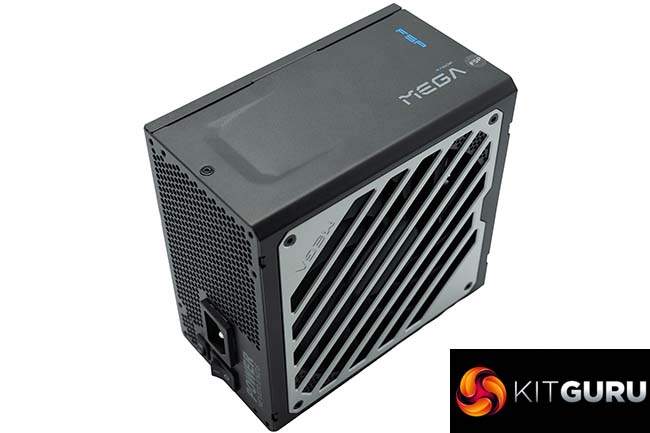
Today we take a look at a new power supply from OEM manufacturer FSP. The company's new Mega GM range comprises three units, with 850W, 1000W and 1200W variants, the latter of which we are looking at today. This unit is fully modular, 80 Plus Gold and Cybenetics Gold-rated and has a 10-year warranty.
Whenever we review an FSP power supply we usually get emails or posts on socials asking about availability and, as always, we have little information about that as we write this content. I have been told that pricing for the 1200W unit we review today should be around the $229 price point, and while FSP don't often give me UK cost details, we estimate around the £200 price point.
Product Overview:
- Efficiency ≧ 90% at typical load
- 80 PLUS® / Cybenetics ® Gold certified
- Supports native PCIe 12V-2×6 connector and cable
- 105°C Japanese bulk capacitor
- 135mm Fluid dynamic bearing (FDB) fan
- Eco semi-fanless fan control switch
- Off-Wet, Off-Dust and Off-Stain conformal coating
- Top-notch LLC topology and synchronous rectifier & DC-DC converters
- Fully modular with embossed cabling design
- Complete protections: OCP, OVP, SCP, OPP, UVP, OTP, SIP, NLO
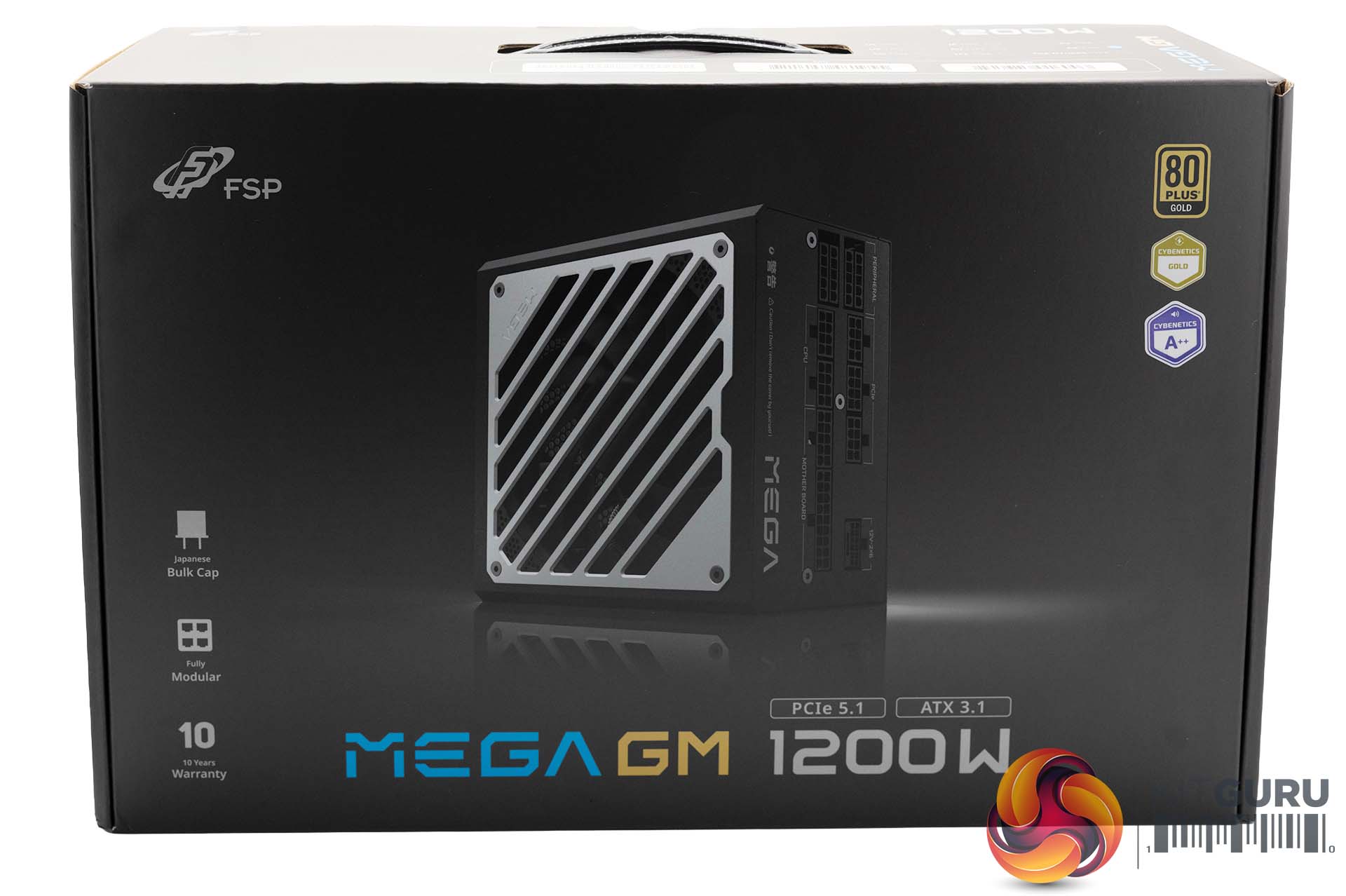
The Mega GM 1200W ships in a nicely designed box, with key specifications (PCIe 5.1/ATX 3.1) and certifications on the front, alongside a high-resolution image of the unit in the middle. Always good to see Cybenetics awards getting featured as they mean more in 2026 than 80 Plus.
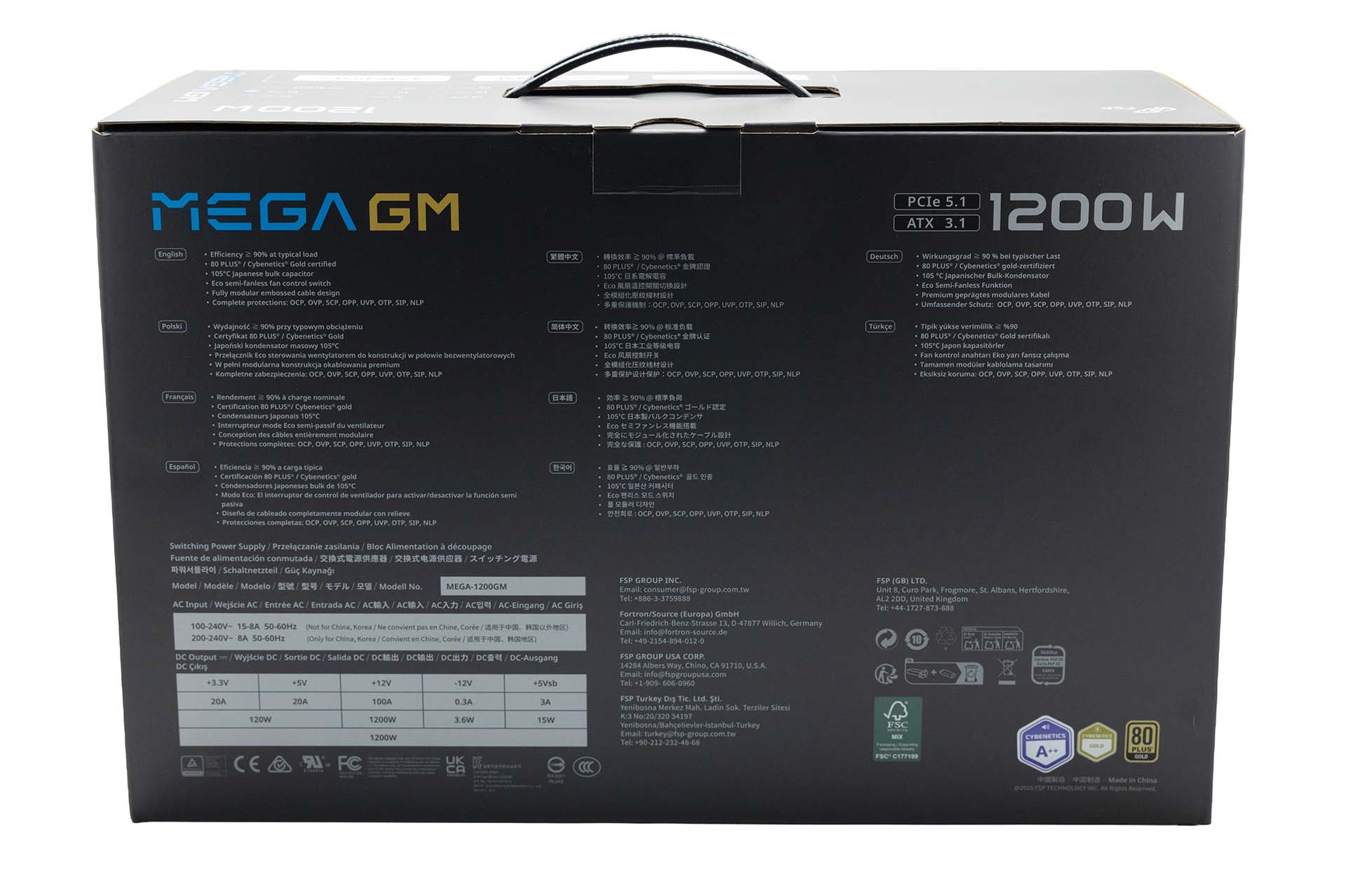
The rear of the box has multiple language key points listed across the top half, with some spec tables and award logos along the bottom.
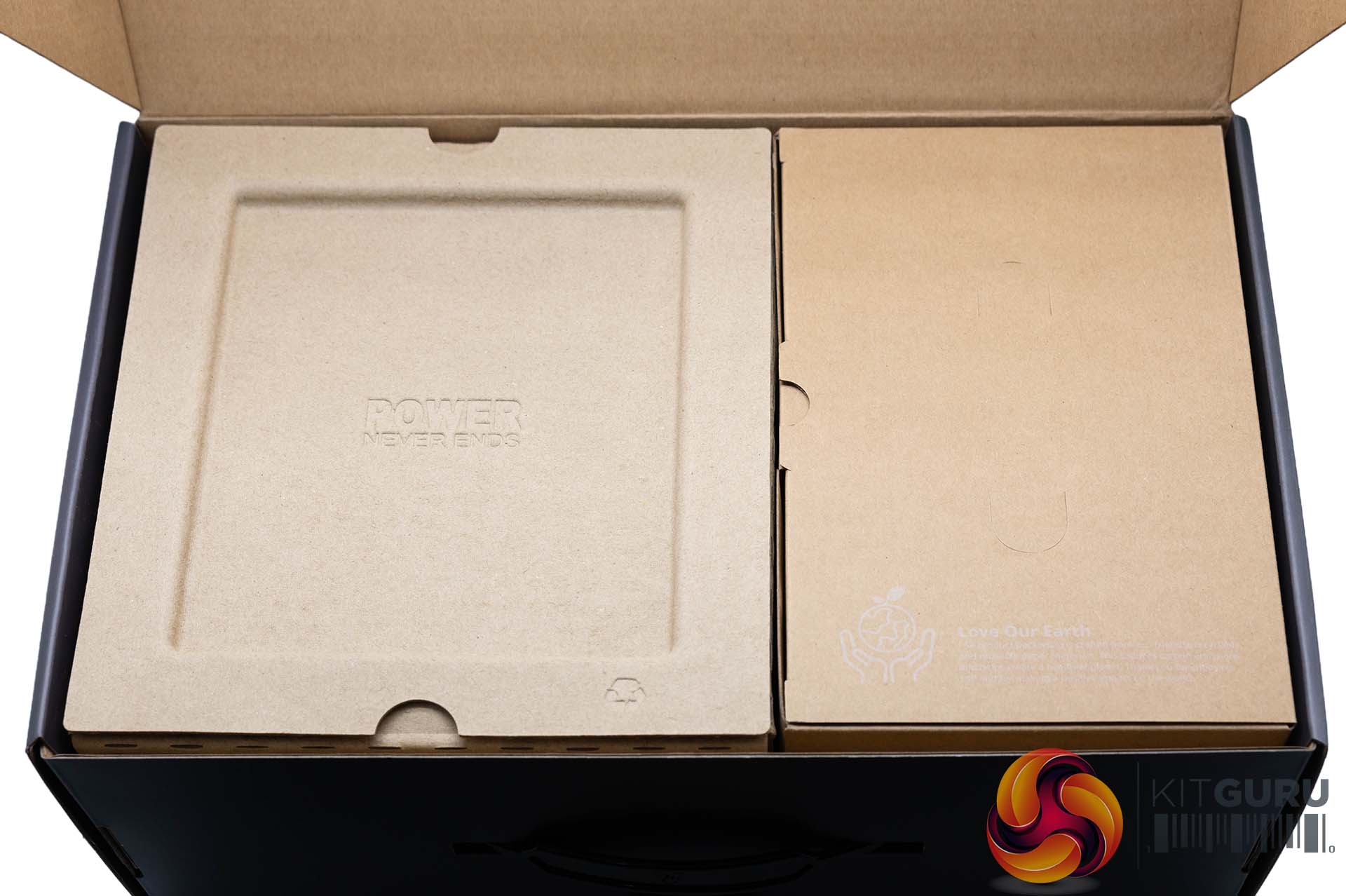
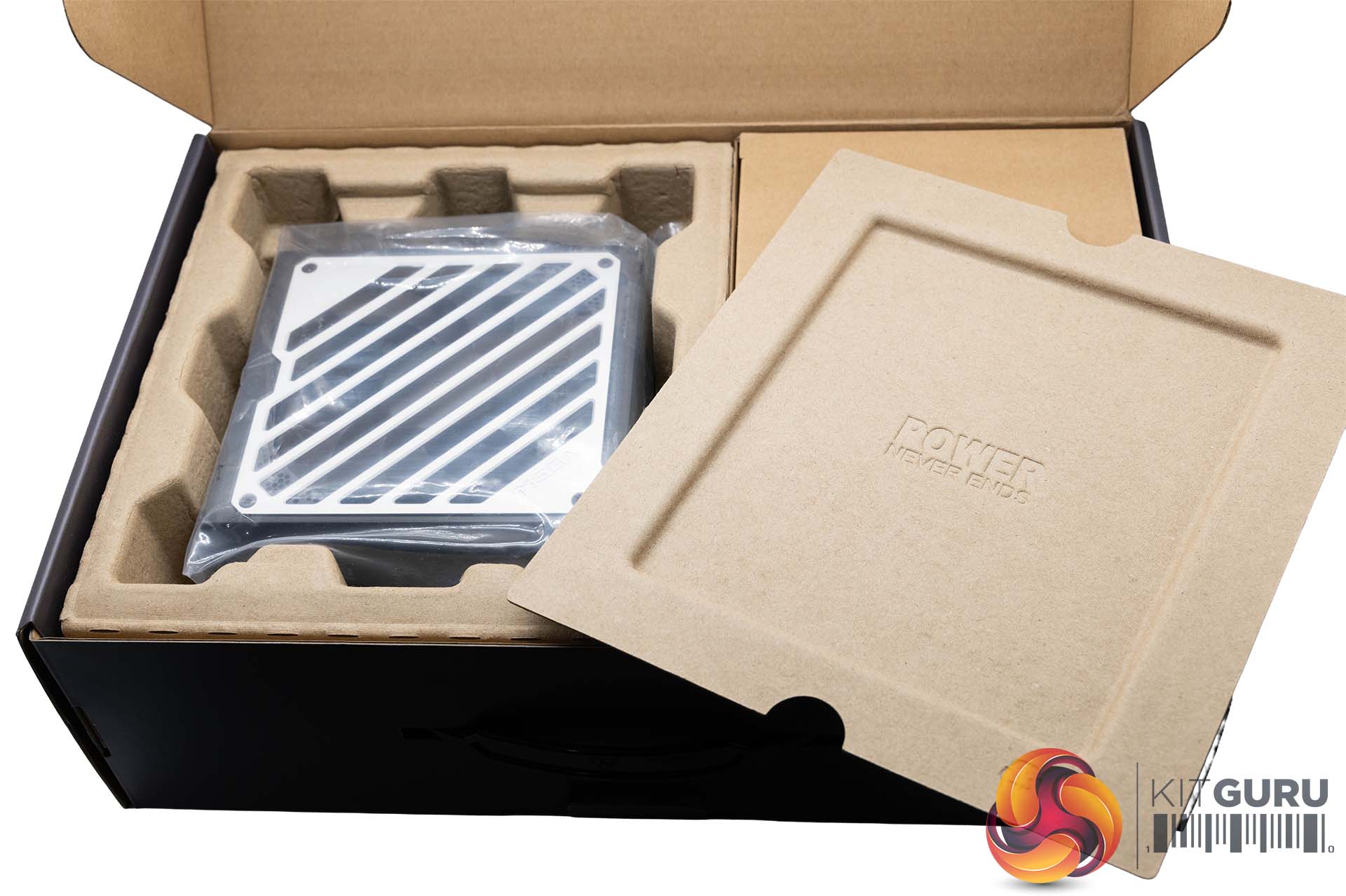
The PSU is very well protected inside a cardboard housing. The accessories are in a separate box on the right.
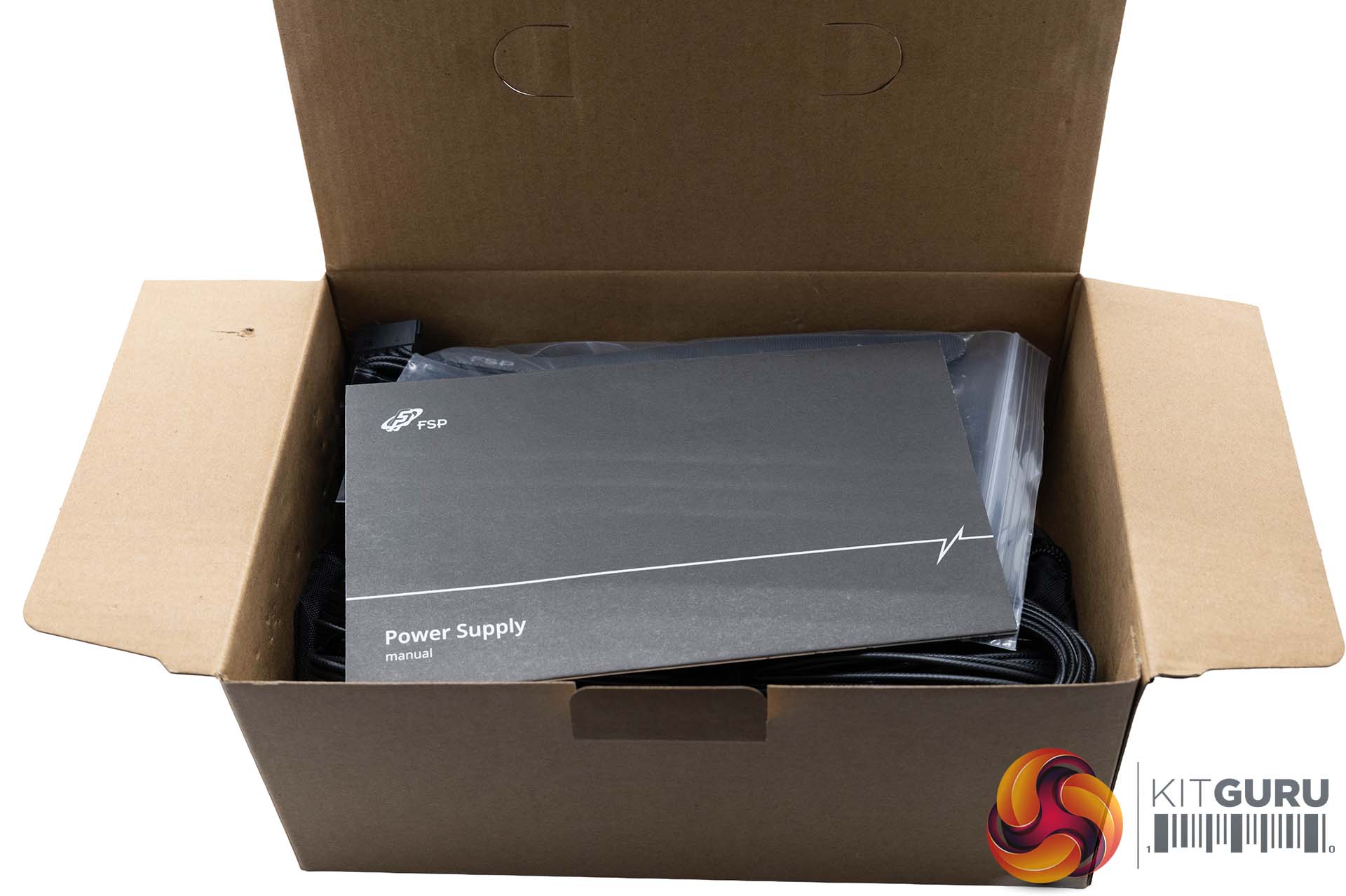
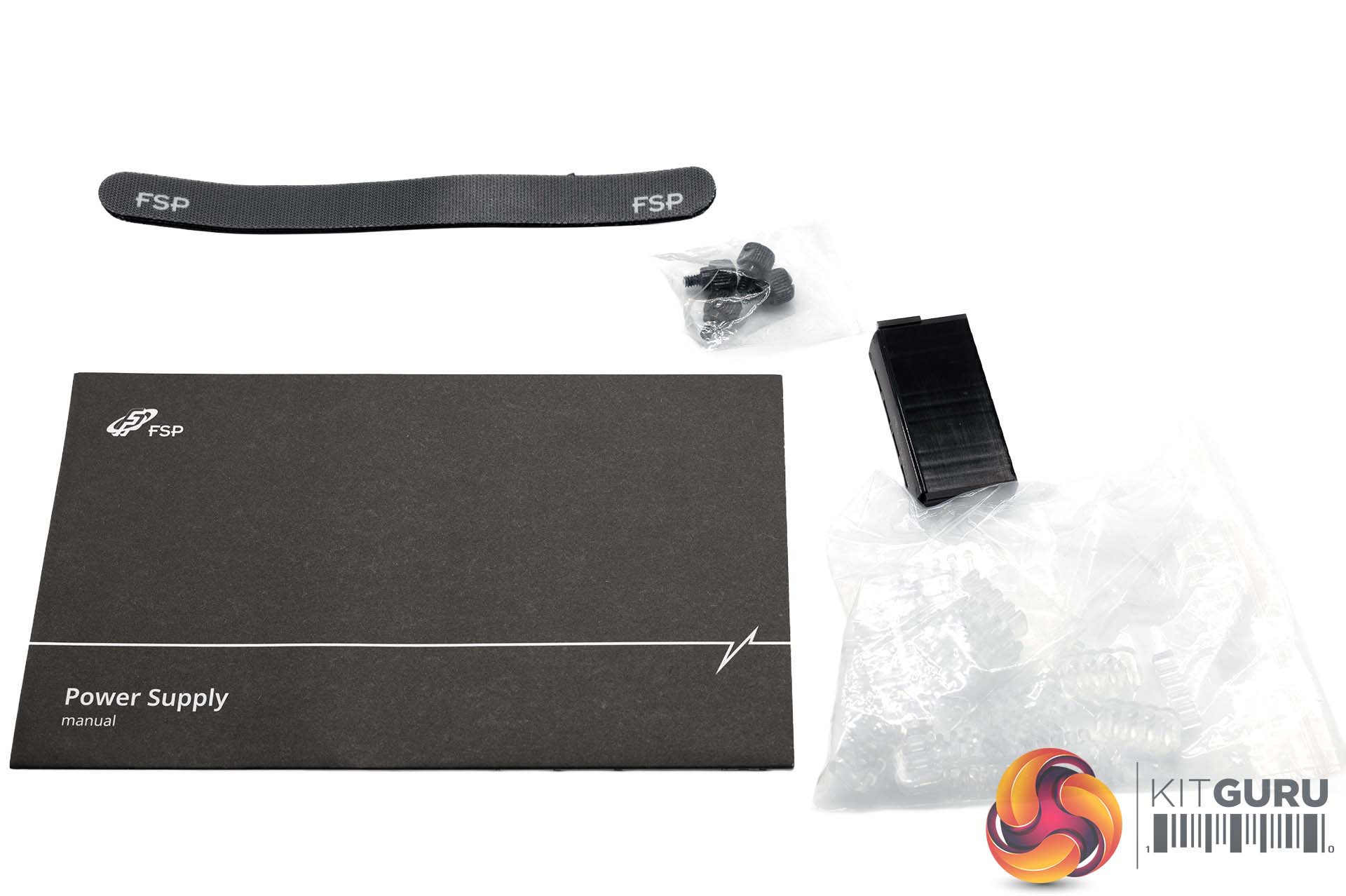
The accessories box contains literature on the power supply, alongside cable combs, a tester, ties, and mounting screws.
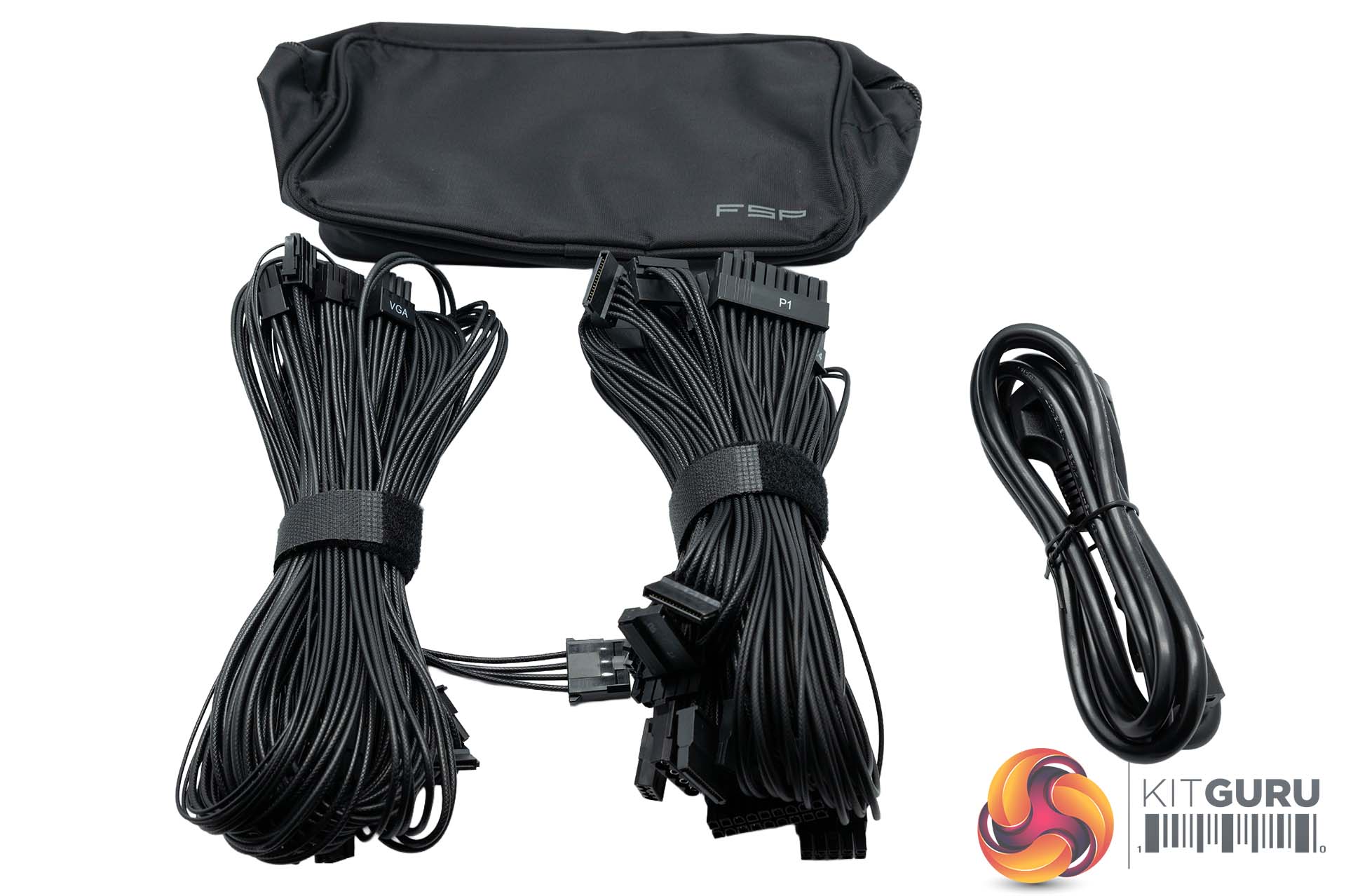
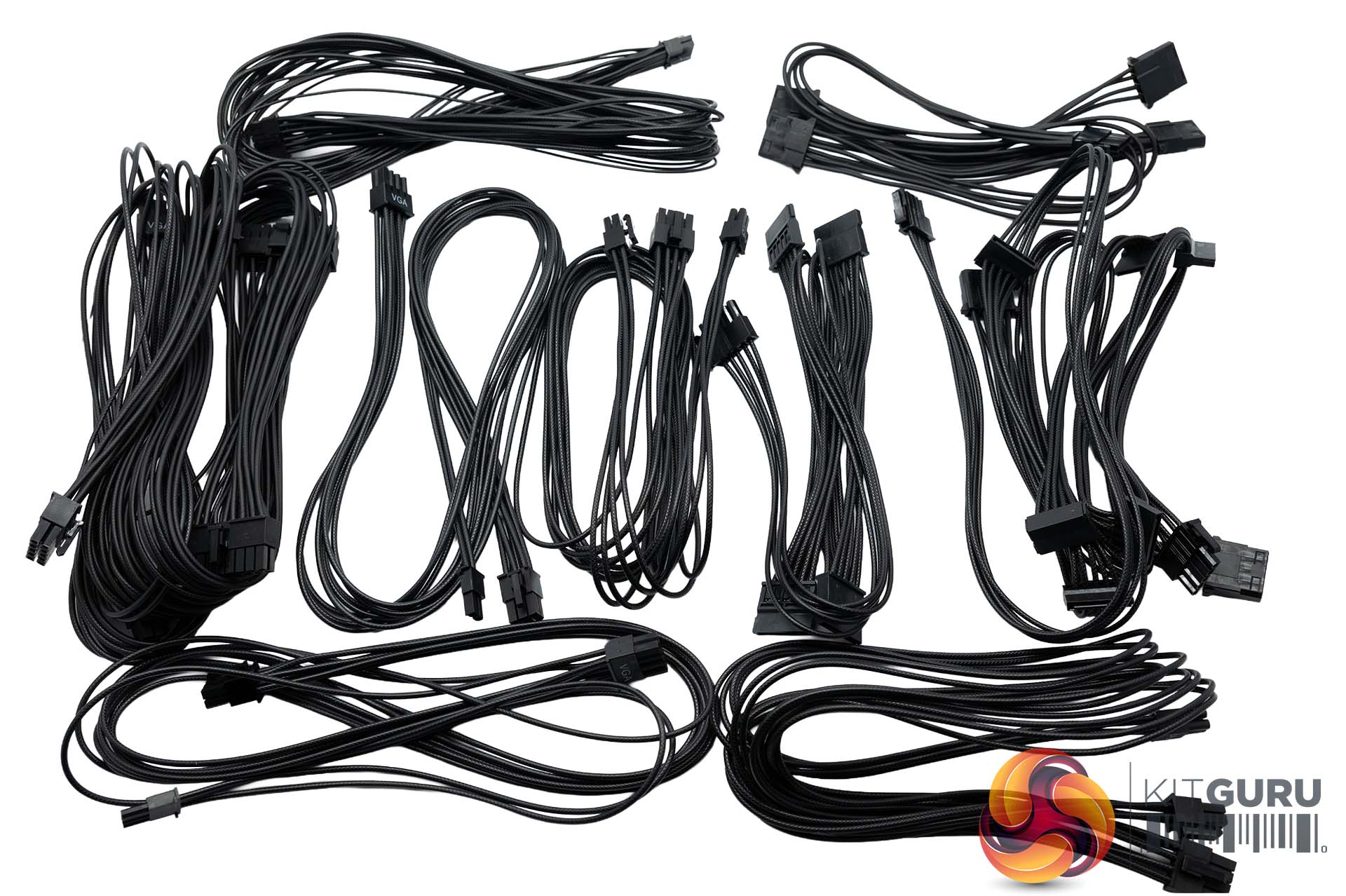
The cables are shipped wrapped into two bundles, with a power cable alongside. They also supply a storage pouch for the cables you don't need.
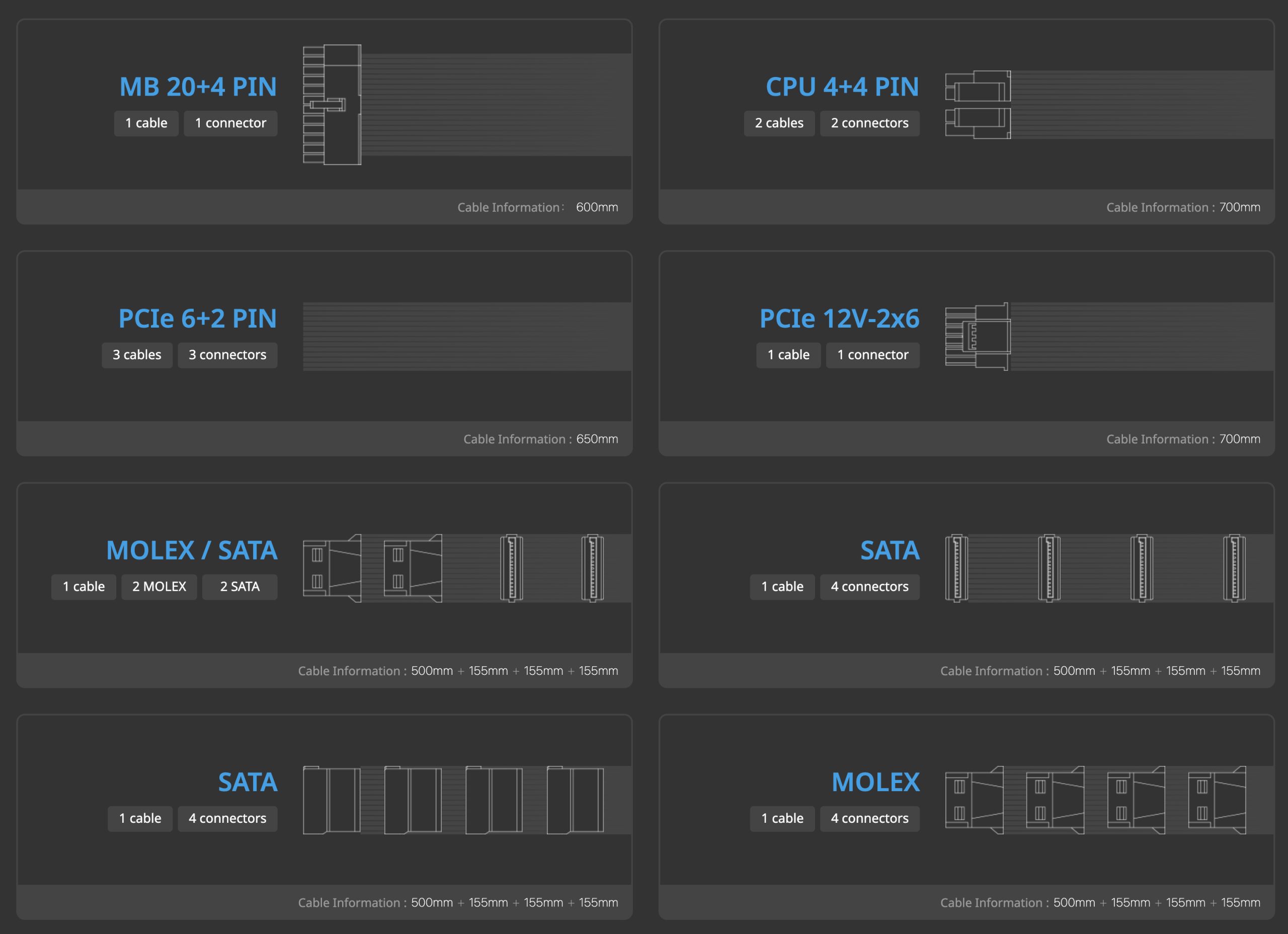
The cables are all individually sleeved, high quality and there are plenty to cover all the bases you would expect with a 1200W unit. SATA cables are 18 AWG gauge, and the 4+4 Pin and 6+2 PIN PCIe cables are 16 AWG gauge. The 12+4 Pin PCIe 600 watt cable is 16-24 AWG.
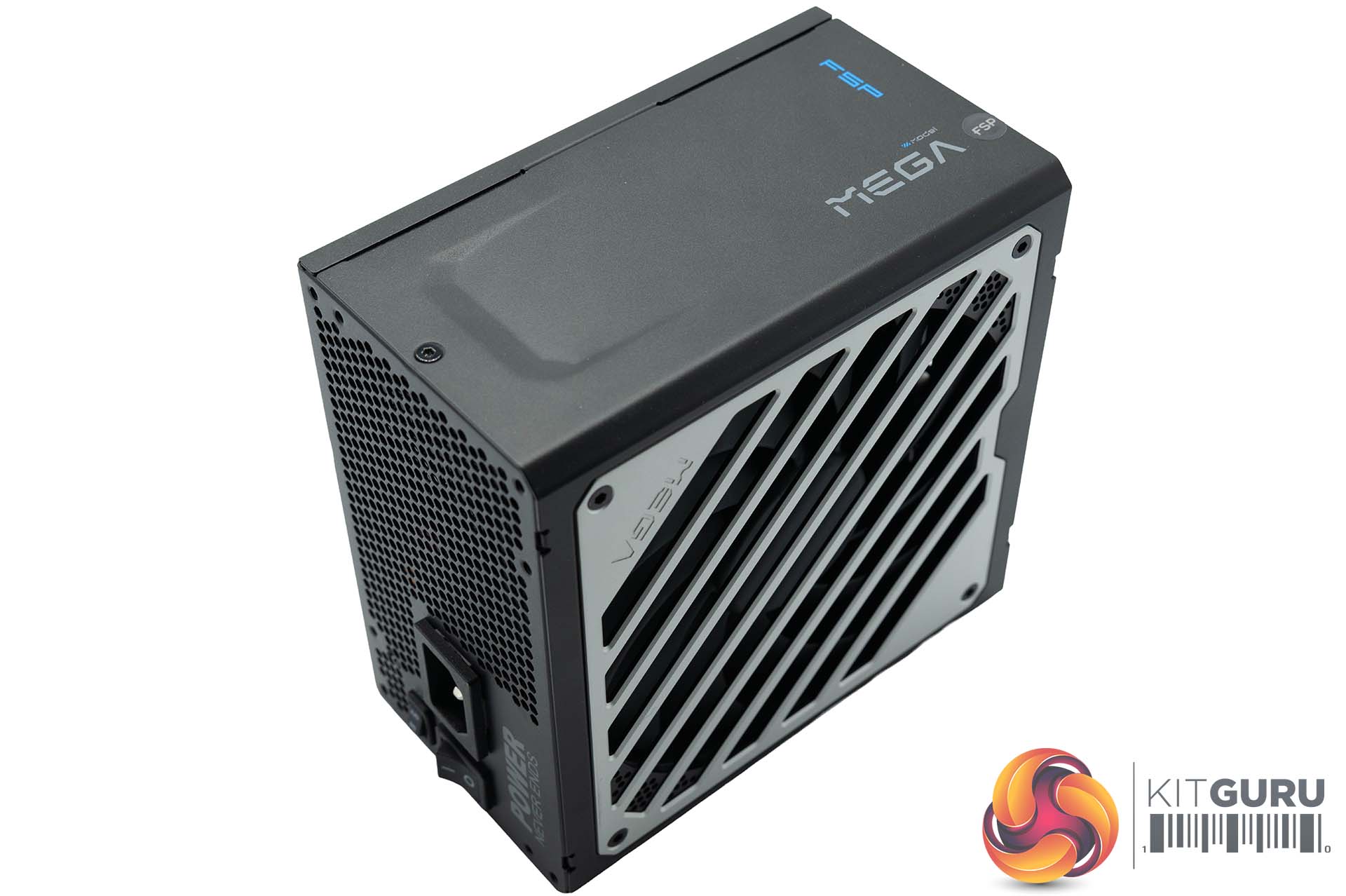
The Mega GM is nicely finished with some subtle branding on the side. It measures 150 mm x 150 mm x 86 mm.
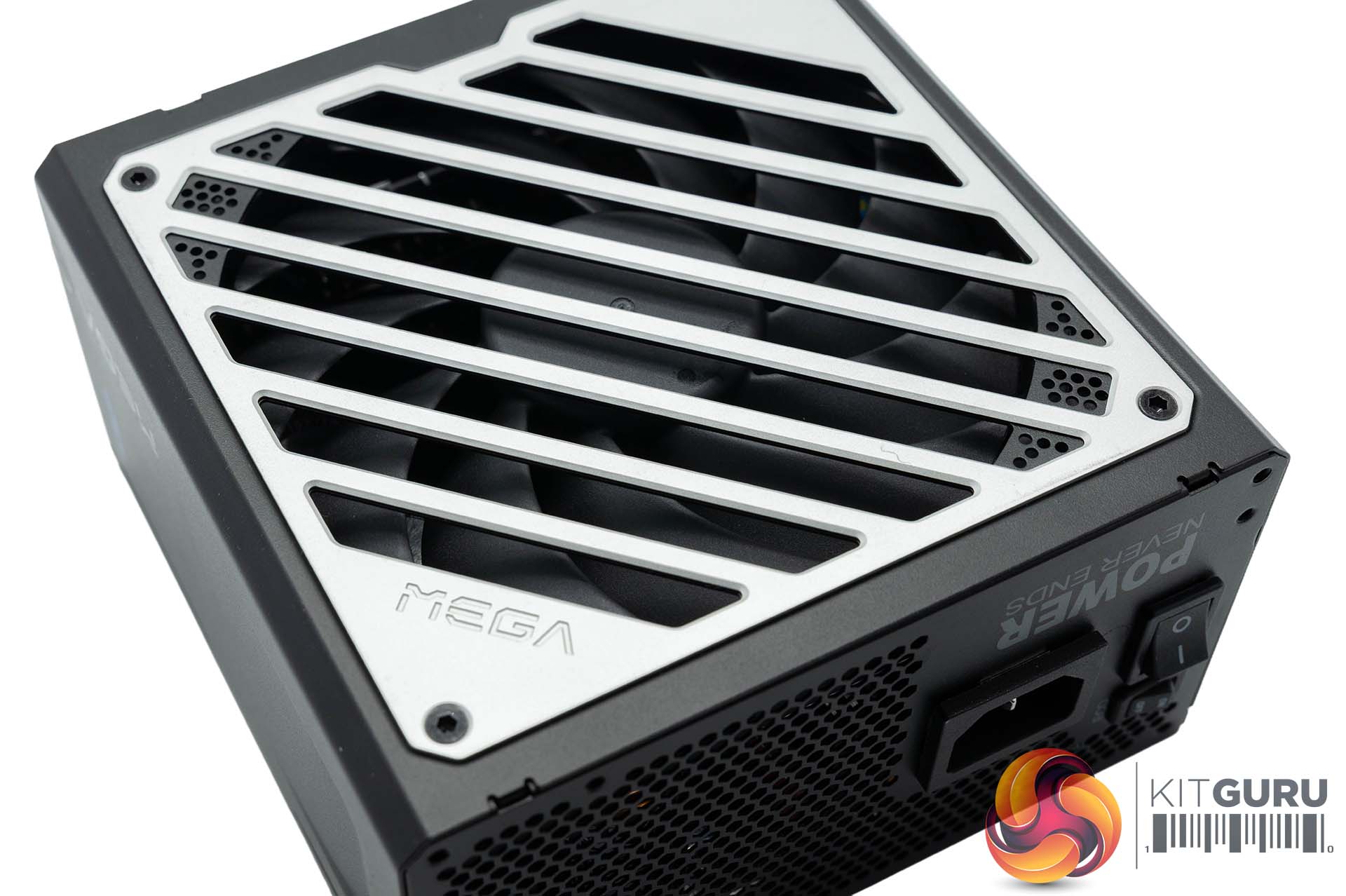
The top fan shroud is accented in silver with the ‘Mega' branding in the corner. Large vents ensure high levels of airflow are possible.
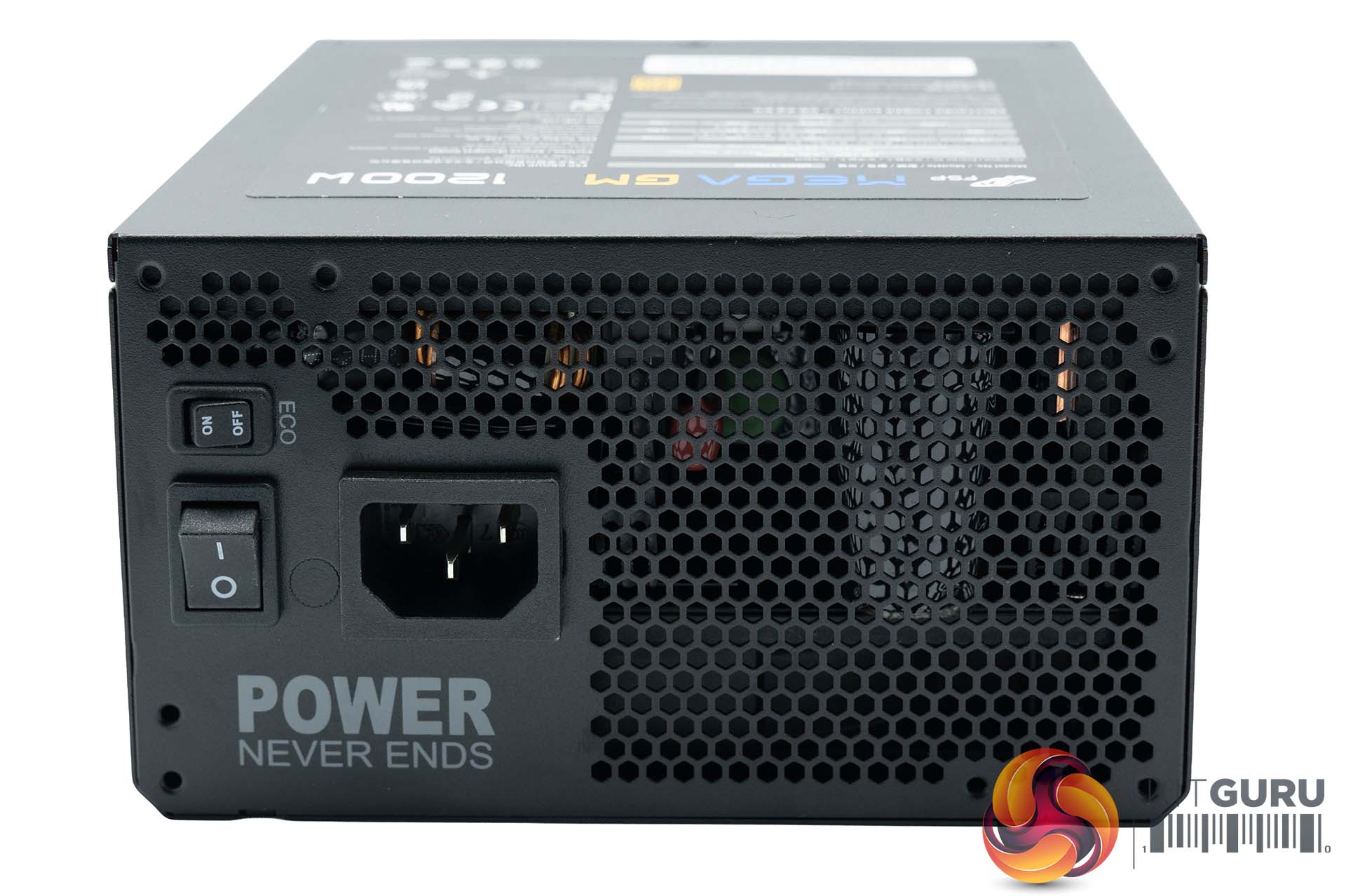
On the side of the unit we find a vented panel to aid with airflow, alongside a power connector, power button and ECO semi-fanless control switch (a mode to turn the fan off at idle and lower power demands).
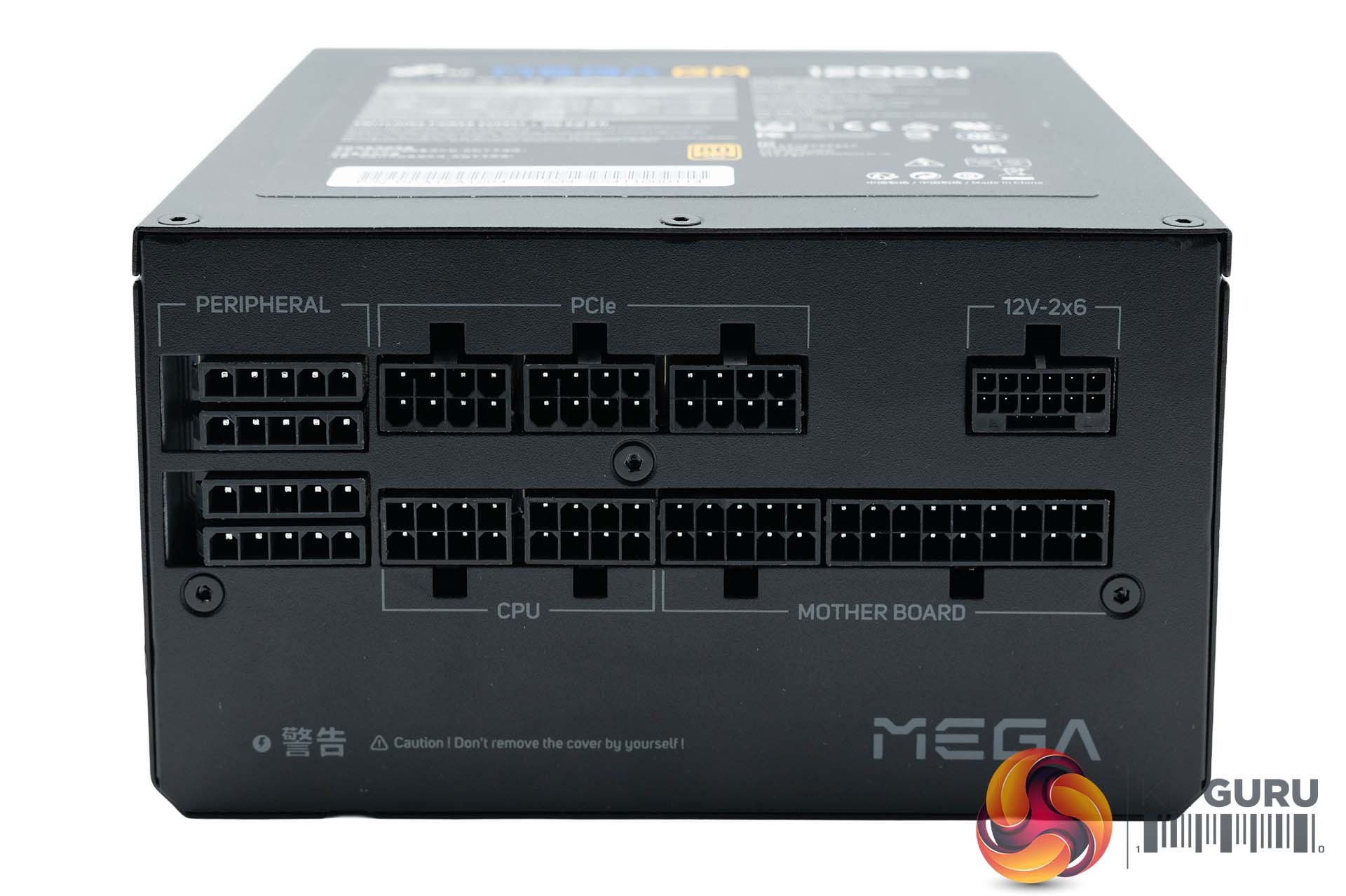
The modular bay is split across two rows, all labelled for ease of use during the installation phase.
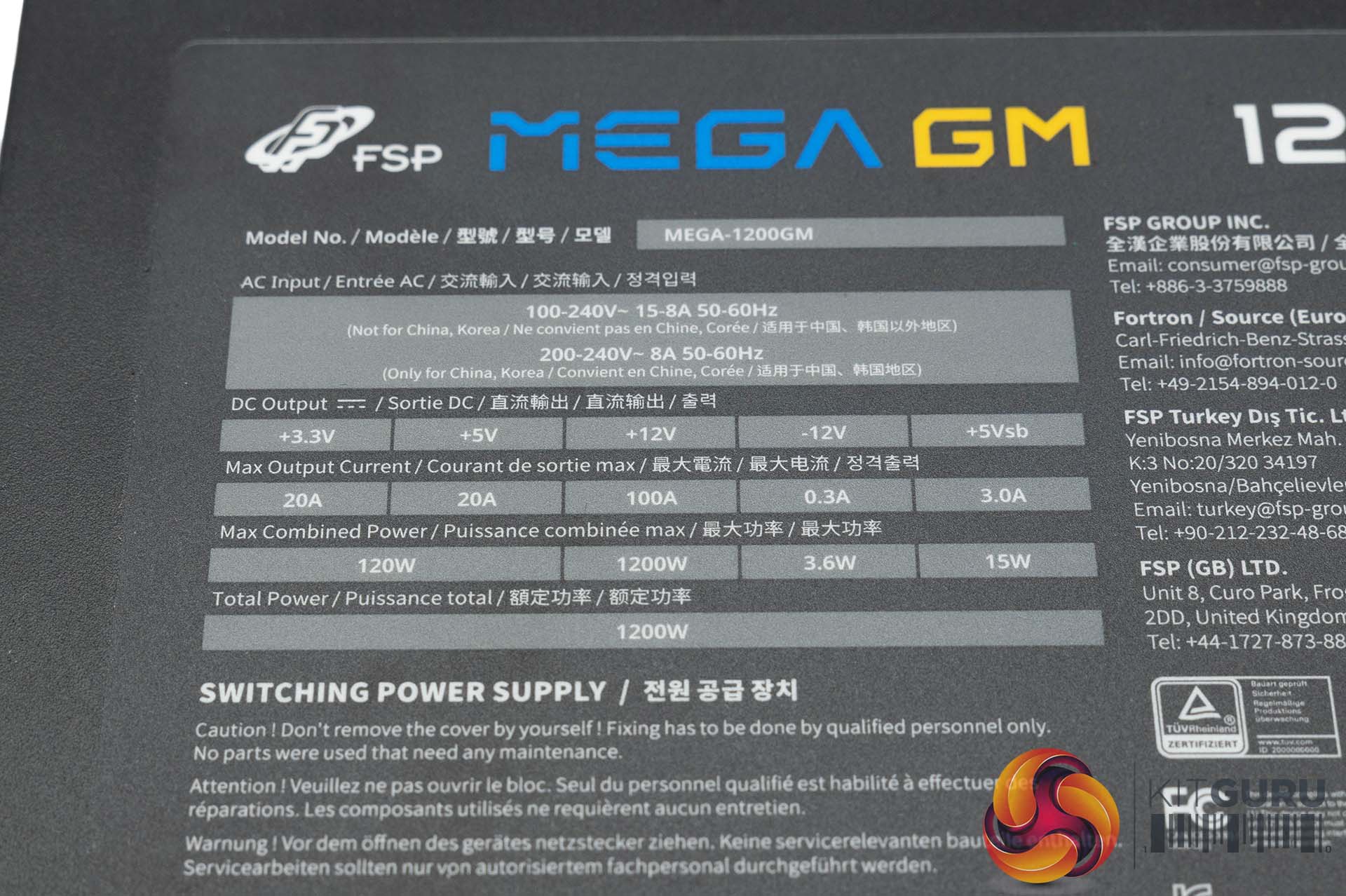
The power supply can deliver 100A on the +12V rail, with 20A on the +3.3V and +5V rails.
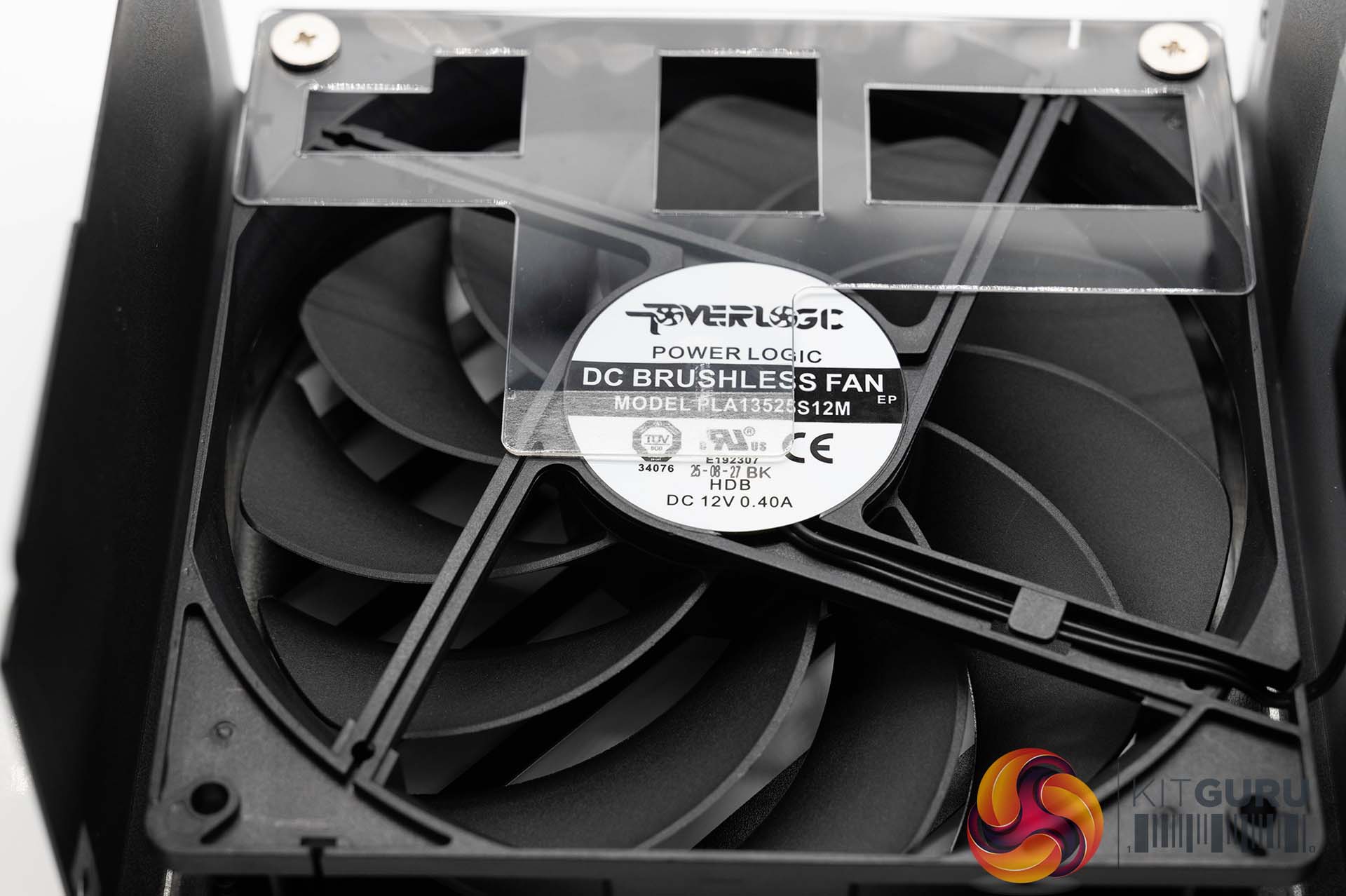
The fan inside is a Power Logic model PLA13525S12M, fluid dynamic bearing, DC 12V 0.40A. This 135mm fan is rated to deliver around 111 CFM airflow with a noise rating around 41.6dBa. It has featured in other power supplies from the likes of be quiet!
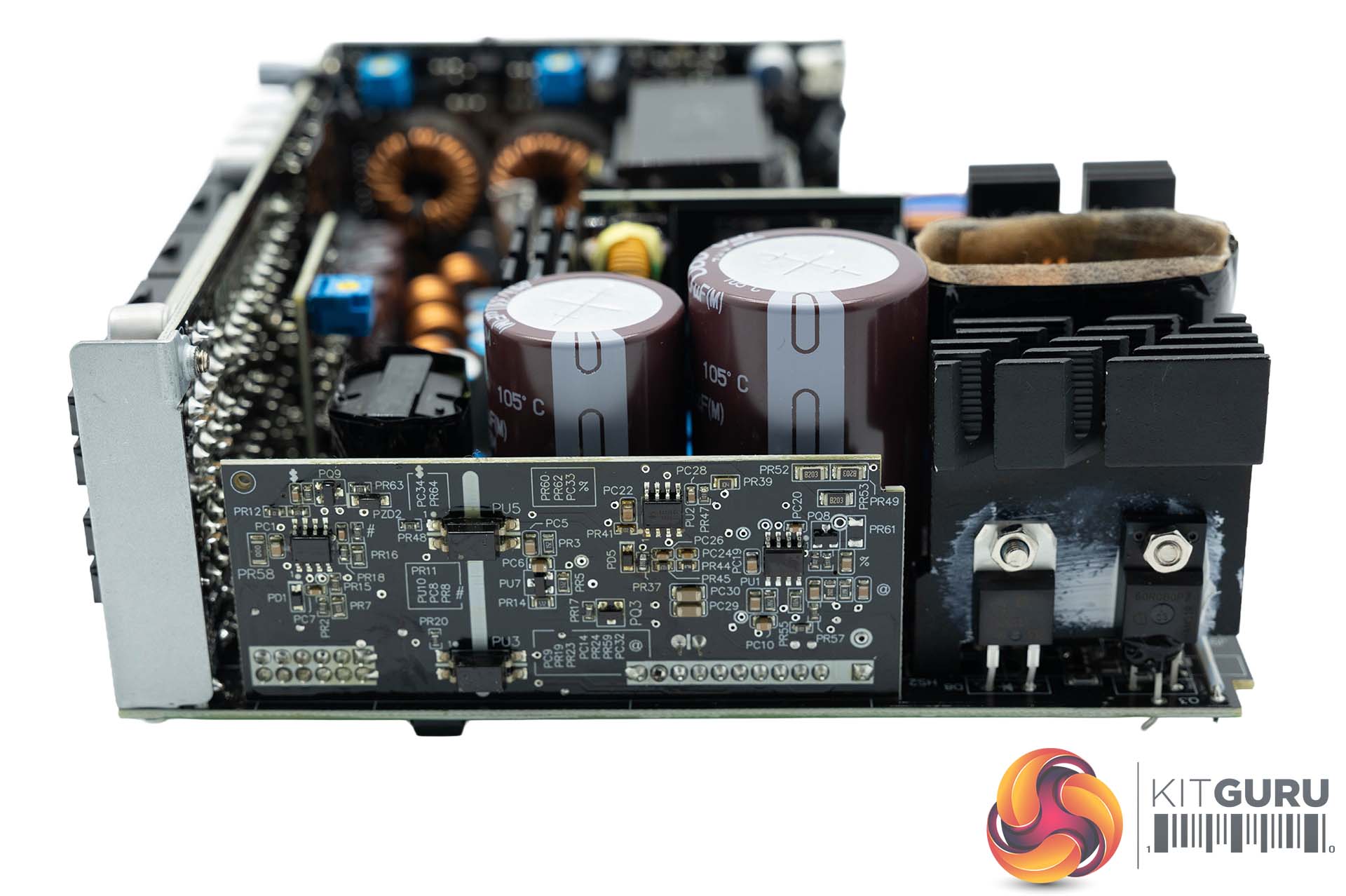
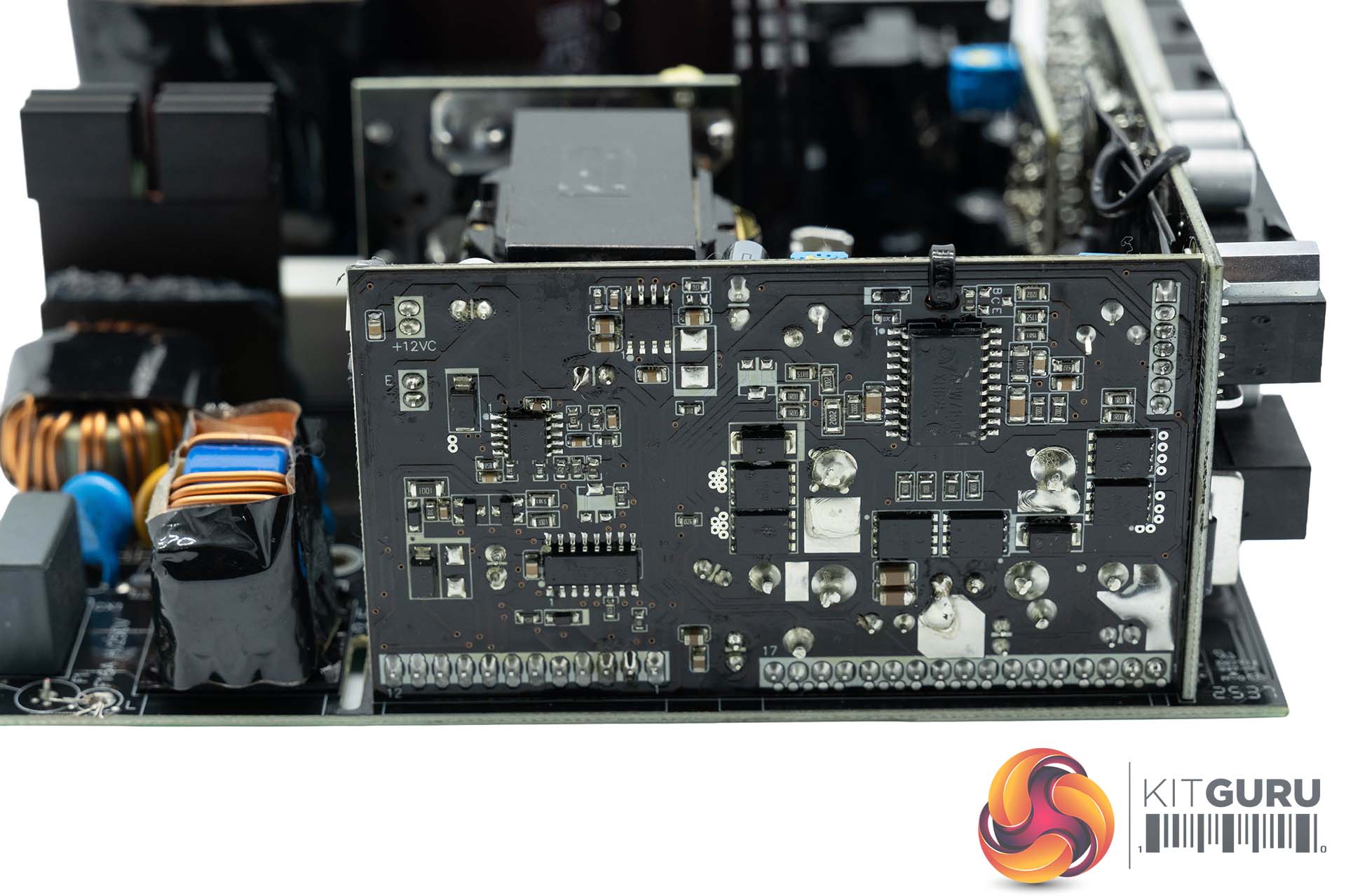
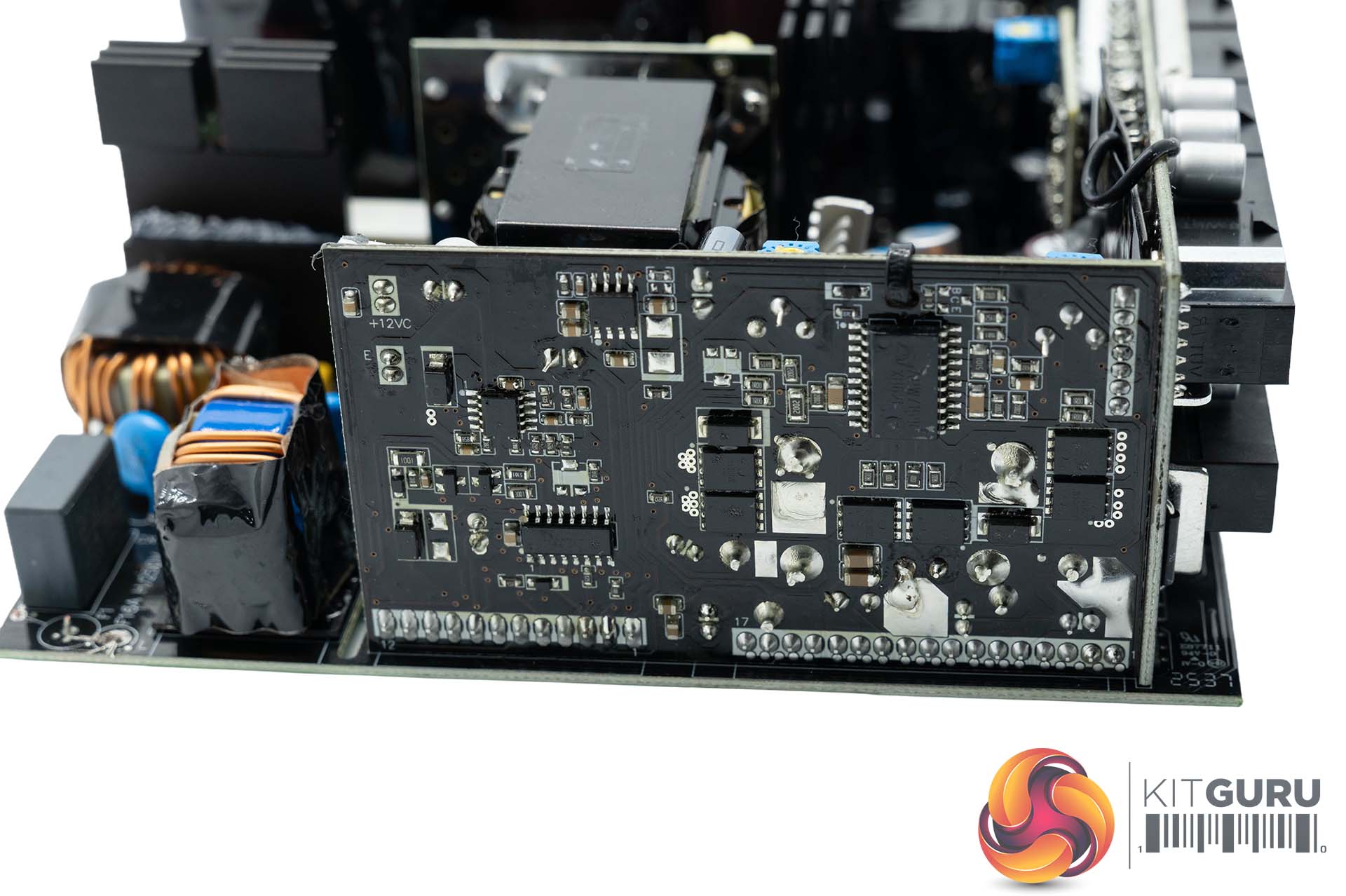
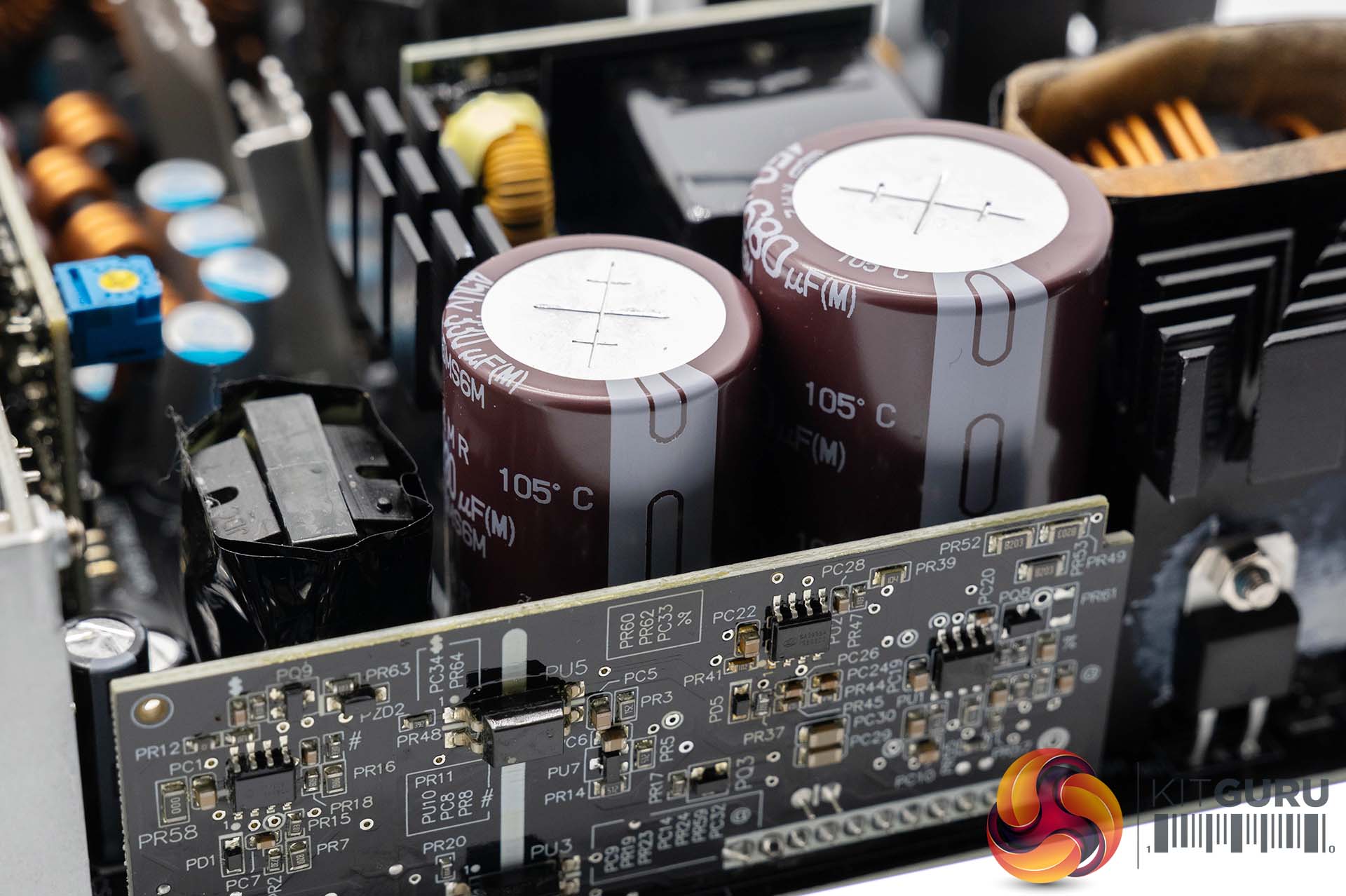
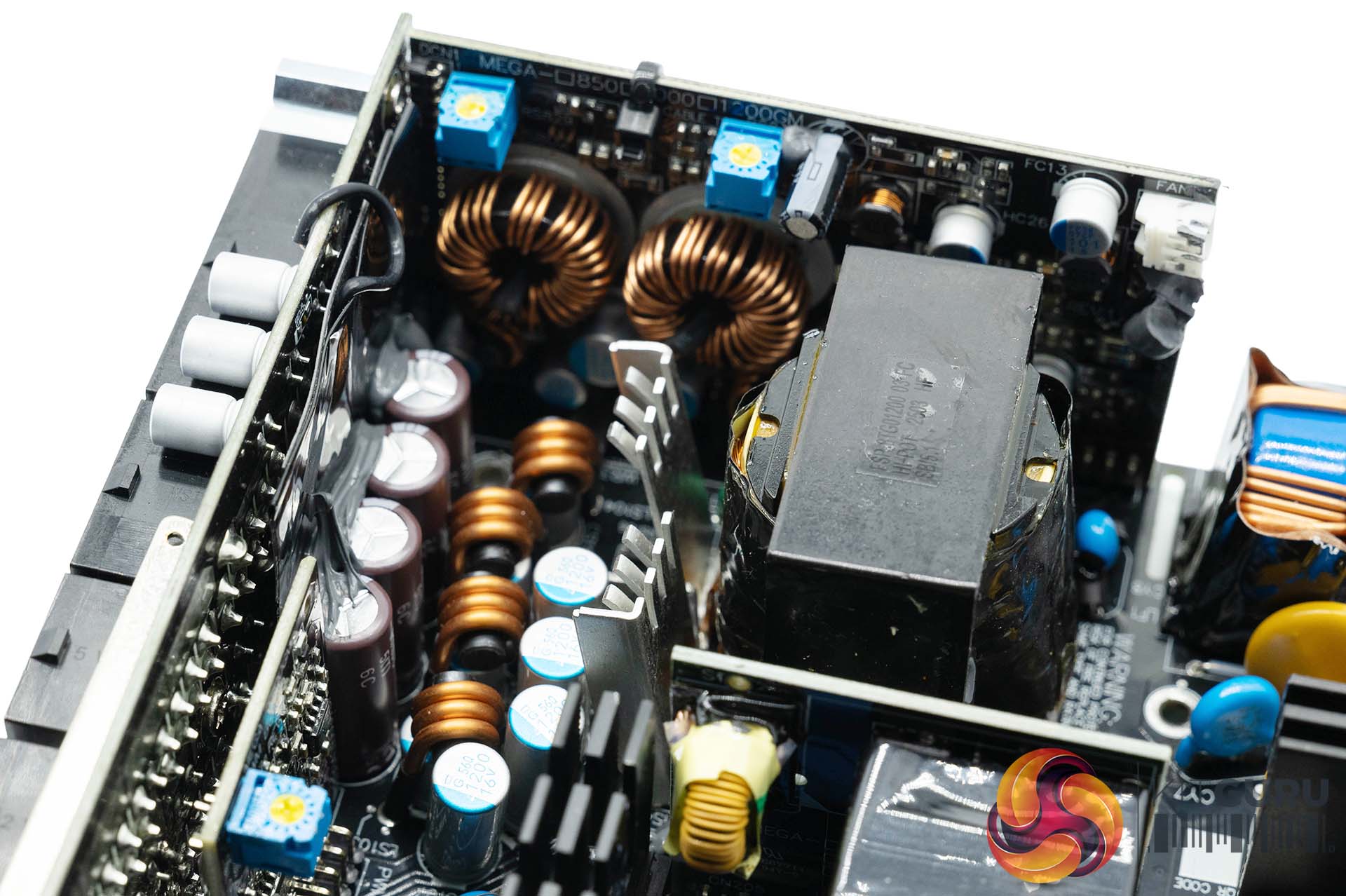
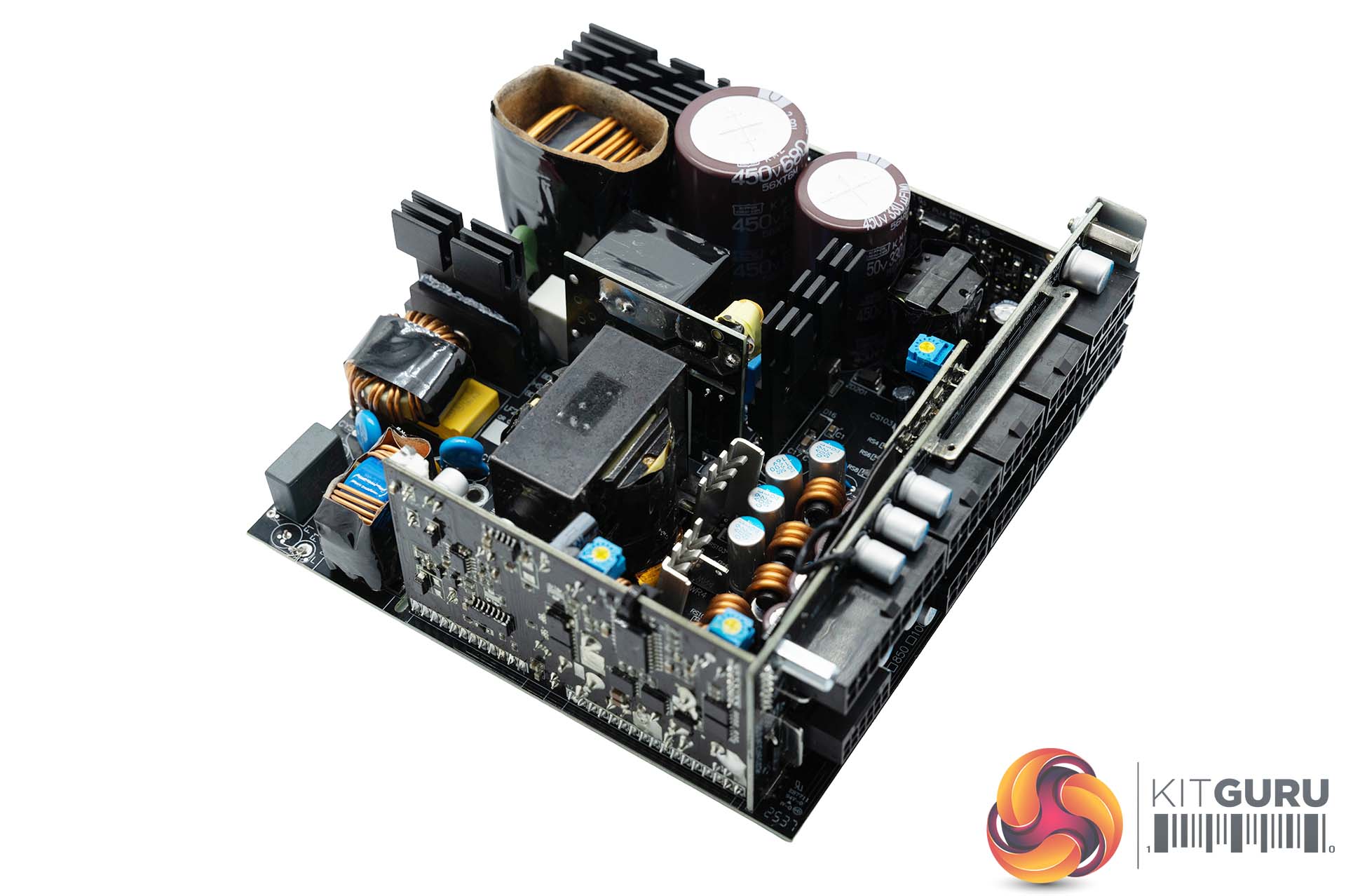
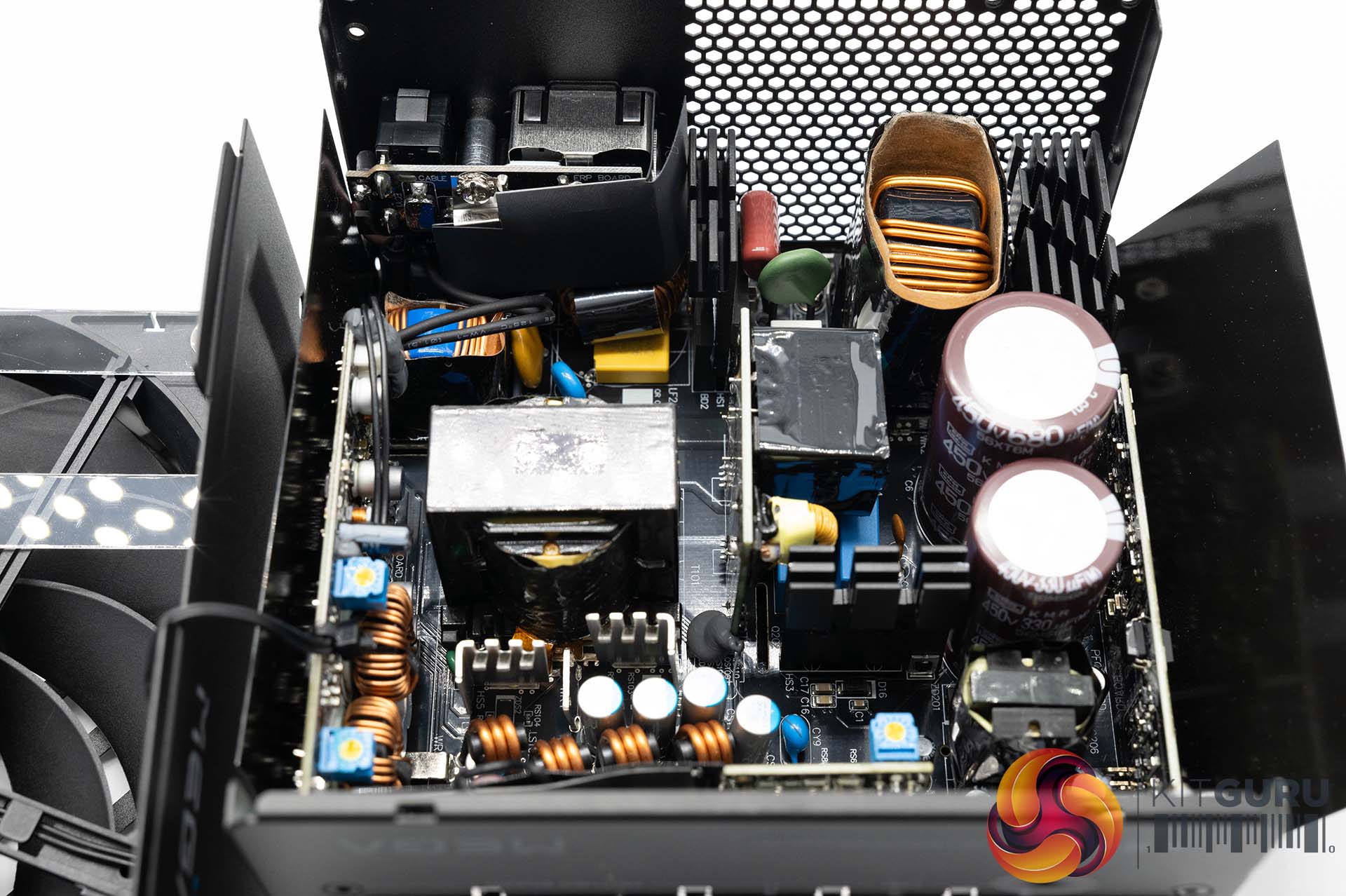
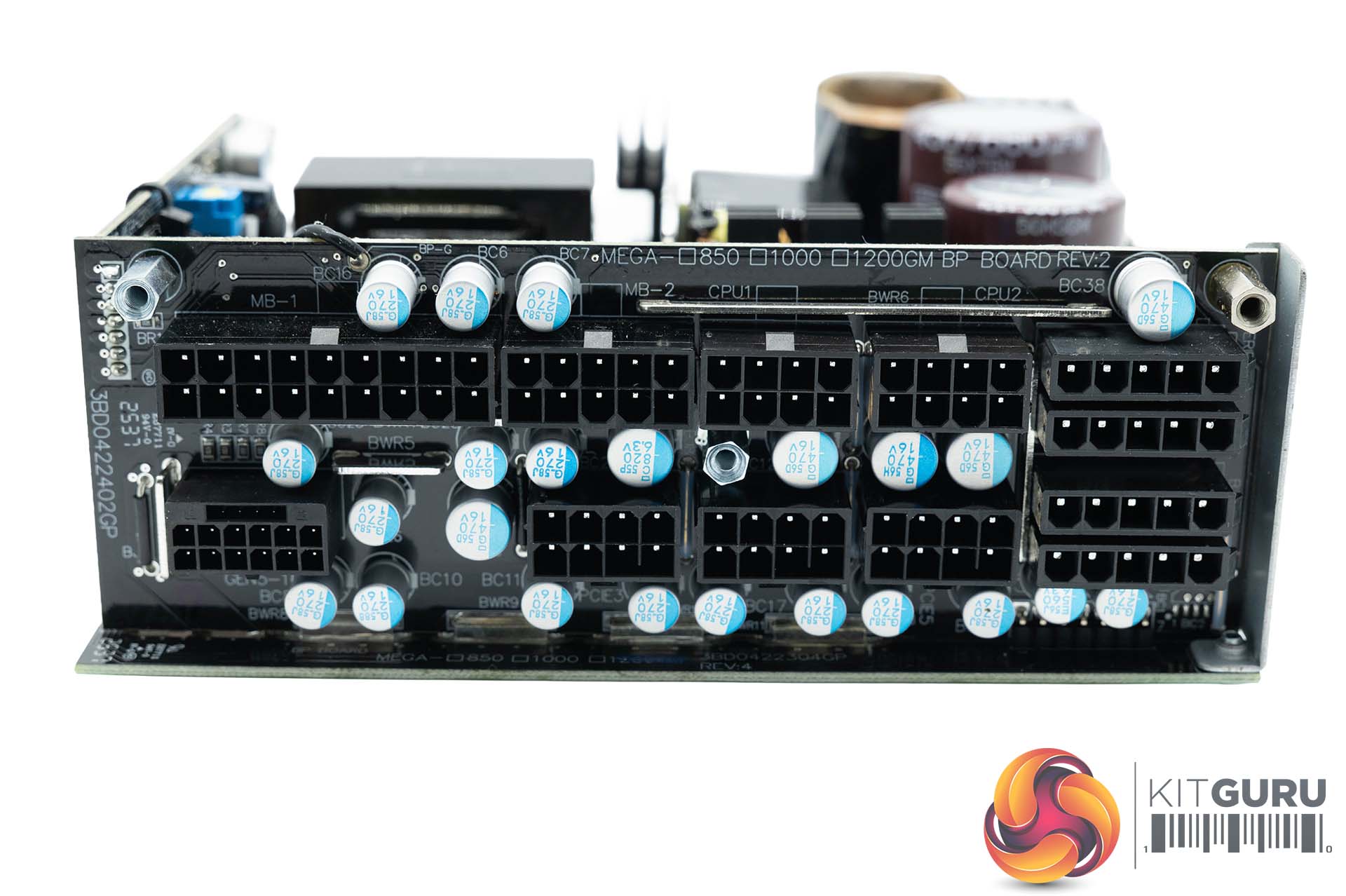
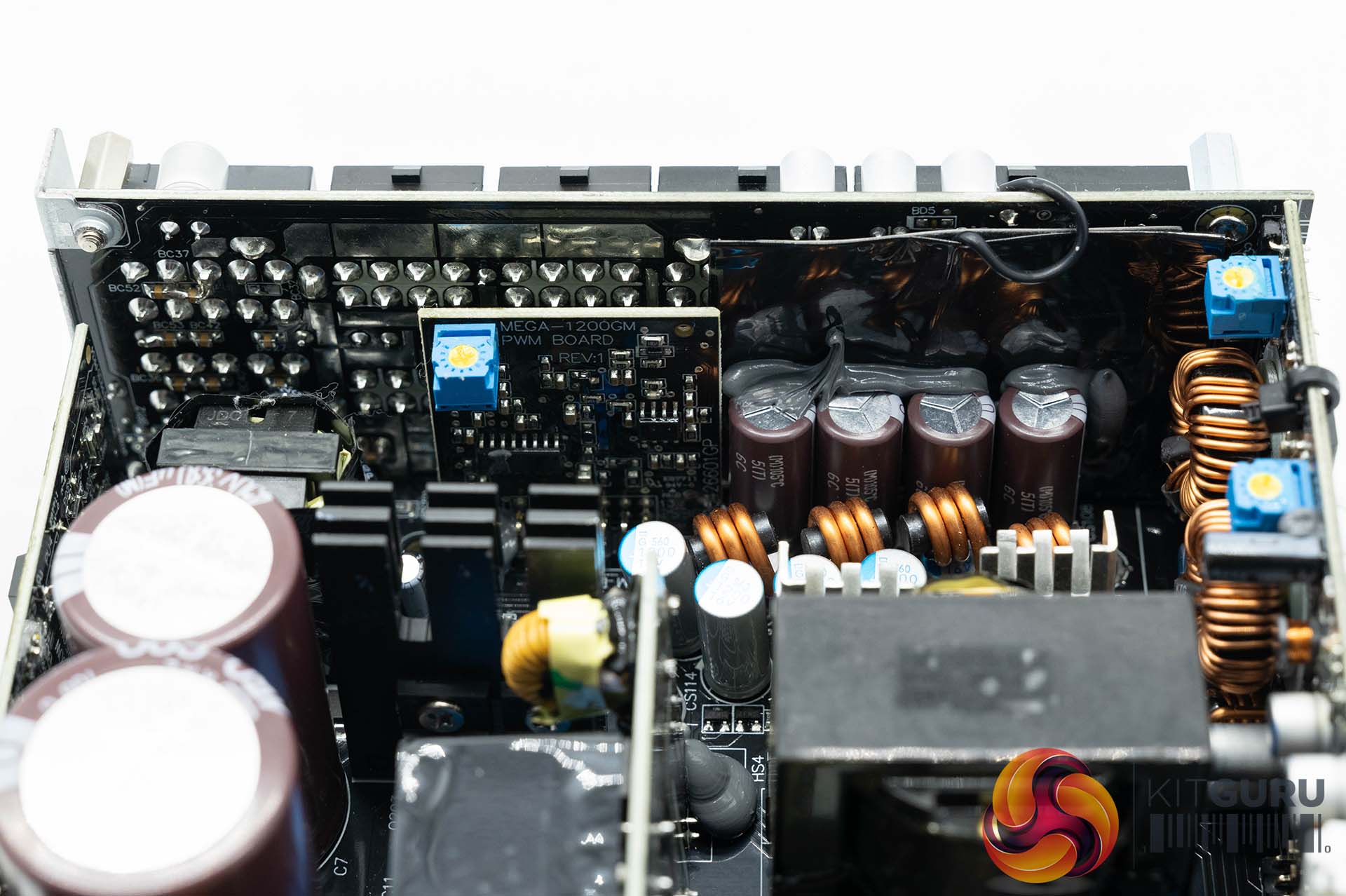
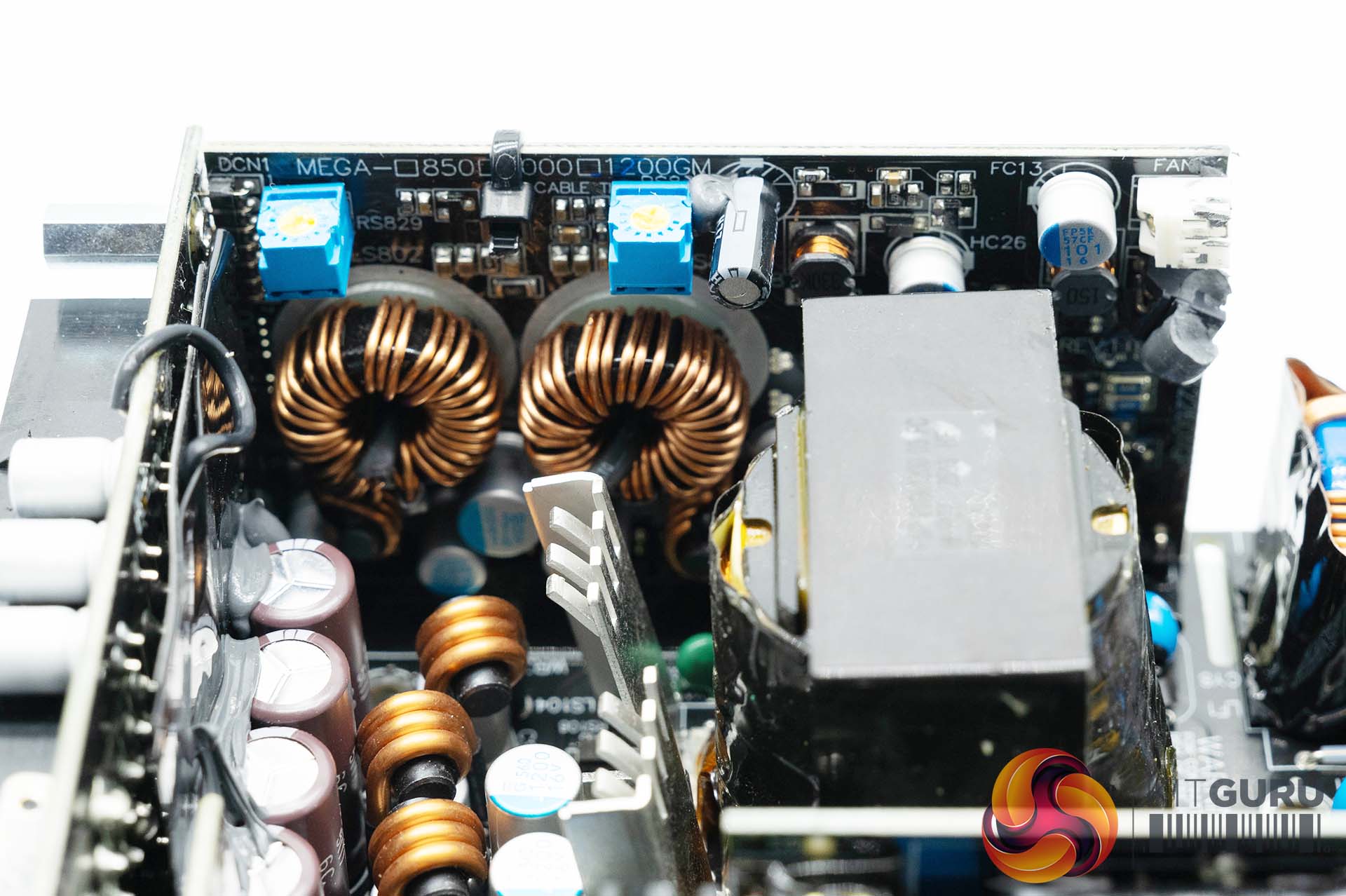
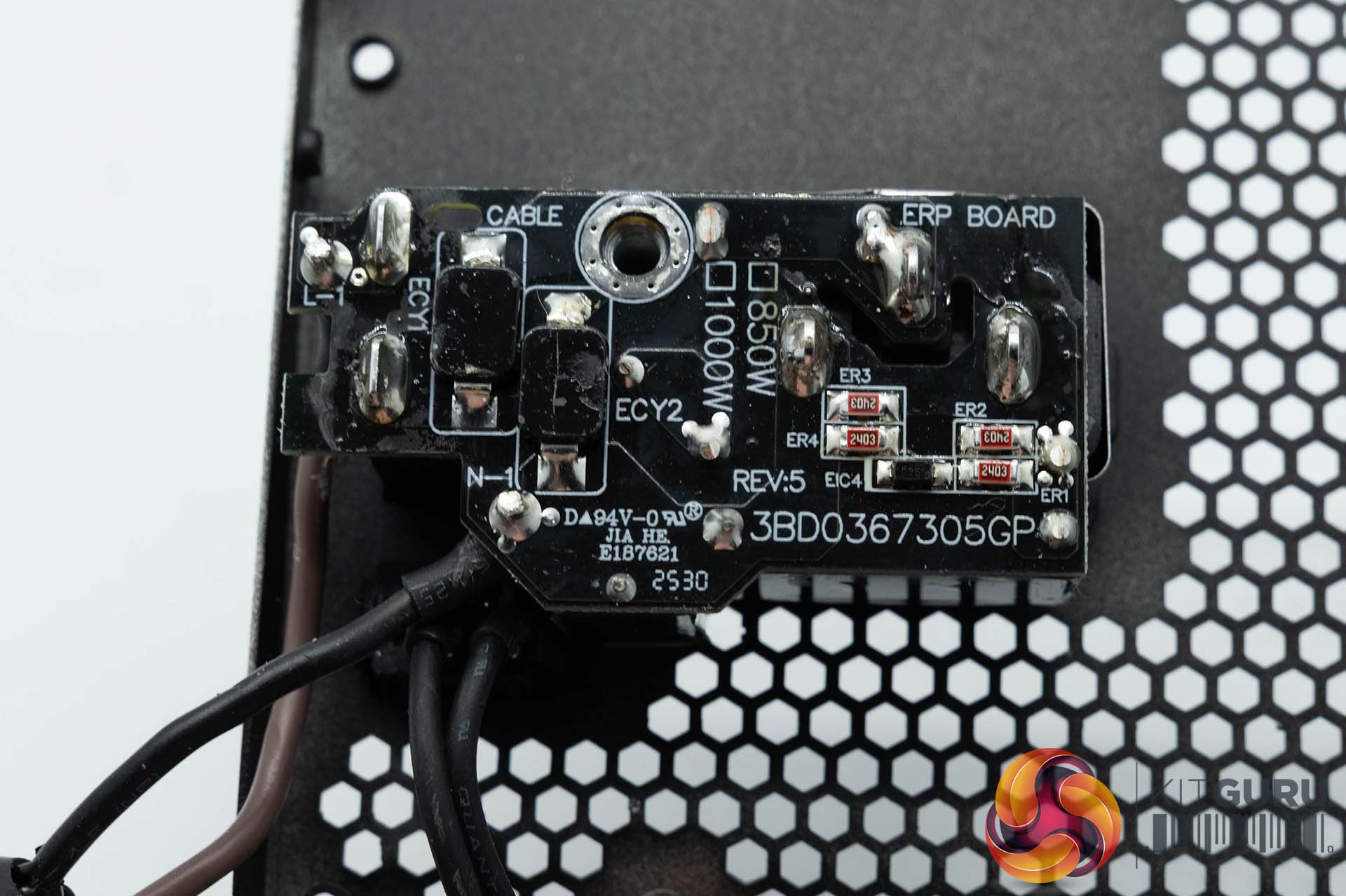
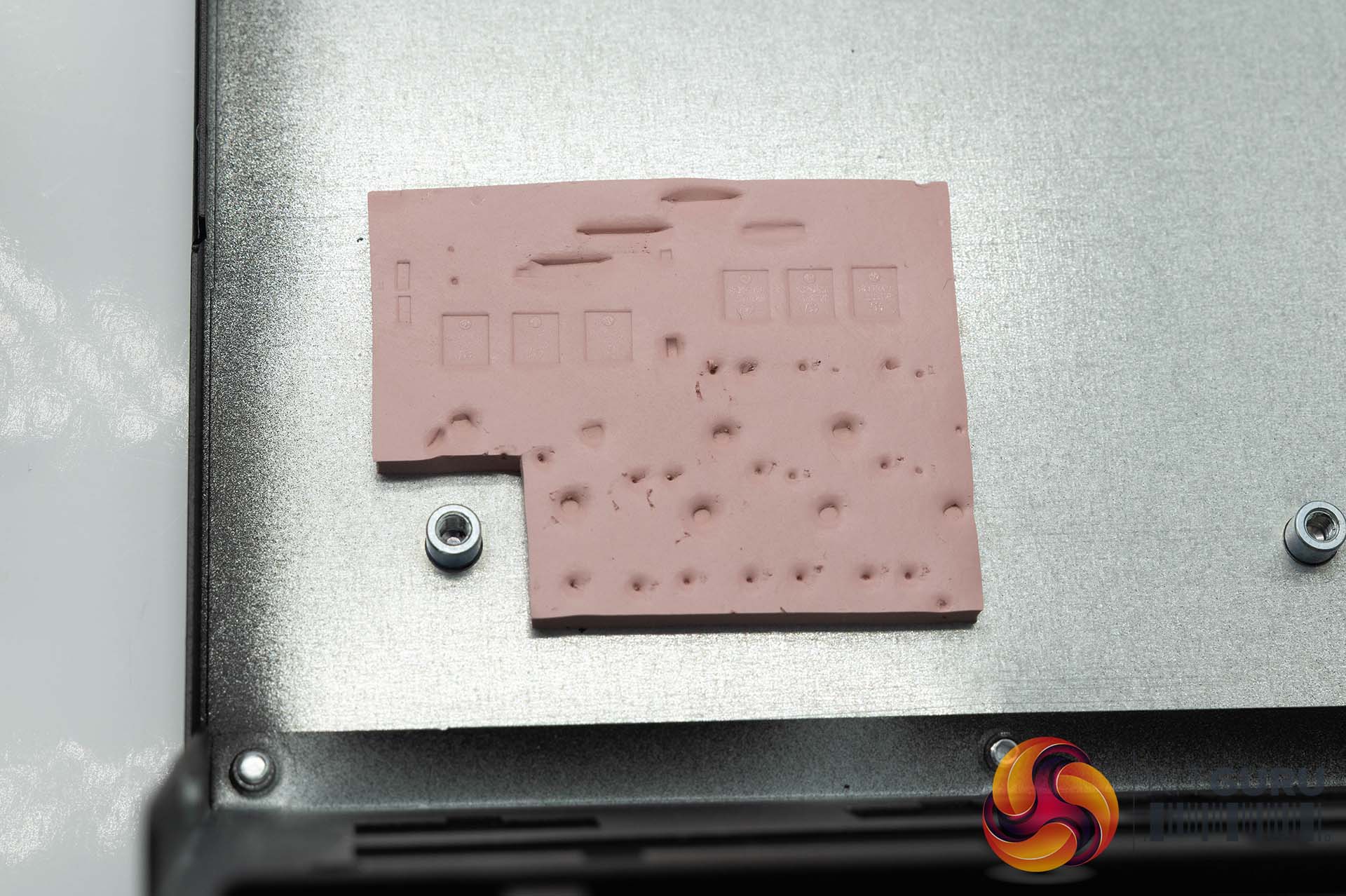
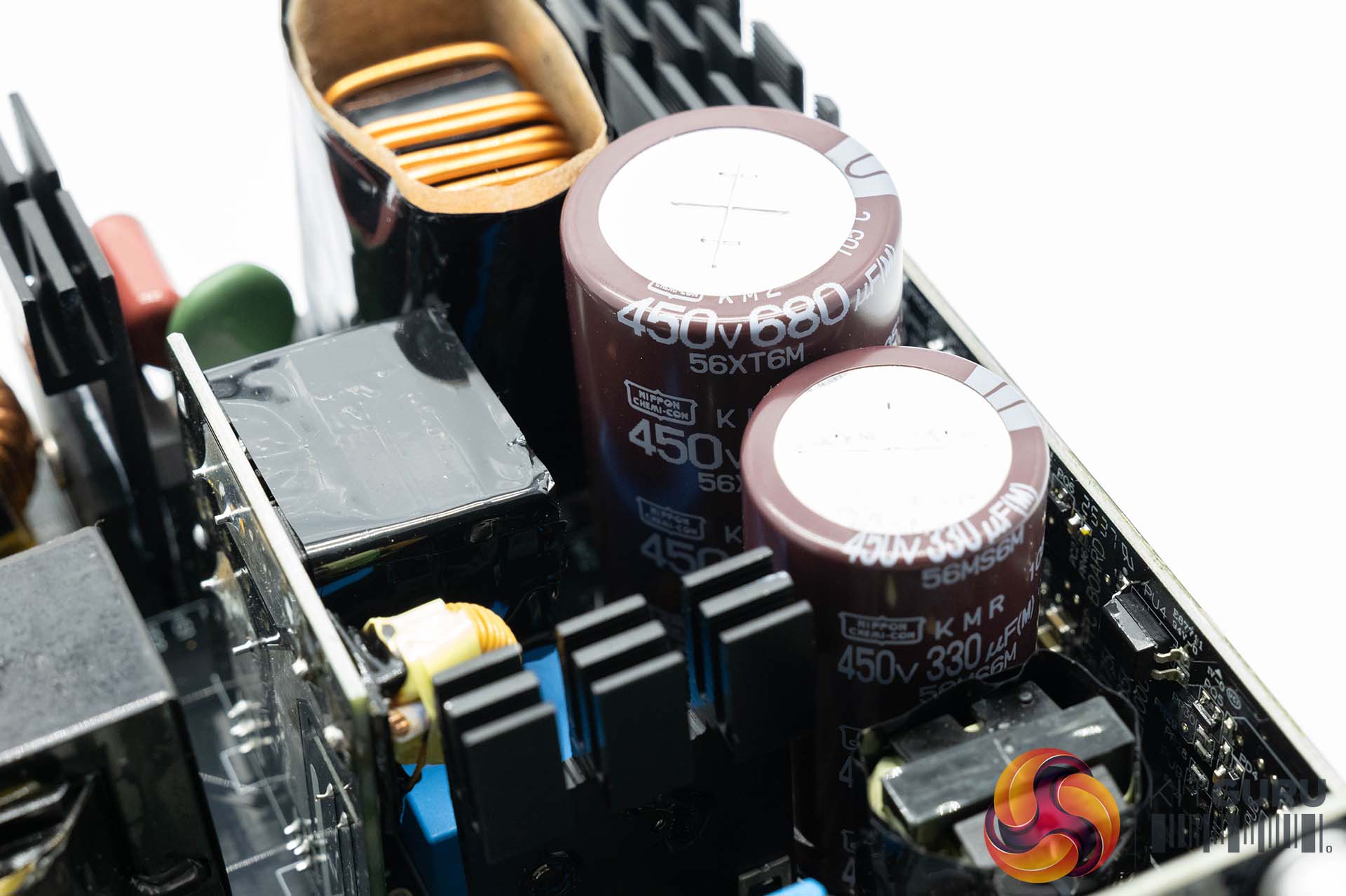
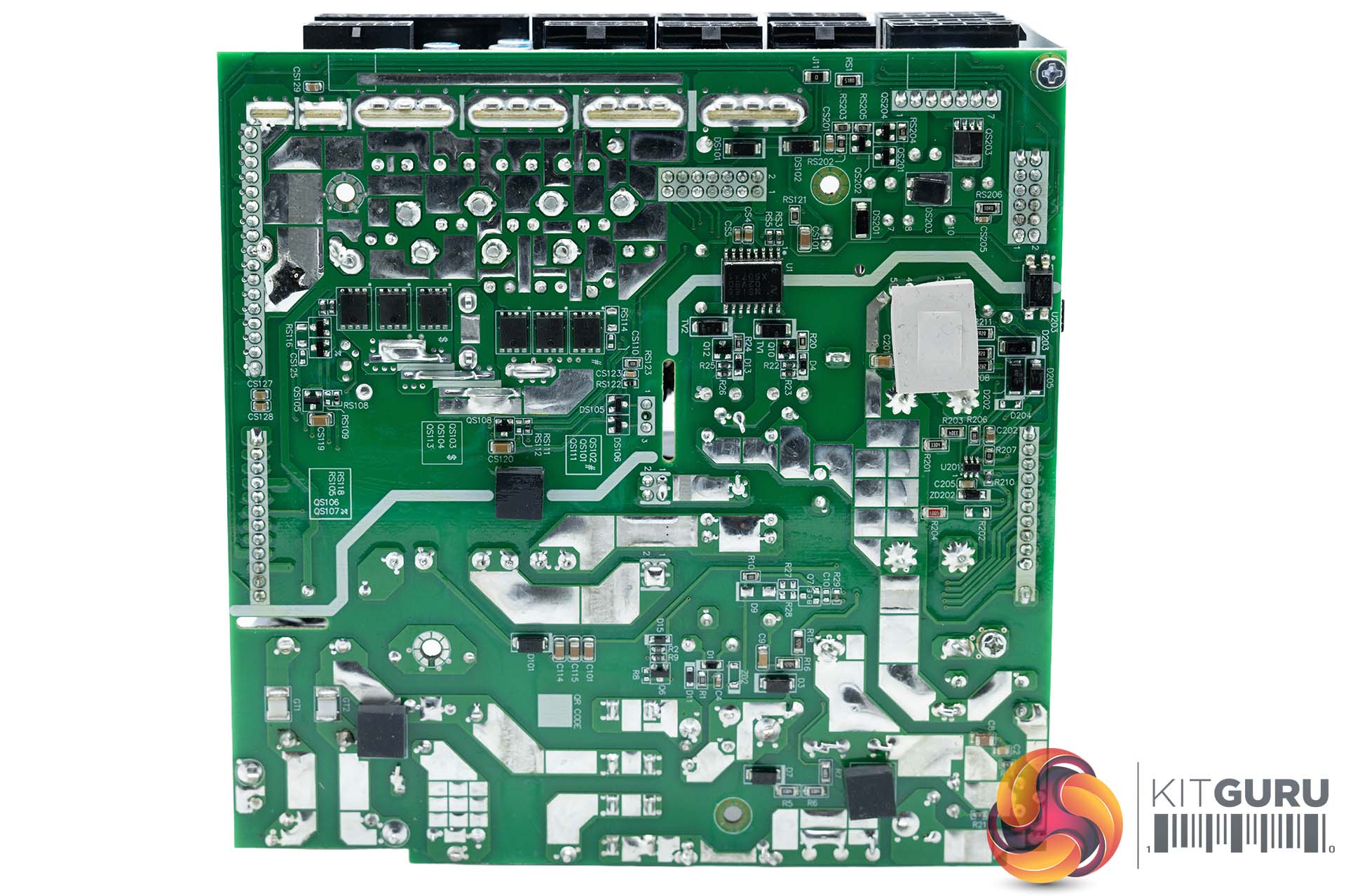
FSP make their own power supplies and we will likely see this design in other power supplies going forward. It is comprised of a primary side APFC, Half Bridge & LLC Resonant converter, alongside the secondary side 12V Synchronous Rectification & DC-DC convertors to generate the minor rails.
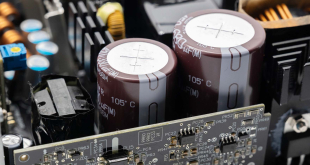
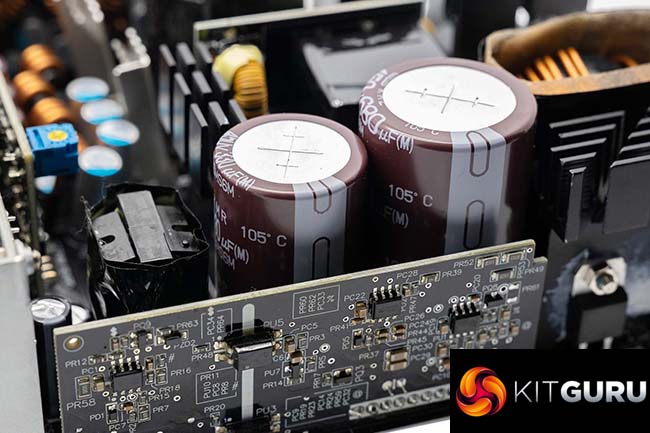
The transient filter is comprised of 2x Y Caps, 3x X Caps, 2x CM chokes and 1x MOV. We are happy to see FSP using quality Japanese capacitors in both primary and secondary side. The two main primary stage capacitors are 105C-rated Japanese caps from Nippon Chemi Con, rated 420V 680uF and 330uF for a total of 1010uF.
Soldering quality on the main PCB is very good throughout. It ships with full OCP, OVP, SCP, OPP, UVP, OTP, SIP, NLO protections.
Correctly testing power supplies is a complex procedure and KitGuru have configured a test bench which can deliver up to a 2,000 Watt DC load.
We test ambient temperatures at 35C in our environment to greater reflect warmer internal chassis conditions.
We use combinations of the following hardware:
• SunMoon SM-268
• CSI3710A Programmable DC load (+3.3V and +5V outputs)
• CSI3711A Programmable DC load (+12V1, +12V2, +12V3, and +12V4)
• Extech Power Analyzer
• Extech MultiMaster MM570 digital multimeter
• Extech digital sound level meter
• Digital oscilloscope (20M S/s with 12 Bit ADC)
• Variable Autotransformer, 1.4 KVA
|
DC Output Load Regulation
|
||||||||||
|
Combined DC Load |
+3.3V
|
+5V
|
+12V
|
+5VSB
|
-12V | |||||
|
A
|
V
|
A
|
V
|
A
|
V
|
A
|
V
|
A | V | |
|
120W
|
0.90
|
3.35
|
0.92
|
5.11
|
8.95
|
12.12
|
0.50
|
5.02
|
0.20
|
-12.03
|
|
240W
|
1.63
|
3.35
|
1.63
|
5.10
|
18.46
|
12.11
|
1.00
|
5.02
|
0.20
|
-12.03
|
| 600W |
3.00
|
3.35
|
3.12
|
5.09
|
46.74
|
12.09
|
1.50
|
5.03
|
0.30
|
-12.03
|
| 900W |
4.01
|
3.35
|
4.07
|
5.09
|
70.82
|
12.07
|
2.00
|
5.02
|
0.30
|
-12.02
|
|
1200W
|
5.02
|
3.34
|
5.20
|
5.09
|
94.59
|
12.05
|
2.50
|
5.02
|
0.30
|
-12.02
|
Load regulation is very good across the rails.
Next we want to try Cross Loading. This basically means loads which are not balanced. If a PC for instance needs 500W on the +12V outputs but something like 30W via the combined 3.3V and +5V outputs then the voltage regulation can fluctuate badly.
| Cross Load Testing | +3.3V | +5V | +12V | -12V | +5VSB | |||||
| A | V | A | V | A | V | A | V | A | V | |
| 1190W | 4.0 | 3.35 | 3.0 | 5.10 | 88.0 | 12.06 | 0.2 | -12.02 | 0.50 | 5.02 |
| 240W | 19.0 | 3.33 | 22.0 | 5.06 | 2.5 | 12.11 | 0.2 | -12.03 | 0.50 | 5.02 |
The power supply handled the cross load test without any issues.
We then used an oscilloscope to measure AC ripple and noise present on the DC outputs. We set the oscilloscope time base to check for AC ripple at both high and low ends of the spectrum. ATX12V V2.2 specification for DC output ripple and noise is defined in the ATX 12V power supply design guide.
|
ATX12V Ver 2.2 Noise/Ripple Tolerance
|
|
|
Output
|
Ripple (mV p-p)
|
|
+3.3V
|
50
|
|
+5V
|
50
|
|
+12V1
|
120
|
|
+12V2
|
120
|
|
-12V
|
120
|
|
+5VSB
|
50
|
Obviously when measuring AC noise and ripple on the DC outputs the cleaner (less recorded) means we have a better end result. We measured this AC signal amplitude to see how closely the unit complied with the ATX standard.
| AC Ripple (mV p-p) | ||||
| DC Load | +3.3V | +5V | +12V | 5VSB |
| 100W | 16 | 15 | 21 | 14 |
| 200W | 17 | 16 | 24 | 15 |
| 400W | 17 | 17 | 26 | 16 |
| 600W | 19 | 18 | 27 | 17 |
| 800W | 20 | 19 | 29 | 19 |
| 1000W | 22 | 20 | 32 | 20 |
| 1200W | 24 | 21 | 34 | 22 |
This unit passes our ripple suppression tests without any issues. Results are pretty good, but far from class leading.
|
Efficiency (%)
|
|
|
100W
|
91.6
|
|
200W
|
93.8
|
|
400W
|
94.2
|
|
600W
|
94.6
|
|
800W
|
93.9
|
| 1000W | 93.2 |
| 1200W | 91.7 |
Efficiency is excellent, hitting around 94.6% at peak. This drops to 91.7% at full load. These are Platinum efficiency levels.
We take the issue of noise very seriously at KitGuru and this is why we have built a special home brew system as a reference point when we test noise levels of various components. Why do this? Well this means we can eliminate secondary noise pollution in the test room and concentrate on components we are testing. It also brings us slightly closer to industry standards, such as DIN 45635.
Today to test the power supply we have taken it into our acoustics room environment and have set our SkyTronic DSL 2 Digital Sound Level Meter (6-130dBa) one meter away from the unit. We have no other fans running so we can effectively measure just the noise from the unit itself.
As this can be a little confusing for people, here are various dBa ratings with real world situations to help describe the various levels.
KitGuru noise guide
10dBA – Normal Breathing/Rustling Leaves
20-25dBA – Whisper
30dBA – High Quality Computer fan
40dBA – A Bubbling Brook, or a Refrigerator
50dBA – Normal Conversation
60dBA – Laughter
70dBA – Vacuum Cleaner or Hairdryer
80dBA – City Traffic or a Garbage Disposal
90dBA – Motorcycle or Lawnmower
100dBA – MP3 Player at maximum output
110dBA – Orchestra
120dBA – Front row rock concert/Jet Engine
130dBA – Threshold of Pain
140dBA – Military Jet takeoff/Gunshot (close range)
160dBA – Instant Perforation of eardrum
|
Noise (dBA)
|
|
|
100W
|
<28.0
|
|
200W
|
<28.0
|
|
400W
|
<28.0
|
|
600W
|
28.9
|
| 800W | 31.8 |
| 1000W | 32.6 |
| 1200W | 35.4 |
This is a great fan, and FSP have tuned the profile for noise efficiency, even at higher loads. It is quiet even at close to full load. Exceptional results.
|
Temperature (c)
|
||
|
Intake
|
Exhaust
|
|
|
100W
|
35
|
37
|
|
200W
|
36
|
39
|
|
400W
|
38
|
42
|
|
650W
|
43
|
44
|
|
800W
|
45
|
50
|
| 1000W | 47 | 53 |
| 1200W | 50 | 56 |
The fan pushes a reasonable amount of air around the case, ensuring the temperatures are well controlled at all load levels. A very good level of optimisation from FSP.
The FSP Technology Mega GM 1200W has performed extremely well throughout our testing over the past week. Overall impressions are very positive, and the use of high-quality components throughout the platform is reassuring to see. This includes premium 105C-rated Japanese capacitors on both the primary and secondary sides, which immediately inspires confidence in long-term reliability.
From a technical standpoint, the Mega GM 1200W delivers excellent power quality. Load regulation is strong, and the unit passed our cross-load testing without issue. Ripple suppression comfortably meets industry stability requirements, although it does fall slightly short of the very best units on the market. Even so, it is clear that FSP has not cut corners internally, and the overall electrical performance remains solid and dependable.
Noise performance is where this power supply truly stands out. FSP has done an excellent job tuning the fan profile, with the unit remaining very quiet under all typical operating conditions. Even during sustained loads approaching 1000W, the Mega GM 1200W was barely audible. It is easily one of the quietest high-power power supplies we have tested, making it an excellent option for users who value a low-noise system.
Based on our own efficiency testing, this unit comfortably exceeds 80 Plus Gold requirements and performs beyond Cybenetics Gold levels. We were also able to obtain the official Cybenetics reports, which certify the Mega GM 1200W at Platinum efficiency. This appears to be a deliberate positioning decision rather than a limitation of the design itself.
We have recently encountered a similar approach from be quiet!, who explained that their own Platinum-capable units are marketed as Gold to account for production variance and to represent average efficiency honestly rather than relying on best-case samples. It is an interesting and increasingly common strategy.
Overall, the FSP Mega GM 1200W is an excellent and well-balanced power supply. It delivers very high levels of sustained power, operates extremely quietly, is fully modular, and uses premium internal components throughout. Backed by a 10-year warranty, it presents a compelling package. As is often the case with FSP products, global availability may be limited, but at an expected price of around £200 / $229, it offers strong value for money given the performance on offer. If retail links become available later, they will be added here.
Pros:
- 10-year warranty.
- Platinum-level efficiency in testing.
- 105C-rated Japanese capacitors on primary and secondary stages.
- High-quality fluid dynamic bearing fan.
- Top tier build quality.
- Exceptionally low noise levels.
- Passed the cross load test.
- Load regulation is strong.
Cons:
- Availability may be limited, as is often the case with FSP products.
KitGuru says: If you are able to find the FSP Mega GM 1200W available in your region, it comes highly recommended. High-quality internal components ensure stable and reliable power delivery, while low noise levels, Platinum-class efficiency, and a long warranty make it one of the most compelling high-wattage power supplies we have tested.