KitGuru KitGuru.net – Tech News | Hardware News | Hardware Reviews | IOS | Mobile | Gaming | Graphics Cards


The Steam Machine officially launched late last month, but this wasn't Valve's first attempt at bringing PC gaming to the living room. The Steam Machine project first began all the way back in 2015 but failed to gain any traction at the time. For the first time, Valve has spoken openly about why that first iteration of the Steam Machine failed.
In an interview with Bloomberg's Jason Schreier, Valve's Pierre-Loup Griffais explained that while “working with partners is great”, Valve's first Steam Machine failed because they failed to release a good ‘reference' product. Something that would act as a “good example” of what a Steam Machine should offer.
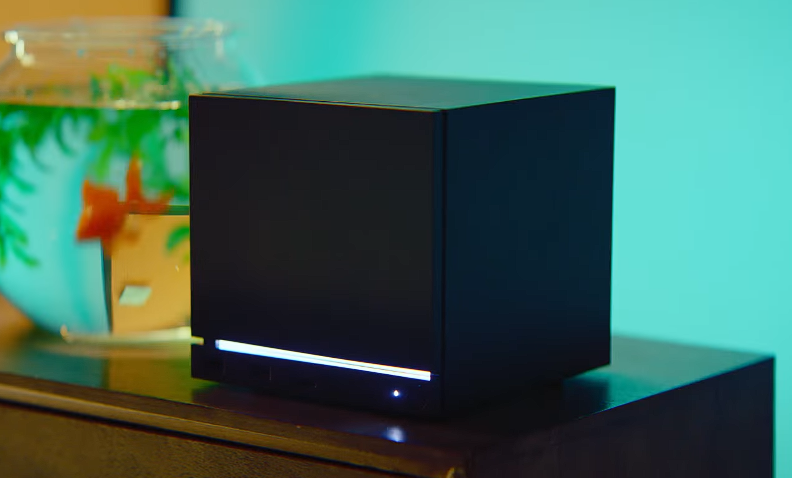
Griffais also added that after the failure of the first Steam Machine, Valve learned that “people just need all their games to be able to have a good experience, you can't just have a subset of the catalog and say this is good”.
While Valve did have a prototype Steam Machine 1.0 back in 2015, it was never put up for sale. Instead, Valve relied on OEMs like Alienware, Zotac and others to make their own Steam Machine hardware, often with worse specs than what Valve had in mind. On top of that, the original SteamOS did not have Proton, the compatibility layer that now enables almost all Windows-based PC games to run on Linux. Steam Machine 1.0 barely had any game support as a result.
“We found out that the only way that this is going to work is if you don't have to do any porting”, Griffais explained. Nowadays thanks to Proton, game developers don't have to do much, if anything, to get a game running on SteamOS, although a bespoke graphics mode can be very helpful for getting newer titles running well on Steam Deck and Steam Machine. Some AAA games have chosen to offer this, including the likes of Cyberpunk 2077 and Spider-Man Remastered.
Valve has fixed those issues with the latest iteration of the Steam Machine, which offers a new base-line performance target, and a much more robust version of SteamOS with greater compatibility for your library of games. At this point, most titles, even unverified ones, will work on SteamOS, but there are some exceptions for certain multiplayer titles that require kernel-level anti-cheat, like GTA Online and Call of Duty.
Unfortunately, the new Steam Machine is in short supply and the waiting list for new stock is backed up to 2027. Due to ongoing issues sourcing memory and SSDs, it is unclear how often Valve will be able to replenish stock, or if it will be able to keep the price point consistent in the long-term.
KitGuru Says: Valve has finally turned SteamOS into a viable gaming platform. Are you considering switching to SteamOS for your next gaming system?