KitGuru KitGuru.net – Tech News | Hardware News | Hardware Reviews | IOS | Mobile | Gaming | Graphics Cards


Apple's week of Mac announcements continues. Following the launch of new M4 iMacs yesterday, Apple has now revealed the new Mac Mini, which promises to be “more mighty, more mini”.
The new Mac Mini is powered by the new M4 and M4 Pro silicon. These ARM-based, Apple-designed processors offer significant performance improvements compared to the M1-based Mac Mini and as you may already suspect, they will also support Apple Intelligence, Apple's new AI-powered service enabled by the new AI acceleration cores found in the M4 series.
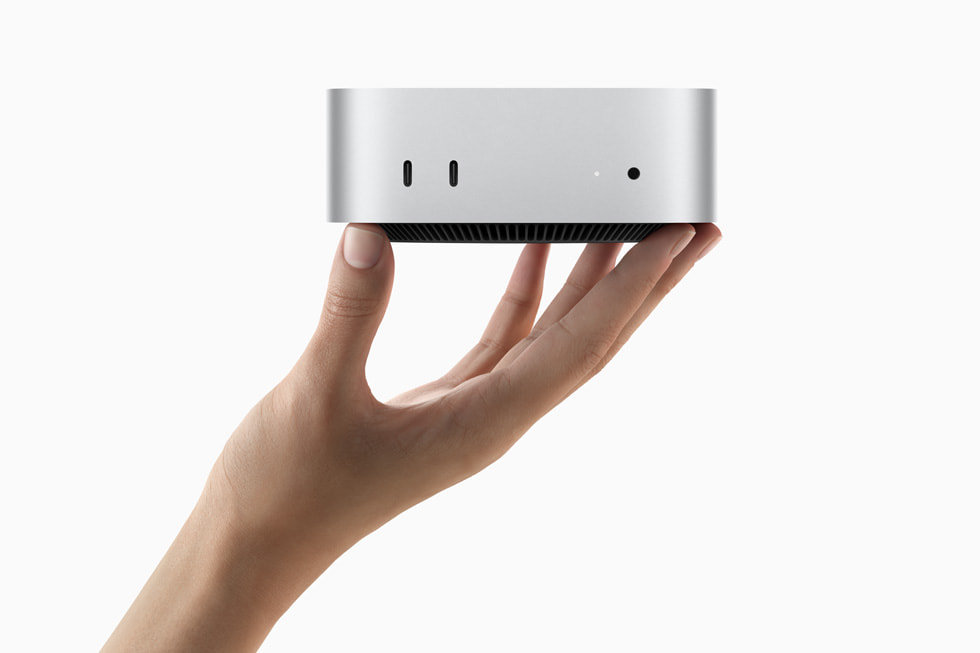
Apple says the standard M4 Mac Mini offers up to 1.8X better CPU performance and up to 2.2X better GPU performance. The M4 Pro offers a significant boost in CPU cores, going up to 14 CPU cores, split between 10 performance cores and four efficiency cores, while the GPU has up to 20 cores and is twice as powerful as the standard M4 GPU.
The new Mac Mini with M4 starts at $599 for the base model. The Mac Mini with M4 Pro starts at $1,399 instead.
Discuss on our Facebook page, HERE.
KitGuru Says: If Apple's claims of a 2X more powerful GPU in the M4 Pro are true, then the Mac Mini pricing structure makes some sense. It will certainly be interesting to see the benchmarks once these become widely available on the 8th of November.