KitGuru KitGuru.net – Tech News | Hardware News | Hardware Reviews | IOS | Mobile | Gaming | Graphics Cards


AMD has released the first public version of FLM (Frame Latency Meter), a measurement tool rivalling Nvidia's LDAT. However, unlike LDAT, FLM can be used by all modern GPUs, including those from Nvidia and Intel.
The FLM latency measuring tool offers various features and a user-friendly interface, making it suitable for casual gamers and enthusiasts. This tool works by computing the total latency of mouse reactions, from the initial mouse movement to the display of the corresponding frame on the screen. The tool supports at least two frame capture codecs, including the AMD GPU-optimized Advanced Media Framework (AMF) codec and the universally compatible Desktop Duplication (DXGI) screen capture codec.
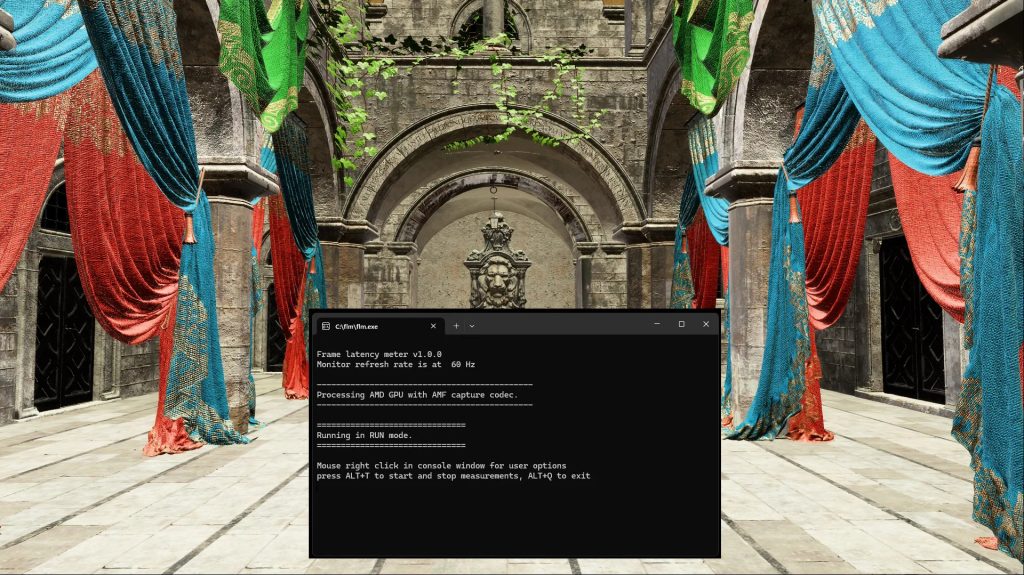
The application offers precise data on latency and “effective framerate”, which can then be exported to a CSV file for data analysis. Moreover, the tool also provides customisable hotkeys for activating measurements, defining the screen capture zone, and selecting measurement formats.
FLM's mouse latency measuring tool distinguishes itself from some competitors by not requiring muzzle flash from bullets to calculate latency. This allows users to swiftly capture numerous measurements without limitations, resulting in a virtually limitless pool of measurement samples and improved accuracy.
Discuss on our Facebook page, HERE.
KitGuru says: FLM's ability to work with all modern GPUs already sets it apart from the competition. However, its accuracy still needs to be tested to determine whether it's a tool worth using.