KitGuru KitGuru.net – Tech News | Hardware News | Hardware Reviews | IOS | Mobile | Gaming | Graphics Cards


Kitguru rates the GTX750ti very highly – we have reviewed a handful of partner cards since Nvidia launched the model earlier this year. For the modest asking price it delivers solid frame rates at 1080p – but it is the Maxwell architecture that deserves special praise. These cards run exceptionally cool and take all the power they need direct from the PCI e slot. We like the combination of high efficiency, low noise and modest heat output – Nvidia seemed focused this year on reducing power demand which can only be seen as a positive step forward.
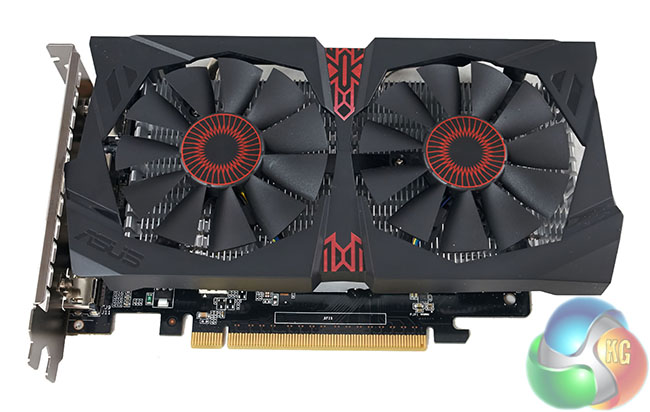
The ASUS STRIX cards that we have reviewed in recent months have certainly tickled our taste buds. The rather catchy STRIX moniker is taken from the ancient Roman and Greek for ‘OWL’. ASUS say ‘ STRIX means the keenest hearing and sharpest eyesight. Strix means feeling your environment so that you detect and react to the slightest movement. Strix means survival on the very edge of instinct. Strix is in your blood, as it is in ours.‘
The STRIX coolers use a semi passive fan profile … meaning that as the thermal curve drops the fans will spin very slowly – eventually stopping completely. This actually makes this ASUS solution today one of the most interesting we have looked at to date.
| GPU | Ref GK107 (Kepler) | Ref GM107 (Maxwell) | Asus GTX750ti Strix OC |
| CUDA Cores | 384 | 640 | 640 |
| Base Clock | 1058mhz | 1020mhz | 1124mhz |
| GPU Boost Clock | N/A | 1085mhz | 1202mhz |
| GFLOPs | 812.5 | 1305.6 | 1305.6 |
| Texture Units | 32 | 40 | 40 |
| Texel fill-rate | 33.9 Gigatexels/sec | 40.8 Gigatexels/sec | 45.0 Gigatexels/sec |
| Memory Clock | 5000mhz | 5400mhz | 5400mhz |
| ROPs | 16 | 16 | 16 |
| L2 Cache Size | 256kb | 2048kb | 2048kb |
| TDP | 64W | 60W | <70W |
| Transistors | 1.3 Billion | 1.87 Billion | 1.87 Billion |
| Die Size | 118mm2 | 148mm2 | 148mm2 |
| Manufacturing Process | 28nm | 28nm | 28nm |
The Asus GTX750 Ti STRIX OC Edition ships in a highly overclocked state – core speeds are increased by 10.2% over the reference solution, to 1,124mhz.