KitGuru KitGuru.net – Tech News | Hardware News | Hardware Reviews | IOS | Mobile | Gaming | Graphics Cards


be quiet! has been working away on its next-generation Silent Wings 4 fans for a couple of years now, with the first 3D-printed prototype arriving in 2020. Now in 2022, the new Silent Wings 4 fans are ready to hit shelves, promising improved performance.
The Silent Wings 4 fans are primarily intended for use with radiators and heatsinks, though be quiet! did stress to us that they are just as, if not more air-flow capable than the Silent Wings 3 series. These new fans also offer a higher range of up to 3000 RPM, giving users the choice between quieter operation or maximum performance.
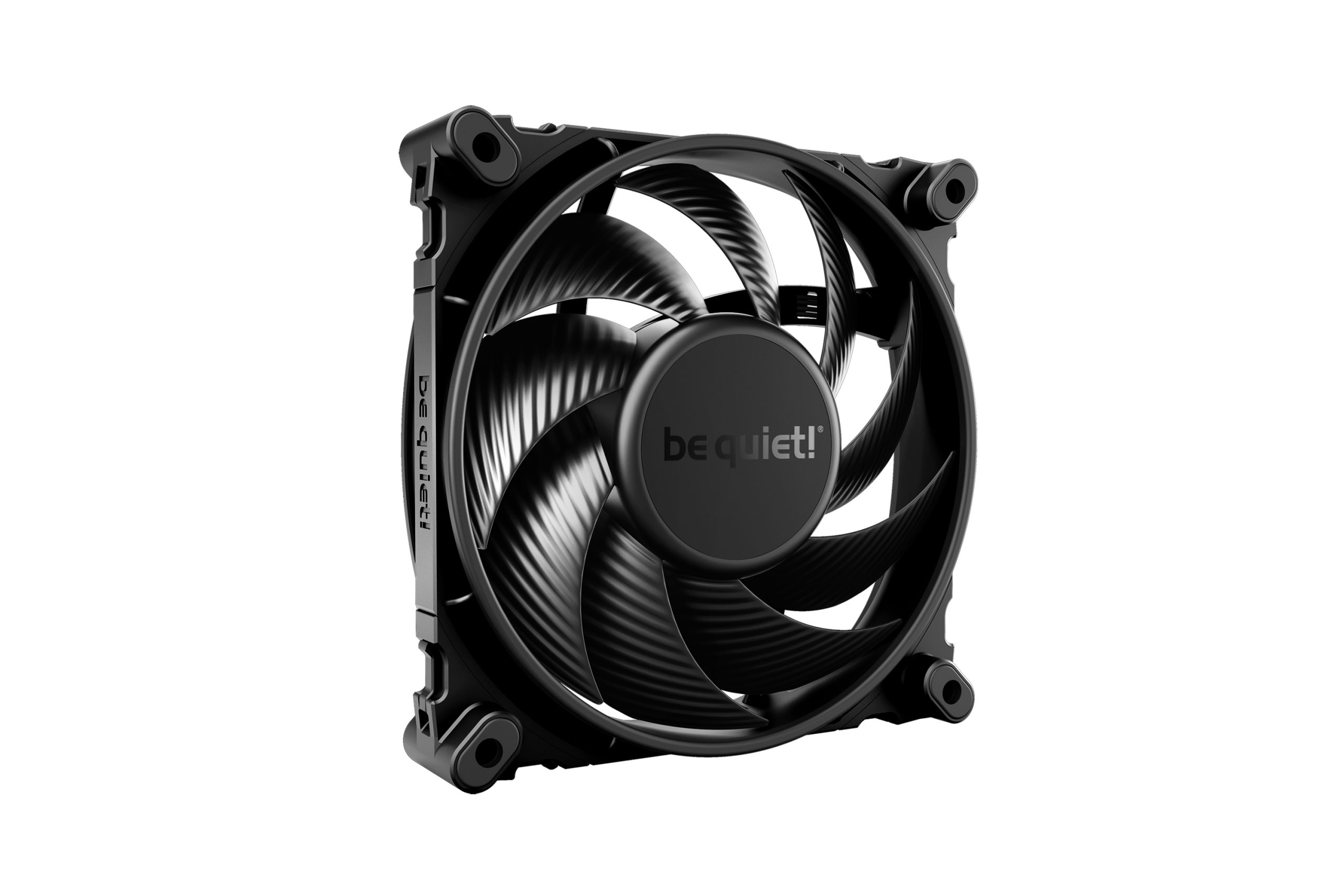
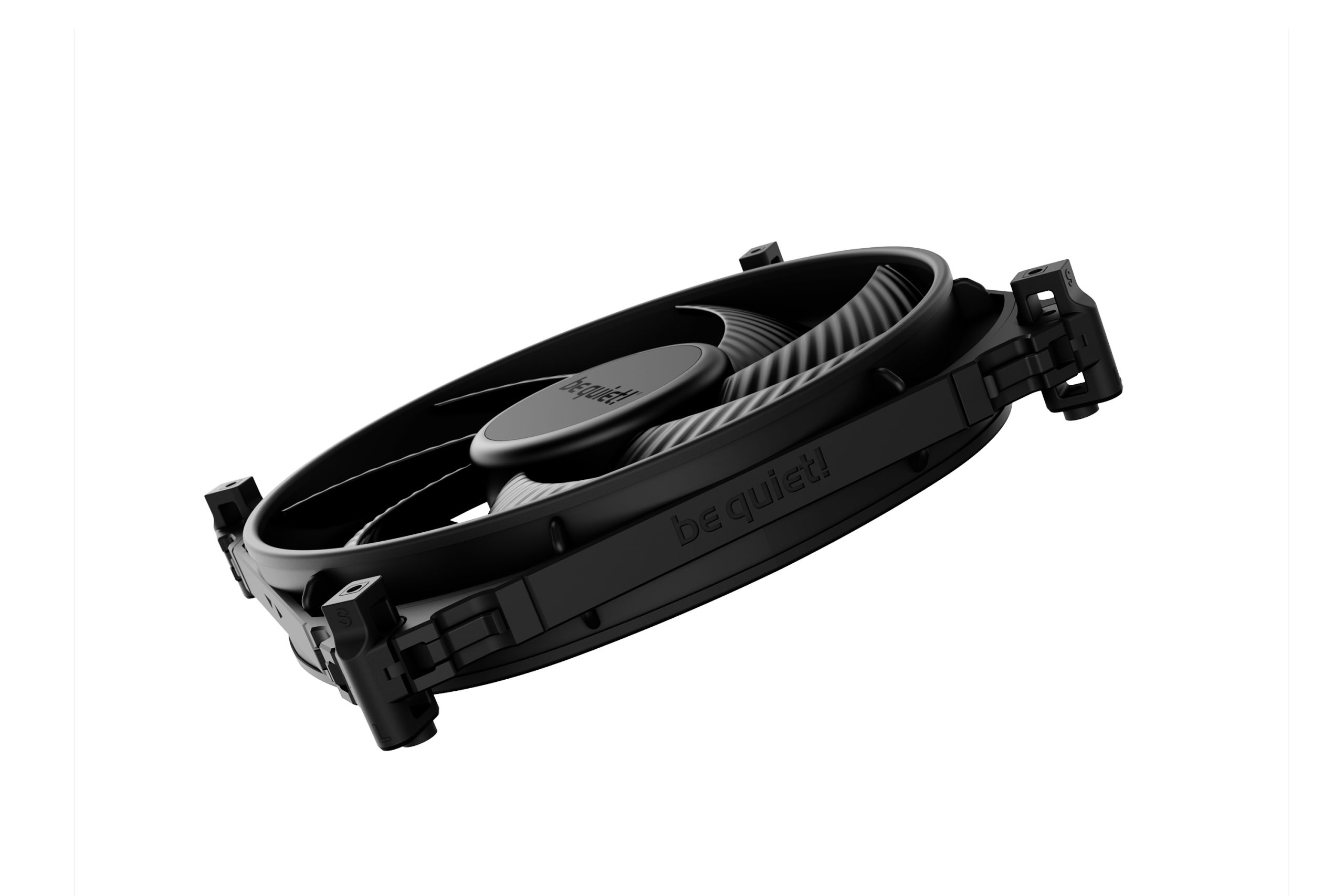
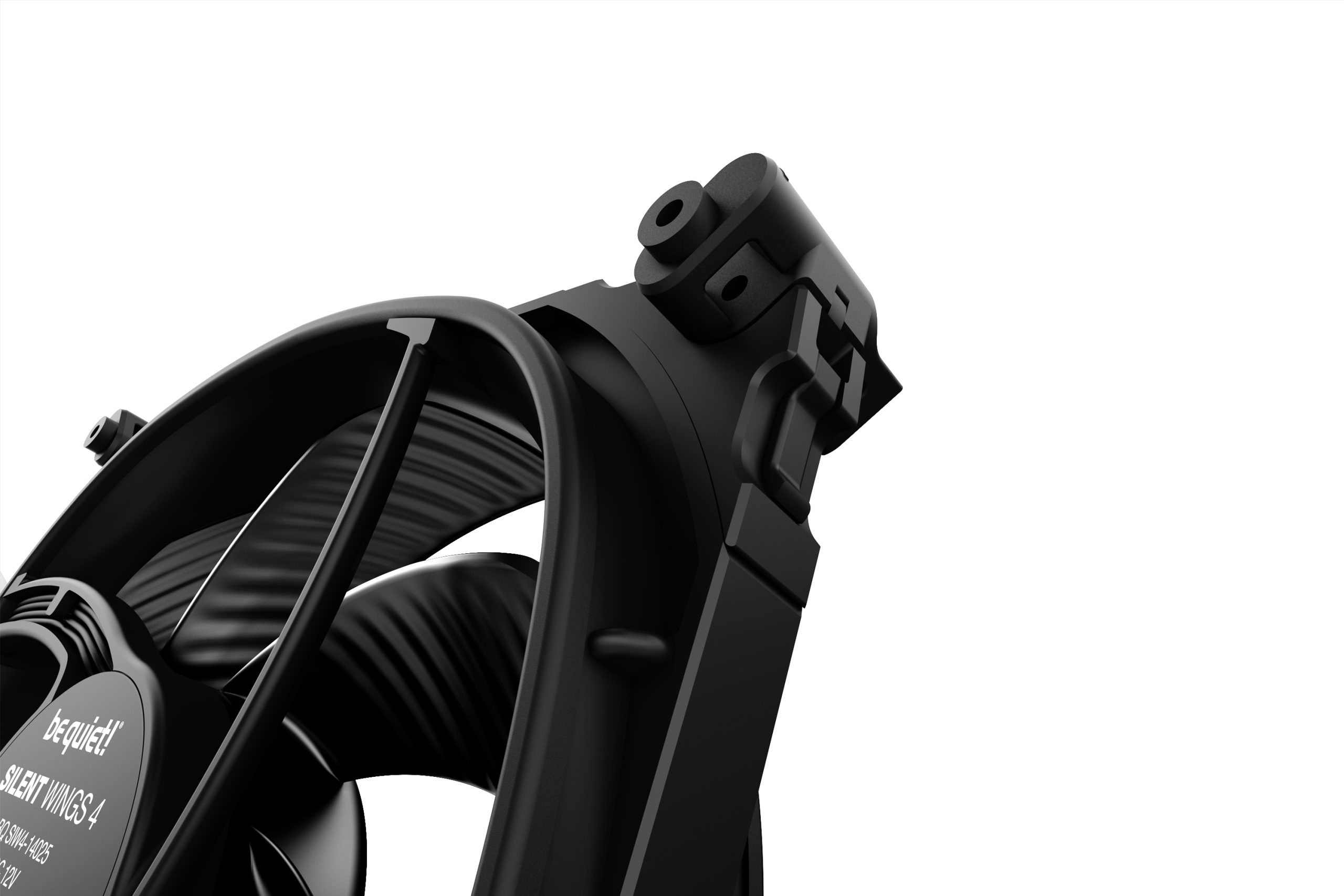
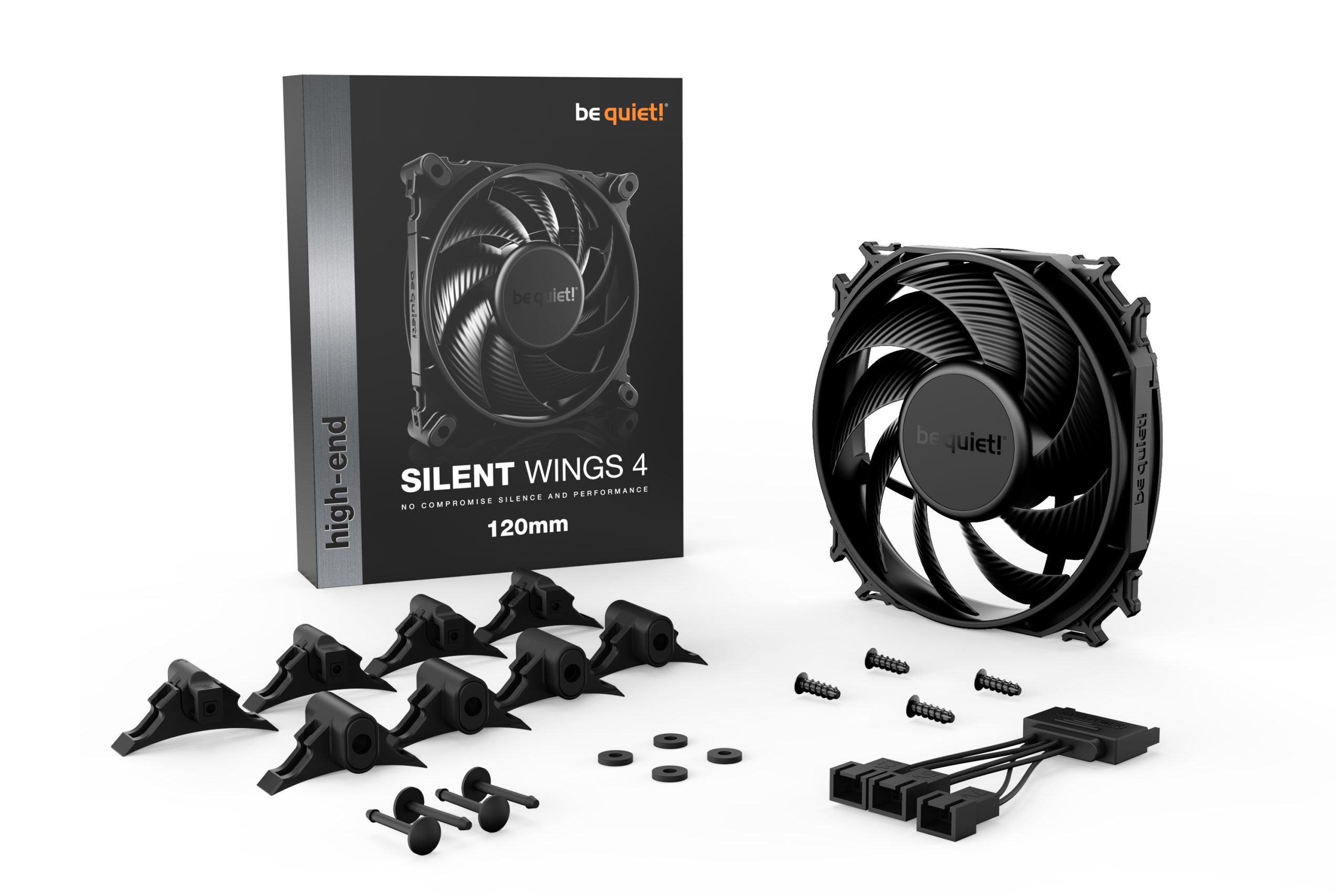
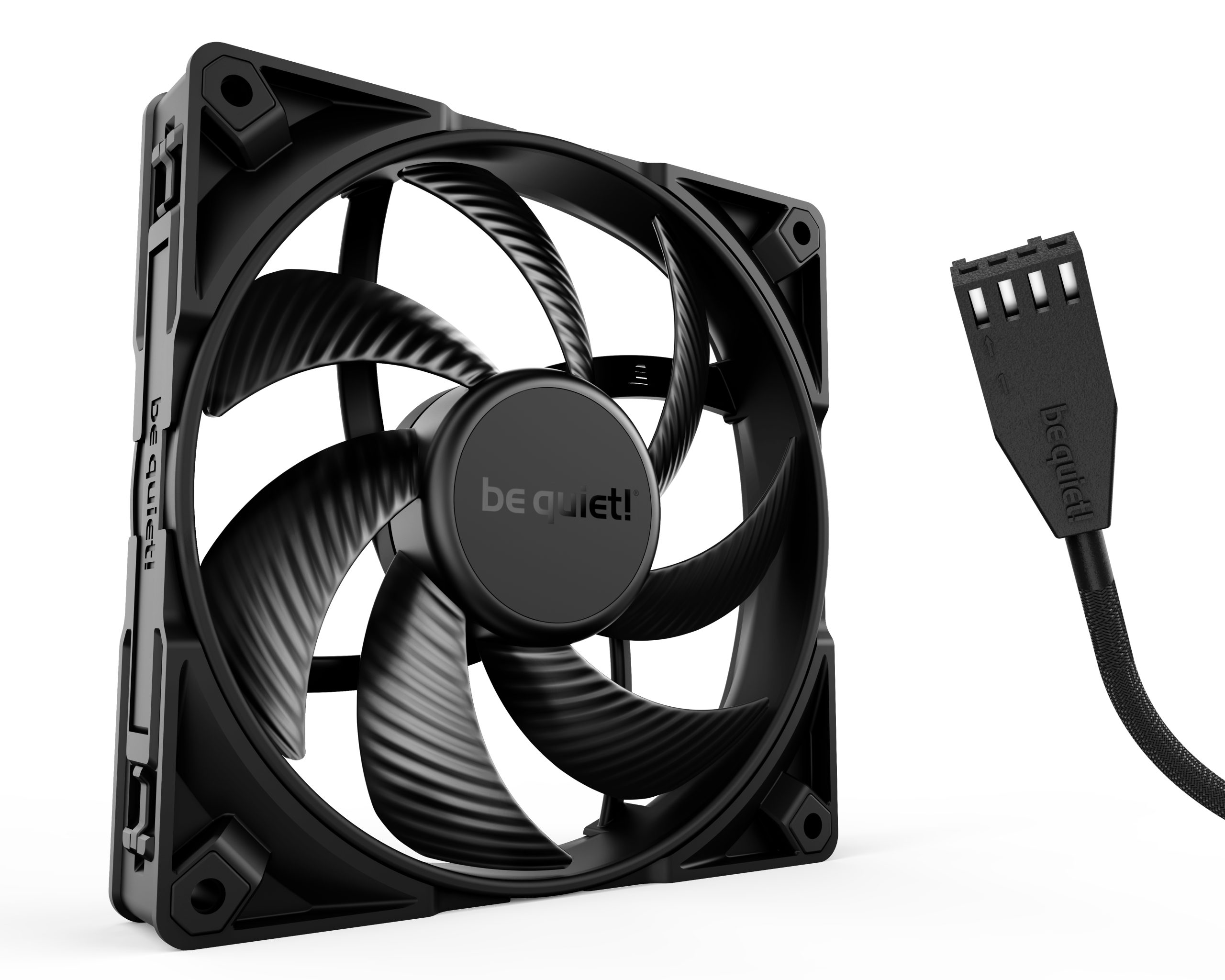
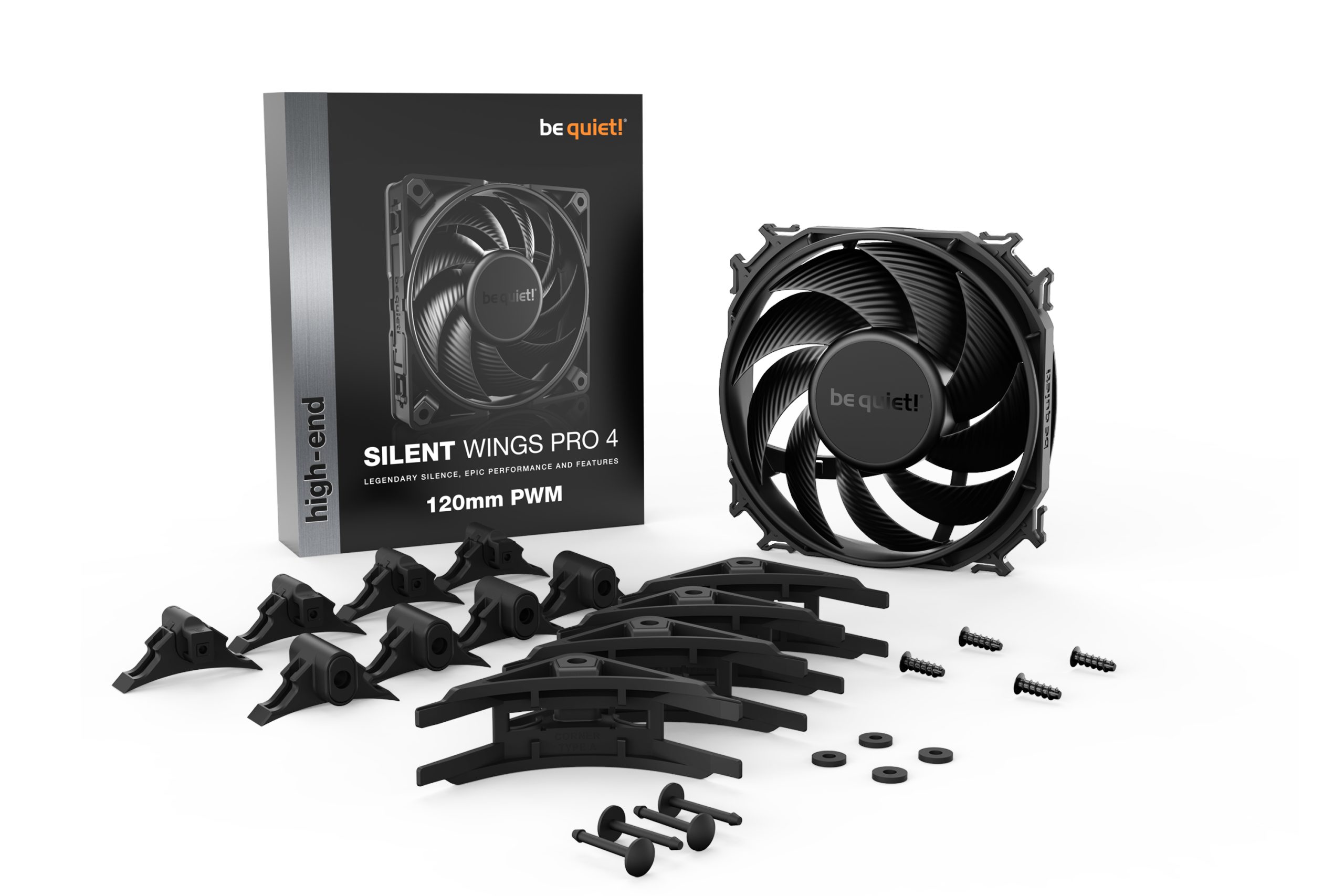
Even with its high RPM, the Silent Wings 4 promise to still be very quiet compared to standard fans. The fans are equipped with a 6-pole fan motor for less power consumption and vibration, and the fans have an anti-vibration push pin installation method when used as a case fan, which should help keep noise to a minimum.
For fan blades, frame and mounting corners, be quiet! is using polybutylene terephthalate (PBT), reinforced with up to 30% fibre glass. This material does not show any signs of impeller creep at the specified maximum RPM of 3,000, even after long periods. If you make the jump to the Silent Wings Pro 4 fans, then you'll also benefit from a speed switch, a patent-pending technology that allows users to switch between different PWM profiles.
The be quiet! Silent Wings 4 fans will be available soon, priced at €24.90 for the 140mm version or €23.90 for the 120mm version. The Silent Wings Pro 4 fans will also be available soon, priced at €32.90 for the 140mm version or €31.90 for the 120mm version.
Discuss on our Facebook page, HERE.
KitGuru Says: Are you looking to build a new PC this year? Will you be considering be quiet! fans for your case and CPU cooler?