KitGuru KitGuru.net – Tech News | Hardware News | Hardware Reviews | IOS | Mobile | Gaming | Graphics Cards


FSP is one of the longest-established power supply manufacturers in the PC industry, with decades of experience producing PSUs both under its own brand and as an OEM partner for a wide range of well-known companies. Its manufacturing spans high-volume consumer products through to industrial and enterprise-grade power solutions, giving FSP a perspective that extends well beyond the retail PC space. When FSP talks about power delivery, stability and long-term operation, it does so from direct experience with systems designed to run continuously, not just peak briefly under load.
That background is becoming increasingly relevant as the PC market shifts towards AI-capable systems. By 2026, more than half of all PCs sold are expected to include some form of AI acceleration, even where AI is not the primary workload. Systems built to support this properly are not inexpensive and are often deployed for commercial use, where they may be expected to operate 24×7. This creates a new class of ‘always-on’ computing – not traditional mission-critical infrastructure, but machines where downtime is disruptive and increasingly unacceptable. Good examples of these applications include:-
- AI training and inference workloads
- Edge computing systems
- Small on-premise compute nodes
- Content processing pipelines
- Always-on analysis or monitoring systems
It is within this middle ground that FSP’s current product strategy begins to make sense. Let’s start with the monster that is the Cannon Pro 3300w.
The Cannon Pro 3300W: Fascinating and revealing at the same time
If there is one product that captures this shift most clearly, it is the Cannon Pro 3300W. At face value, a 3,300 watt ATX-class power supply sounds excessive, even absurd. Most high-end enthusiast PCs rarely exceed half that figure under real workloads. But focusing only on the number misses the point.
The Cannon Pro is not interesting because it can deliver 3,300 watts briefly. It is interesting because it is designed to sustain extreme power delivery, potentially 24 hours a day, in a desktop-style enclosure. That has consequences that extend beyond the PC itself.
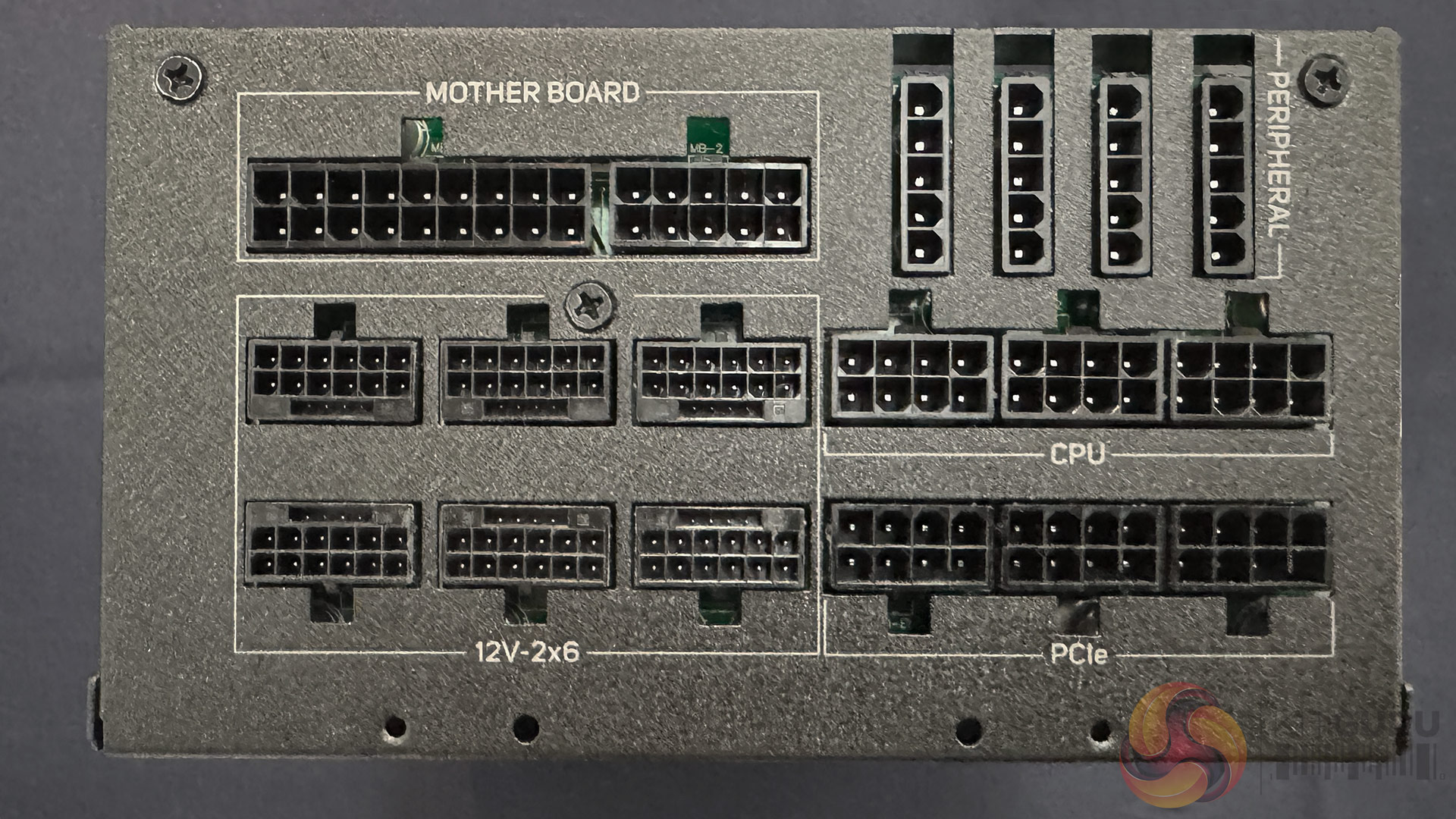
In the UK, a typical single-phase household electrical supply is rated around 13 amps per socket, translating to roughly 3,000 watts at 230V under ideal conditions. Running a system that can legitimately draw close to that limit continuously is not something most domestic installations are designed for. In practical terms, a system built around the Cannon Pro would almost certainly require:-
- Dedicated electrical circuit
- Separate fuse in the consumer unit
- Electrical considerations similar to those used for electric showers or high-load appliances
This is not about theoretical maximum draw. It is about sustained demand. A PC that can pull 3,300 watts continuously changes the assumptions around where and how “desktop” hardware can be deployed.
And yet, this is precisely why the product is so compelling. It forces the realisation that desktop-class compute has crossed into territory traditionally reserved for industrial or datacentre environments. For the KitGuru audience, some of these systems represent a boundary shift. We've heard some amazing claims from other PSU vendors recently, most of whom don't have more than a single GPU connector on the back of their high-end PSUs.
Multi-GPU thinking, outside the datacentre
FSP’s messaging around the Cannon Pro makes it clear that this is not a gaming product. Six 12V-2×6 connectors and support for multiple high-end GPUs point directly at AI workloads, where parallelism matters more than frame rates. What is notable is not that this exists (datacentres have been doing this for years), but that it now exists in an ATX-adjacent form factor.
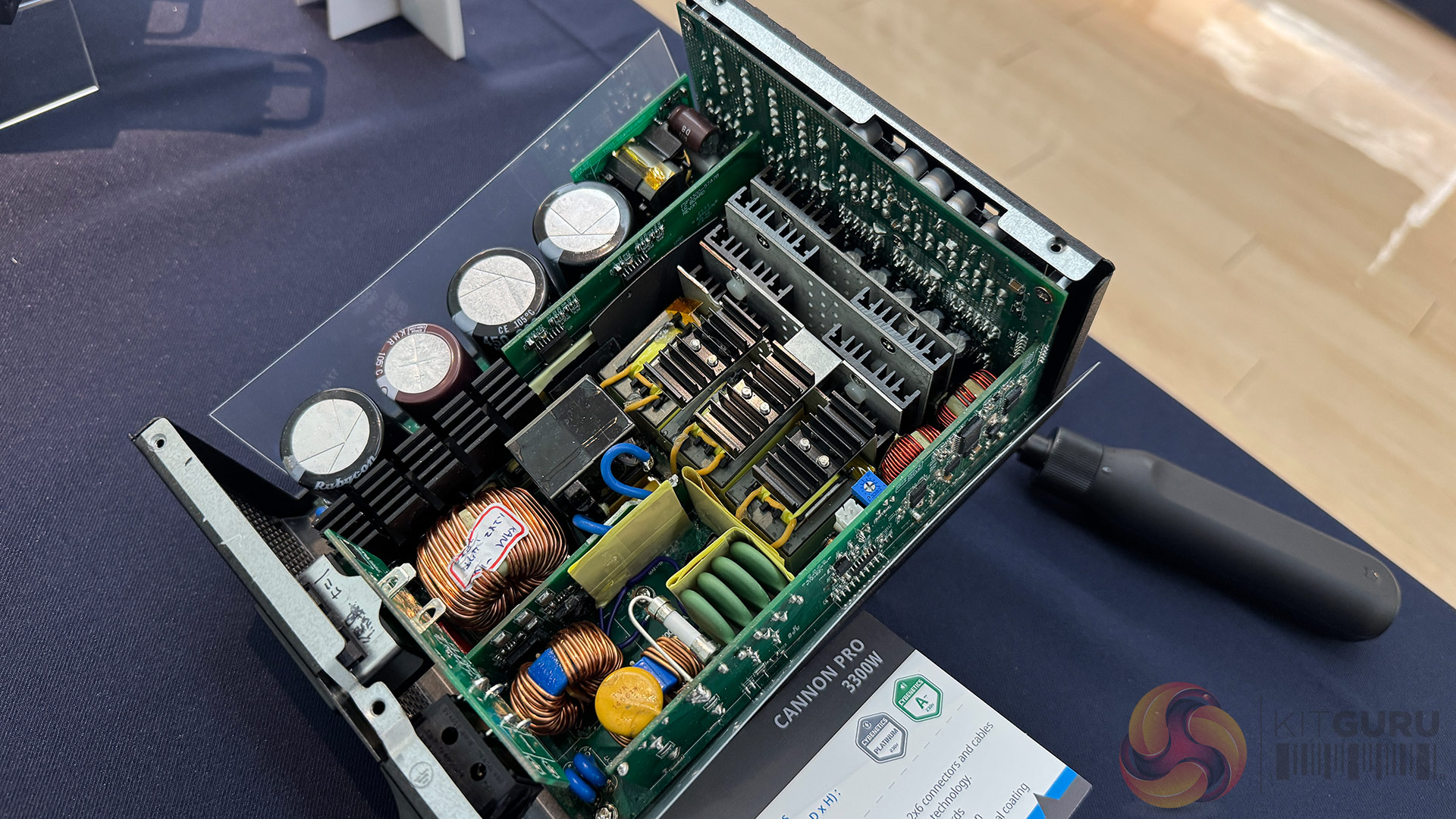
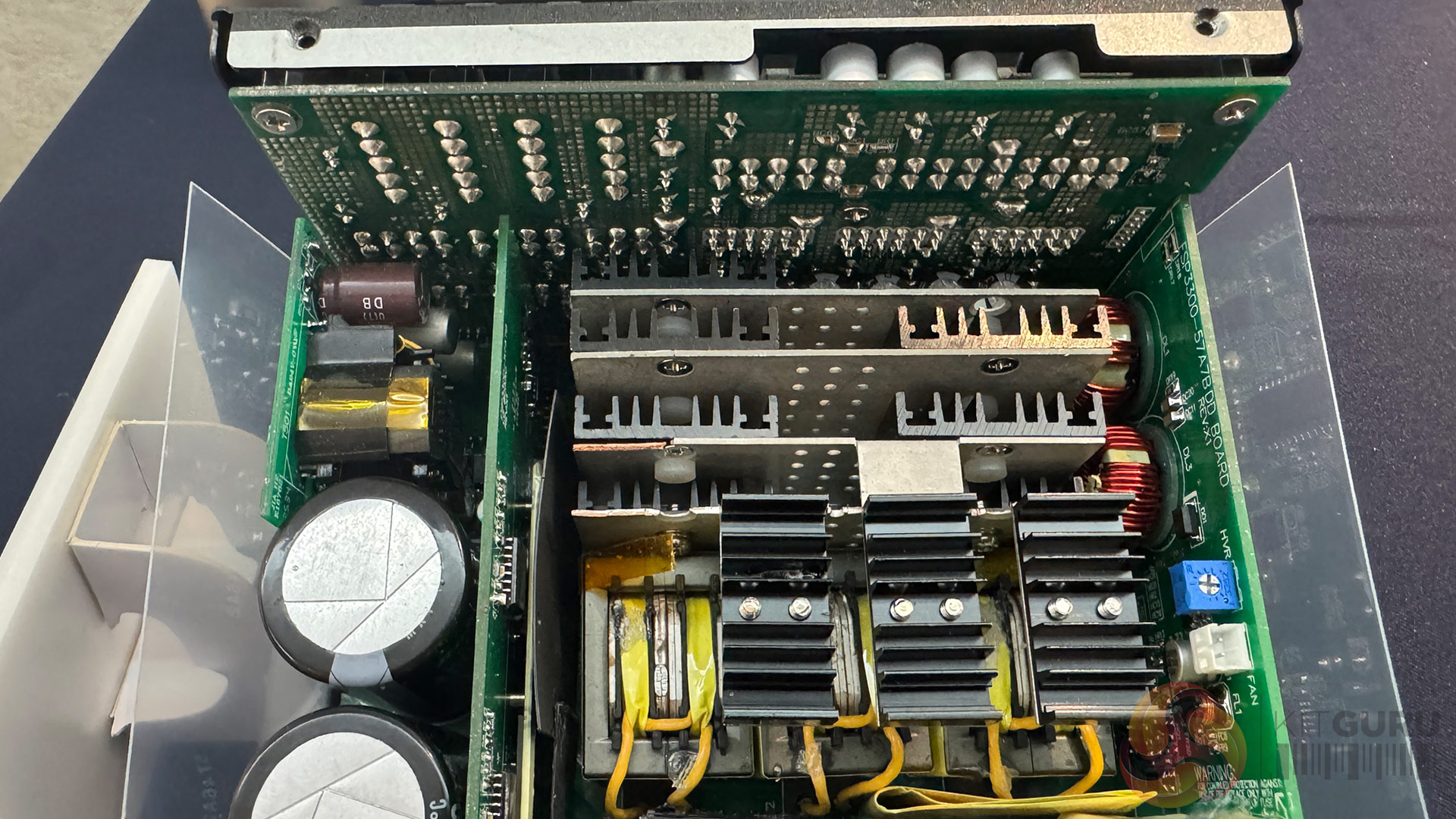
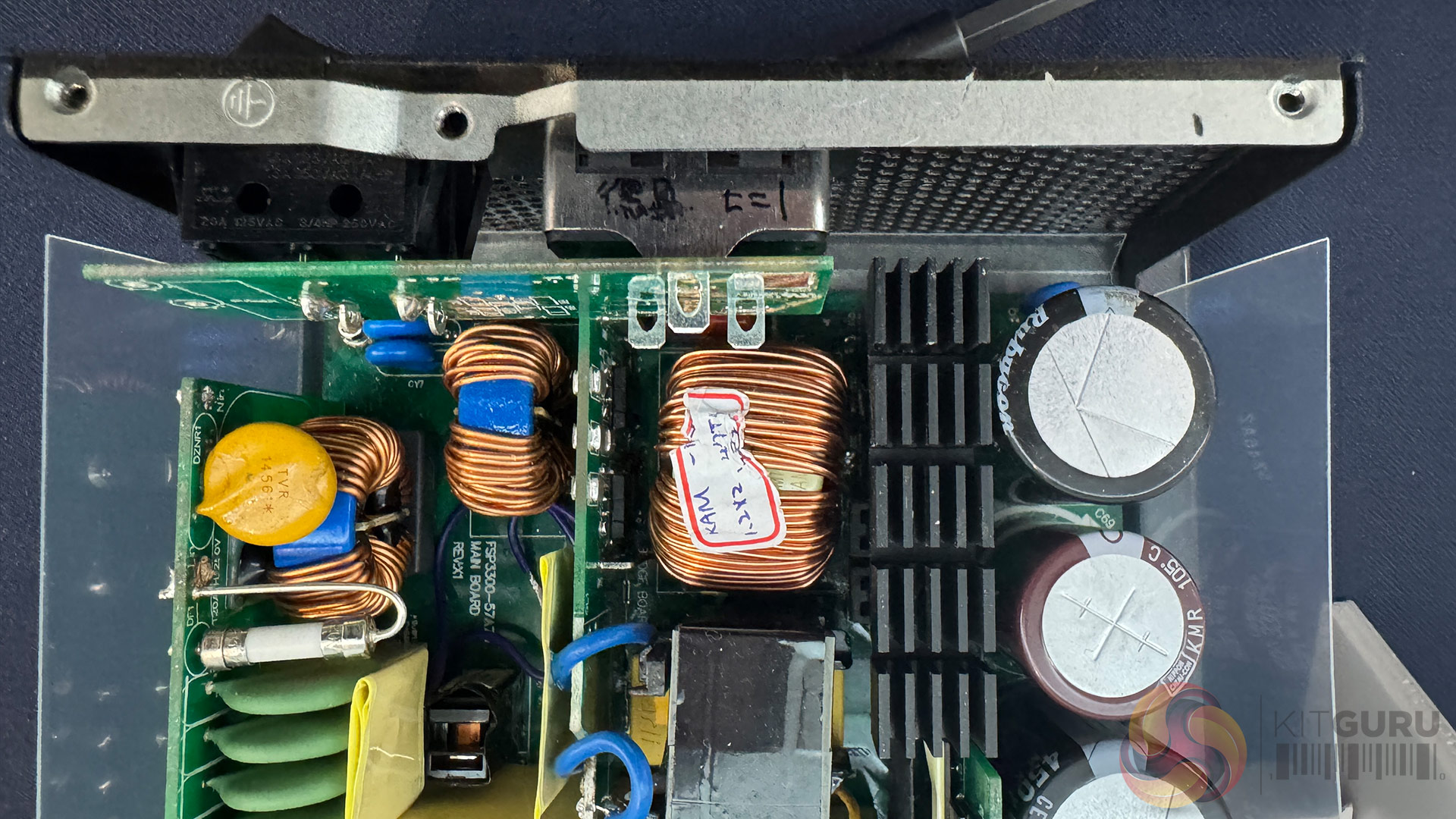
This reflects a broader trend we are seeing across the industry, where enterprise and prosumer hardware concepts are bleeding into the retail and workstation space. NVIDIA recognised this years ago when it introduced Studio drivers for GeForce GPUs, effectively acknowledging that a large number of users were already using ‘gaming’ hardware for professional and semi-professional workloads.
AI has accelerated that convergence. The distinction between consumer, prosumer and enterprise is no longer clean. It is porous, workload-driven, and often dictated by budget rather than architecture.
FSP’s product stack reflects this reality. The Cannon Pro sits at the extreme end, but it is supported by a broader range of power supplies that scale down into more recognisable enthusiast and workstation territory.
nVidia's H100 (Hopper: PCI-Express variant) products typically draw 350-400w each for sustained/extended use, giving you the potential for a 6x H100 card system in a desktop workstation chassis – running off a single PSU. Serious use will normally mean a back-up PSU for power security. There are now several new ‘dual PSU workstation chassis' coming to market right now.
Power stability matters more than peak power
One of the more subtle points in FSP’s presentation to KitGuru, was that the challenge is not simply delivering large amounts of power, but doing so consistently.
Training workloads, inference pipelines and edge systems tend to stress power supplies differently from gaming. Loads are sustained. Thermal equilibrium matters. Efficiency curves under continuous operation matter. Component longevity becomes a first-order concern rather than an afterthought.
This explains FSP’s focus on:
- GaN-based designs
- Multiple transformer layouts
- High MTBF ratings
- Monitoring interfaces such as PMBus
- Redundant and hot-swappable architectures
These are not features aimed at enthusiasts chasing benchmark numbers. They are aimed at users who, once a system has been deployed, don’t want to think about power at all. In that sense, power reliability becomes the enabler for everything else. If the power layer is unstable, the rest of the system becomes irrelevant. That's where the new high-end PSUs from FSP come in. Regardless of demand, surely the number one requirement for any decent PSU is that it sits there and ‘does its job' for the best part of a decade. If you ever notice your PSU, then something's probably gone wrong.
AI hardware is leaking into retail PCs, but slowly
It would be a mistake to frame this purely as an enterprise story. There is clear evidence that AI-driven requirements are influencing retail PC design, from GPU power envelopes to motherboard layouts and cooling expectations. That said, this is not a wholesale shift. Most consumer systems do not need multiple redundant PSUs, PMBus monitoring or 3-kilowatt power budgets. The majority of retail PCs will continue to operate comfortably within existing power assumptions.
What's changing is the ceiling.
Products like the Cannon Pro exist not because everyone needs them, but because some users need them today. Once the ceiling gets raised, the rest of the ecosystem adjusts around it. To get an idea of how long it can take for ‘serious power draw’ to make it into common place systems – consider that a 250w PSU the early 90s was considered perfectly capable, but that doubled over the next 10 years with 500w PSUs being common place in the early 2000s. These days, a 1000w PSU is considered (relatively) mainstream by the KitGuru audience – and we’re sure that some of you will be looking at the 3,300 watt Cannon Pro and starting to imagine how it might be useful in your every day lives (but maybe not as useful to your electric bill).
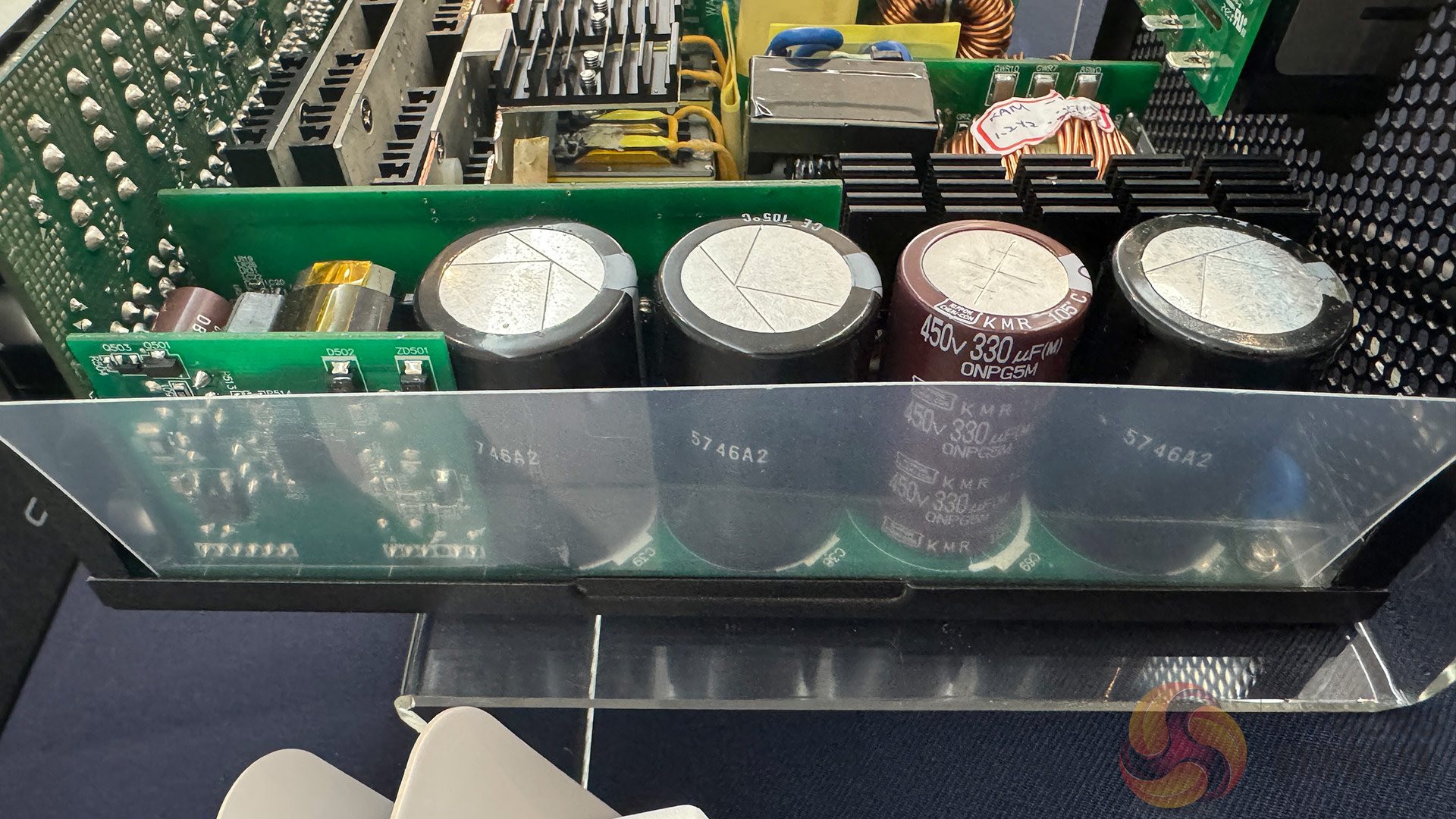
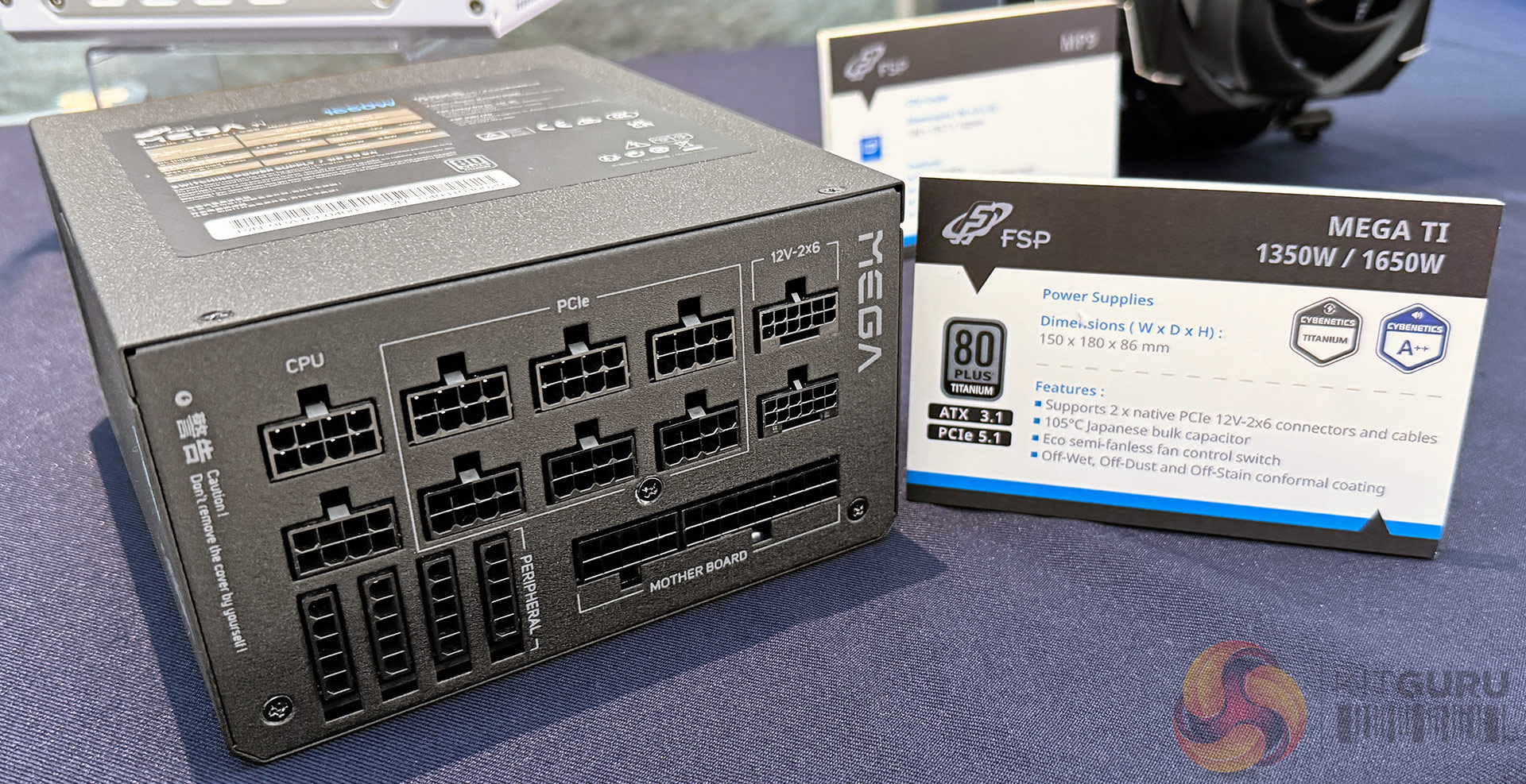
The MEGA Ti series offers a much more affordable/sensible path to running one or two high end RTX graphics cards. KitGuru saw both the 1,350w (dual RTX5080) and 1,650w (dual RTX5090) models. They offer ATX 3.1 and PCIe 5.1 with 80Plus Titanium certification and they both have dual native PCIe 12V-2×6 connectors and cables. FSP uses 105°C Japanese bulk capacitors and there's an Eco semi-fanless fan control switch.
The quiet arrival of power continuity
FSP’s PSU+BBU concepts are perhaps the most forward-looking, abut also the most limited in terms of immediate market impact. The idea is straightforward: Integrate short-duration battery backup directly into the power supply, eliminating transfer time and simplifying deployment. From a technical standpoint, this has clear advantages over traditional UPS setups, particularly for smaller systems – where space, efficiency and simplicity matter.
However, the market for this remains small outside of datacentres, industrial environments and specific edge deployments. Most consumers are unlikely to pay a premium for integrated backup power, especially when in countries where outages are infrequent and existing UPS solutions are ‘good enough’.
That does not make the idea invalid. It simply means adoption will be selective. FSP’s thinking here has value, but it is not about volume. It is about enabling a specific class of always-on systems where even brief interruptions are unacceptable.
KitGuru says: Taken together, FSP’s 2026 roadmap is less about individual products and more about a change in assumptions. Power is no longer just a supporting component. For a growing class of workloads, it is a foundational constraint. Sustained load, reliability and continuity now matter as much as headline performance. The Cannon Pro 3300W is not a product most readers will ever own. But it is a clear signal of where the boundaries moving toward. Desktop-class systems are now capable of demanding infrastructure-level power support, and that changes the conversation. Even if the market for such systems remains niche in the short term, it’s clear that over the next 3 generations of graphic card – power will be more of a bottleneck than ever before. When the supply of power becomes a bottleneck, everything else has to adapt.