KitGuru KitGuru.net – Tech News | Hardware News | Hardware Reviews | IOS | Mobile | Gaming | Graphics Cards


Primate Labs has officially released Geekbench 7, introducing updated CPU and GPU workloads alongside redesigned multi-core testing. The new cross-platform benchmark suite is available today across Android, iOS, Windows, macOS, and Linux platforms.
Geekbench 7's updated CPU workloads focus on real-world media tasks, including AV1 video encoding for screen-sharing, Opus audio compression, and Whisper speech recognition for live captions. Primate Labs also added a Game Physics workload built on the Jolt Physics engine while expanding image format support in the Photo Library to include JPEG XL and DNG. Multi-core testing has been restructured so workloads only run multi-threaded if corresponding real-world applications do, excluding single-threaded tasks like the HTML5 Browser test.
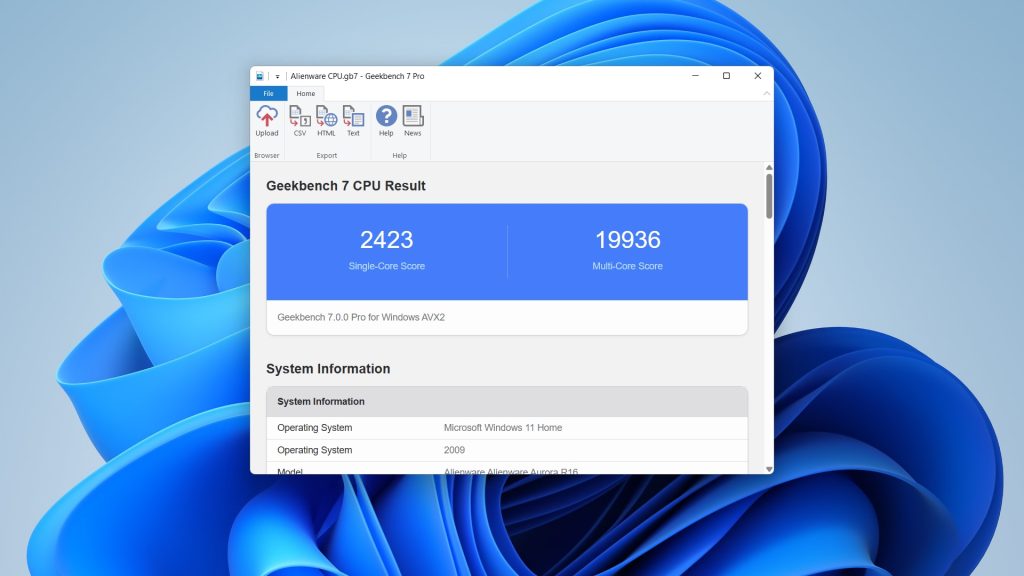
GPU benchmarks now place greater emphasis on machine learning and creation tasks, adding face tracking, super-resolution upscaling, and background blurring alongside RAW processing, path tracing, and fluid simulation. In response to user demand, CUDA joins OpenCL, Vulkan, and Metal as a natively supported GPU API. Primate Labs updated the underlying datasets across tests such as File Compression and PDF Viewer to support larger, more demanding file processing.
KitGuru says: Geekbench 7 brings welcome updates to reflect modern workloads, particularly with the addition of native CUDA support and a more realistic multi-core scoring approach. Have you already tried Geekbench 7?