KitGuru KitGuru.net – Tech News | Hardware News | Hardware Reviews | IOS | Mobile | Gaming | Graphics Cards


Razer has introduced the Base Station V3 Chroma, a new RGB headset stand with integrated USB connectivity and automated profile switching. The updated stand expands the company’s Chroma ecosystem and adds intelligent headset detection to streamline audio and lighting setups.
The standout new feature of the Base Station V3 Chroma is Seamless Headset Detection, which works with any headset supported by Razer Synapse. Lifting the headset from the stand triggers a custom profile that can switch audio and mic inputs, adjust Chroma lighting, launch games, activate shortcuts or run macros. Users can create separate profiles for gaming, streaming or media playback, with the setup reverting automatically once the headset is placed back on the stand.
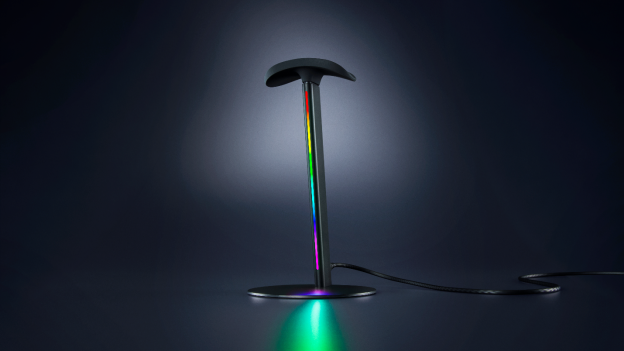
The stand also functions as a small connectivity hub. Dual USB 3.1 ports support headset dongles and other peripherals, while software‑based virtual 7.1 surround sound is available for analog headsets. A 12‑zone vertical RGB strip provides lighting effects and syncs with other Razer Chroma peripherals, as well as supported games and partner devices.
Designed for everyday use, the Base Station V3 Chroma features a curved rubberised ledge to protect headset padding and maintain shape, along with a felt anti‑slip base to keep the stand stable on the desk.
KitGuru says: The Base Station V3 Chroma adds automation and connectivity to a traditionally simple accessory, making it a more functional option for Razer users building out a Chroma‑synced setup.