KitGuru KitGuru.net – Tech News | Hardware News | Hardware Reviews | IOS | Mobile | Gaming | Graphics Cards


Thermalright is adding to its vast lineup of CPU coolers this week. The latest one is the Royal Knight SE, featuring a new dual-tower design and a slimmer fan at the front to prevent it from obstructing the RAM slots.
The Thermalright Royal Knight SE measures 122x114x155mm (LxWxH) and features a cleverly designed dual-tower heatsink and a slim 15mm fan to ensure it won't interfere with front slot memory.

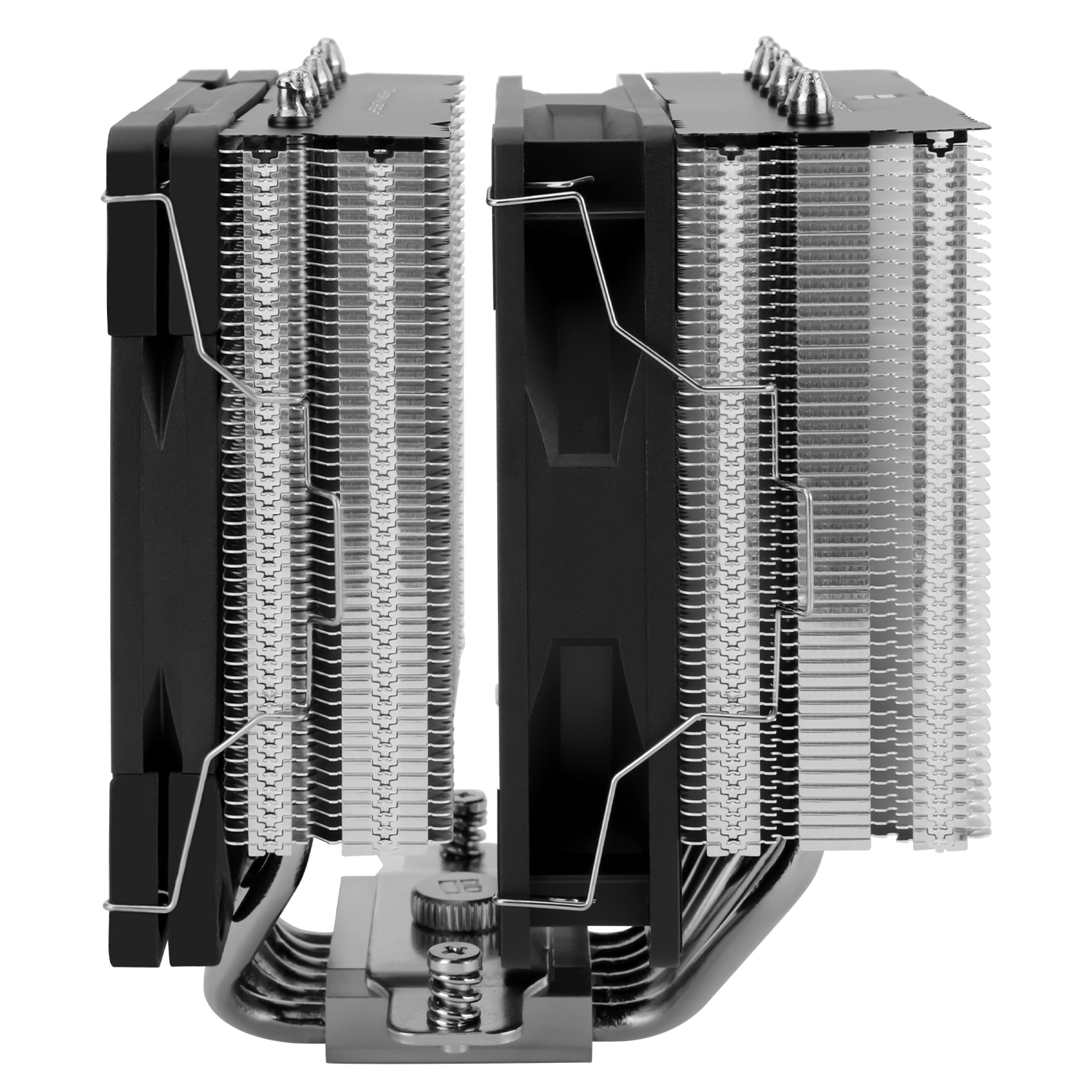
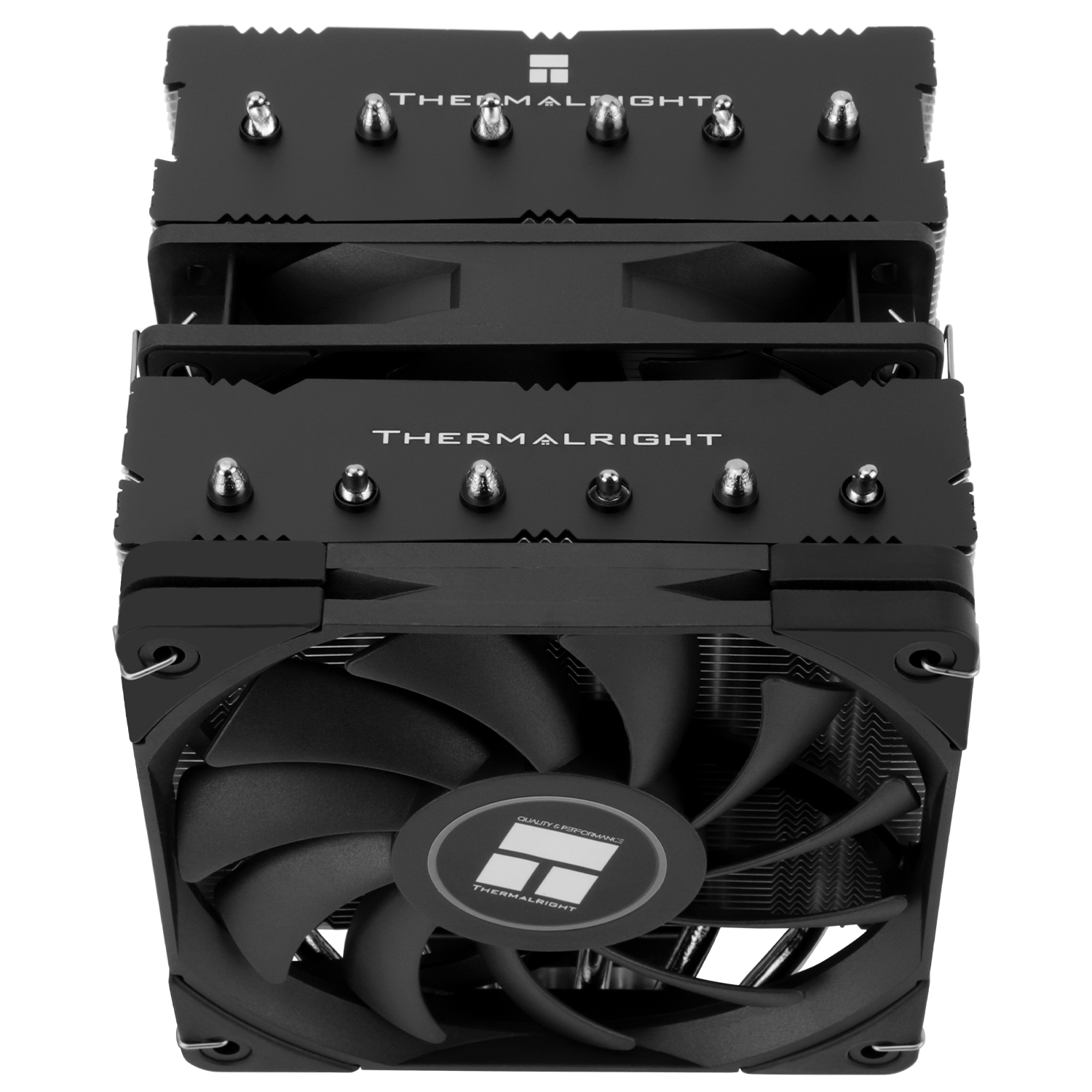

The SE model features a black top fin and a C1100 Pure nickel-plated copper base. The cooler's foundation relies on six 6mm heat pipes distributed across a dual-tower design, suggesting a good cooling performance. The centre fan is a 25mm thick TL-C12 V2 120mm PWM fan rated for a maximum rotational speed of 1500 RPM and capable of pushing 66.17 CFM of air at a 1.53mmAq pressure with a rated noise level of 25.6dB(A). The front TL-C12015B 120mm PWM fan is only 15mm thick, but it can still rotate at up to 1800 RPM and push 59 CFM of air at a 1.24mmAq pressure with a rated noise level of 26.1dB(A).
The Royal Knight SE's mounting kit is versatile, offering compatibility with various sockets, including AMD AM4 and AM5 and Intel LGA 115x, 1200, 1700, and 1851. Moreover, it comes with the company's TF7 thermal paste, enhancing its value proposition.
KitGuru says: We've been hearing about Thermalright often from our readers thanks to their competitively priced coolers. It will be interesting to see how this new dual-tower offering stacks up against others on the market from more expensive brands.