KitGuru KitGuru.net – Tech News | Hardware News | Hardware Reviews | IOS | Mobile | Gaming | Graphics Cards


Today we see the launch of the Ryzen 8000G APU family and are reviewing the Ryzen 7 8700G, however this is our second time around with this hardware. At CES 2023 AMD launched their new Phoenix laptop chips in the Ryzen 7040HS Series which we later reviewed in the Razer Blade 14 (2023) and that is the origin story of these new APUs, which are a Phoenix laptop chip in Desktop AM5 form.
Time stamps
00:00 Dark Souls 3
01:55 The PC Build
03:15 ATX v Micro / Mini – cost differences
04:12 Stripping the system down
05:10 The Ryzen 7 8700G Tech data
07:29 AMD’s claims – HD 60fps
08:14 Hardware discussion
10:30 The results
11:54 Gaming results 1080p
15:23 Real world experience with Dark Souls 3
17:12 Leo’s closing thoughts
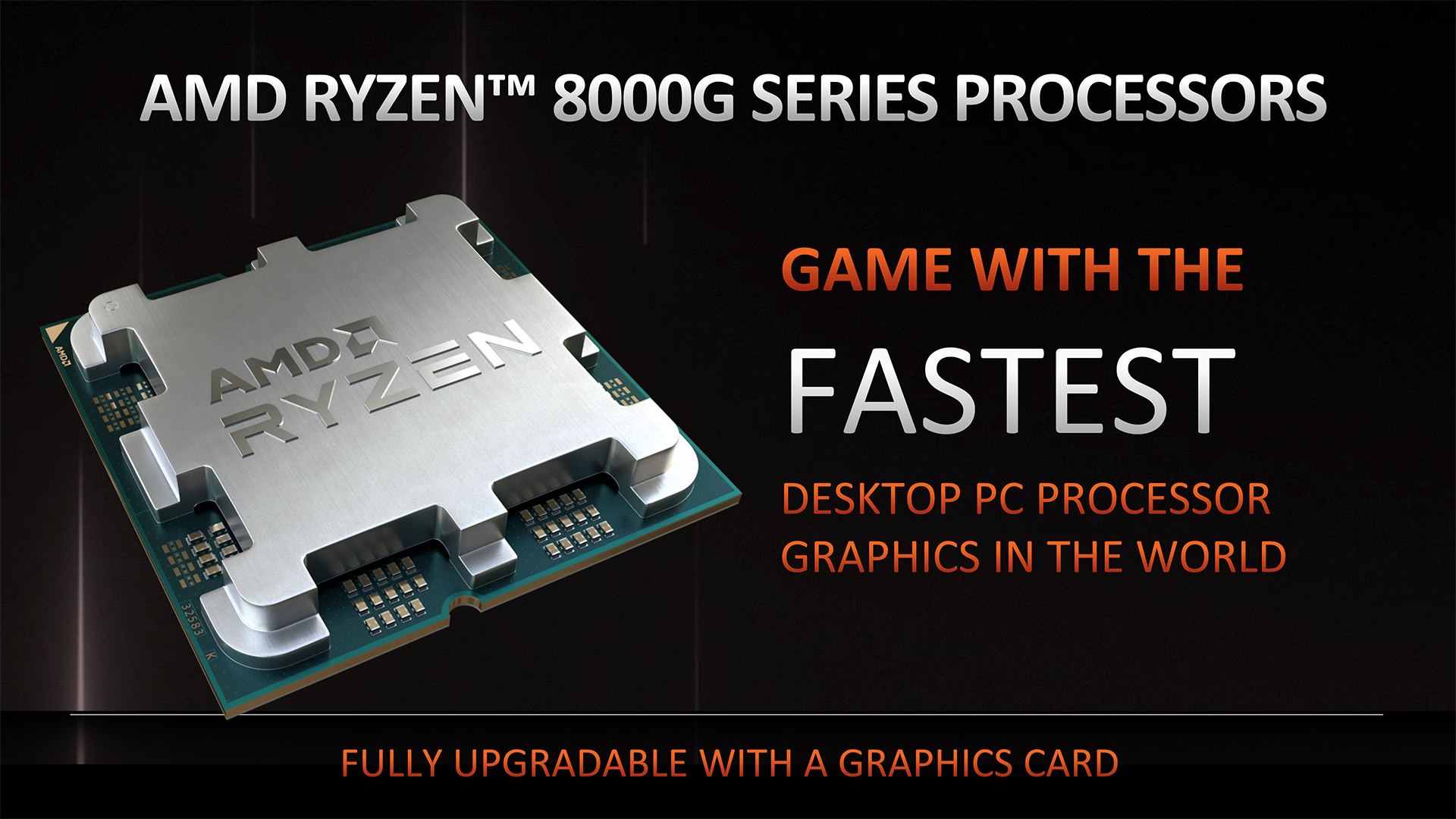
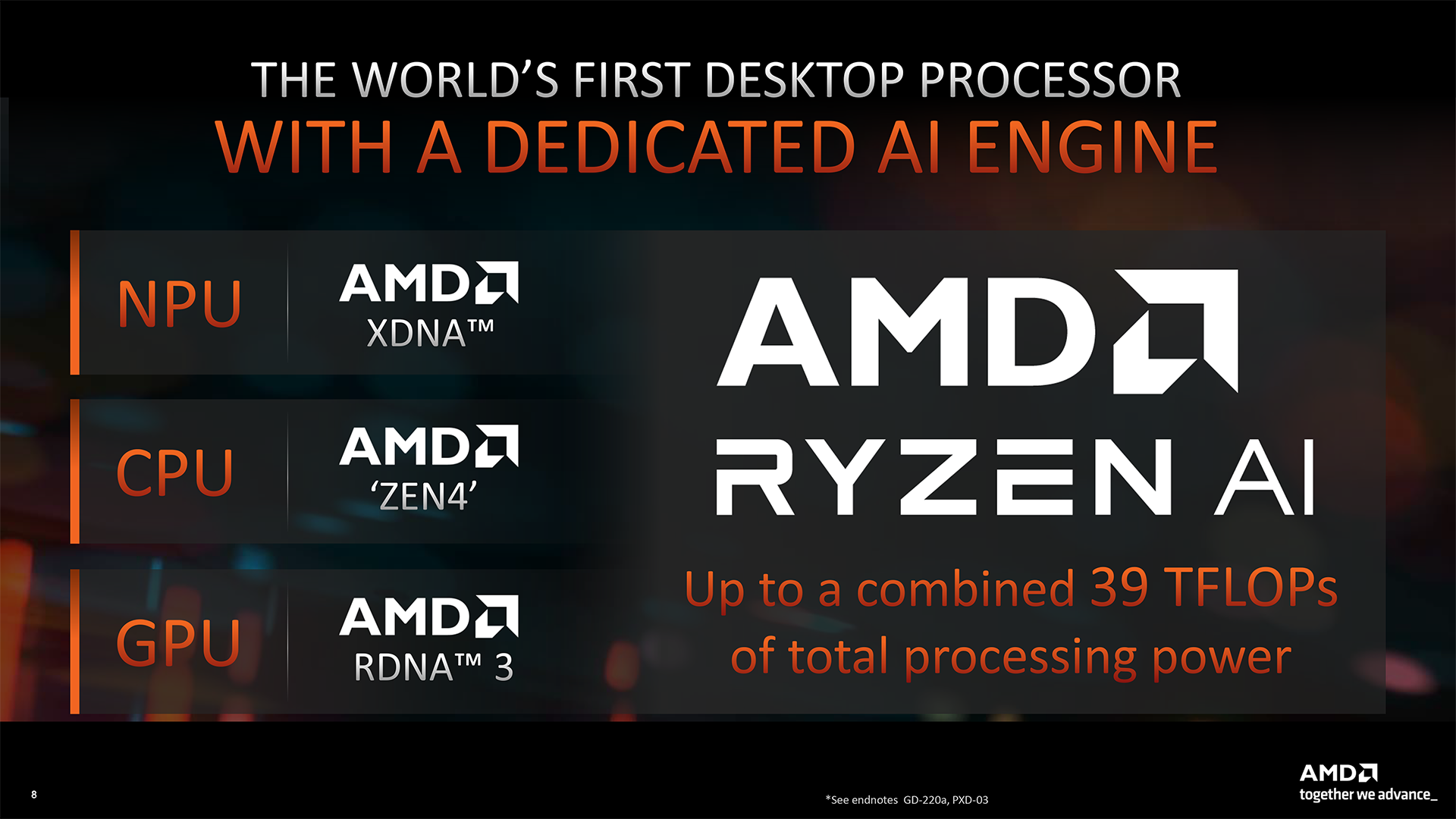
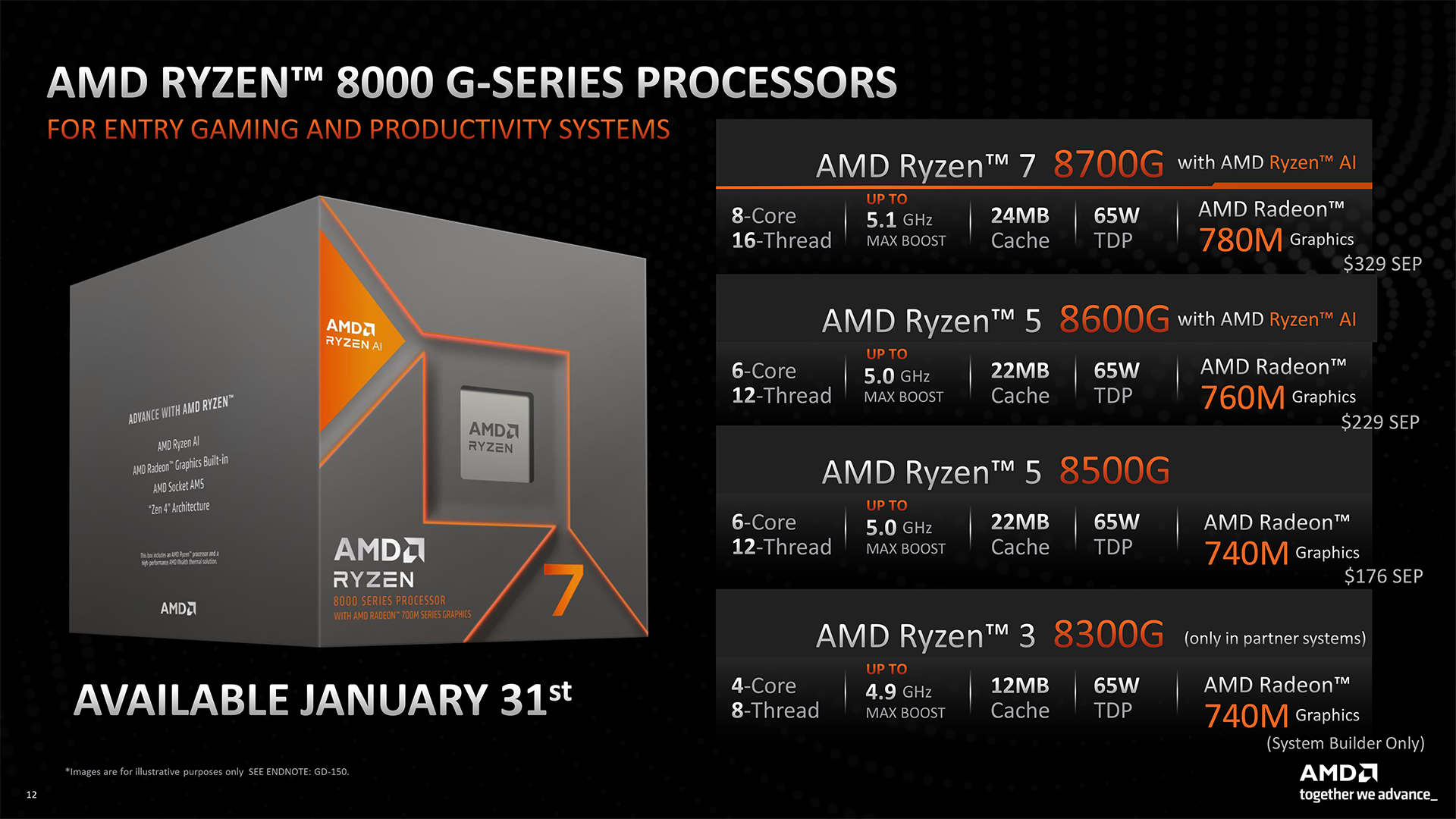
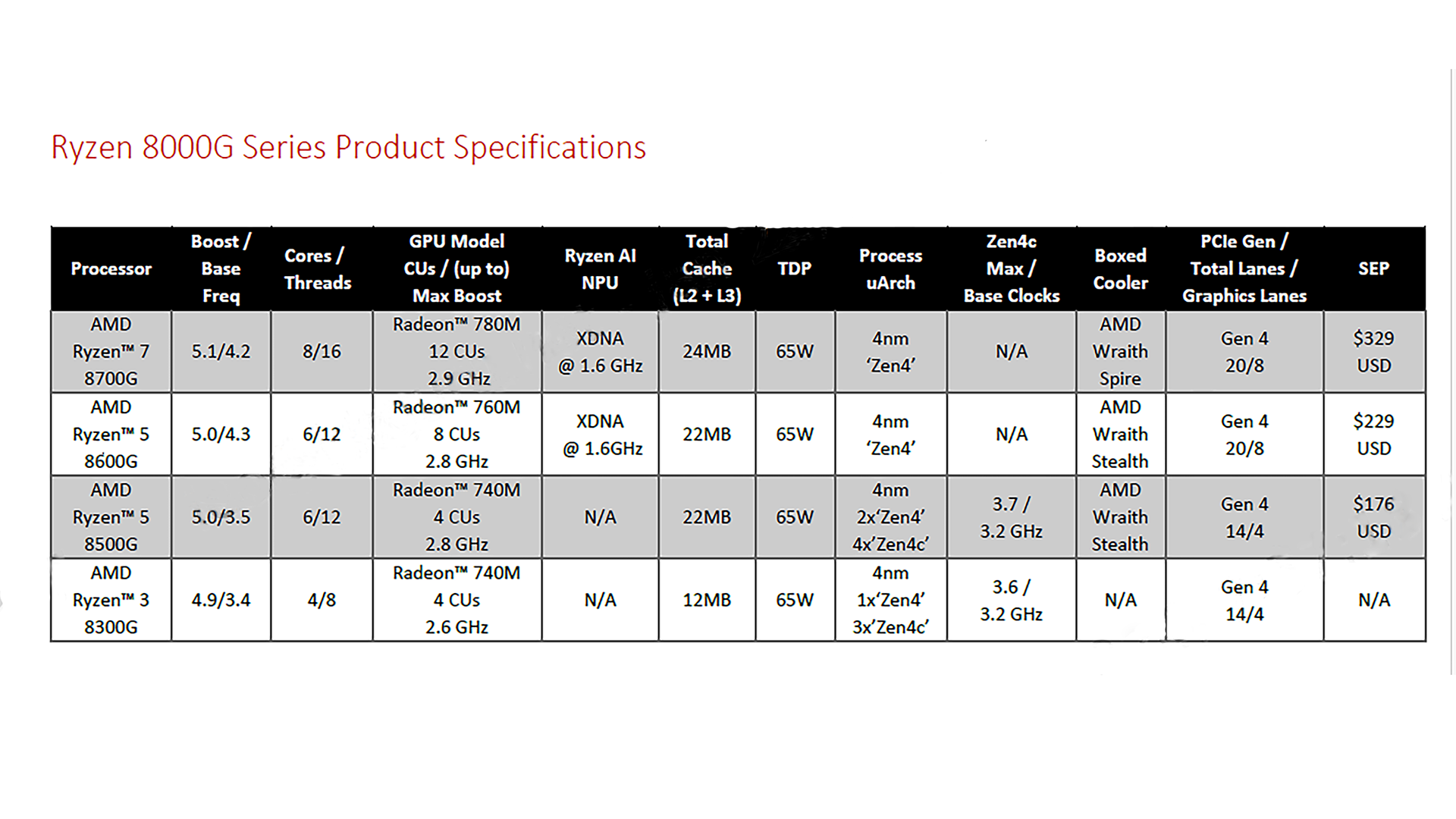
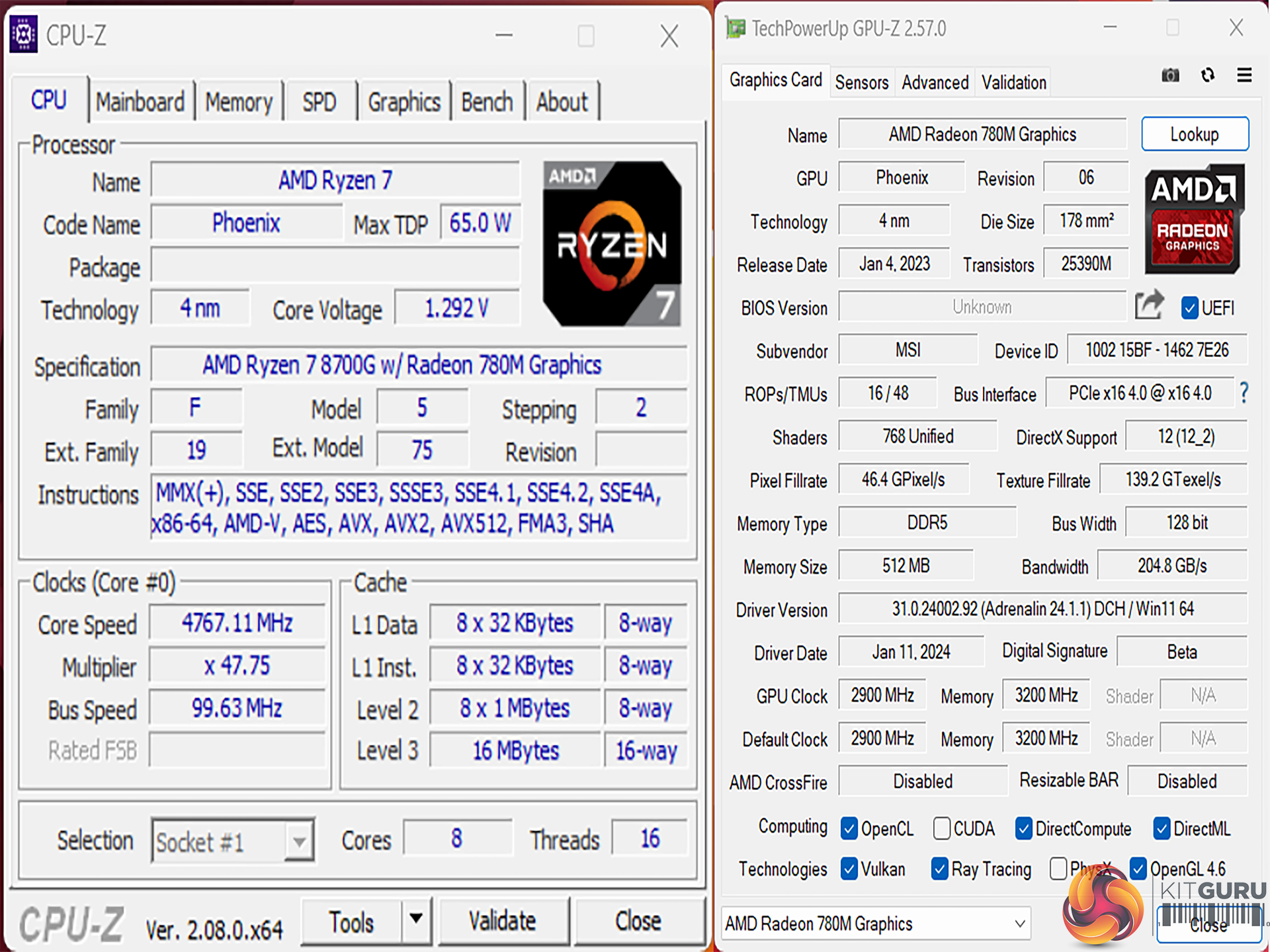
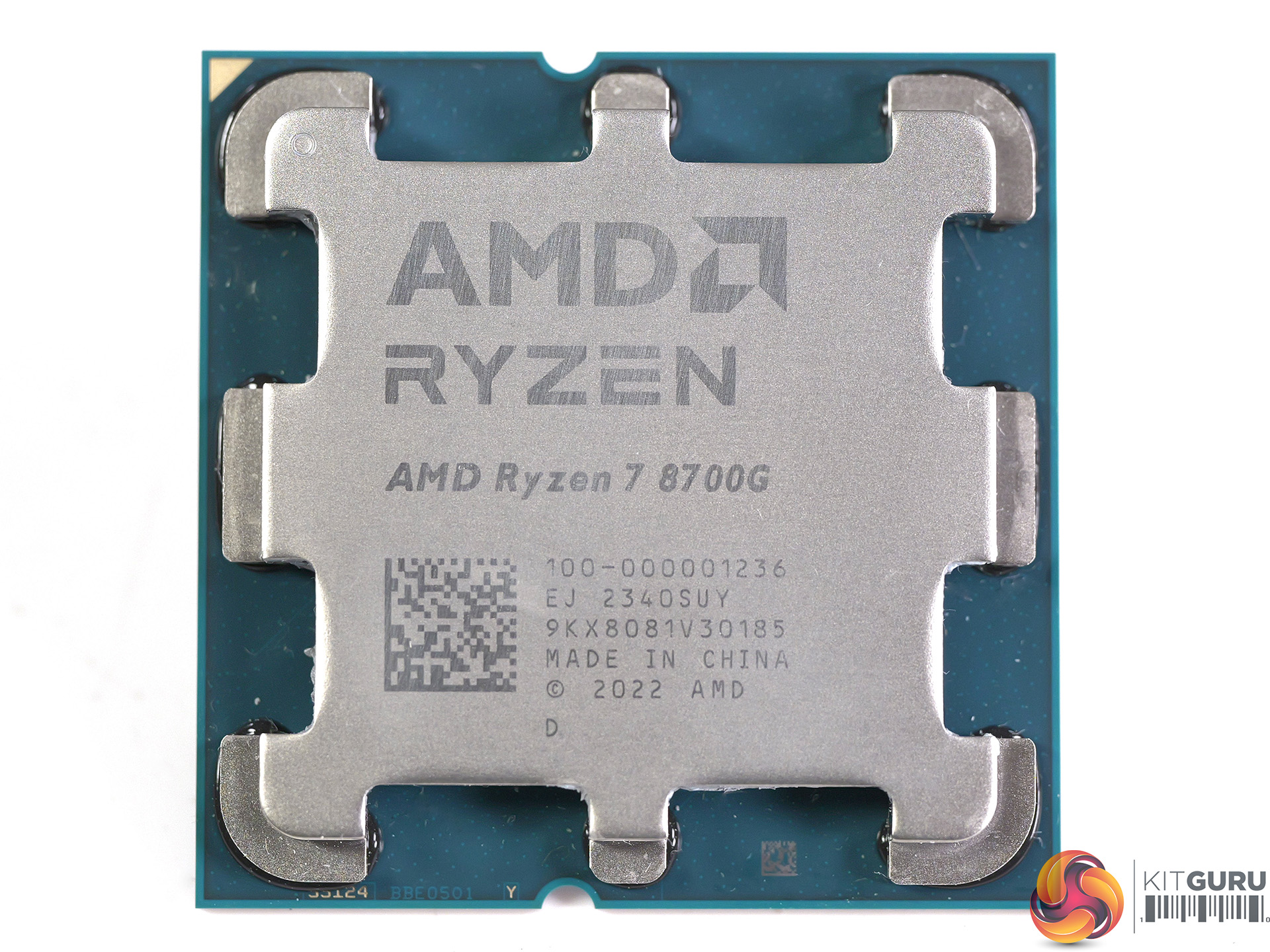
The key points about the Ryzen 7 8700G is that it packs eight Zen4 cores, just like a regular desktop Ryzen 7, and also sports integrated Radeon 780M graphics that promise Full HD gaming at 60+ fps, provided you set image quality to Low. In addition you get an XDNA engine for AI duties and while we are sure that will come in handy in the future, we currently consider it to be a bit of a sideshow.
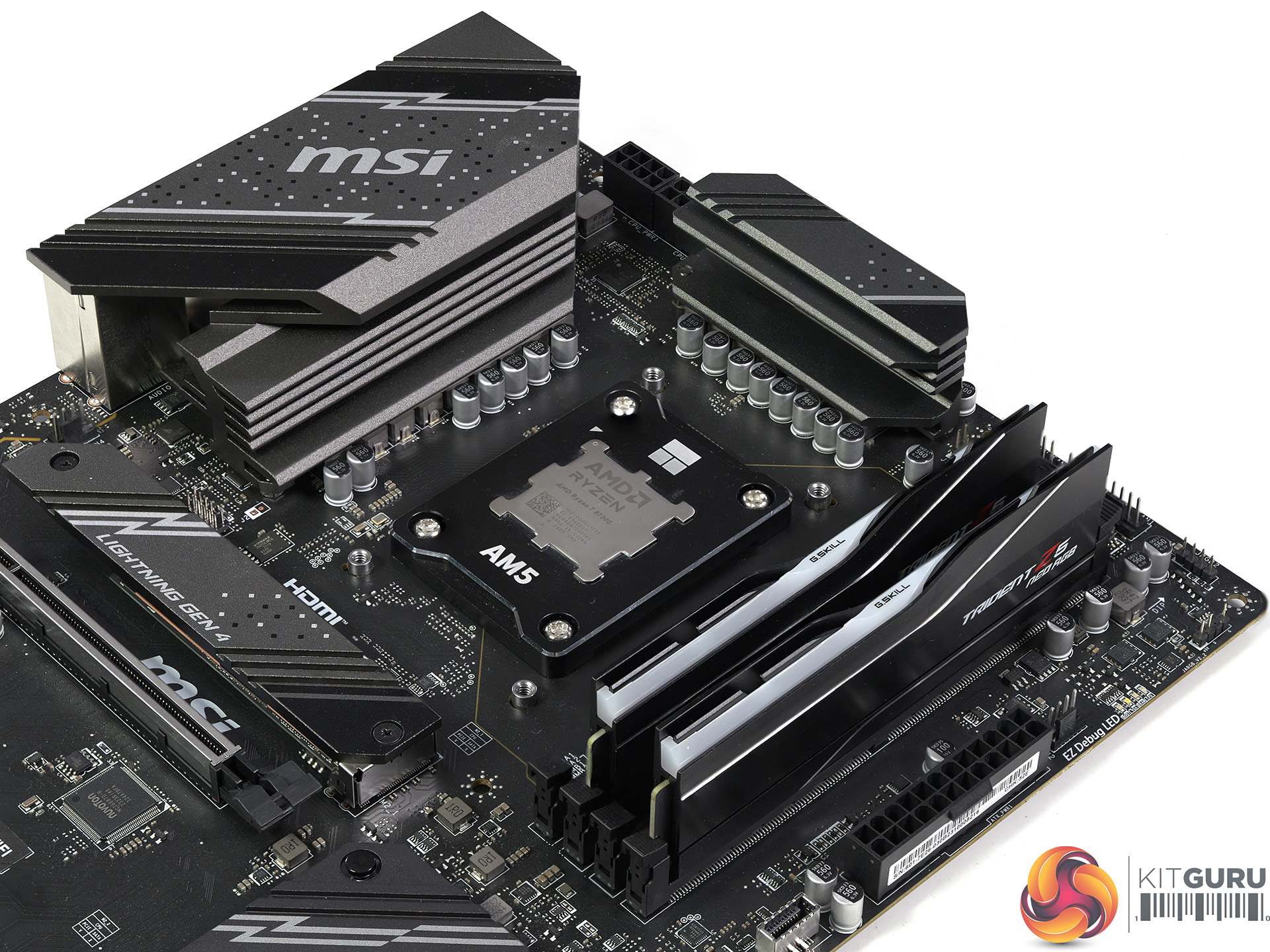
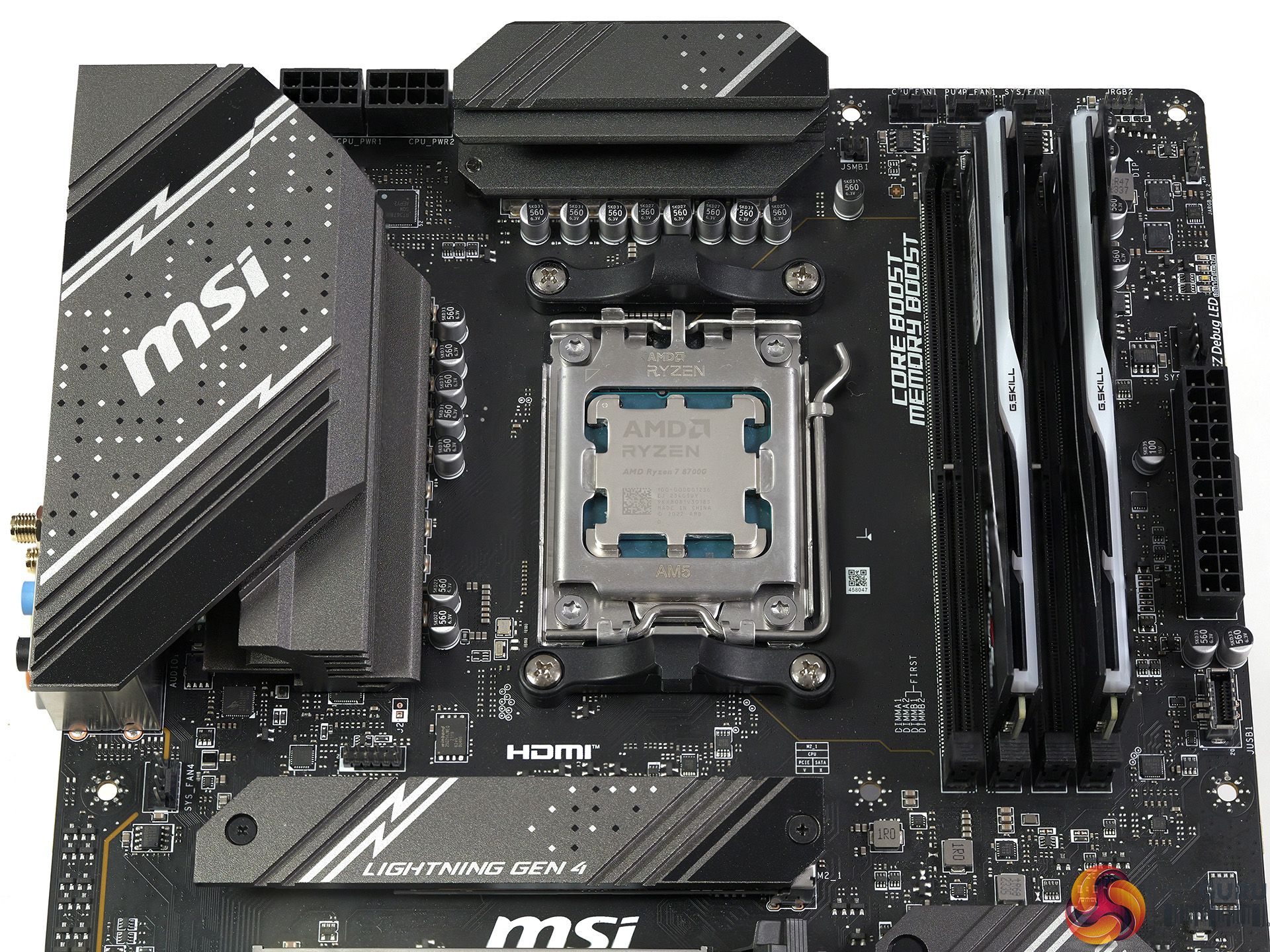
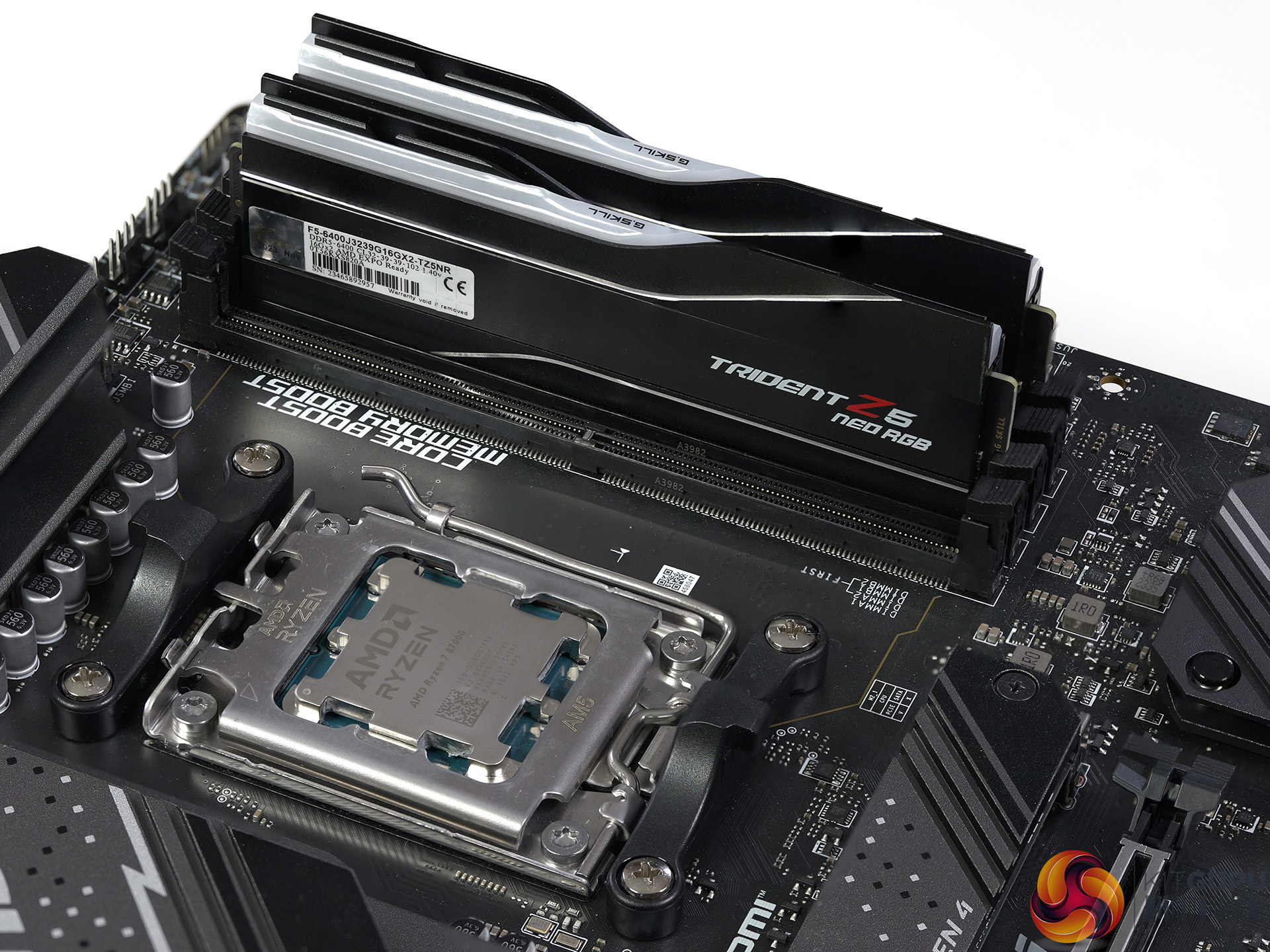
For our review AMD sent us the RYzen 7 8700G along with an MSI B650 Gaming Plus WiFi motherboard and a 32GB kit of G.Skill Trident Z5 Neo RGB DDR5-6400 C34 memory.
Performance and Testing
We explain our testing methodology in our video at some length. In essence we built two test systems using very similar hardware. The first system is built around the Ryzen 7 8700G while the second uses an Intel Core i5-14600K that is limited to the same 65W as the AMD Ryzen 7 8700G. Here is a breakdown of the two test systems.
AMD System
- CPU: AMD Ryzen 7 8700G
- CPU Cooler: AMD Wraith
- Motherboard: MSI B650 Gaming Plus WiFi
- RAM: 32GB G.Skill Trident Z5 Neo RGB DDR5-6400 C34
- Graphics: AMD Radeon 780M and Gigabyte Radeon RX 6500 XT Eagle 4GB
- SSD: 1TB Sabrent Rocket 4 Plus
- Power Supply: Seasonic Focus GX-1000 Gold
Intel System:
- CPU: Intel Core i5-14600K
- CPU Cooler: Intel RM1
- Motherboard: Gigabyte Z790 Aorus Elite AX
- RAM: 32GB G.Skill Trident Z5 Neo RGB DDR5-6400 C34
- Graphics: Intel UHD Graphics 770 and Gigabyte Radeon RX 6500 XT Eagle 4GB
- SSD: 1TB Sabrent Rocket 4 Plus
- Power Supply: Seasonic Focus GX-1000 Gold
CPU Performance and Testing
Cinebench R23 Multi Core
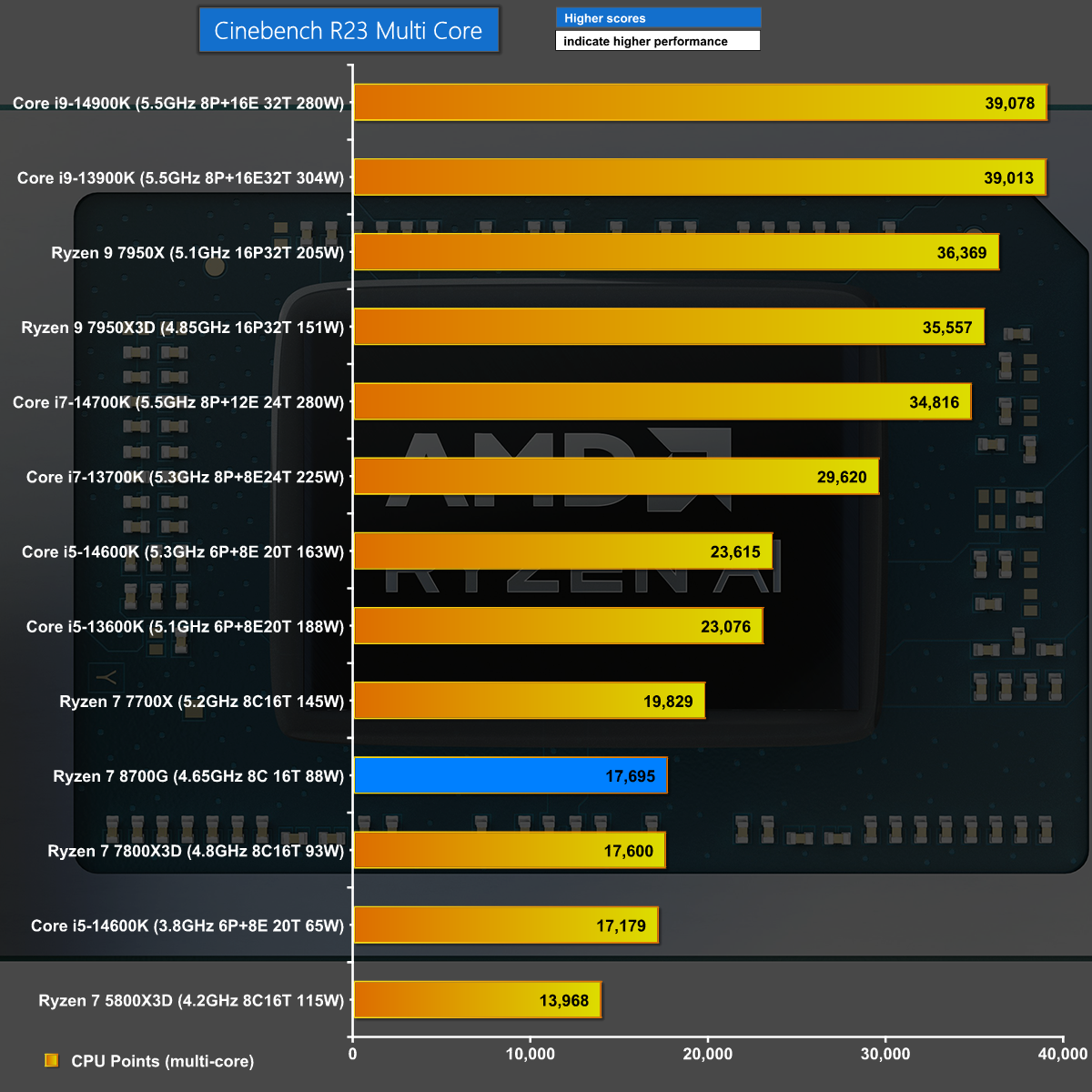
In Cinebench R23 Multi Core the Ryzen 7 8700G runs at 4.65GHz on all cores which is significantly slower than the eight-core Ryzen 7 7700X and consequently it delivers lower performance. As we will see in the next chart this is a simple matter of clock speed versus power draw.
Clock Speeds and Power Draw
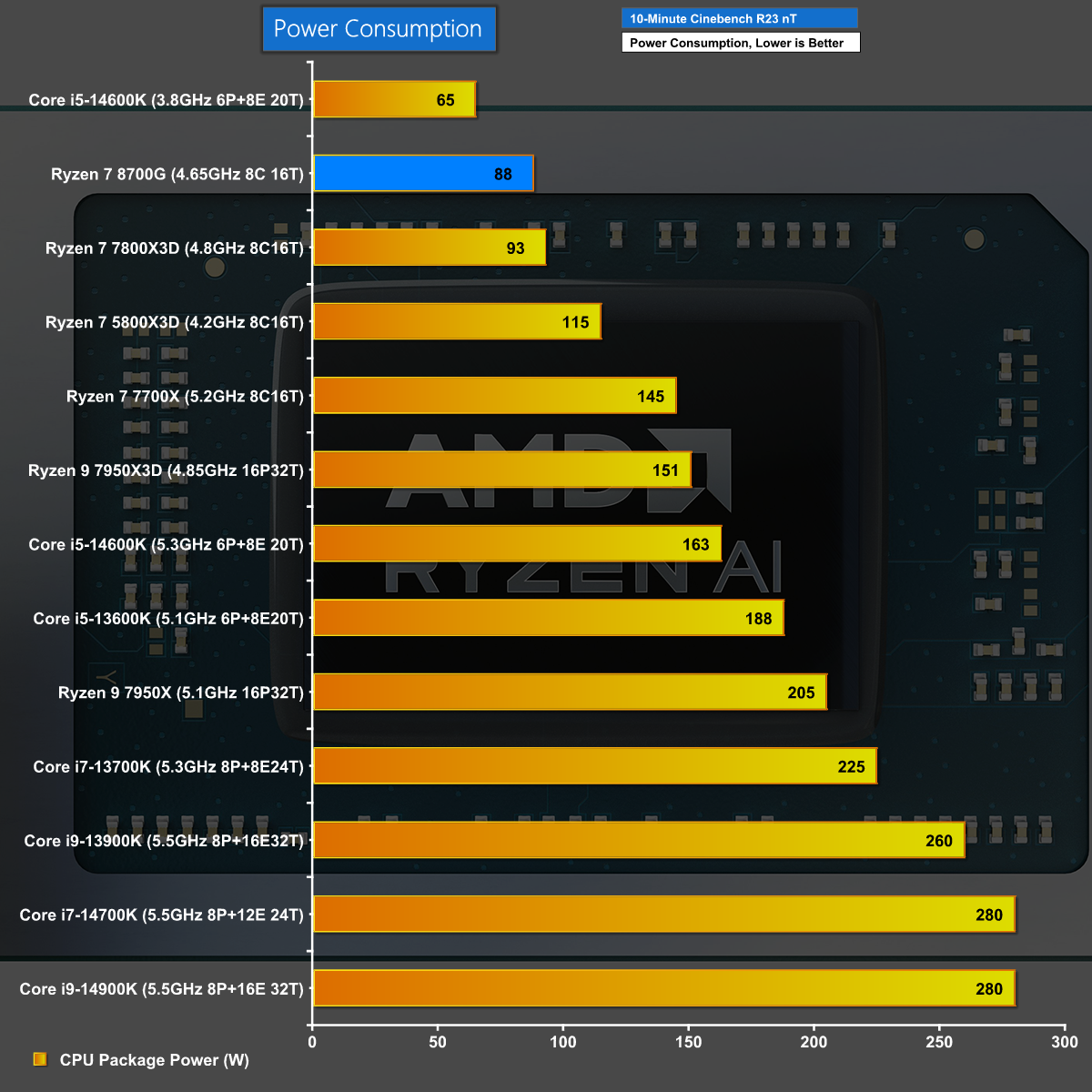
We can see the Ryzen 7 8700G draws 88W under load which is far less than we typically see with a desktop Ryzen 7 CPU. This demonstrates the laptop origin of the hardware where 88W is a relatively high number.
AIDA64 Memory Bandwidth
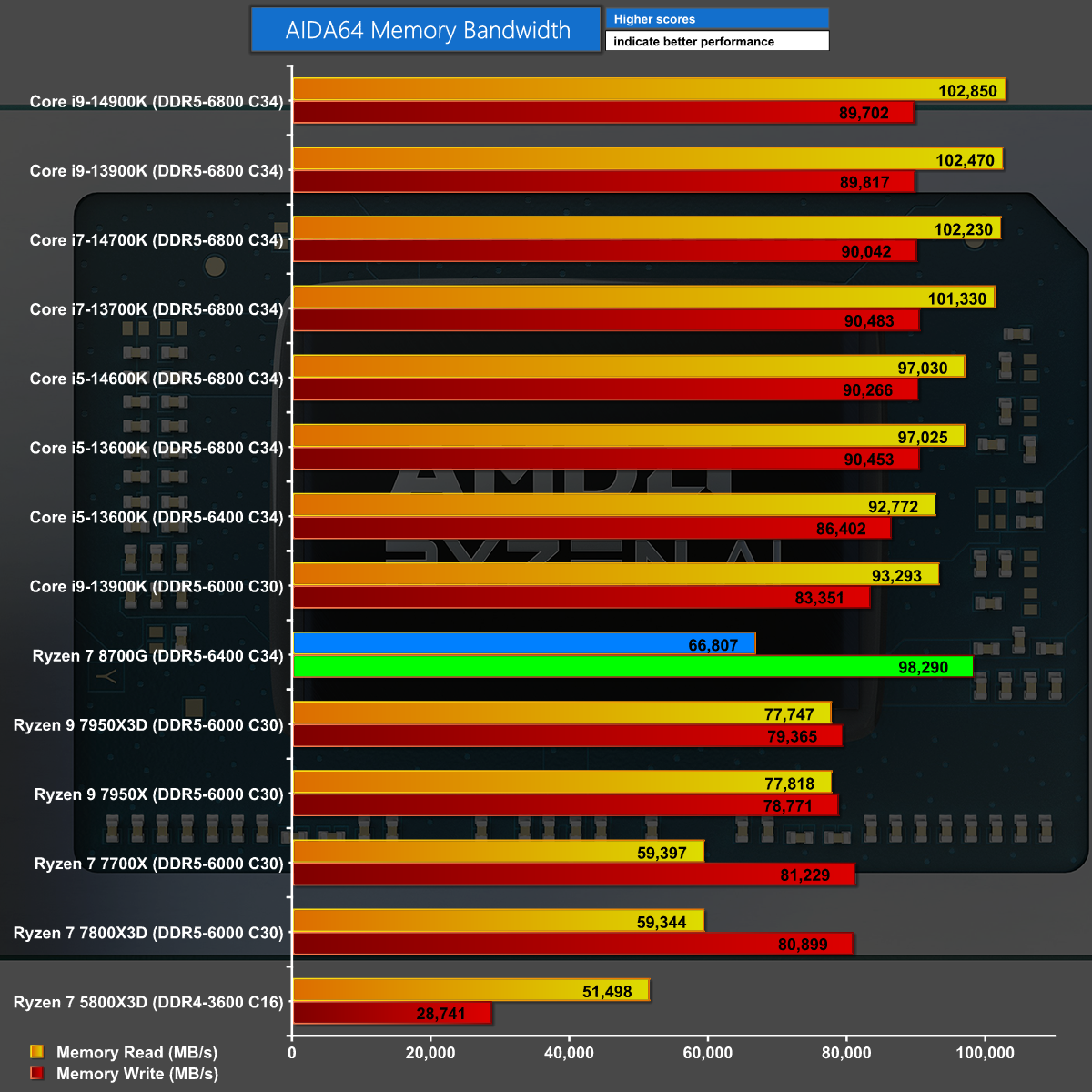
In AIDA64 Memory Bandwidth we see the impact of faster DDR5 memory on the benchmark, but we also have to consider the way that AMD works with memory compared to Intel. The result is that the Ryzen 7 8700G writes to DDR5-6400 impressively fast and reads at a decent speed.
Borderlands 3 at 1080p
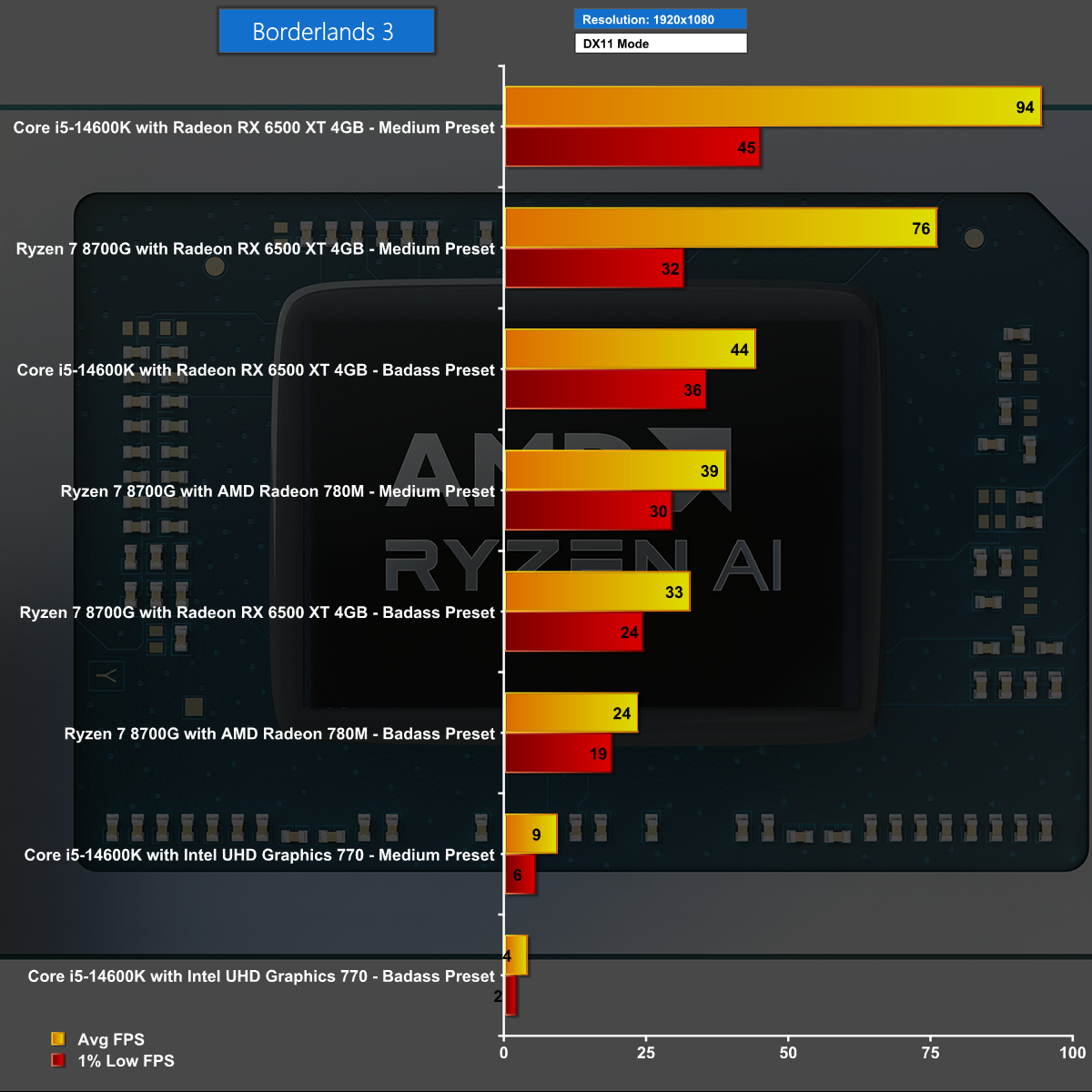
You will have to watch our video to get the full blow-by-blow explanation of our gaming benchmark tests but the short take is that in Borderlands 3 at 1080p we found an add-in graphics card was essential. The AMD 780M integrated graphics perform well but did not pass 40fps, and that makes for a poor gaming experience.
Far Cry 6 at 1080p
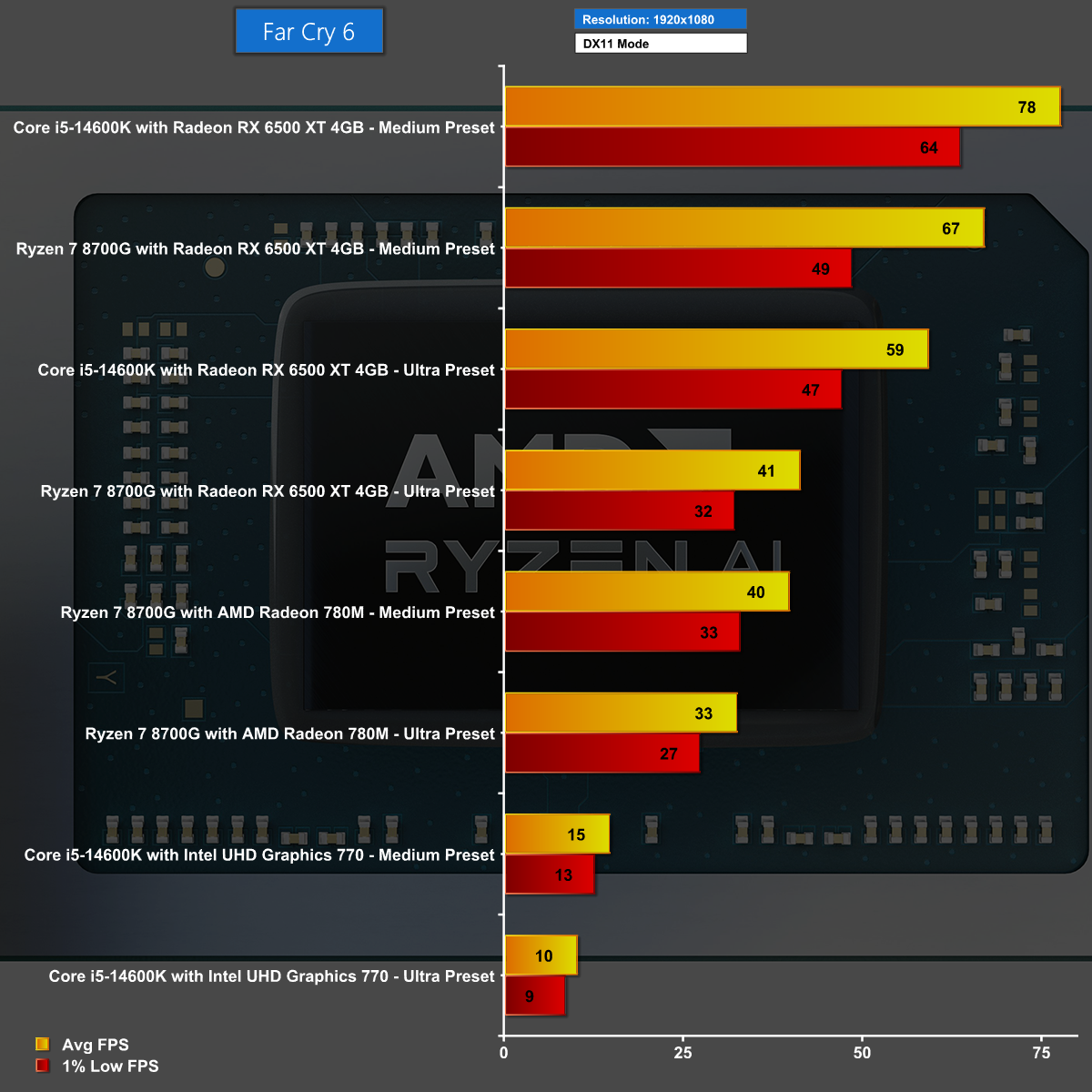
In Far Cry 6 at 1080p we saw a similar figures to Borderlands 3 with the AMD Ryzen 7 8700G running at 40fps on the Medium preset. Once again an add-in graphics card is a necessity.
Shadow of the Tomb Raider
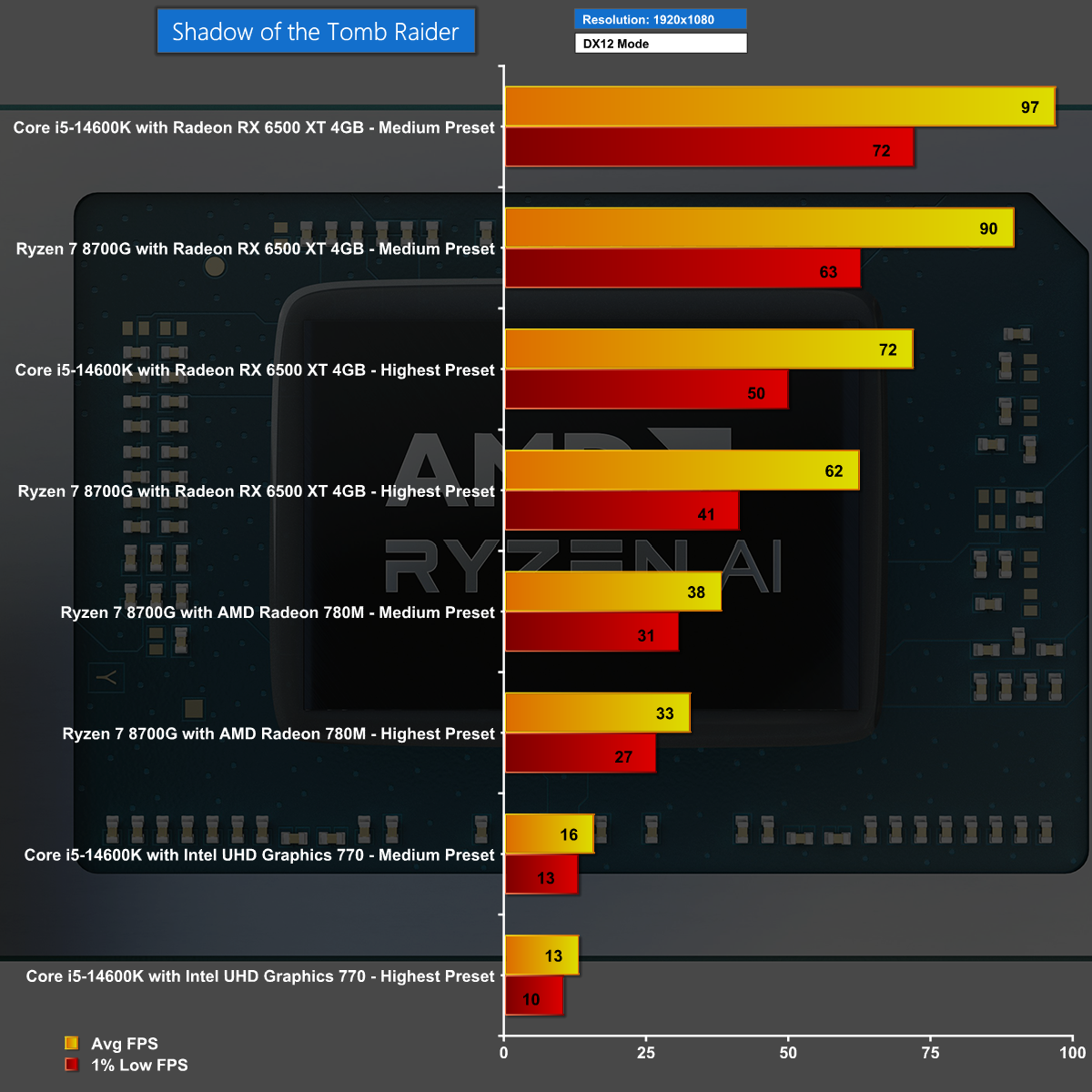
It was three for three with Shadow of the Tomb Raider with frames rates on the integrated 780M graphics topping out at 38fps. This is better than we expected however it is not quite enough to make us happy.
The new AMD Ryzen 7 8700G is an interesting piece of hardware that has caused us to go back and forth with our thinking. It is priced at the same level as the Ryzen 7 7700 and 7700X, however it does not perform at the same level as it uses less power and runs at lower clock speeds.
Balanced against that we get integrated Radeon 780M graphics that are truly superb and which bring a level of performance that we found to be genuinely impressive.
The problem, as we demonstrate in our video is that most people will want more gaming performance than the 780M graphics can provide and will install a graphics card.
As we also show, a basic RX 6500 XT 4GB will trounce the integrated graphics and deliver a significantly better experience. Another point is that non-gamers will be perfectly happy with the basic integrated graphics that Intel offers in Raptor Lake and can confidently buy a Core i5-14600K.
We are happy to recommend the Ryzen 7 8700G, provided you are certain you will never install a graphics card. If you are uncertain about that key point we suggest you approach this new APU with caution.
Discuss on our Facebook page HERE.
Pros:
- Radeon 780M powers the best APU graphics we have ever seen.
- Ryzen 7 8700G gives you a relatively cheap way to start 1080p PC gaming.
- An AI engine with XDNA is included.
Cons:
- APU systems are effectively limited to ATX and Micro-ATX form factors as Mini-ITX AMD AM5 motherboards carry a hefty premium.
- Budget graphics cards can get really noisy.
- If you use a GPU, the Core i5-14600K is a better choice.
KitGuru says: Ryzen 7 8700G allows 1080p gaming without a graphics card!