KitGuru KitGuru.net – Tech News | Hardware News | Hardware Reviews | IOS | Mobile | Gaming | Graphics Cards


Power draw
We use Nvidia PCAT to measure power draw of the graphics card only, with readings from both the PCIe slot and the PCIe power cables combined into a single figure. We use A Plague Tale: Requiem (4K/2160p) for this testing.
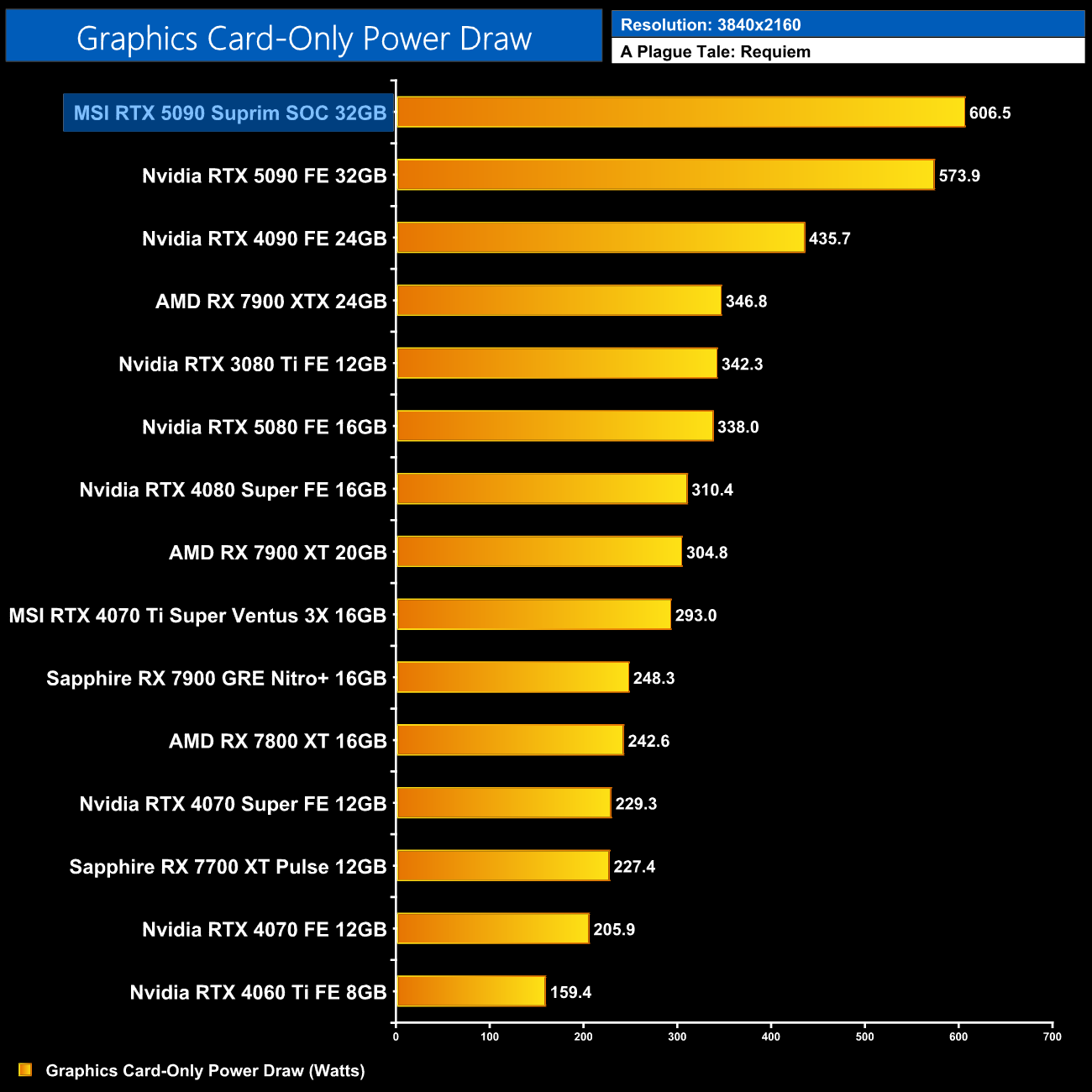
Power draw has increased for the Suprim SOC, at least when using the Gaming BIOS. This saw an average result of 606.5W when running A Plague Tale: Requiem at 4K, which is the game where we saw the highest power draw in our day 1 RTX 5090 review. That means the MSI card pulls about 6% more juice than the FE.
Performance per Watt
Combining the power draw values shown above with the performance data, we present performance per Watt for each graphics card tested:
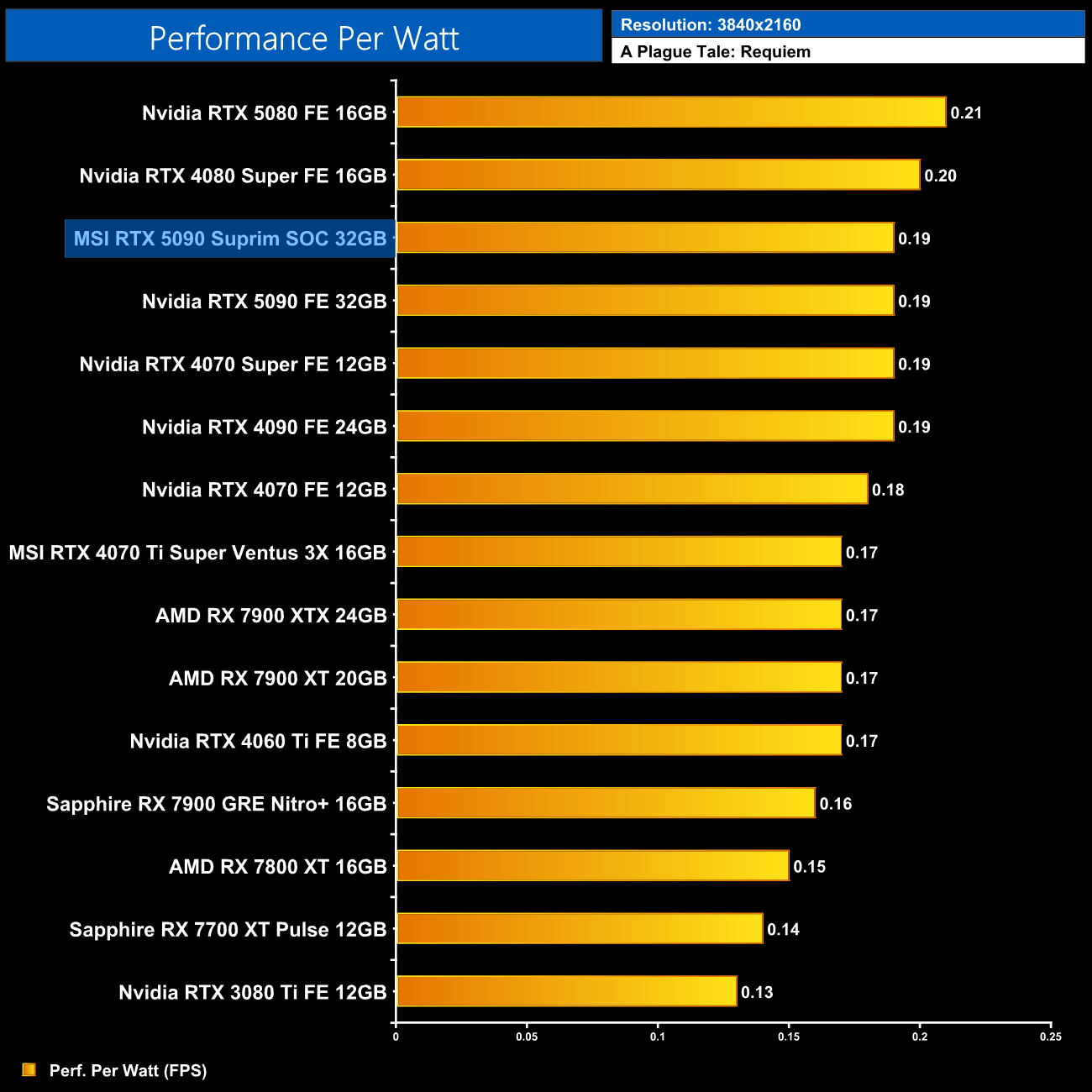
Despite that increased power draw, general efficiency is on par with the 5090 FE, given the Suprim SOC also runs faster – the differences effectively cancel themselves out.