KitGuru KitGuru.net – Tech News | Hardware News | Hardware Reviews | IOS | Mobile | Gaming | Graphics Cards


For our manual overclocking tests, we used AMD's built-in tuning tool. Our best results are as below.
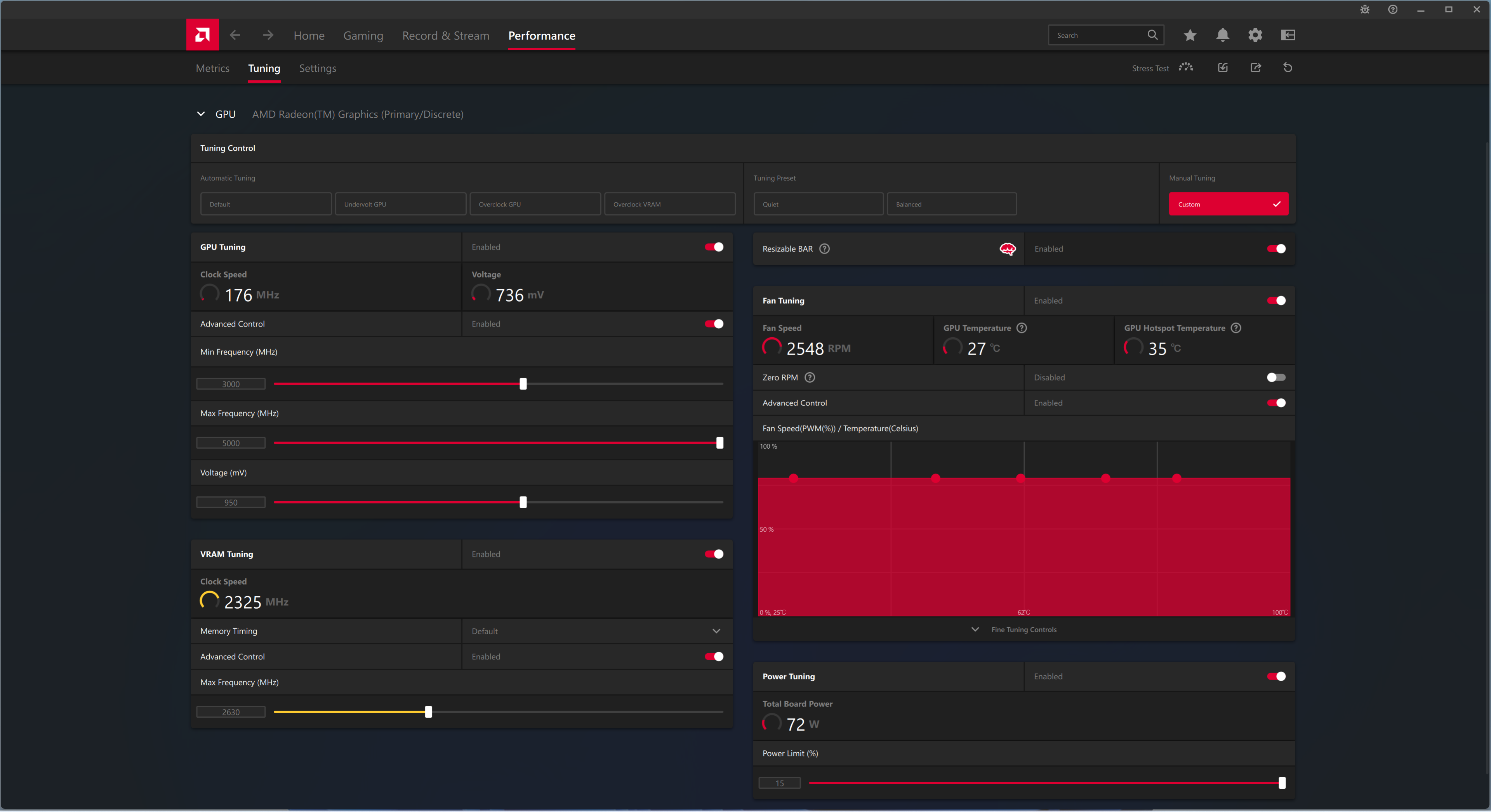
Overclocking the RX 7800 XT essentially boils down to how far can you undervolt the GPU, and how much more frequency can be added to the memory. With the Hellhound, our sample was stable with voltage at 950mV, while we pushed memory clocks to 2630MHz (21.04 Gbps effective, up from 19.5Gbps.)
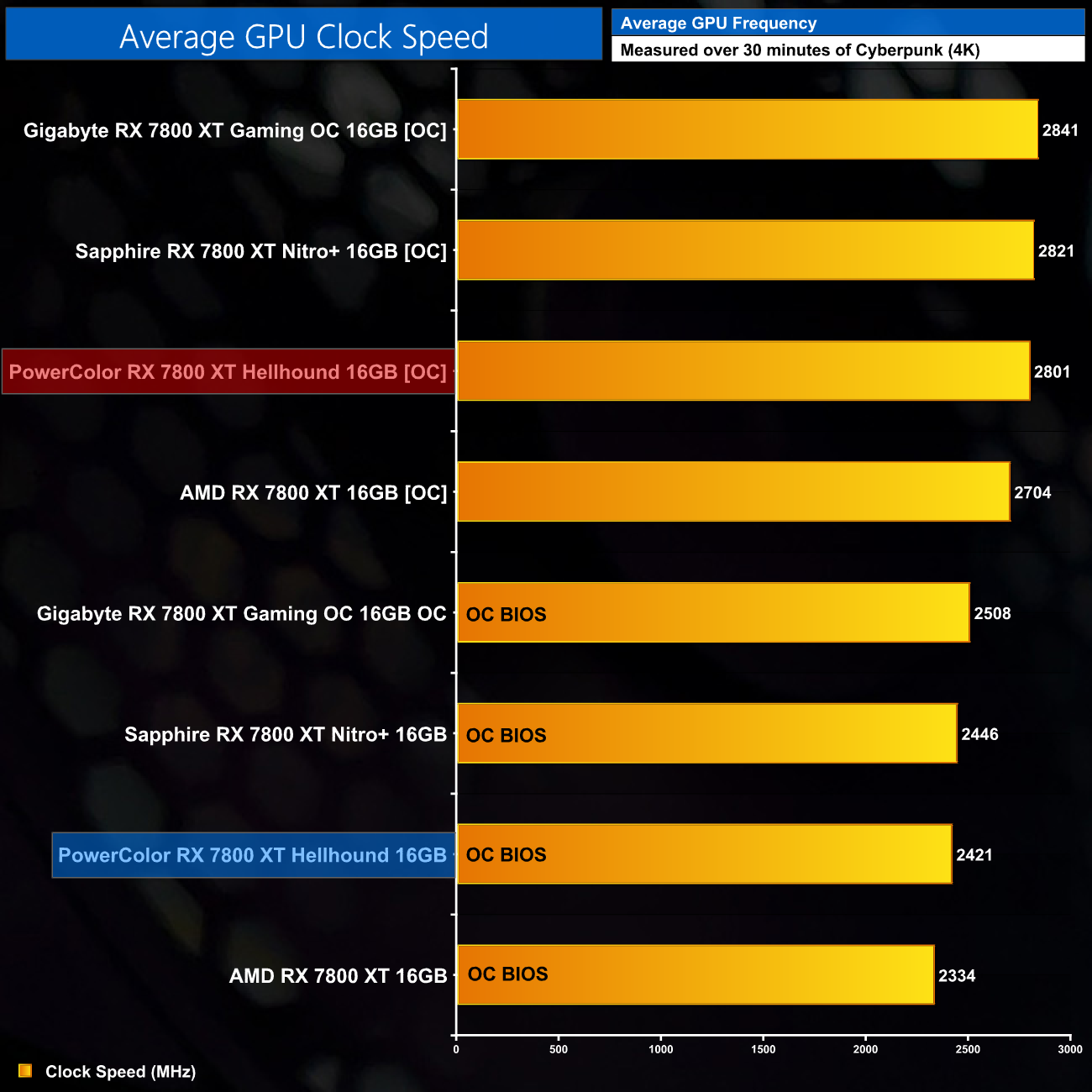
This resulted in a pretty hefty real-world clock speed gain, with the Hellhound running 380MHz faster once the overclock was dialled in – it averaged 2801MHz during our thirty-minute stress test, and was perfectly stable while doing so.
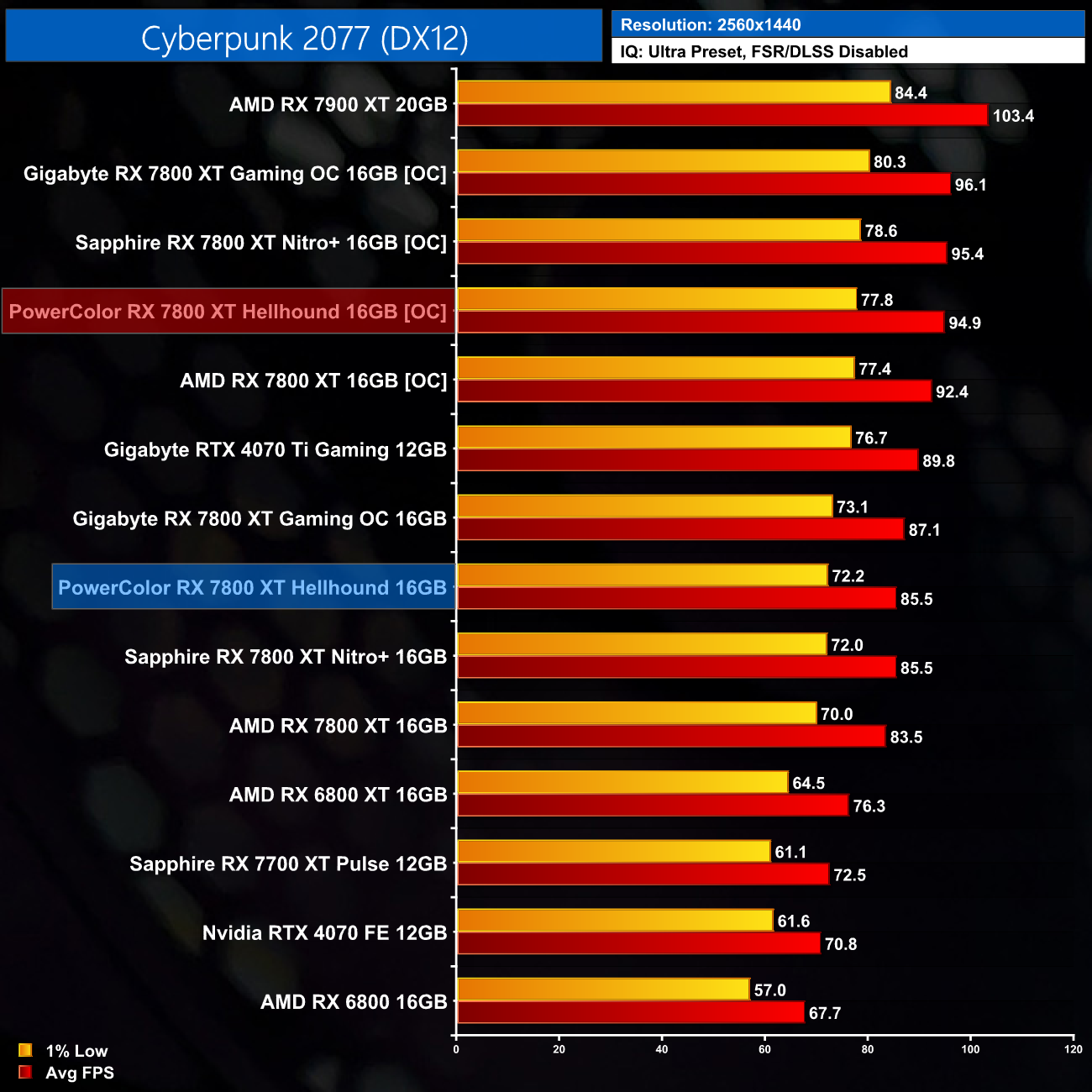
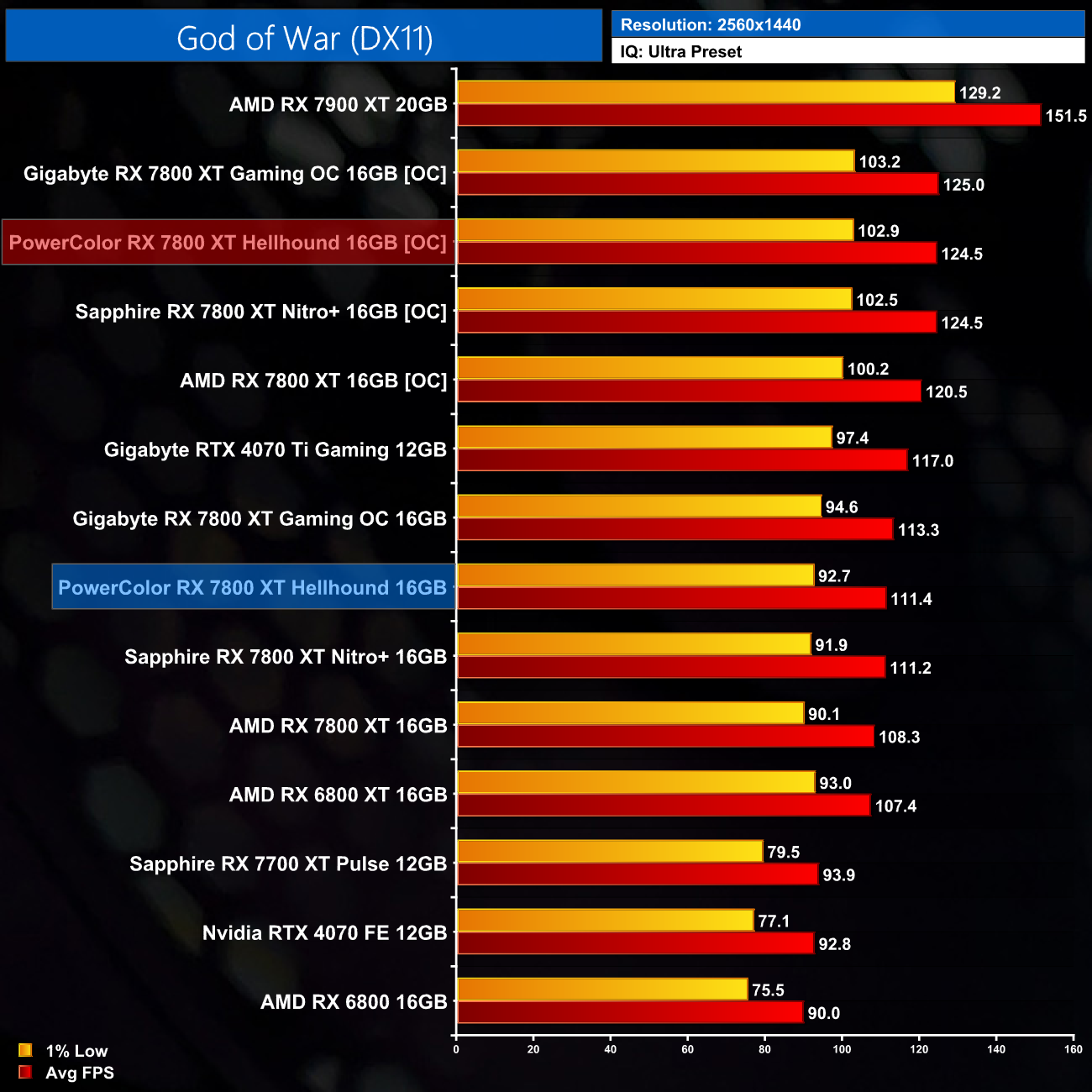
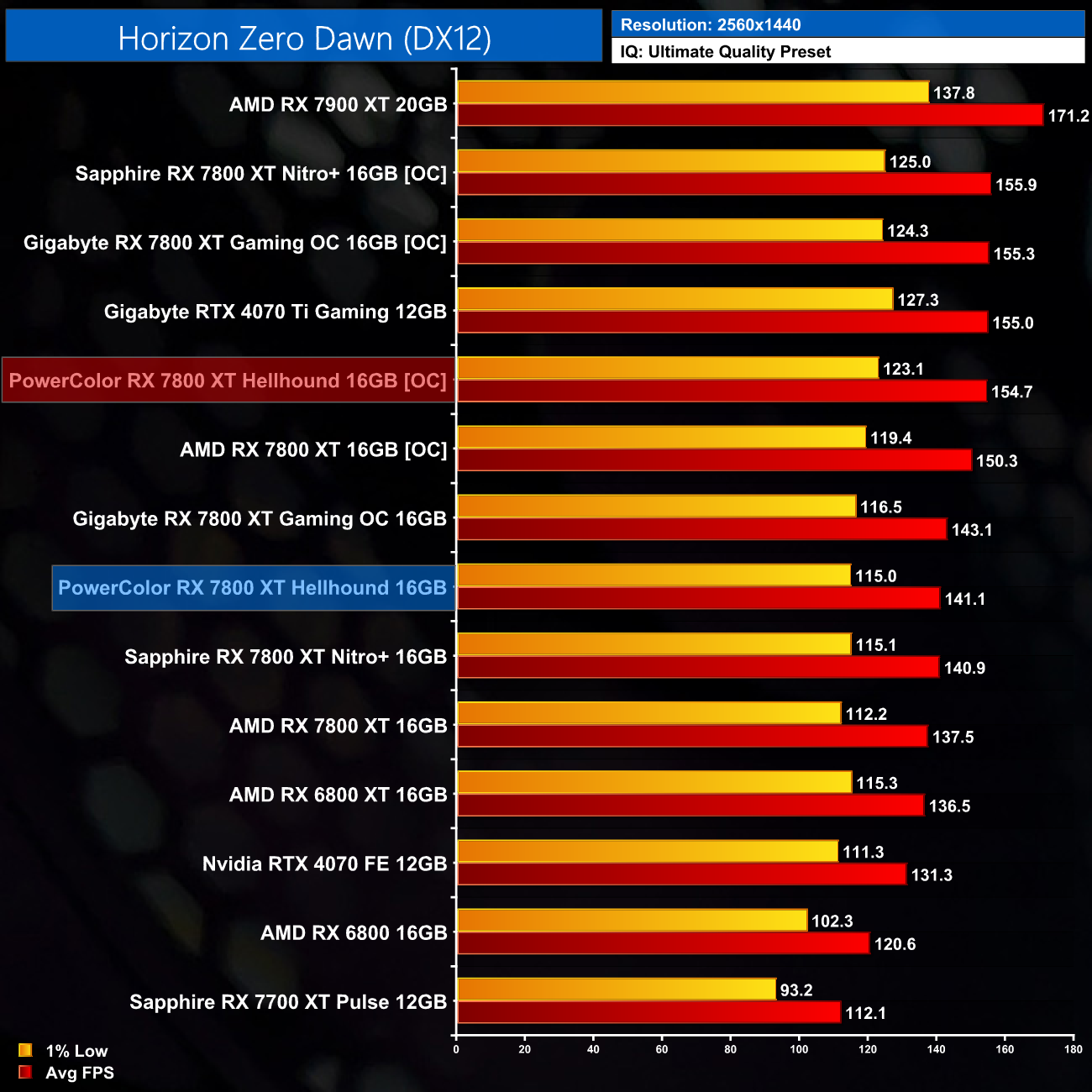
This overclocked netted us gains of between 10-12% in the three games we tested, in some cases bringing performance up to RTX 4070 Ti levels! It's certainly a lot more impressive than I was expecting.
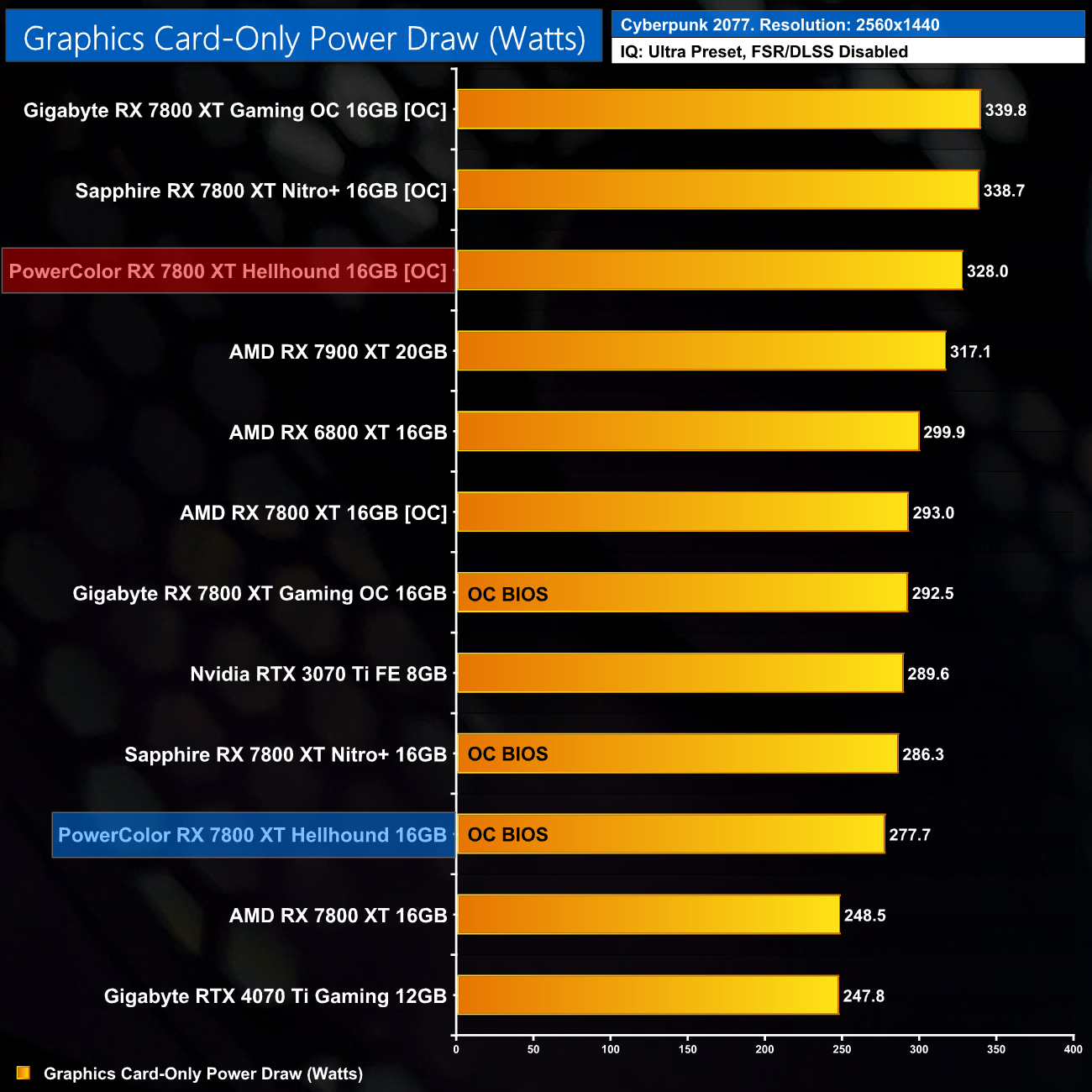
Naturally, this overclock increases power draw by a fair chunk, now hitting just under 330W, so that's an 18% increase in power draw for 10-12% performance gains.
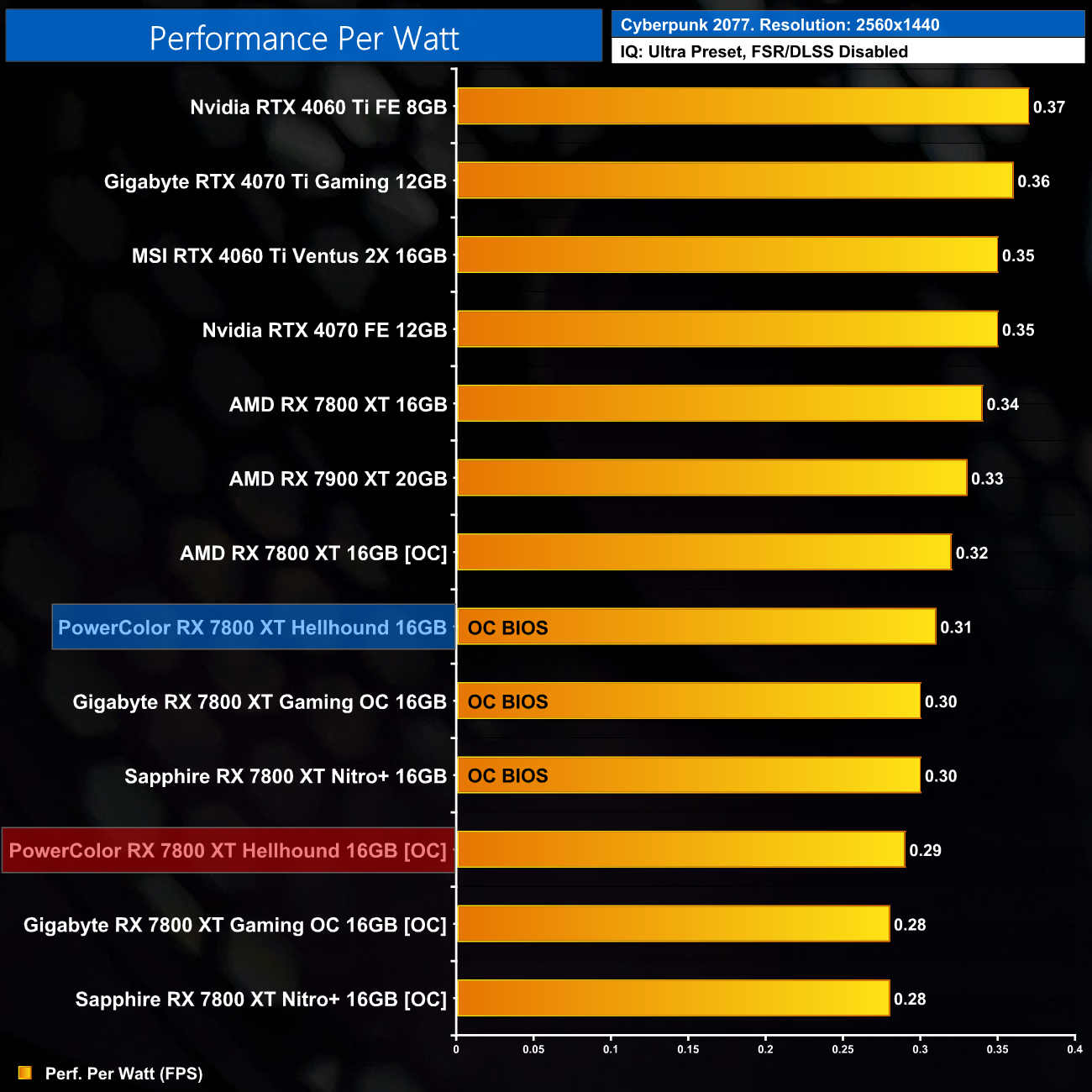
That obviously means that efficiency is further reduced, lowering performance per Watt by 6%. A stock-clocked reference 7800 XT is 17% more efficient.