KitGuru KitGuru.net – Tech News | Hardware News | Hardware Reviews | IOS | Mobile | Gaming | Graphics Cards


Here we present the average clock speed for each graphics card while running Cyberpunk 2077 for 30 minutes. We use GPU-Z to record the GPU core frequency during gameplay. We calculate the average core frequency during the 30 minute run to present here.
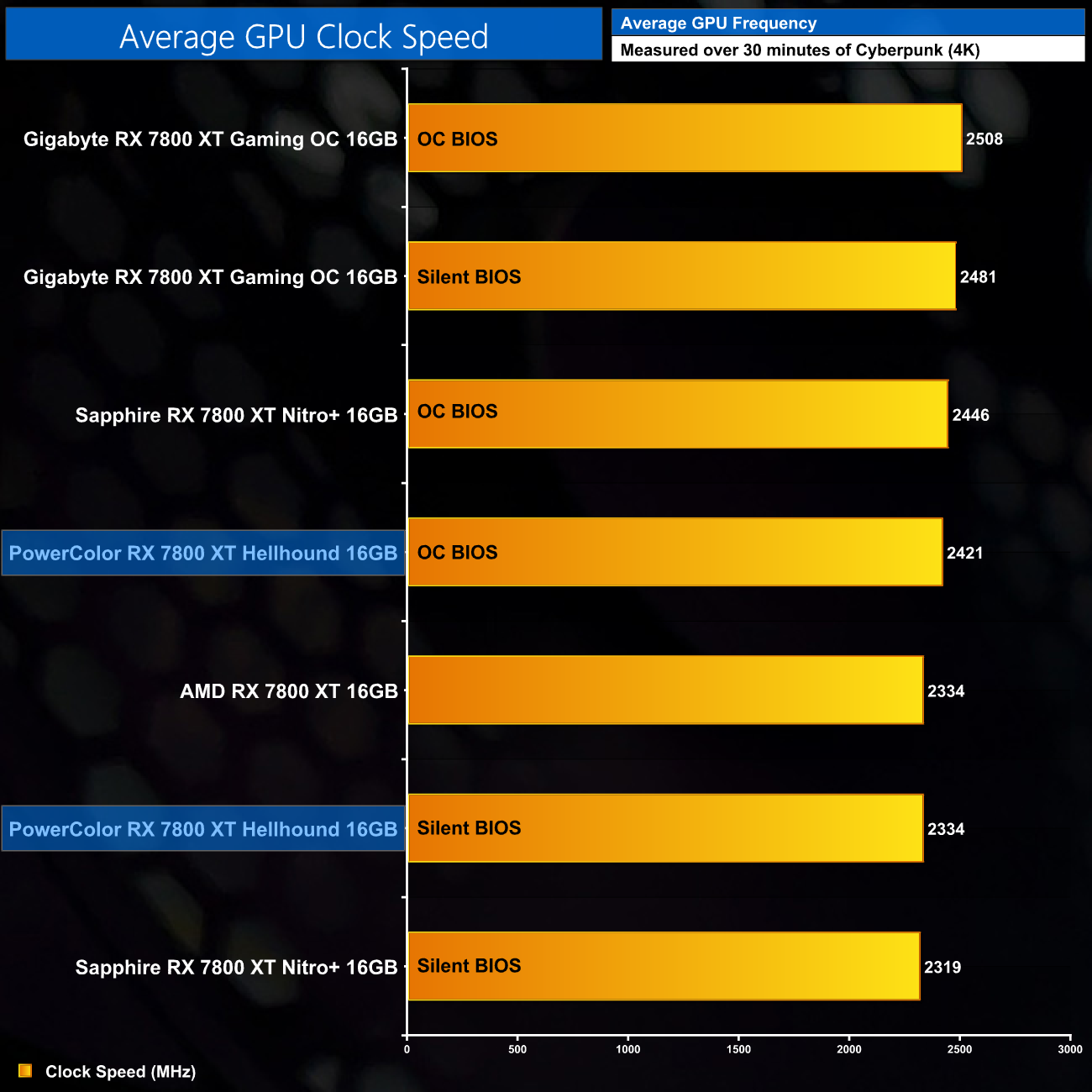
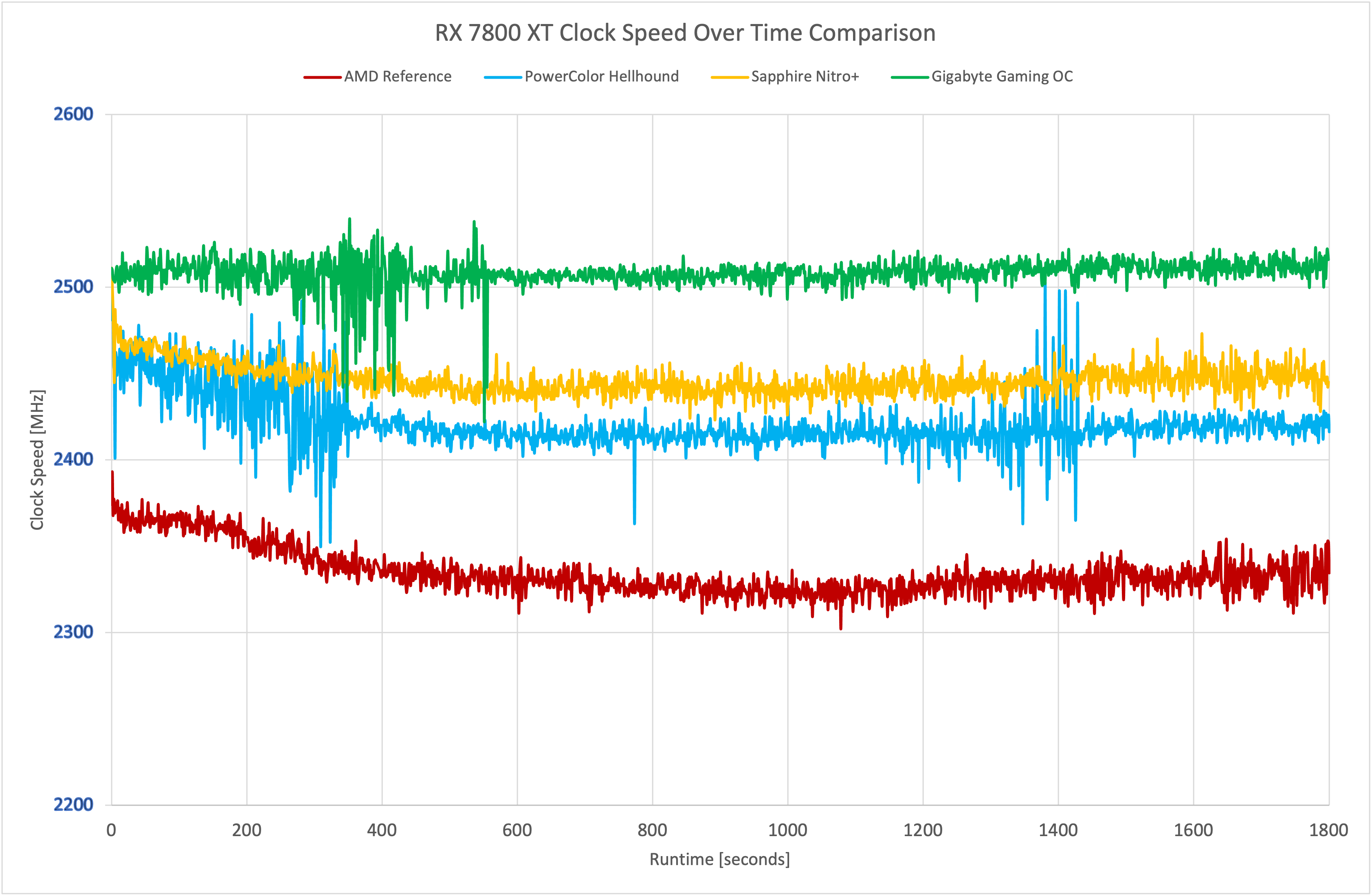
The small performance gains for the Hellhound come as a result of its factory overclock. PowerColor hasn't gone too crazy here, the company instead told us it was prioritising thermal and acoustic performance, but the OC BIOS averaged 2421MHz over our 30-minute stress test, making it 4% faster in terms of raw clock speed. The Silent BIOS does reduce clock speed to reference specifications, and I kid you not, the average clock speed proved identical over our testing between that and AMD's reference card.