KitGuru KitGuru.net – Tech News | Hardware News | Hardware Reviews | IOS | Mobile | Gaming | Graphics Cards


We use Nvidia PCAT to measure power draw of the graphics card only, with readings from both the PCIe slot and the PCIe power cables combined into a single figure. We use Cyberpunk 2077 (4K) for this testing.
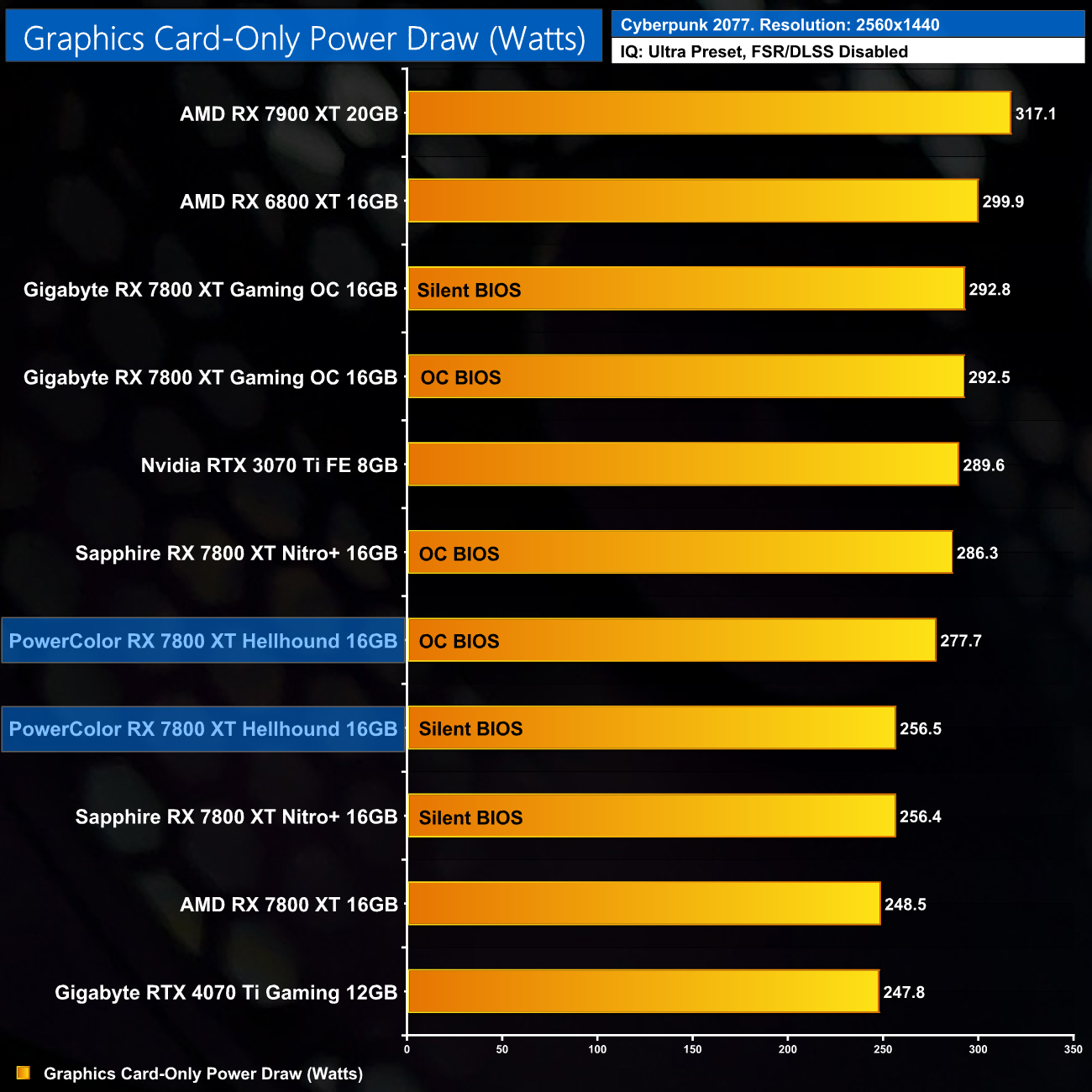
Power draw has increased over the reference card, the OC BIOS appears to target 280W total board power, as we measured just under 278W power draw in Cyberpunk 2077. The Silent BIOS is less power hungry at 256.5W, just a small 8W increase over the reference RX 7800 XT.
Combining the power draw values shown above with the performance data, we present performance per Watt for each graphics card tested:
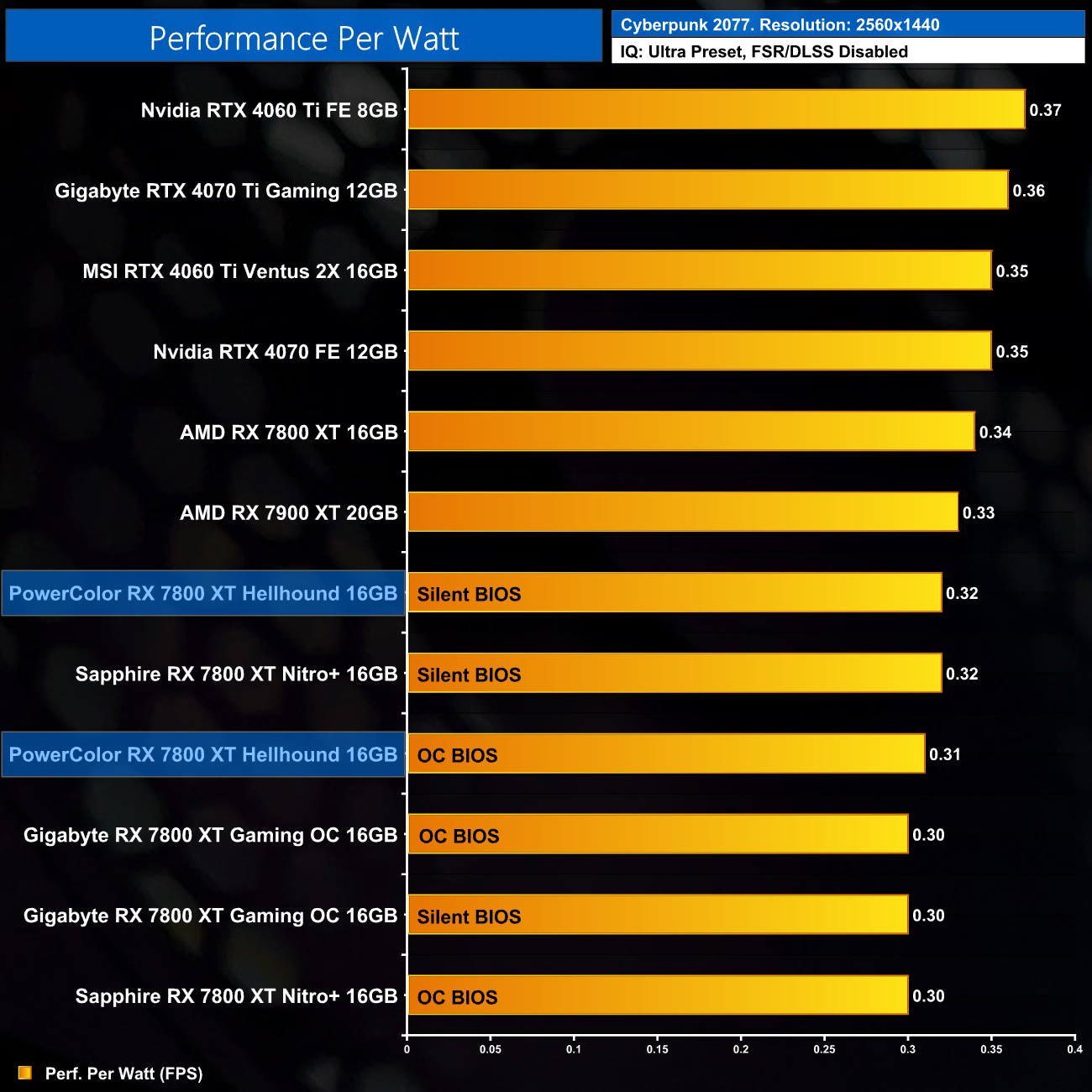
As power draw has increased, despite very small performance gains, overall efficiency is slightly worsened compared to the reference card, but by less than 10% when looking at performance per Watt.