KitGuru KitGuru.net – Tech News | Hardware News | Hardware Reviews | IOS | Mobile | Gaming | Graphics Cards


Originally, the RTX 3050 desktop GPUs were powered by cut-down GA106 chips. A few months later, Nvidia started shipping an exclusive OEM version using GA107 chips with 2,304 CUDA cores. Now, it seems we're getting a third version of the RTX 3050 desktop card powered by a different chip.
Nvidia didn't announce this third version, but looking at the specifications of the recently listed MSI Ventus 2X 8G OCV1 graphics card (via VideoCardz), you can read that it has a power consumption of 115W, 15W less than the standard non-V1 model. even if it's not explicitly listed, this new card should pack the GA107 GPU, the same chip used in the laptop variants.
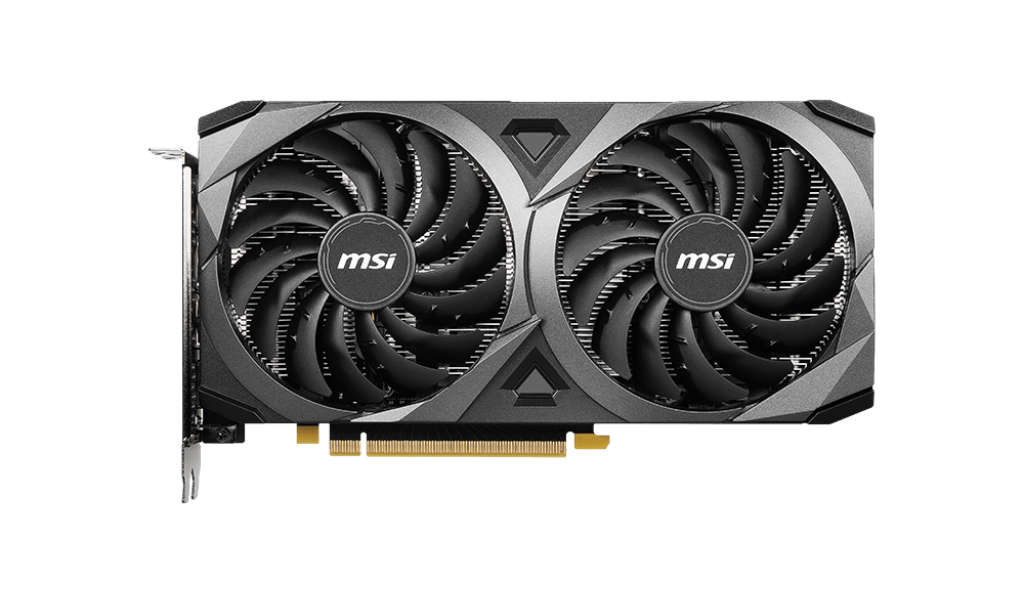
The lower power consumption confirms nothing, but it suggests this RTX 3050 card doesn't use the same chip as the non-V1 model. Despite using a different chip that consumes less power, the remaining specifications are the same, meaning it packs 2,560 CUDA cores with a boost clock speed of 1,807MHz and 8GB of memory clocked at 14Gbps across a 128-bit memory bus.
Currently, MSI is the only AIB partner that has listed RTX 3050 cards with 115W of power consumption.
KitGuru says: Considering all the specs remain unchanged, the performance of the 115W model should be the same as the 130W version. However, the overclocking potential in the less power-hungry models should be lower. On the other hand, overall efficiency in the 115W model is likely better.