KitGuru KitGuru.net – Tech News | Hardware News | Hardware Reviews | IOS | Mobile | Gaming | Graphics Cards


Today we check out one of the newest power supplies from Enermax, the PlatiGemini 1200W. This power supply supports both the ATX 12V and ATX12VO standards and is also ATX V3.1 compliant. The unit is rated at 1200 Watts, is fully modular, and adopts Japanese capacitors throughout the design. As the product name would indicate, it is also 80 Plus Platinum certified.
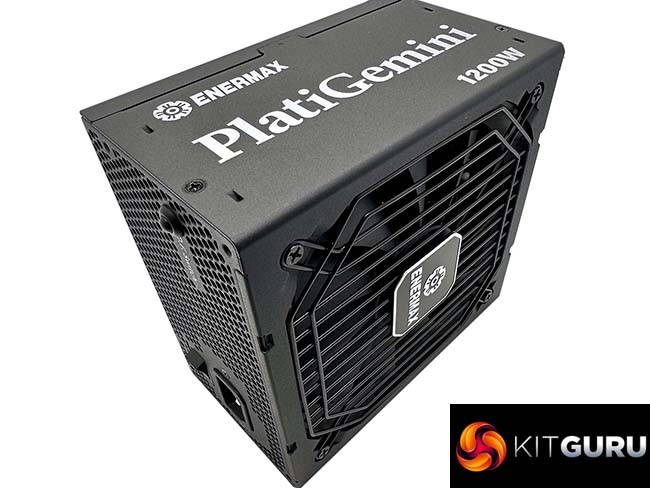
The Enermax PlatiGemini 1200W is priced around £225 in the United Kingdom, although availability right now is patchy at best. Enermax always send us Amazon links for these reviews, but right now the Amazon Link for this product (HERE) is showing ‘currently not available' – we are told the next shipment will be arriving in the middle of May.
Another USP for these new, power Enermax units is the diminutive physical depth of 150mm – one of the smallest 1200W power supplies on the market. Enermax even managed to cram a 1650W unit into the same dimensions. You can check out our review of the Revolution D.F. X 1650W HERE.
Enermax PlatiGemini 1200W PSU overview:
▪ Red Dot Design Award 2024 Winner
▪ Integrated with Both Intel ATX 3.1 and ATX12VO Standards
▪ Fully Modular 80 PLUS® Platinum Certified
▪ PCIe 5.1 with 600W 12V-2×6 Cable
▪ Up to 235% Power Excursion
▪ Industrial-Grade 100% Japanese Capacitors
▪ Invest in Longevity with Dust-Free Rotation Tech. & D.F. Switch
▪ Optimal Semi-Fanless Tech. with 60% Zero-RPM
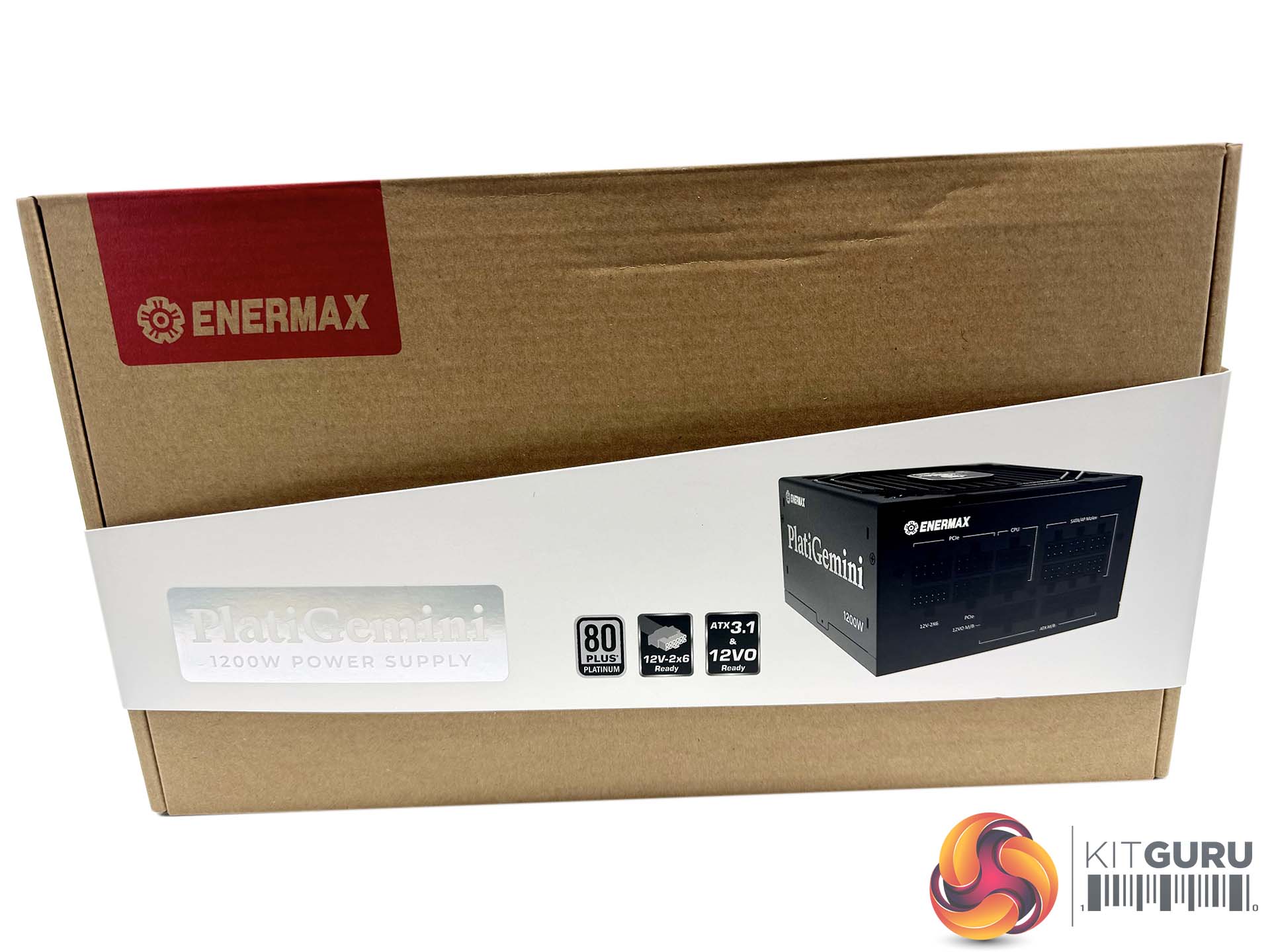
Enermax have opted for simple brown packaging for this power supply, with a small ‘sleeve' that fits around the box. On the front of the box, they mention the Platinum efficiency, and the standards certifications.
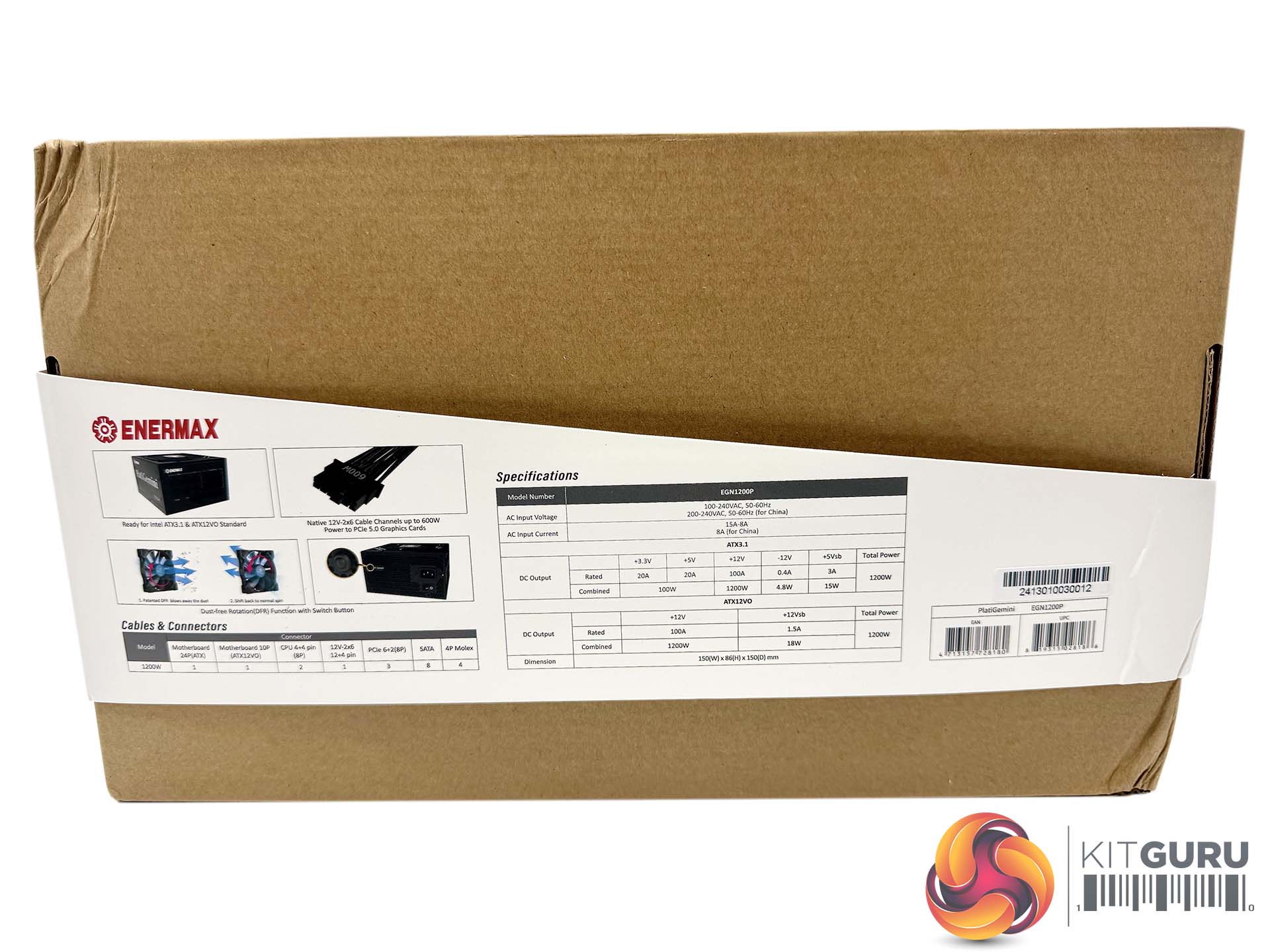
The rear of the box expands on some details, including the operation of the Dust Free Rotation fan, and various cables and connectors.
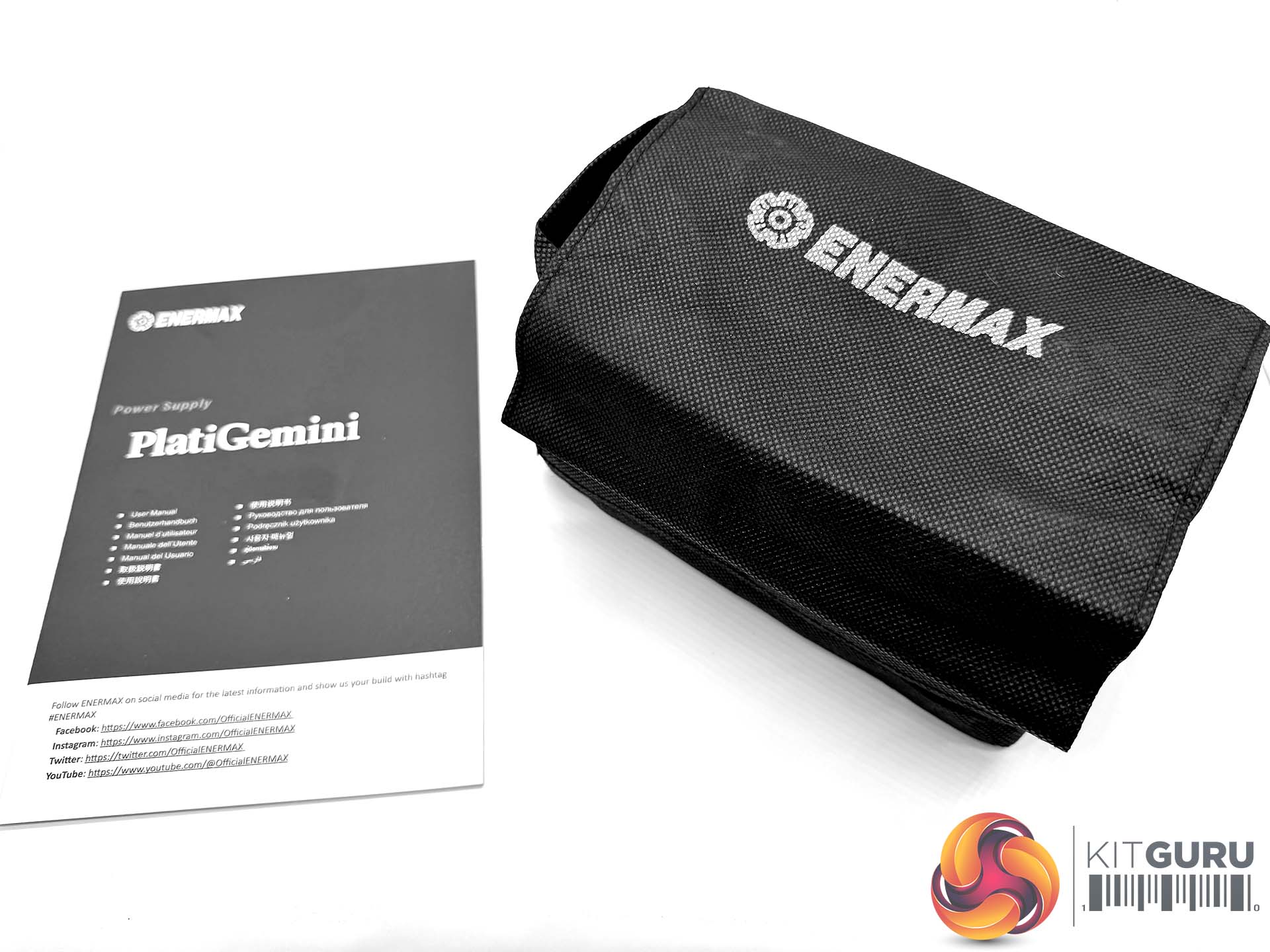
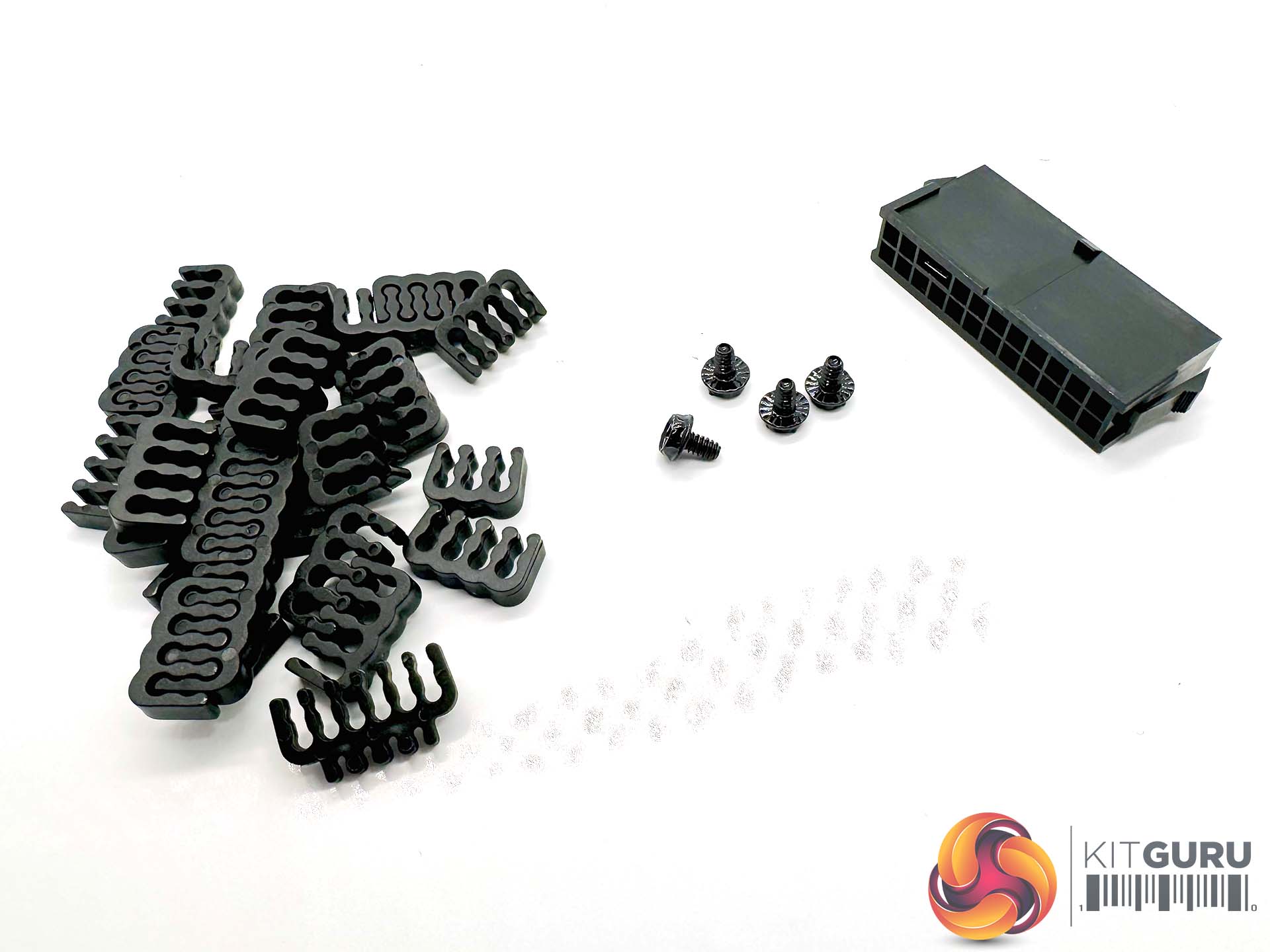
The cables are supplied in a felt bag, alongside a user manual. Enermax also supply cable combs, a PSU tester, and mounting screws.
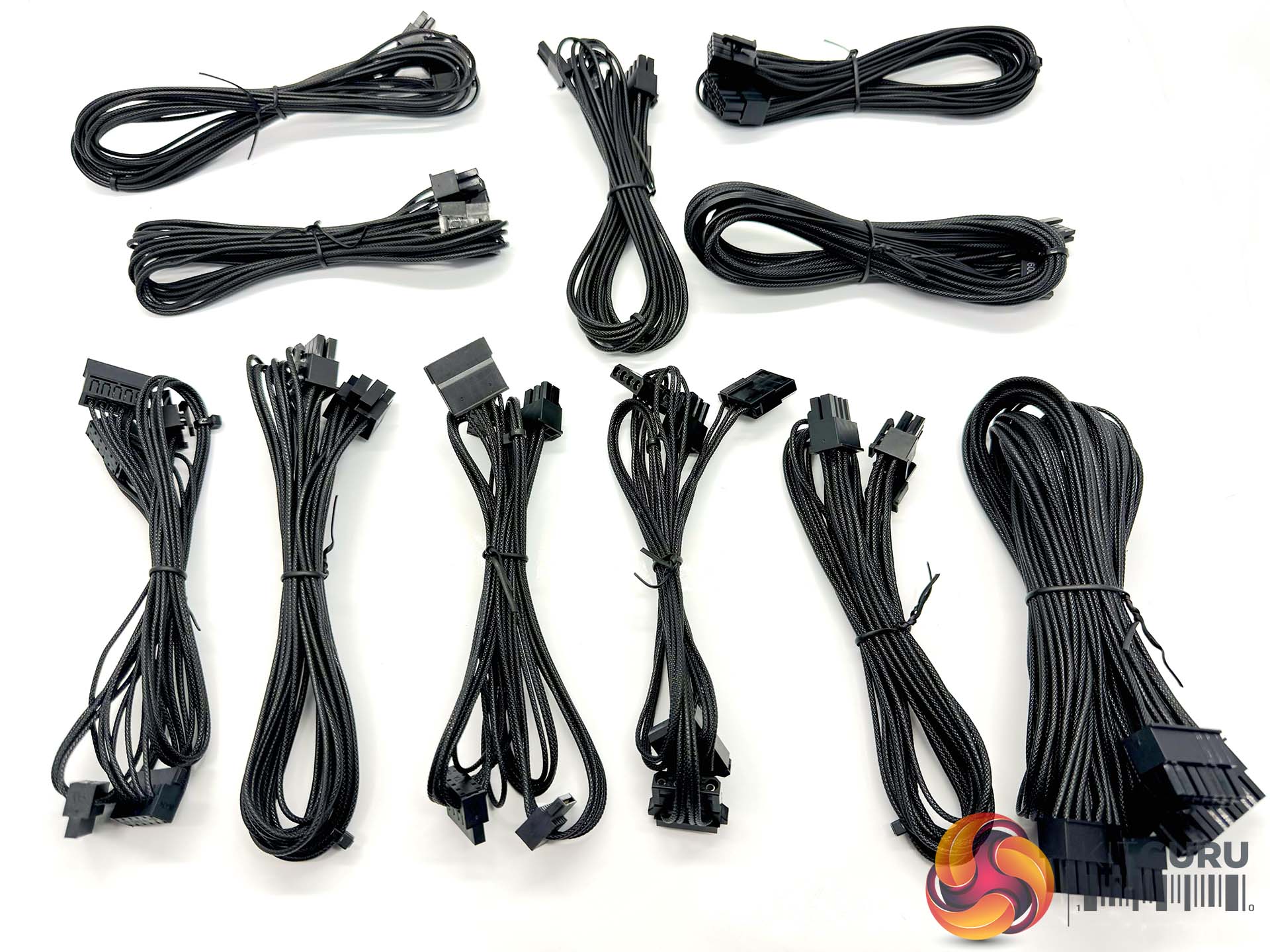
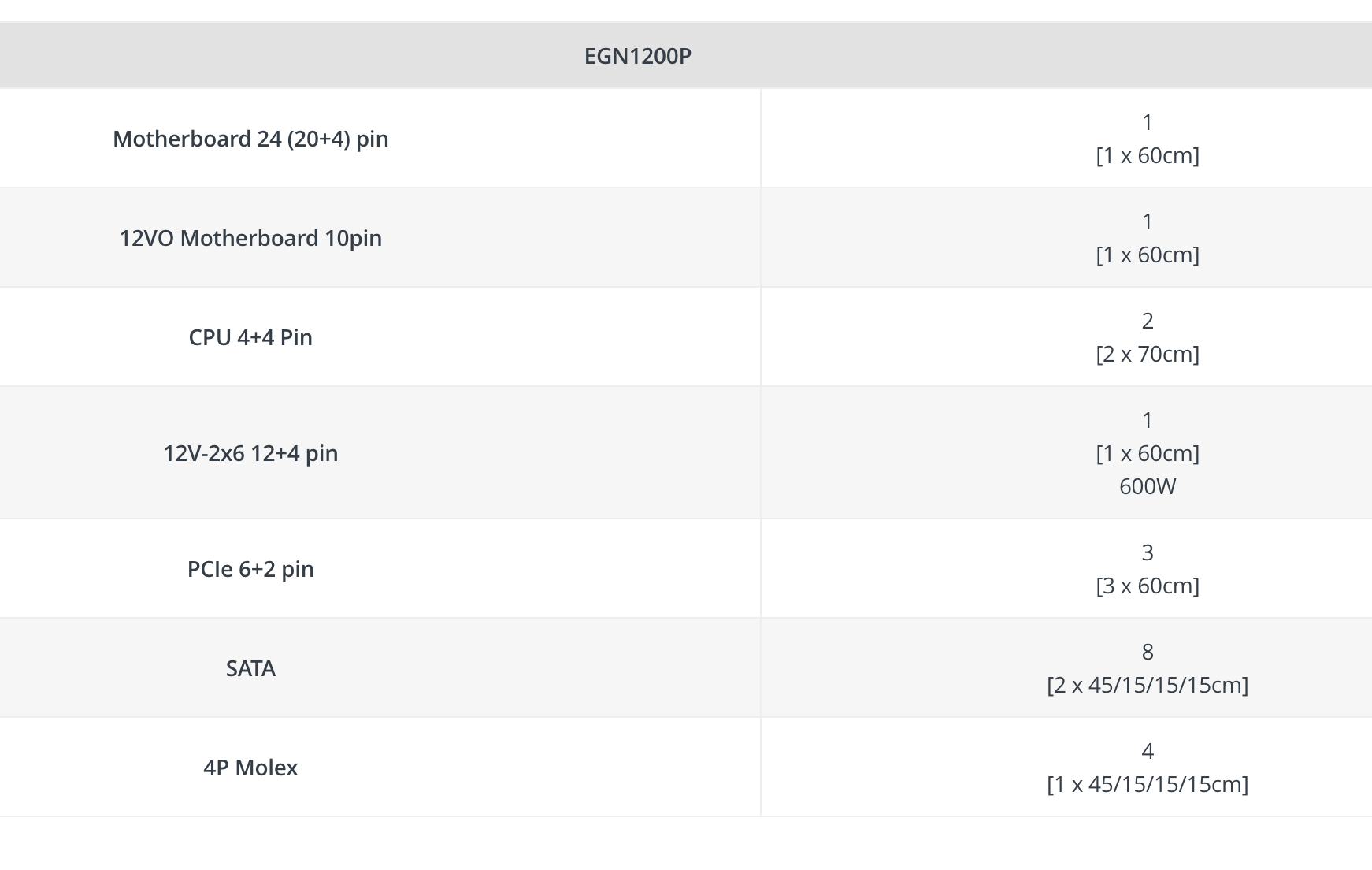
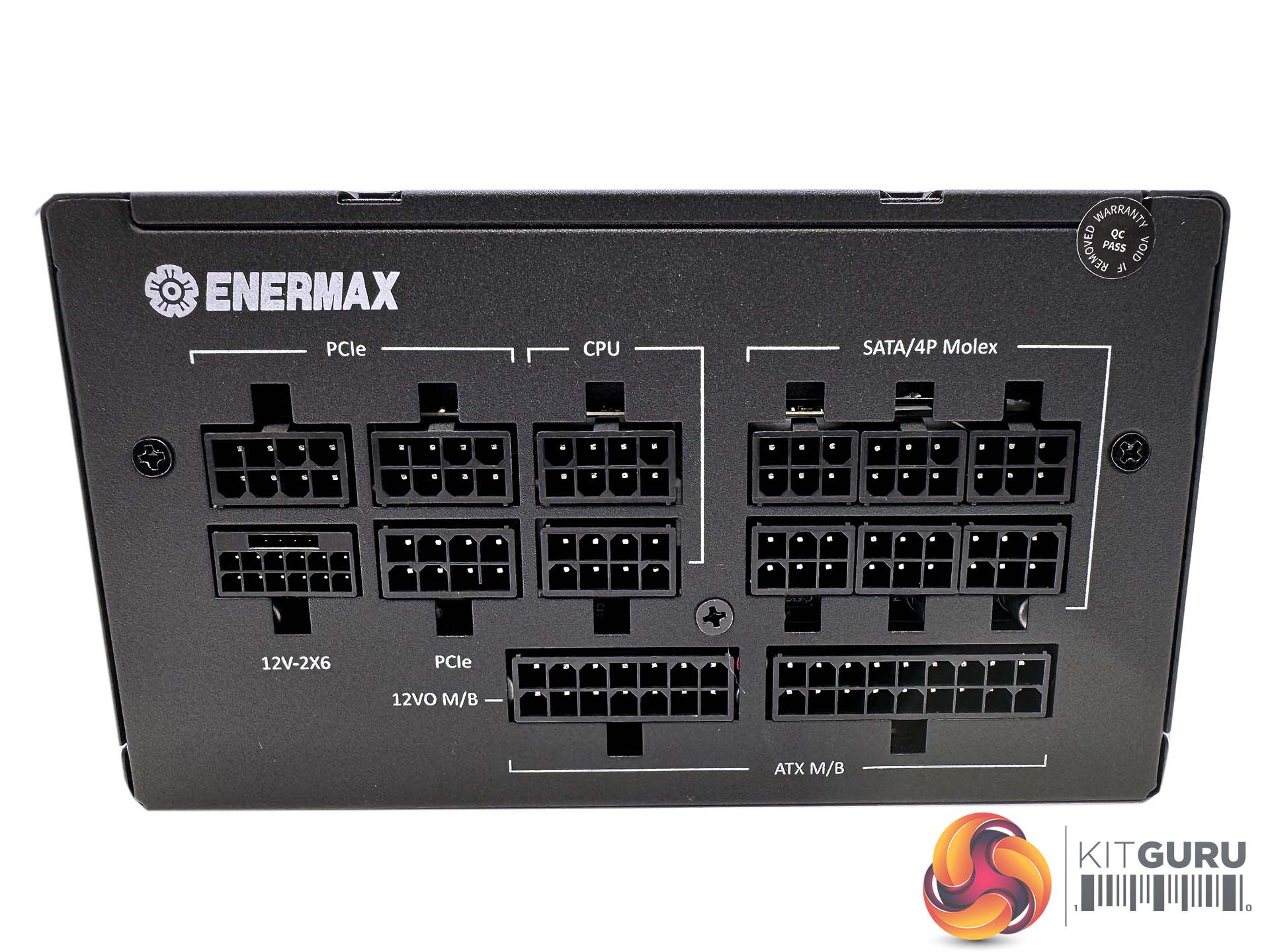
Enermax supply a good selection of cables to cater to the audience buying a 1200 Watt power supply. All the cables are individually sleeved – they look nice, but are a little more work when routing cables inside a system (ribbon cables tend to make more sense for most people). The distance between the peripheral connectors for instance is set at 150 mm. The cables vary from between 16 AWG to 24 AWG.
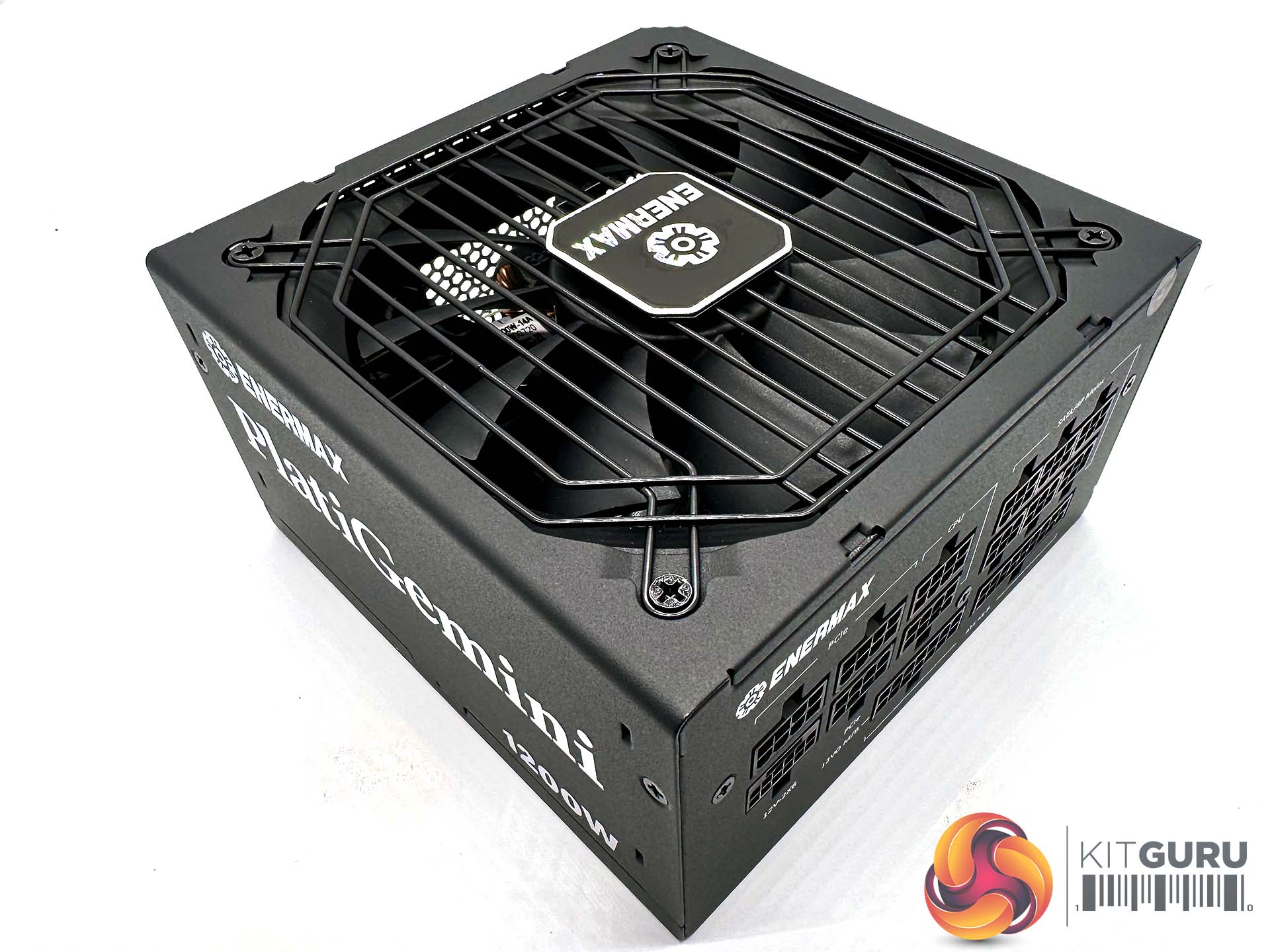
This is a very compact 1200 Watt power supply measuring 150 mm (D) x 150 mm (W) by 86 mm (H). It will fit into even some small chassis – making it ideal for a high power draw, compact system build. The finishing of the supply is very good.
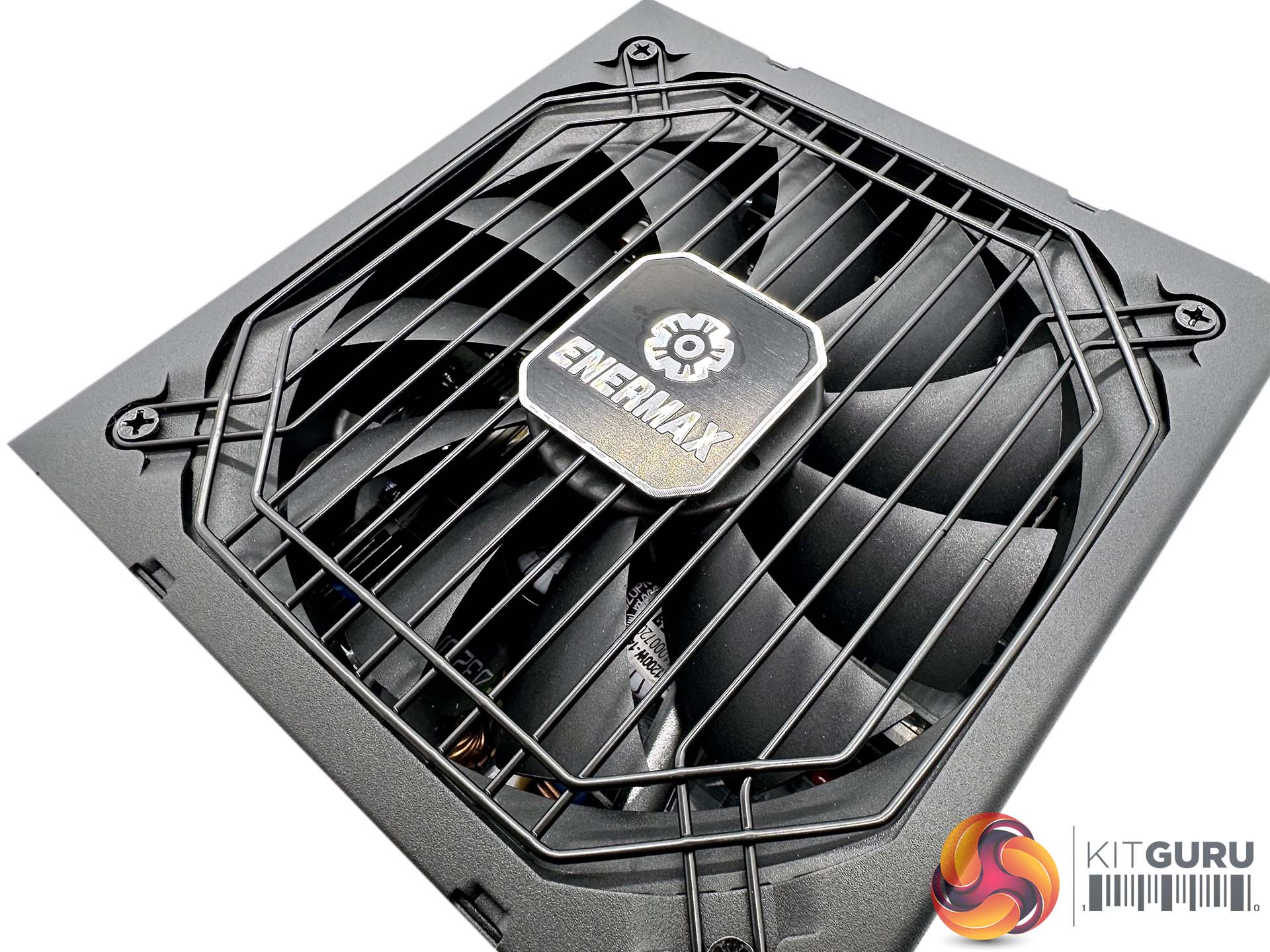
Enermax are using a 135mm fan which they say is Double Ball Bearing. We will take a closer look at this later in the review when we crack the unit open.
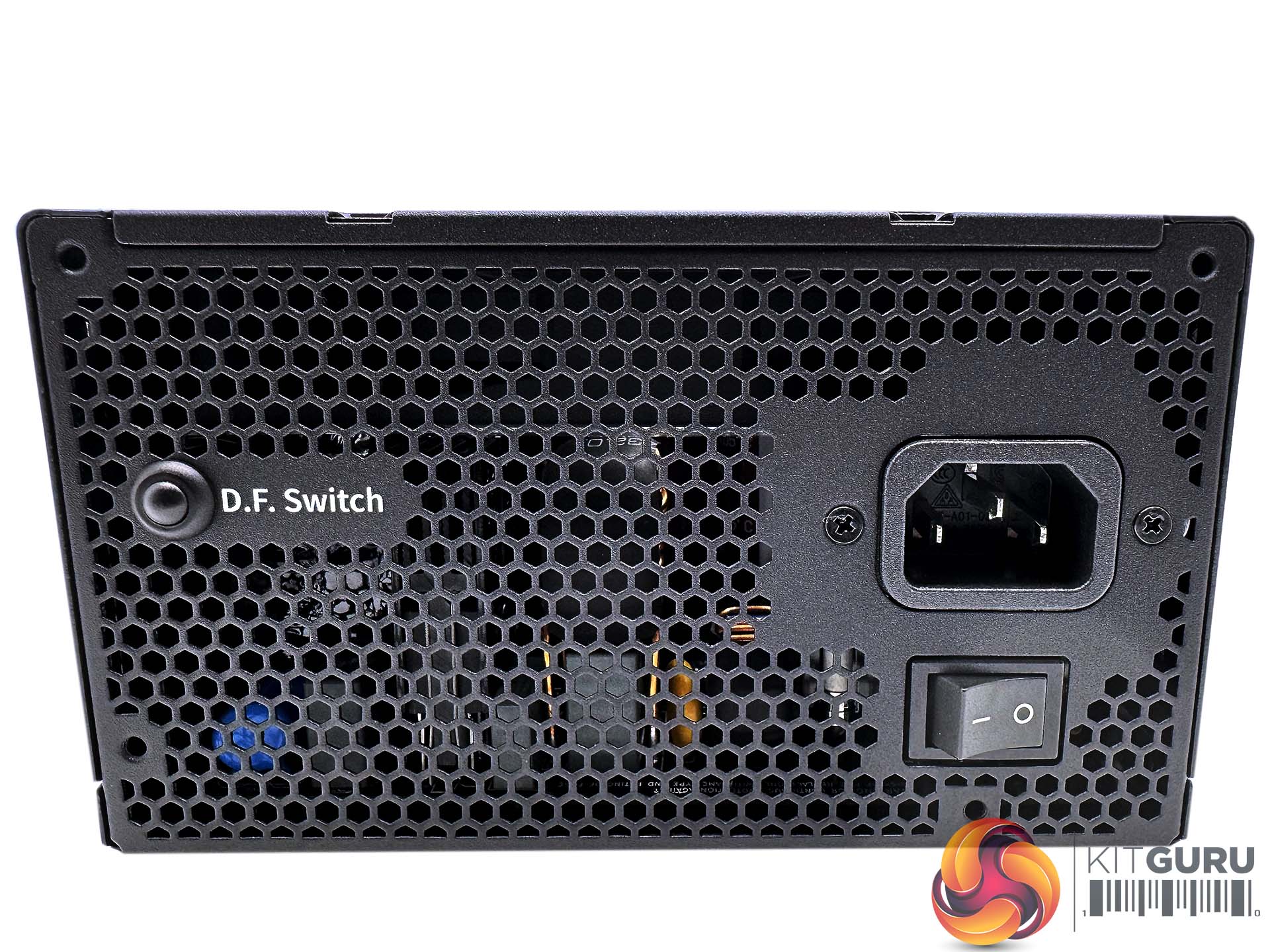
One side of the power supply is home to the power button and connector along with a button marked as ‘D.F. Switch'. If you press this switch it will activate the fan for Enermax ‘Dust Free Rotation Tech'.
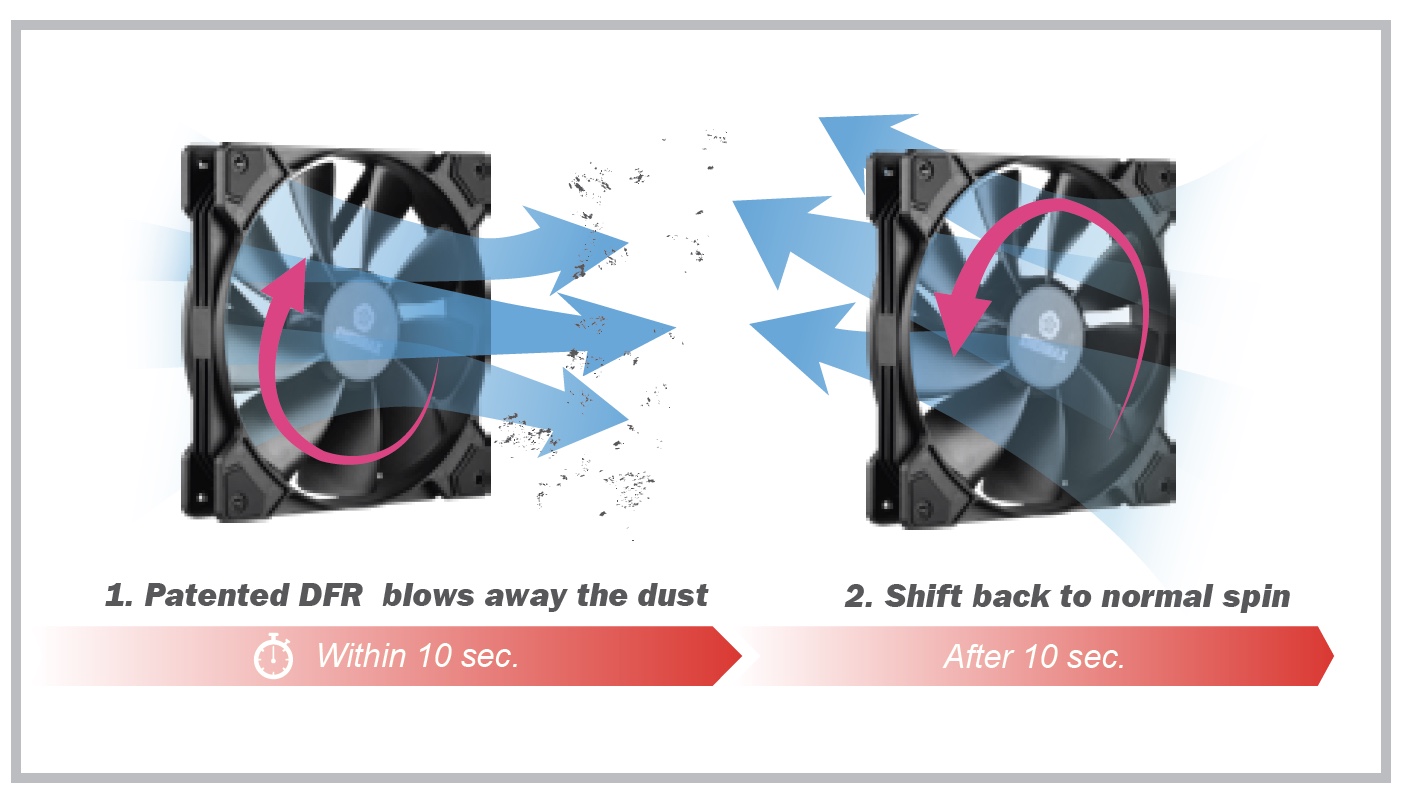
Basically this fan spins in reverse to expel dust from the insides of the unit when it is first powered up. Enermax call this a ‘self cleaning mode'. While the fan reverses direction on start up, it is difficult to actually test if this would help remove stubborn dust over the years. It's certainly an interesting idea.
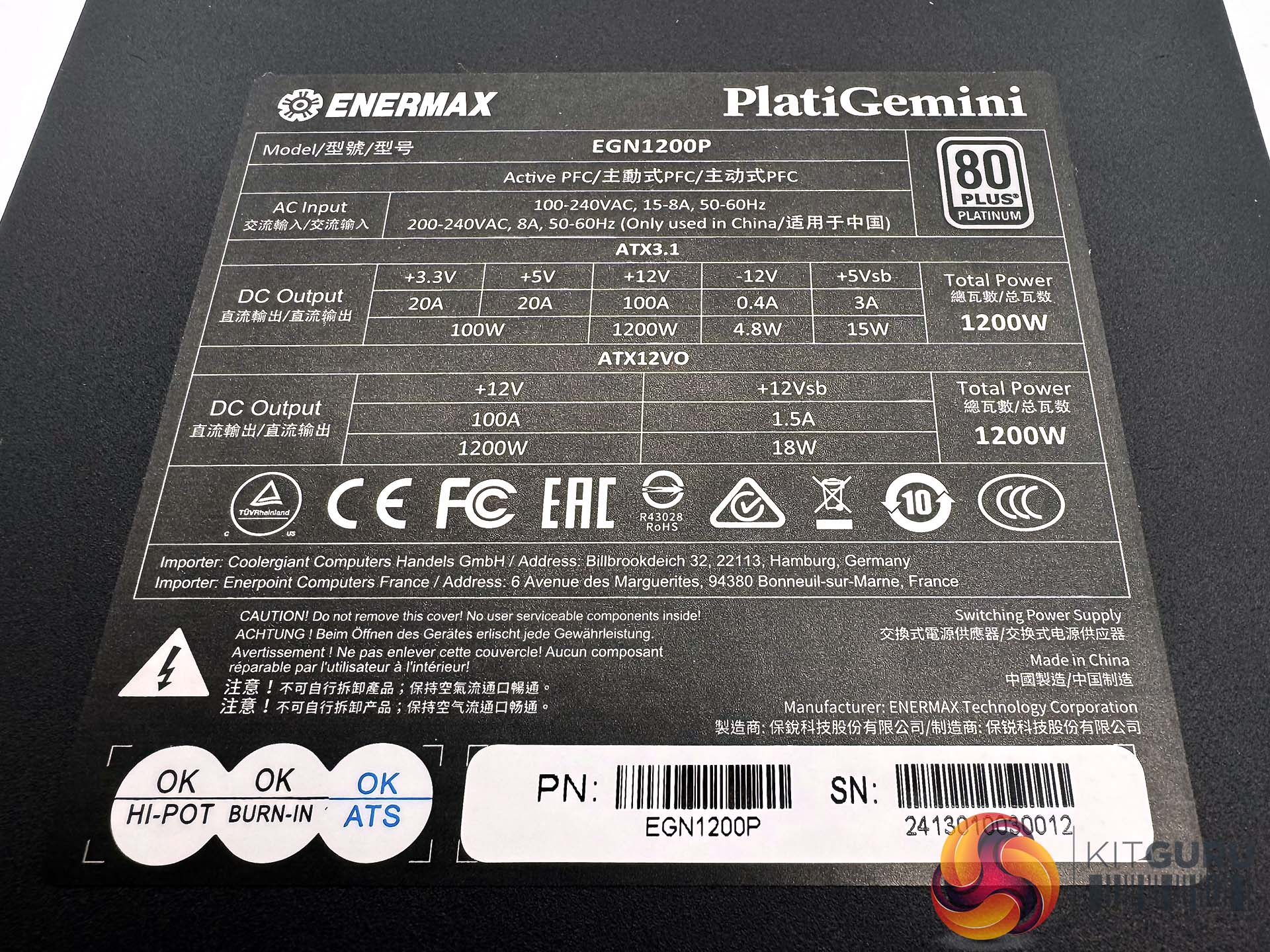
As we can see the unit can deliver 100 amps via the +12V rail. and 20A each to both +3.3V and +5V rails.
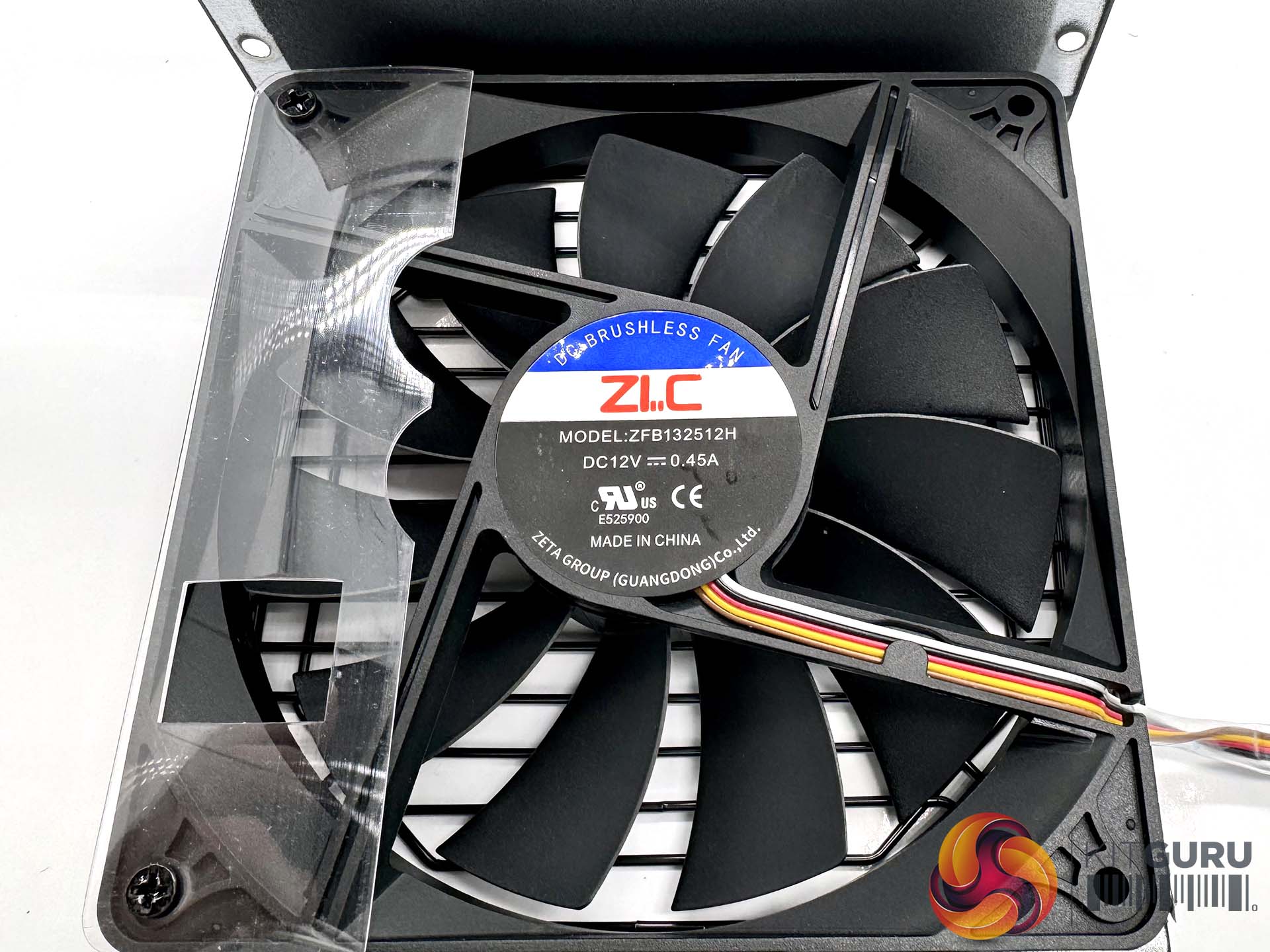
Enermax are using a 135mm ZIC Fan. This is a double ball bearing design rated at 12V, 0.45A – model number ZFB132512H. We haven't had many experiences with this particular brand. Enermax have attached a small plastic shield on one side – this forcibly redirects air flow over specific high output and heatsinks of the power supply underneath.
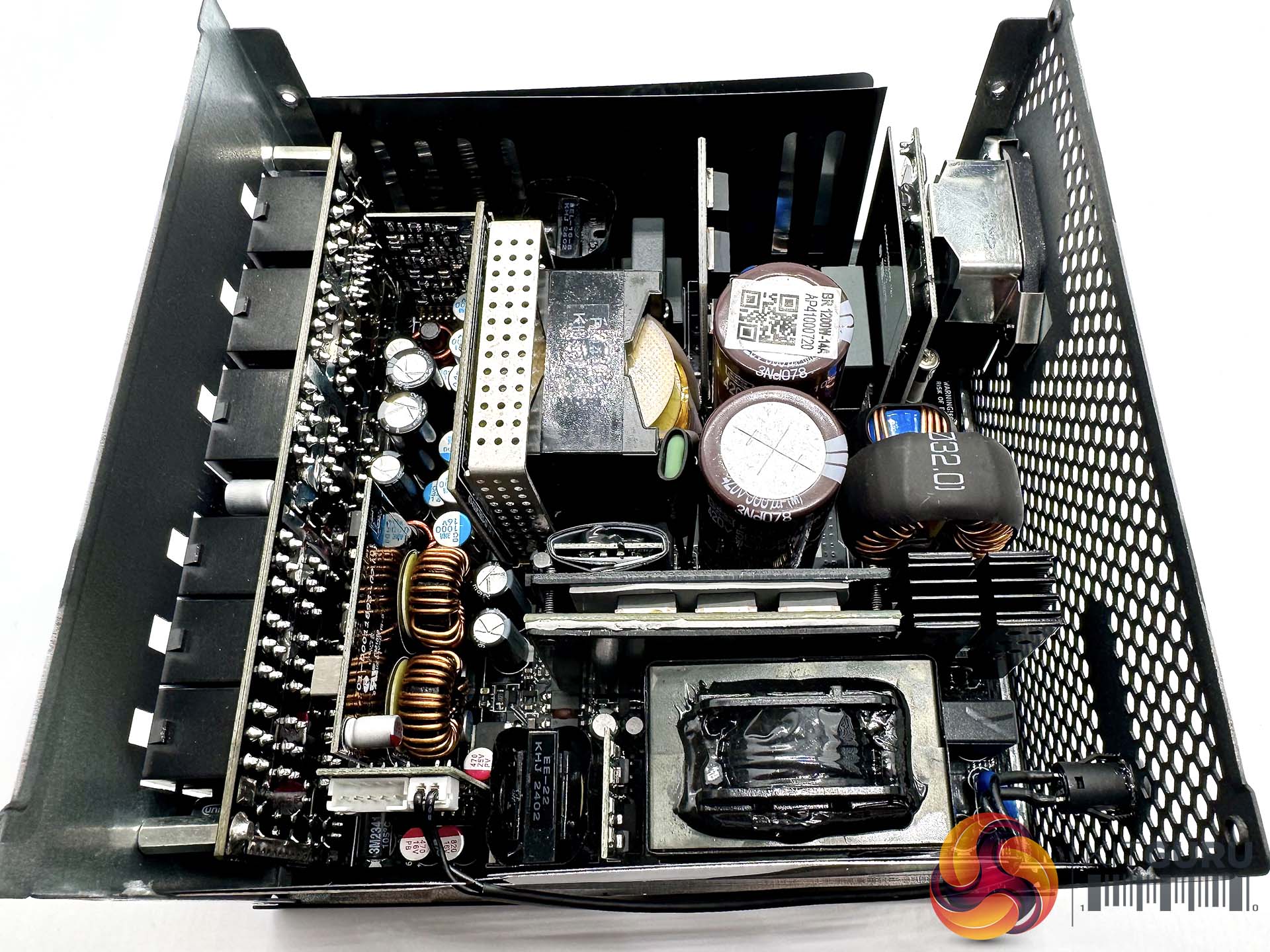
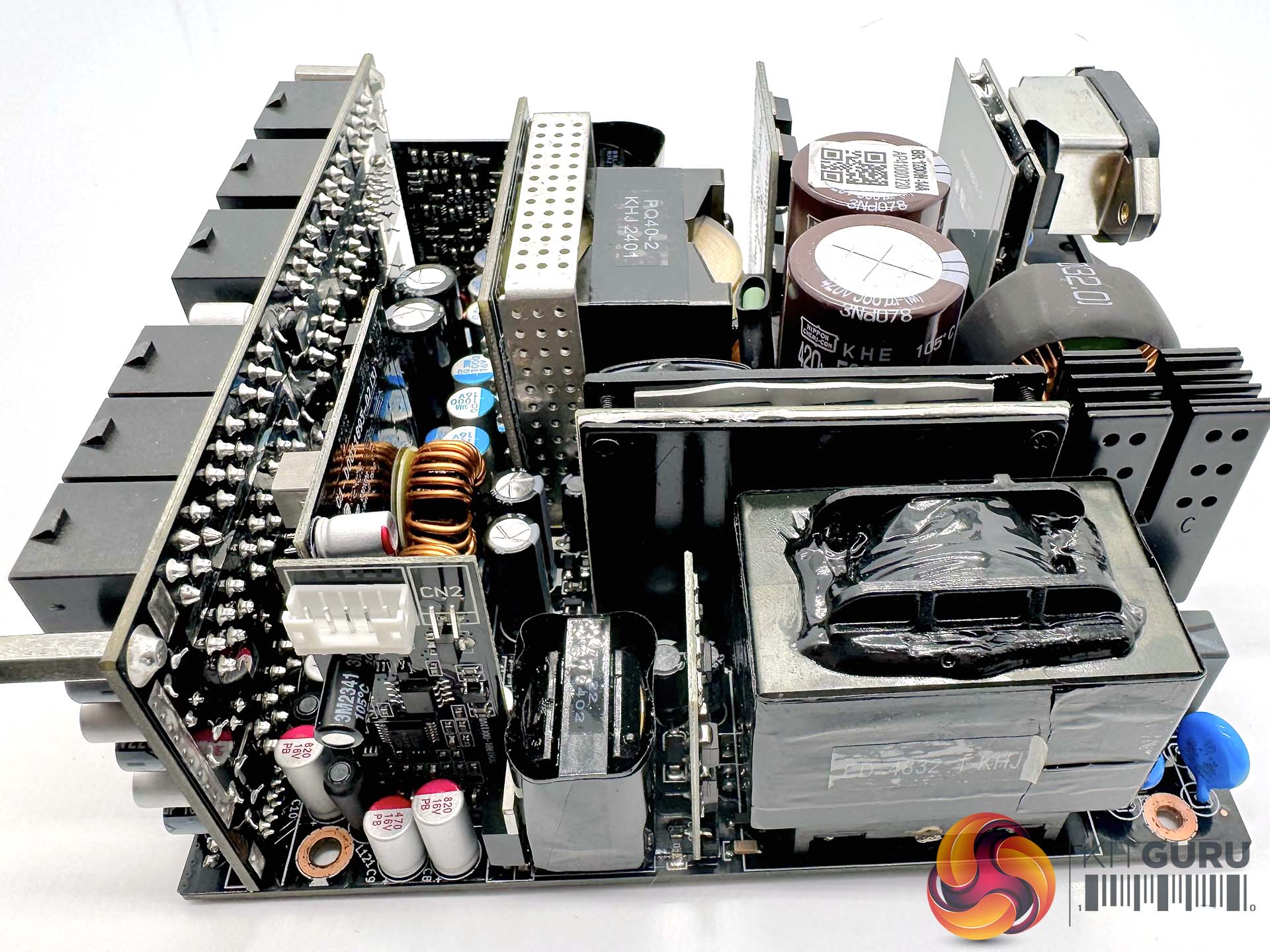
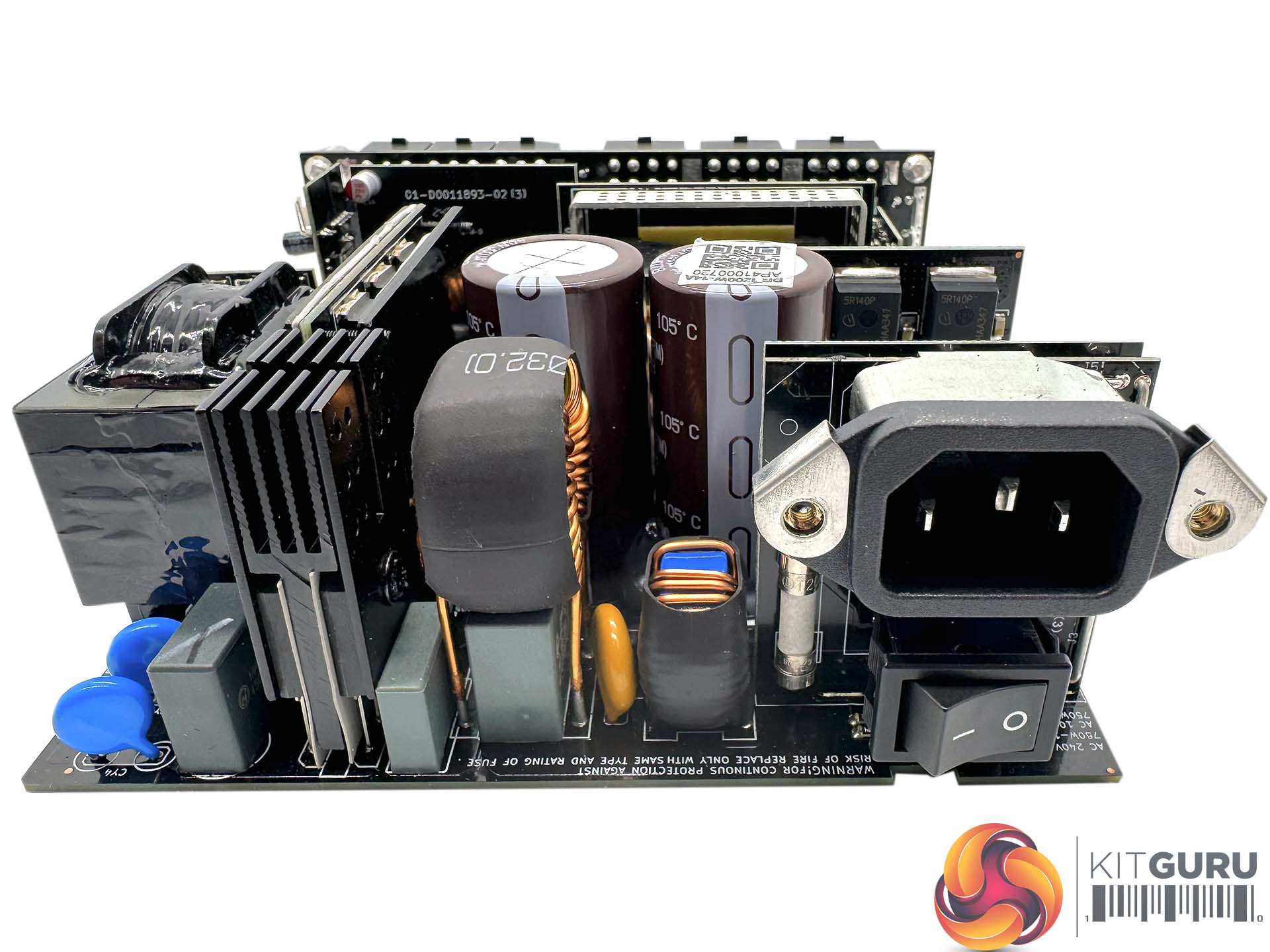
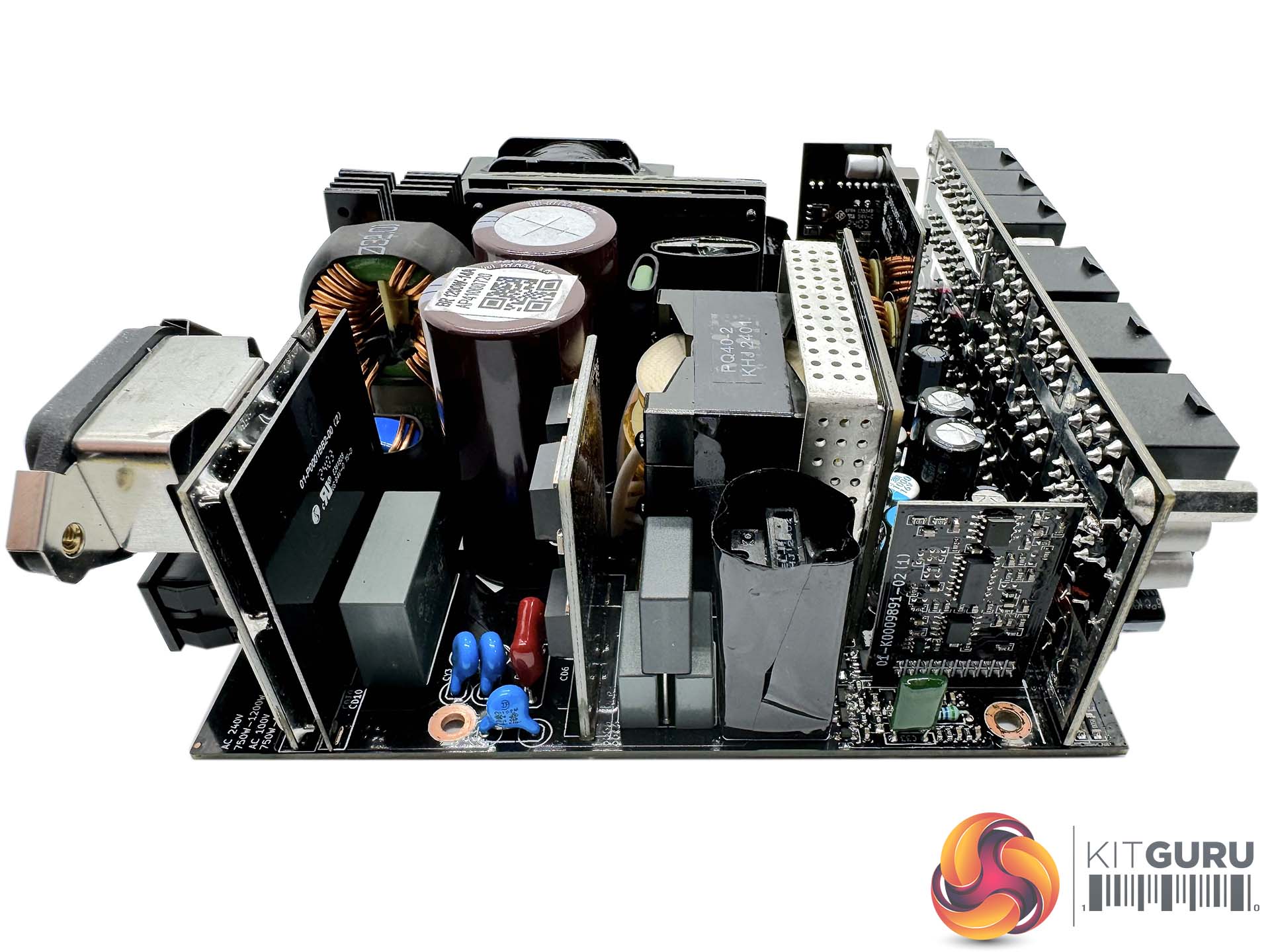
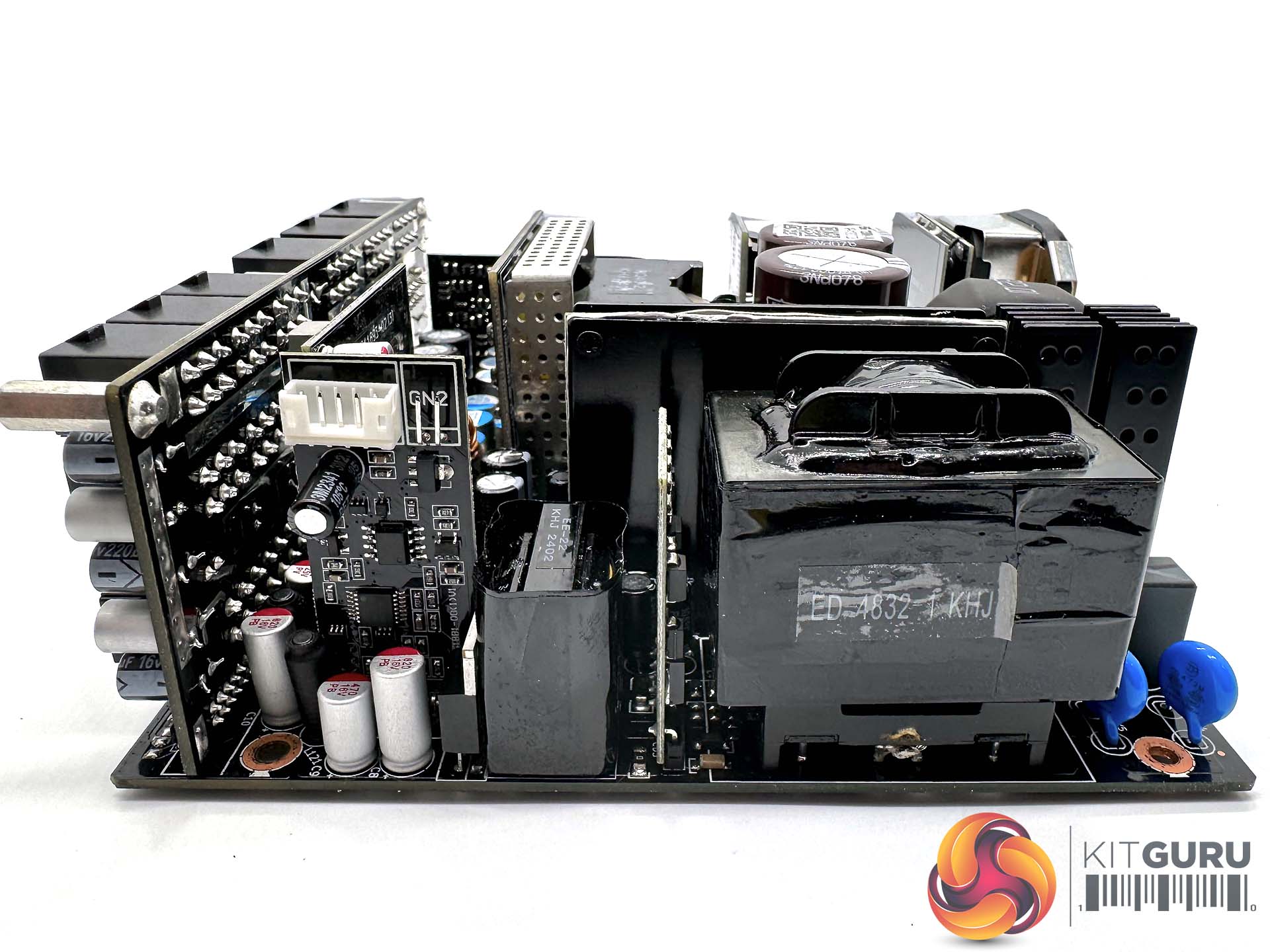
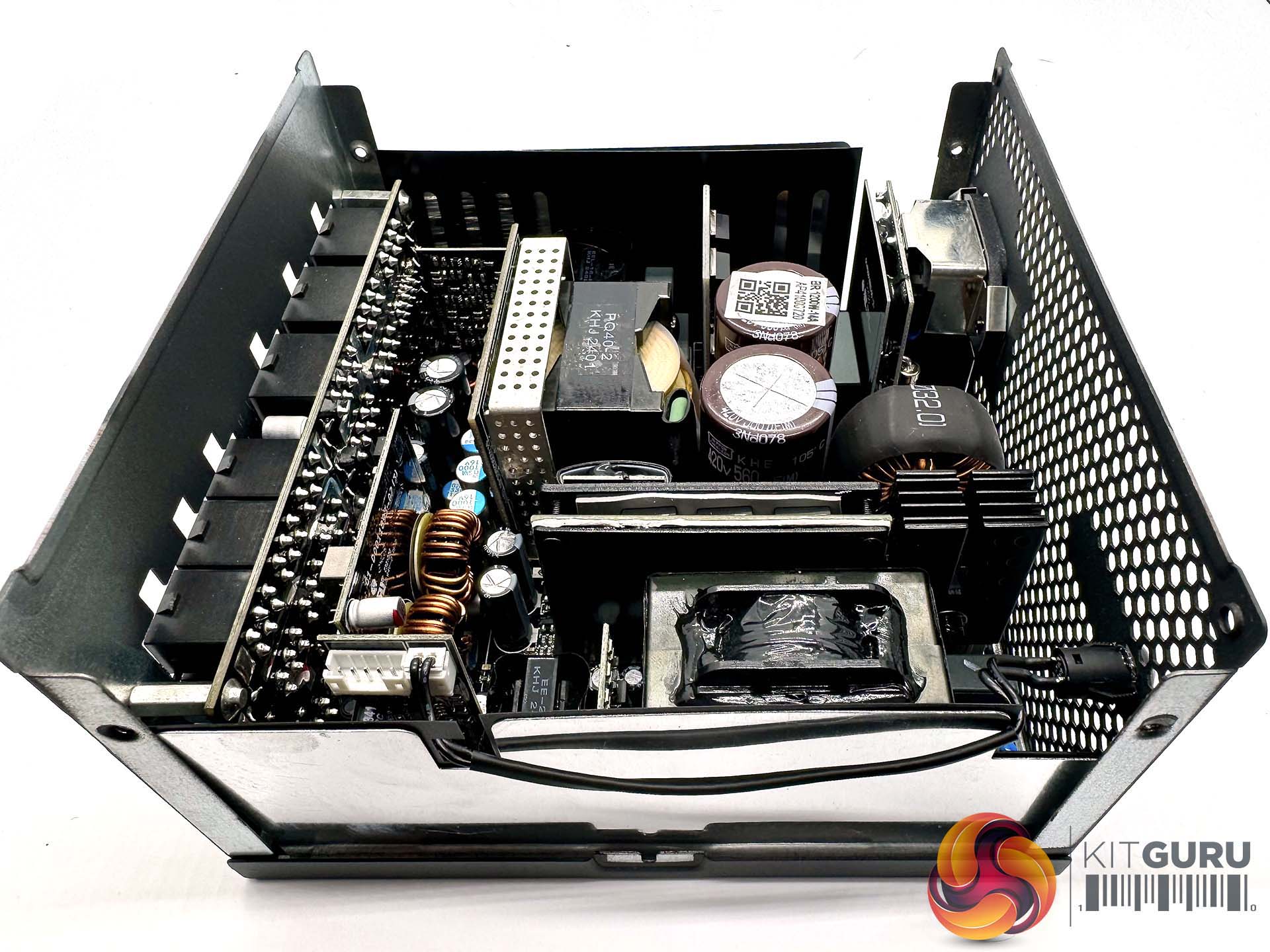
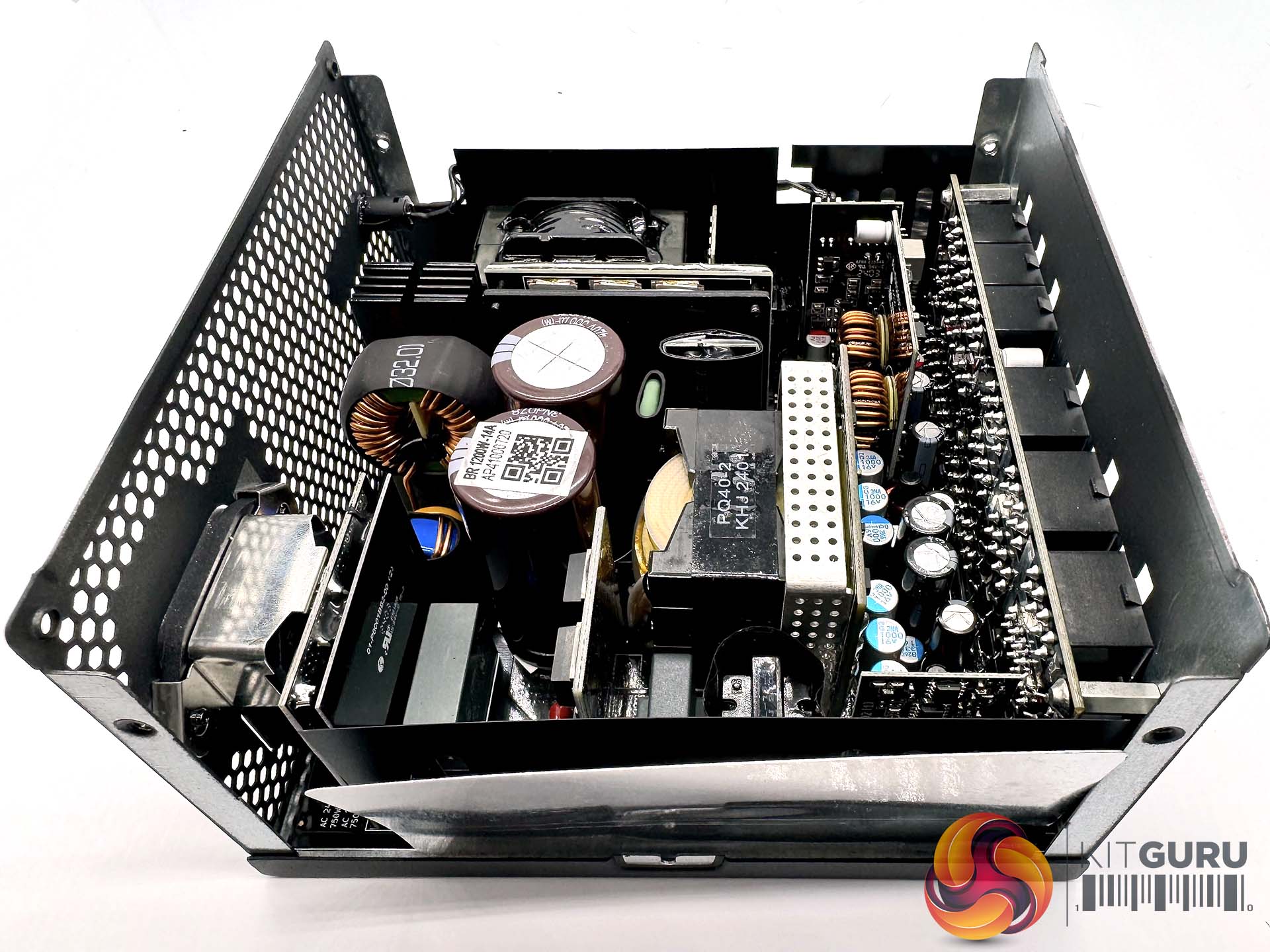
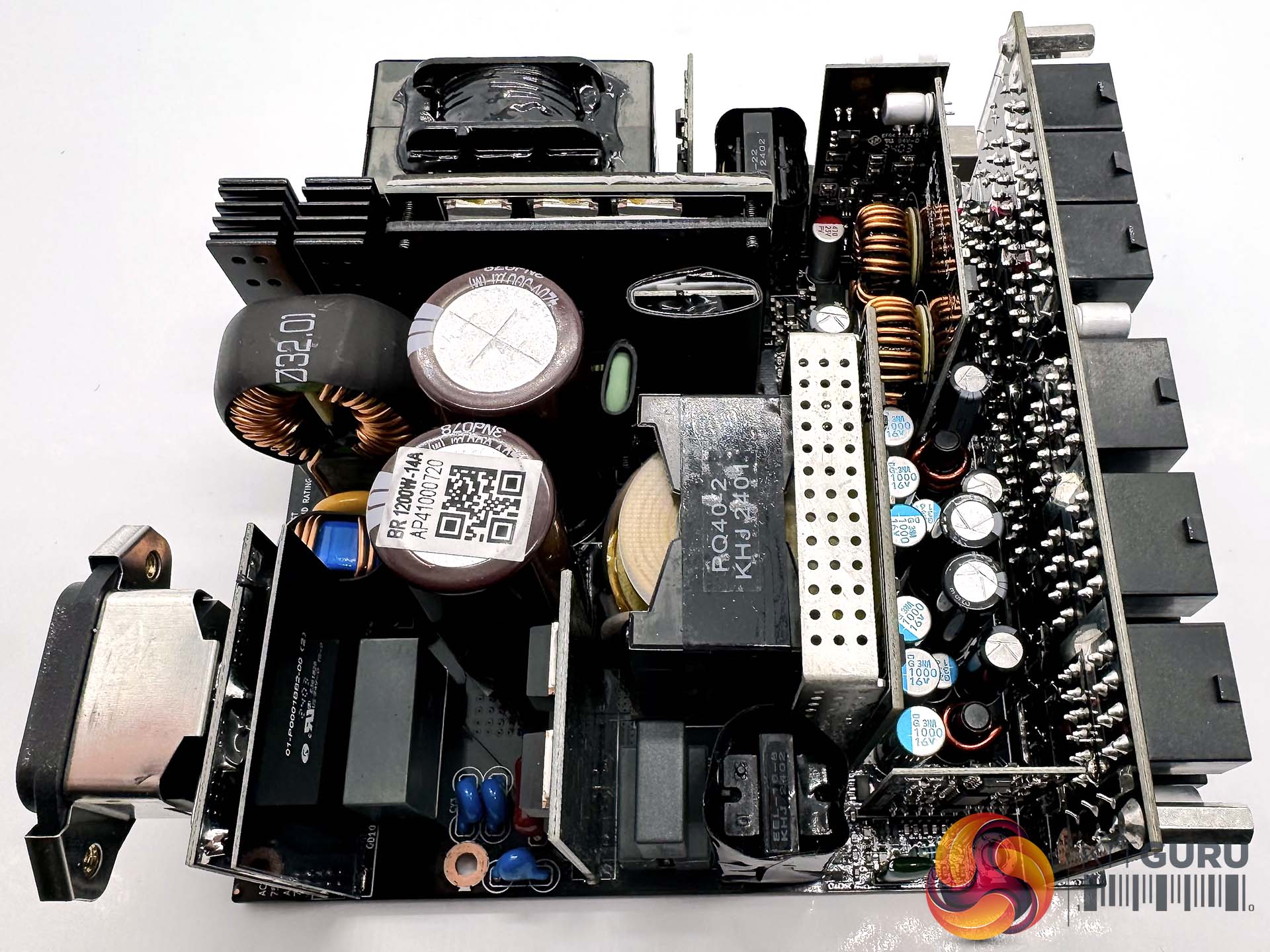
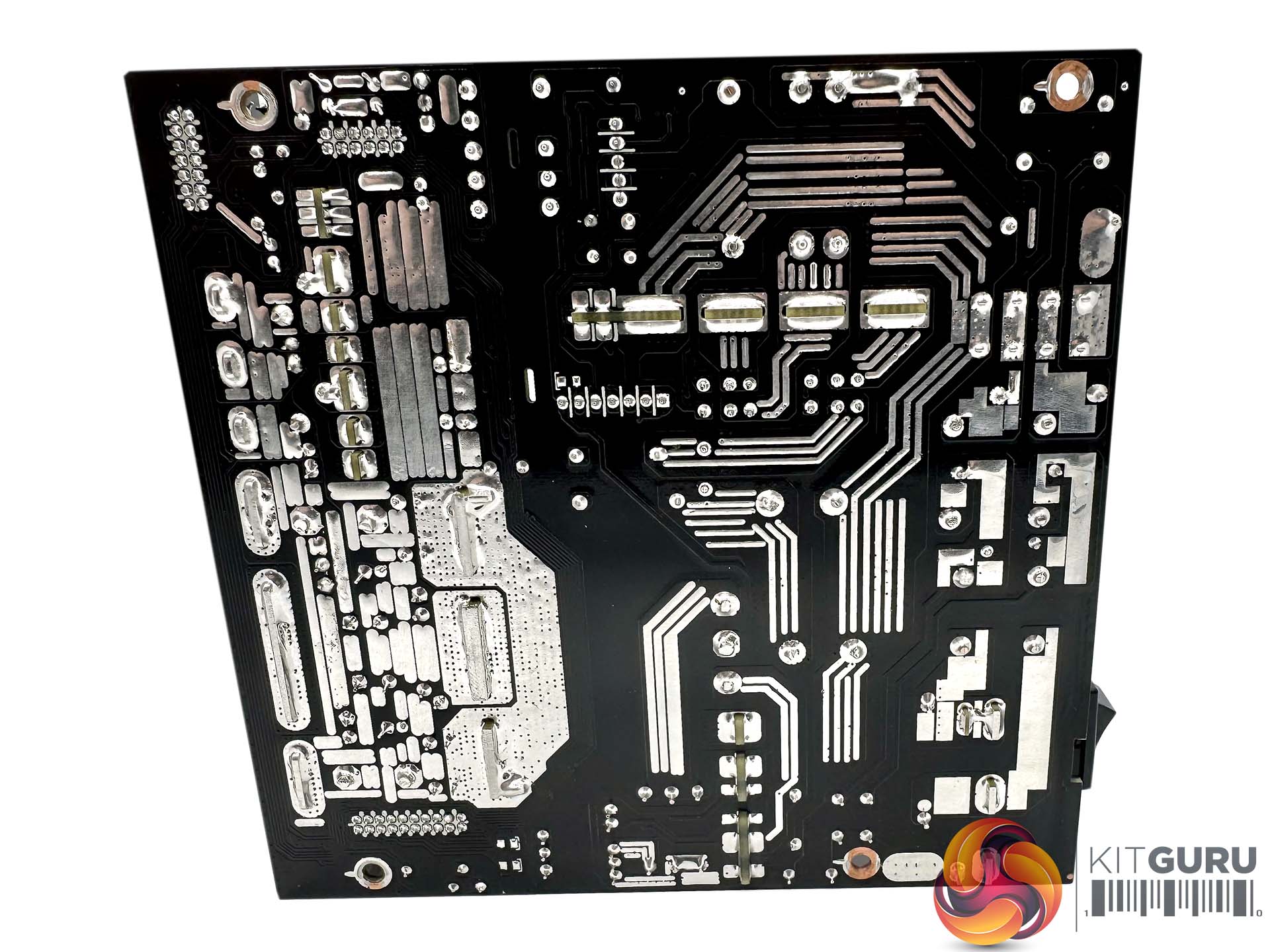
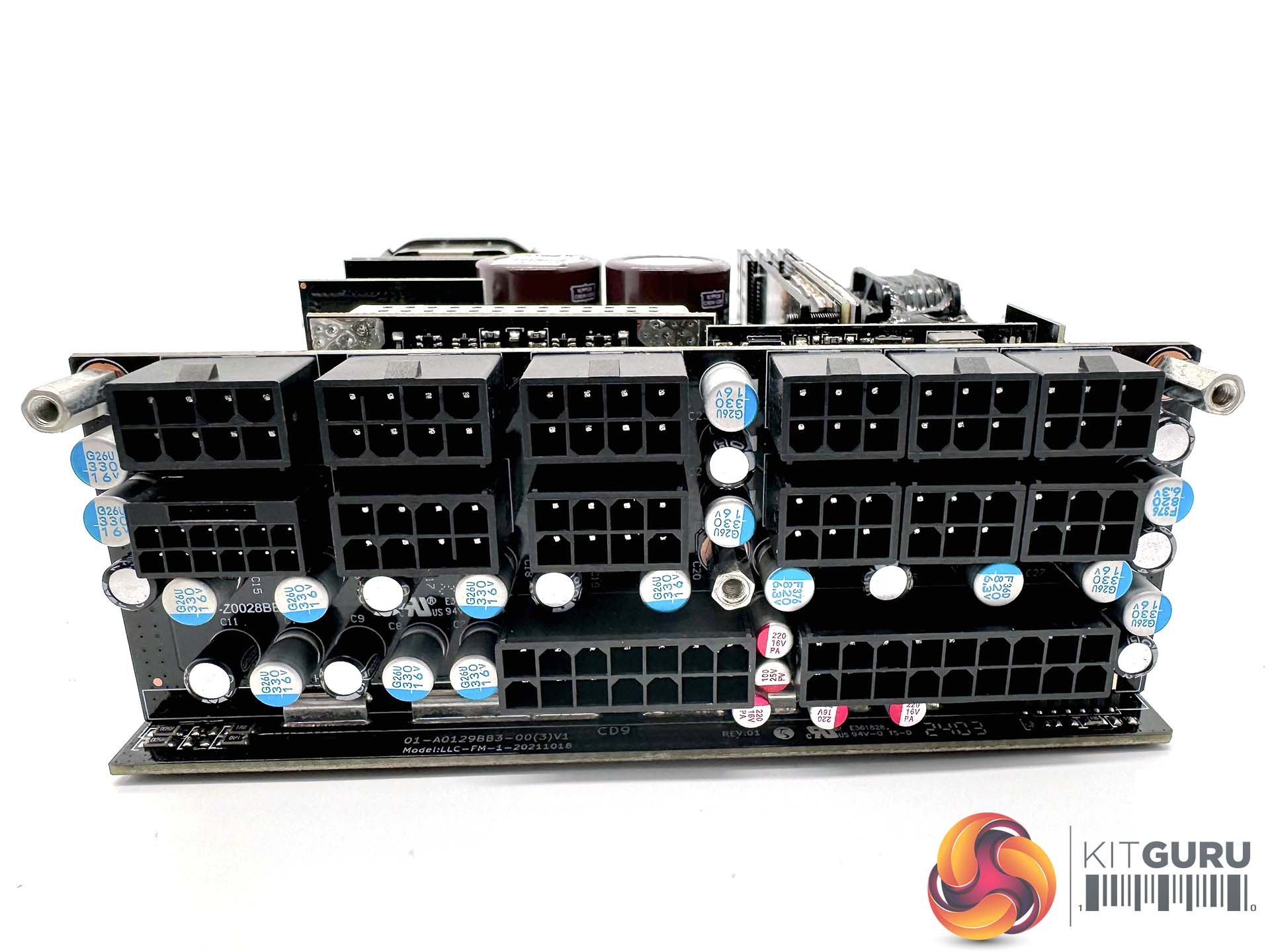
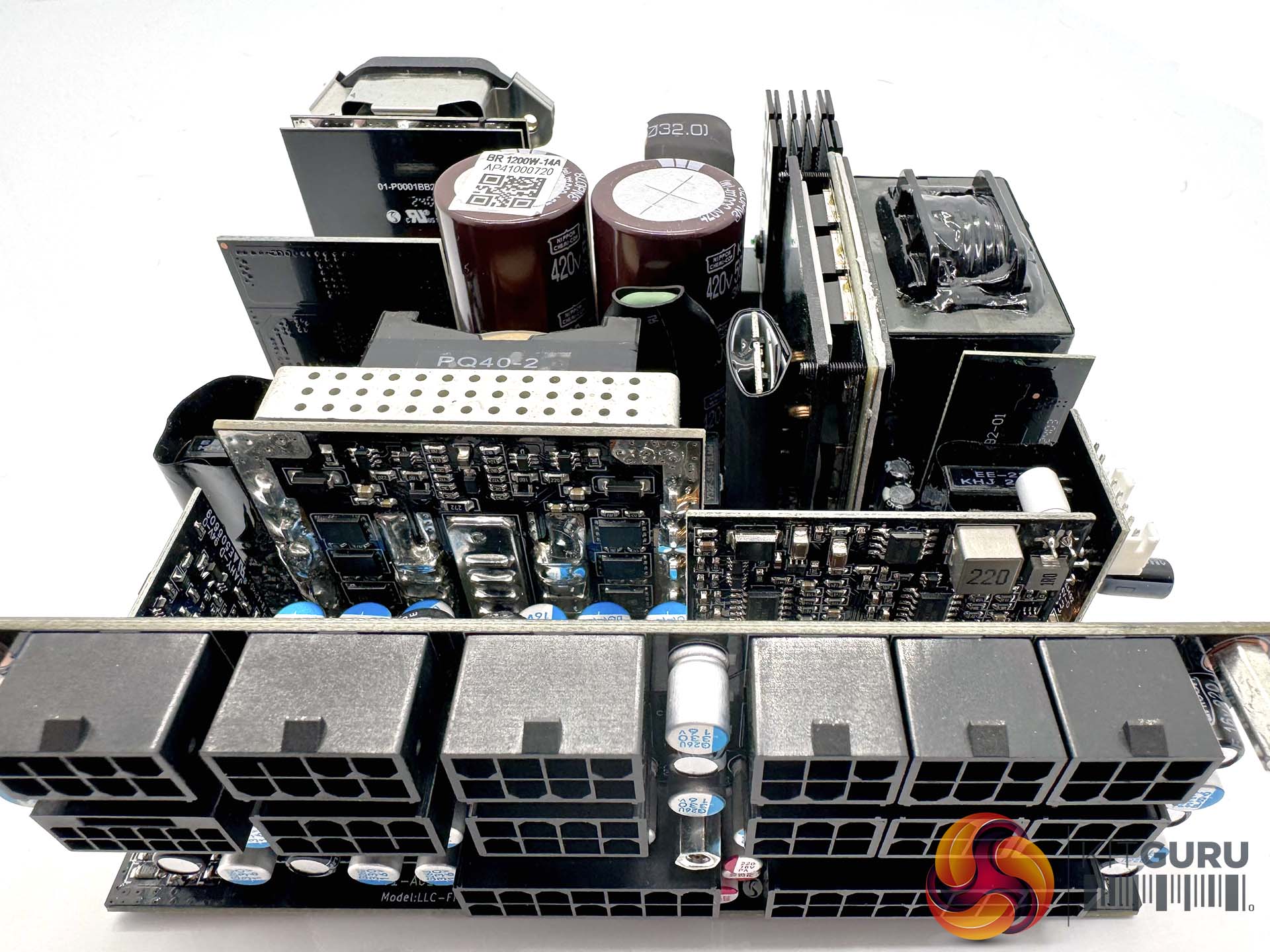
Enermax are using RSY as a partner for the design of this power supply. We know RSY were involved with other companies in the past such as Seasonic and Super Flower, but it is not often we see one of their designs in a unit we test. This platform is new and worth some discussion. It is delivering two standby rails at the same time. This is due to the ATX12VO and ATX12V implementations in the design. As you may have noticed earlier in the review on the power supply readout table, the unit is set up as a standard unit, but one that also outputs only 12VSB and 12V.
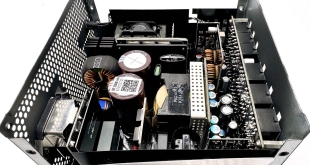
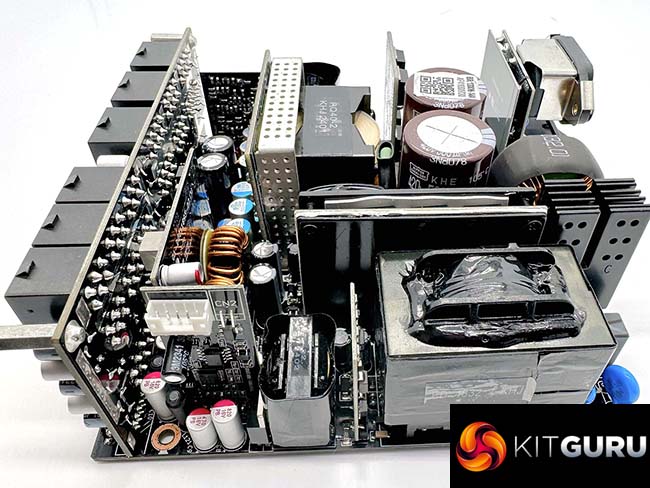
The internal design of this power supply is clean with plenty of space between component for good air flow and the soldering quality throughout is really very good. The 12V FETs are installed on a vertical PCB, close to the main transformer. There are DC-DC convertors which generate the minor rails in this area as well.
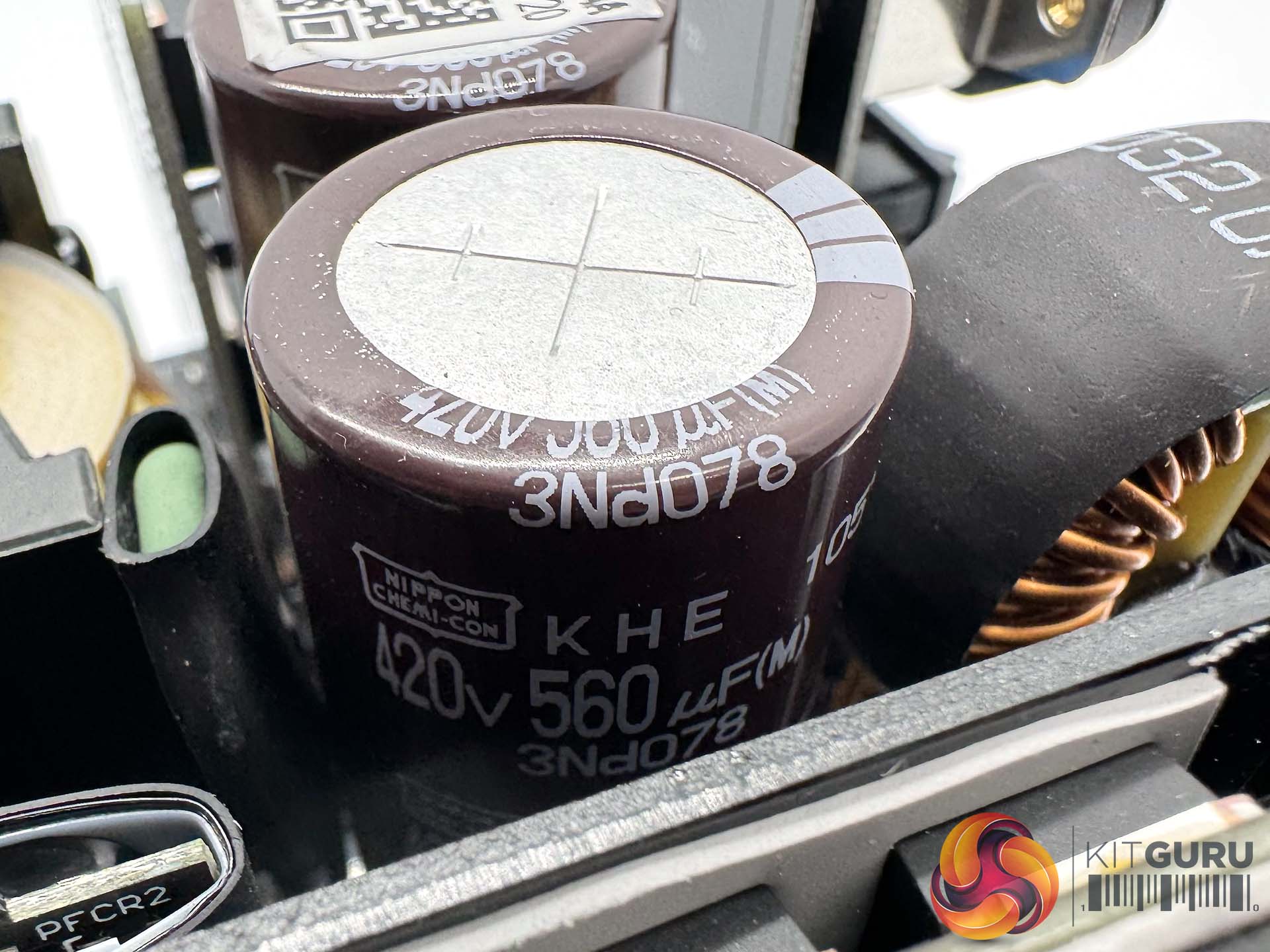
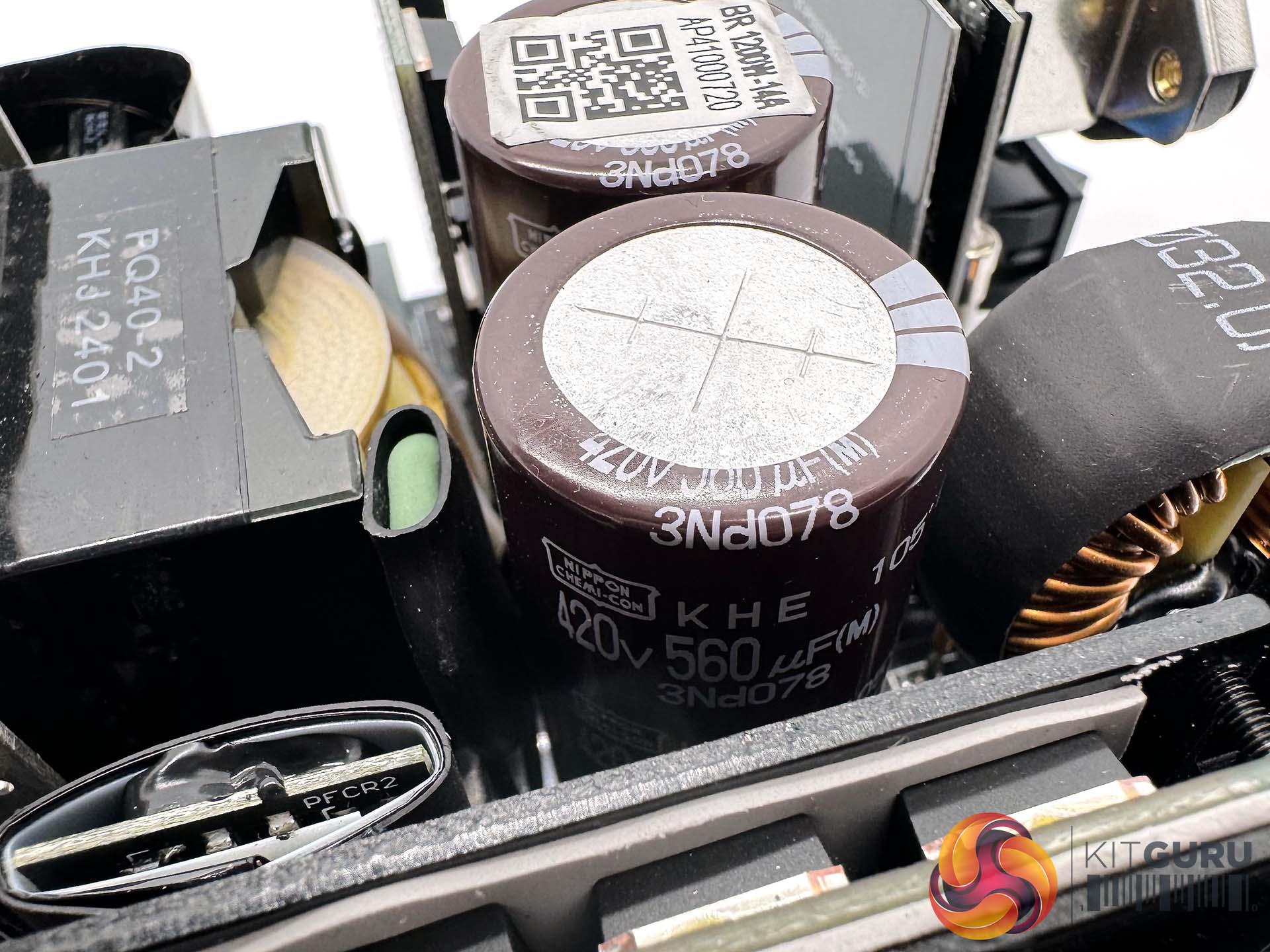
It is also reassuring to see high grade capacitors from Japanese companies such as Rubycon and Nippon Chemi Con throughout the design. There are some polymer caps as well, to help with ripple filtering across the secondary stage.
Correctly testing power supplies is a complex procedure and KitGuru have configured a test bench which can deliver up to a 2,000 Watt DC load.
We test ambient temperatures at 35C in our environment to greater reflect warmer internal chassis conditions.
We use combinations of the following hardware:
• SunMoon SM-268
• CSI3710A Programmable DC load (+3.3V and +5V outputs)
• CSI3711A Programmable DC load (+12V1, +12V2, +12V3, and +12V4)
• Extech Power Analyzer
• Extech MultiMaster MM570 digital multimeter
• Extech digital sound level meter
• Digital oscilloscope (20M S/s with 12 Bit ADC)
• Variable Autotransformer, 1.4 KVA
|
DC Output Load Regulation
|
||||||||||
|
Combined DC Load |
+3.3V
|
+5V
|
+12V
|
+5VSB
|
-12V | |||||
|
A
|
V
|
A
|
V
|
A
|
V
|
A
|
V
|
A | V | |
|
120W
|
0.90
|
3.33
|
0.93
|
5.01
|
8.95
|
12.09
|
0.50
|
5.02
|
0.20
|
-12.01
|
|
240W
|
1.62
|
3.33
|
1.63
|
5.01
|
18.45
|
12.09
|
1.00
|
5.01
|
0.20
|
-12.02
|
| 600W |
3.00
|
3.33
|
3.11
|
5.01
|
46.78
|
12.08
|
1.50
|
5.01
|
0.30
|
-12.01
|
| 900W |
4.01
|
3.31
|
4.05
|
5.01
|
70.86
|
12.06
|
2.00
|
5.01
|
0.30
|
-12.01
|
|
1200W
|
5.02
|
3.29
|
5.20
|
5.01
|
94.57
|
12.05
|
2.50
|
5.01
|
0.30
|
-12.01
|
Load regulation is excellent with minor droop on the +3.3V over 5A.
| Enermax PlatiGemini 1200W | Maximum Load |
| 1750 Watts* |
*We managed to record 1750 Watts before I began to worry about the protection features of the power supply. I pushed the unit to 145Amps via the 12V rail and the OCP failed to protect the unit at this point. We are not sure if this is an oversight or something that has escaped evaluation, but Enermax and RSY should look into this.
Next we want to try Cross Loading. This basically means loads which are not balanced. If a PC for instance needs 500W on the +12V outputs but something like 30W via the combined 3.3V and +5V outputs then the voltage regulation can fluctuate badly.
| Cross Load Testing | +3.3V | +5V | +12V | -12V | +5VSB | |||||
| A | V | A | V | A | V | A | V | A | V | |
| 1190W | 4.0 | 3.33 | 3.0 | 5.02 | 88.0 | 12.06 | 0.2 | -12.02 | 0.50 | 5.01 |
| 240W | 19.0 | 3.33 | 22.0 | 5.02 | 2.5 | 12.08 | 0.2 | -12.01 | 0.50 | 5.01 |
The Enermax PlatiGemini 1200W handled our cross load tests without any issues. When hit with 88A, the +12V rail held at 12.06.
We then used an oscilloscope to measure AC ripple and noise present on the DC outputs. We set the oscilloscope time base to check for AC ripple at both high and low ends of the spectrum. ATX12V V2.2 specification for DC output ripple and noise is defined in the ATX 12V power supply design guide.
|
ATX12V Ver 2.2 Noise/Ripple Tolerance
|
|
|
Output
|
Ripple (mV p-p)
|
|
+3.3V
|
50
|
|
+5V
|
50
|
|
+12V1
|
120
|
|
+12V2
|
120
|
|
-12V
|
120
|
|
+5VSB
|
50
|
Obviously when measuring AC noise and ripple on the DC outputs the cleaner (less recorded) means we have a better end result. We measured this AC signal amplitude to see how closely the unit complied with the ATX standard.
| AC Ripple (mV p-p) | ||||
| DC Load | +3.3V | +5V | +12V | 5VSB |
| 100W | 5 | 5 | 5 | 5 |
| 200W | 5 | 5 | 5 | 10 |
| 400W | 10 | 5 | 10 | 10 |
| 600W | 10 | 5 | 10 | 10 |
| 800W | 15 | 5 | 10 | 15 |
| 1000W | 15 | 10 | 10 | 20 |
| 1200W | 20 | 10 | 15 | 25 |
Ripple suppression is superb with the +12V rail hitting a maximum of 15mW at full load. The minor +3.3V and +5V rails hit maximum 20mW and 10mW respectively. All of these fall well within industry rated parameters.
|
Efficiency (%)
|
|
|
100W
|
90.6
|
|
200W
|
93.0
|
|
400W
|
94.2
|
|
600W
|
94.2
|
|
800W
|
93.7
|
| 1000W | 93.1 |
| 1200W | 92.2 |
Efficiency is superb, hitting over 94% between 40%-60% load. At full load, efficiency drops to just over 92%. This unit is extremely efficient.
We take the issue of noise very seriously at KitGuru and this is why we have built a special home brew system as a reference point when we test noise levels of various components. Why do this? Well this means we can eliminate secondary noise pollution in the test room and concentrate on components we are testing. It also brings us slightly closer to industry standards, such as DIN 45635.
Today to test the power supply we have taken it into our acoustics room environment and have set our SkyTronic DSL 2 Digital Sound Level Meter (6-130dBa) one meter away from the unit. We have no other fans running so we can effectively measure just the noise from the unit itself.
As this can be a little confusing for people, here are various dBa ratings in with real world situations to help describe the various levels.
KitGuru noise guide
10dBA – Normal Breathing/Rustling Leaves
20-25dBA – Whisper
30dBA – High Quality Computer fan
40dBA – A Bubbling Brook, or a Refrigerator
50dBA – Normal Conversation
60dBA – Laughter
70dBA – Vacuum Cleaner or Hairdryer
80dBA – City Traffic or a Garbage Disposal
90dBA – Motorcycle or Lawnmower
100dBA – MP3 Player at maximum output
110dBA – Orchestra
120dBA – Front row rock concert/Jet Engine
130dBA – Threshold of Pain
140dBA – Military Jet takeoff/Gunshot (close range)
160dBA – Instant Perforation of eardrum
|
Noise (dBA)
|
|
|
100W
|
<28.0
|
|
200W
|
<28.0
|
|
400W
|
<28.0
|
|
600W
|
32.4
|
| 800W | 34.5 |
| 1000W | 36.8 |
| 1200W | 38.4 |
This fan doesn't really spin up much at all until later in the power delivery, and over 800 Watts load it is audible. This all would depend how loud your actual PC is of course, but over 1000 Watt load, we recorded a fair bit of fan noise. Not that it's intrusive, just noticeable. I feel Enermax could have opted for a slightly less aggressive fan profile in this particular unit especially when factoring in the high efficiency levels.
|
Temperature (c)
|
||
|
Intake
|
Exhaust
|
|
|
100W
|
35
|
37
|
|
200W
|
36
|
40
|
|
400W
|
38
|
42
|
|
650W
|
43
|
47
|
|
800W
|
45
|
50
|
| 1000W | 47 | 52 |
| 1200W | 50 | 55 |
Temperatures are well maintained throughout the load range thanks to the overall efficiency of the design and the high airflow from the large fan.
There is no doubt in my mind that the Enermax PlatiGemini 1200 is an excellent power supply with a very impressive and unique design implementation. Enermax's cooperation with RSY has yielded a power supply right at the top of the chain.
Technically this is a very capable design in a variety of areas. Noise suppression scores well, as does load regulation with only some droop showing via the +3.3V rail. Cross loading didn't cause any major issues for the power supply, and noise levels are quite low until the upper end of power delivery after 1,000 Watts demand.
Efficiency of the unit is class leading, hitting over 94% between 40% and 60% load demand. Cable quality rates very highly, as does the build quality of the power supply itself. The fully modular design will tick boxes for system builders wanting the cleanest system build possible.
My only concern would be an unusually high triggering point for the OCP protection elements of the design. I didn't push the unit all the way to a breaking point, but at 1,750 Watts the temperatures were rising and OCP still hadn't kicked in. This could be rectified with some minor adjustments.
Another great feature of this particular supply is the diminutive physical depth of 150mm – one of the smallest 1200W power supplies on the market. This means that this unit will fit into a wider variety of chassis designs than many competing units in a similar power sector.
The Enermax PlatiGemini 1200W is priced around £225 in the United Kingdom, although availability right now is patchy at best. Enermax always send us Amazon links for these reviews, but right now the Amazon link for this product (HERE) is showing ‘currently not available'. We asked Enermax about this and they said the first batch of supplies have already sold out, and they expect new stock to land in May. USA availability seems quite good right now, priced at around $250.
Discuss on our Facebook page HERE.
Pros:
- High efficiency.
- Ripple suppression.
- High build quality.
- ZIC DBB Fan is well made.
- Cables are well made.
- Fully modular.
- Long cables.
- DFR fan implementation.
- ATX 3.1 and PCIe 5.1 supported.
Cons:
- Load regulation could be tighter at 3.3V.
- OCP protection didn't kick in at 1750W.
- Availability issues in certain regions.
- Can get a little loud between 1000W and 1200W.
KitGuru says: This new design from Enermax and RSY is fantastic. It delivers high levels of power without generating a lot of noise. Efficiency levels are class leading and the build quality and cable selection are first class.