KitGuru KitGuru.net – Tech News | Hardware News | Hardware Reviews | IOS | Mobile | Gaming | Graphics Cards


Today we take a look at one of the latest power supplies from Enermax in their Revolution D.F. X series. We will be analysing the range-topping 1650 Watt solution targeting the most demanding users on the market. This is a fully modular design, rated 80 Plus Gold with a semi-fanless mode and ‘dust free' rotation tech. Enermax are also very proud to claim that this unit uses high grade Japanese capacitors throughout the design, along with customisable RGB capabilities.
Every time we publish a review on Enermax products, we get inundated with requests for purchase links. Currently availability of this unit is limited to certain parts of the world with Amazon in Europe listing it at around 350 euros HERE. We asked Enermax about UK stock arriving in the channel and they said it should be available in May over HERE, around the £300 price point.
The Revolution D.F. X meets all Intel ATX 3.0 standards – including up to 200% power excursion, and 70% efficiency at 2% loading, as well as less than 200ms power on time.
As well as the flexible mesh sleeved cables and dual ball bearing fan, Enermax are targeting the RGB audience. As shown above, one of the side panels has an RGB panel cut into the the chassis with the option for 14 lighting modes via the RGB control button. RGB haters will be pleased to hear you can completely disable the lighting.
Product Overview:
- Intel ATX 3.0 & PCIe 5.0 Ready
- Fully Modular 80 PLUS® Gold Certified
- 2x Native 600W PCIe 5.0 / Gen 5 12+4 Pin 12VHPWR Cables
- Extra Dual PCIe 8 Pin to 12+4 Pin 12VHPWR Cable
- Up to 200% Power Excursion and Instant Power-on Time
- 6-pole Motor Fan Inside
- RGB Control Button for ON/OFF and 14 lighting Modes
- Dust-Free Rotation Tech. for Ultra Cleanness
- Semi-Fanless Tech. for Absolute Silence Under 40% Load
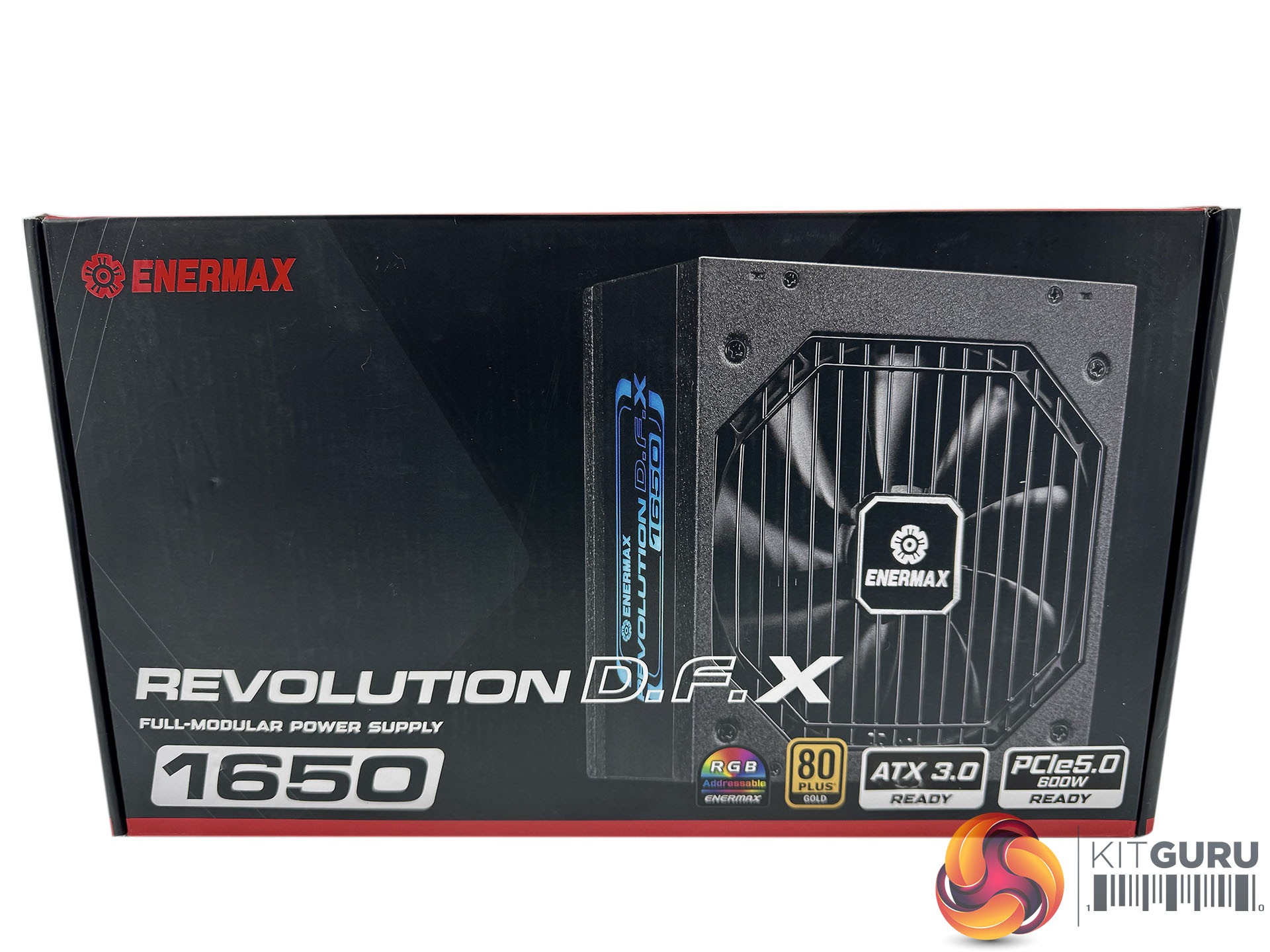
The power supply arrives in large, full colour box which is very heavy. The front highlights the PCIe5.0 and ATX 3.0 readiness, along with an RGB logo. As mentioned earlier in the review, this PSU is 80 Plus Gold.
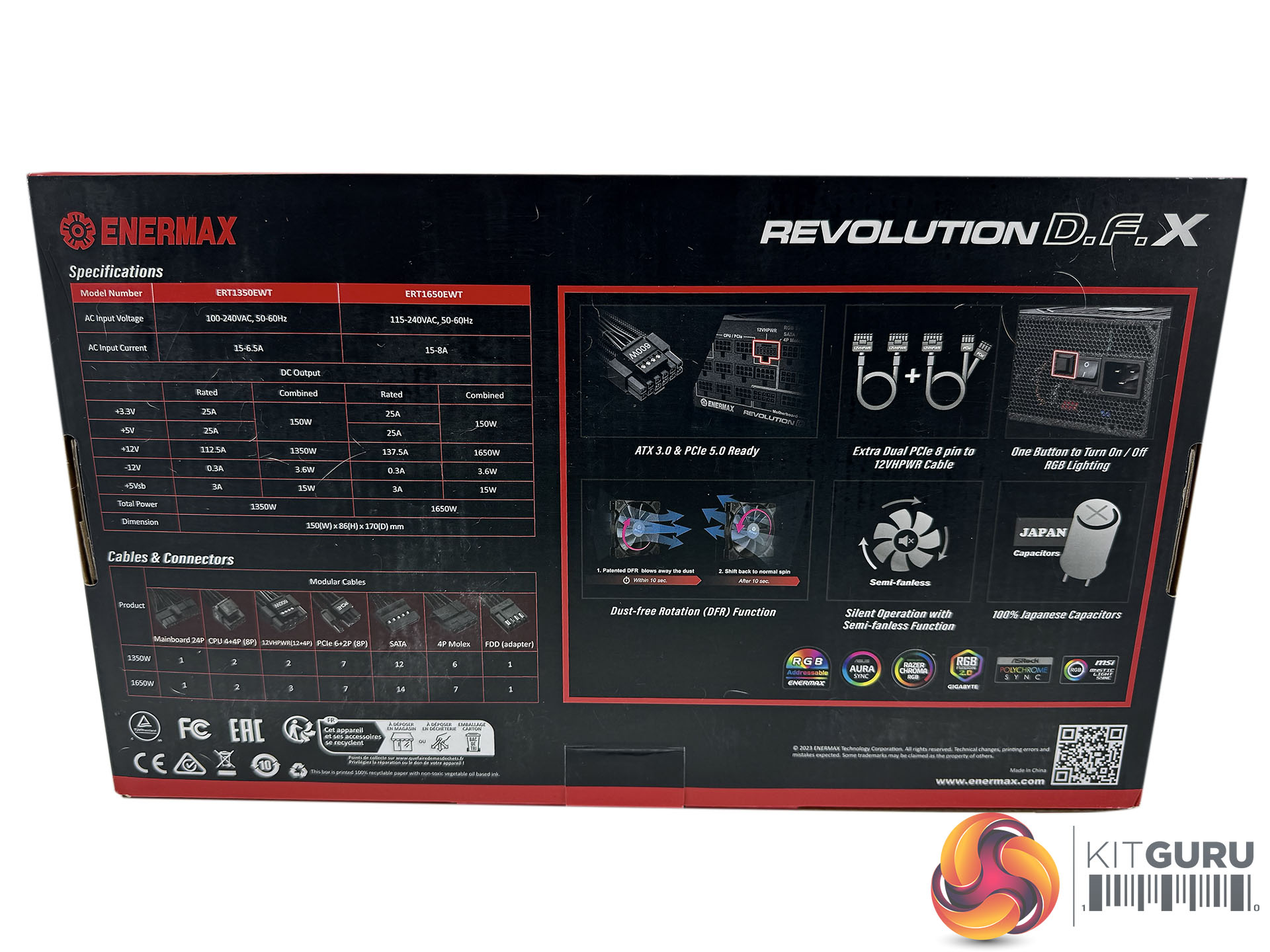
There is a lot of information on the rear of the box, highlighting the main selling points. The addressable RGB aspect gets a mention, alongside support from partners such as Razer, Gigabyte, MSI and ASRock.
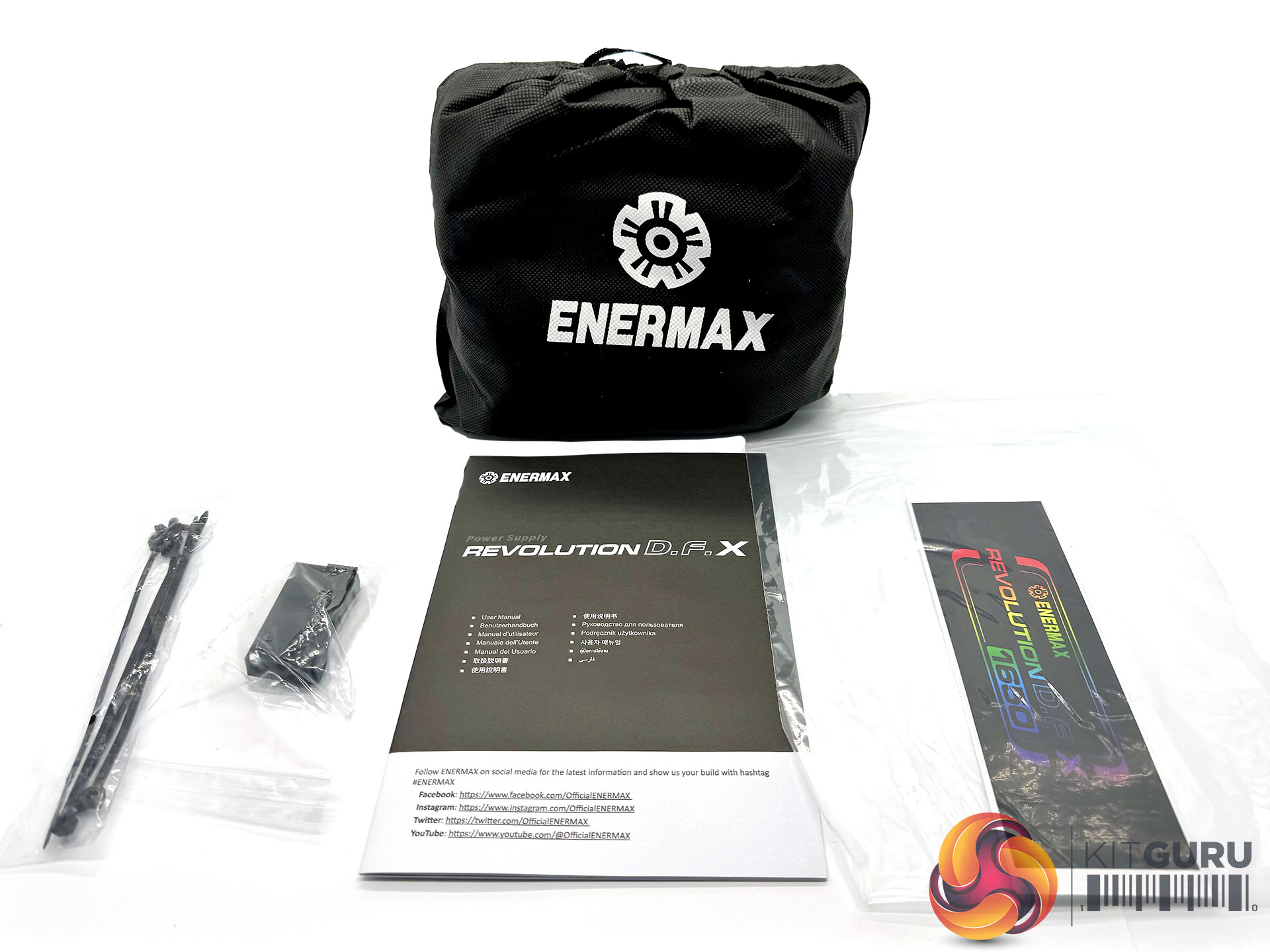
The bundle is extensive, with a PSU test adapter, some cable ties and mounting screws, a user manual and literature and some stickers.
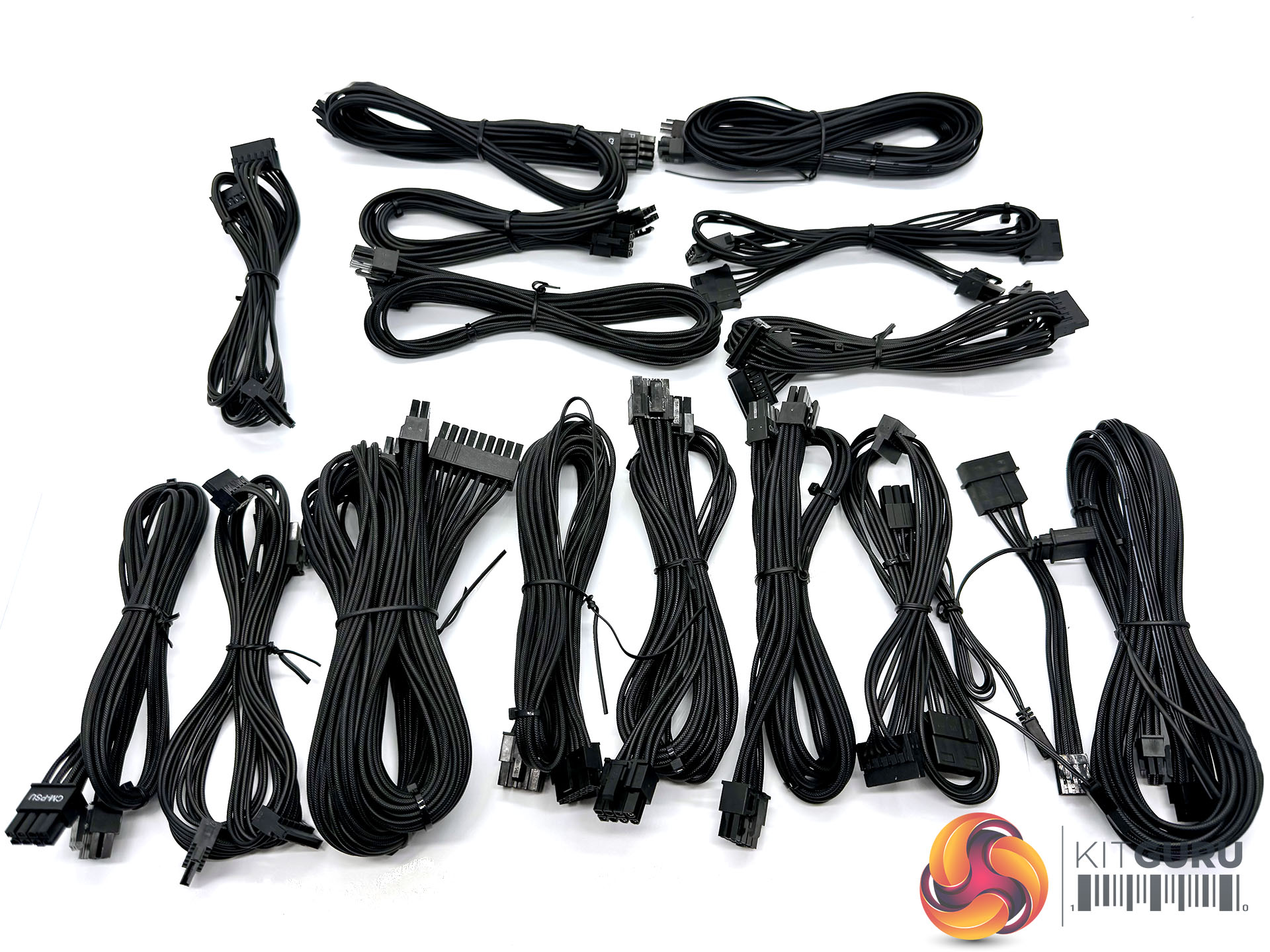
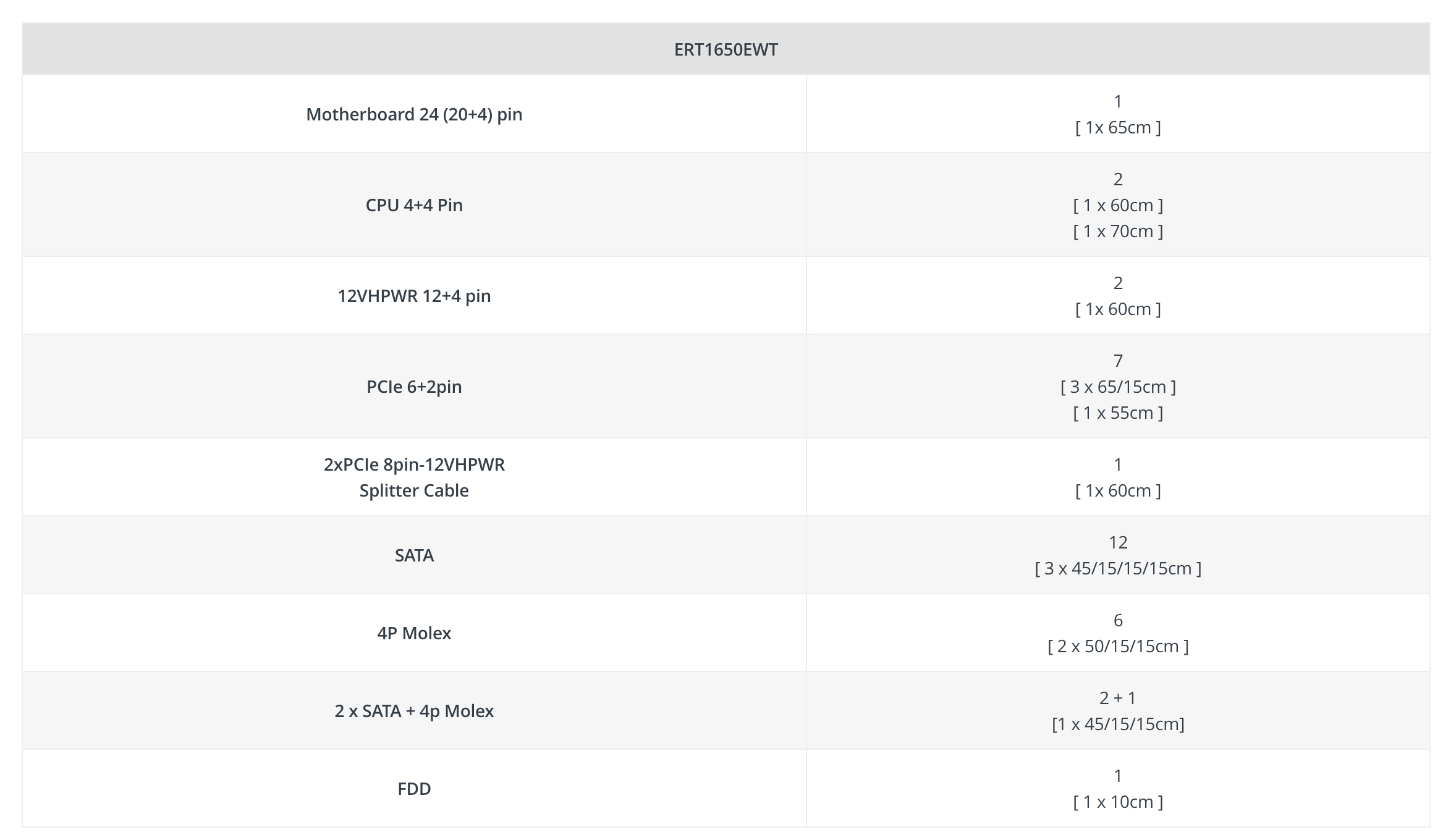
As you would expect with such a powerful power supply there is a wealth of cables supplied in the box to cater for even the most demanding systems. The majority of cables measure between 16 to 18 AWG. None of the cables adopt in-cable capacitors.
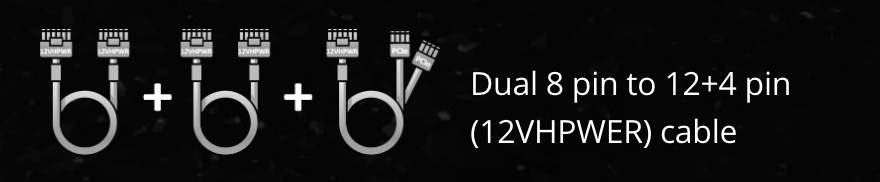
Enermax include two 12VHPWR 12+4 pin cables with the 1650W version. They do stress you need to be aware of the total Wattage output of the graphics cards.
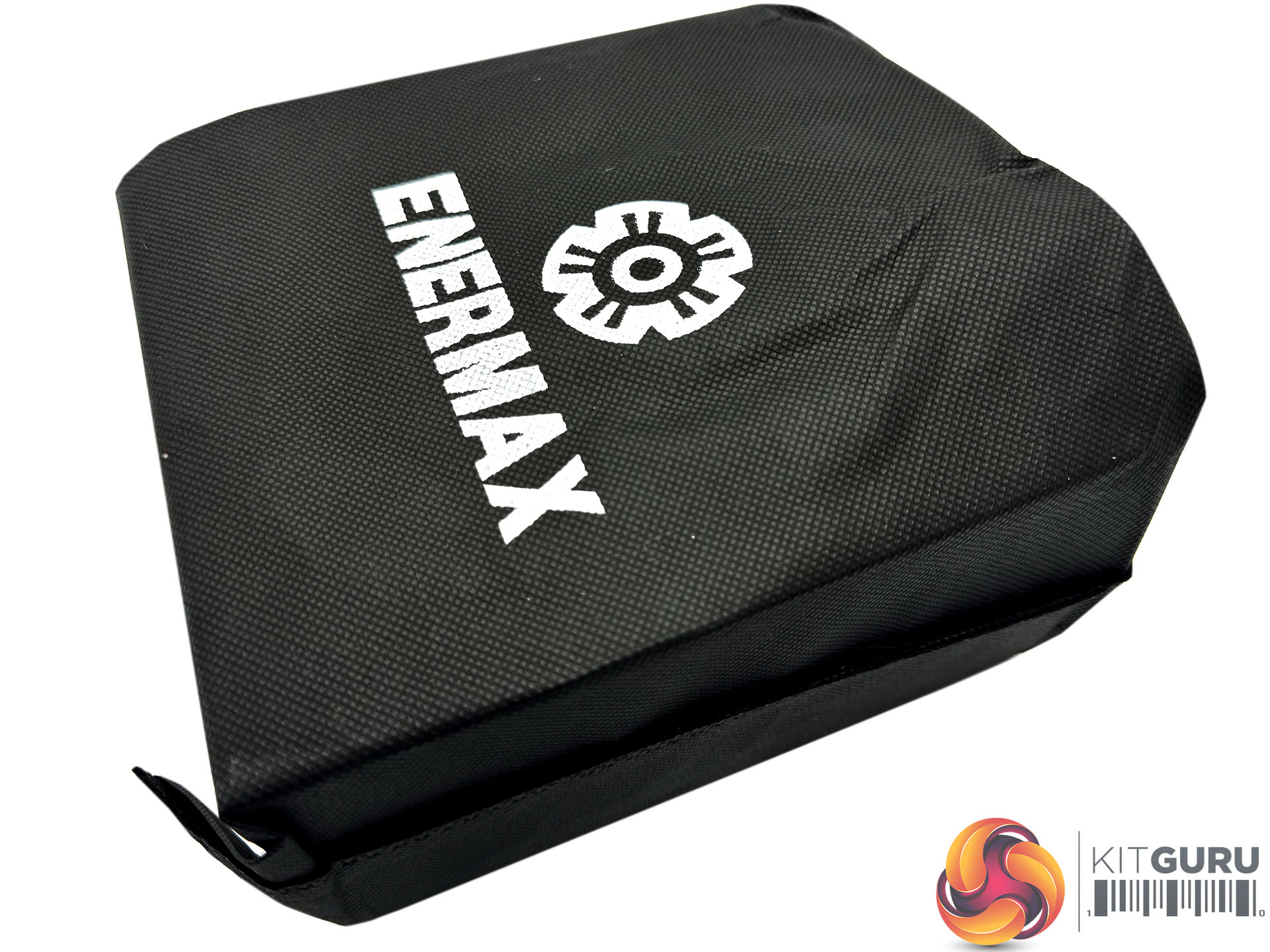
The power supply is well protected during shipping. It is wrapped in a pretty good quality protective bag and sandwiched between two thick blocks of styrofoam.
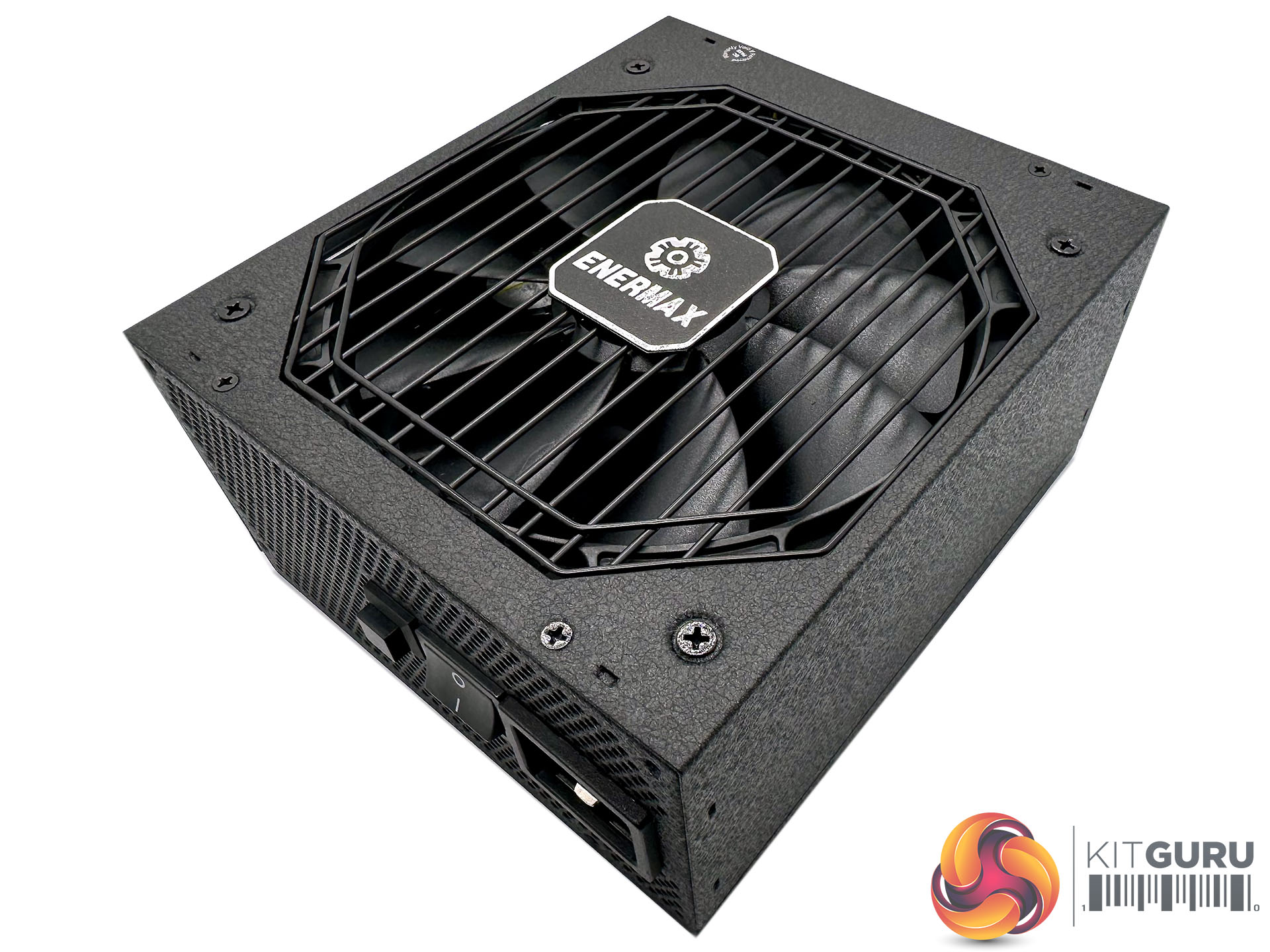
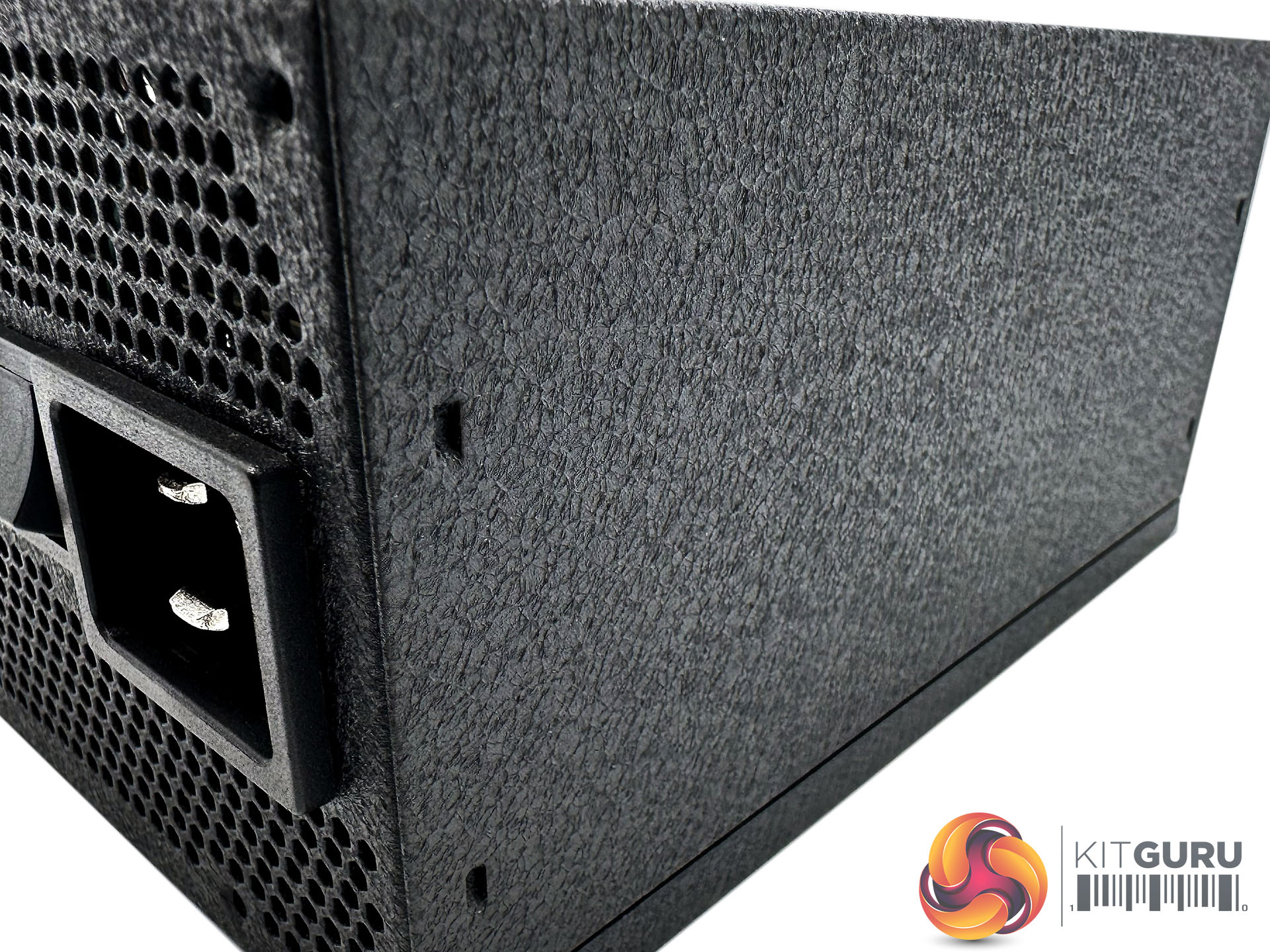
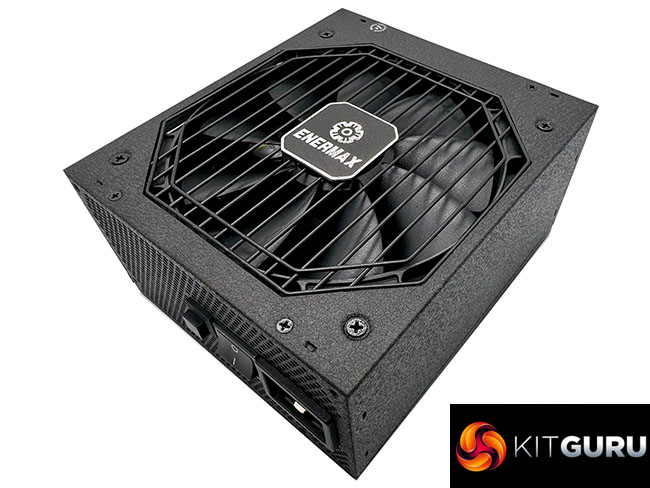
The power supply is finished to very high levels, it is interesting to see Enermax have decided to adopt a rough grain like texture on the surface – this ensures fingerprints are never a problem and you can really get a good grip on the unit when installing. It's a small thing to note, but it really is such a nice idea.
While many power supplies with a massive output such as this are physically very large, Enermax have managed to keep this unit to 150mm x 170mm x 86mm, meaning it will fit into almost any ATX chassis (or bigger) on the market. The Seasonic Prime TX-1600 which we reviewed back in July 2023 for instance, is 150 mm x 210 mm x 85mm. It really is unusual to see a 1650 Watt power supply so compact.
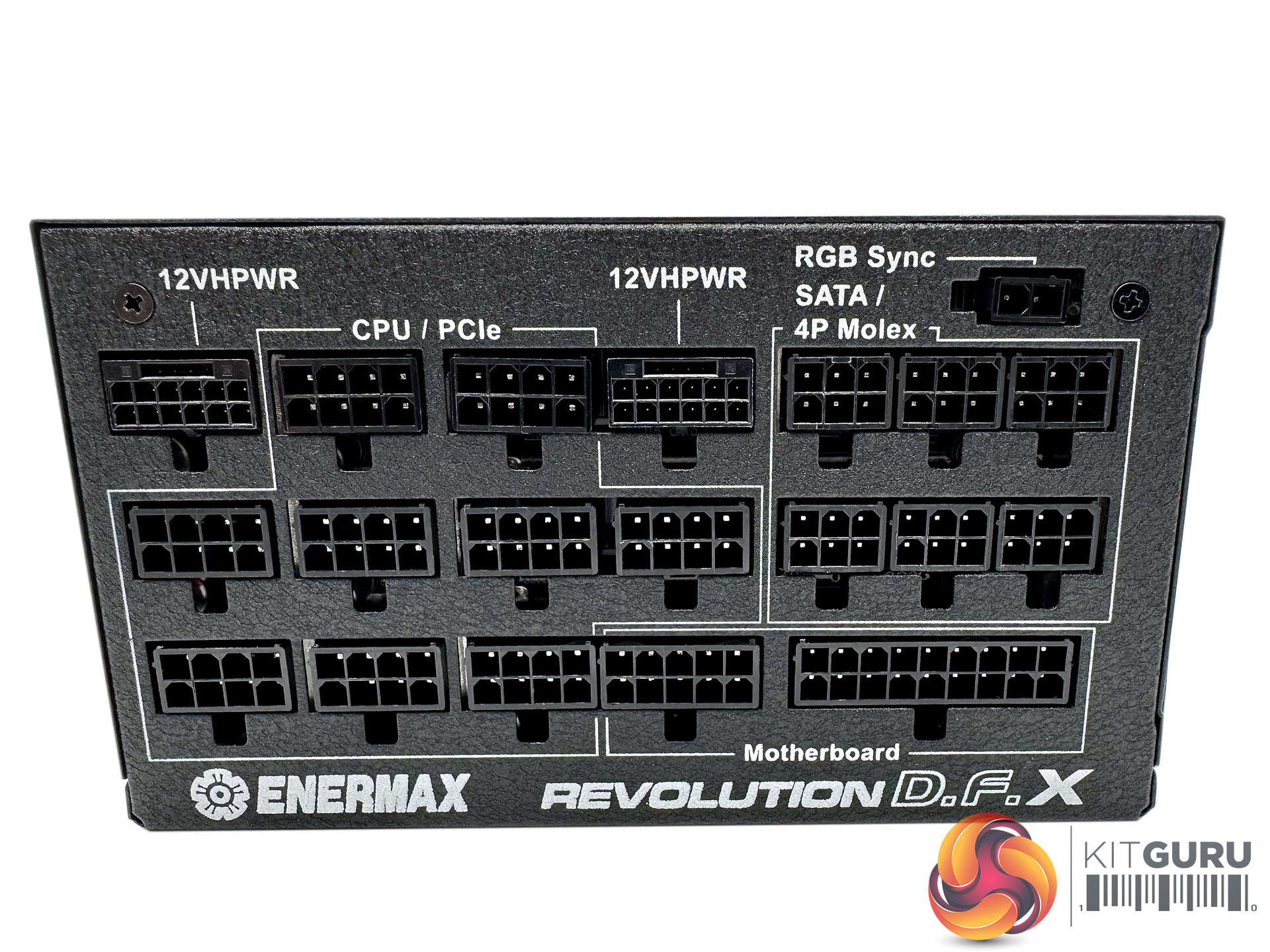
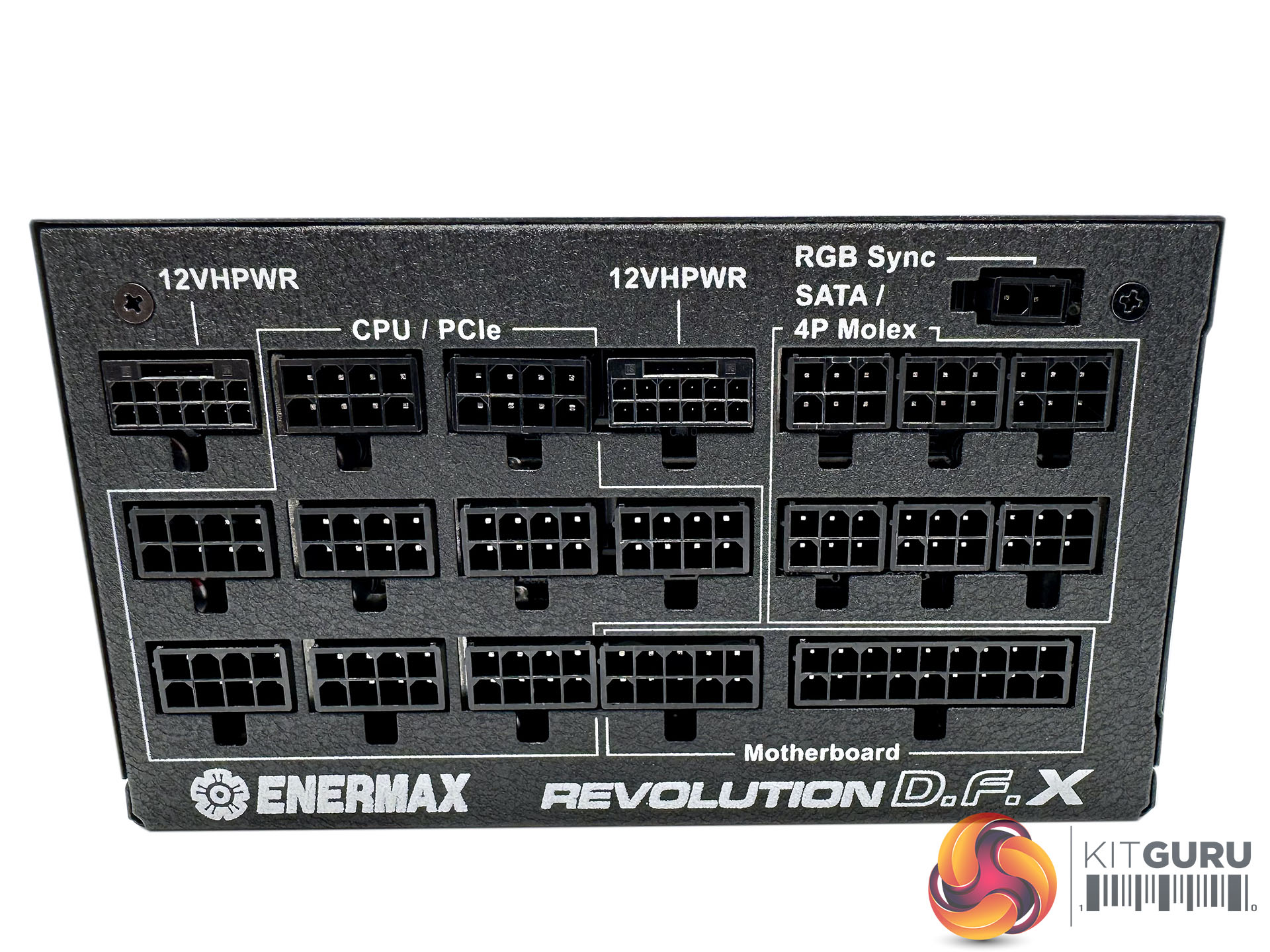
One side is home to the modular bay, all clearly labelled into three rows for ease of install. At the very top is an RGB sync connector to pair up with compatible motherboards. The RGB switch is also positioned here.
The RGB switch rotates between Sunset, Grass, Ocean, Snow White, Sunrise, Sky Blue, Amethyst, Breath, Flow, Aurora, Pulse, Wave, Reverse modes. And Off – if you hate all things RGB.
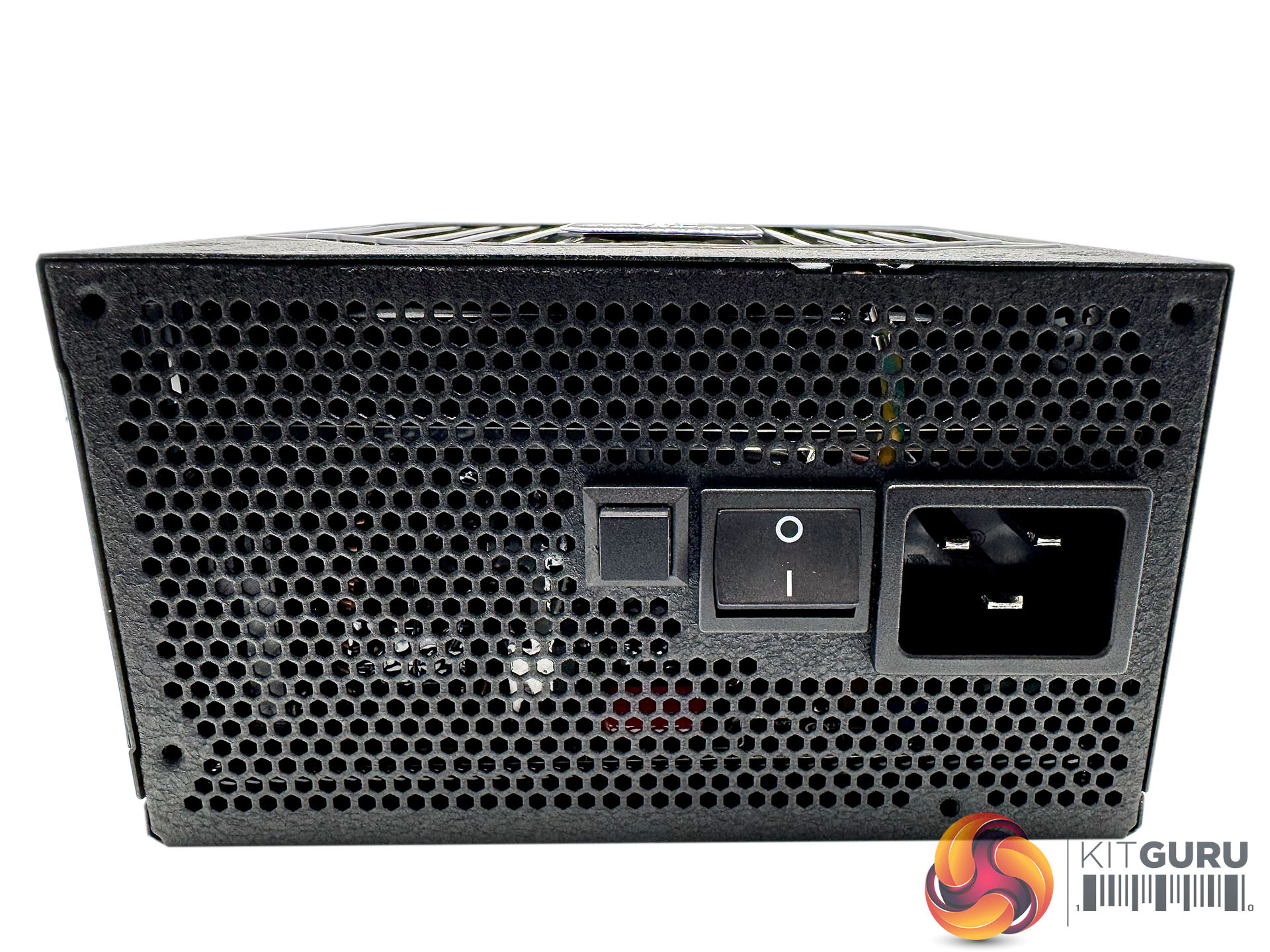
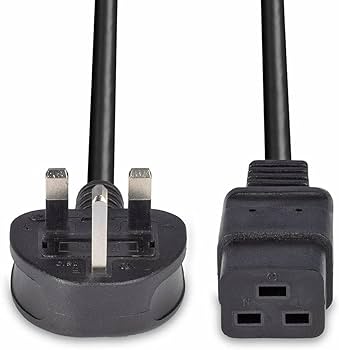
The other side is home to the power panel, including the power switch. If you have never owned a very high output power supply, you will be wondering why the prongs on this unit are horizontally wide. You must use a C19 power cable with this PSU (this is supplied in the box). The C19 power cord's primary benefit over a standard power cable is the ability to safely deliver massive power levels.
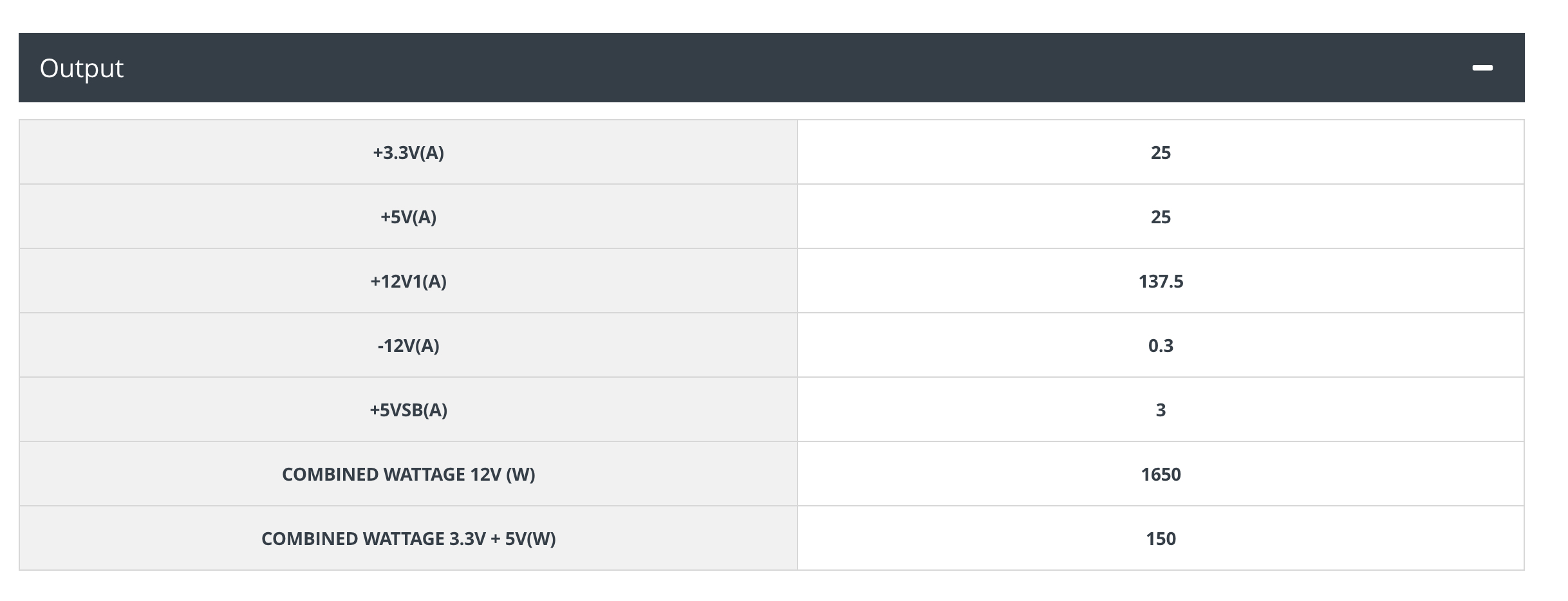
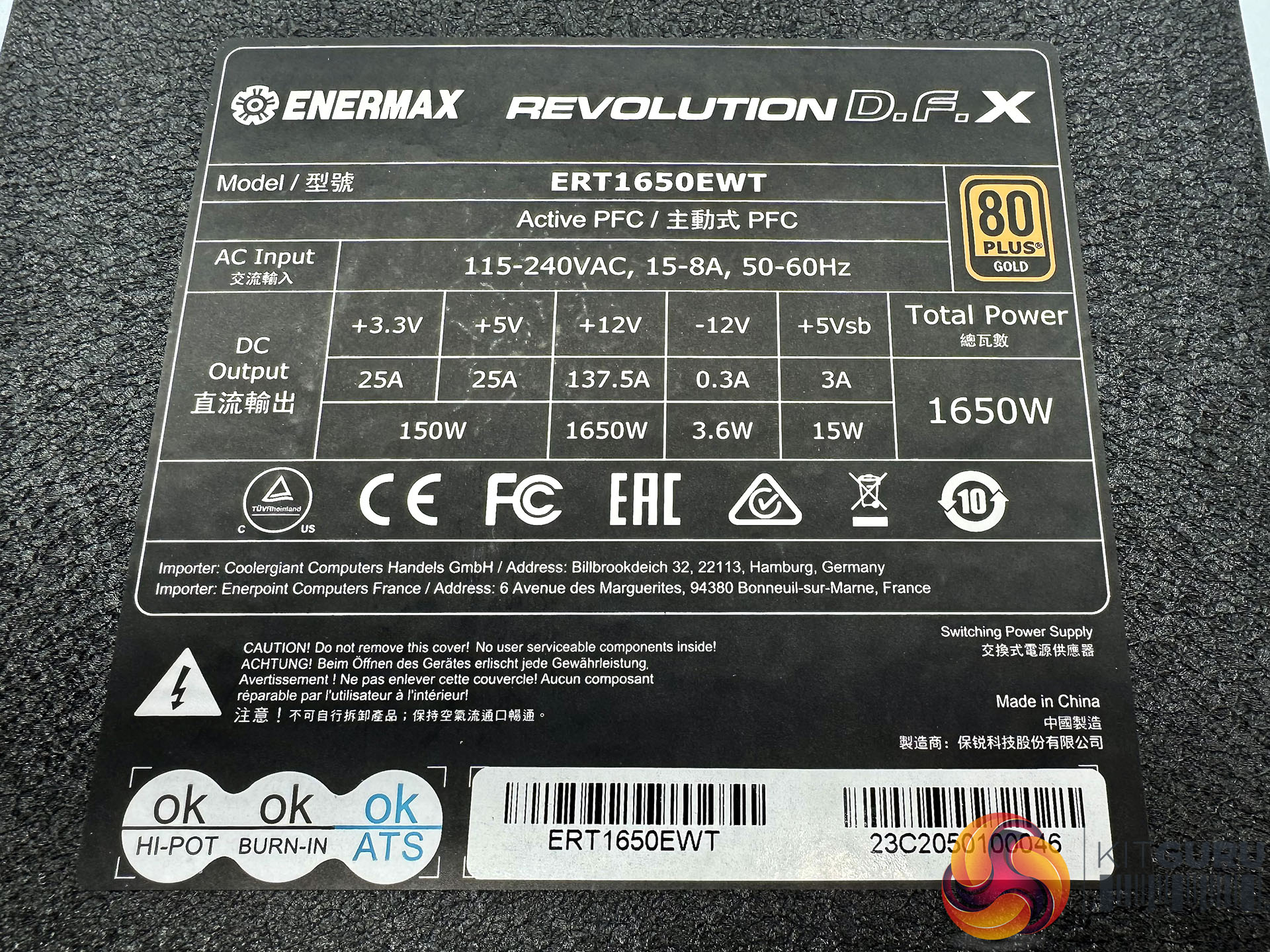
Yes, you read that right – a 137.5 Amp delivery via the +12V rail. Both secondary +3.3V and +5V rails deliver 25 Amps.
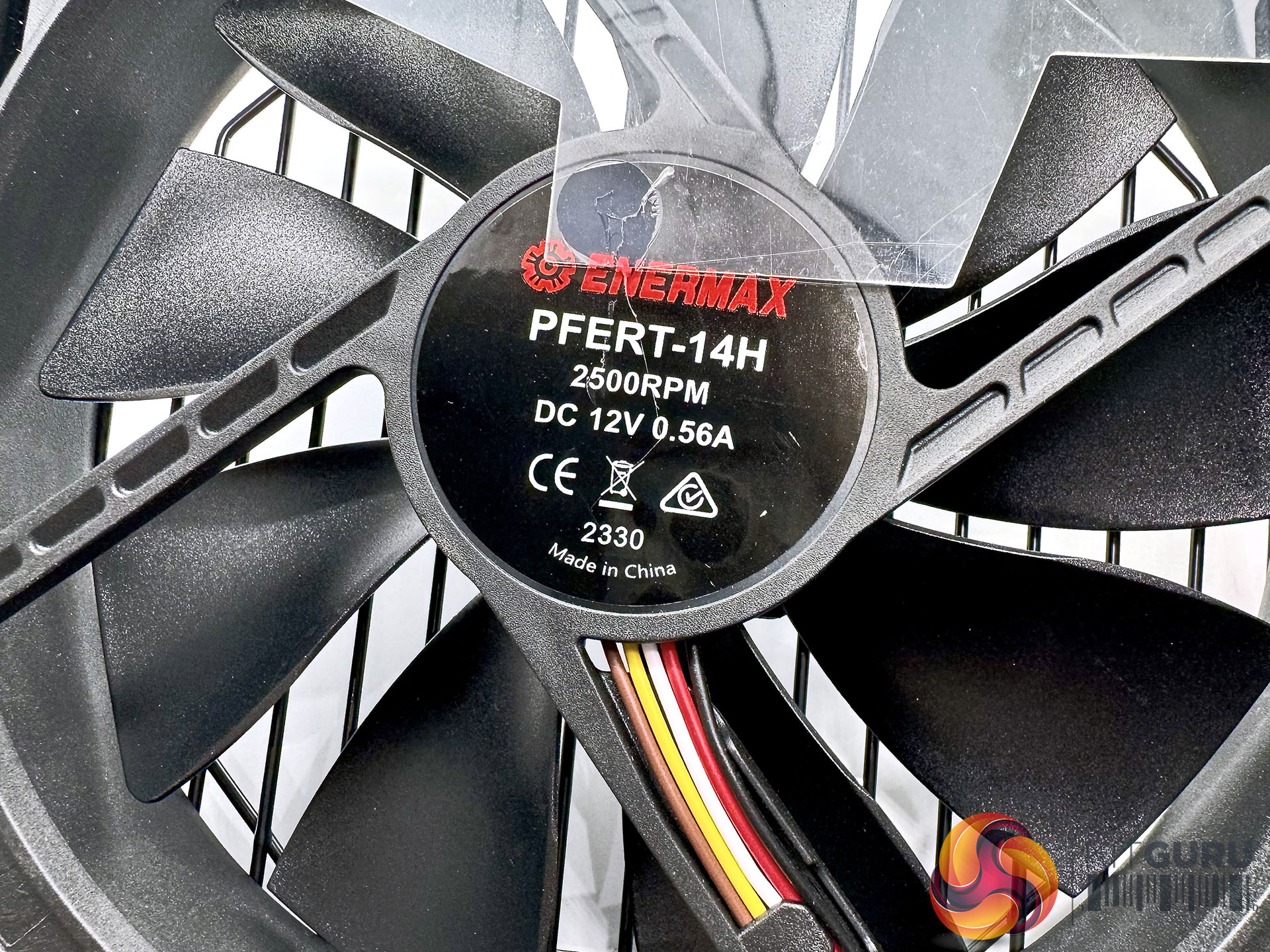
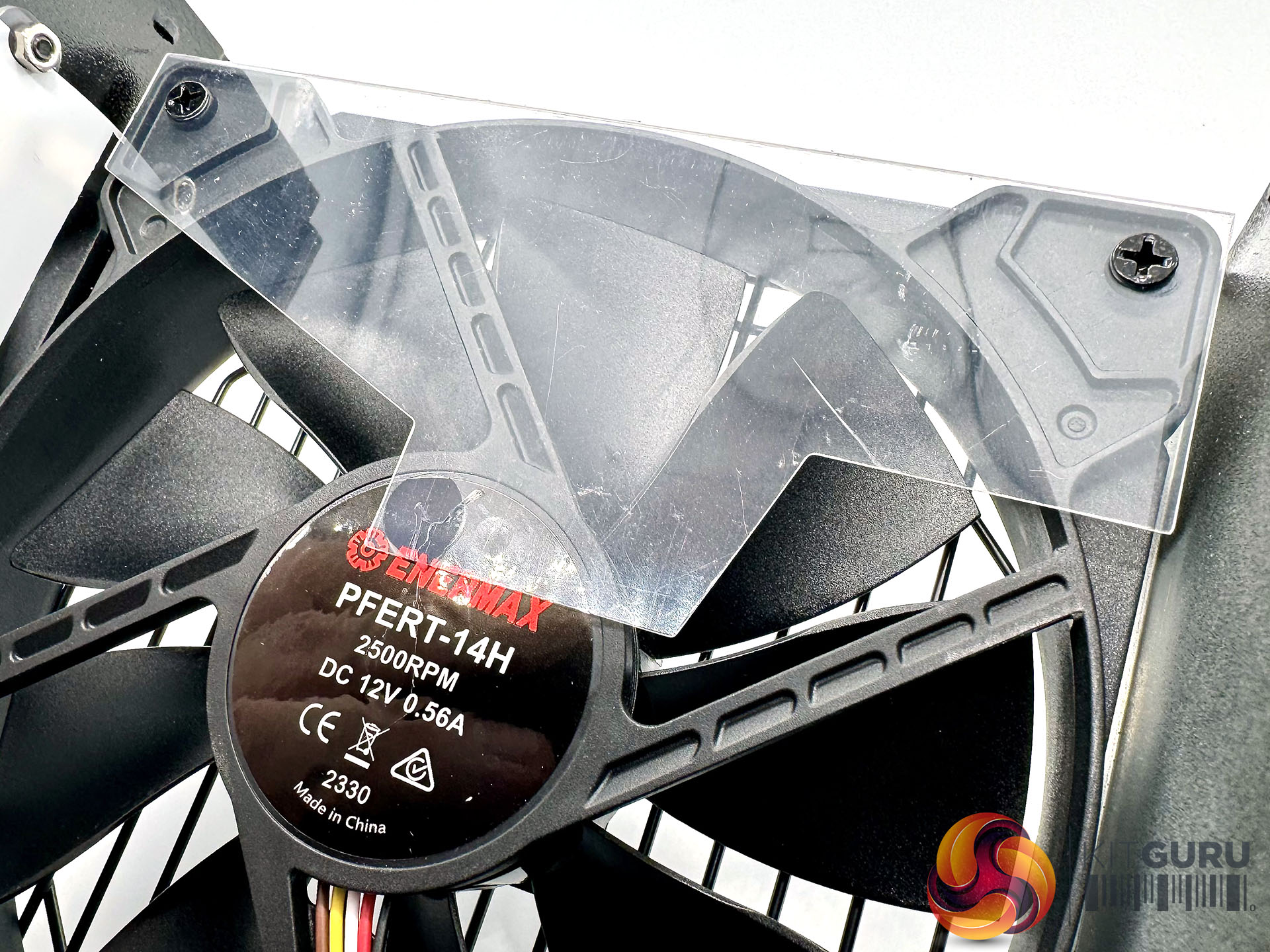
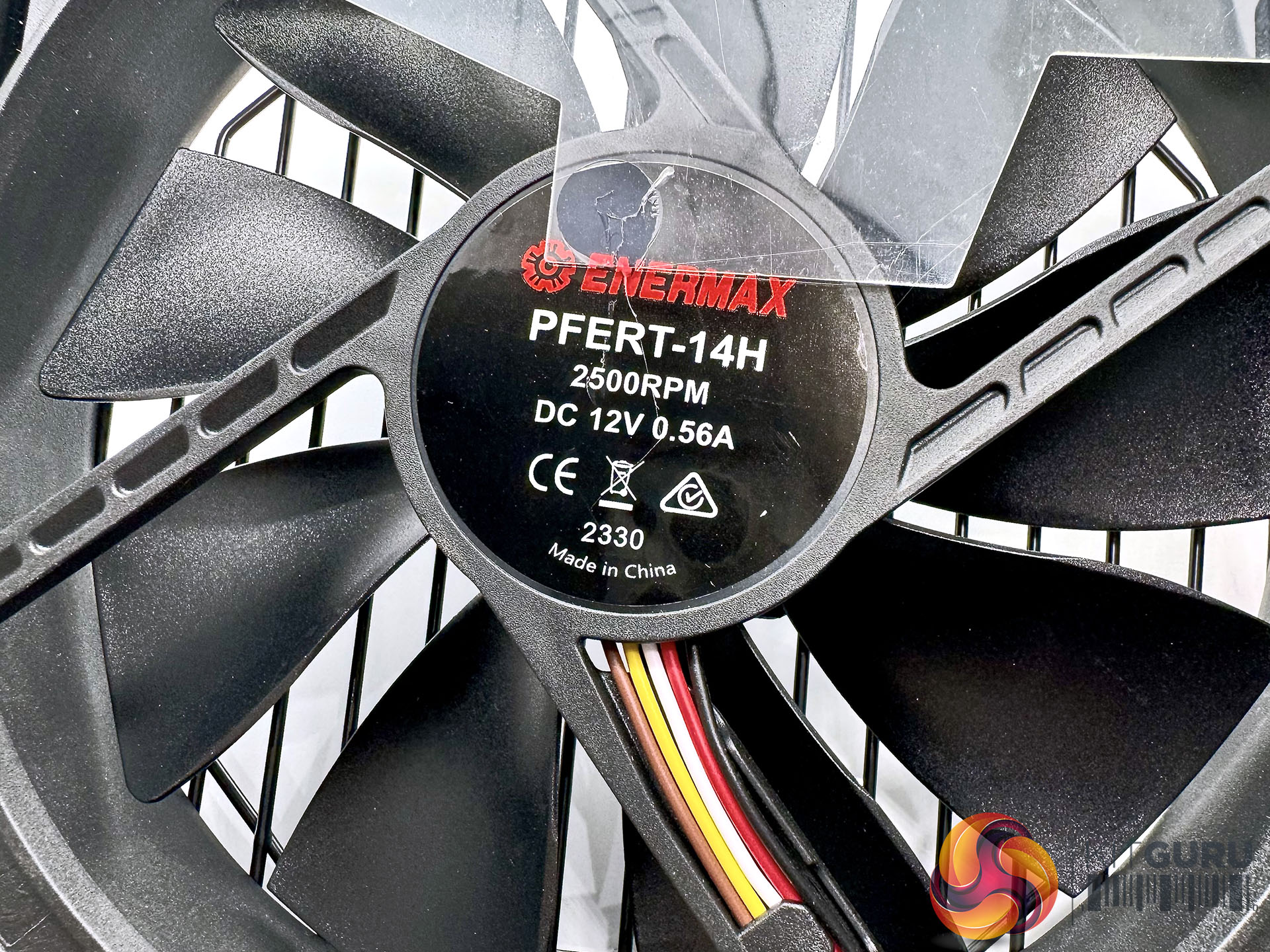
Enermax are using their PFERT-14H fan in this unit. This is a dual bearing fan, rated at speeds up to 2,500 rpm, with DC 12V, 0.56A. Enermax have a lot of literature available for this fan. It uses ‘industrial grade' dual ball bearings to reduce unnecessary friction and to optimise performance.
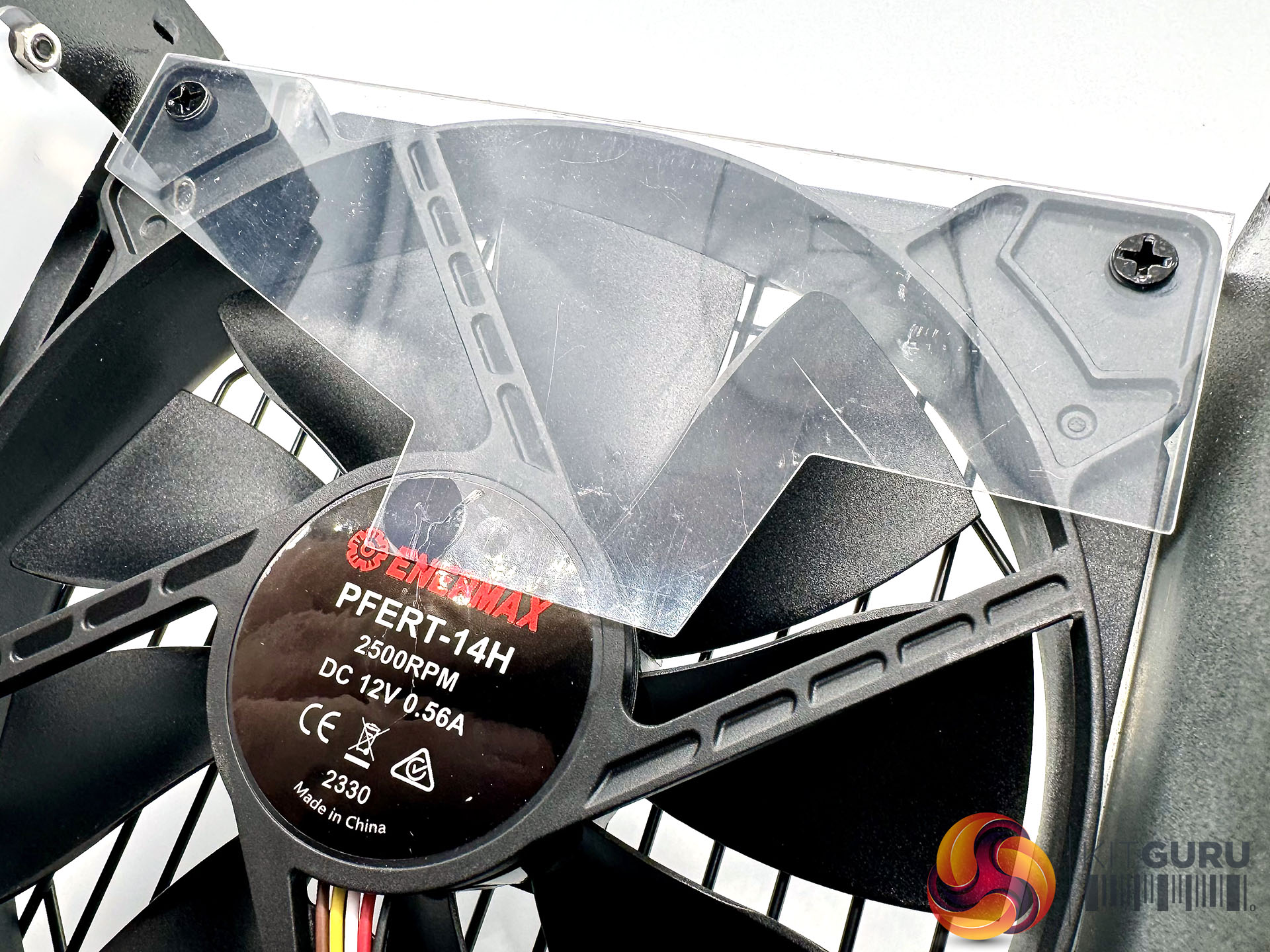
There is a plastic shroud covering part of the fan – along the top section. This is to forcibly direct airflow over specific parts of the design and heatsinks, underneath.
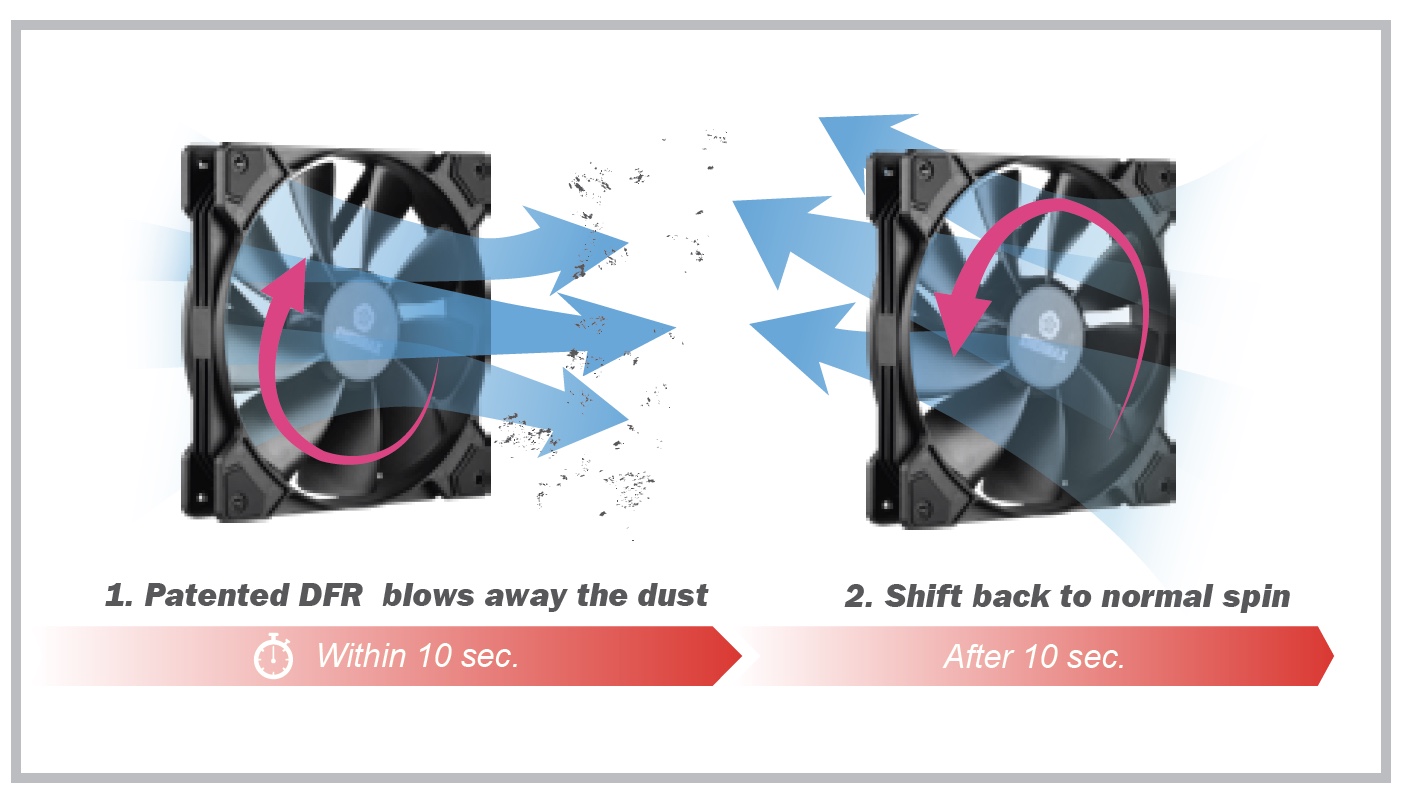
The Enermax ‘Dust Free Rotation' (DFR) function. Basically this fan spins in reverse to expel dust from the insides of the unit when it is first powered up. Enermax call this a ‘self cleaning mode'. While the fan reverses direction on start up, it is difficult to actually test if this would help remove stubborn dust over the years. It's certainly an interesting idea.
In their own words, ‘by incorporating these high-quality dual-ball bearings, the REVOLUTION D.F. X achieves enhanced stability and exceptional quality. This design not only extends the lifespan of the unit but also maximizes the performance of your system for your most demanding needs.'
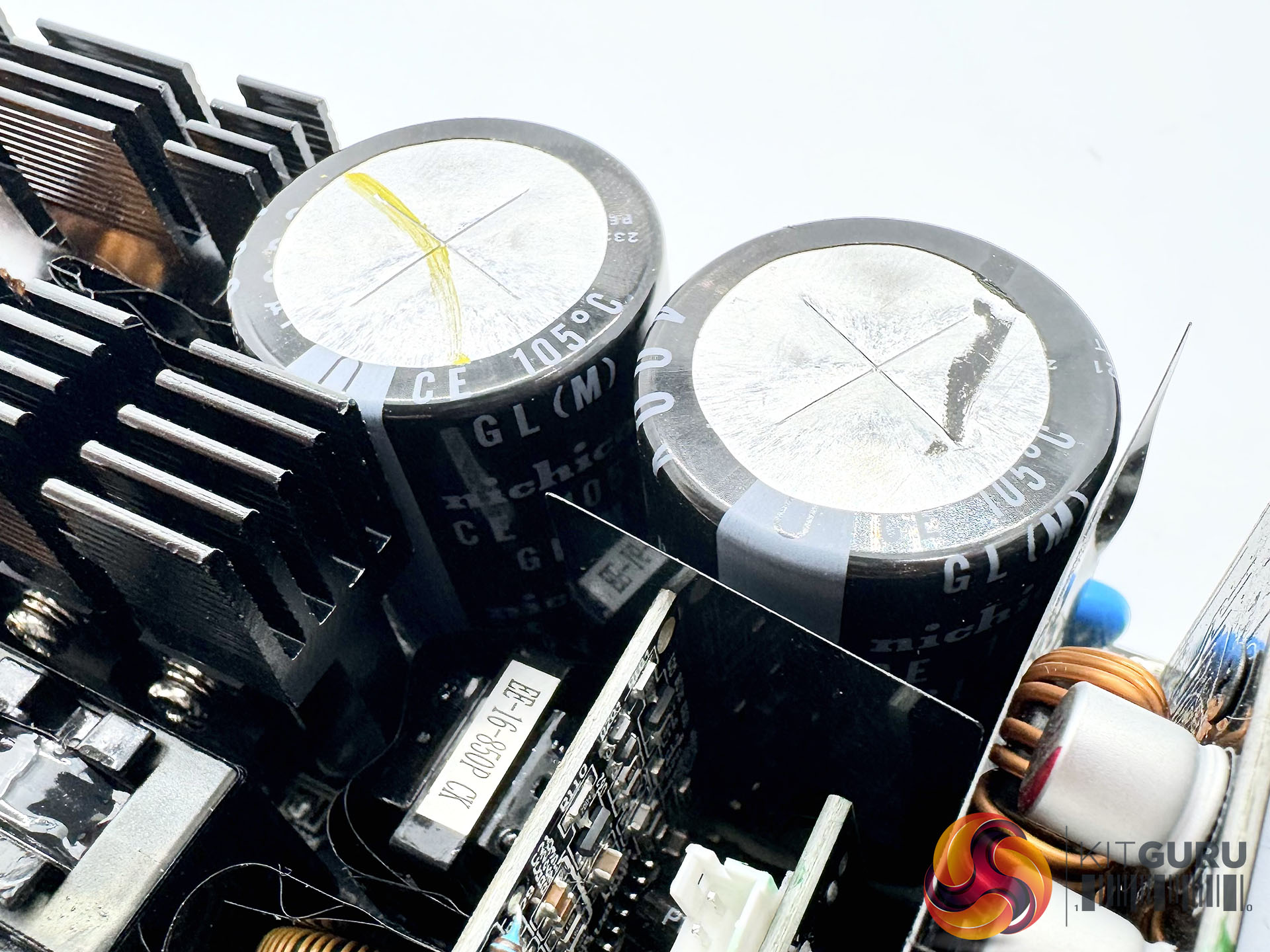
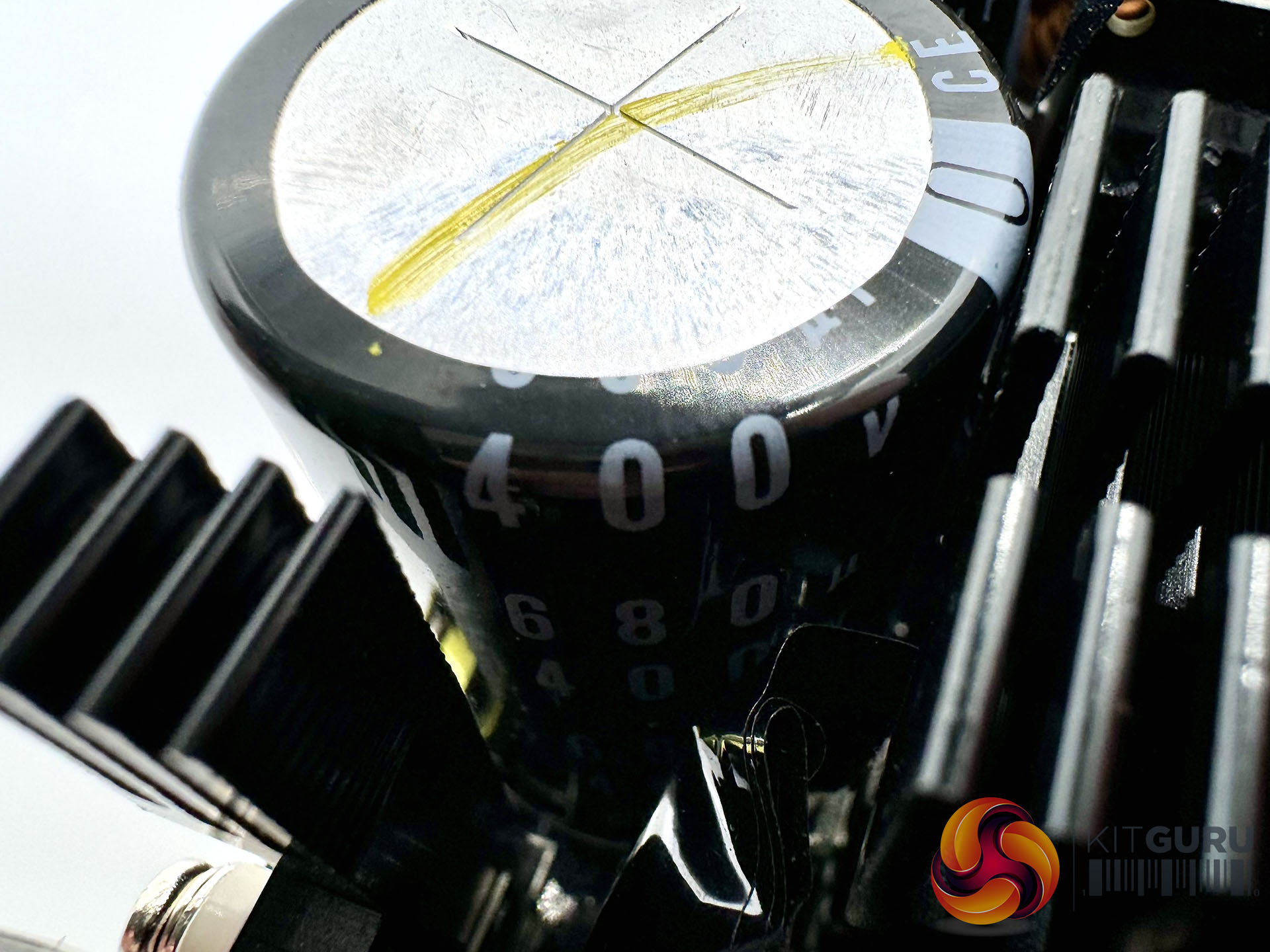
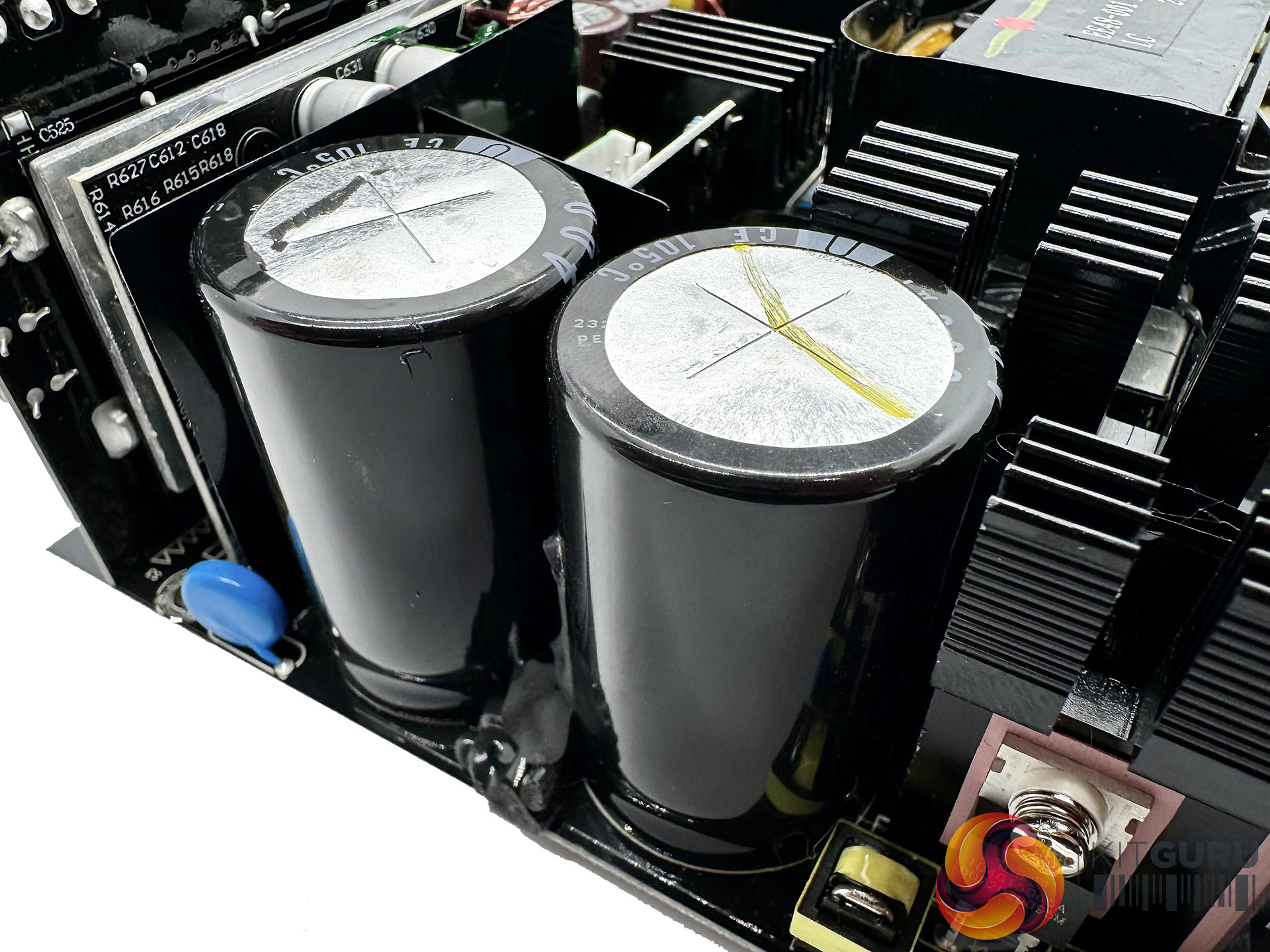
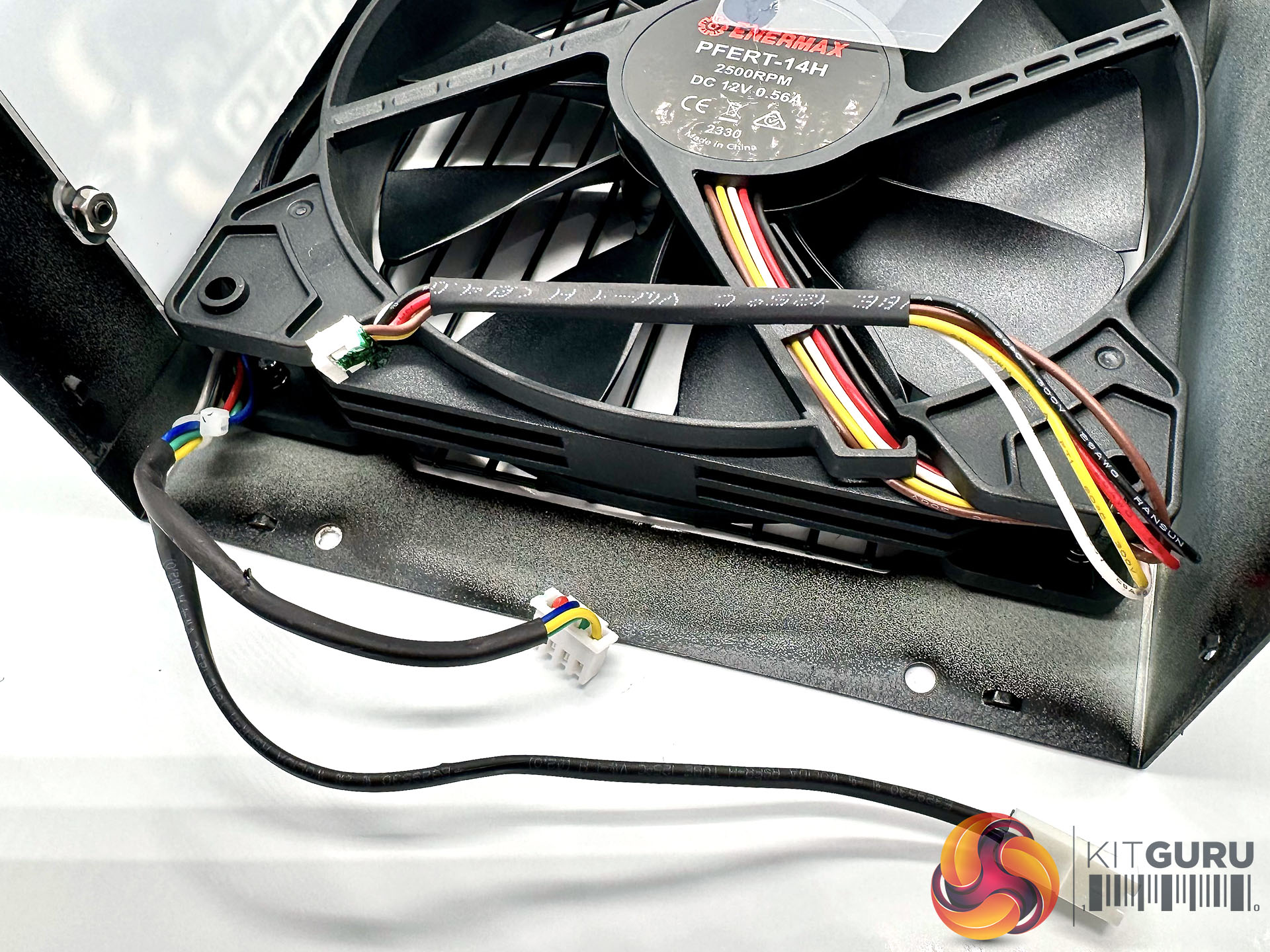
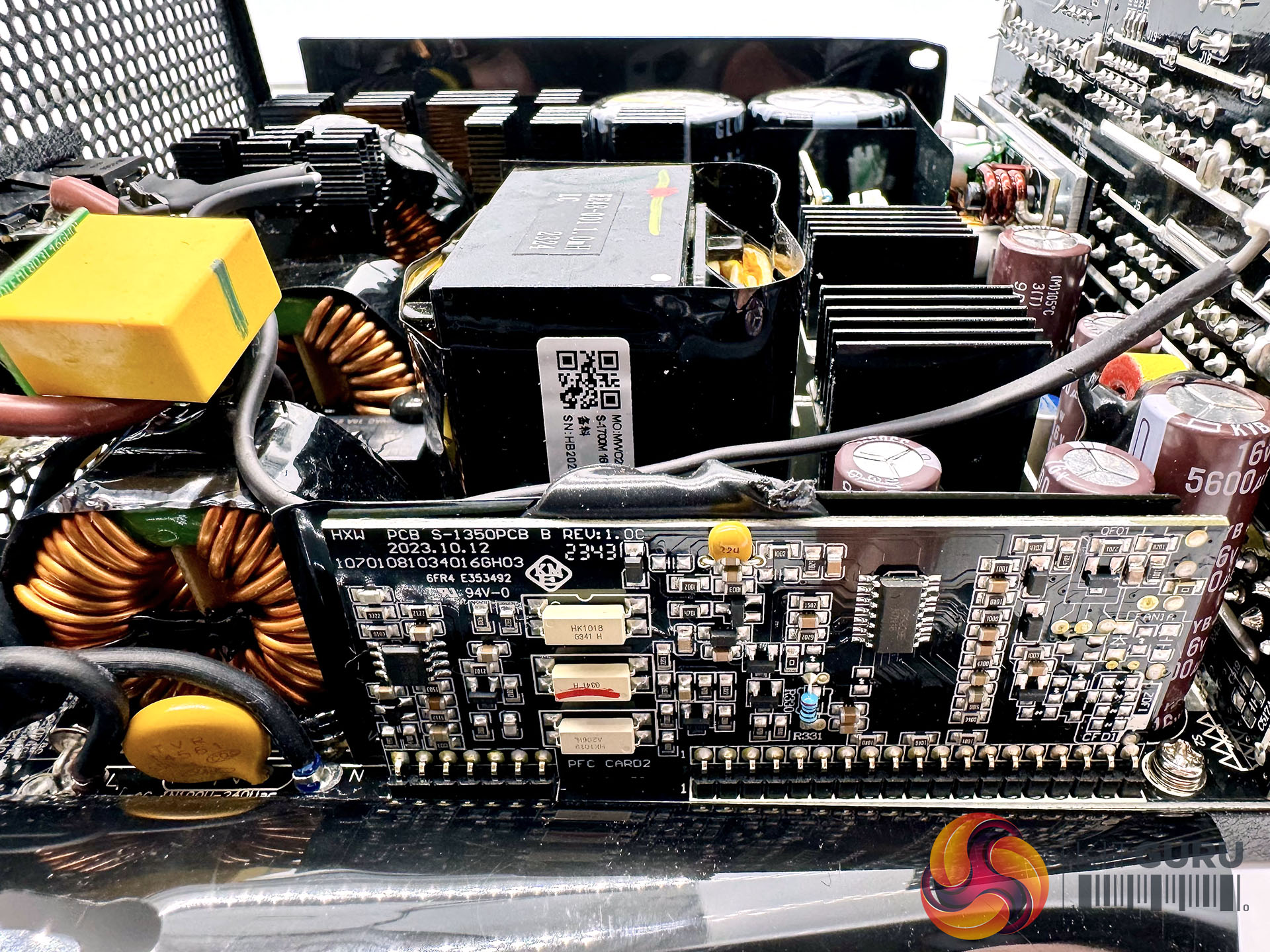
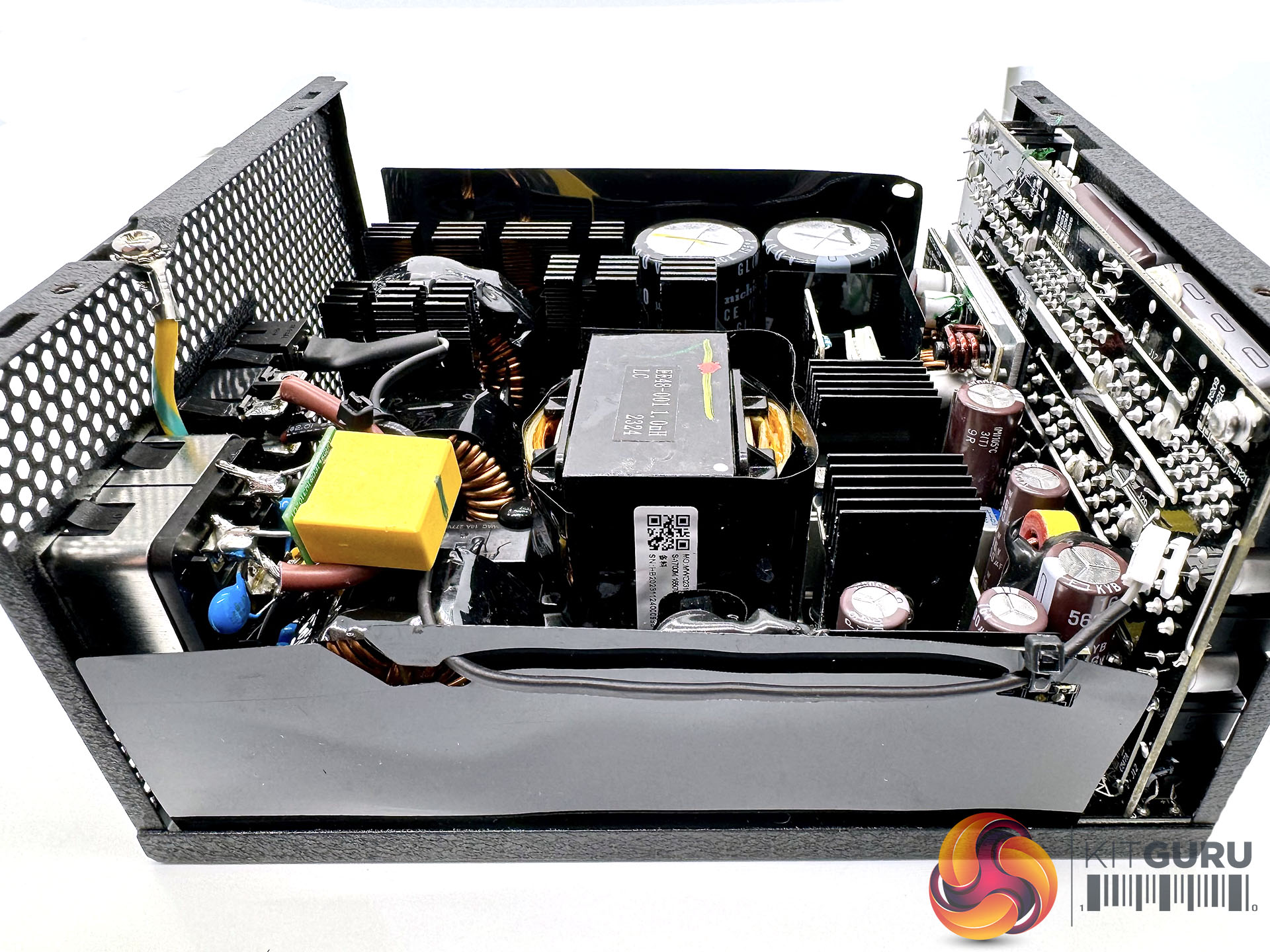
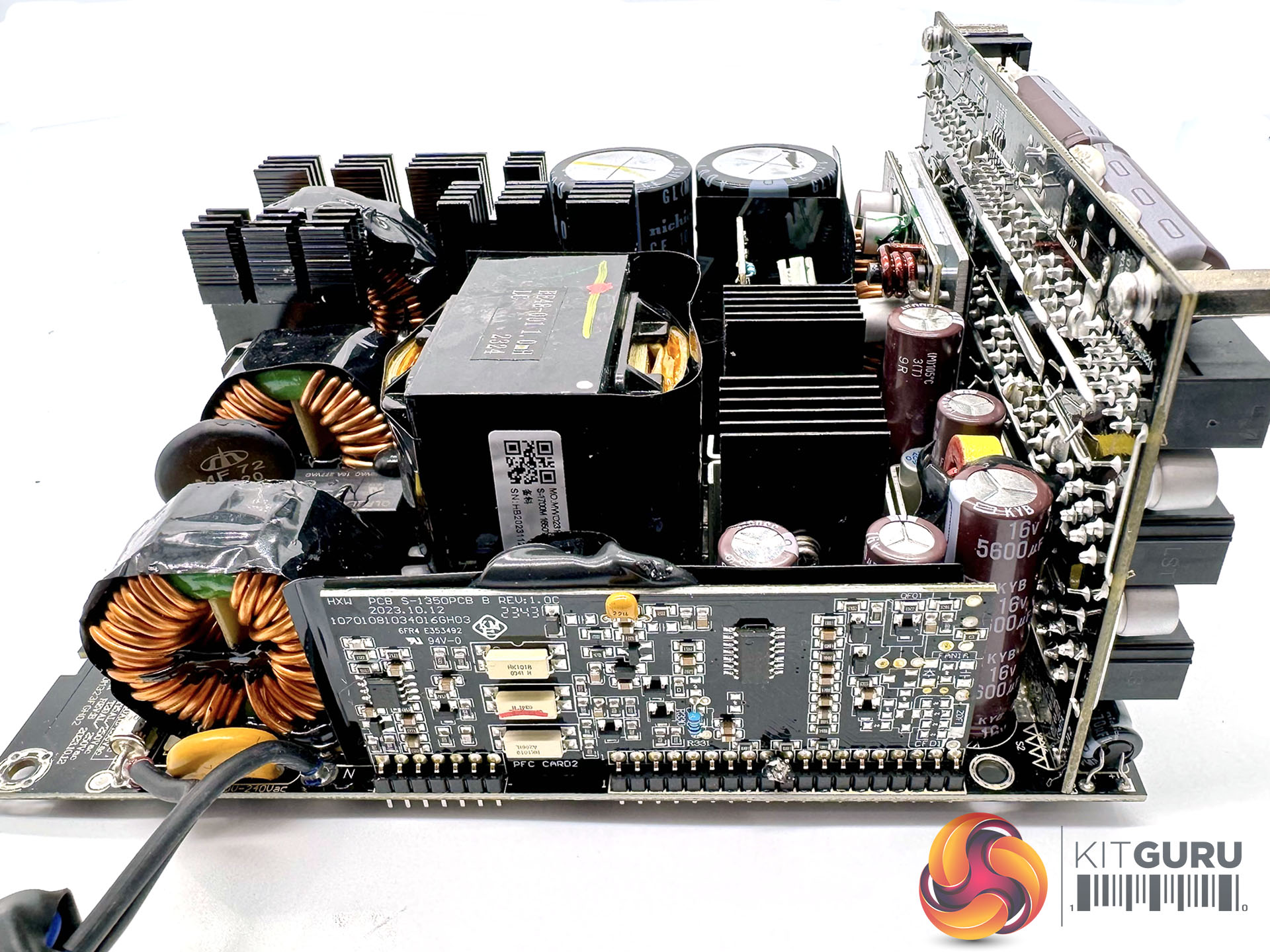
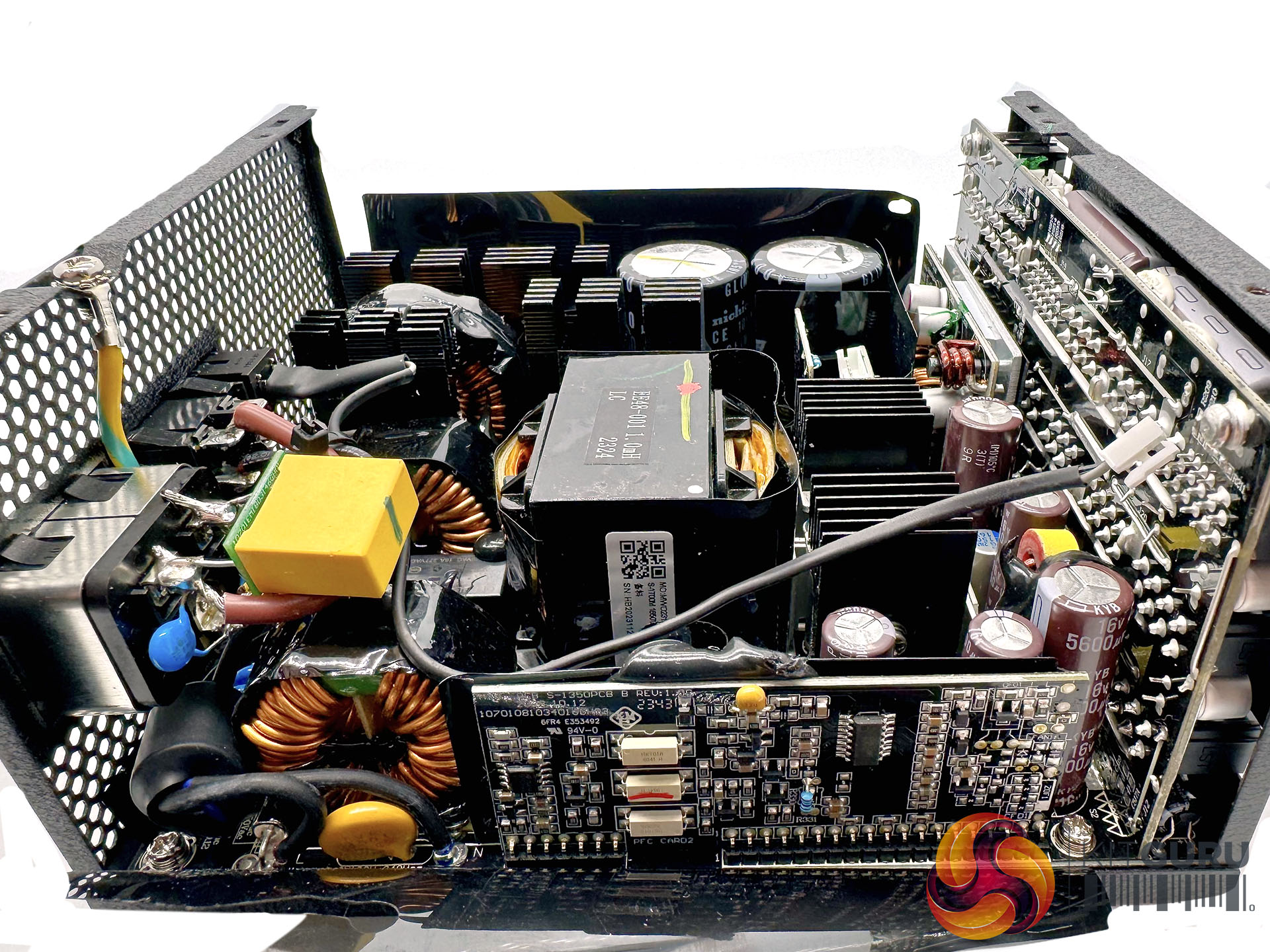
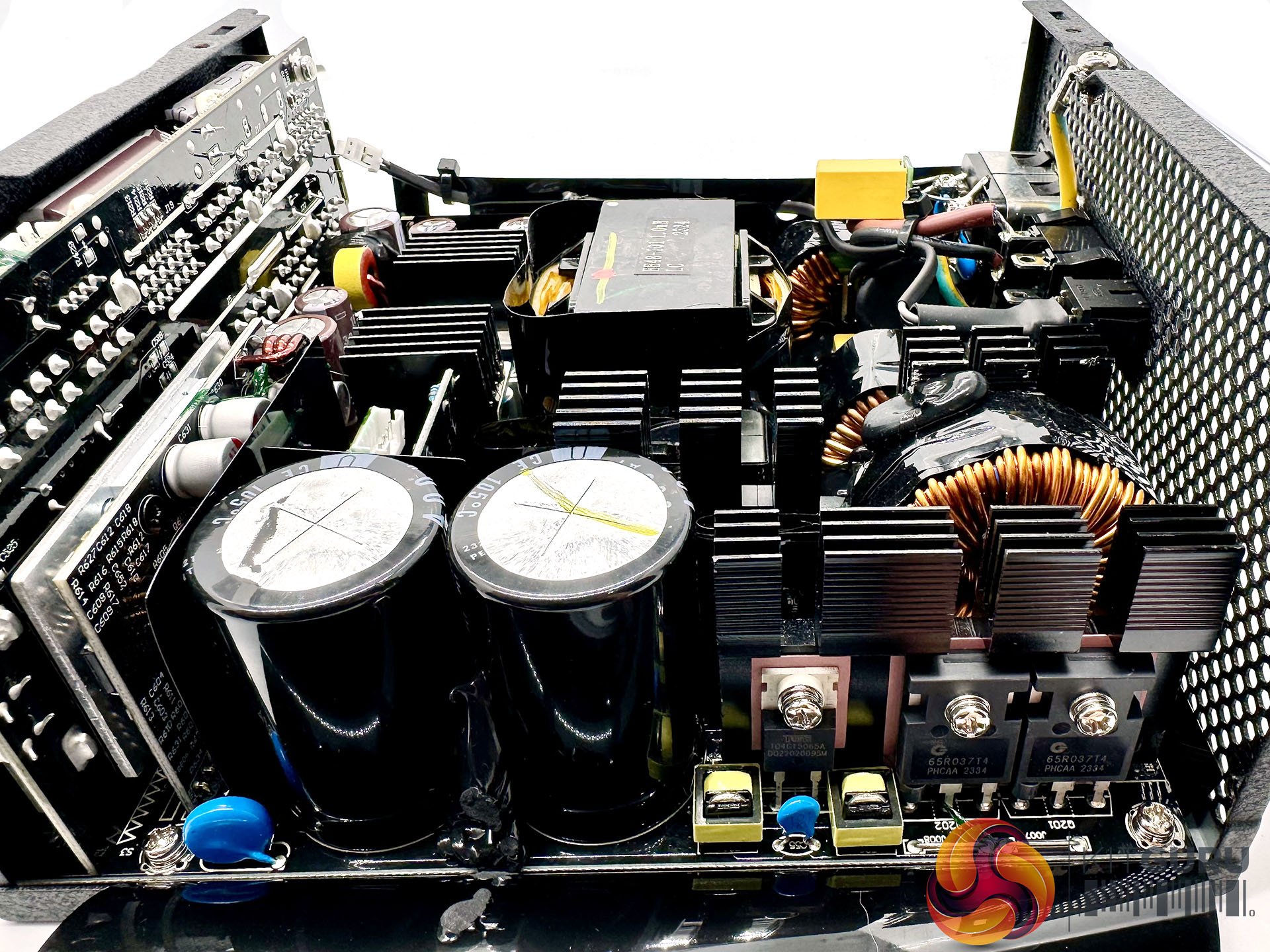
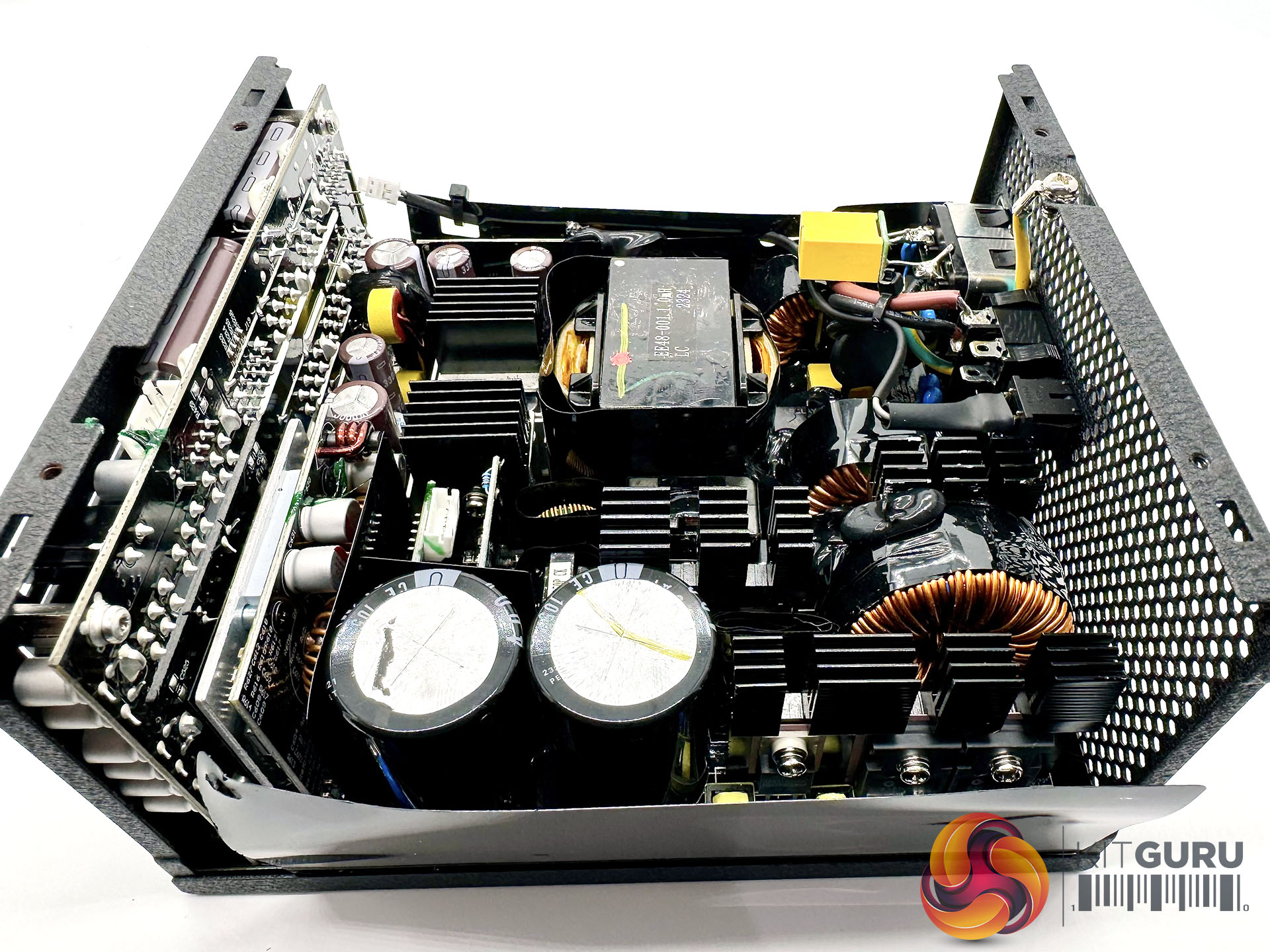
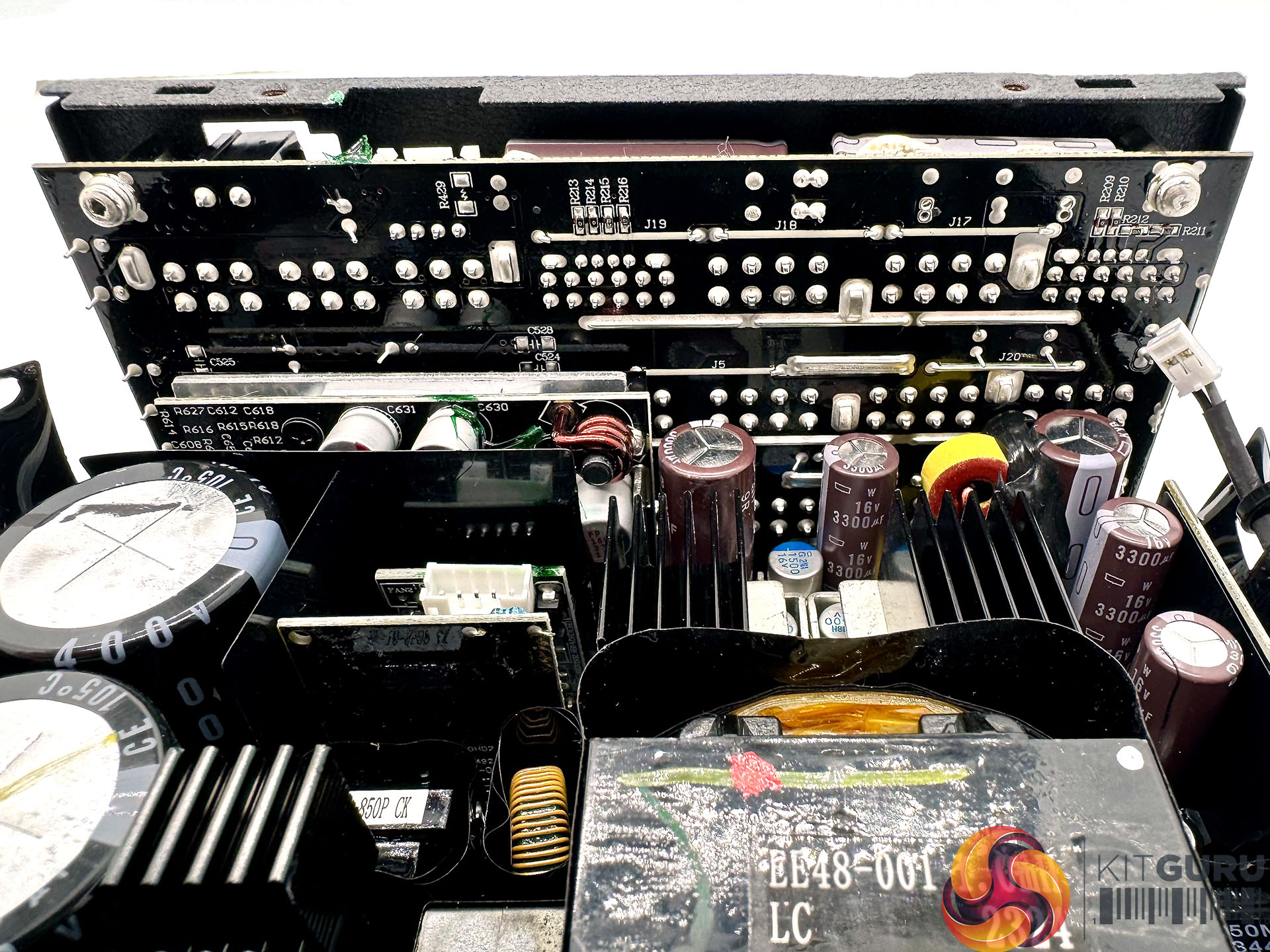
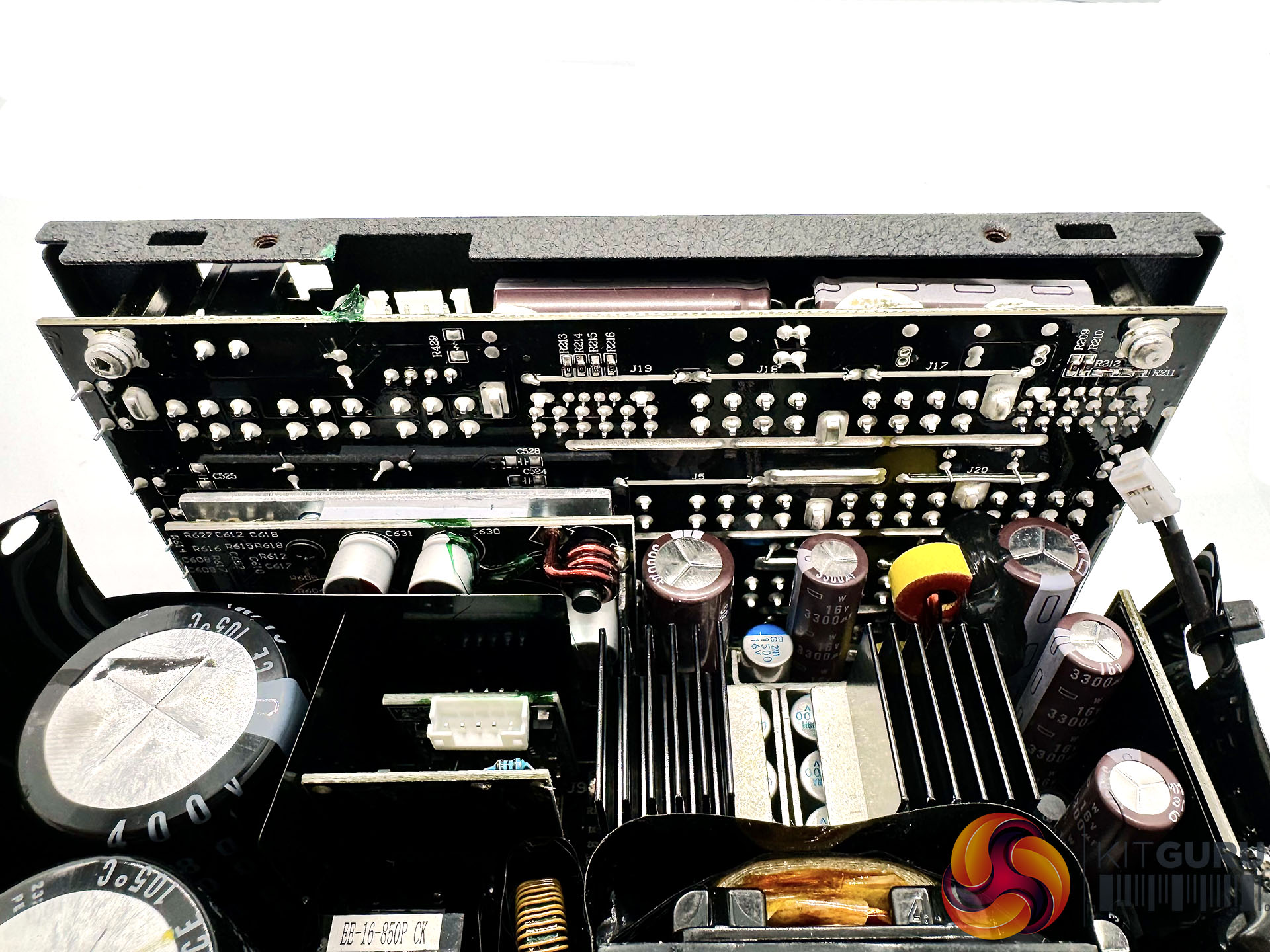
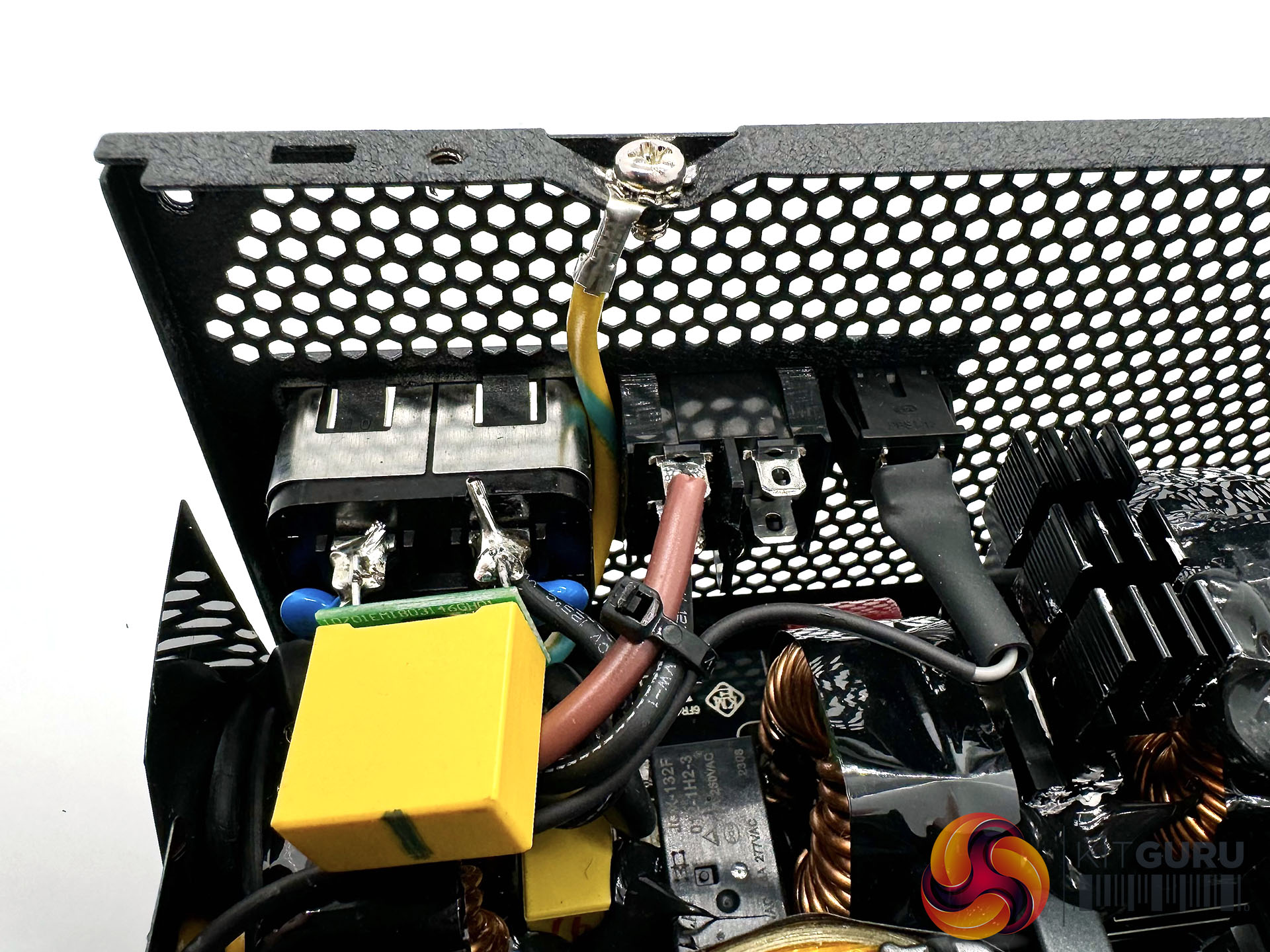
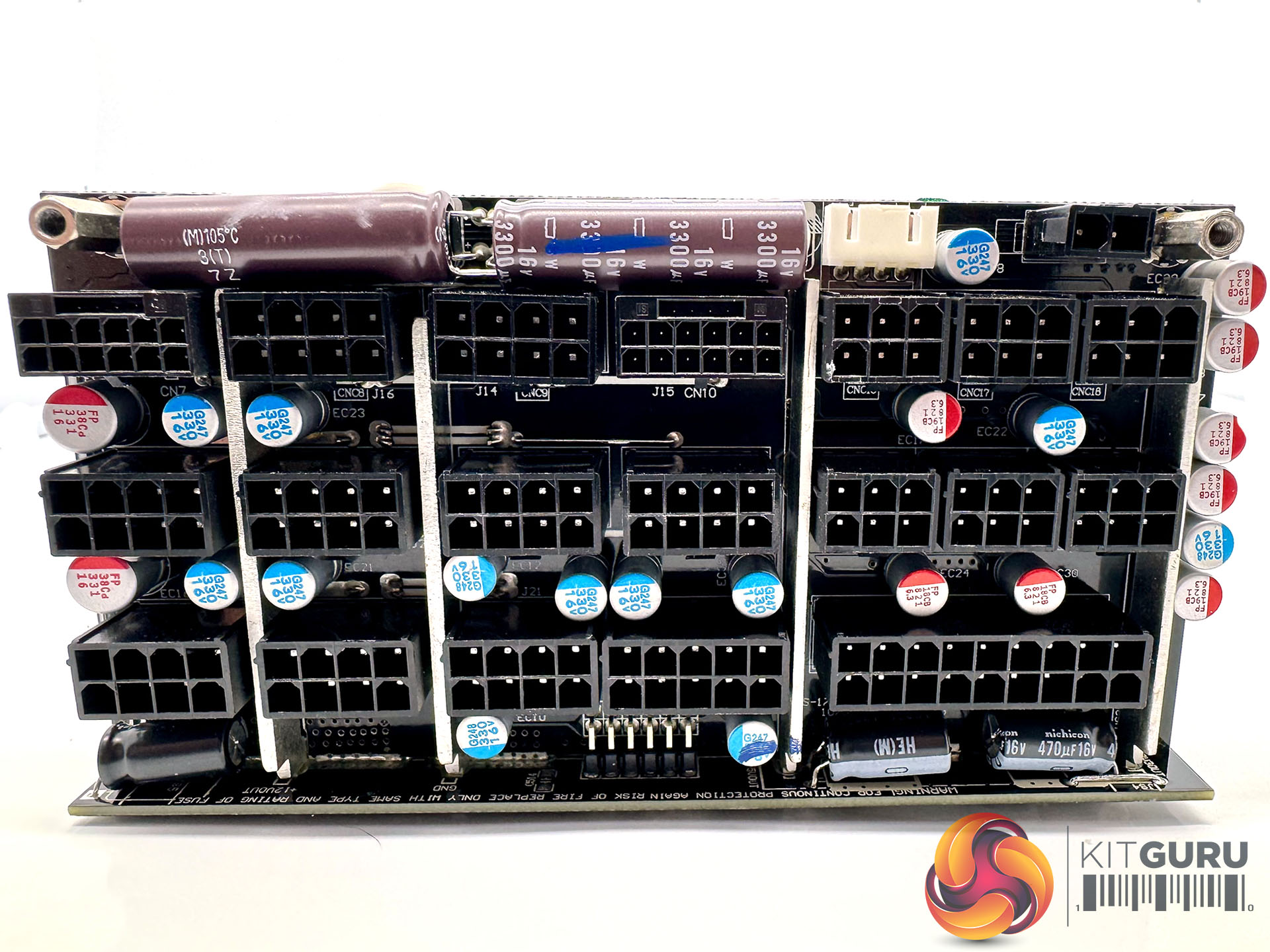
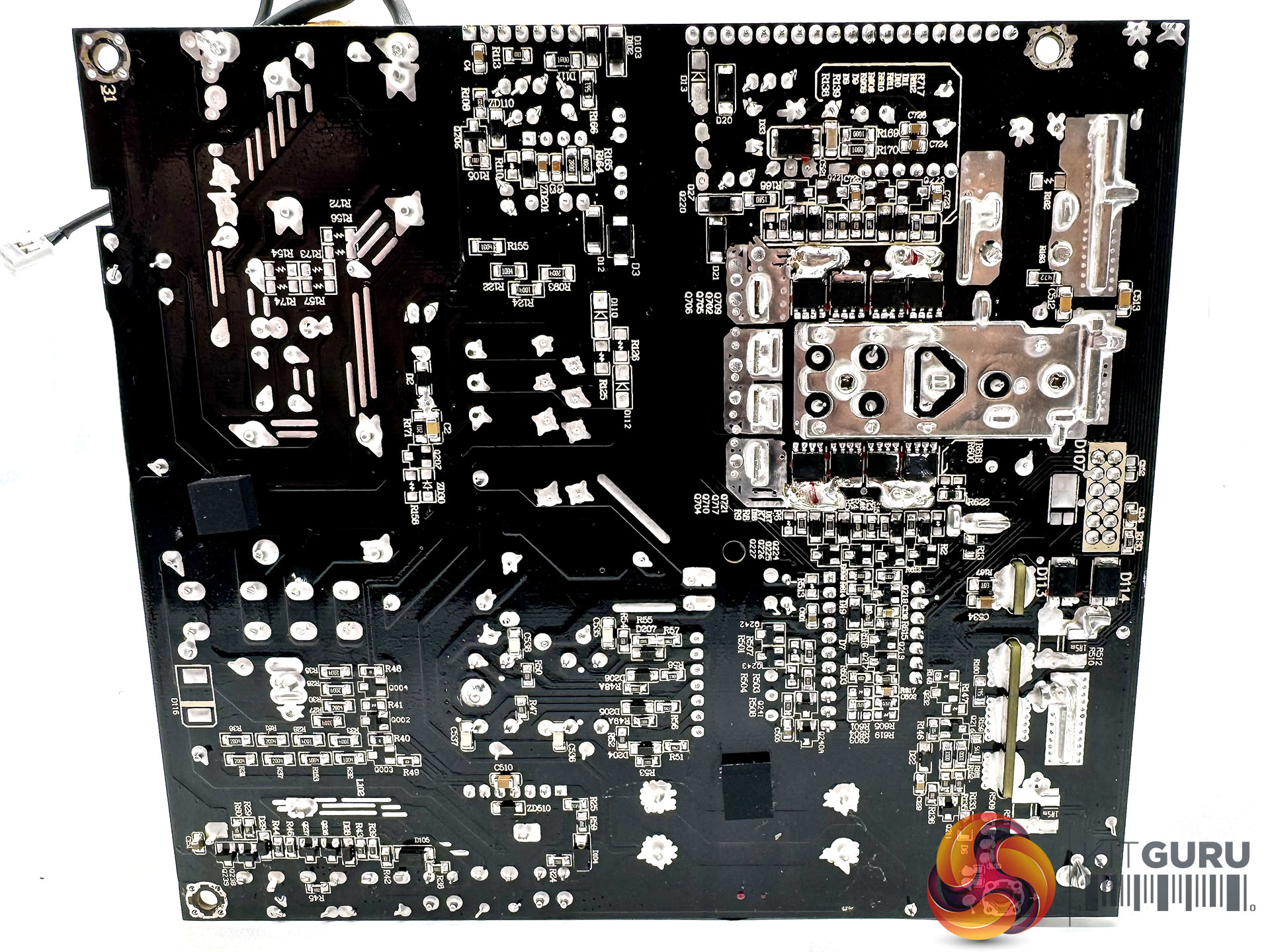
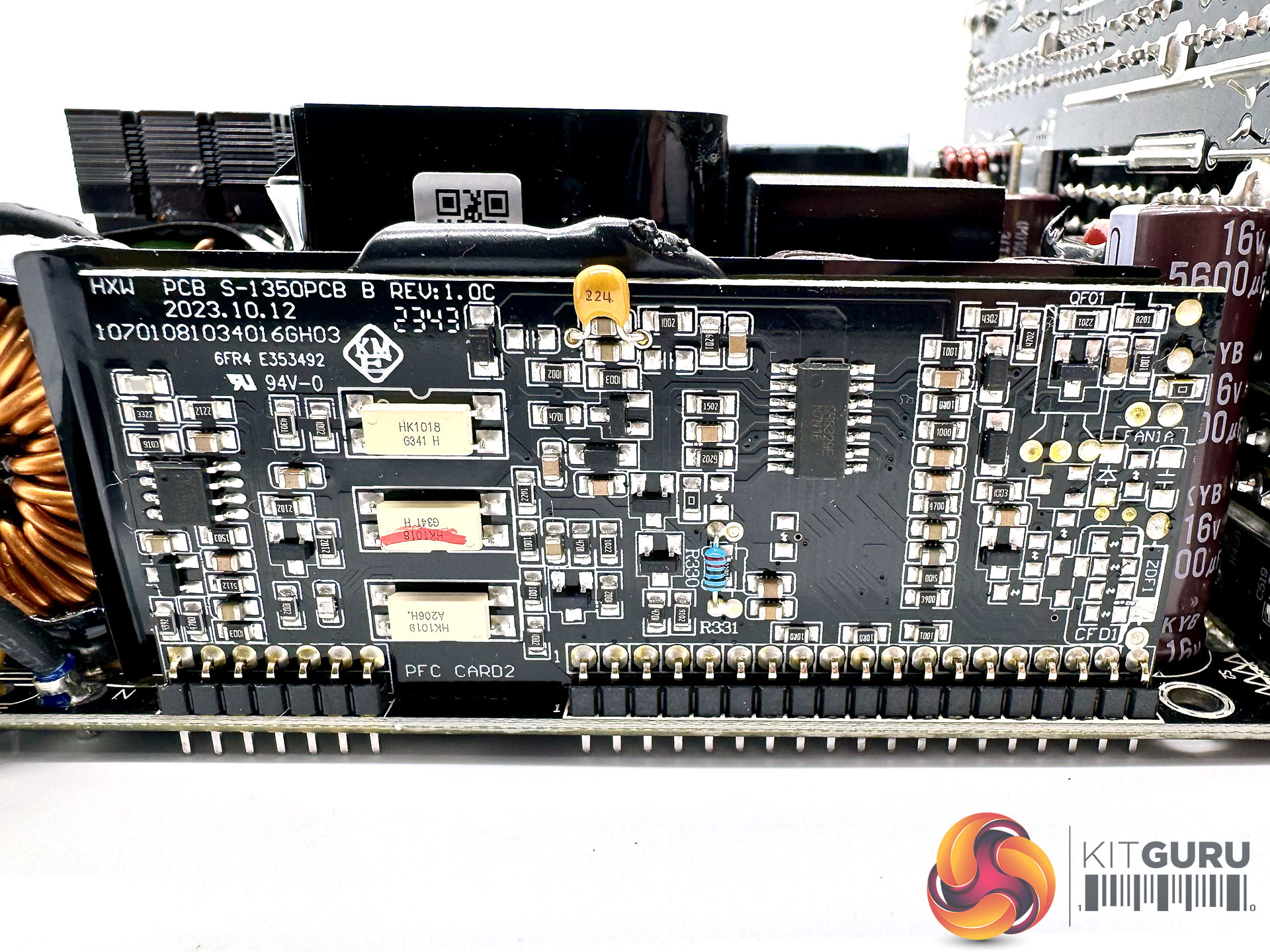
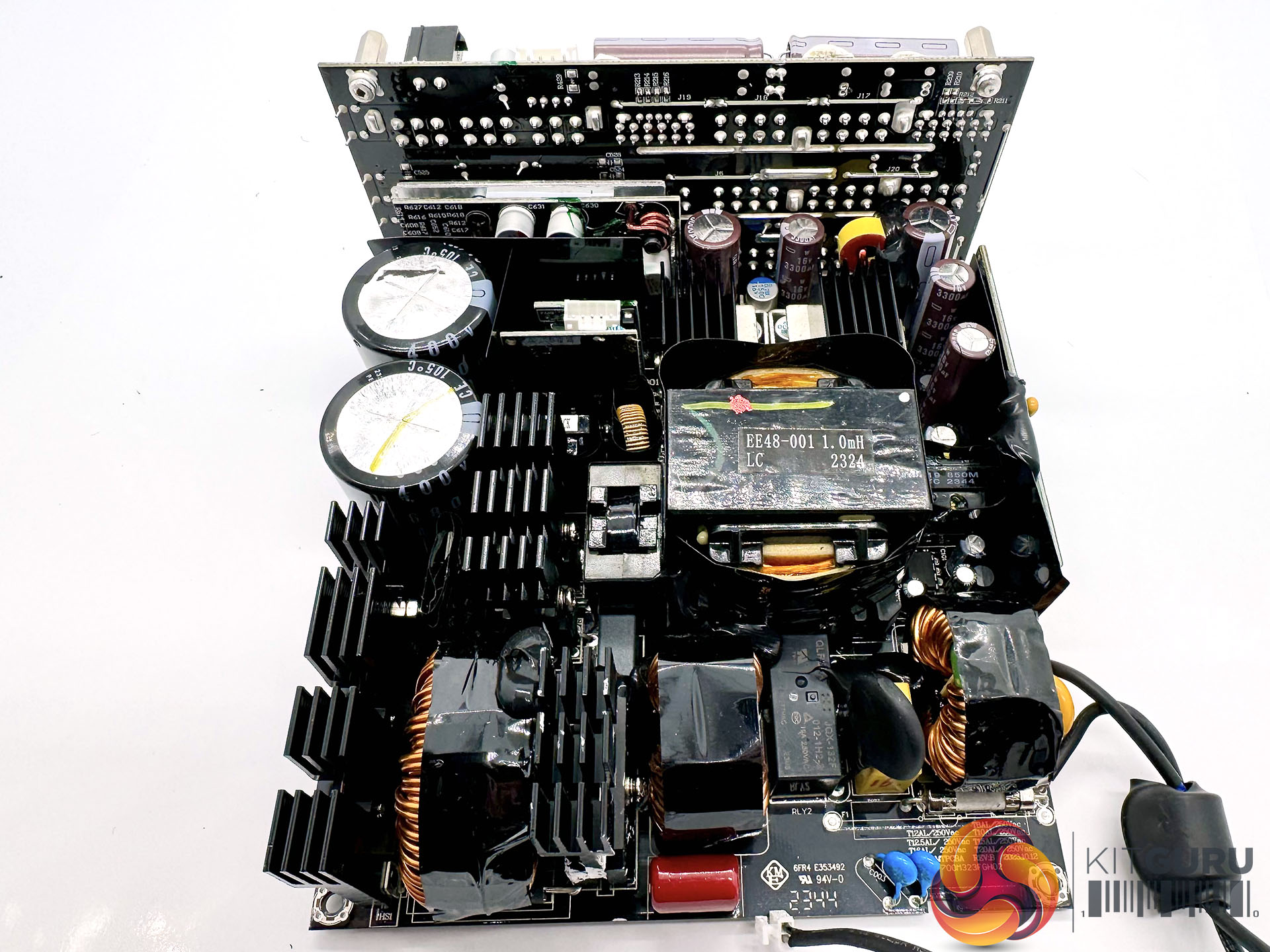
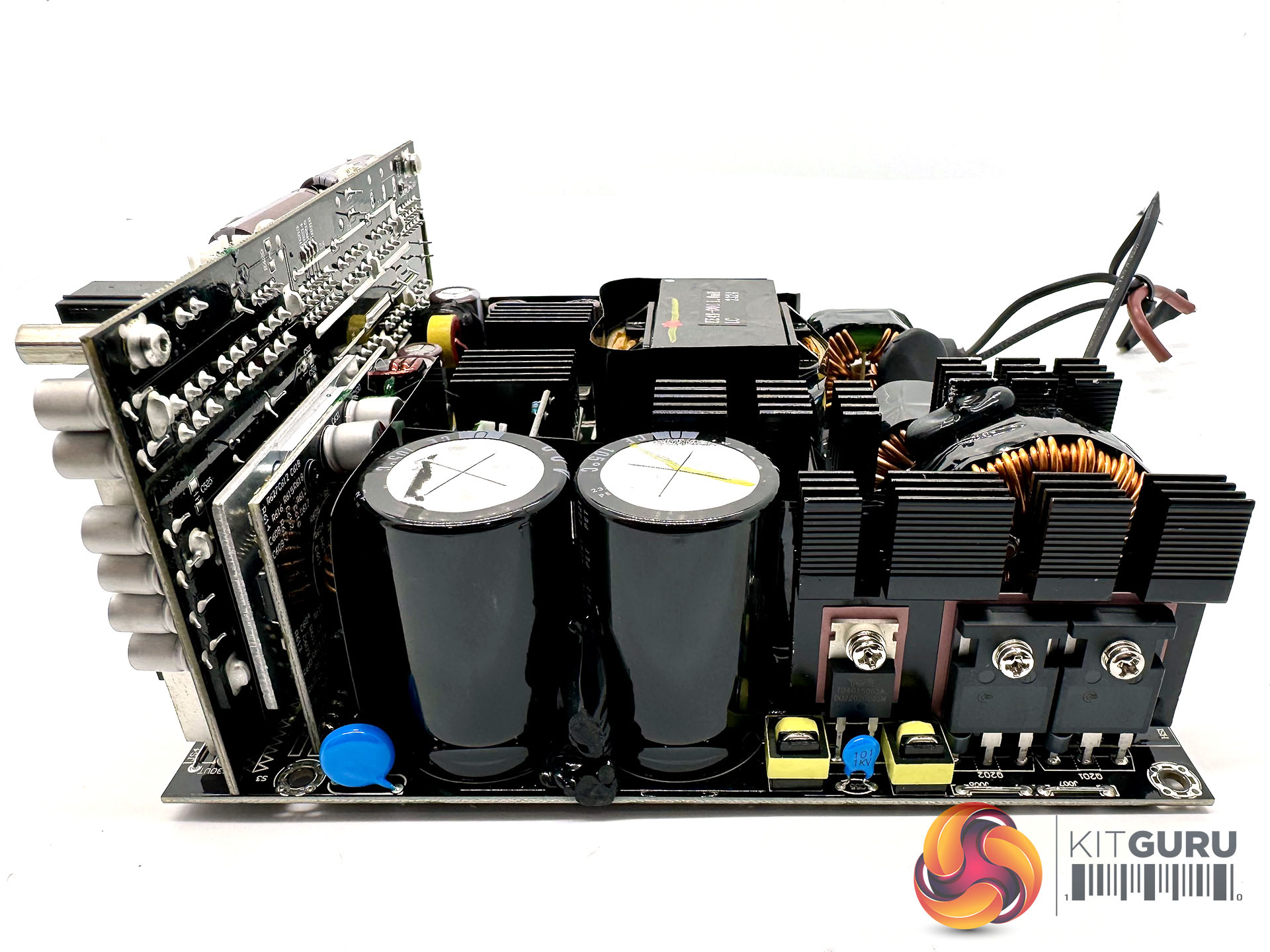
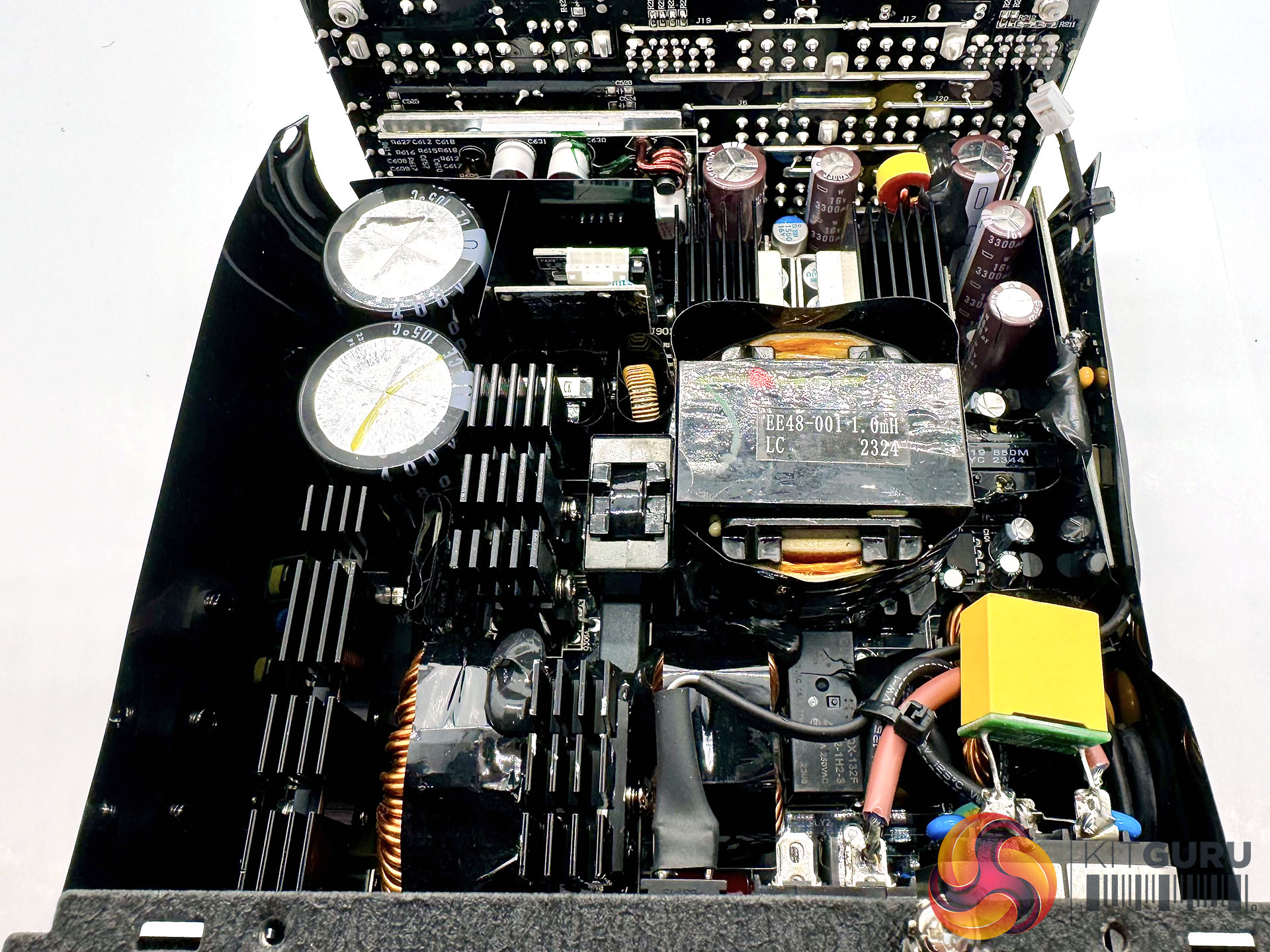
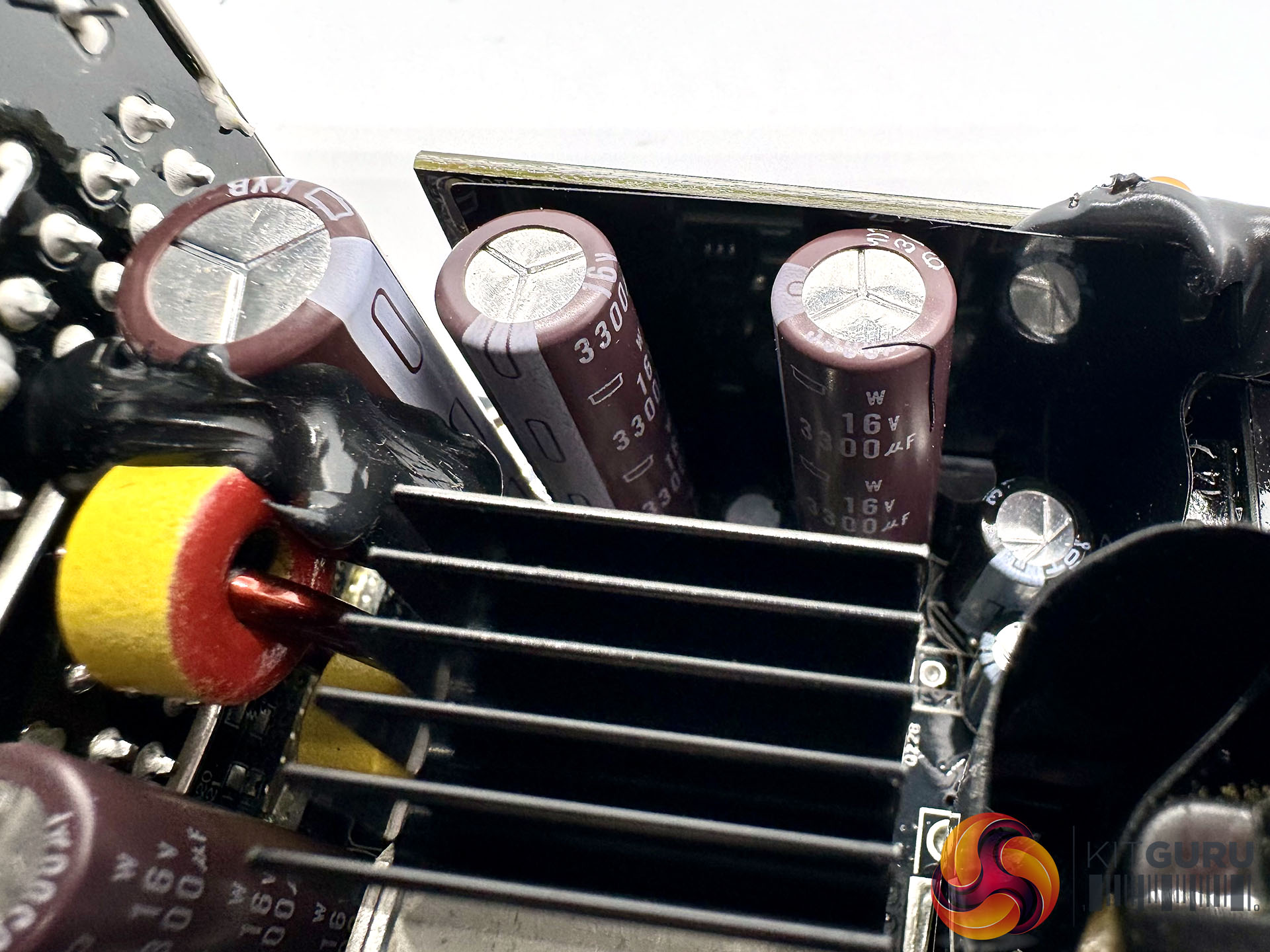
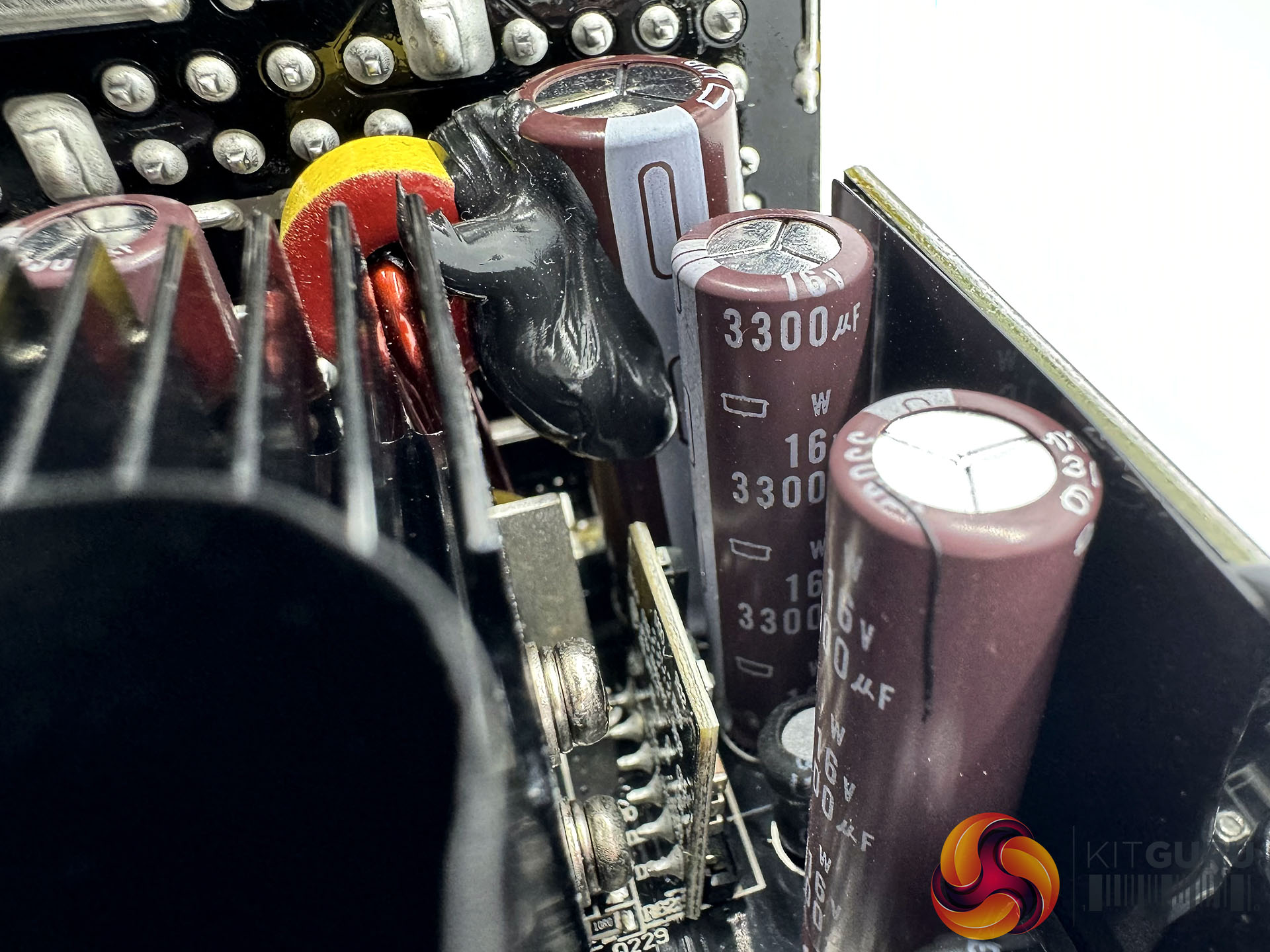
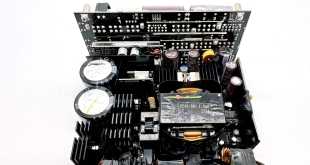
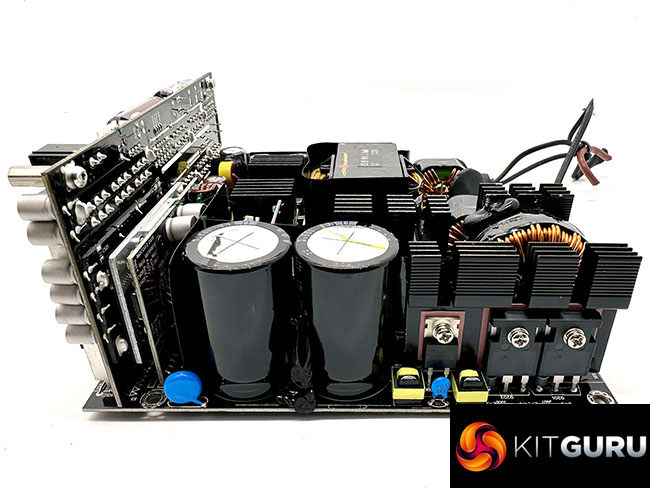
We can see this is a SANR OEM manufactured design for Enermax. SANR seem to be the OEM for the Enermax Revolution D.F. X series of power supplies. This is a half bridge LLC resonant converter with DC to DC circuit design offering good output efficiency and voltage stability.
Again, we can see Enermax and SANR aren't penny pinching, as they are adopting high grade Japanese Capacitors throughout the design. A pair of Nichicon 105c rated Japanese capacitors handle the primary stage. These are rated 680uF 400V, for a total of 1360uF. Secondary stage capacitors are also high grade units we would expect to see in a power supply at this price.
The unit has OCP, OVP, UVP, OPP, OCP and SCP protections.
Correctly testing power supplies is a complex procedure and KitGuru have configured a test bench which can deliver up to a 2,000 Watt DC load. Due to public requests we have changed our temperature settings recently – previously we rated with ambient temperatures at 25C, we have increased ambient temperatures by 10c (to 35c) in our environment to greater reflect warmer internal chassis conditions.
We use combinations of the following hardware:
• SunMoon SM-268
• CSI3710A Programmable DC load (+3.3V and +5V outputs)
• CSI3711A Programmable DC load (+12V1, +12V2, +12V3, and +12V4)
• Extech Power Analyzer
• Extech MultiMaster MM570 digital multimeter
• Extech digital sound level meter
• Digital oscilloscope (20M S/s with 12 Bit ADC)
• Variable Autotransformer, 1.4 KVA
12V output is single rail for our testing.
|
DC Output Load Regulation
|
||||||||||
|
Combined DC Load |
+3.3V
|
+5V
|
+12V
|
+5VSB
|
-12V | |||||
|
A
|
V
|
A
|
V
|
A
|
V
|
A
|
V
|
A | V | |
|
500W
|
7.63
|
3.33
|
8.82
|
5.05
|
36.05
|
12.08
|
1.5
|
5.01
|
0.30 | -12.01 |
|
750W
|
12.63
|
3.32
|
14.12
|
5.03
|
52.06
|
12.08
|
2.0
|
5.01
|
0.30 | -12.01 |
|
1000W
|
17.75
|
3.32
|
20.00
|
5.03
|
72.25
|
12.06
|
2.5
|
5.00
|
0.50 | -12.01 |
| 1250W | 18.84 | 3.32 | 24.04 | 5.02 | 90.14 | 12.04 | 3.0 | 5.01 | 0.60 | -12.01 |
|
1500W
|
18.87
|
3.31
|
22.64
|
5.03
|
115.90
|
12.00
|
3.5
|
5.00
|
0.80 | -12.00 |
| 1650W | 10.10 | 3.30 | 10.10 | 5.05 | 125.00 | 11.97 | 3.5 | 5.01 | 0.80 | -12.02 |
Load regulation is really good across the board.
| Enermax Revolution D.F. X 1650W | Maximum Load |
| 1865W |
We managed to get the PSU to achieve 1865W before it would shut down, delivering 215W more than the rated specifications.
Next we want to try Cross Loading. This basically means loads which are not balanced. If a PC for instance needs 500W on the +12V outputs but something like 30W via the combined 3.3V and +5V outputs then the voltage regulation can fluctuate badly.
| Cross Load Testing | +3.3V | +5V | +12V | -12V | +5VSB | |||||
| A | V | A | V | A | V | A | V | A | V | |
| 1150W | 3.0 | 3.33 | 2.0 | 5.02 | 92.0 | 12.05 | 0.2 | -12.03 | 0.50 | 5.01 |
| 250W | 20.0 | 3.31 | 24.0 | 5.01 | 5.0 | 12.07 | 0.2 | -12.03 | 0.50 | 5.01 |
The D.F X 1650 produced class leading results in the cross loading test. It exhibited no discernible weaknesses in any of the testing.
We then used an oscilloscope to measure AC ripple and noise present on the DC outputs. We set the oscilloscope time base to check for AC ripple at both high and low ends of the spectrum.
ATX12V V2.2 specification for DC output ripple and noise is defined in the ATX 12V power supply design guide.
|
ATX12V Ver 2.2 Noise/Ripple Tolerance
|
|
|
Output
|
Ripple (mV p-p)
|
|
+3.3V
|
50
|
|
+5V
|
50
|
|
+12V1
|
120
|
|
+12V2
|
120
|
|
-12V
|
120
|
|
+5VSB
|
50
|
Obviously when measuring AC noise and ripple on the DC outputs the cleaner (less recorded) means we have a better end result. We measured this AC signal amplitude to see how closely the unit complied with the ATX standard.
| AC Ripple (mV p-p) | ||||
| DC Load | +3.3V | +5V | +12V | 5VSB |
| 500W | 10 | 15 | 20 | 10 |
| 750W | 15 | 15 | 25 | 10 |
| 1000W | 15 | 20 | 25 | 15 |
| 1250W | 20 | 25 | 30 | 15 |
| 1500W | 25 | 30 | 35 | 20 |
| 1650W | 35 | 35 | 45 | 20 |
Ripple suppression falls within industry rated parameters although the minor +3.3V and +5V are higher than many we have tested lately.
|
Efficiency (%)
|
|
|
500W
|
93.67
|
|
750W
|
94.01
|
|
1000W
|
93.61
|
|
1250W
|
93.17
|
| 1500W | 92.55 |
| 1650W | 91.71 |
Overall efficiency is excellent, peaking around 94% at around 50% load. This is actually around Platinum efficiency levels, not Gold.
We take the issue of noise very seriously at KitGuru and this is why we have built a special home brew system as a reference point when we test noise levels of various components. Why do this? Well this means we can eliminate secondary noise pollution in the test room and concentrate on components we are testing. It also brings us slightly closer to industry standards, such as DIN 45635.
Today to test the power supply we have taken it into our acoustics room environment and have set our Digital Sound Level Noise Decibel Meter Style 2 one meter away from the unit. We have no other fans running so we can effectively measure just the noise from the unit itself.
As this can be a little confusing for people, here are various dBa ratings in with real world situations to help describe the various levels.
KitGuru noise guide
10dBA – Normal Breathing/Rustling Leaves
20-25dBA – Whisper
30dBA – High Quality Computer fan
40dBA – A Bubbling Brook, or a Refrigerator
50dBA – Normal Conversation
60dBA – Laughter
70dBA – Vacuum Cleaner or Hairdryer
80dBA – City Traffic or a Garbage Disposal
90dBA – Motorcycle or Lawnmower
100dBA – MP3 Player at maximum output
110dBA – Orchestra
120dBA – Front row rock concert/Jet Engine
130dBA – Threshold of Pain
140dBA – Military Jet takeoff/Gunshot (close range)
160dBA – Instant Perforation of eardrum
|
Noise (dBA)
|
|
|
500W
|
31.5
|
|
750W
|
32.9
|
|
1000W
|
33.6
|
|
1250W
|
34.2
|
| 1500W | 35.6 |
| 1650W | 36.4 |
The fan in this unit is generally very quiet, and below a 1000 Watt load, it would be difficult to hear inside a system populated with several fans. As the power demand ramps up to close to 1,500 Watts the fan spins up becoming audible. At full load the fan is clearly heard, although it seems unlikely most people would be running a system demanding a constant 1,650 Watts at home!
|
Temperature (c)
|
||
|
Intake
|
Exhaust
|
|
|
500W
|
36
|
38
|
|
750W
|
37
|
42
|
|
1000W
|
42
|
46
|
|
1250W
|
46
|
53
|
|
1500W
|
48
|
56
|
| 1650W | 50 | 58 |
The high levels of efficiency ensure the temperatures inside the chassis remain well with safe levels, long term – even in a warmer environment.
|
Maximum load
|
Efficiency
|
|
1865W
|
90.77
|
At 1865W, the efficiency level is still good, measuring 90.77%. Not a practical situation to be running 24/7, but worth noting.
The Enermax Revolution D.F. X 1650W is another great power supply from one of the best known names in the PC sector. This is an incredibly efficient unit which exceeds the 80 Plus Gold rated certification Enermax claim it achieves. We know that Aris' excellent Cybenetics platform have rated this power supply at Platinum efficiency levels.
We can't help but feel the RGB functionality is somewhat of a gimmick, although it is hard to fault Enermax for trying to appeal to a specific audience who enjoy lighting effects. Many users will hide the power supply at the bottom of a chassis anyway, but I do like how Enermax have opted to include a physical button to control the RGB, without the need for messy, resource-hogging software installs. You can also disable it with a button press, ignoring it completely if you wish.
Technically, the D.F. X 1650 is a capable power supply. Ripple suppression is a little higher than we would like to see when loads reach in excess of 1000 Watts, but the unit still falls within industry rated parameters. Load regulation is fairly good.
The efficiency of this unit and the adoption of multiple, fairly large heatsinks, ensures this PSU runs cool, even under heavy, extended loads. The large dual ball-bearing fan forces a lot of air through the unit, aiding stability, even in warmer conditions. The Enermax ‘DFR' (Dust Free Rotation) is an interesting concept as we detailed earlier in the review. We have no way to properly test it long term, but in theory it should remove some dust particles from surfaces.
It is always good to see when a company uses high grade Japanese capacitors in their designs, spending a little extra money to aid long term reliability. We have noted Enermax used 105C rated Rubycon capacitors in another D.F. X unit we reviewed, but we found 105C rated Nichicon caps in this 1650W unit. Both these brands, along with Nippon Chemi Con, are market leaders.
Right now this power supply is not available for sale in the United Kingdom. Current availability is limited to certain parts of the world with Amazon in Europe listing it at around 350 euros HERE. We asked Enermax about UK stock arriving in the channel and they said it should be available in May over HERE, for around the £300 price point.
If you need a power supply capable of massive power delivery then the Enermax D.F. X 1650 deserves some serious consideration, if you can find it. It exceeds the modest 80 Plus Gold claims on the box, and is capable of delivering in excess of 1,800 Watts in our testing.
Discuss on our Facebook page HERE.
Pros:
- Exceeds the 80 Plus Gold claims – more like Platinum.
- Fan will counter spin to help remove dust.
- 105C rated Japanese capacitors from leading manufacturers.
- Delivered over 1,800 Watts.
- Physically small footprint is a huge plus point.
- RGB functionality.
Cons:
- Likely to be difficult to find.
- RGB functionality won't appeal to everyone.
KitGuru says: Enermax have been conservative rating this unit, it achieves Platinum levels of efficiency. It is quiet, powerful and adopts 105C rated high grade Japanese capacitors from Nichicon in the design. The software-free RGB support works well, and can also be disabled.