KitGuru KitGuru.net – Tech News | Hardware News | Hardware Reviews | IOS | Mobile | Gaming | Graphics Cards


Today we take a look at a new flagship power supply from MSI – the MEG Ai1600T. If we can look past the 2025 trend of putting an ‘Ai' moniker in the product name, we have strong hopes that this unit will deliver high quality power in a variety of tasking situations. The Ai1600T is fully modular, and has achieved Titanium approvals from both 80 Plus and Cybenetics certification platforms.
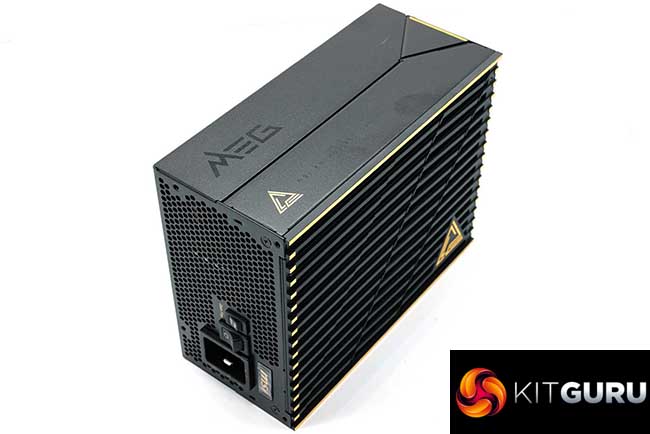
We don't get a lot of MSI power supplies to review so it was with great interest when they sent me a couple of new ones in the last week to look at. I thought I would dive straight into this premium flagship model to get an idea of the direction the company is going in 2025. We will get to the price later, because that certainly deserves some serious discussion, but bear with me for now.
The Ai1600T is based on a semi passive platform and it ships with a reassuring class leading 12 year warranty. It is also capable of a 240% total power excursion. RTX5090? Have no fear – just make sure it is plugged in properly!
MSI MEG Ai1600T Features:
- Supports Nvidia® GeForce RTXTM 50 Series graphics cards
- Dual-native 12V-2×6 Connectors
- Server-grade materials, SiC interleaved PFC MOSFET
- Tri-certified Titanium certification (80 PLUS / Cybenetics / PPLP)
- PCIe 5.1 and ATX 3.1 Ready
- Dual-color 12V-2×6 cables
- 100% all Japanese 105oC capacitor
- Full digital design with control MCU
- Industrial level protection with OCP/ OTP/ OPP/ SCP/ OVP/ UVP/ SIP/ NLO
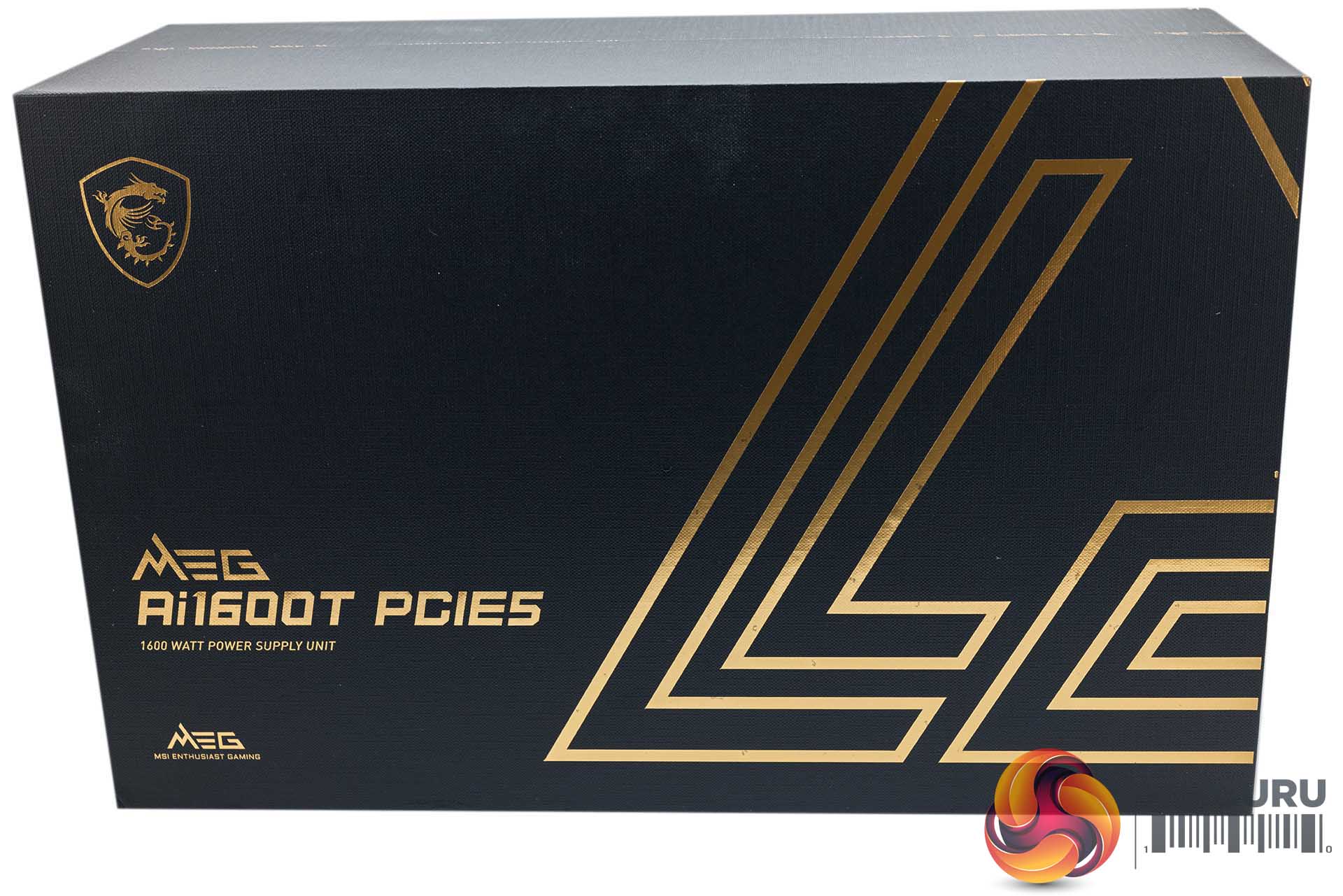
When this box arrived with me, I could not get over the weight. it was weighing in at close to 5KG. The PSU itself is quite heavy too, at 2.52KG, but the packaging of this power supply is some of the most extreme I have seen in the 15 years I have been doing this job.
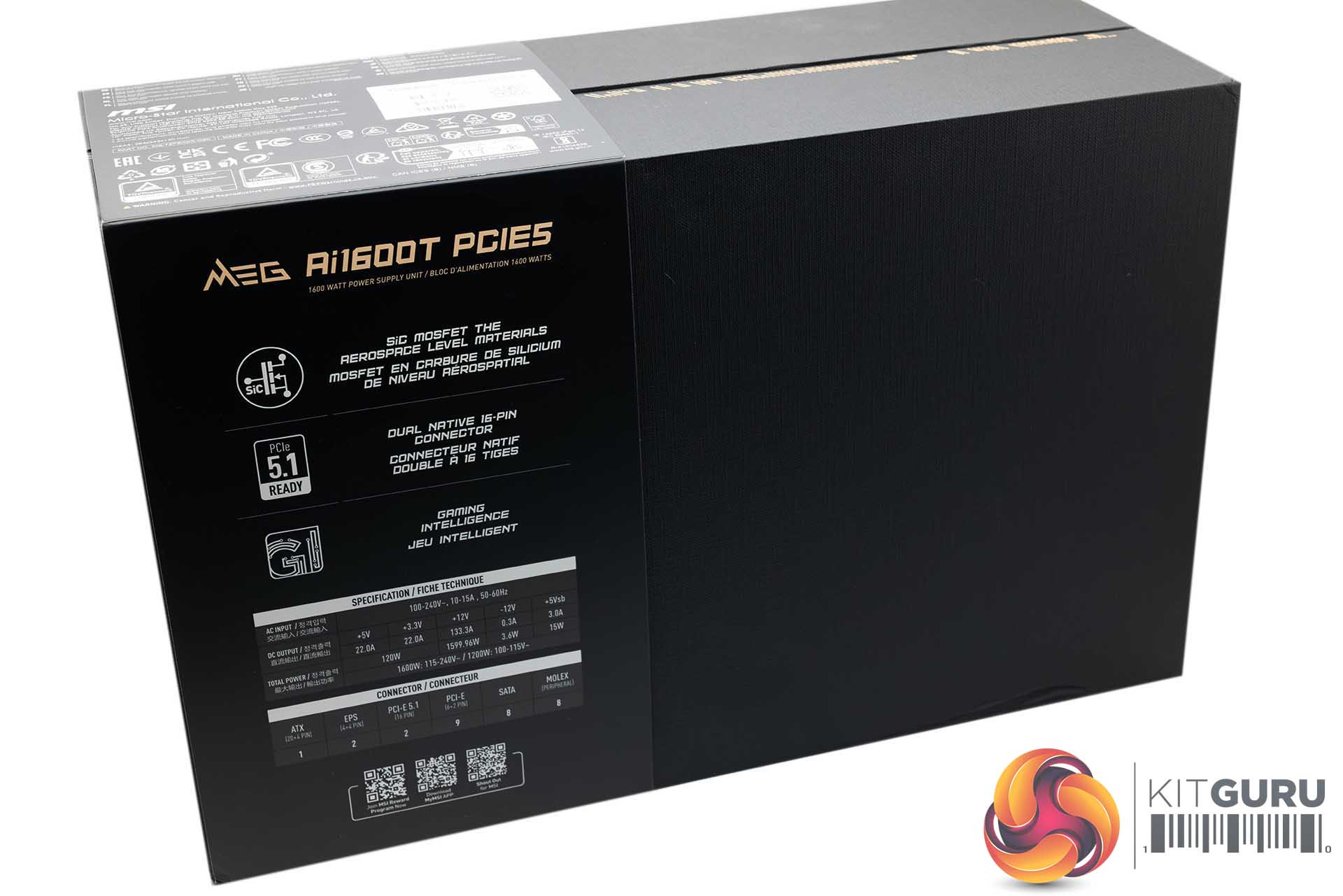
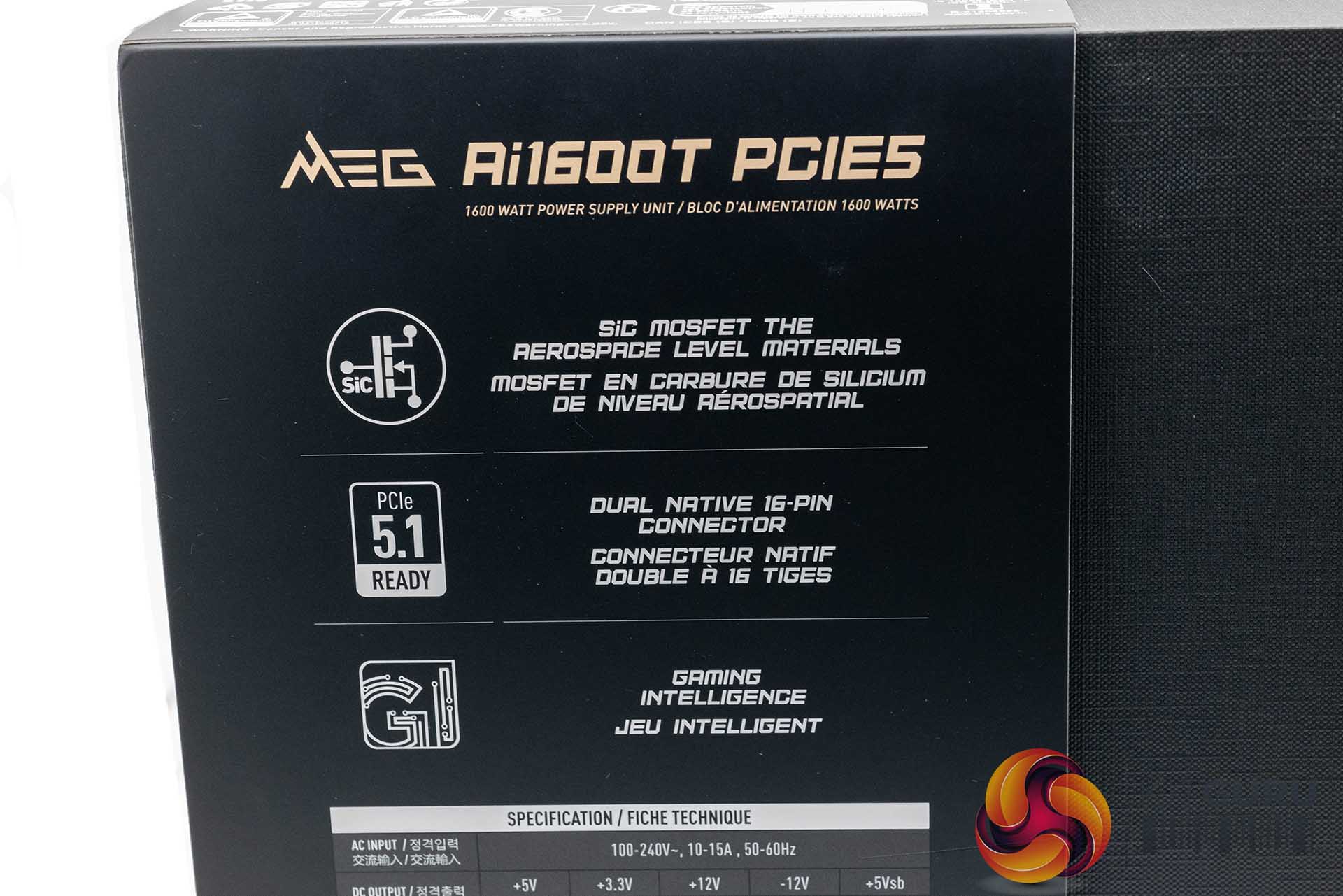
The rear of the box is simple, with some highlighted featured and key selling points. All very subdued so far.
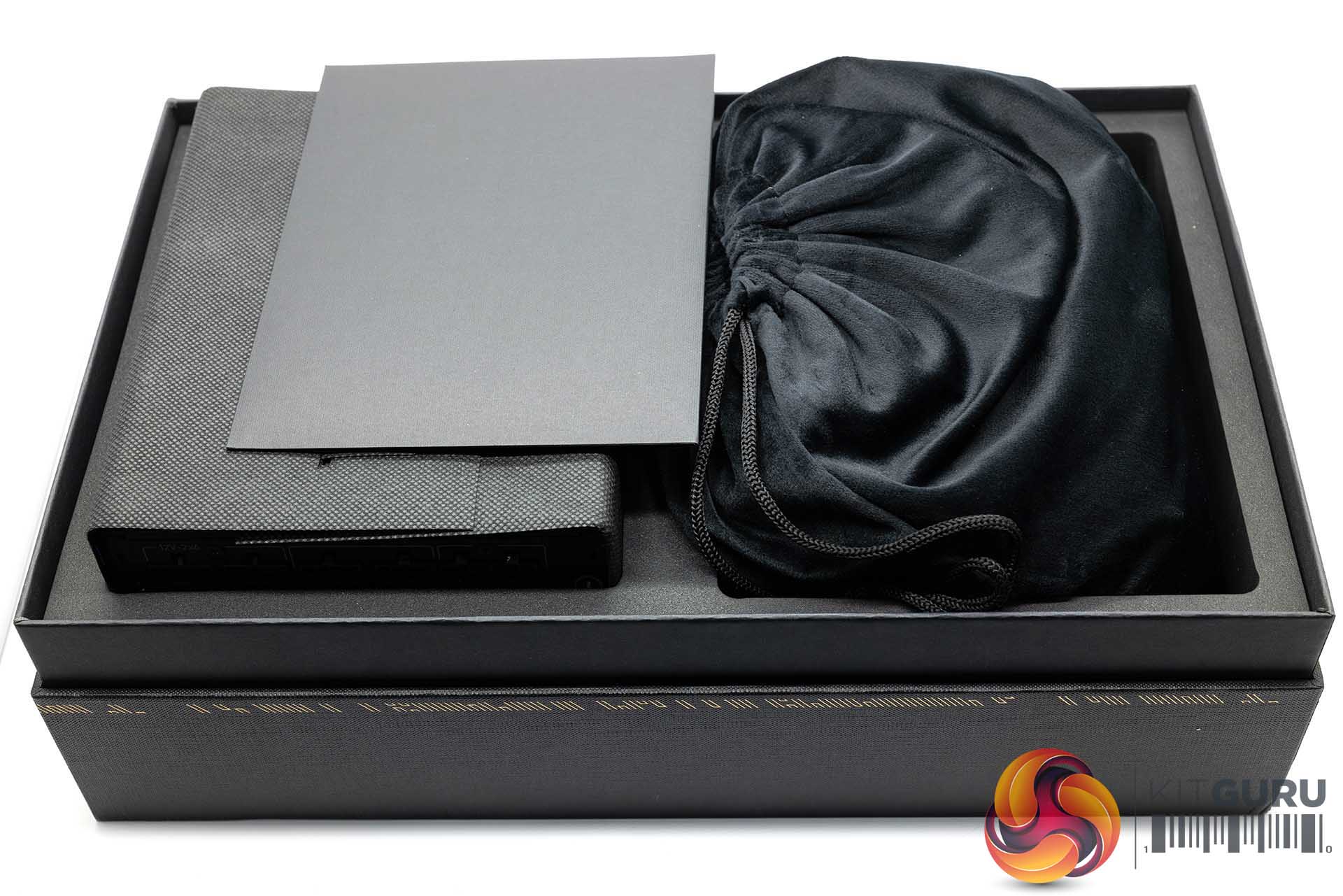
Opening the main box is somewhat of an experience itself. MSI have wrapped all the accessories in a luxury soft bag in its own compartment.
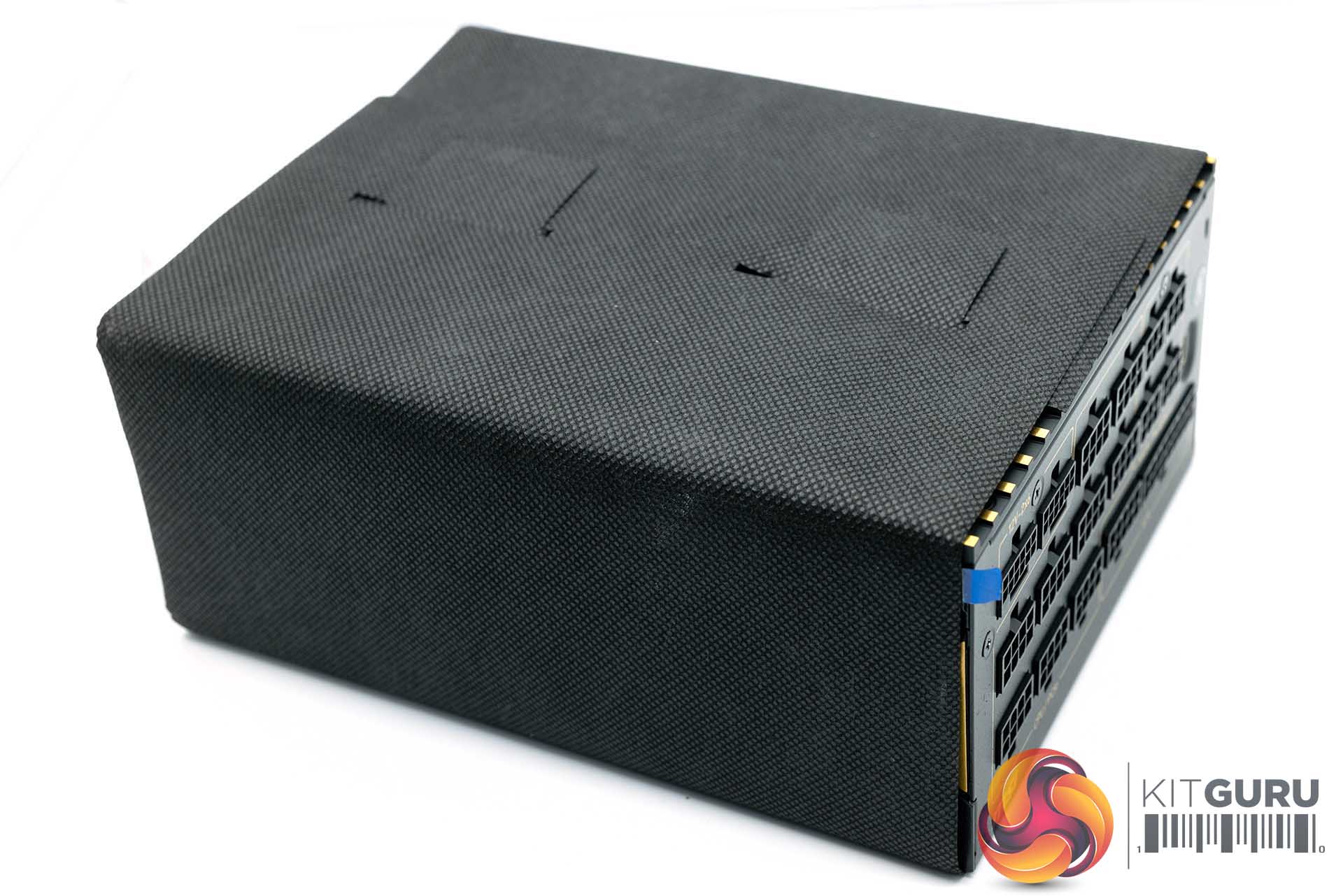
The power supply itself wrapped in a soft felt outer ‘wrap'.
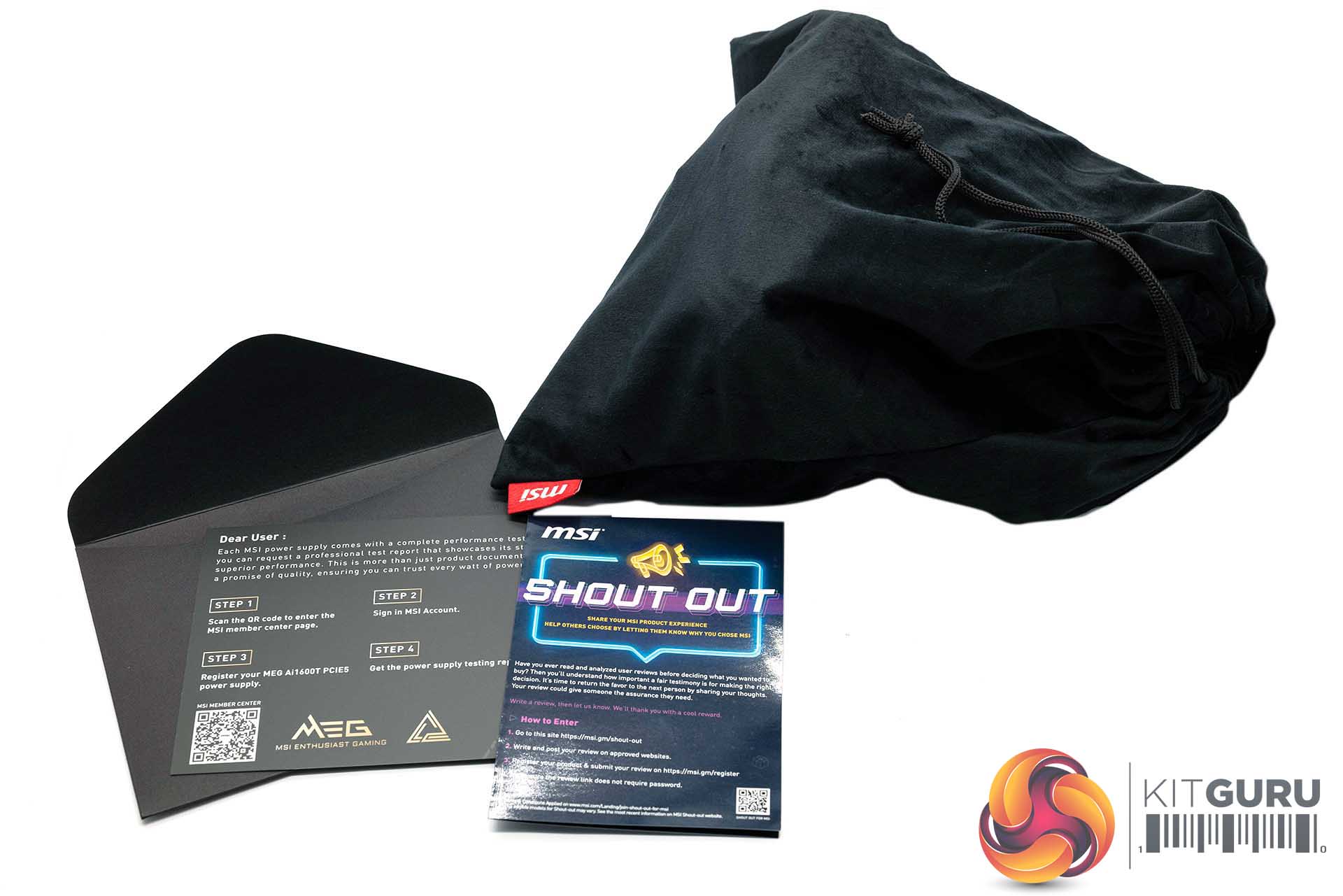
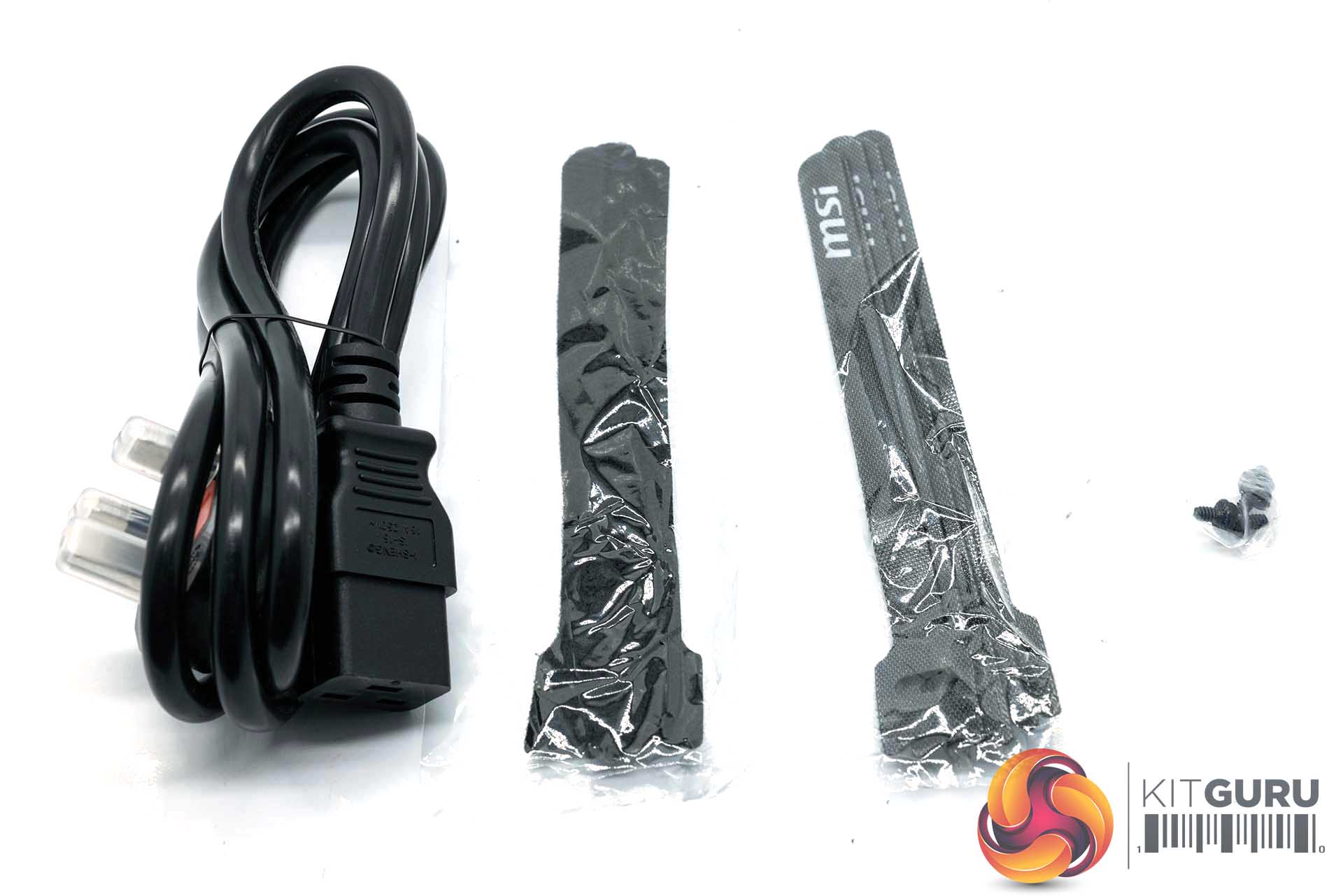
MSI include a C19 power cable with the unit, some cable ties, mounting screws and literature.
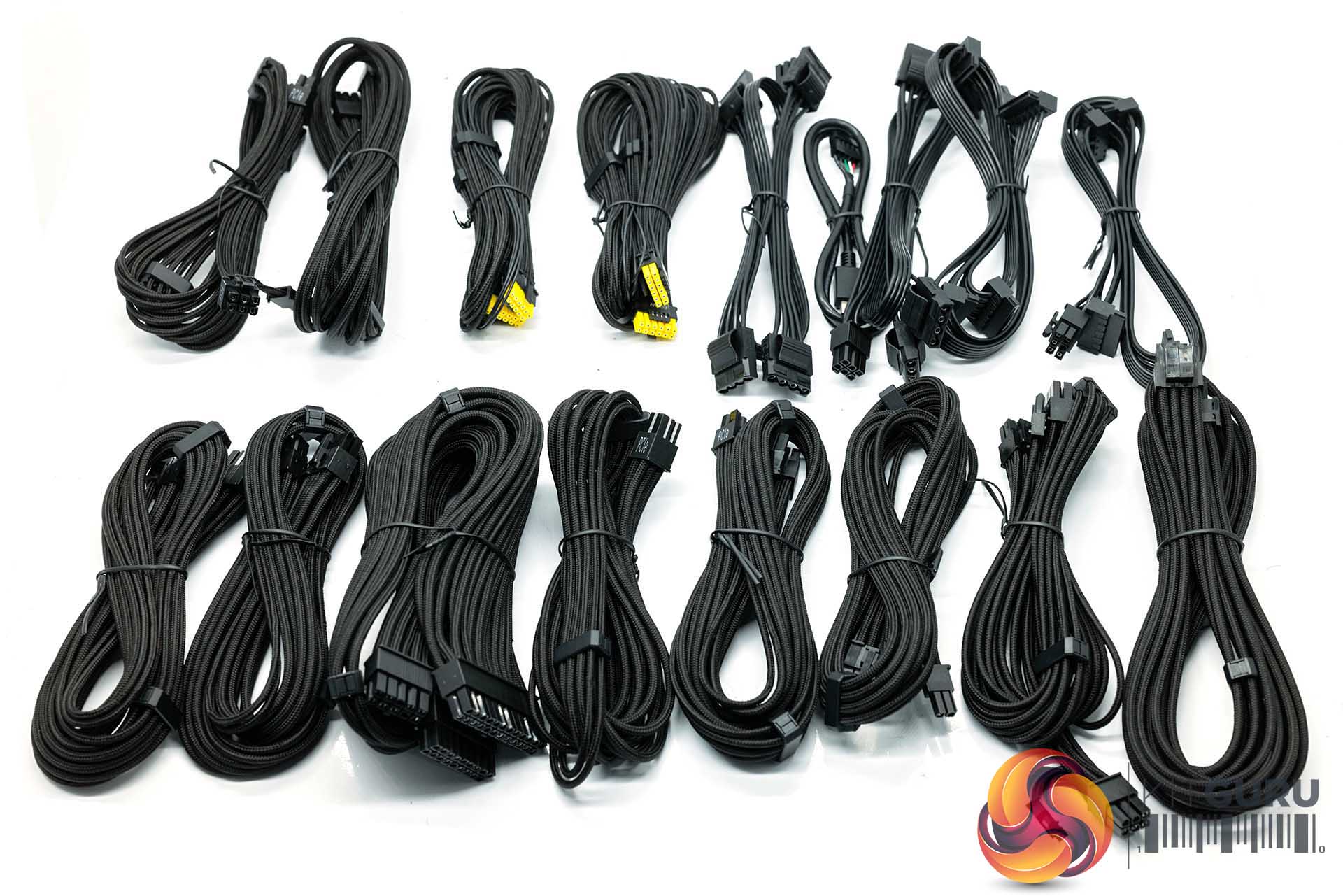
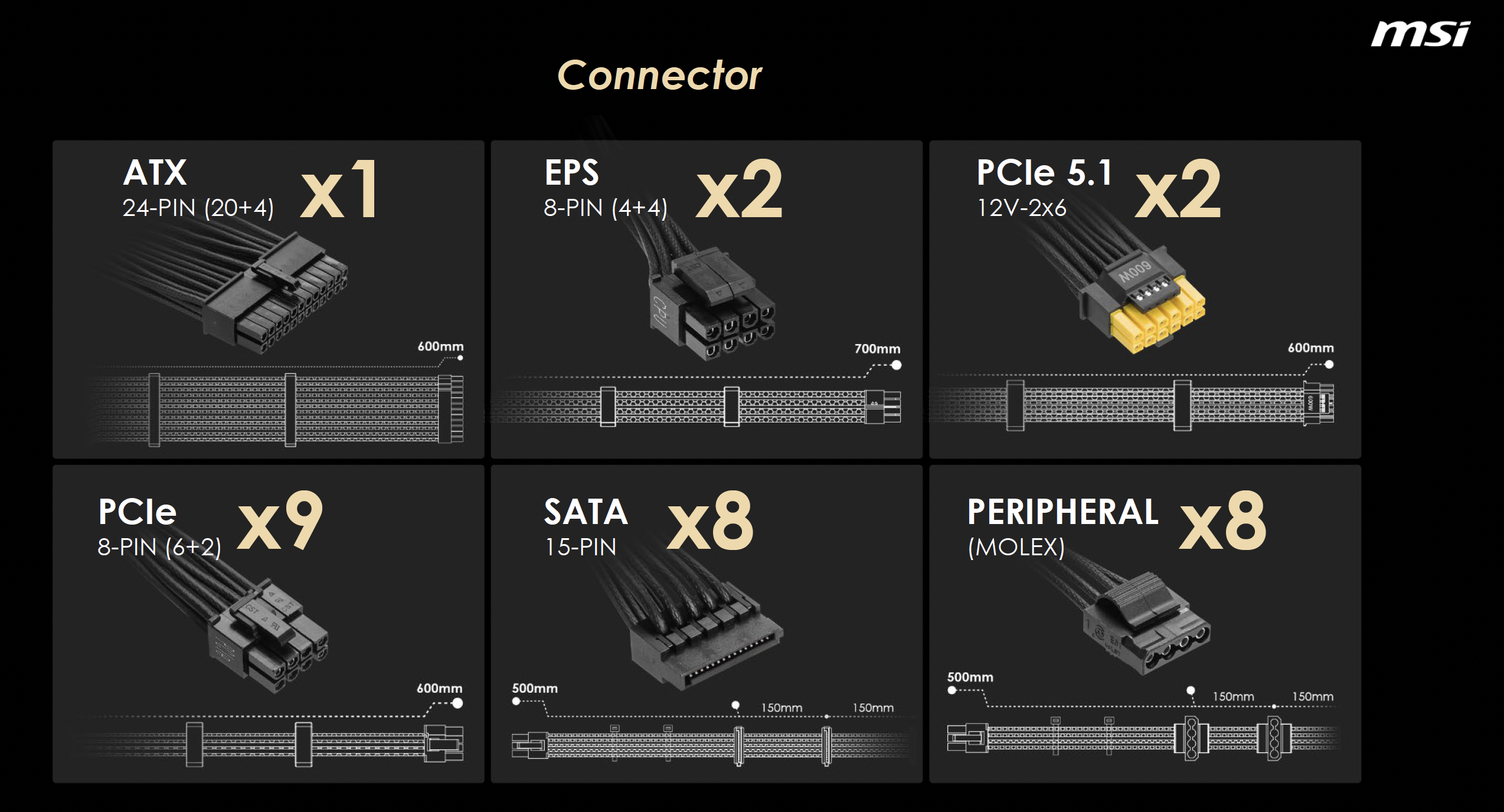
The quality of the cables is first class, they both look and feel great. They aren't all soft and braided as you can see in the image above, but most are. They include a pair of 12V 2×6 cables which can handle 600 watts per cable. They include five PCIe cables and two EPS cables as well. The cables also have ‘cable organisers' preinstalled.
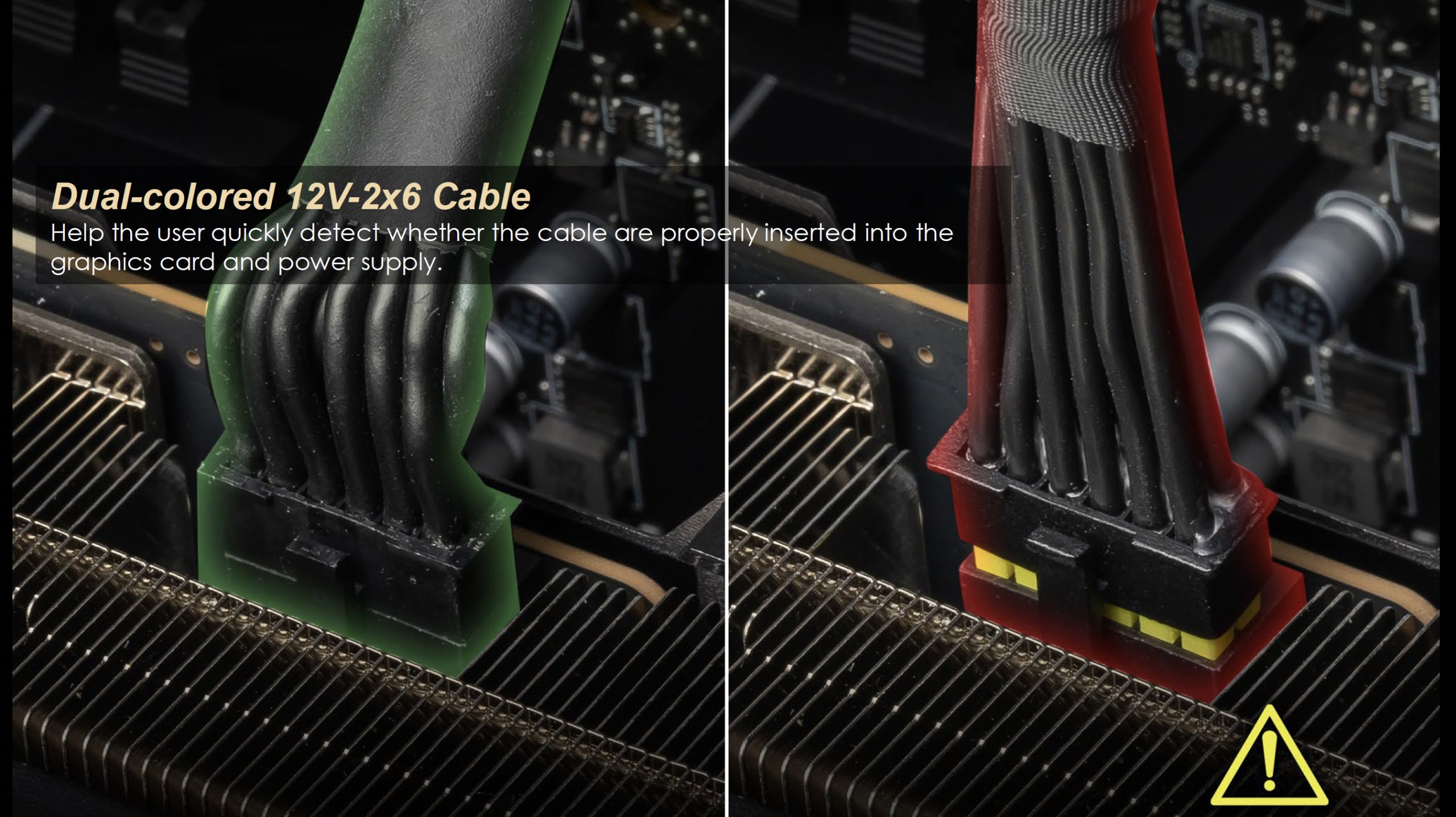
While there has been a lot of talk on the controversial 12V-2×6 cable design lately (something we have covered a few times before) MSI have designed a cable that is effectively colour-coded – if you can still see the yellow pins on the connector, it is not inserted properly. This seems to be super critical now after analysis into this cable and possible issues when not connected correctly. It is a topic for another day.
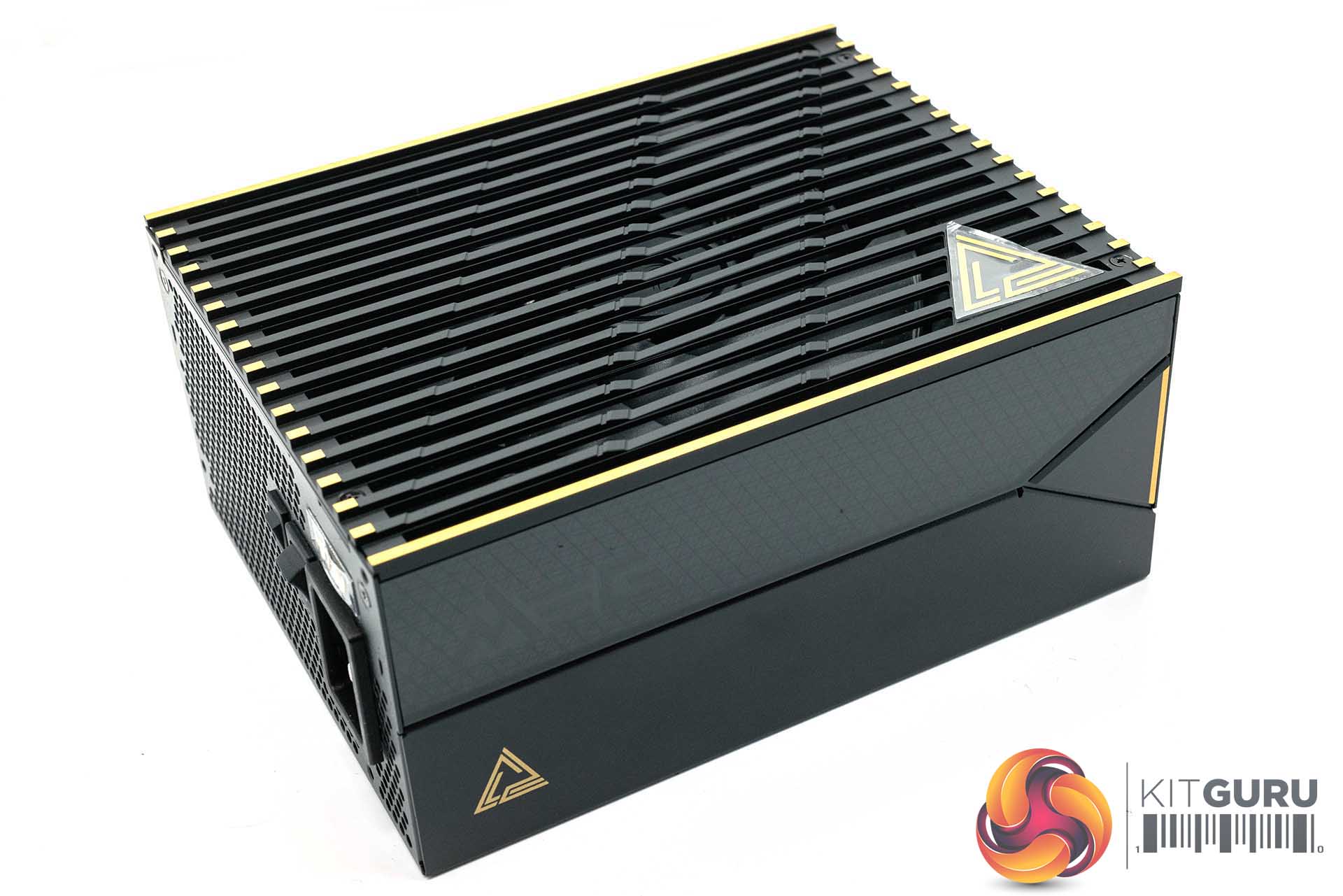
The power supply is a monster – it weighs a ton, feels extremely substantial in the hand and is clearly built to a premium price point. I can't say personally that I am a huge fan of gold accenting on any PC components, but we know the Asian audience love gold.
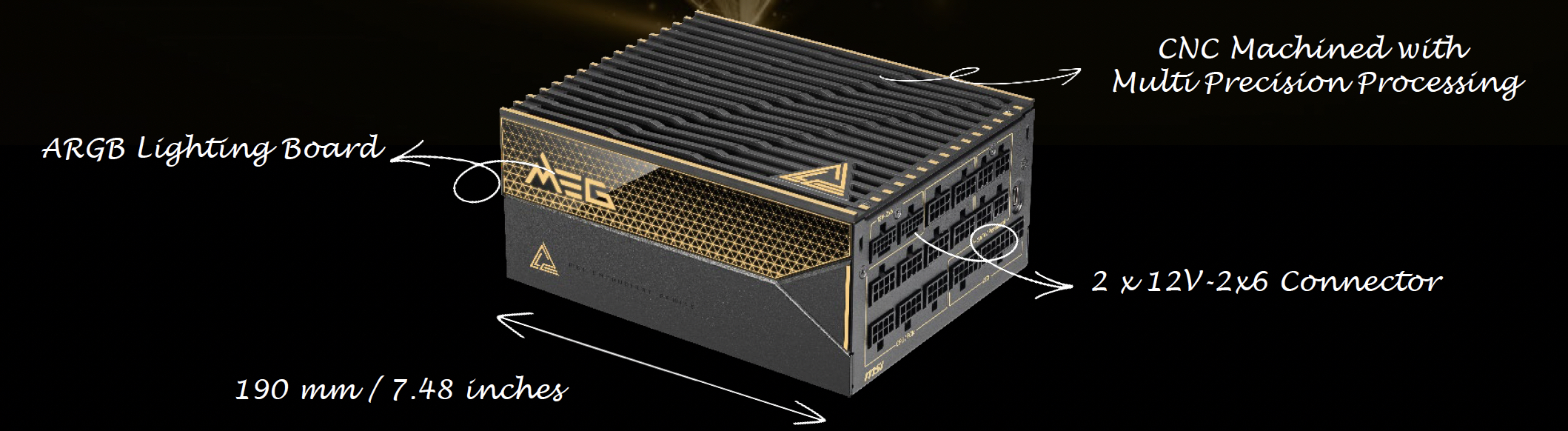
There is a panel on the side of the unit – this aRGB lighting board shows a pattern when its lit up. I am not here for bling, just the test data.
The power supply measures 190x150x86mm – the other 1250W, 1000W and 850W units in this specific range are smaller with 150x150x86mm dimensions. While 190mm is rather long, this is smaller than the Seasonic Prime TX1600 Noctua Edition supply that we reviewed back in December last year (210mm).
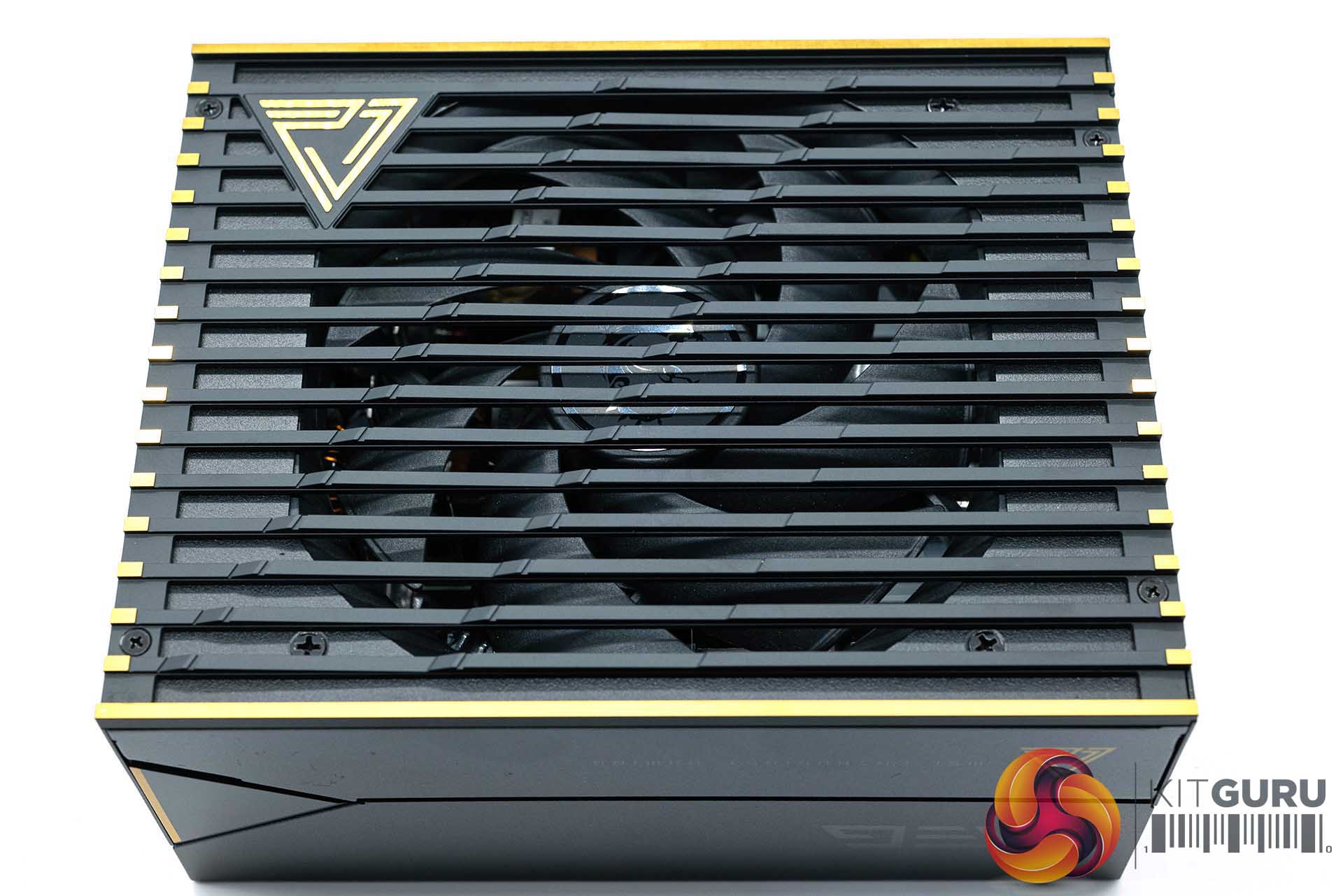
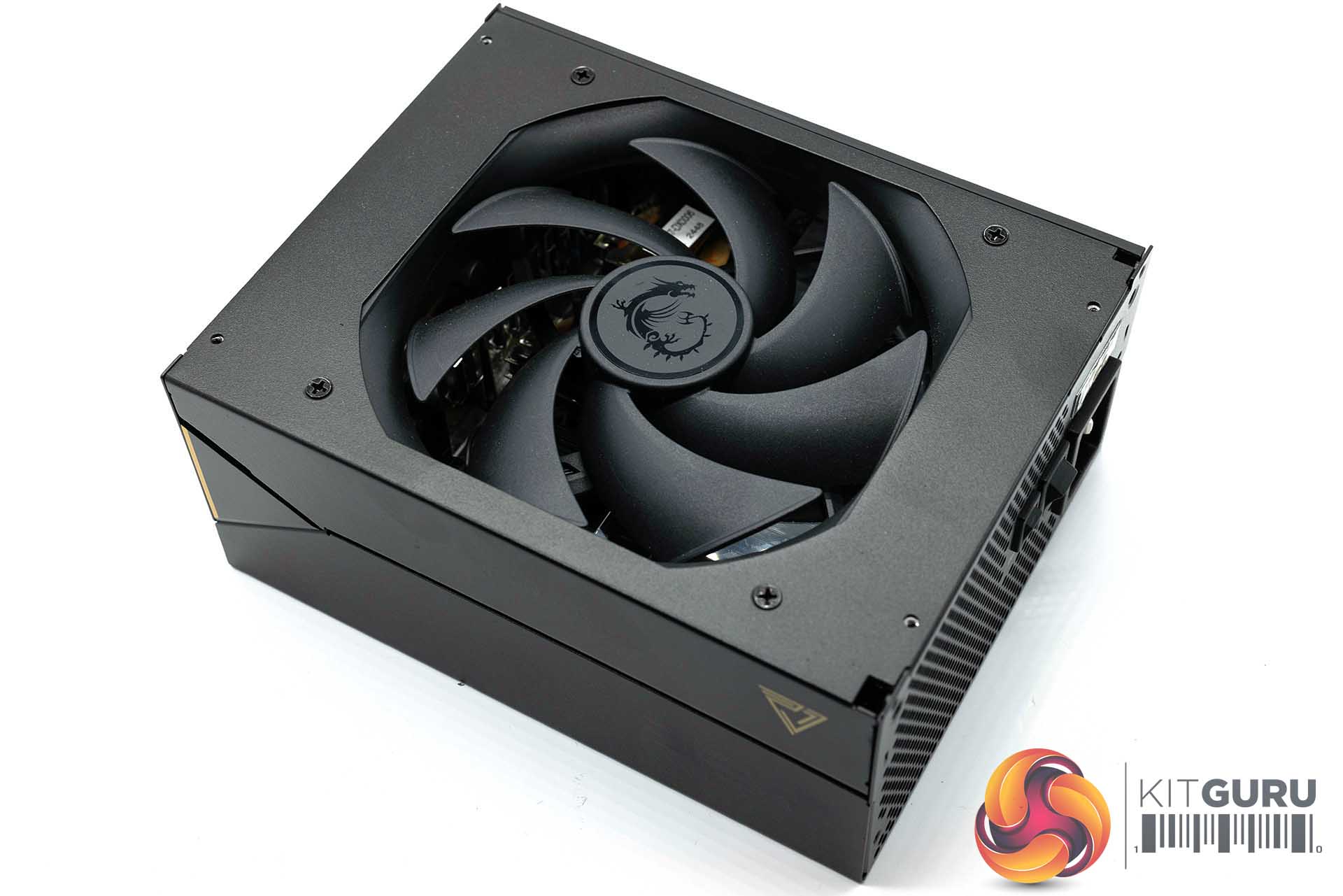
Removing the top plate we can see a fancy ‘MSI Dragon' branded fan – we will take a closer look at this fan later.
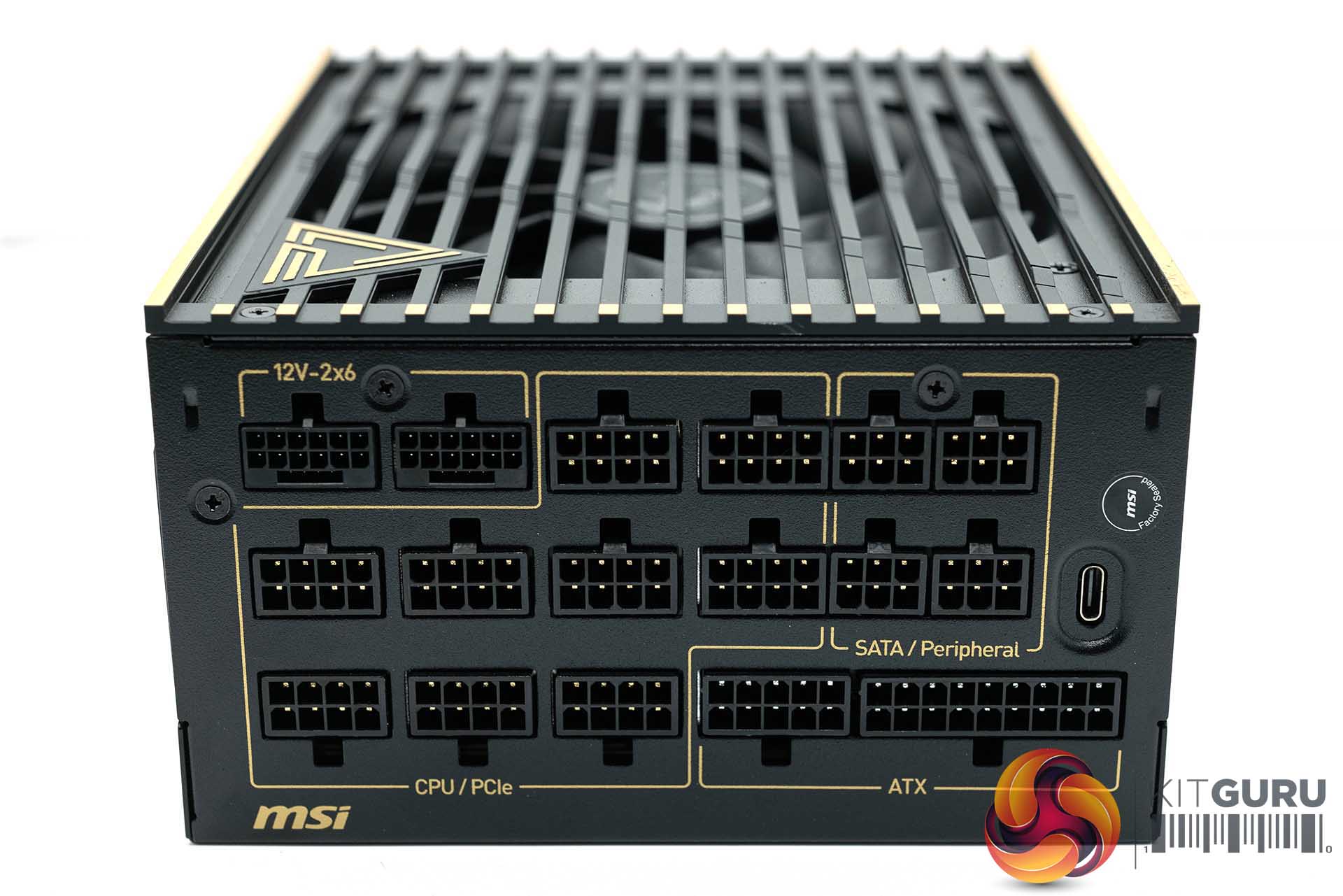
The modular side of the power supply is crammed with ports and connectors. There is a type C USB port as well to connect the power supply to your system – if you wanted to monitor and adjust some settings via software in Windows. Or to play mindlessly with RGB options for a few hours.
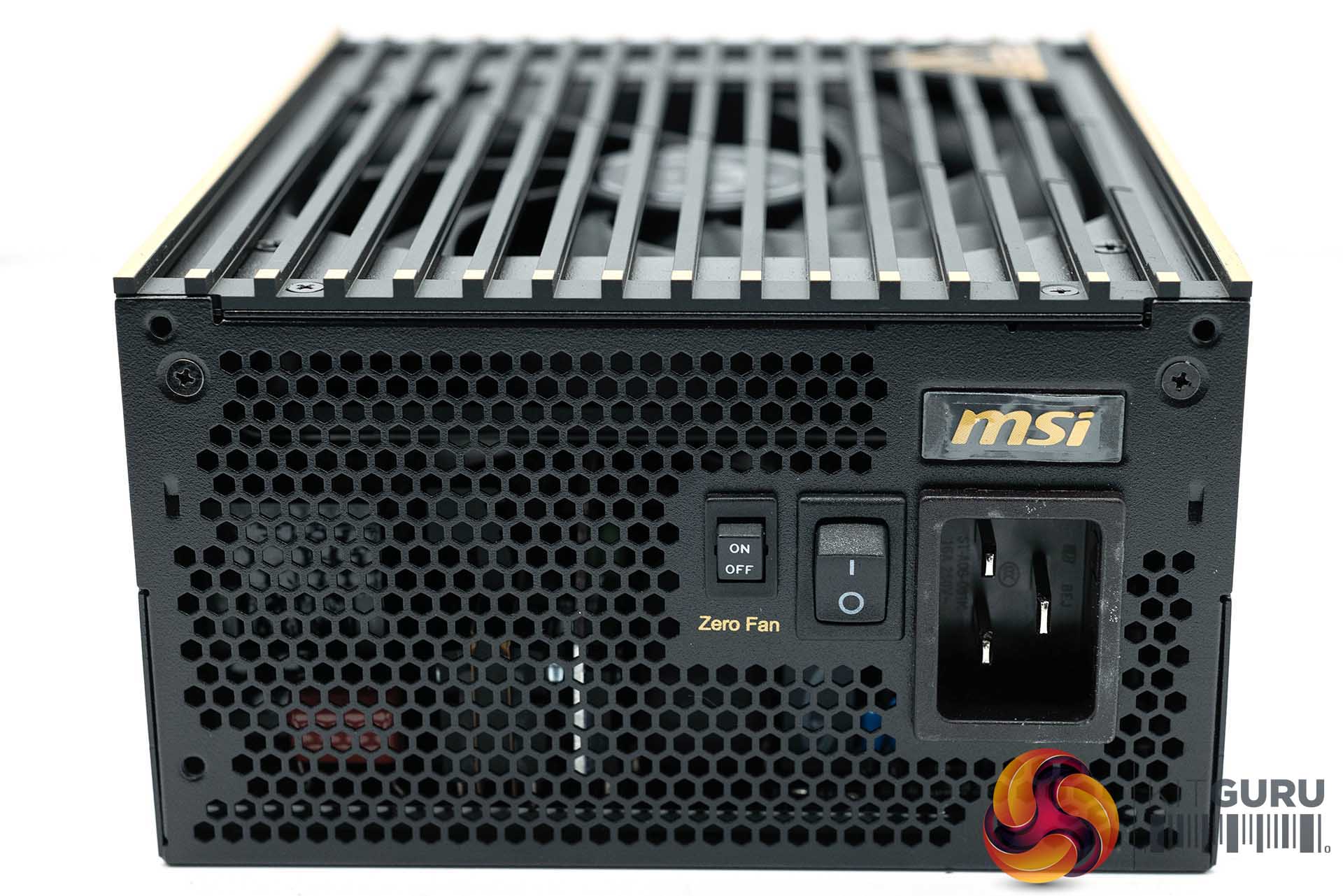
The power side of the Ai1600T has a C19 style power connector port, a power switch and a Zero fan ON/OFF button.
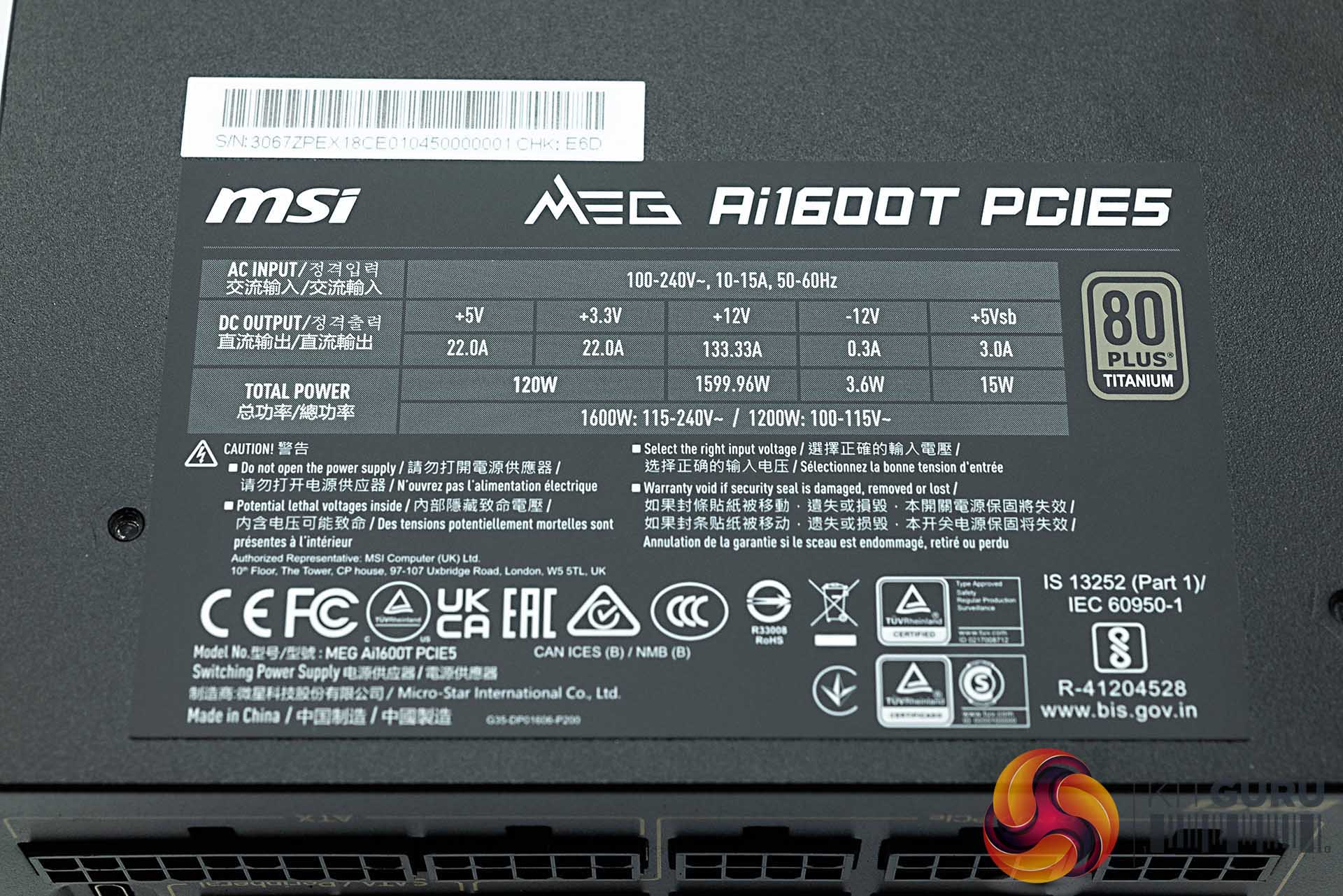
The Ai1600T power supply is able to deliver 1599.96W on the +12V rail (133.33A), and 22A on both +3.3V and +5V minor rails. This is an extreme level of power that will cope with any hardware available on the market for a consumer driven enthusiast system.
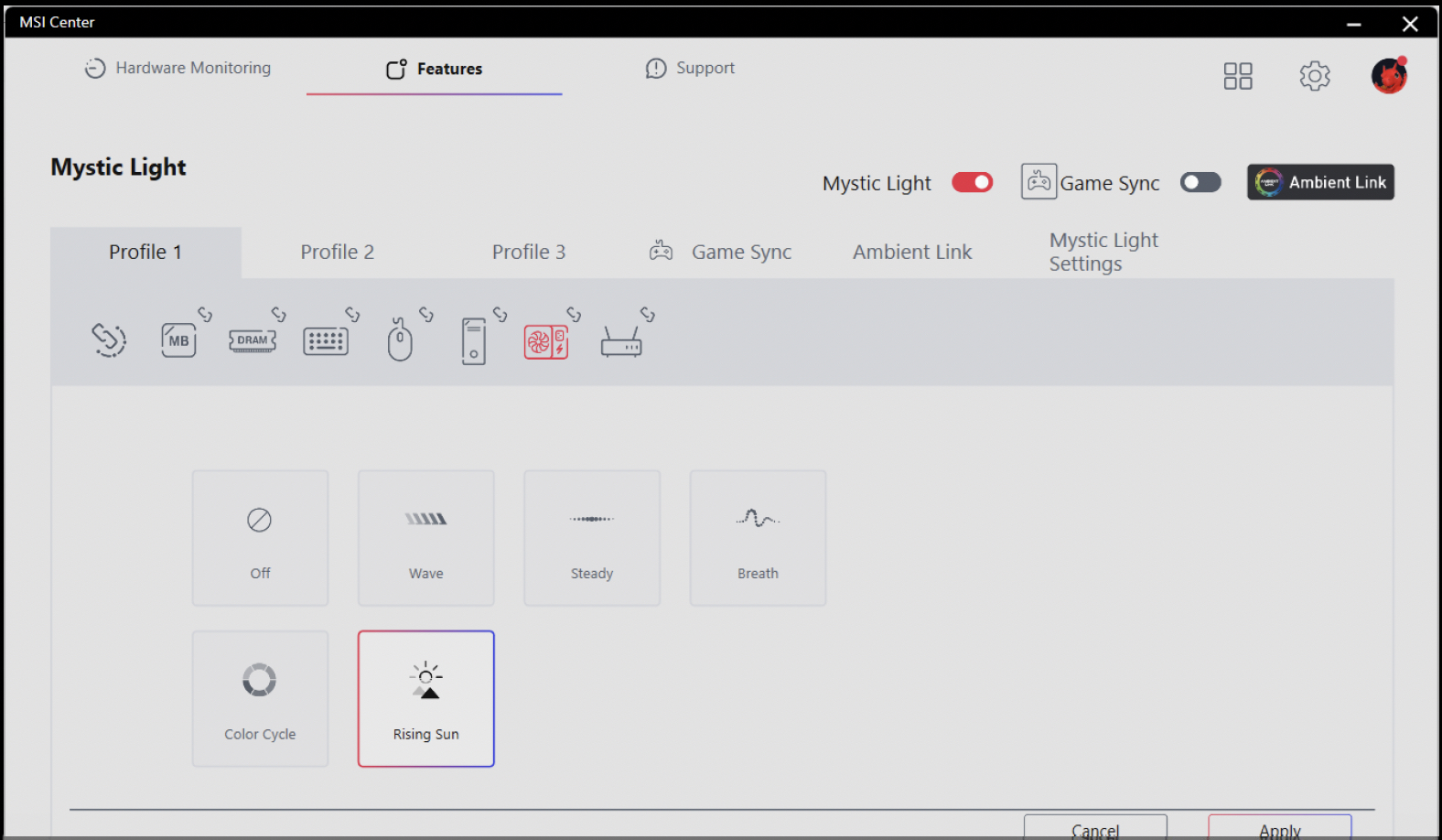
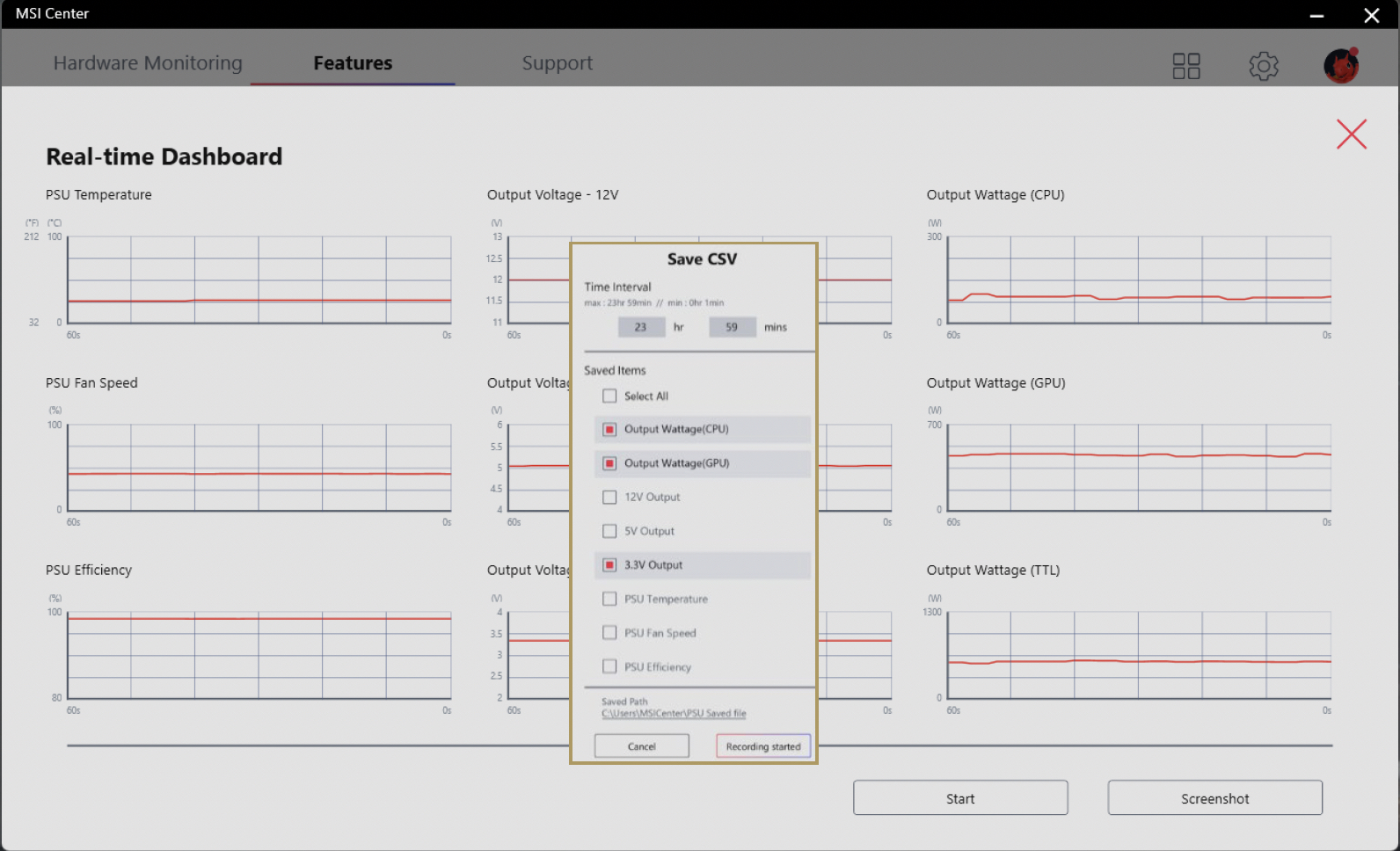
As previously mentioned you can connect this power supply to your system motherboard via a supplied USB C cable. If you install MSI Center the software gives you a real time dashboard system to adjust and play with settings. This shows you real time power supplied to the GPU and CPU and total system wattages. You can also record this data if you need to log the information.
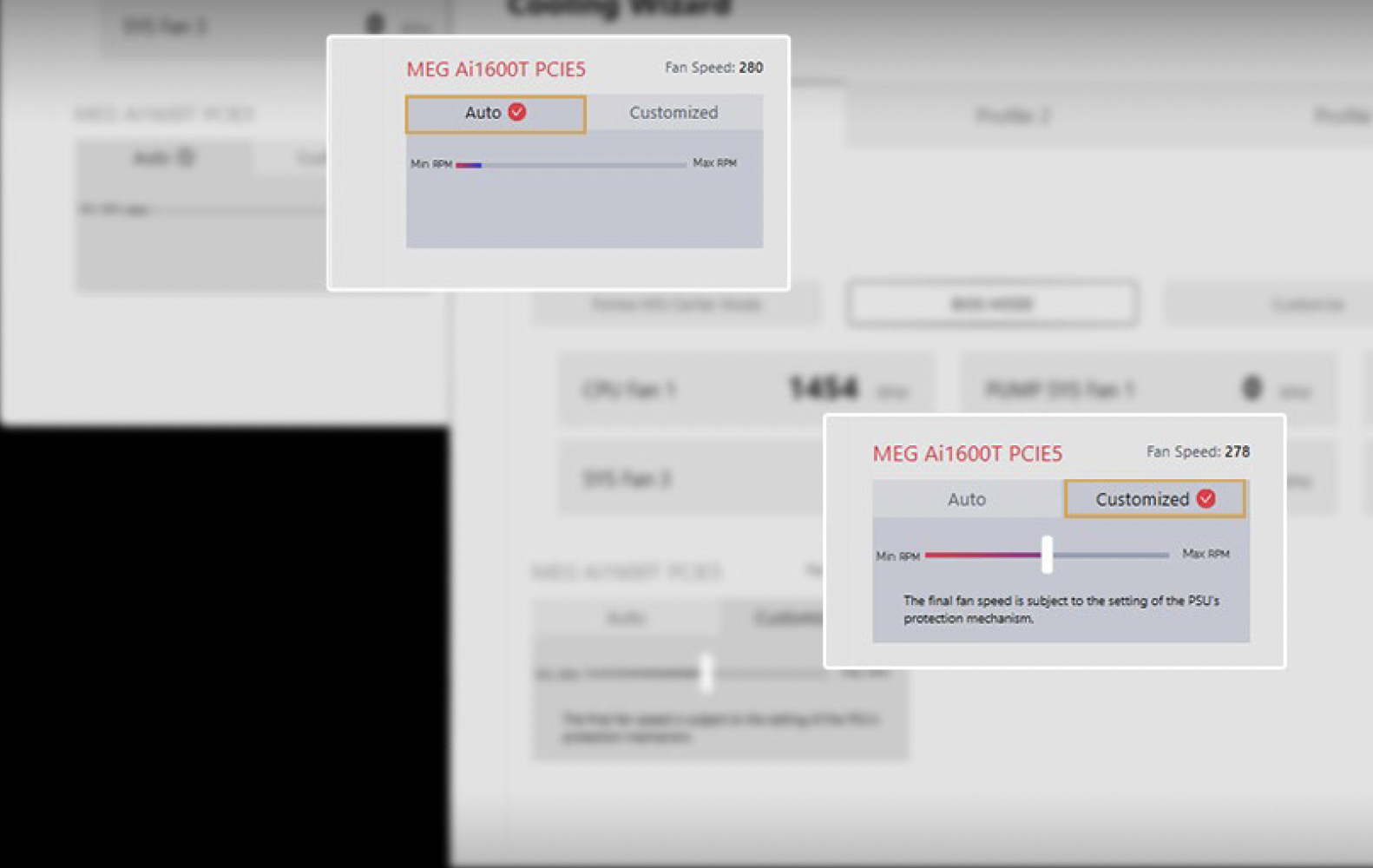
Additionally this software allows you to set up fixed fan speeds and to bypass the software completely if you wish. You can force the fan to run at the lowest possible speed if you wanted and clearly MSI have faith in their user base!
Of course as this is MSI they give you control over the ‘Mystic Light' effects. You can even use a ‘Rising Sun' profile which (in their own words) ‘Delivers a stunning display of radiance and beauty that elevates your setup'. Ok, then.
Quite honestly while I appreciate that these software packages add a little ‘interest level' to any product, I have never been a fan of installing unnecessary software packages into my Windows install. I am also not interested in controlling RGB or logging data on a power supply either, but I appreciate a select audience may very well like this. I have never had good experiences with MSI Dragon software either, and deinstalled in on my MSI ACE motherboard a long time ago.
For the purposes of our testing, the software was not installed at all and we tested the Ai1600T as it is supplied out of the box. We assume most people will do exactly the same thing and keep that USB C port free for something else.
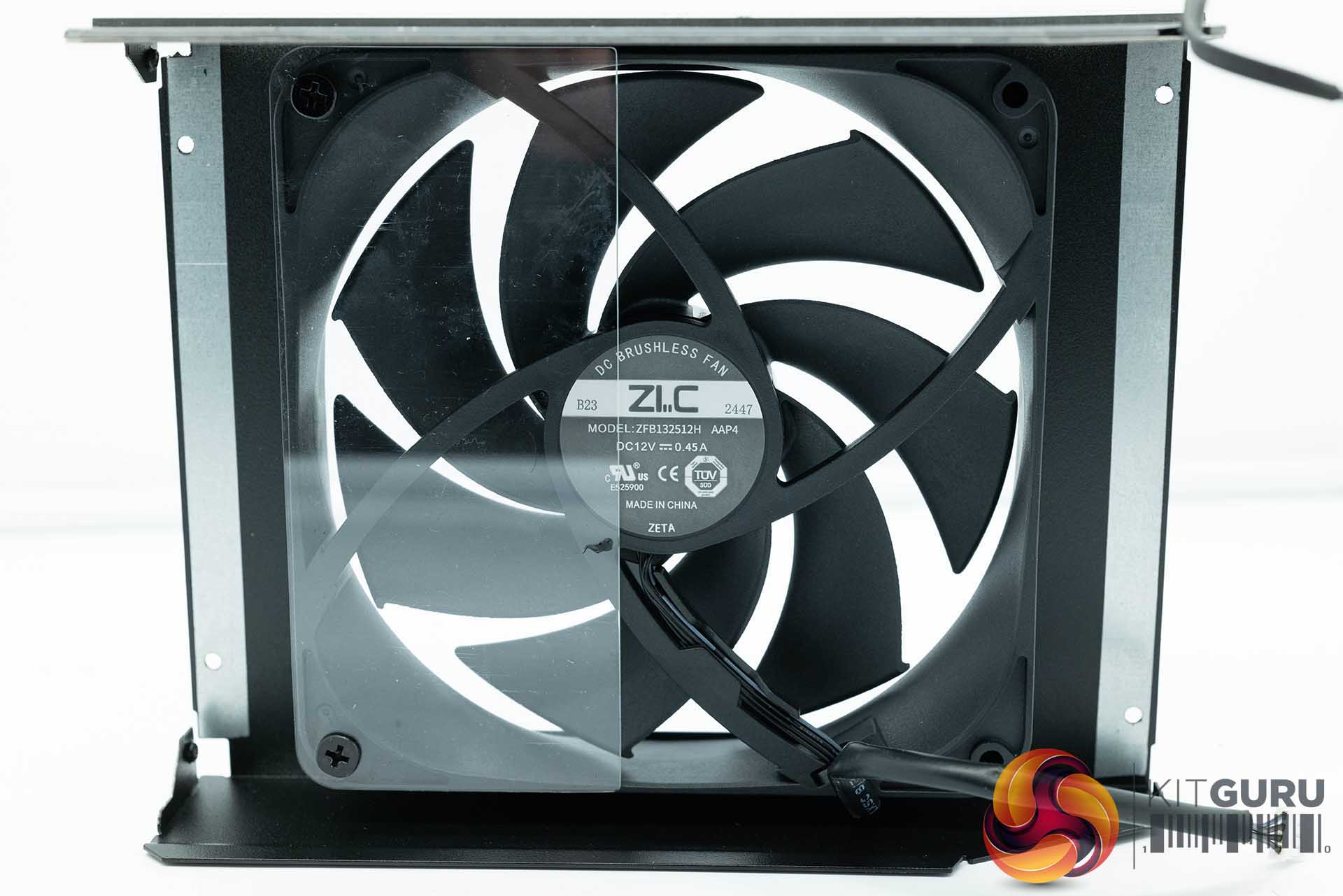
I was quite shocked to see this fan inside the flagship MSI MEG Ai1600T power supply. i have seen this fan in other power supplies I have reviewed before such as the Enermax PlatiGemini 1200W I tested back in April 2024 and other much cheaper units.
The fan in question is a 135mm ZETA ZIC fan. This is a double ball bearing design rated at 12V, 0.45A – model number ZFB132512H. Yes, this is a Double Ball Bearing unit, not a Fluid Dynamic bearing fan.
I am still waiting for feedback from MSI on their use of a Double Ball Bearing fan in this product, as based on the literature they sent me earlier, all the other units in this specific range are using Fluid Dynamic bearing fans. it seems like a very weird choice to me long term and I know DBB fans can get louder as the internal lubrication dries up over several years.
The more observant of you will have noticed there is a small piece of clear plastic covering a quarter of the fan (see above) which helps direct airflow across specific components underneath when properly installed above the PCB.
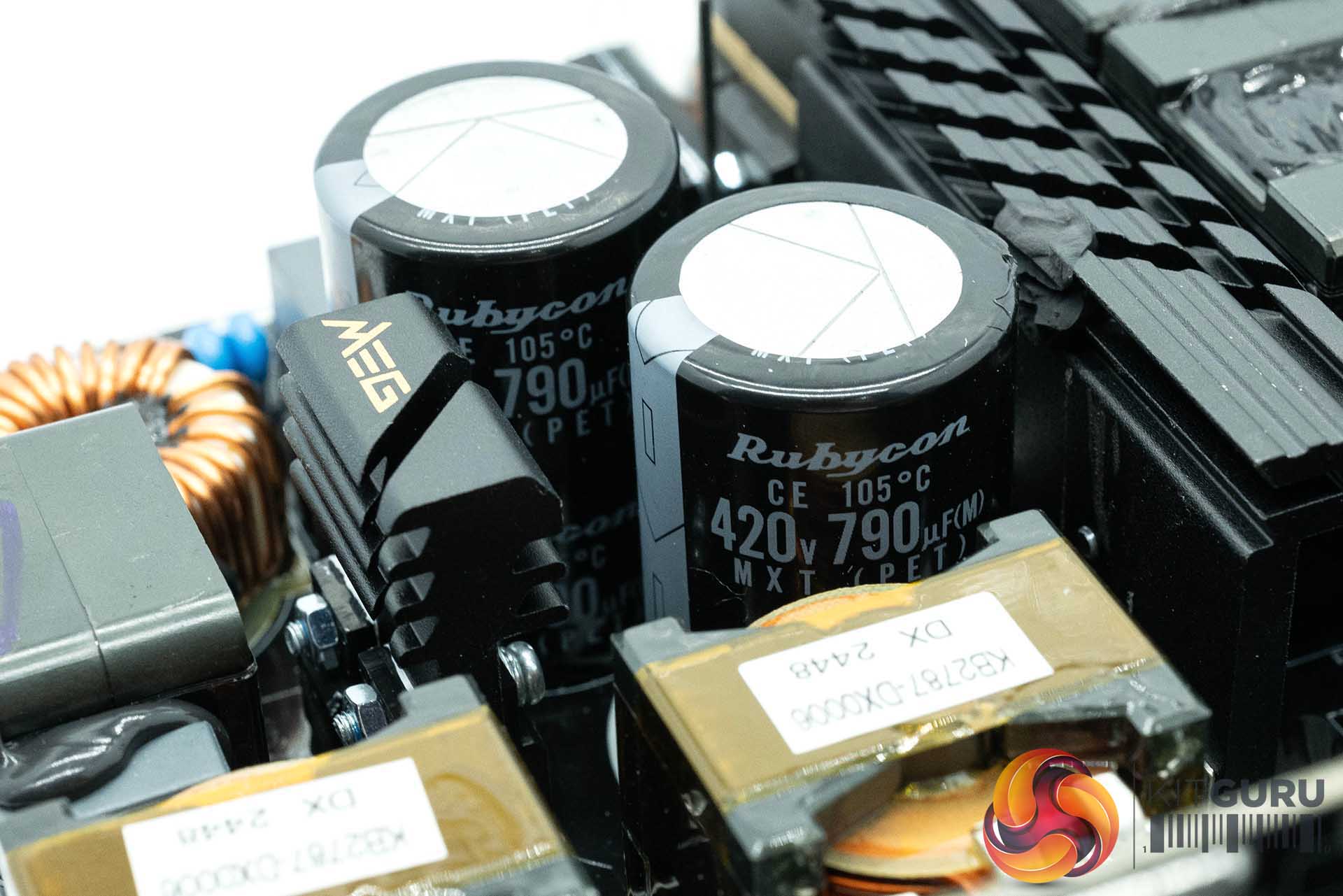
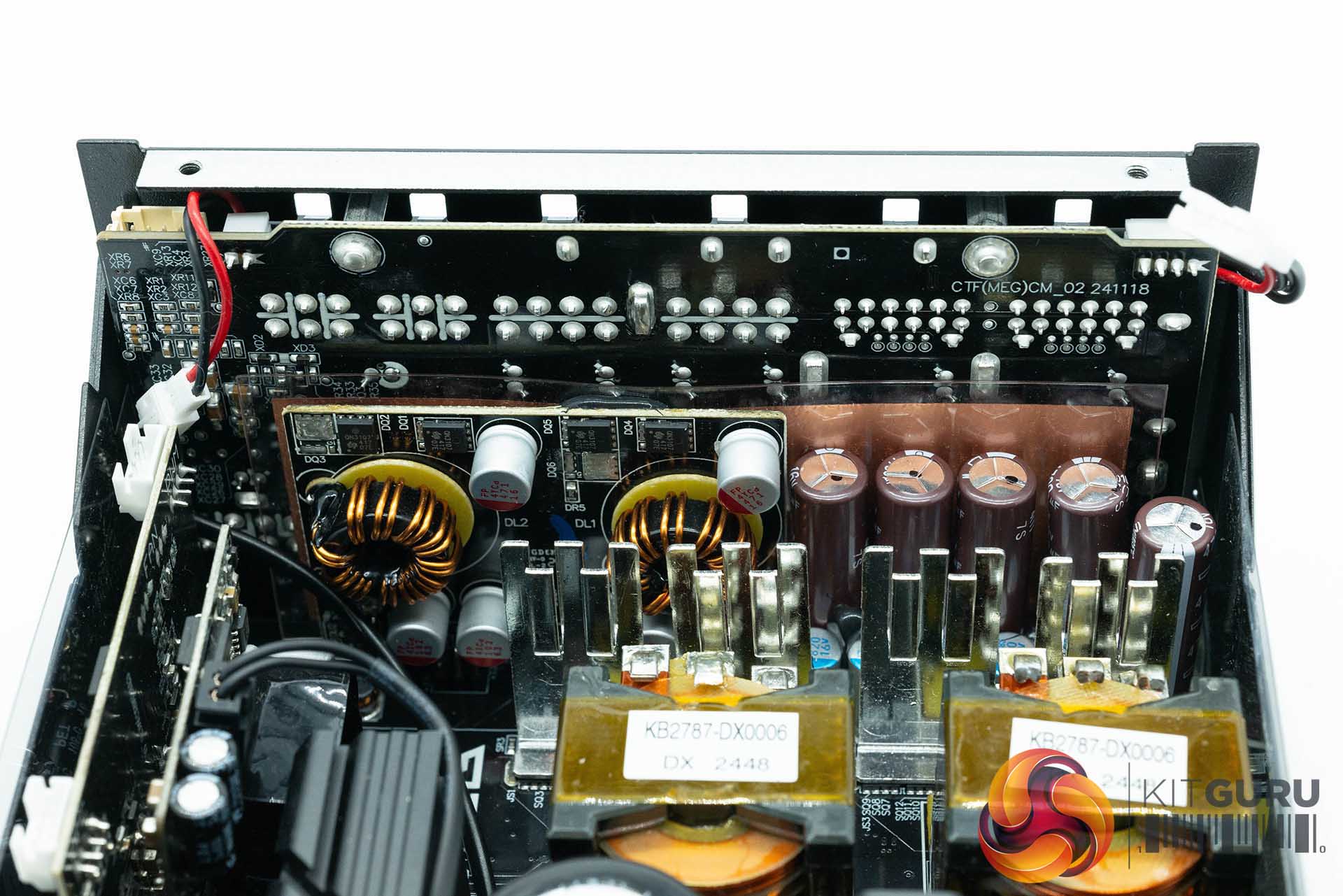
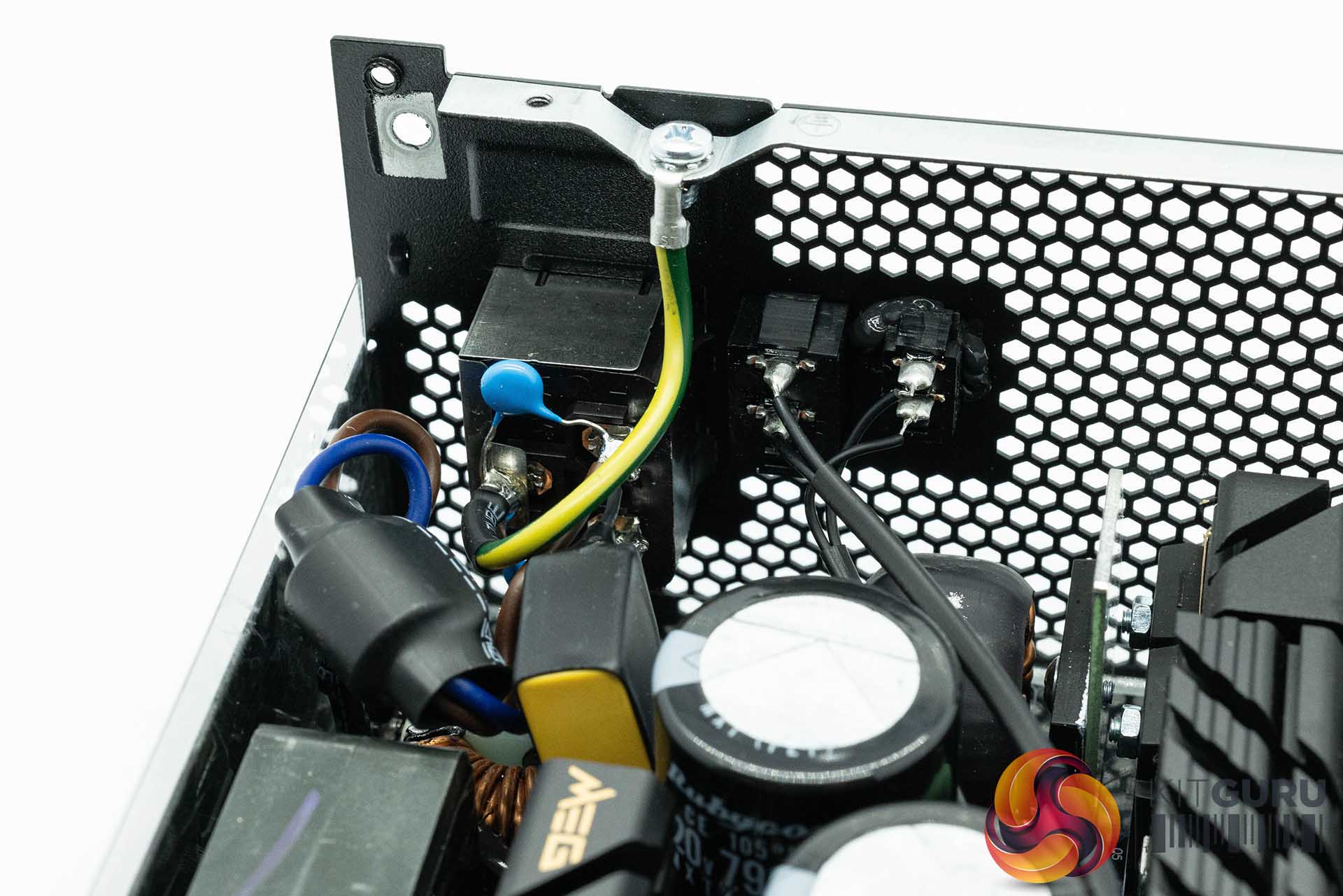
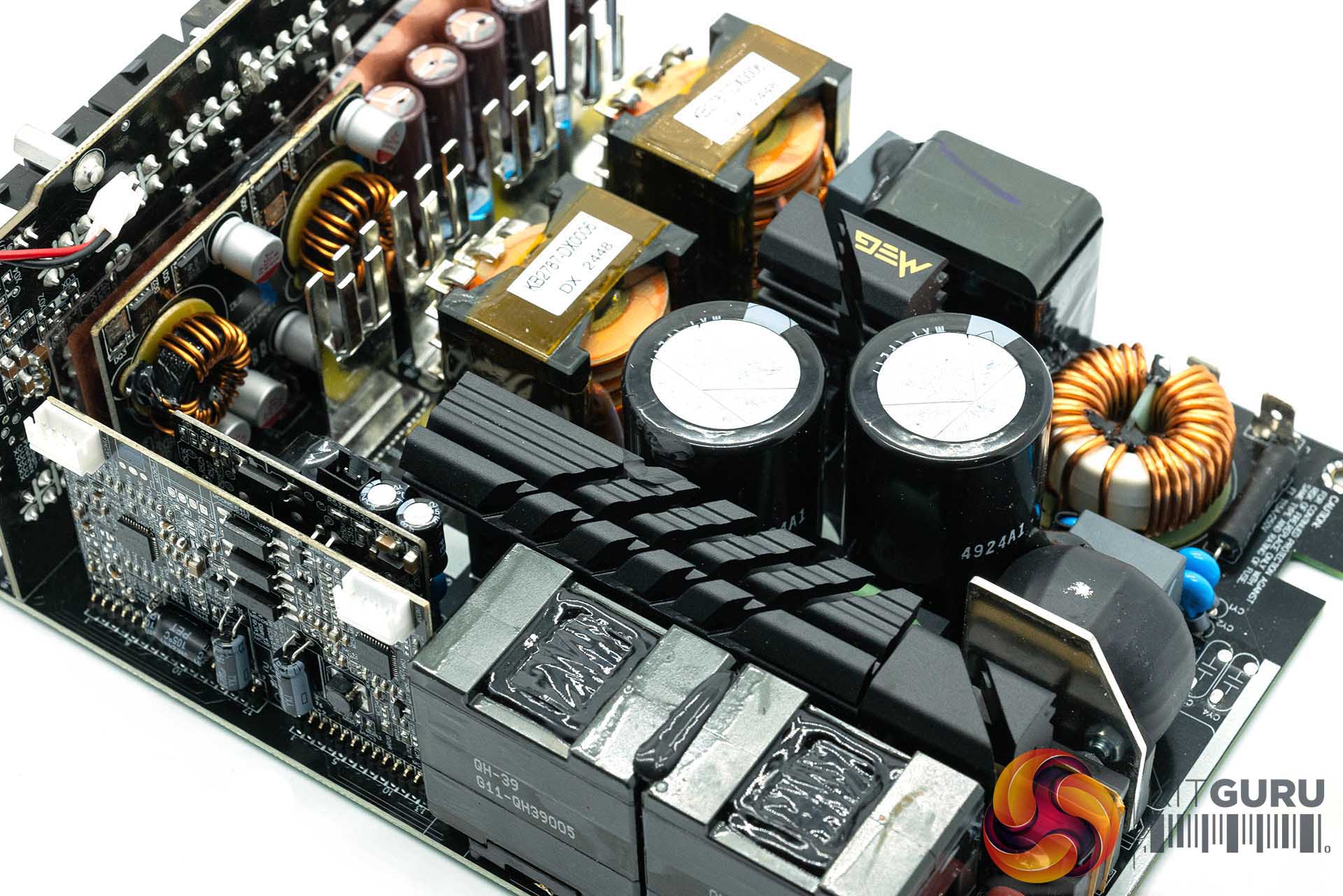
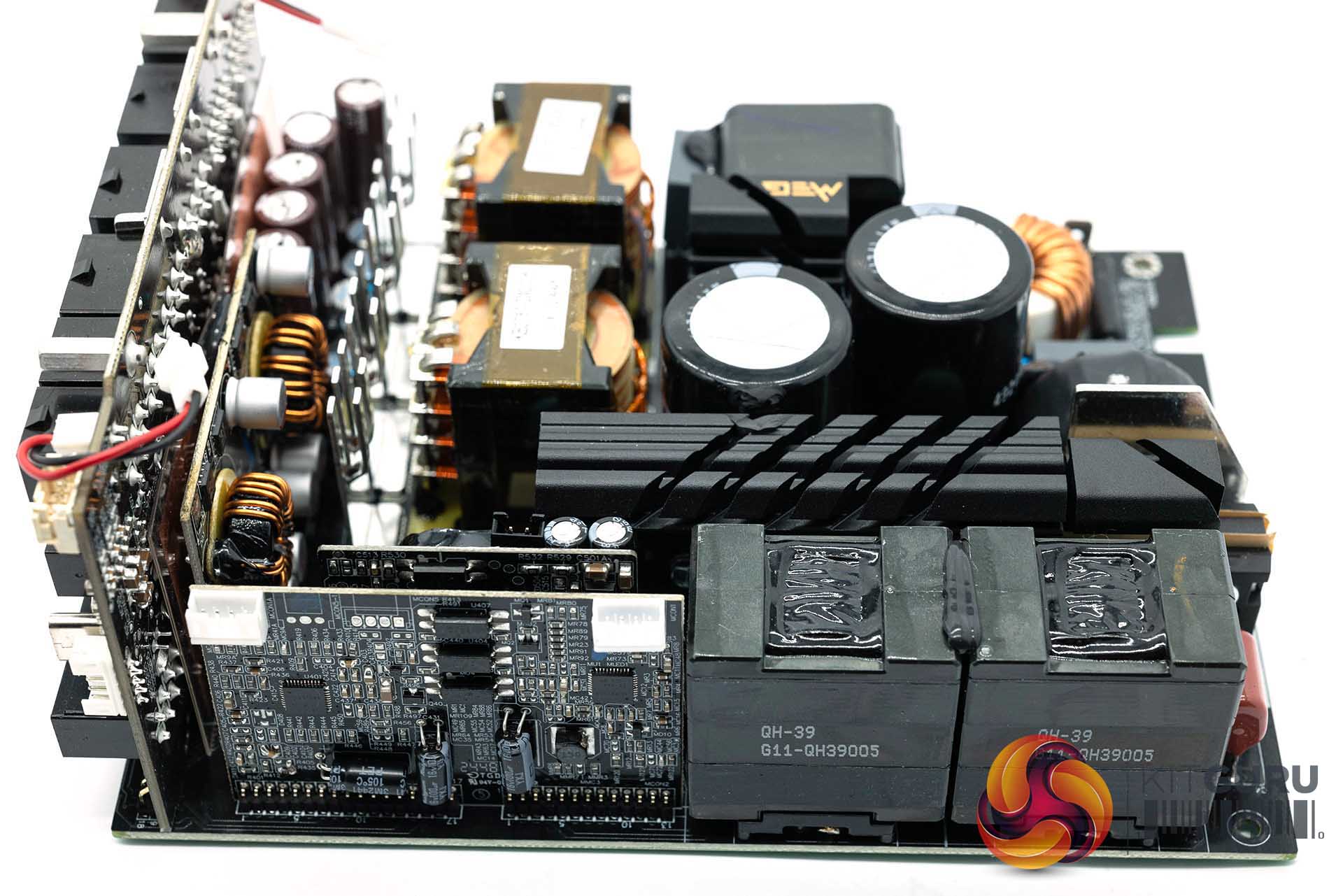
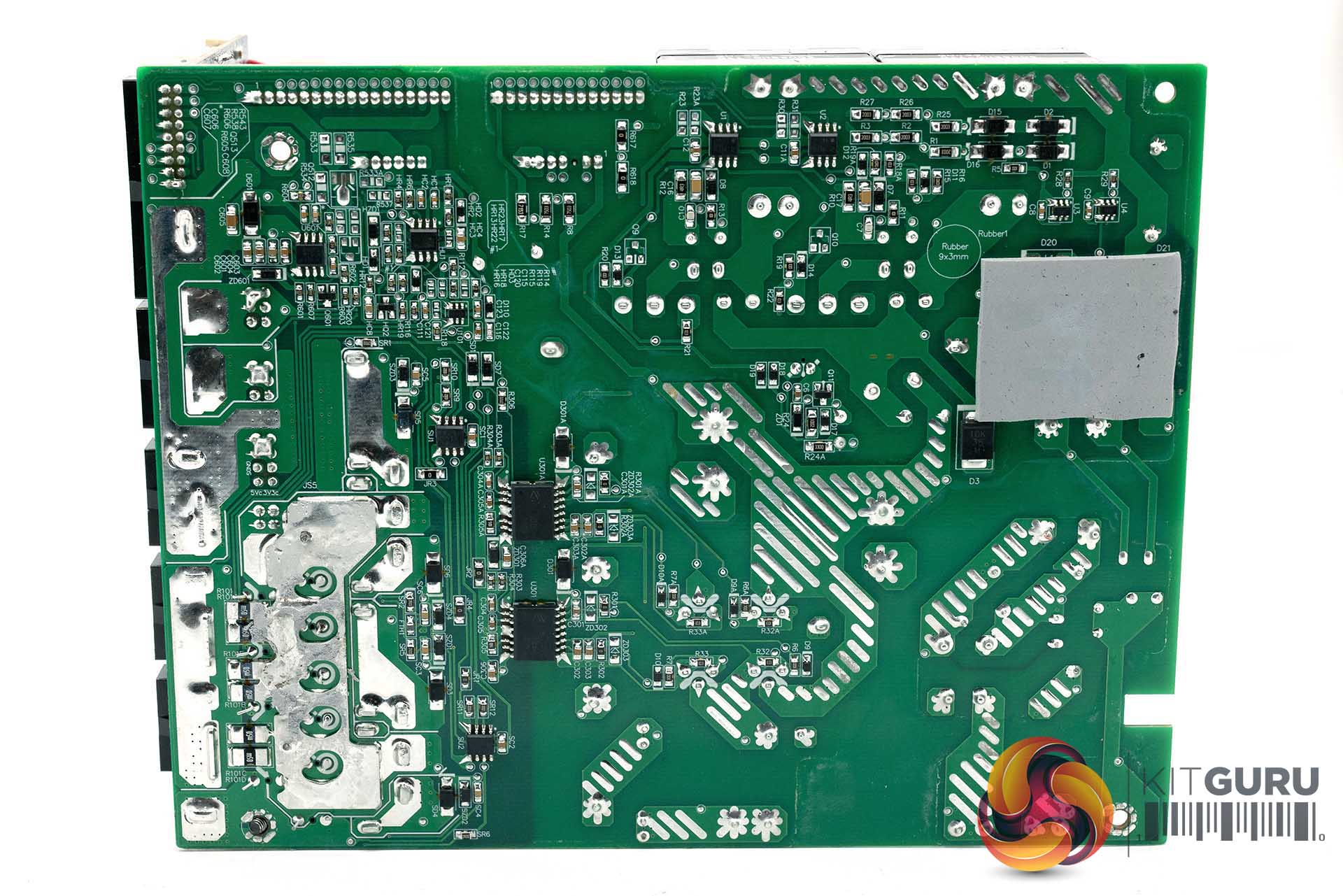
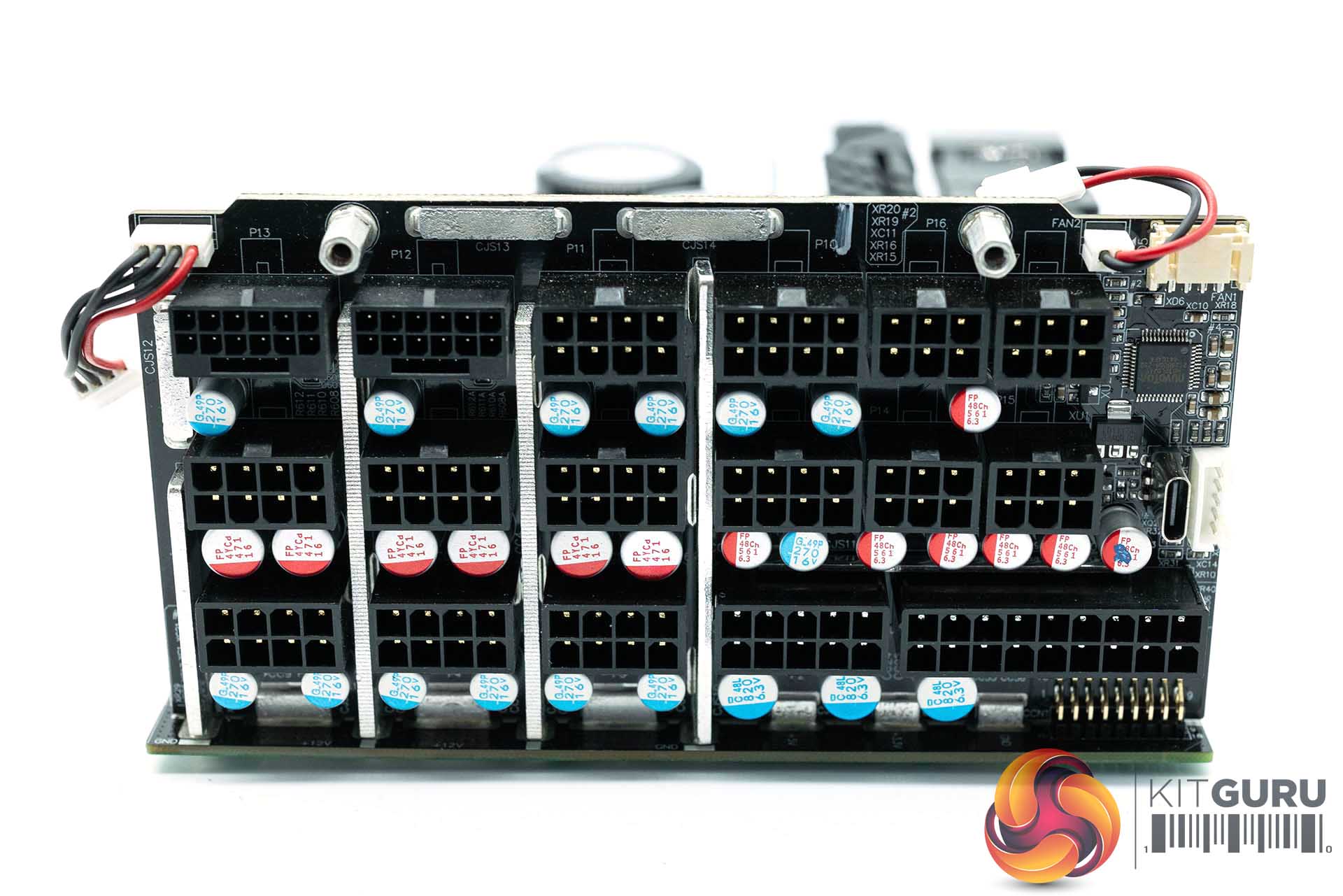
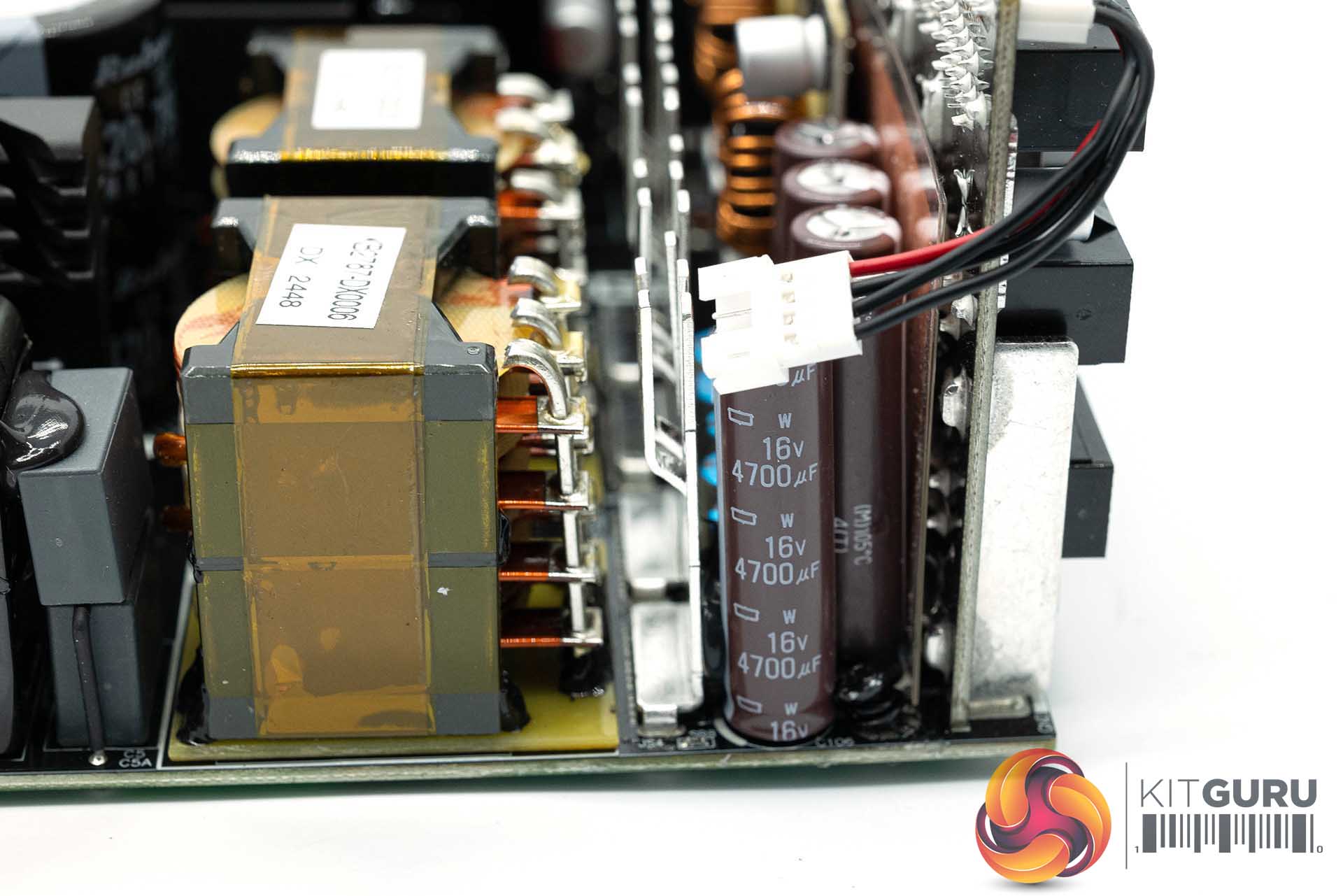
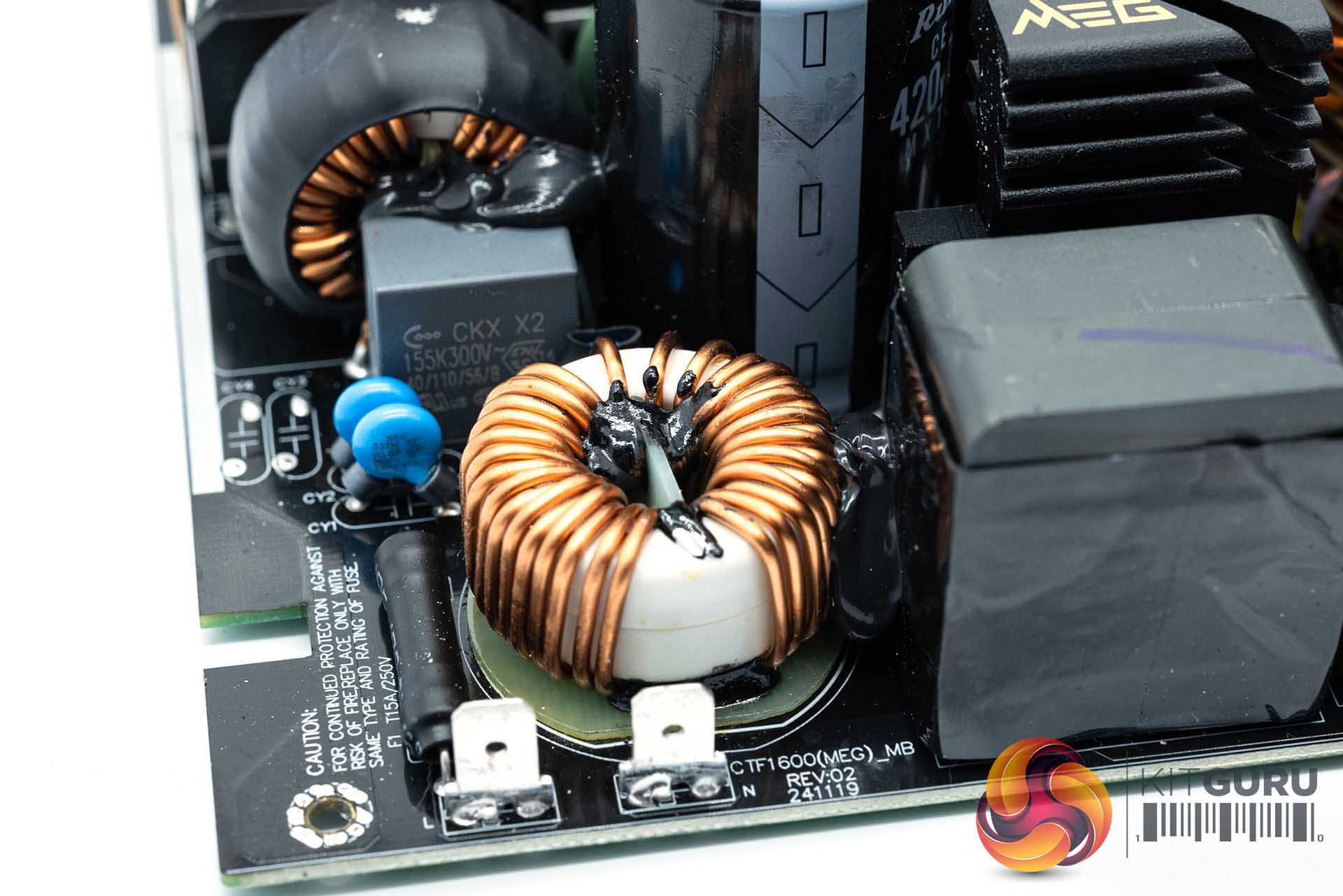
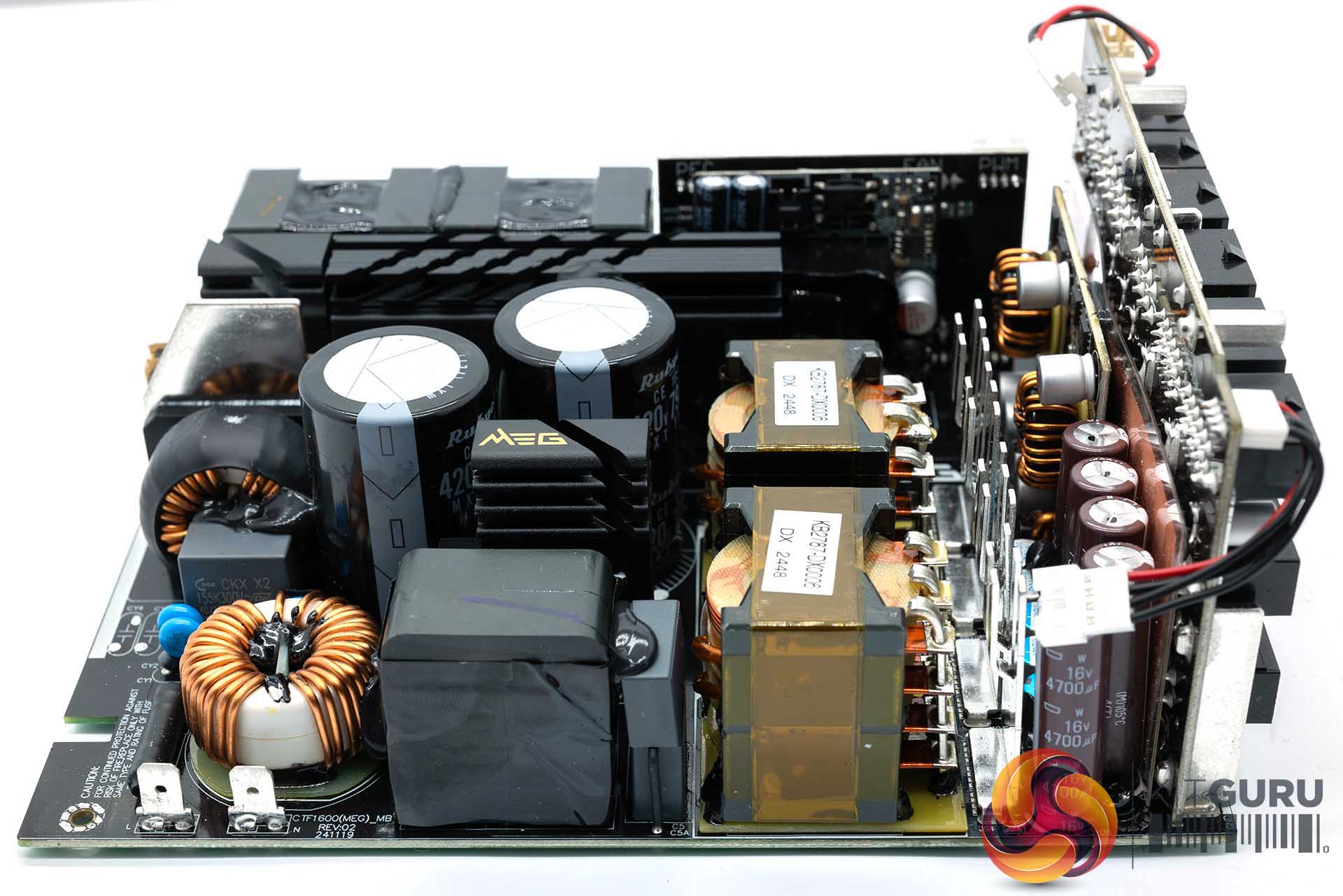
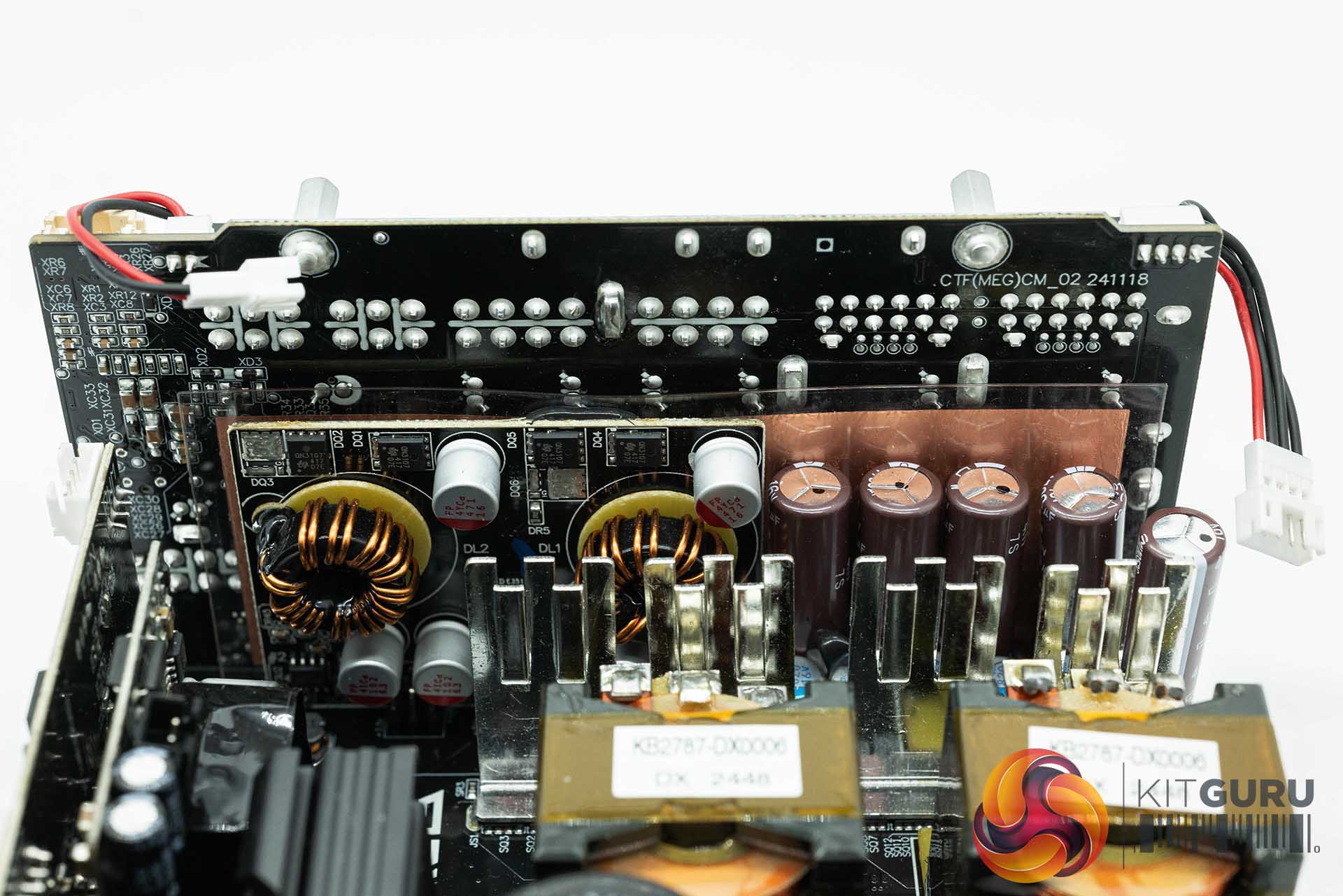
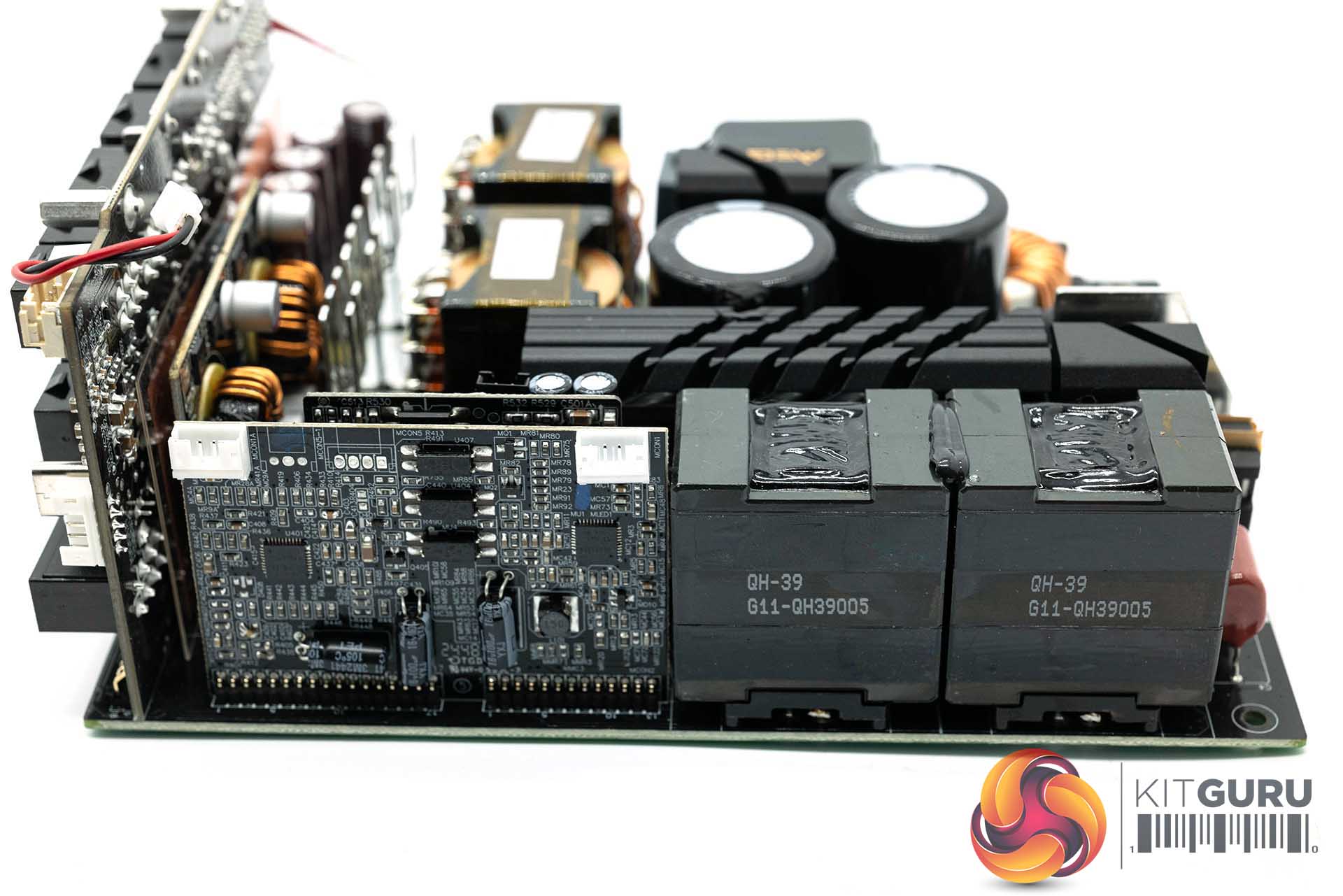
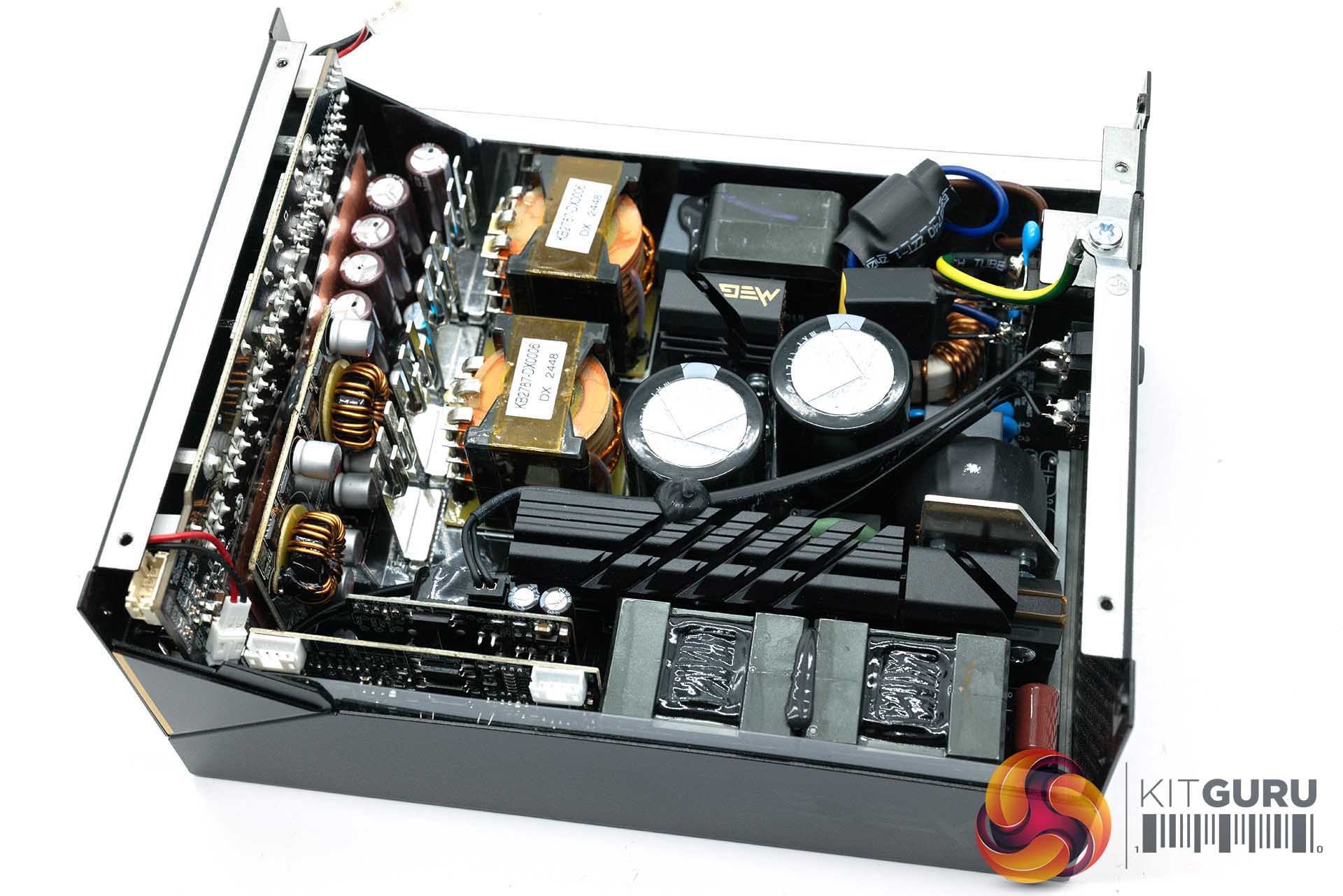
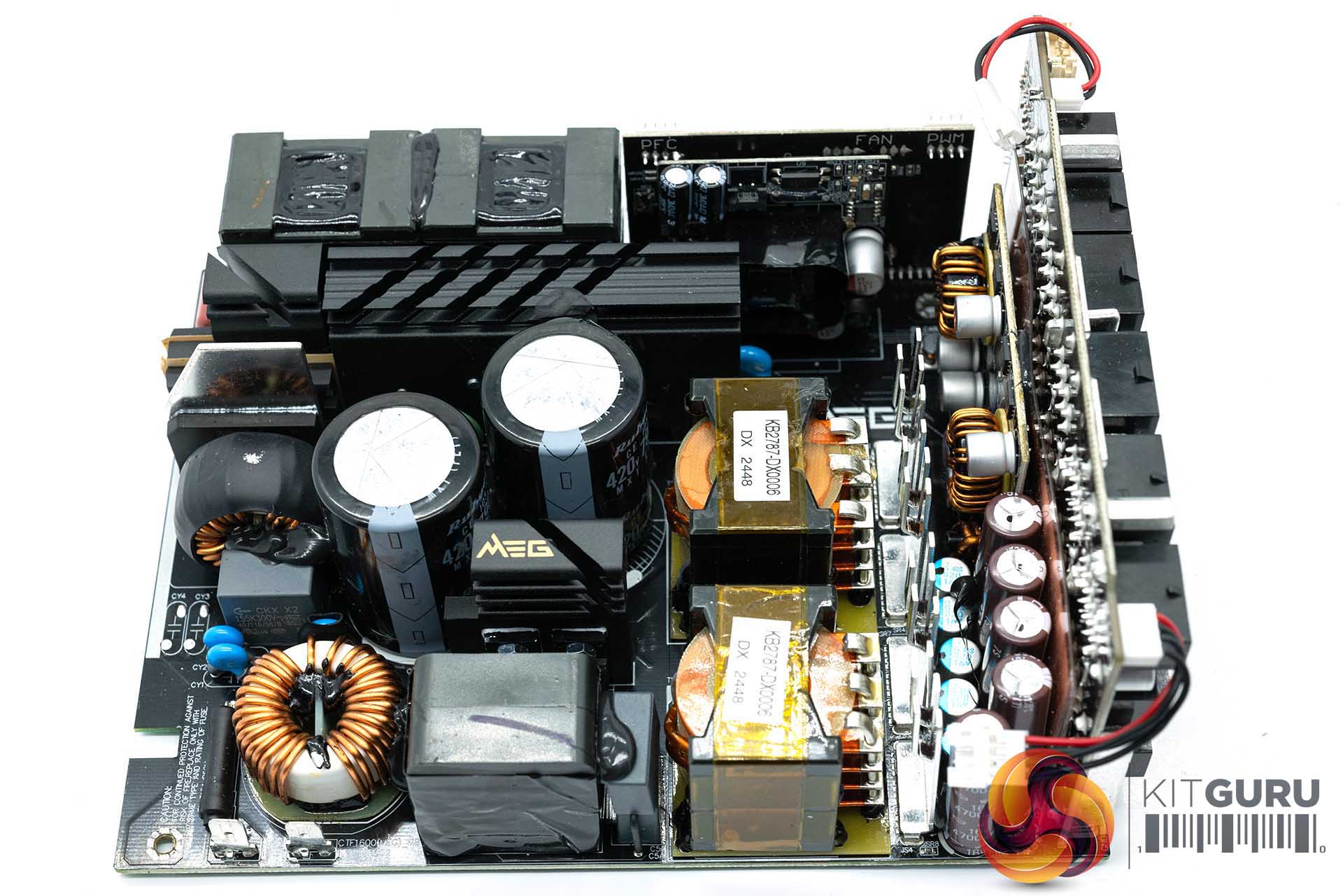
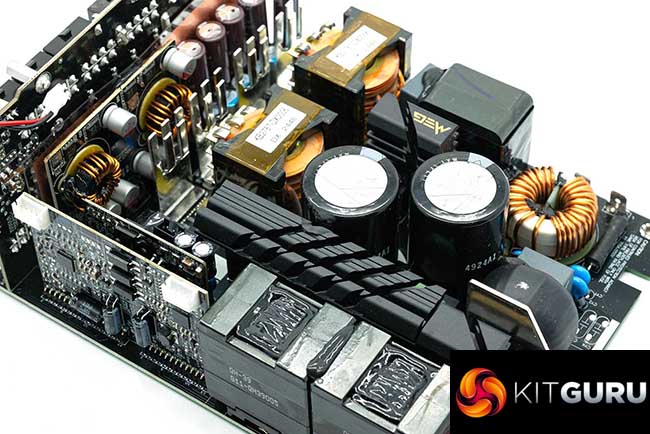
We can see that MSI are using CWT (Channel Well Technology) as their OEM partner of choice for this power supply. This is the CTF platform. Inside is a large PCB and it is pretty heavily populated across the board. They are using two parallel transformers instead of one, to save on circular space requirements.
The unit is not packed with heatsinks either, just a few strategically placed across the board. This is a fully digital design from CWT and adopts an MCU to control PFC and LLC. This architectural design helps to enhance accuracy and manages dynamic adjustments better as well to give more stable power delivery.
The 12V rail is generated via 12x FET's and are cooled by some heatsinks you see in the gallery above. The primary rail feeds a pair of DC-DC converters to generate the minor rails. A single NTC thermistor is adopted to deal with high inrush currents.
Build quality is stellar throughout and the soldering on the PCB (in images above) is also of the highest standards. CWT have clearly been given a large budget from MSI to design this power supply so you can see high grade Japanese polymer and electrolytic capacitors all over the design.
The two primary caps are 105c Japanese branded from one of my favourite brands Rubycon – both are rated @ 420v 790uF for a total of 1580uF output. While these are serious capacitors, the output is a substantially lower than the Seasonic based TX1600 edition which was populated with three capacitors from Nippon Chemi Con in the primary stage – for a whopping 2460uF output (3x 820uF) (See HERE).
Correctly testing power supplies is a complex procedure and KitGuru have configured a test bench which can deliver up to a 2,000 watt DC load. Due to public requests we have changed our temperature settings recently – previously we rated with ambient temperatures at 25C, we have increased ambient temperatures by 10c (to 35c) in our environment to greater reflect warmer internal chassis conditions.
We use combinations of the following hardware:
• SunMoon SM-268
• CSI3710A Programmable DC load (+3.3V and +5V outputs)
• CSI3711A Programmable DC load (+12V1, +12V2, +12V3, and +12V4)
• Extech Power Analyzer
• Extech MultiMaster MM570 digital multimeter
• Extech digital sound level meter
• Digital oscilloscope (20M S/s with 12 Bit ADC)
• Variable Autotransformer, 1.4 KVA
12V output is single rail for our testing.
|
DC Output Load Regulation
|
||||||||||
|
Combined DC Load |
+3.3V
|
+5V
|
+12V
|
+5VSB
|
-12V | |||||
|
A
|
V
|
A
|
V
|
A
|
V
|
A
|
V
|
A | V | |
|
500W
|
7.63
|
3.33
|
8.82
|
5.02
|
36.05
|
12.08
|
1.5
|
5.01
|
0.30 | -12.01 |
|
750W
|
12.63
|
3.30
|
14.12
|
5.02
|
52.06
|
12.06
|
2.0
|
5.01
|
0.30 | -12.01 |
|
1000W
|
17.75
|
3.29
|
20.00
|
5.01
|
72.25
|
12.04
|
2.5
|
5.01
|
0.50 | -12.01 |
| 1250W | 18.84 | 3.28 | 24.04 | 5.01 | 90.14 | 12.02 | 3.0 | 5.00 | 0.60 | -12.01 |
|
1500W
|
18.87
|
3.26
|
22.64
|
4.99
|
115.90
|
12.00
|
3.5
|
5.00
|
0.80 | -12.01 |
| 1600W | 10.00 | 3.29 | 10.00 | 5.01 | 125.00 | 11.99 | 3.5 | 5.00 | 0.80 | -12.00 |
Load regulation is a bit mixed, with both +12V and +5V rails delivering a good set of results, but the +3.3V rail was not as tight as I would have hoped. Especially from a hugely expensive flagship model such as this one.
Next we want to try Cross Loading. This basically means loads which are not balanced. If a PC for instance needs 500W on the +12V outputs but something like 30W via the combined 3.3V and +5V outputs then the voltage regulation can fluctuate badly.
| Cross Load Testing | +3.3V | +5V | +12V | -12V | +5VSB | |||||
| A | V | A | V | A | V | A | V | A | V | |
| 1150W | 3.0 | 3.33 | 2.0 | 5.01 | 92.0 | 12.02 | 0.2 | -12.01 | 0.50 | 5.01 |
| 250W | 20.0 | 3.26 | 24.0 | 4.99 | 5.0 | 12.05 | 0.2 | -12.00 | 0.50 | 5.01 |
The MEG Ai1600T Power Supply delivered decent results overall, but again +3.3V rail was showing some significant droop.
We then used an oscilloscope to measure AC ripple and noise present on the DC outputs. We set the oscilloscope time base to check for AC ripple at both high and low ends of the spectrum.
ATX12V V2.2 specification for DC output ripple and noise is defined in the ATX 12V power supply design guide.
|
ATX12V Ver 2.2 Noise/Ripple Tolerance
|
|
|
Output
|
Ripple (mV p-p)
|
|
+3.3V
|
50
|
|
+5V
|
50
|
|
+12V1
|
120
|
|
+12V2
|
120
|
|
-12V
|
120
|
|
+5VSB
|
50
|
Obviously when measuring AC noise and ripple on the DC outputs the cleaner (less recorded) means we have a better end result. We measured this AC signal amplitude to see how closely the unit complied with the ATX standard.
| AC Ripple (mV p-p) | ||||
| DC Load | +3.3V | +5V | +12V | 5VSB |
| 500W | 8 | 8 | 10 | 7 |
| 750W | 10 | 11 | 15 | 11 |
| 1000W | 13 | 12 | 18 | 13 |
| 1250W | 15 | 12 | 23 | 14 |
| 1500W | 18 | 13 | 27 | 17 |
| 1600W | 22 | 14 | 34 | 18 |
These are very good ripple suppression results across both primary and minor rails. In all honesty however I was a little disappointed overall based on the purely digital platform implementation and the huge price point, but more on this in our closing thoughts.
|
Efficiency (%)
|
|
|
500W
|
93.92
|
|
750W
|
95.82
|
|
1000W
|
96.27
|
|
1250W
|
95.53
|
| 1500W | 94.66 |
| 1600W | 94.44 |
Overall efficiency is superb, peaking close to 96.3% at around 45-50% load.
We take the issue of noise very seriously at KitGuru and this is why we have built a special home brew system as a reference point when we test noise levels of various components. Why do this? Well this means we can eliminate secondary noise pollution in the test room and concentrate on components we are testing. It also brings us slightly closer to industry standards, such as DIN 45635.
Today to test the power supply we have taken it into our acoustics room environment and have set our Digital Sound Level Noise Decibel Meter Style 2 one meter away from the unit. We have no other fans running so we can effectively measure just the noise from the unit itself.
As this can be a little confusing for people, here are various dBa ratings in with real world situations to help describe the various levels.
KitGuru noise guide
10dBA – Normal Breathing/Rustling Leaves
20-25dBA – Whisper
30dBA – High Quality Computer fan
40dBA – A Bubbling Brook, or a Refrigerator
50dBA – Normal Conversation
60dBA – Laughter
70dBA – Vacuum Cleaner or Hairdryer
80dBA – City Traffic or a Garbage Disposal
90dBA – Motorcycle or Lawnmower
100dBA – MP3 Player at maximum output
110dBA – Orchestra
120dBA – Front row rock concert/Jet Engine
130dBA – Threshold of Pain
140dBA – Military Jet takeoff/Gunshot (close range)
160dBA – Instant Perforation of eardrum
|
Noise (dBA)
|
|
|
500W
|
<28.0
|
|
750W
|
<28.0
|
|
1000W
|
<28.0
|
|
1250W
|
30.2
|
| 1500W | 31.7 |
| 1600W | 33.7 |
I did discuss the CWT/MSI adoption of a dual ball bearing fan earlier in the review – it is unusual in 2025 to see this inside a flagship design rather than a FDB fan. This unit however is very quiet given that it is a semi passive design and the fan didn't really start spinning until around 800 watts was demanded.
The fan profile is favouring a lower spin state even at higher loads. While I no longer have this power supply for direct comparison, the same fan in the Enermax PlatiGemini 1200W was much more active above 800 watt loads (HERE).
I am also quite surprised to note that this unit does not appear to have fan failure protection either. I know the Seasonic PX and TX1600 models ship with this.
|
Temperature (c)
|
||
|
Intake
|
Exhaust
|
|
|
500W
|
36
|
38
|
|
750W
|
37
|
43
|
|
1000W
|
42
|
47
|
|
1250W
|
46
|
53
|
|
1500W
|
48
|
57
|
| 1600W | 50 | 63 |
The highly efficient design and moderate airflow produce decent temperatures, although I feel if the fan was little more active above 1000 watts these would be noticeably better.
This has certainly been a very interesting review for me and it has taken a longer time than normal as I needed to look into some of the Ai1600T design implementations. The MSI MEG Ai1600T is their flagship model and clearly they put a lot of time and effort into this design with the help of Channel Well Technologies expertise. The presentation, packaging and overall aesthetics of the unit are class leading.
Initial thoughts are impressive – unboxing this power supply is an experience in itself. The box weighs an absolute ton, and the packaging is at the highest level. You feel like you are opening something very special indeed. While the power supply is quite long at 190mm, it is in fact noticeably shorter than many other 1600 watt power supplies we have tested in recent years – which can often measure 210mm.
Ai1600T build quality is stellar, the materials used on the chassis are substantial and engineered to the highest levels. I can't say i am a huge fan of the gold accenting myself, but this is very much going to be down to personal choice at the end of the day. We know Gold colours are very popular in the ASIAN market but overall, I would consider the quality of build and appearance at the highest possible levels regardless of my abhorrence for gold PC components.
The Ai1600T performs adequately well, but the +3.3V rail is a little disappointing in certain situations and when hit hard with a lot of amps it reacts in a loose manner. Not enough to cause any real life concerns to be fair, but it could have been set up a little better in my opinion. I was quite surprised to see this was the case from a high end flagship model.
Technically, this is where things get interesting for me.
While the performance of the unit is quite good we have to factor in the pricing. This is what will help form a buying decision after all for most people. Well maybe not actually if you are still reading a review of a power supply which cost more than my Ducati V4R insurance for the year.
When I was told the pricing, my jaw literally hit the desk. MSI are placing a MSRP on this unit of £600. Checking the UK on 14th February, MSI pointed me to AWD IT – who have it listed for £609.99 (HERE). But it is only on pre order at AWD IT at time of publication so you can't actually buy it there yet.
EBuyer have it on their store right now for £637.65 (HERE) and CCL have it listed for £643.99 (HERE). When I spoke to MSI about this inflated pricing, they did tell me that prices will be dropping soon to around the £600 (MSRP) mark. I don't exactly know when this might happen, or if it even will – but that is what I was told. If you are reading this review months after it was published and the pricing is still around the £640 mark then we can both agree that MSI weren't entirely accurate.
My other issue with this power supply is the fact it is both using a Dual Ball Bearing fan and has no fan failure protection. While I have not had first hand experience with the A1250GS, A1000GS or A850GS, the literature I received from MSI claims they are all equipped with Fluid Dynamic Bearing fans. Fluid Dynamic bearing fans generally are a better option in a power supply than Ball Bearing fans, because in the space of a few years the lubricant in DBB fans can tend to dry up, which leads to higher noise levels and potential failure. It won't always be the case of course as environmental factors will also play a part, but as a general rule, you really do want a FDB fan rather than a DBB fan.
Think of it like this – as I mentioned earlier, the MSI Ai1600T has a substantial 12 year warranty, so if the DBB fan starts to make more audible noise in a few years as the lubricant dries up, I am pretty sure MSI would not replace the unit for you. After all it would still be classed as a fully operational product. Let's say this did happen and you opened the unit inside a 12 year warranty and replaced the fan yourself, you would have basically voided the remainder of your 12 year warranty.
I have asked MSI for a statement on this, but have not yet received a reply. I will update this page if I get a statement.
The lack of fan failure protection strikes me as unusual and after doing some research it would appear that one of the most skilled power supply experts on the planet – ARIS (Hwbusters) already asked the engineer who built this power supply about this problem and he was told that they would look into this for future designs (SOURCE: HWBUSTERS).
In closing, with the overall very good, but not ground breaking Ai1600T performance characteristics, and the relatively disappointing +3.3V rail performance, paired up with potential fan issues mentioned above it is hard to recommend this product without reservation. The kicker for me is the somewhat insane pricing in the UK of £640 ($805 dollars to our American friends reading this). I don't quite know the market MSI are targeting with this power supply, but to be honest, I would have preferred if they would have spent less time on the software development and RGB nonsense and focused a little more on some critical tuning of the unit which would have helped it score higher in our technical tests.
Pros:
- Class leading build quality.
- Very quiet operation.
- 12V Tight load regulation.
- Ripple suppression is pretty good.
- 12 Year Warranty.
- superb efficiency results.
- You might like RGB and software install.
Cons:
- long term double ball bearing fan concerns.
- 3.3V rail could be better.
- No fan Failure protection.
- ‘Ai' branding. No its not constantly adapting via algorithms, its a power supply.
- How much?
- You might hate RGB and software install.
Kitguru says: The Ai1600T is a good power supply that deserves consideration. With a high retail price of £640 in the UK and some concerns mentioned in the full review we can only offer it a reserved recommendation.