KitGuru KitGuru.net – Tech News | Hardware News | Hardware Reviews | IOS | Mobile | Gaming | Graphics Cards


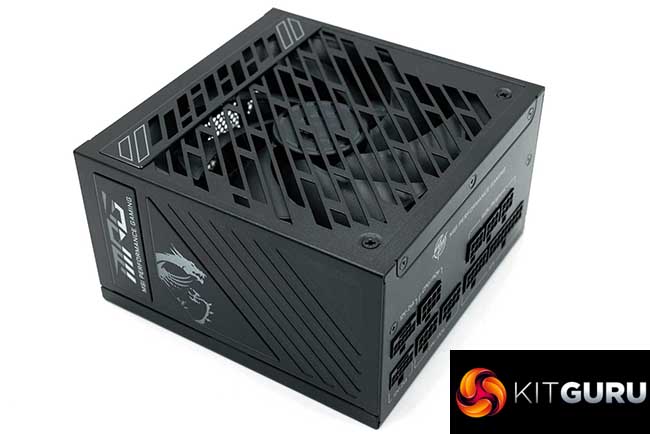
Today we take a look at another new power supply in the MSI catalogue – the MPG A1000GS. This PCIE5 ATX v3.1 supply is fully modular, and is 80 Plus and Cybenetics gold certified. Is this a unit you want to be shortlisting for a new build in 2025? Let's find out.
While the last flagship MSI power supply I looked at cost a staggering £600 (MEG Ai1600T – review HERE), the MPG A1000GS I am reviewing today has an more palatable MSRP of £184.99. Checking pricing online as we go to publication this indeed appears to be the case (HERE). MSI are including two native 12V 2×6 connectors to support the new range of RTX 50 series graphics cards (although one is surely enough for a 1000W PSU). This power supply has a power excursion rating of 235% and is PCIe 5.1/ATX 3.1 ready.
The OEM partner of choice for this power supply is CWT based on the CTE platform.
This power supply falls into the mid tier of a ‘triangle rating system' inside documentation that MSI sent us. I think this is worth a little clarification today as I had so much to discuss regarding the Ai1600T in the previous review, I did not dwell on this at all.
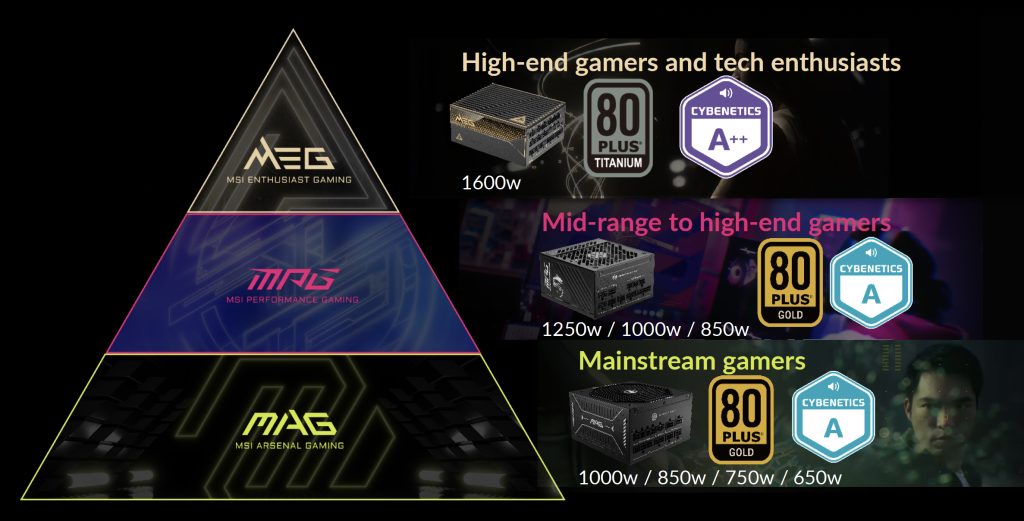
So, for clarity, the ‘MEG' range is ‘Enthusiast Gaming' sector in the high end, with the aforementioned £600 Ai1600T filling that slot. The supply we are testing today falls into the MPG ‘Performance Gaming' sector and the lower end 1000w/850w/750w/650w units fill the MAG ‘Arsenal Gaming' sector.
MSI MPG A1000GS Overview:
- Supports Nvidia® GeForce RTXTM 50 series graphics cards
- 2 x native 12V-2×6 connector
- Dual-color 12V-2×6 cable
- 80 PLUS Gold certified
- Optimized the sound level
- 100% all Server-grade 105oC capacitor
- Embossed Jacket Cables, the cables are more bending and routing
- Industrial level protection with OCP/ OTP/ OPP/ SCP/ OVP/ UVP/ SIP/ NLO
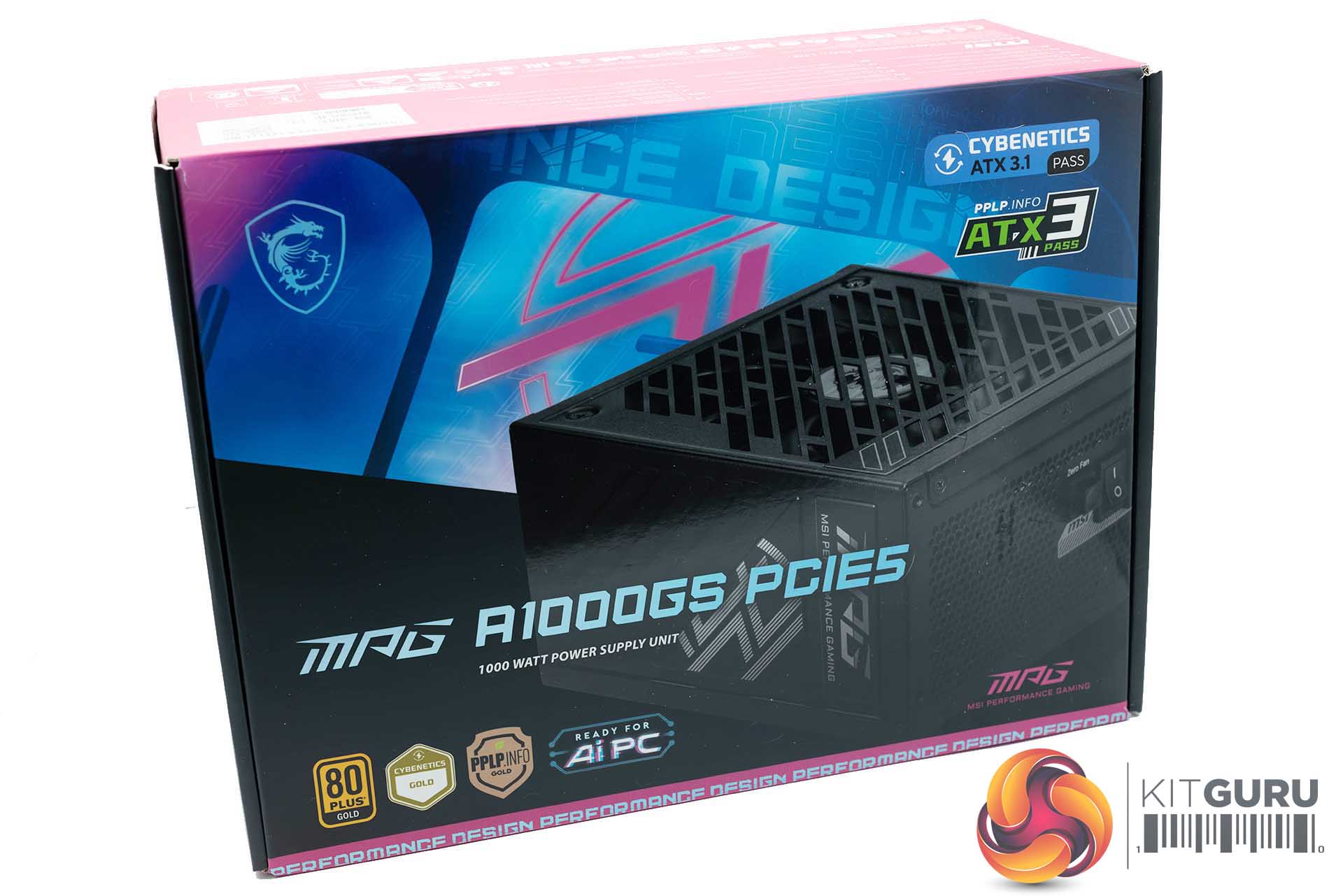
The MPG A1000GS arrives in a very colourful box with a high resolution image of the product taking centerstage. A list of Gold rated certifications are listed bottom left alongside a ‘Ready for Ai PC' badge. Not sure exactly what that means, but right now ‘Ai' is the buzzword that companies love to focus on regardless of the product.
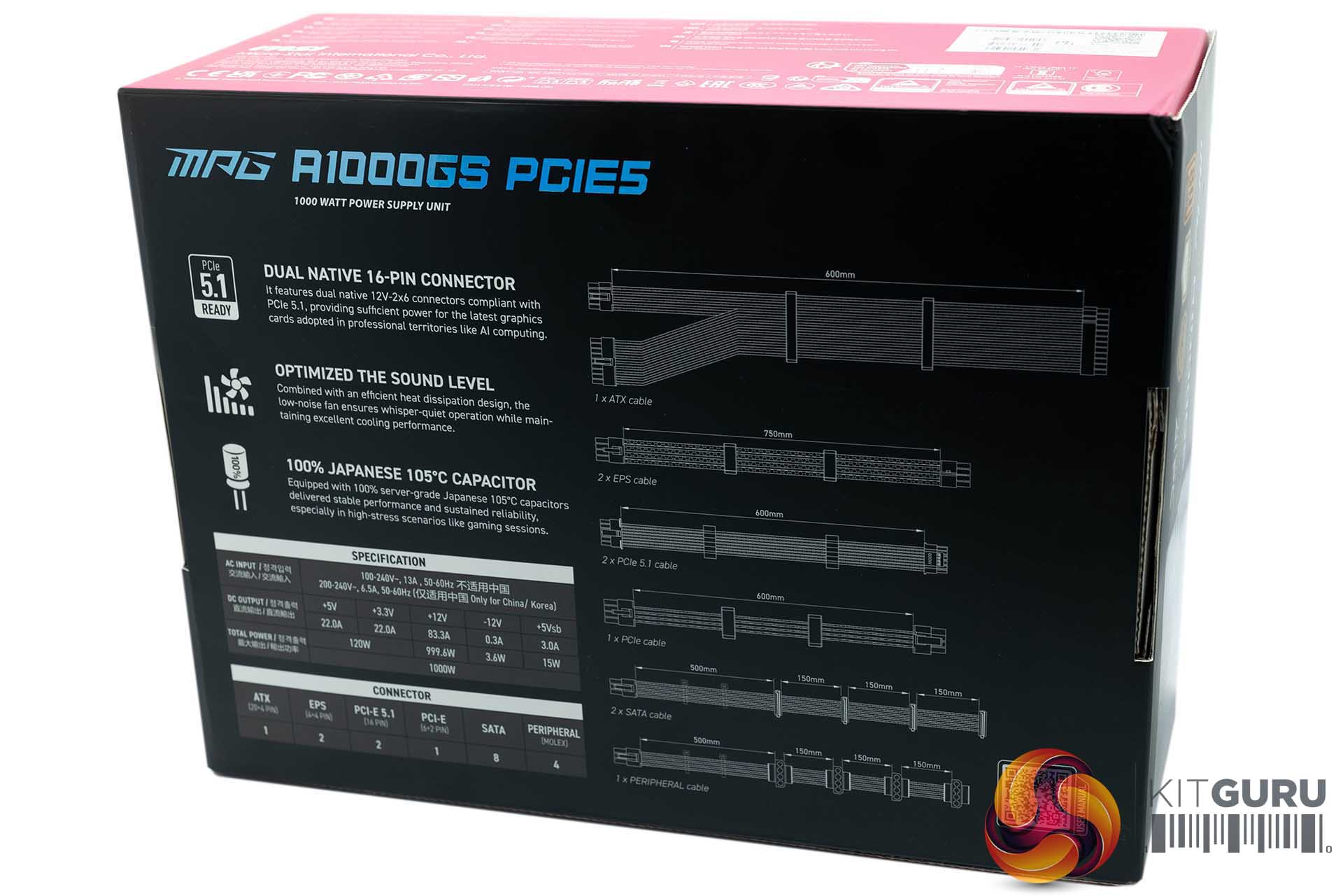
The rear of the box highlights the 105c Japanese Capacitors, ‘optimised sound levels' and dual native 16 pin connectors.
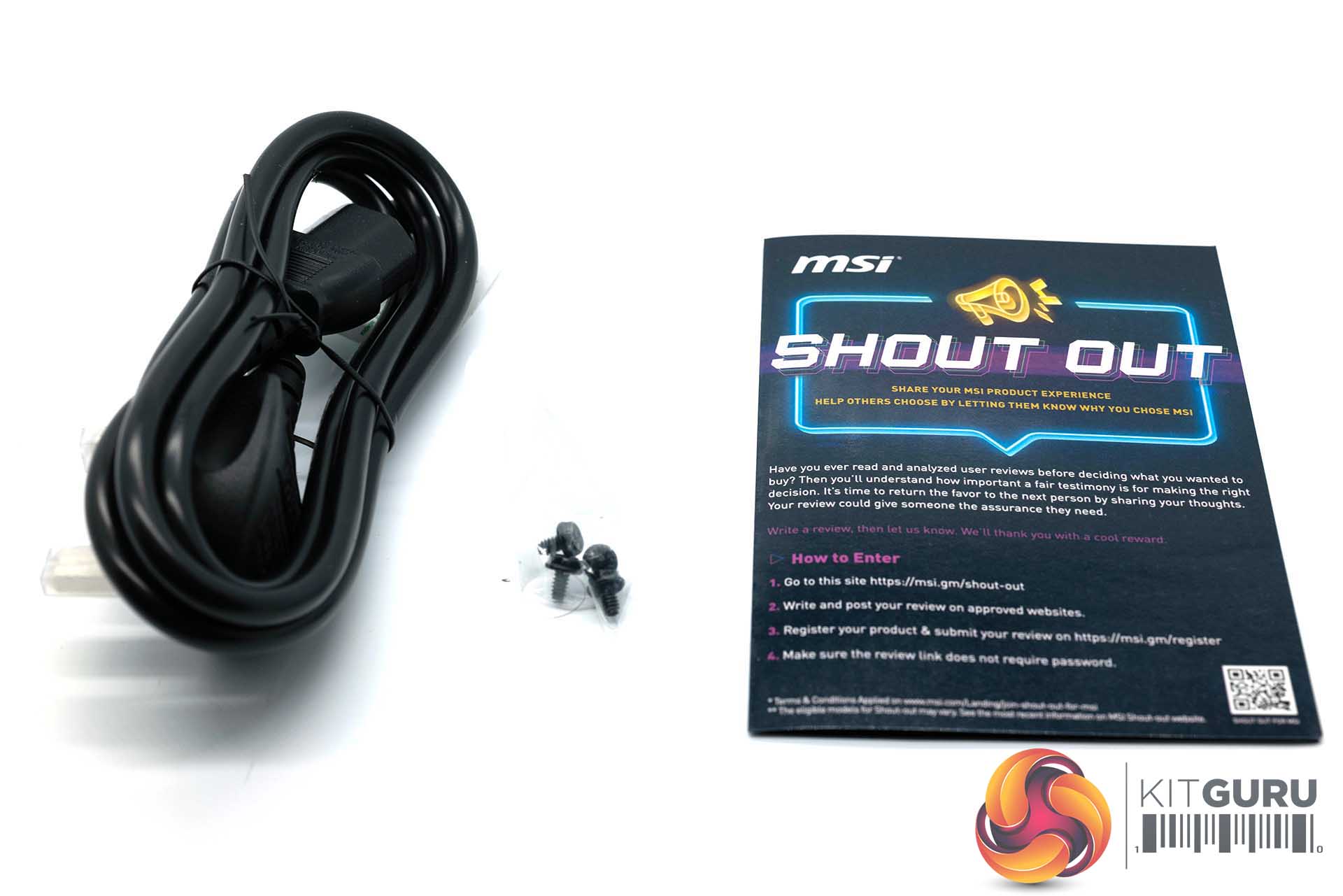
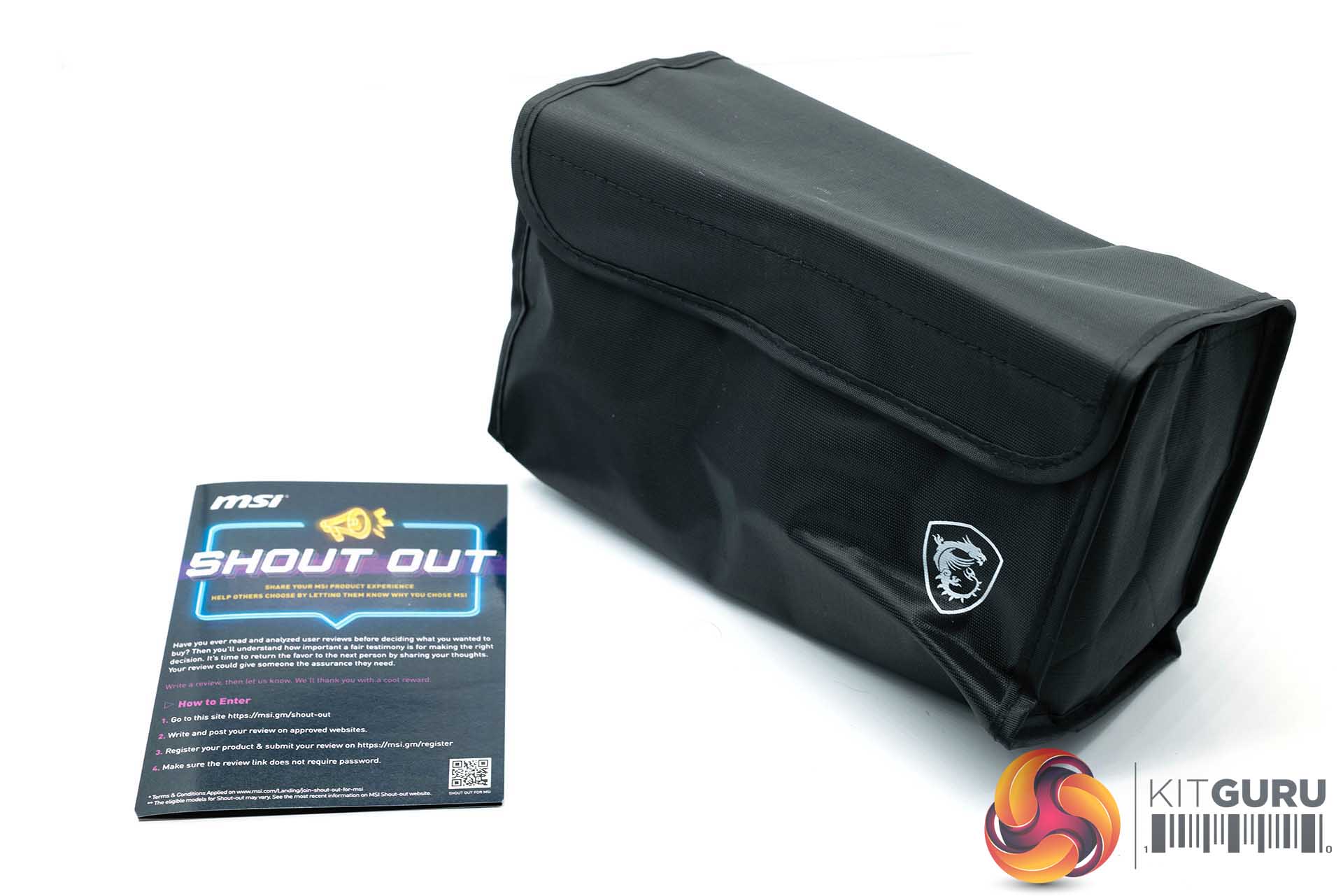
Inside the box is a power cable, mounting screws, some literature and a bag of power cables.
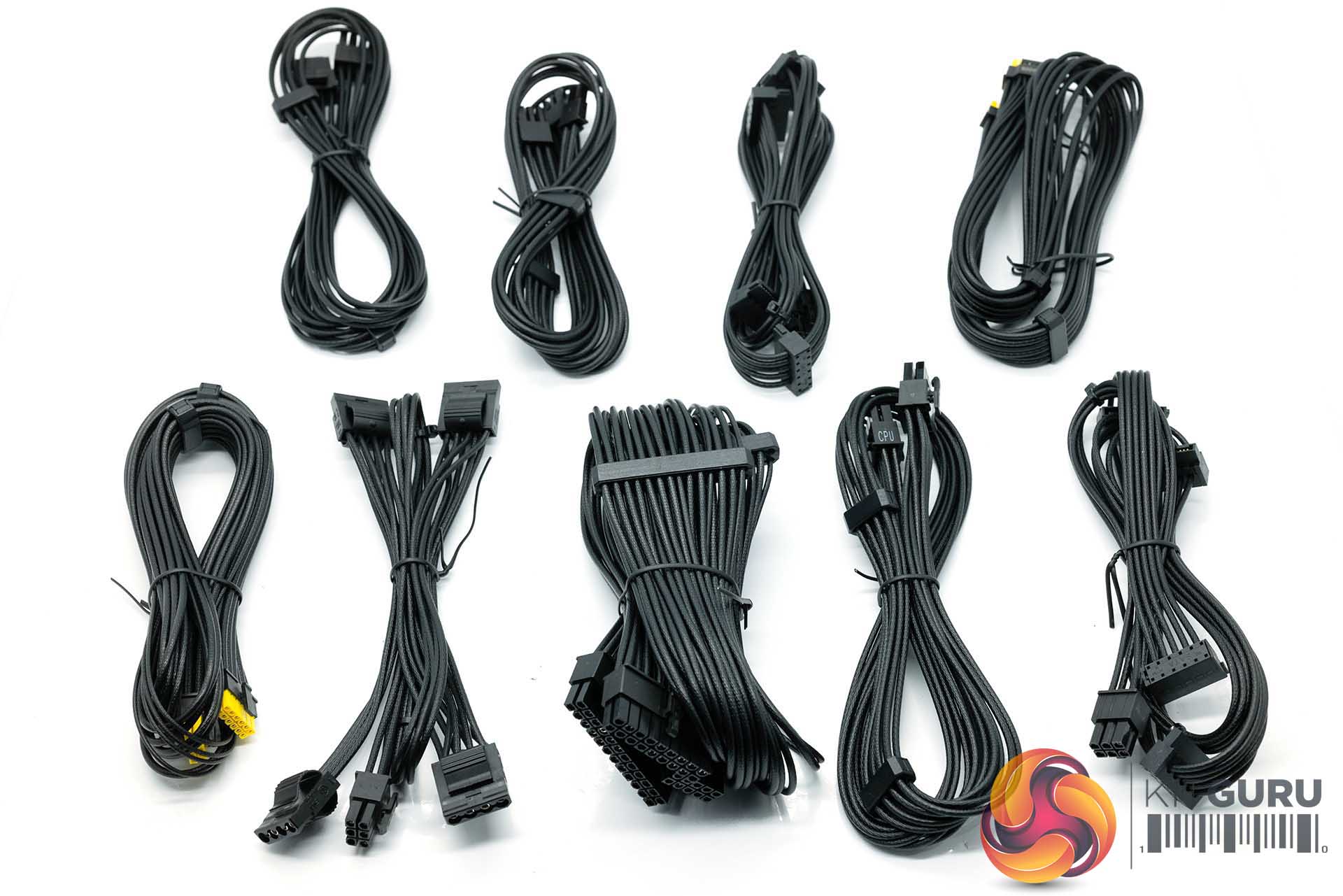
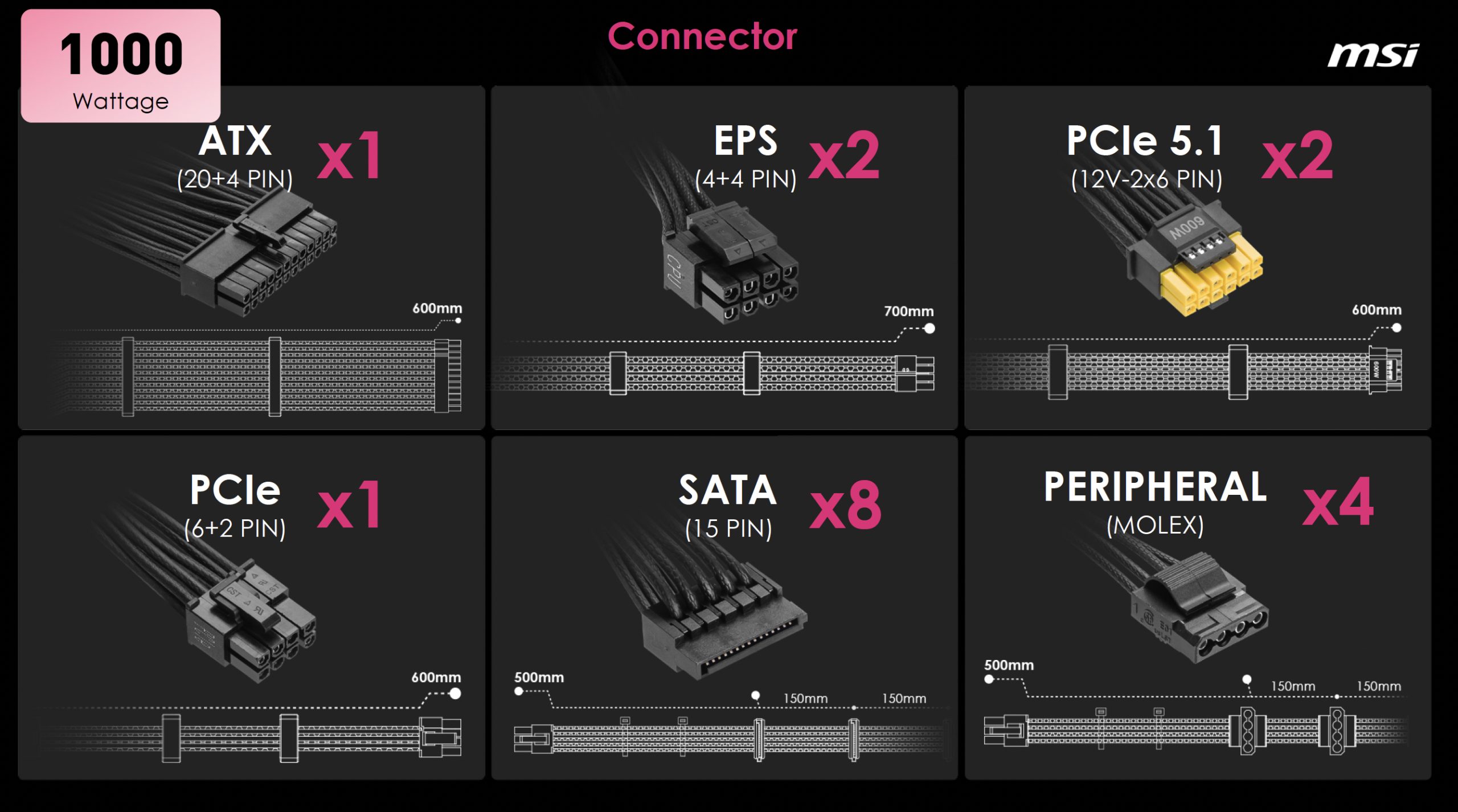
The quality of the cables is first class, they both look and feel great. They are soft and embossed as you can see in the image above. They include a pair of 12V 2×6 cables which can handle 600 watts per cable. Not sure this is really suitable for a 1000W power supply mind you, 1600W yes.
I was surprised to see only a single PCIe (6+2pin) cable which means this will not be an ideal power supply for AMD graphics cards. I can't help but feel this is a rather strange and somewhat controversial decision. AMD's 7900 XTX is a popular graphics card and this may cause problems for future releases too, with RDNA 4 on the horizon.
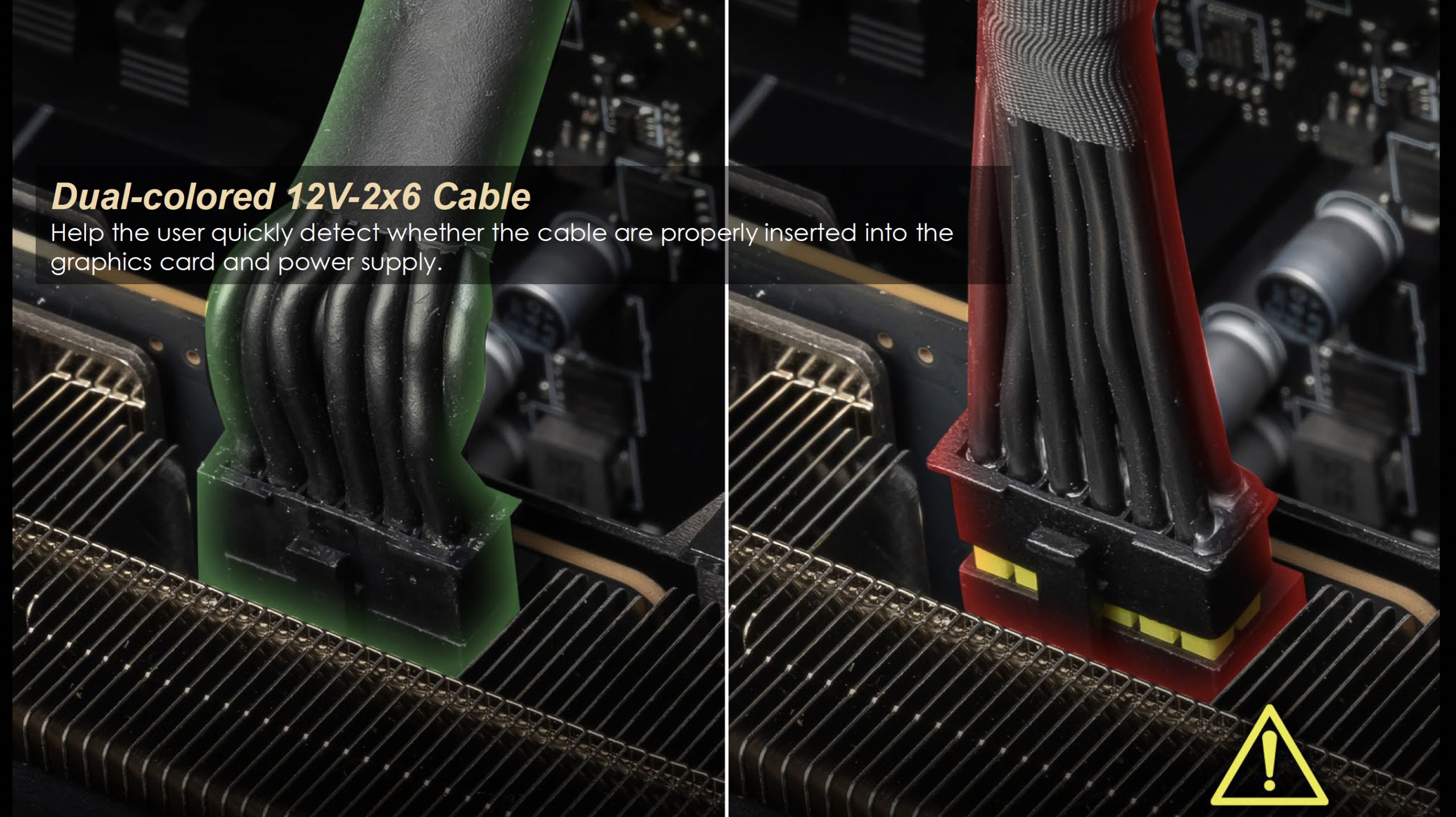
While there has been a lot of talk on the controversial 12V-2×6 cable design lately (something we have covered a few times before) MSI have designed a cable that is effectively colour-coded – if you can still see the yellow pins on the connector, it is not inserted properly. This seems to be super critical now after analysis into this cable and possible issues when not connected correctly. It is a topic for another day.
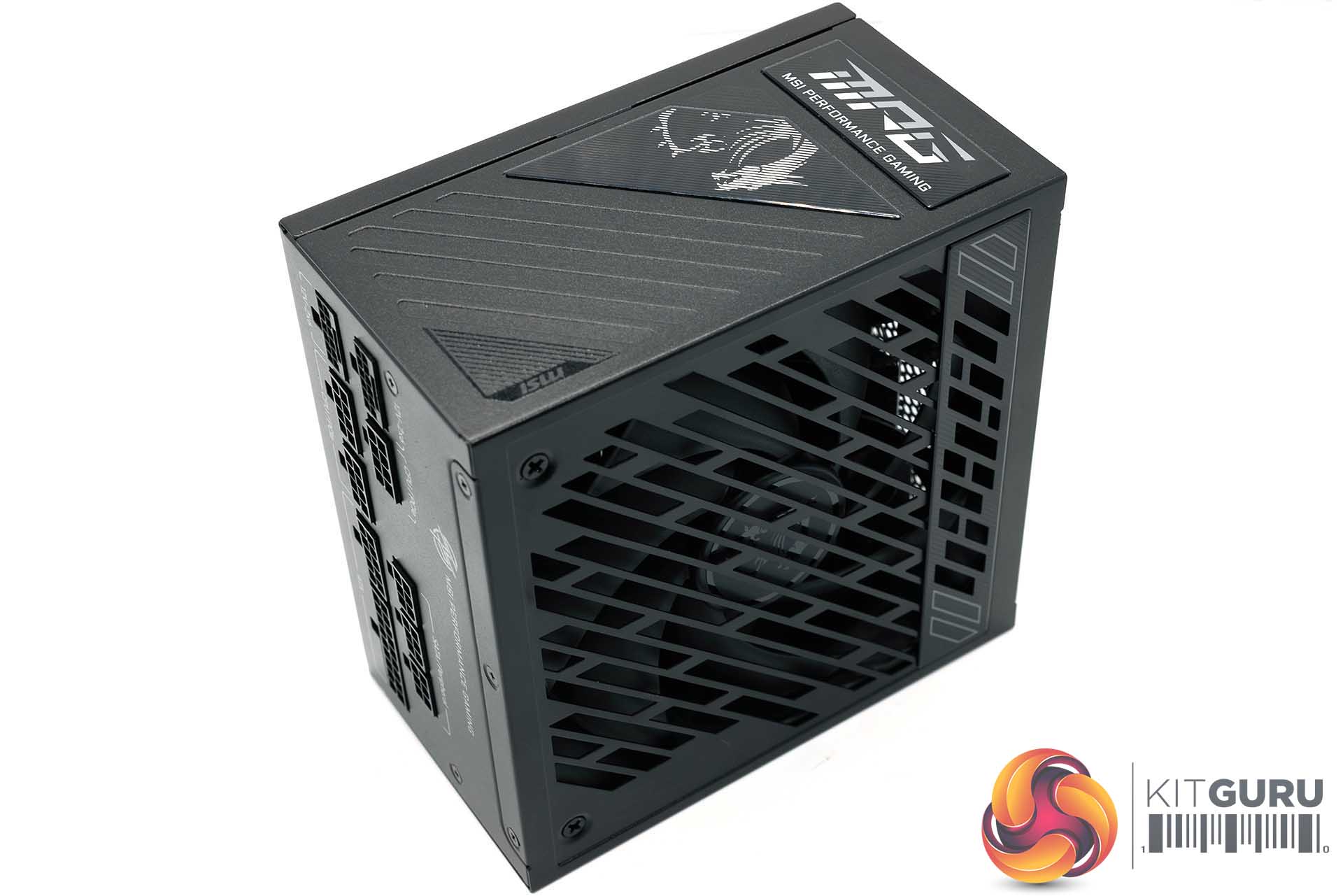
The MSI MPG A1000GS is a compact power supply, measuring 150x150x86 mm. The sides of the PSU have the logo of the MSI dragon mascot in place, along with the ‘MPG Performance Gaming' logo. If you like your power supplies clean and simple then this might not appeal to you, but in reality most system builds now hide a power supply behind a shroud.
I quite like the overall appearance however even if it is a little more complex than usual.
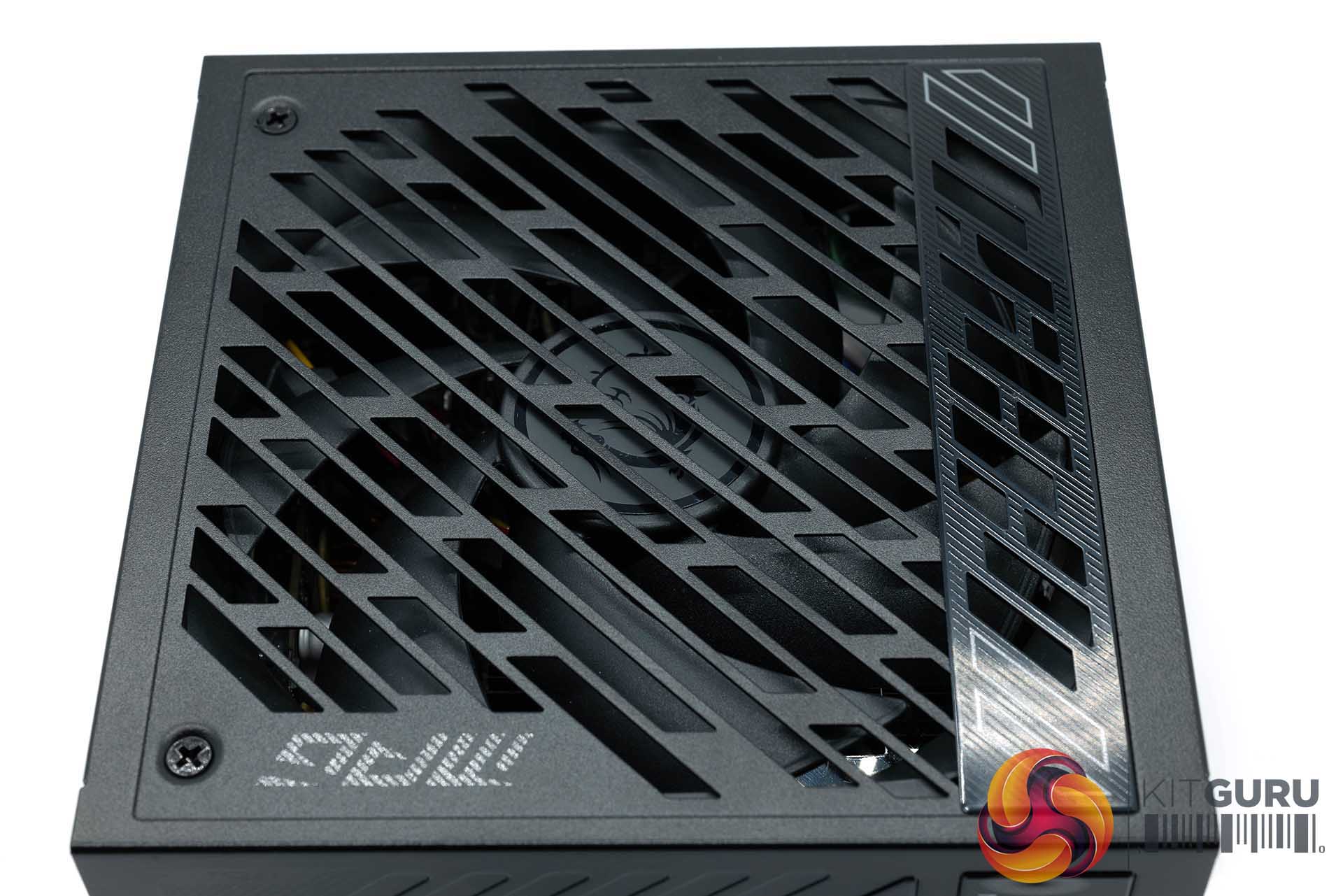
The PSU fan is hidden behind a grille. The cut holes on this one look to offer good airflow capabilities which is good to see.
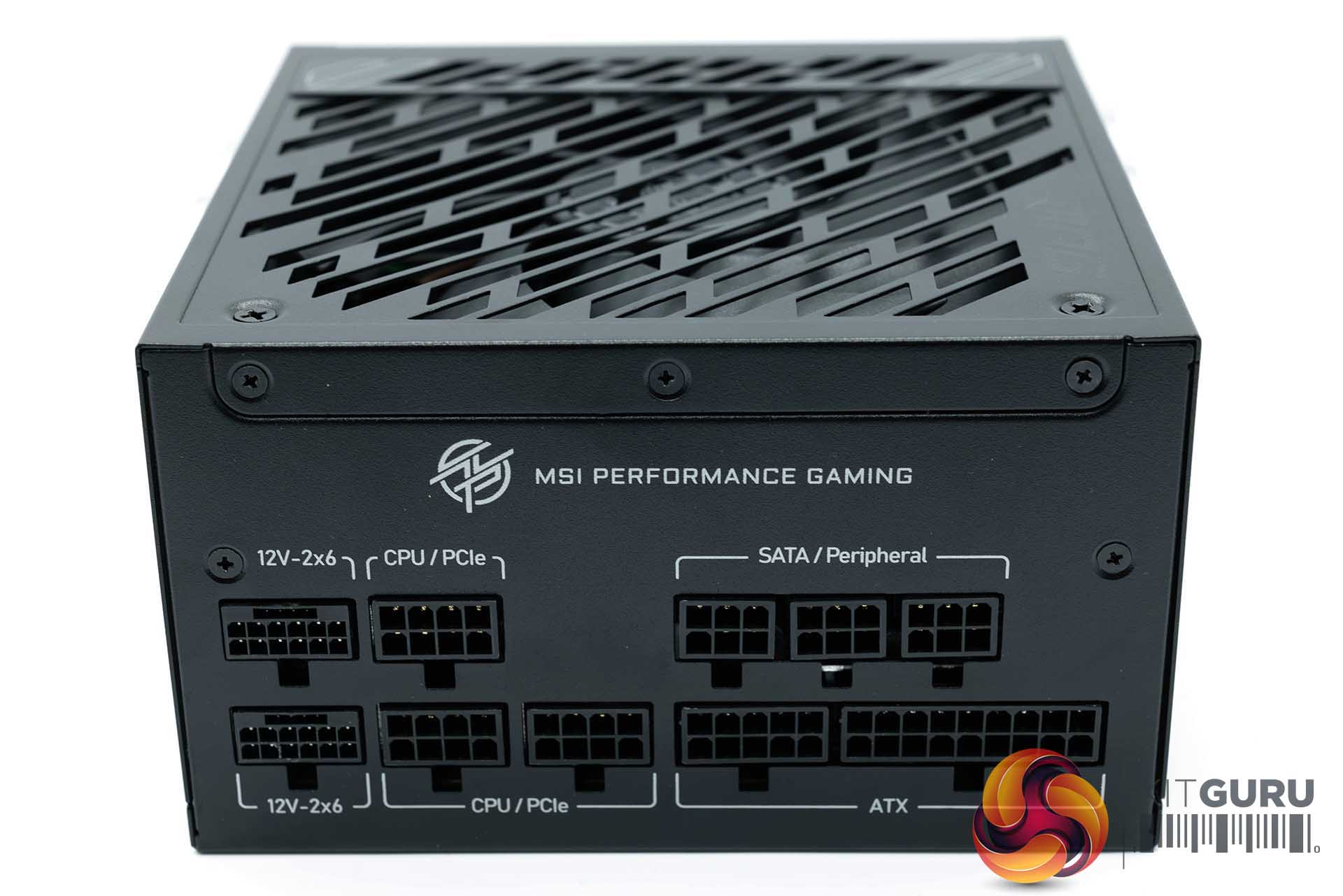
The modular bay is split over two rows, all clearly labelled for ease of use during the installation phase of the build process.
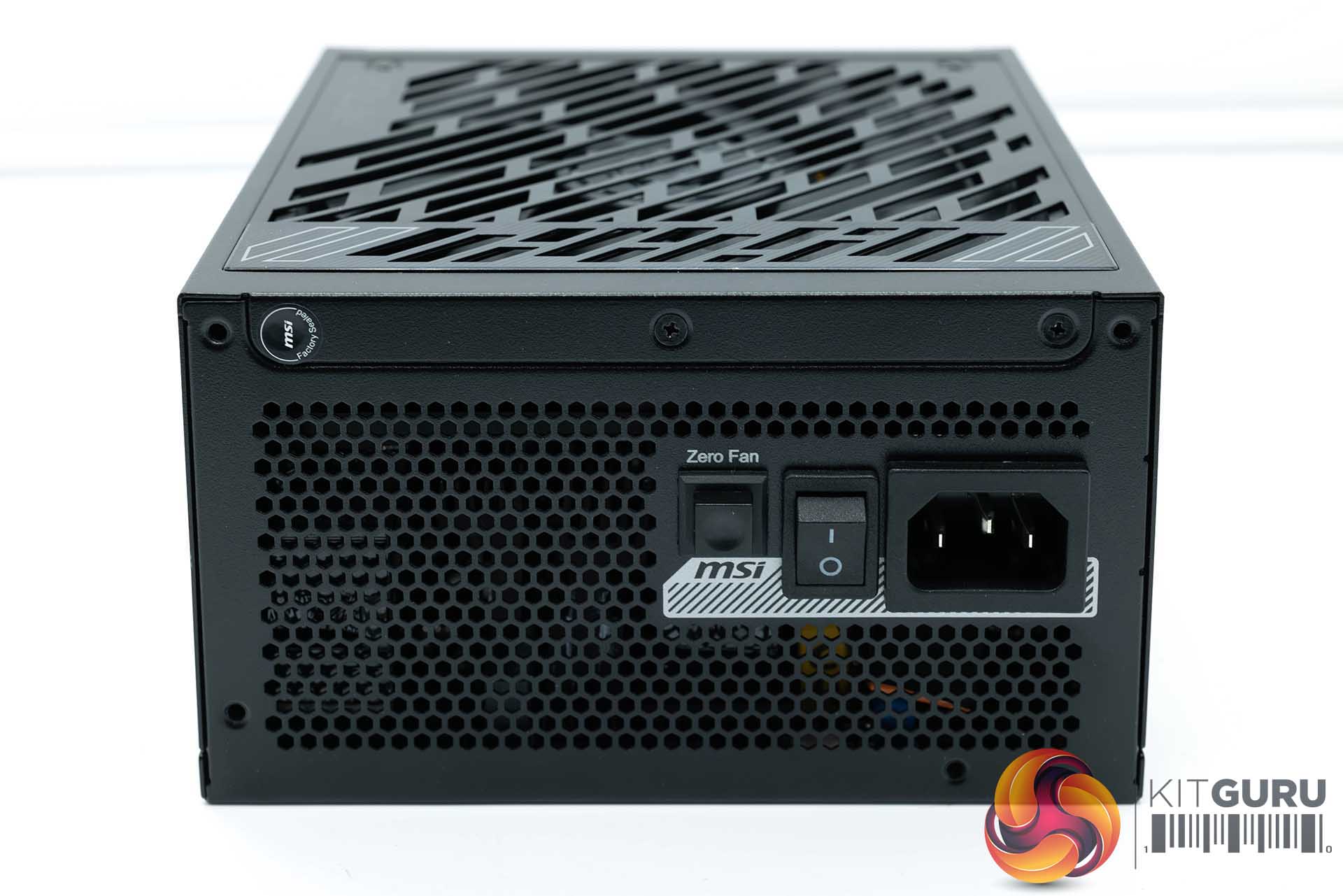
The other side of the unit is home to the power connector, power switch and ‘zero fan' function. This toggles the units passive operation between specific loads.
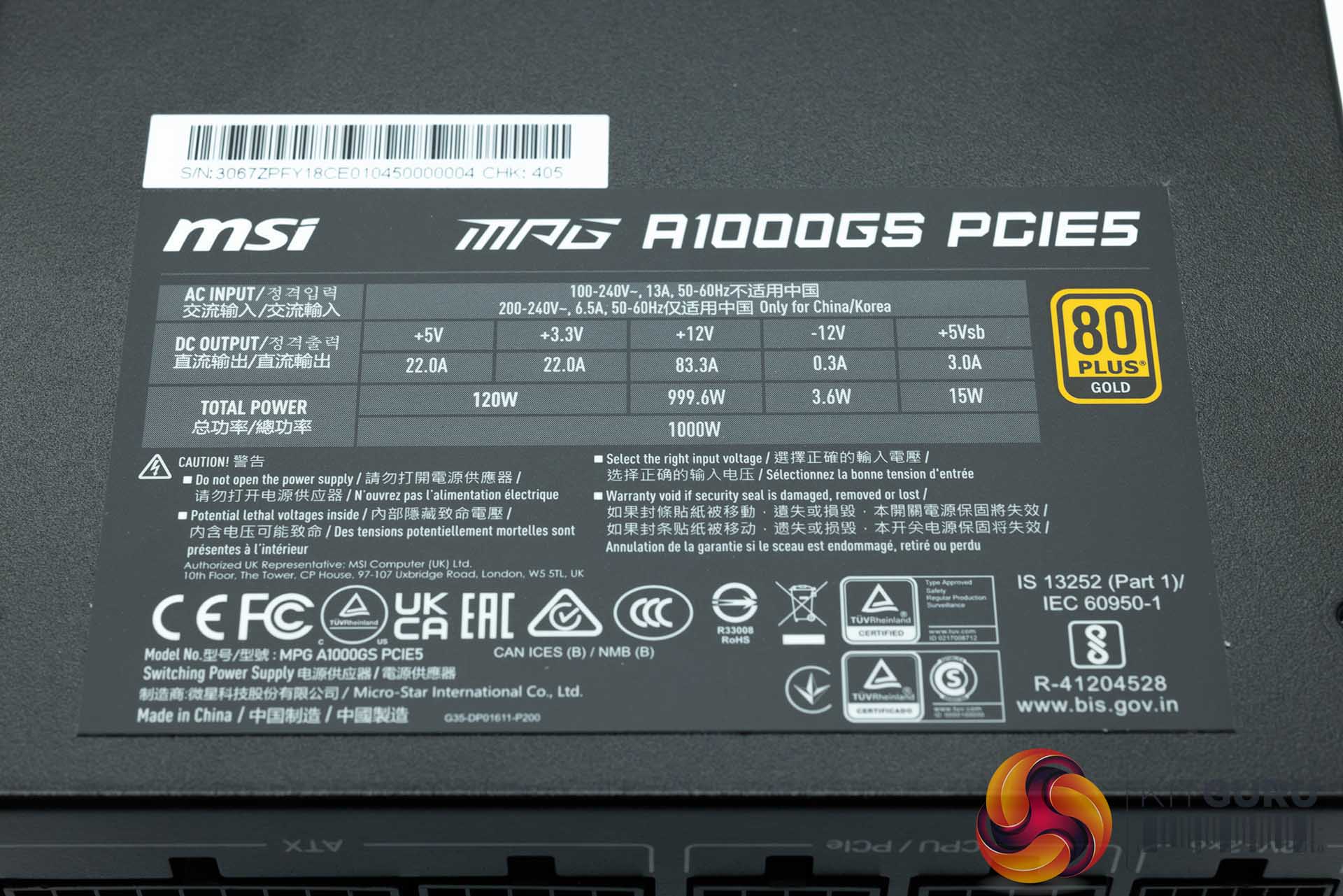
The A1000GS can deliver 83.3A on the +12v rail for 999.6W of the total power. The +3.3V and +5V rails can deliver 22A.
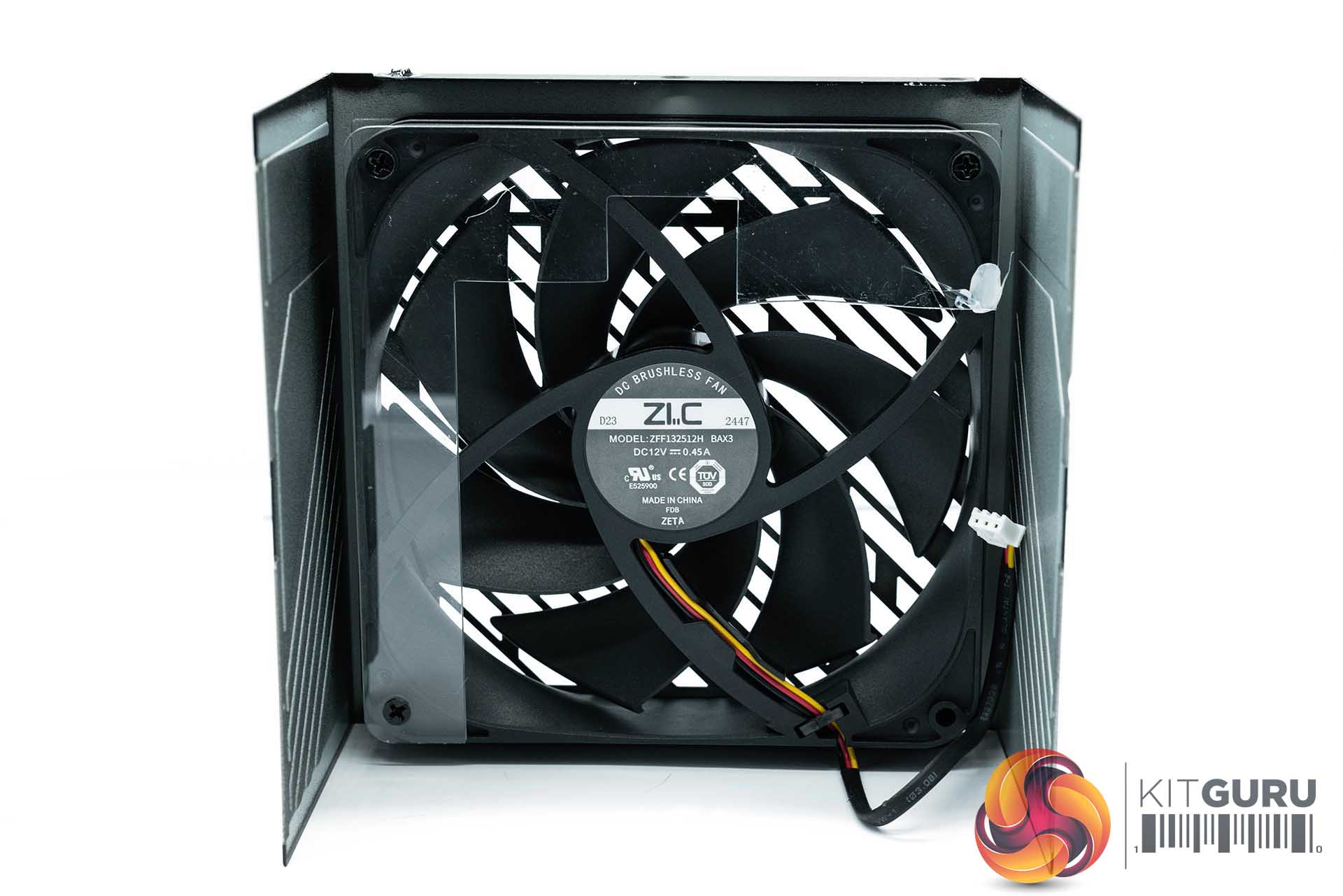
MSI are using a 135mm ZETA ZIC fan in this unit – Model ZFF132512H rated 12V and 0.45A. Unlike the 1600 Watt Ai1600T, this unit adopts a high grade Fluid Dynamic Bearing fan which is good to see for long term life and reduced noise. We don't often see ZETA fans in the units we have reviewed in the last few years, but the fan seems pretty high quality for those interested.
The more observant of you will notice that there is a clear plastic strip around the outer edge of the fan to help direct airflow to specific areas on the PCB and components below.

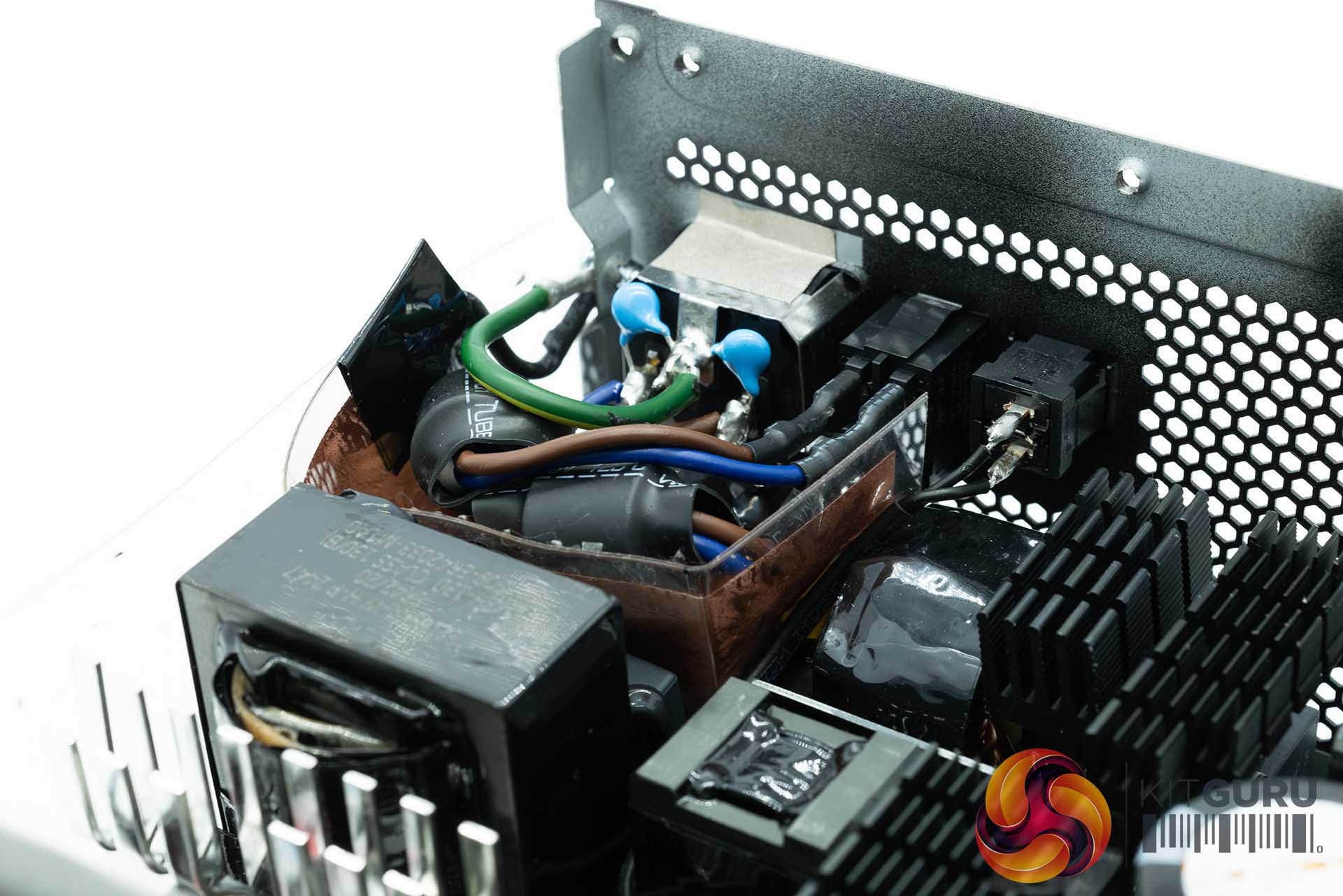
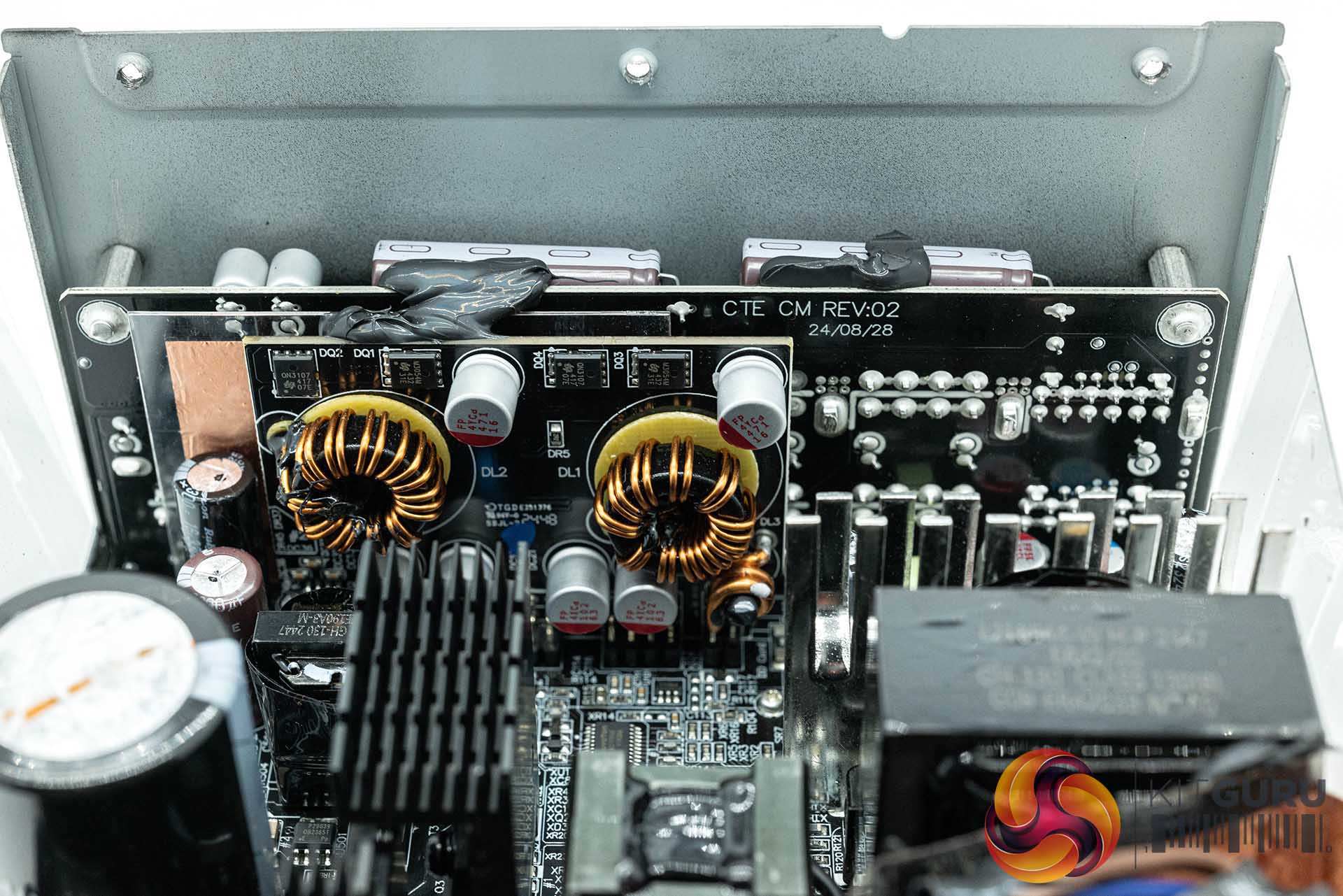
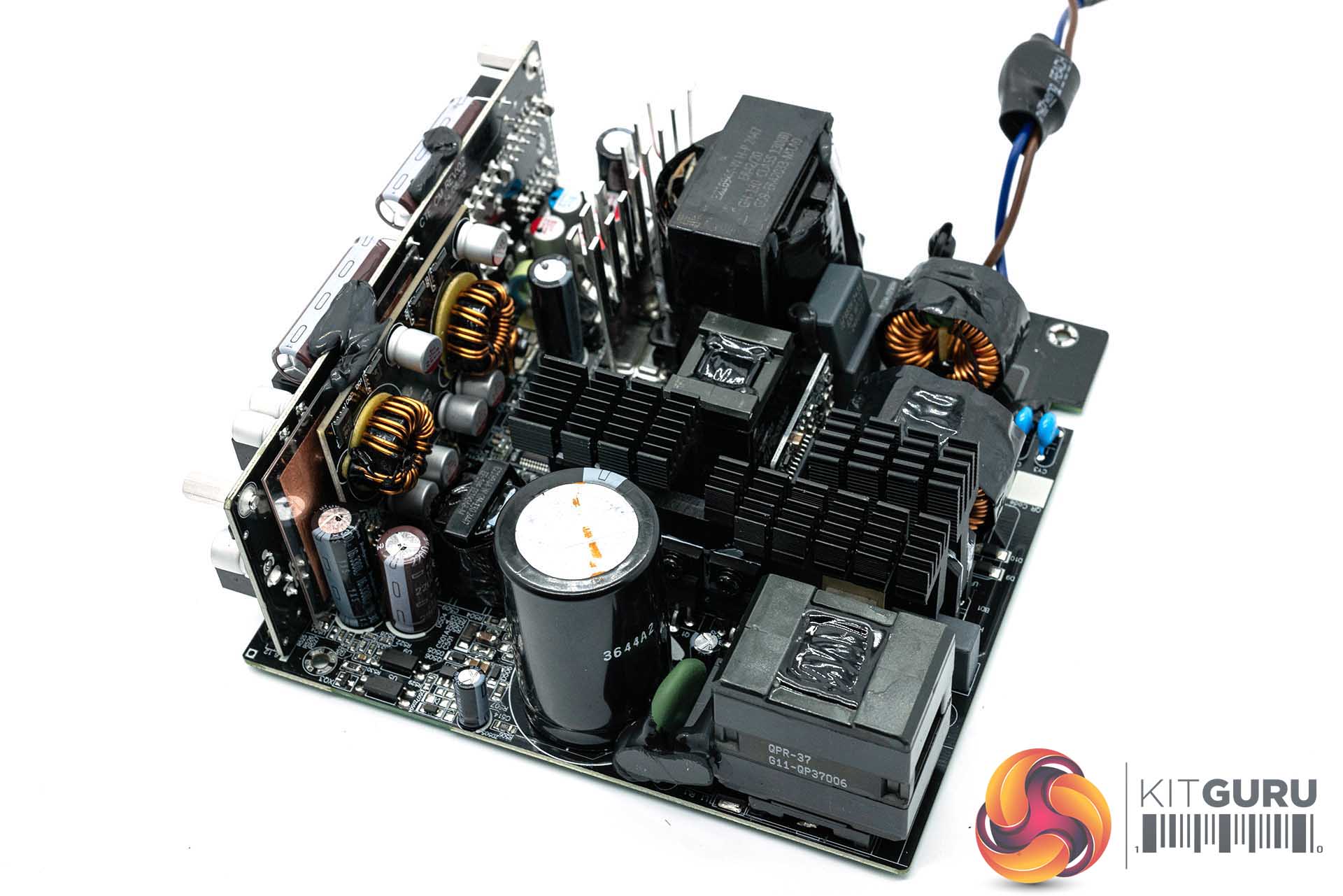
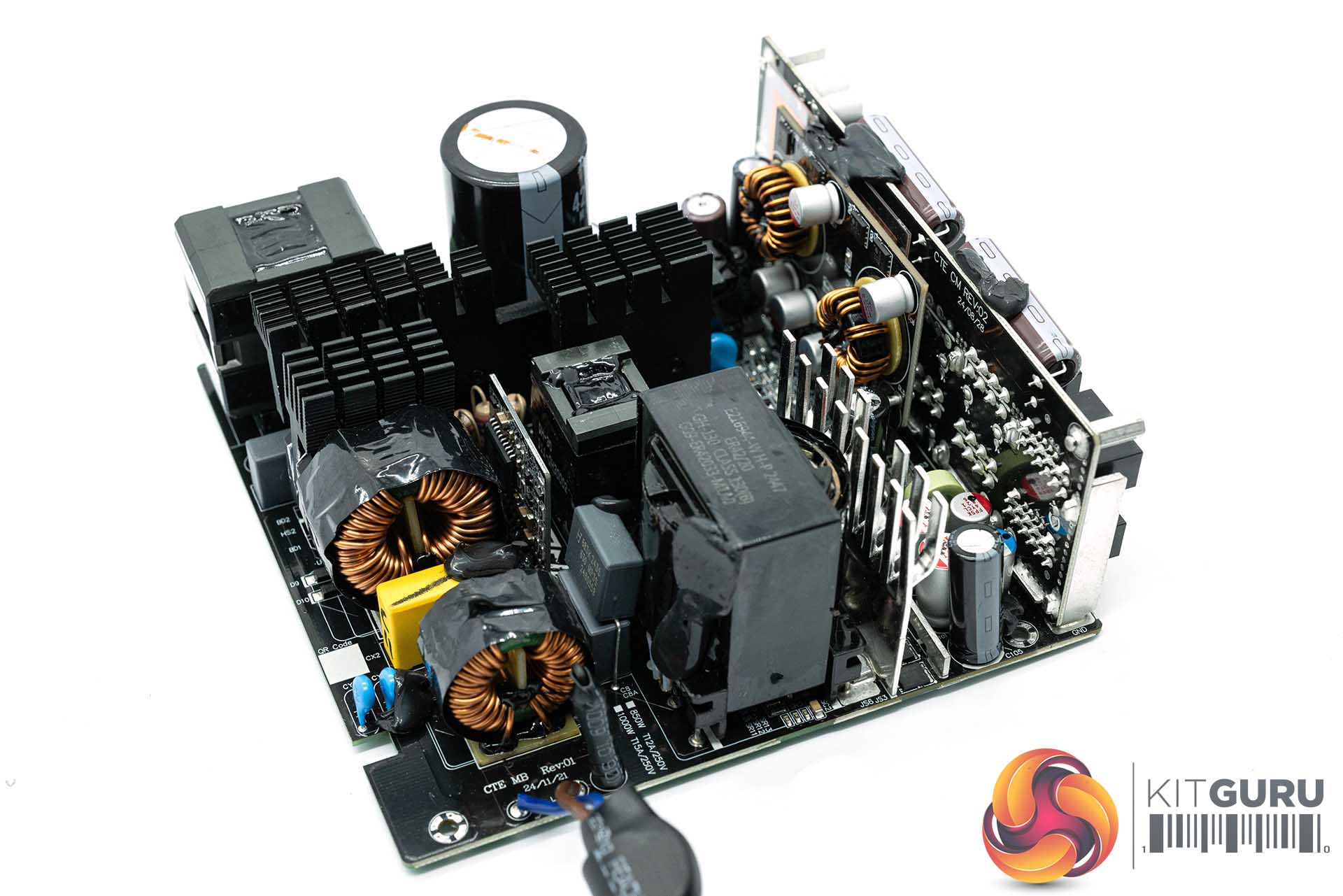
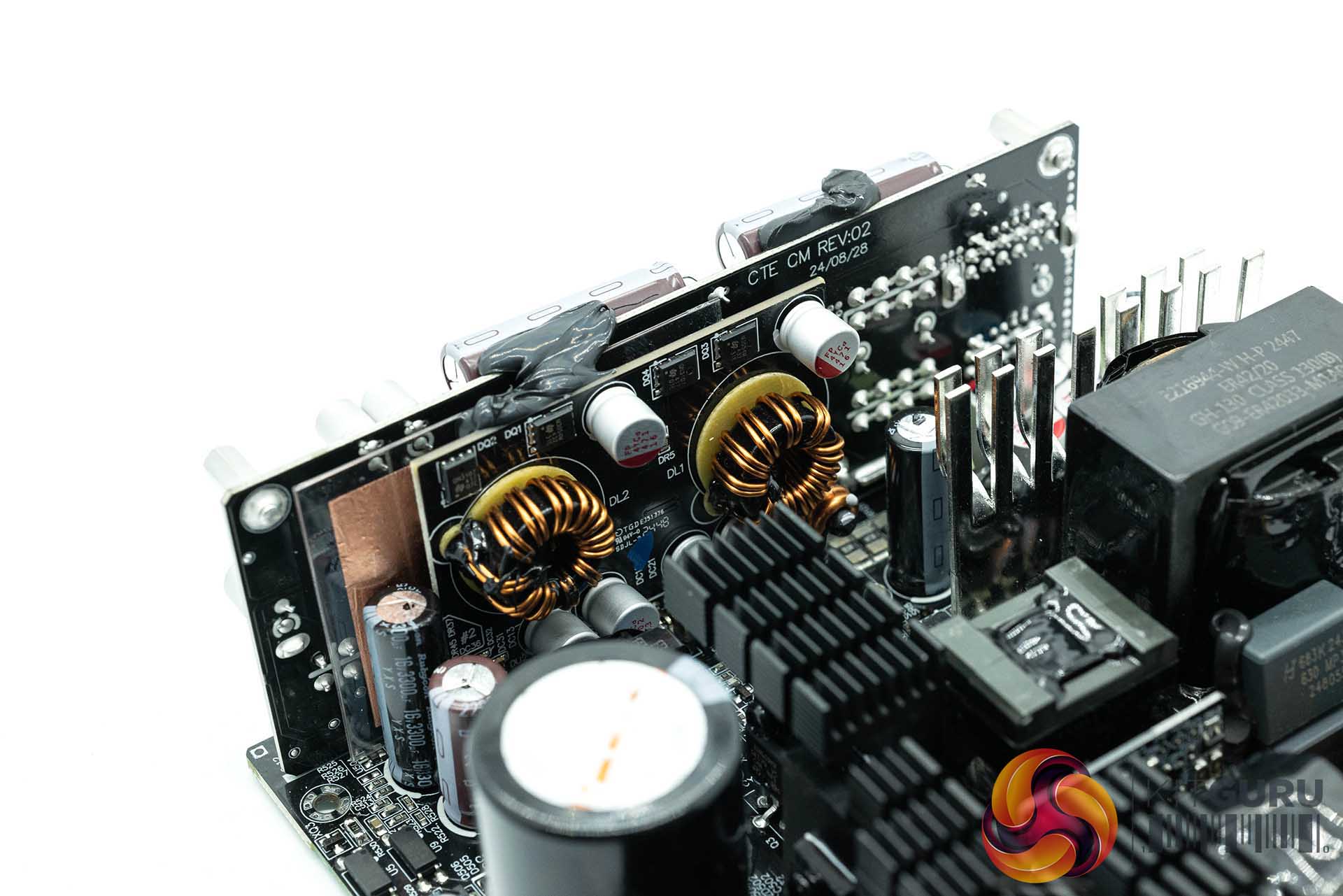
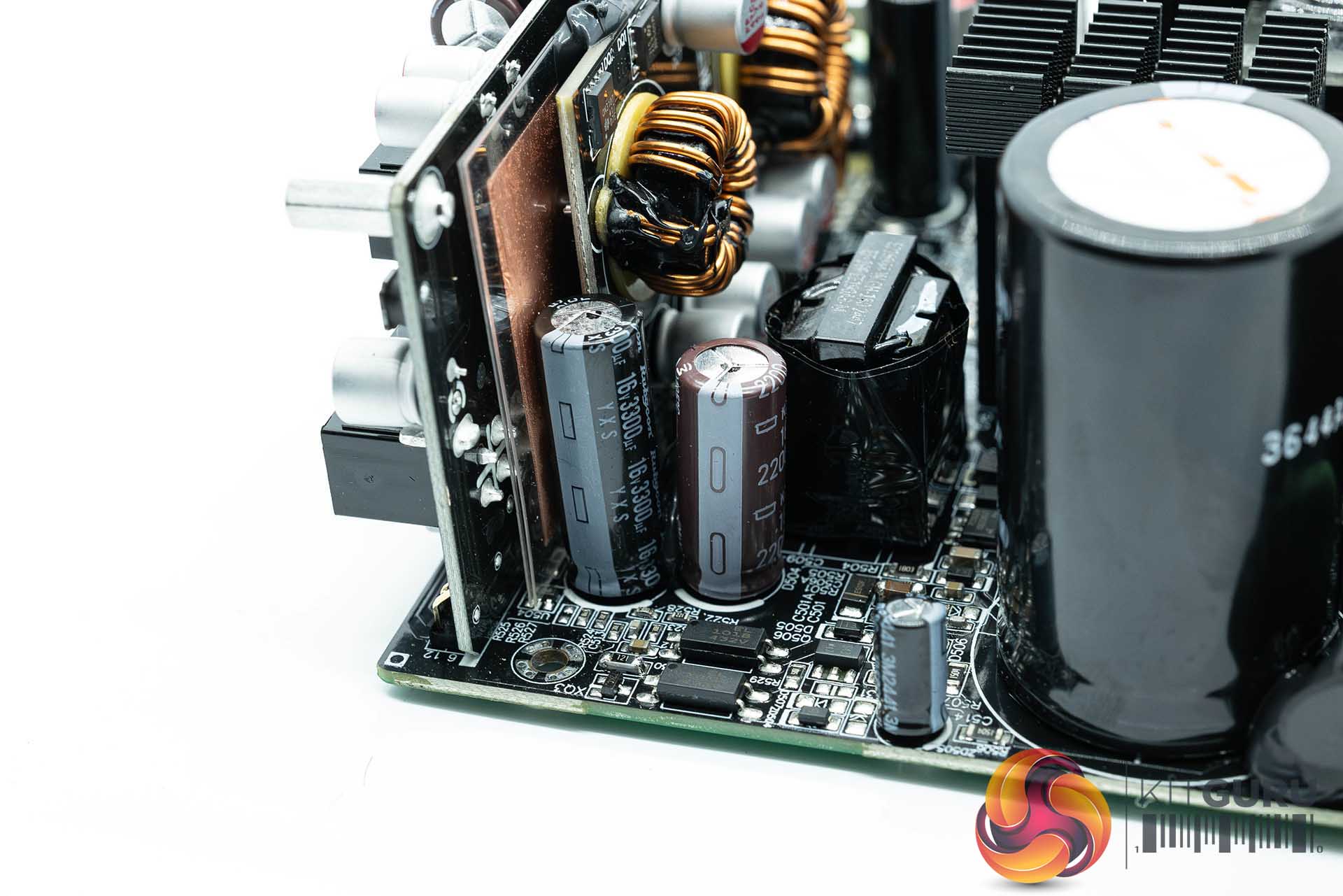
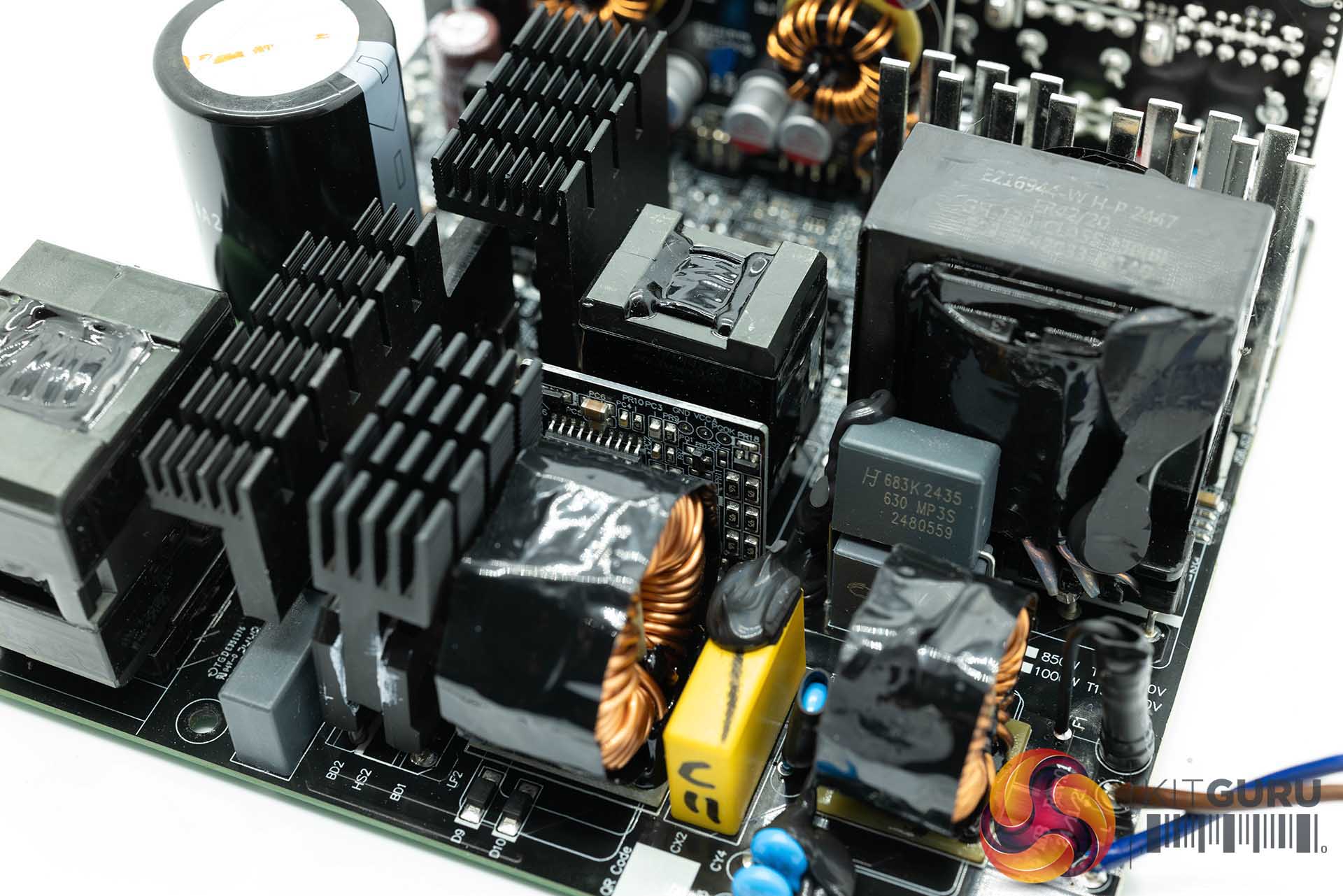
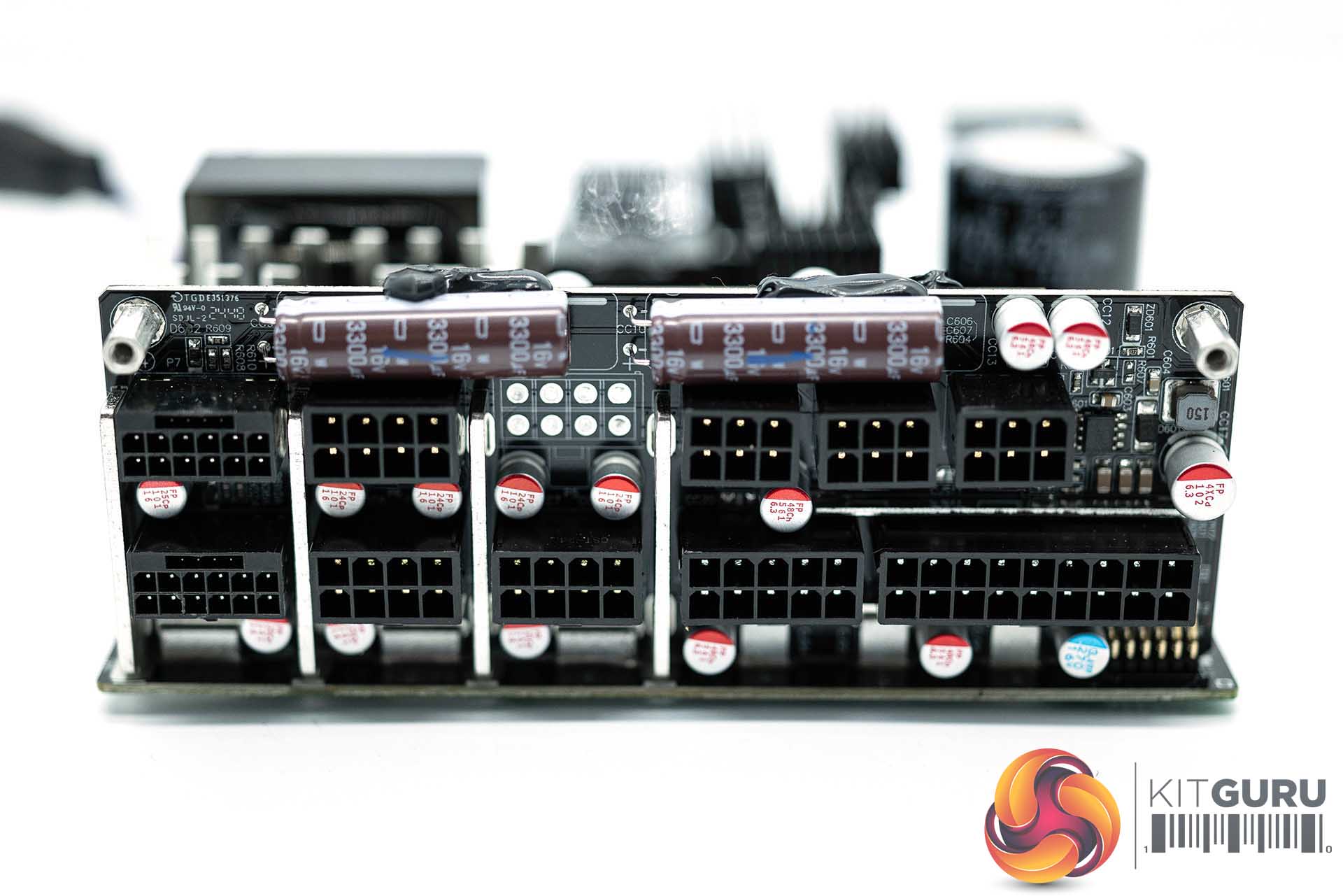
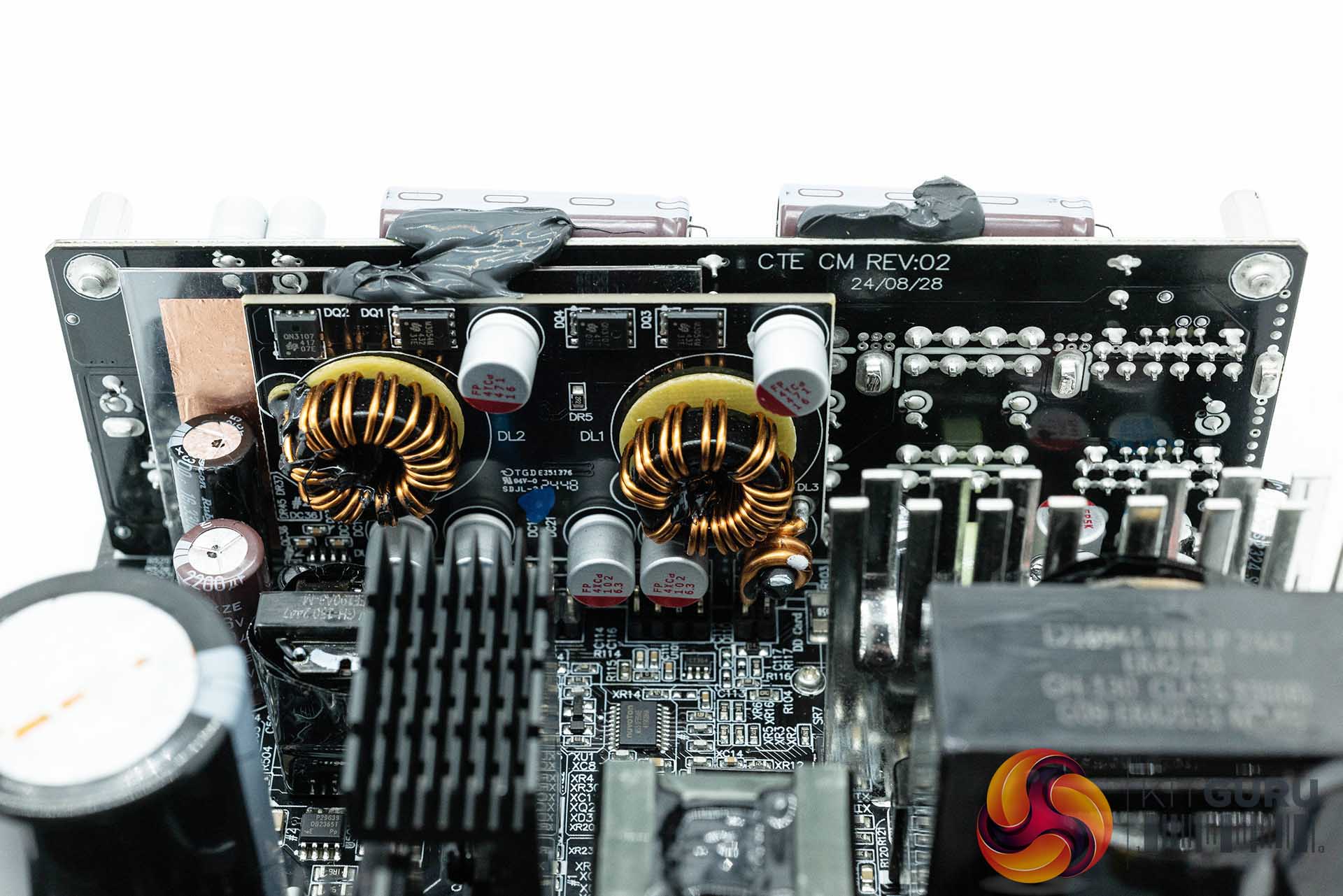
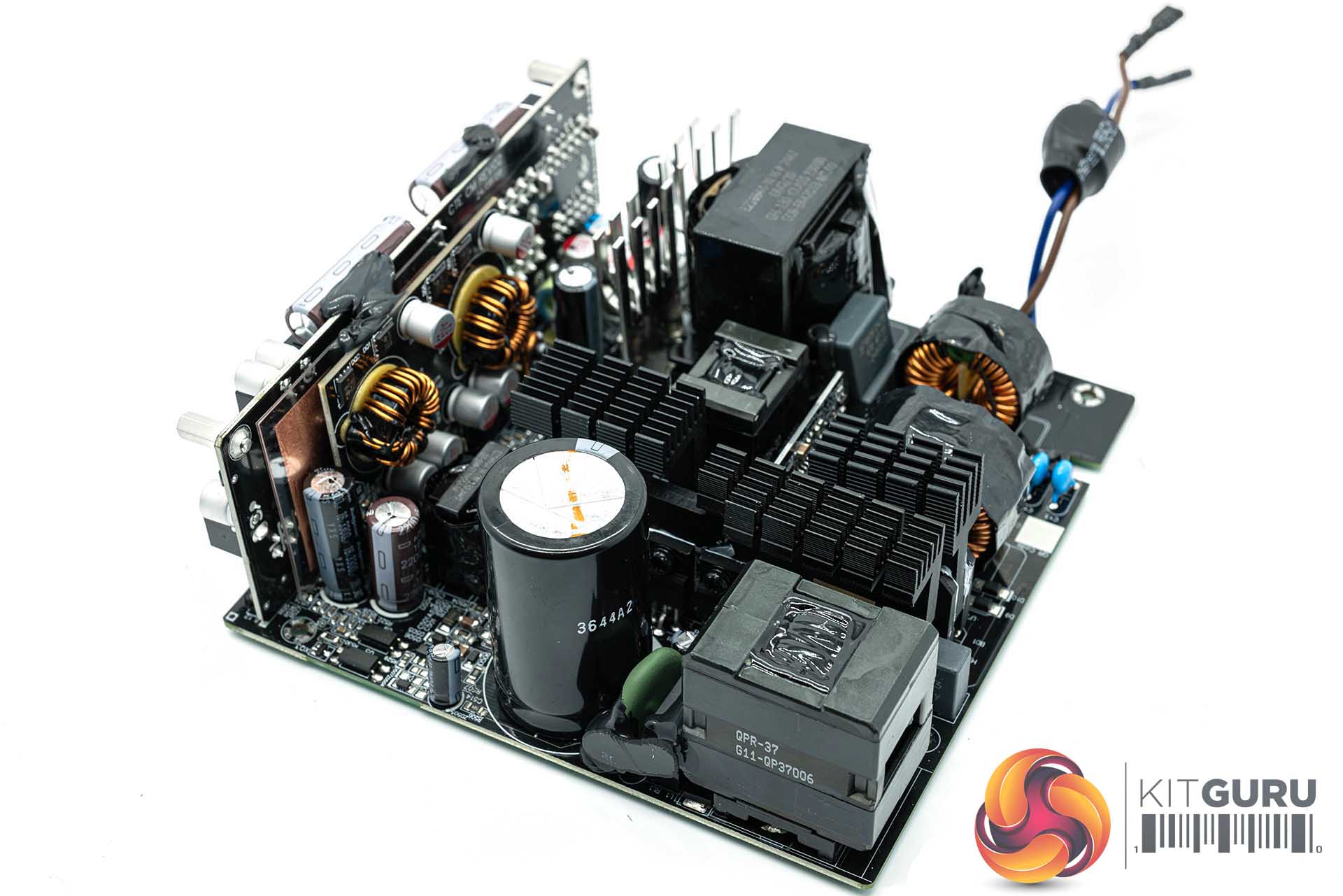
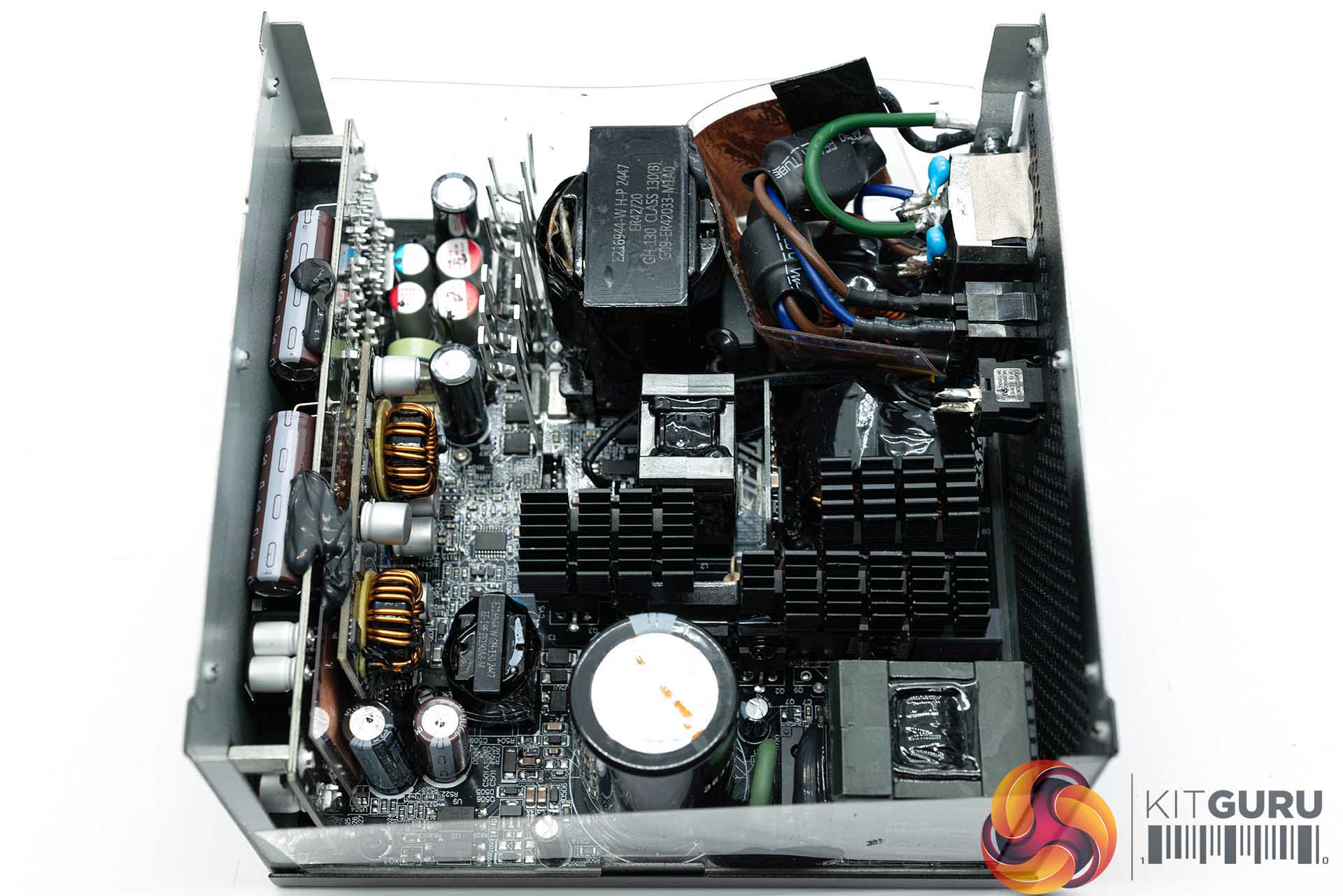
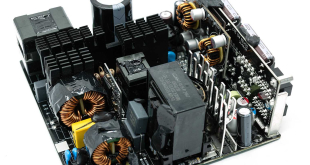
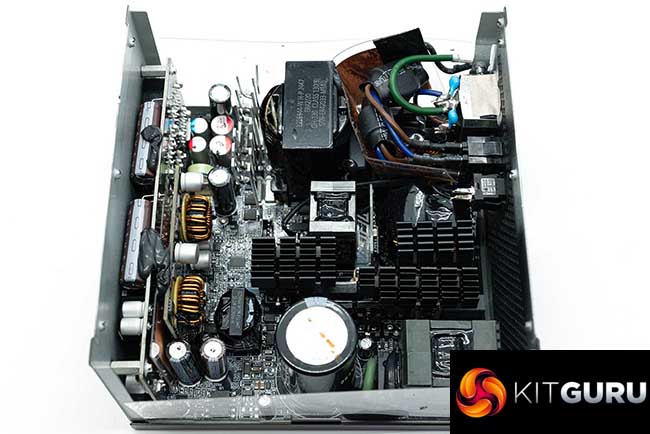
As mentioned earlier in the review, this is a CWT OEM part based around their CTE platform. The design incorporates a lot of high quality parts throughout – specifically the the capacitors and FETs. Soldering quality looks pretty good throughout as well.
This PCB is significantly smaller than the one inside the MSI Ai1600T unit we reviewed a short while ago. There are multiple heatsinks inside to help remove excess heat, which would be needed more in this unit than a Platinum or Titanium rated design.
This is a semi digital platform , with the digital controller handling the primary side and part of the secondary side too. A fully digital platform would cost a lot more, so this is why it is semi digital. The transient filter is 2x X Caps, 4x Y caps, 2x CM Chokes, and 1x MOV. The main capacitor is a 105c rated Rubycon MXE unit, rated 420V and 820uF output.
The PSU has OCP/OTP/OPP/SCP/OVP/UVP/SIP and NLO protections in place. Like the last MSI unit I tested, i am quite surprised again to see a lack of fan failure protection.
Correctly testing power supplies is a complex procedure and KitGuru have configured a test bench which can deliver up to a 2,000 Watt DC load.
We test ambient temperatures at 35c in our environment to greater reflect warmer internal chassis conditions.
We use combinations of the following hardware:
• SunMoon SM-268
• CSI3710A Programmable DC load (+3.3V and +5V outputs)
• CSI3711A Programmable DC load (+12V1, +12V2, +12V3, and +12V4)
• Extech Power Analyzer
• Extech MultiMaster MM570 digital multimeter
• SkyTronic DSL 2 Digital Sound Level Meter (6-130dBa)
• Digital oscilloscope (20M S/s with 12 Bit ADC)
• Variable Autotransformer, 1.4 KVA
We test in a single +12V configuration.
|
DC Output Load Regulation
|
||||||||||
|
Combined DC Load |
+3.3V
|
+5V
|
+12V
|
+5VSB
|
-12V | |||||
|
A
|
V
|
A
|
V
|
A
|
V
|
A
|
V
|
A | V | |
|
100W
|
0.90
|
3.30
|
0.90
|
5.04
|
7.35
|
12.08
|
0.50
|
5.00
|
0.20
|
-12.02
|
|
200W
|
1.60
|
3.30
|
1.64
|
5.03
|
15.13
|
12.07
|
1.00
|
5.01
|
0.20
|
-12.02
|
|
500W
|
3.21
|
3.30
|
3.24
|
5.03
|
38.60
|
12.05
|
1.50
|
5.00
|
0.20
|
-12.00
|
| 750W |
4.03
|
3.30
|
4.17
|
5.03
|
58.53
|
12.03
|
2.00
|
5.00
|
0.30
|
-12.01
|
|
1000W
|
5.45
|
3.29
|
5.51
|
5.03
|
78.13
|
12.01
|
2.50
|
5.01
|
0.30
|
-12.01
|
The load regulation of this power supply is excellent across the board.
Next we want to try Cross Loading. This basically means loads which are not balanced. If a PC for instance needs 500W on the +12V outputs but something like 30W via the combined 3.3V and +5V outputs then the voltage regulation can fluctuate badly.
The power supply had no problems sustaining at constant 1000W load.
| Cross Load Testing | +3.3V | +5V | +12V | -12V | +5VSB | |||||
| A | V | A | V | A | V | A | V | A | V | |
| 885W | 2.0 | 3.33 | 2.0 | 5.01 | 72.0 | 12.00 | 0.2 | -12.01 | 0.50 | 5.01 |
| 240W | 20.0 | 3.28 | 22.0 | 5.00 | 2.0 | 12.08 | 0.2 | -12.02 | 0.50 | 5.01 |
The supply handled our cross load test very well, holding stable results across the range.
We then used an oscilloscope to measure AC ripple and noise present on the DC outputs. We set the oscilloscope time base to check for AC ripple at both high and low ends of the spectrum. ATX12V V2.2 specification for DC output ripple and noise is defined in the ATX 12V power supply design guide.
|
ATX12V Ver 2.2 Noise/Ripple Tolerance
|
|
|
Output
|
Ripple (mV p-p)
|
|
+3.3V
|
50
|
|
+5V
|
50
|
|
+12V1
|
120
|
|
+12V2
|
120
|
|
-12V
|
120
|
|
+5VSB
|
50
|
Obviously when measuring AC noise and ripple on the DC outputs, the cleaner (less recorded) means we have a better end result. We measured this AC signal amplitude to see how closely the unit complied with the ATX standard.
| AC Ripple (mV p-p) | ||||
| DC Load | +3.3V | +5V | +12V | 5VSB |
| 100W | 16 | 11 | 16 | 10 |
| 250W | 18 | 13 | 18 | 11 |
| 500W | 21 | 16 | 22 | 13 |
| 750W | 23 | 18 | 25 | 18 |
| 1000W | 26 | 22 | 32 | 21 |
Ripple noise suppression falls within the industry rated parameters, but like the Ai1600T unit we tested recently, these figures fall behind leading results right now from competitors. So while there will be no issues in the real world, these results are technically a little disappointing to me.
|
Efficiency (%)
|
|
|
100W
|
89.3
|
|
250W
|
90.8 |
|
500W
|
92.5
|
|
750W
|
91.8
|
|
1000W
|
90.4
|
The efficiency results are solid enough, peaking at 92.5% between 45% and 55% load. This drops to around 90.5% efficiency at full load.
We take the issue of noise very seriously at KitGuru and this is why we have built a special home brew system as a reference point when we test noise levels of various components. Why do this? Well this means we can eliminate secondary noise pollution in the test room and concentrate on components we are testing. It also brings us slightly closer to industry standards, such as DIN 45635.
Today to test the Power Supply we have taken it into our acoustics room environment and have set our SkyTronic DSL 2 Digital Sound Level Meter (6-130dBa) one meter away from the unit. We have no other fans running so we can effectively measure just the noise from the unit itself.
As this can be a little confusing for people, here are various dBa ratings in with real world situations to help describe the various levels.
KitGuru noise guide
10dBA – Normal Breathing/Rustling Leaves
20-25dBA – Whisper
30dBA – High Quality Computer fan
40dBA – A Bubbling Brook, or a Refrigerator
50dBA – Normal Conversation
60dBA – Laughter
70dBA – Vacuum Cleaner or Hairdryer
80dBA – City Traffic or a Garbage Disposal
90dBA – Motorcycle or Lawnmower
100dBA – MP3 Player at maximum output
110dBA – Orchestra
120dBA – Front row rock concert/Jet Engine
130dBA – Threshold of Pain
140dBA – Military Jet takeoff/Gunshot (close range)
160dBA – Instant Perforation of eardrum
|
Noise (dBA)
|
|
|
100W
|
<28.0
|
|
250W
|
<28.0
|
|
500W
|
30.3
|
|
750W
|
33.1
|
| 1000W | 35.7 |
The Semi passive mode keeps the fan inactive until around 400W are demanded from the unit, and the fan starts spinning up a little. Around 800 Watts is when the fan ramps up to compensate for rising internal temperatures. At full load the fan is still quite quiet which is surprising.
|
Temperature (c)
|
||
|
Intake
|
Exhaust
|
|
|
100W
|
37
|
43
|
|
250W
|
38
|
48
|
|
500W
|
40
|
54
|
|
750W
|
45
|
59
|
|
1000W
|
46
|
65
|
Temperatures inside didn't raise any alarm bells for me, but they could be better, especially above 700 Watts load when the fan could really be spinning a little faster. This could effective reduce temperatures by 1-4c overall.
MSI are definitely pushing into the power supply market this year with a range of new units launched since Christmas. The MPG A1000GS is the second PSU we have reviewed from them, and while it is a good product I have some points I need to go over before wrapping up this review.
Firstly, I feel the omission of a second 6+2Pin PCIe cable is rather strange as it will alienate many AMD GPU owners. The A1000GS has clearly been released to target Nvidia 40 and 50 series owners, which I understand, but potentially alienating AMD users is not a very good public relations exercise. It is also not very clearly explained either online or on the box – you need to be paying attention. This could have been a ‘non issue' by simply including a 12V 2×6 to 2x 6+2 pin PCIe cable.
Secondly, while I am impressed with how quiet this unit performs (even under heavy load) I feel MSI could do with optimising the fan to be more aggressive as the loads increase. I appreciate that targeting an audience which values the lowest possible noise is a good idea, but this unit is not massively efficient by higher 2025 standards and temperatures do suffer a little under heavy load – as reported earlier in the review.
Technically the A1000GS performs pretty well, load regulation is solid and it passed our cross loading test without any issues or concerns. Ripple suppression could be better however, especially when we factor in some of the results lately from competitor products. Not to say the unit will exhibit any ‘real world' issues based on what we documented, but the design clearly could be optimised a little more to improve the results.
Internally I was happy to see CWT paying a lot of attention to the component selection. The A1000GS is loaded with high quality capacitors and FETs and they have not skimped on the quality of the primary stage components either, adopting a high grade Japanese Rubycon 105c rated capacitor and other Japanese capacitors throughout the secondary stage.
The pricing for this product seems a little on the high side in my opinion. As the last power supply i reviewed was the MSI Ai1600T at £600+, I had to readjust my way of thinking when considering a value proposition. A quick search on Scan UK shows that a lot of 1000W 80 Plus Gold Certified power supplies are available for between £150 and £180 (HERE).
At time of publication you can currently buy the A1000GS on stores such as AWD IT for £184.99 HERE. That is the recommended retail price of the product, so I doubt you will see it for any less unless it is on sale. So while the power supply delivers a decent set of results it is right at the upper level in this price bracket, meaning it really should be delivering something ‘extra special' for the customer. The MSI MPG A1000GS while certainly competent isn't really an exceptional design.
MSI are offering a full 10 year warranty with this power supply, which is very good for an 80 Plus Gold rated unit. Just be aware if you use AMD graphics cards to pay very careful attention to the fact you only get a single 6+2 pin PCIe connector, meaning it is not suitable for a high end AMD graphics card.
Pros:
- Quiet at all times.
- 105c rated Japanese connectors.
- Tight load regulation.
- High build quality.
- Fully modular.
- High quality components inside.
- Fluid dynamic bearing fan.
- Gold certified on both Cybenetics and 80 Plus platforms.
Cons:
- Quite expensive on the market today.
- Fan could be tuned to be more aggressive at higher loads to reduce internal temperatures.
- Only a single 6+2 pin PCIe connector cable, high end AMD gamers should avoid.
- No fan failure protection.
KitGuru says: The MPG A1000GS is a very good power supply well suited to powering Nvidia RTX graphics cards. Load regulation is tight and the overall build quality and choice of internal components is excellent.