KitGuru KitGuru.net – Tech News | Hardware News | Hardware Reviews | IOS | Mobile | Gaming | Graphics Cards


Today we look at the 1000W unit in NZXT's new Gold certified range – our second review in the series. NZXT are well known for selling white components so it made sense for them to update this range of power supplies. These units are fully modular, ATX 3.1 compatible and they ship with high grade Japanese capacitors. NZXT are backing them with a 10 year warranty.
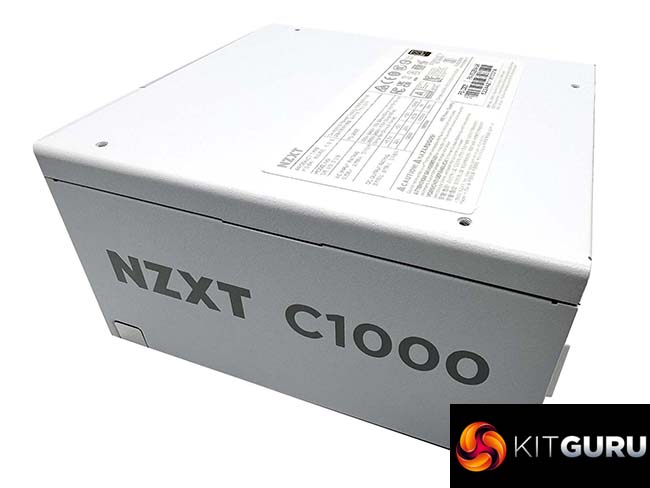
NZXT told us that availability of these white versions is slated for the end of September, and there are three units up for sale in both black and white colours. A pricing update on all these is below for reference.
It is interesting to see that the white version has the same price as the black version in the UK, but the USA price is $5 more expensive. These figures below were sent directly from NZXT – we can't check white PSU prices as the units are not yet available.
MSRP:
Black
C1200 Gold: $199.99/£184.99
C1000 Gold: $179.99/£169.99
C850 Gold: $144.99/£139.99
White
C1200 Gold: $204.99/£184.99
C1000 Gold: $184.99/£169.99
C850 Gold: $149.99/£139.99
Features of the C Series Gold
Premium Performance. Low Noise
- Certified for high efficiency and low noise: 80 PLUS Gold Efficiency, Cybenetics Gold Efficiency, and Cybenetics A- Noise Level.
- Durable, heat-resistant 12V-2×6 connector pumps up to 600 watts to NVIDIA® GeForce RTX™ 40 Series graphics cards.
- 135mm fluid dynamic bearing fan with Zero RPM Fan Mode is completely silent when under 50% load.
Made for Any Build
- Compliant with the ATX 3.1 standard to fuel high-performance PC components with stability, efficiency, and power spike resistance.
- Fully modular design allows for only connecting essential cables, reducing clutter for better airflow and a neater build.
- The compact size optimizes case space.
- Modern standby promotes quick wake-ups and energy-efficient sleeps.
- Thanks to high-quality construction and rigorous product testing, NZXT PSUs are backed by a 10-year warranty.
- New all-white finish with white sleeve cables available to better match all white builds.
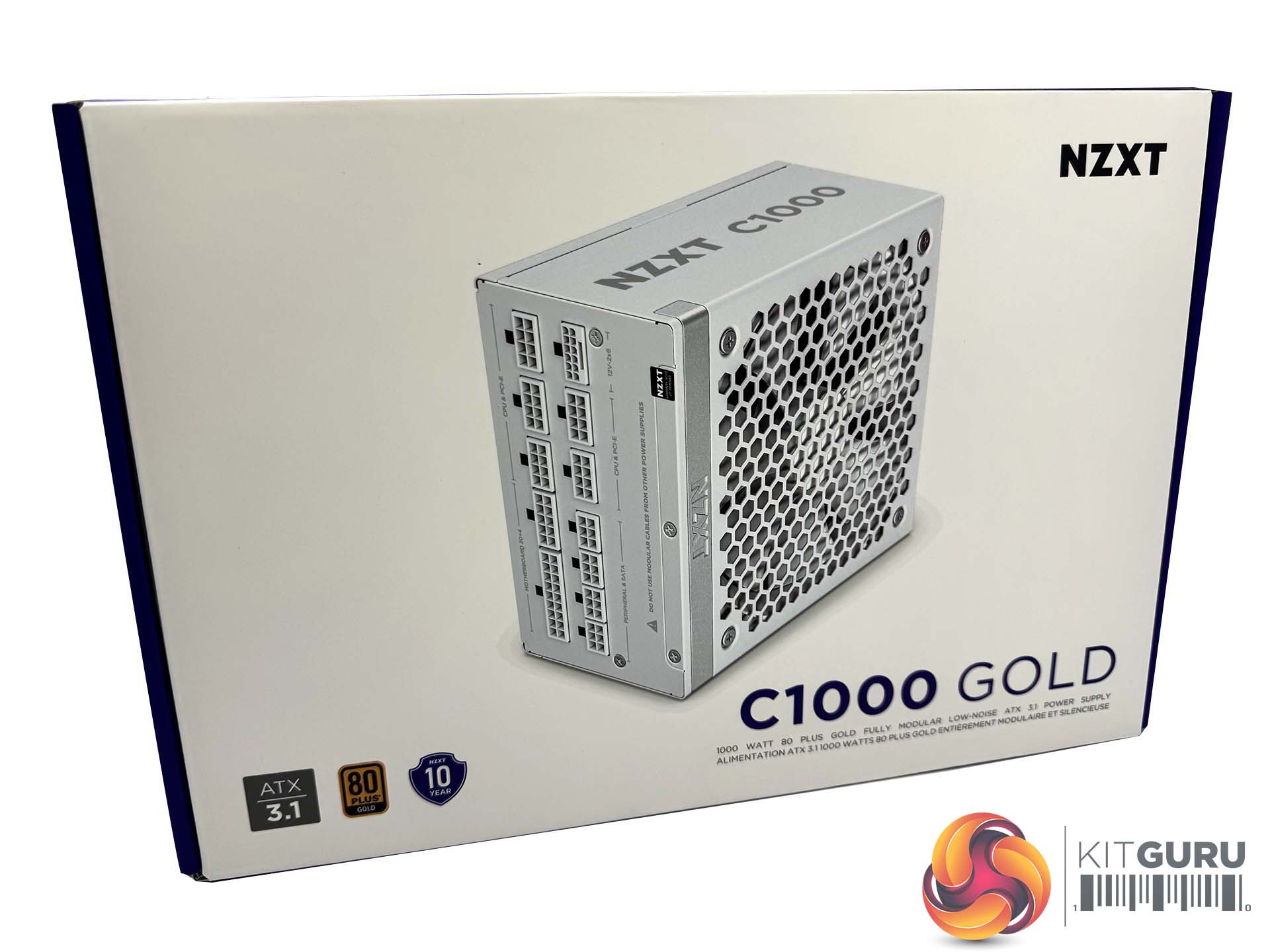
Kudos to NZXT for creating proper artwork for these boxes and not using a universal box for both black and white versions. The front of the box lists some key selling points such as the ATX 3.1 compatibility, the 10 year warranty and the 80 Plus Gold badge. I was a little surprised not to see a Gold Cybenetics badge on the box as we know it was certified by them as well. Hopefully they add this later.
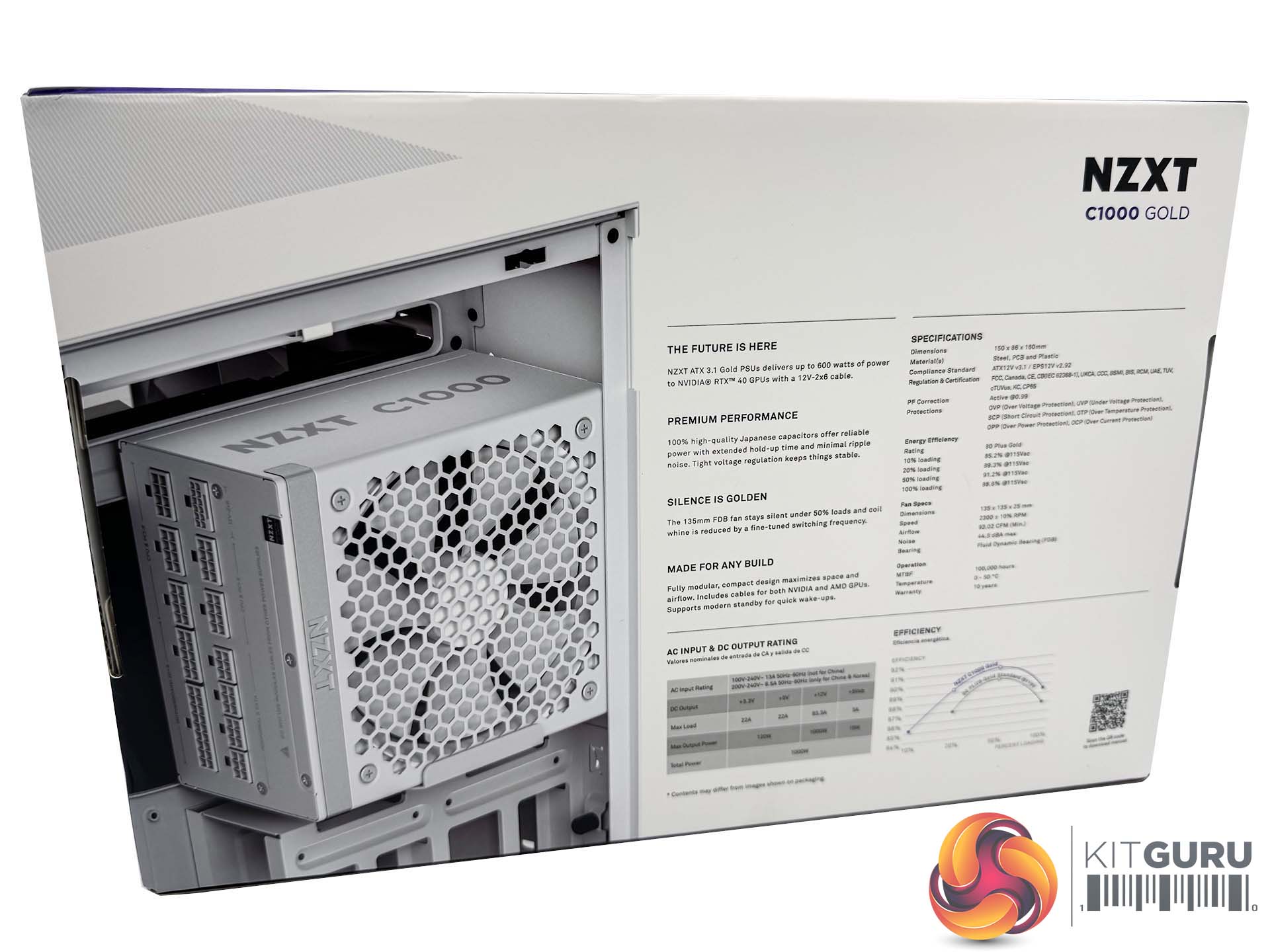
The rear of the box covers some topics we have already discussed such as the use of Japanese capacitors, Gold certification and modular design. There is mention of an FDB (Fluid Dynamic Bearing) fan and the fact it will stay disabled under 50% load. More on this shortly.
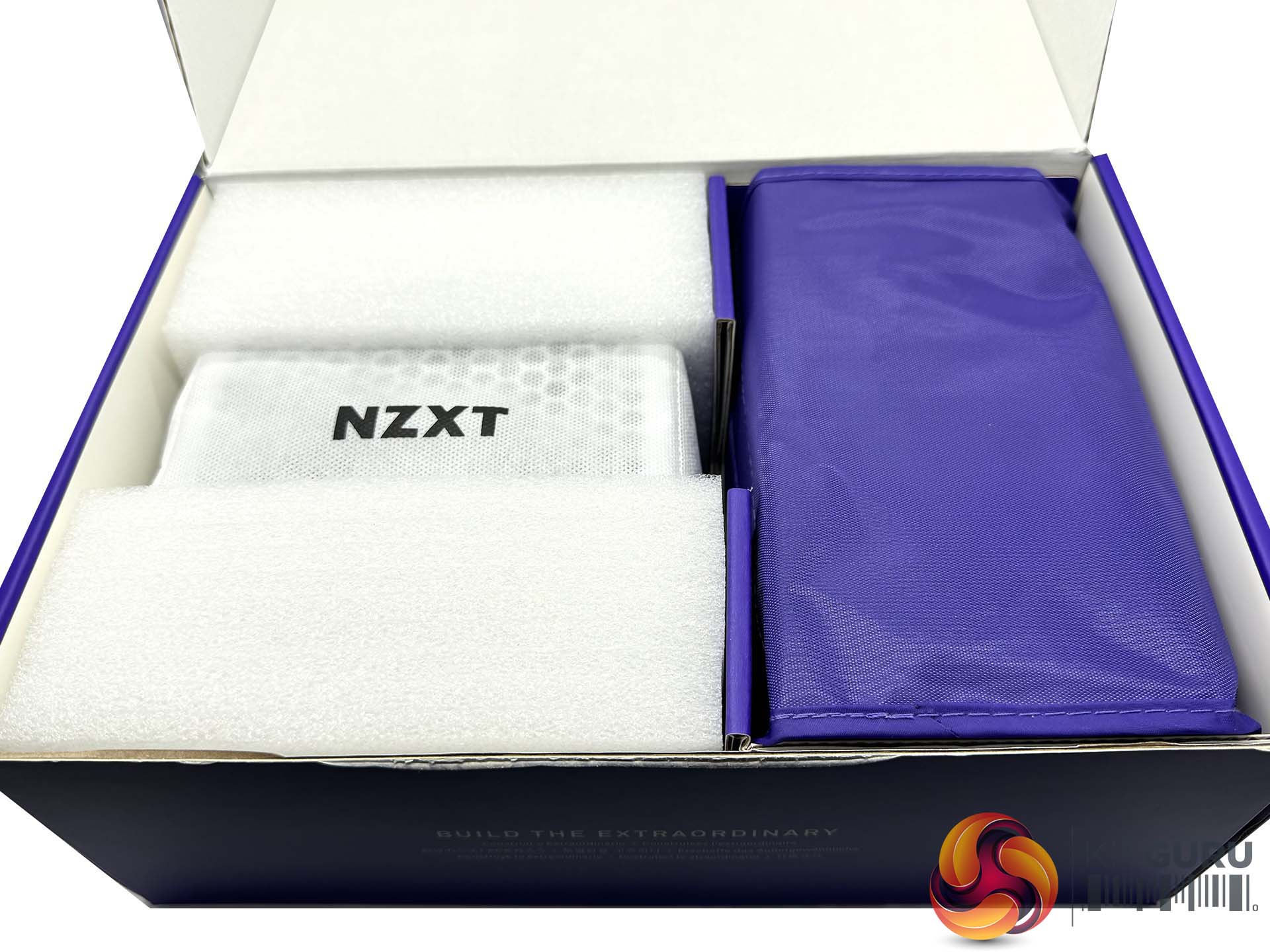
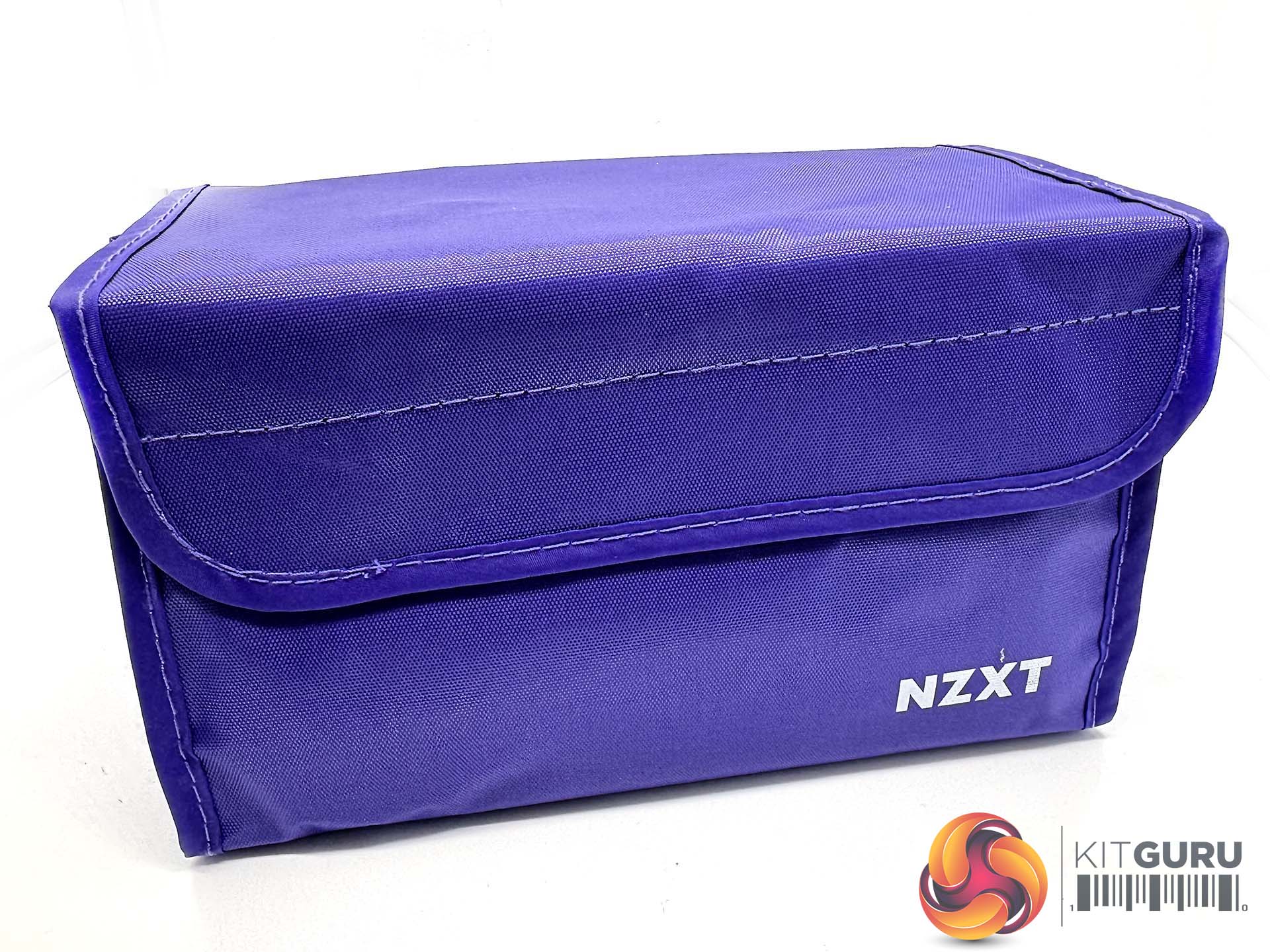
The box contains a cool looking purple bag of cables, alongside the power supply which is protected between slabs of foam. This is always good to see as some power supplies we have reviewed lately are just shipping inside the outer cardboard box without any kind of shipping protection.
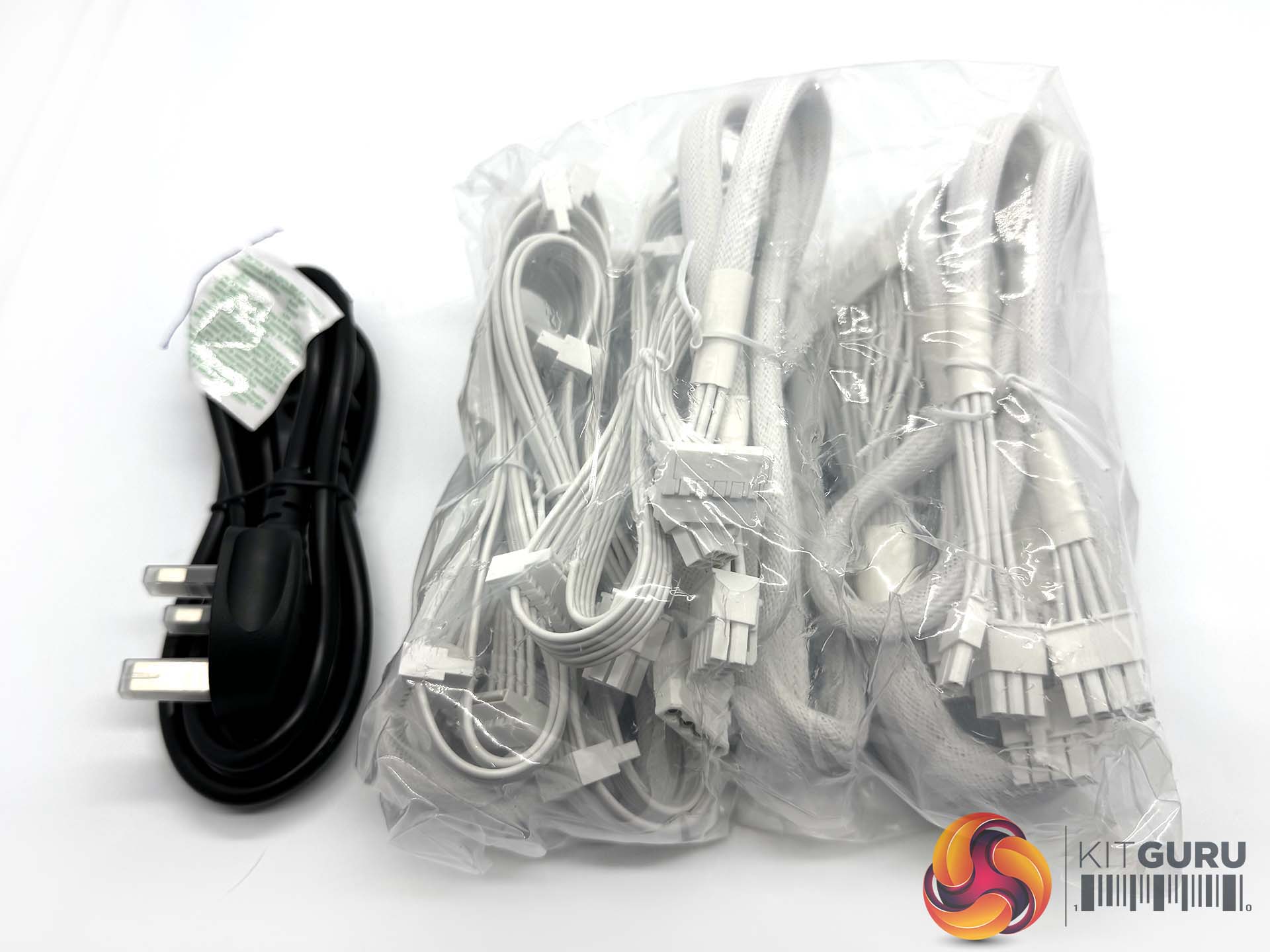
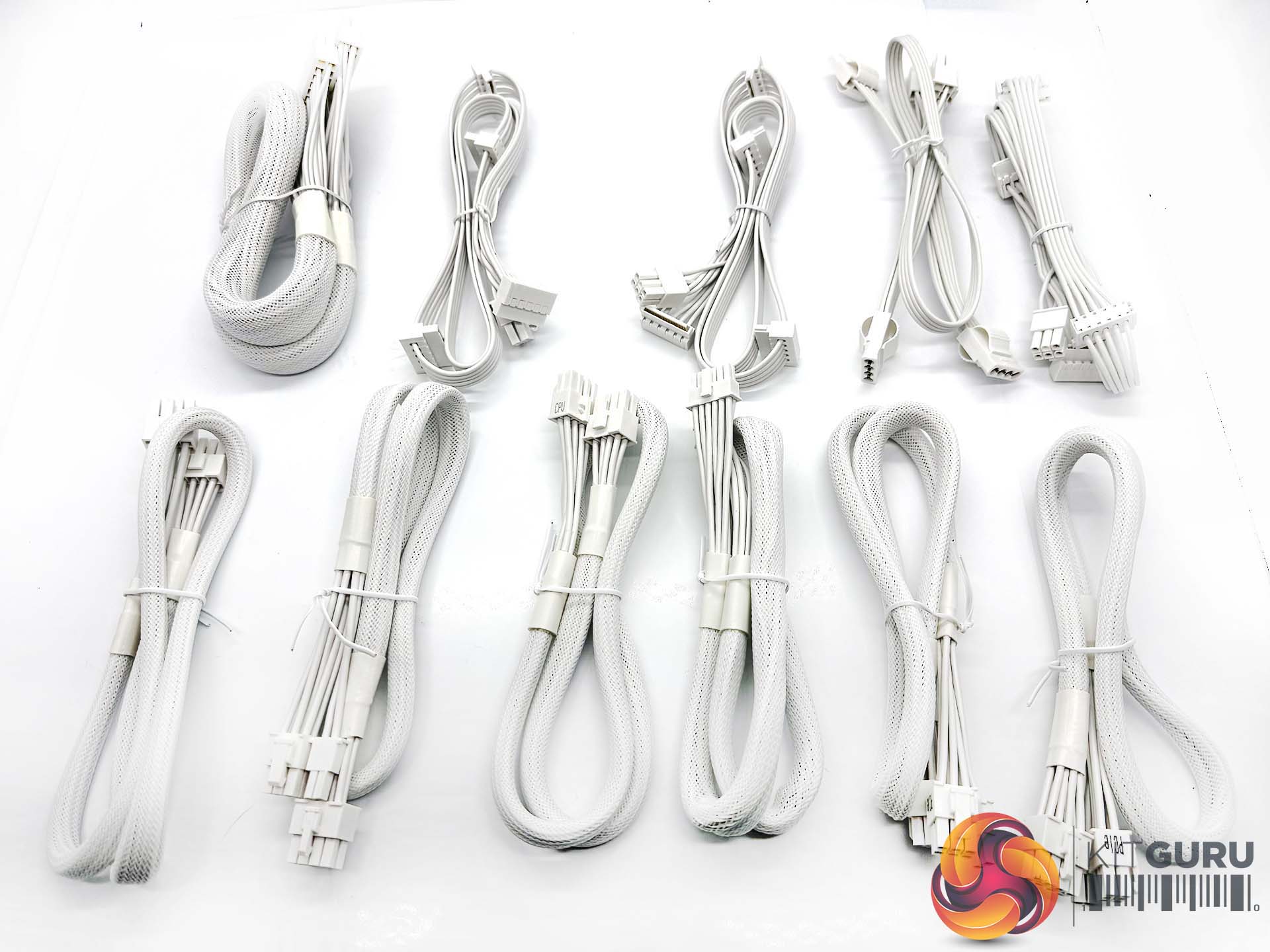
Inside the purple bag the cables are wrapped up in plastic wrap, along with a power cable and some screws. The cable quality is pretty good and we are pleased to see NZXT didn't cheap out and supply black cables in the box!
| NZXT C1000 Cables | |
| 24-Pin ATX Power Cablex | x1 |
| 4+4-pin CPU Power Cable |
x1
|
| 8-pin CPU Power Cable |
x1
|
| 6+2-pin PCIe Power Cable |
x3
|
| 16-pin (12+4) 12V-2×6 PCIe Cable | x1 |
| SATA Cable | x12 |
| Peripherals Cable | x4 |
| 6-32 Screws | x4 |
| AC Power Cord | x1 |
| NZXT C1000 Cable length | |
| 24-Pin ATX Power Cable | 600mm with nylon sleeving |
| 4+4-pin CPU Power Cable |
700mm with nylon sleeving
|
| 8-pin CPU Power Cable | 700mm with nylon sleeving |
| 6+2-pin PCIe Power Cable | 650mm with nylon sleeving |
| 16-pin (12+4) 12V-2×6 PCIe Cable | 650mm with nylon sleeving |
| SATA Cable | 500 mm + 150mm |
| Peripherals Cable | 500 mm + 150mm |

The NZXT C1000 power supply measures 150mm x 85mm x 160mm (WxHxD) with a weight of around 1.83kg. This is a very nicely put together power supply with a simple appearance to suit a variety of white builds.

It's nice to see that NZXT have included a white fan to fall in line with the overall aesthetic. NZXT have also added a chrome bar along one side with some ‘NZXT' branding. It is good to see they have kept the holes large around the fan so as not to impede airflow.

The modular bay is split over two rows with each section clearly labelled for ease of use during the installation phase.

On the other side is a power connector slot, a power switch and a zero fan button. This switch enables the fan to be disabled under lighter loads, until a specific temperature is reached.

The power supply is able to deliver 83.3A to the +12V rail, along with 22A to both +3.3V and +5V rails.
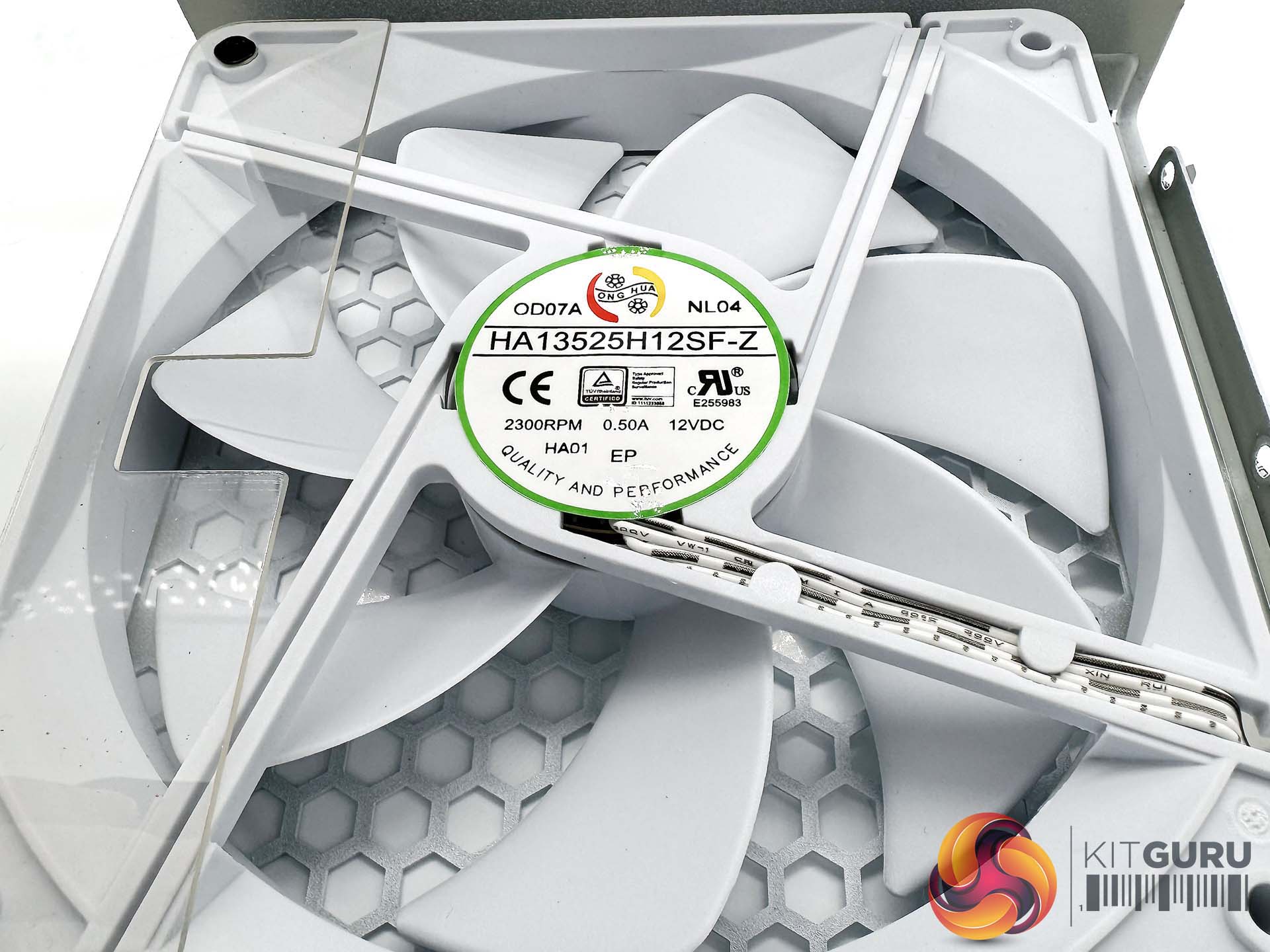
We like to see Hong Hua Fluid Dynamic Bearing (FDB) fans in power supplies. FDB fans are great for power supplies as they combine great performance against reasonable costs. This is the first white one I think I have seen! This fan is a HA13525H12SF-Z rated at 2,300rpm, 0.5A 12 VDC. This series of fans is used quite often in higher quality units we test.
There is a small plastic flap on the side of the fan to direct the airflow specifically over the heatsinks and components underneath.
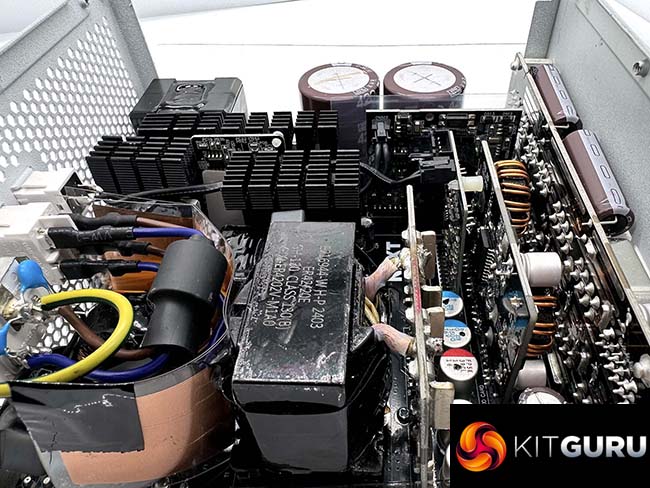
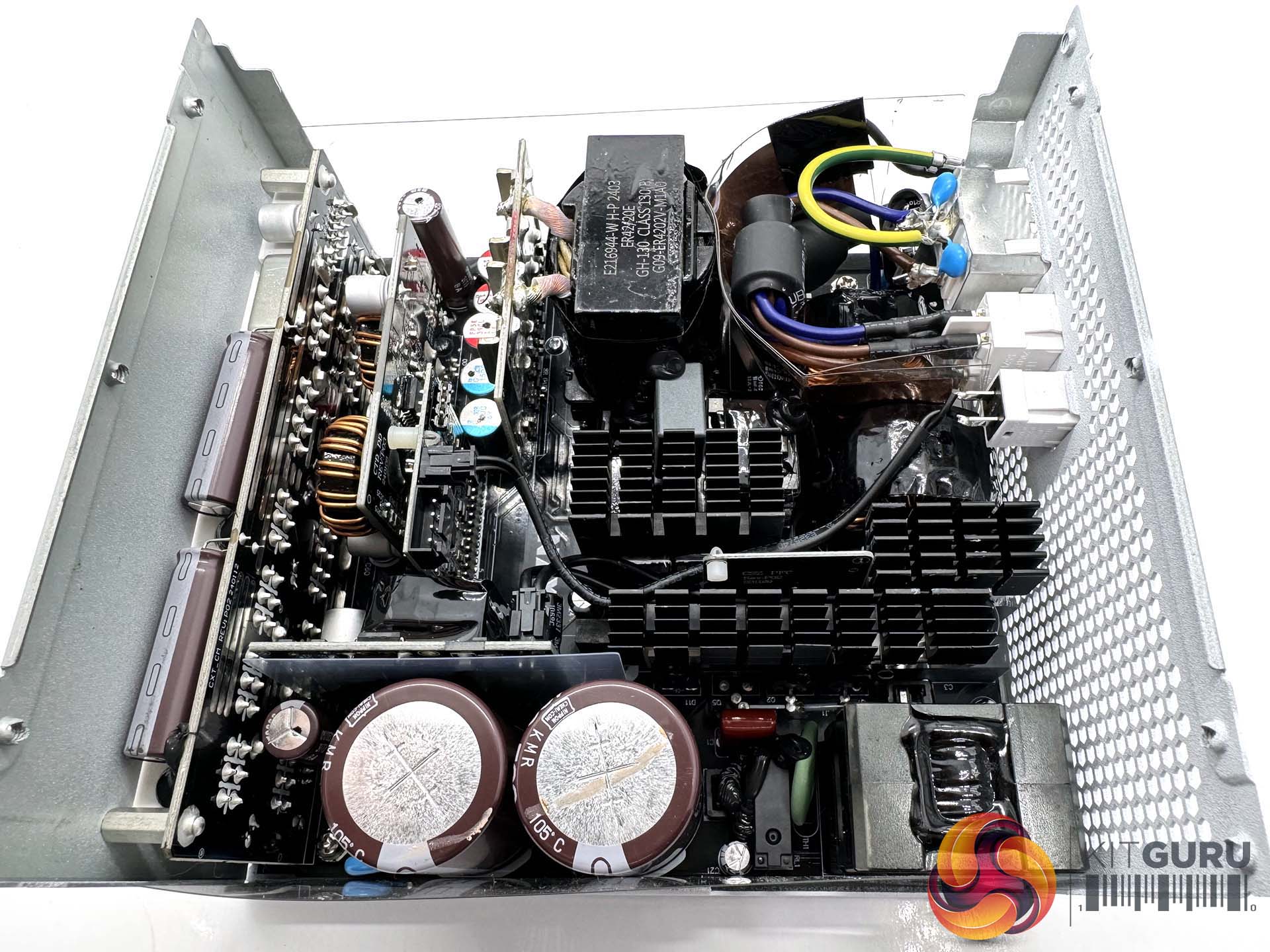
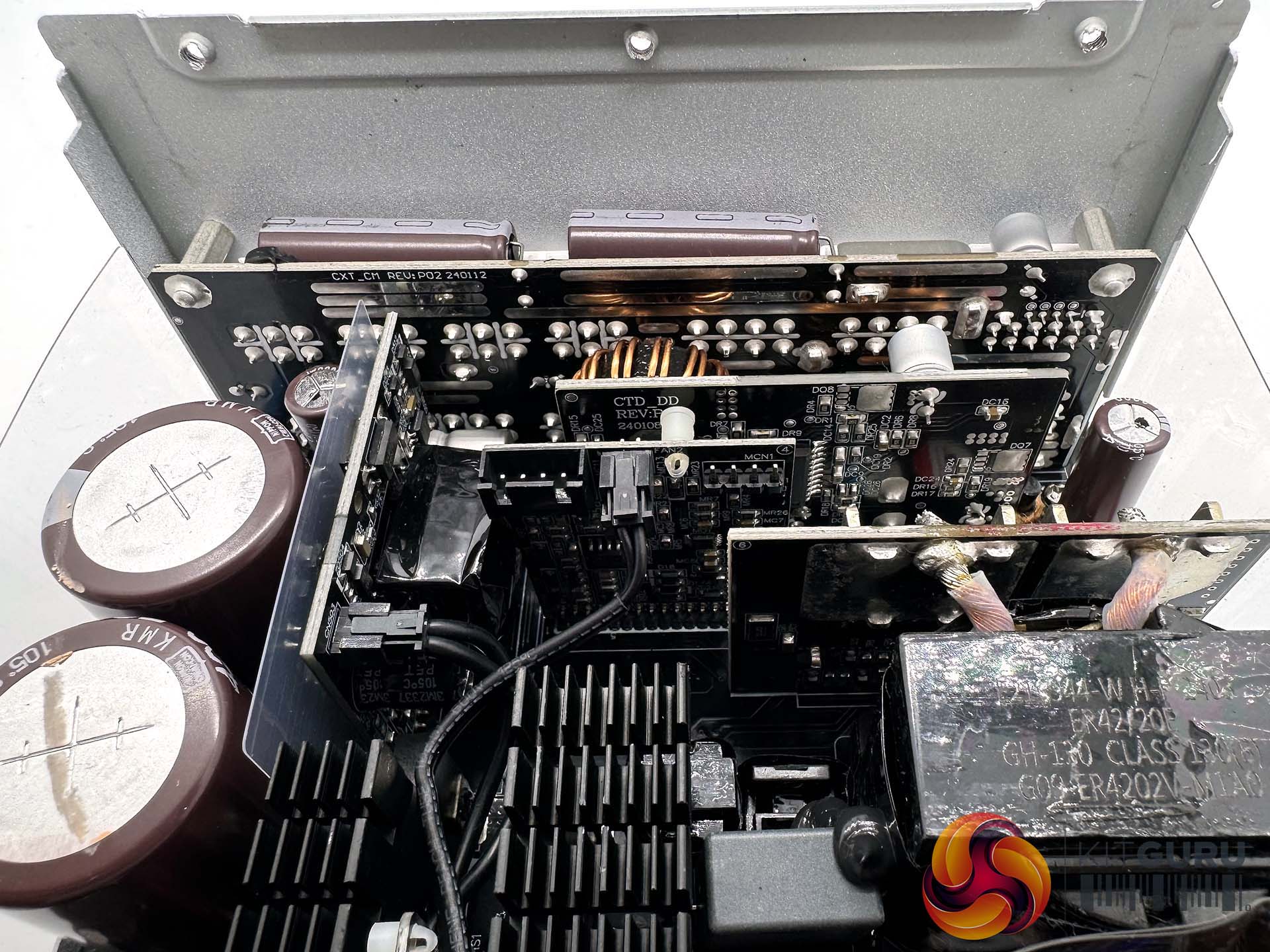
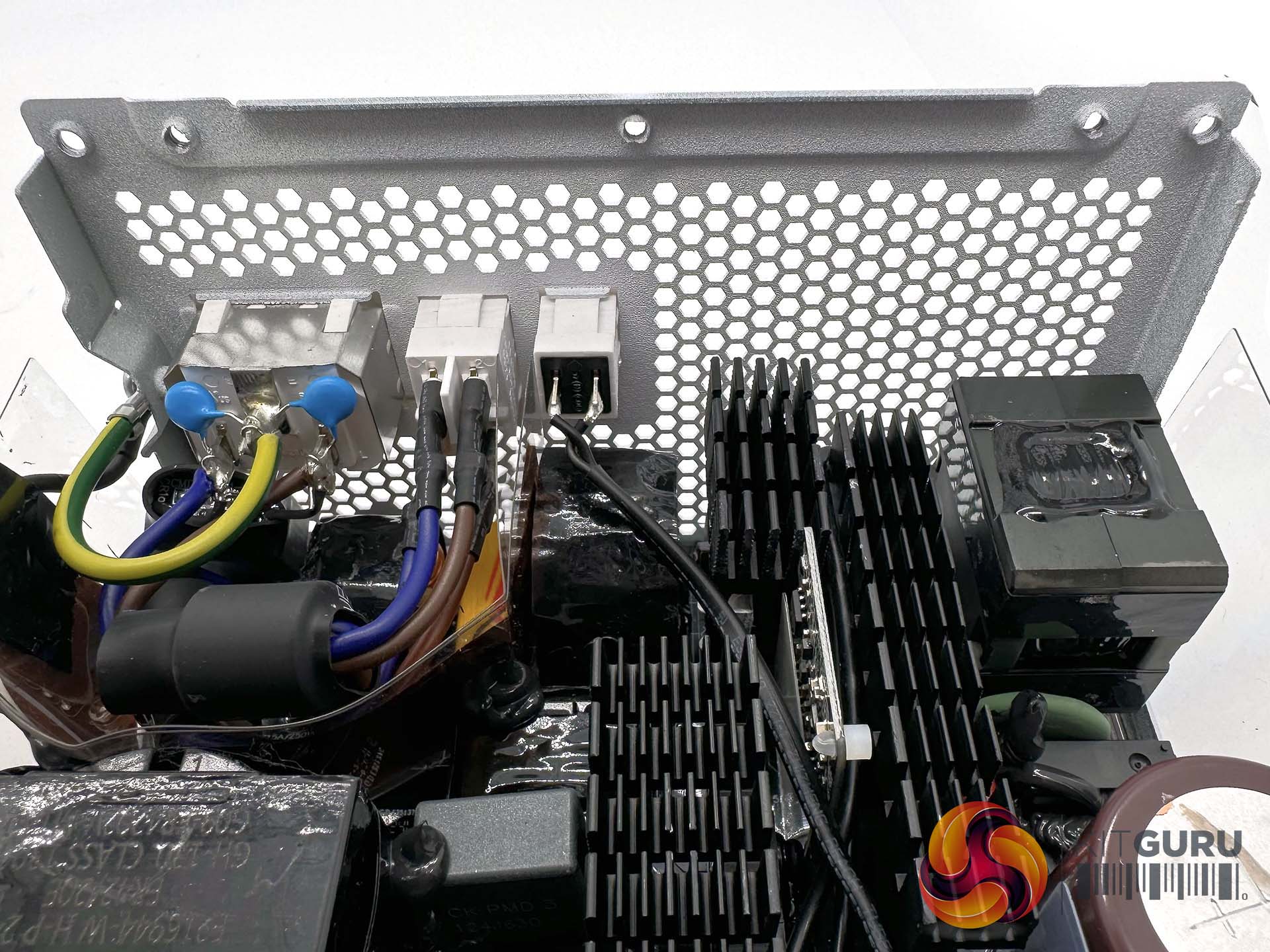
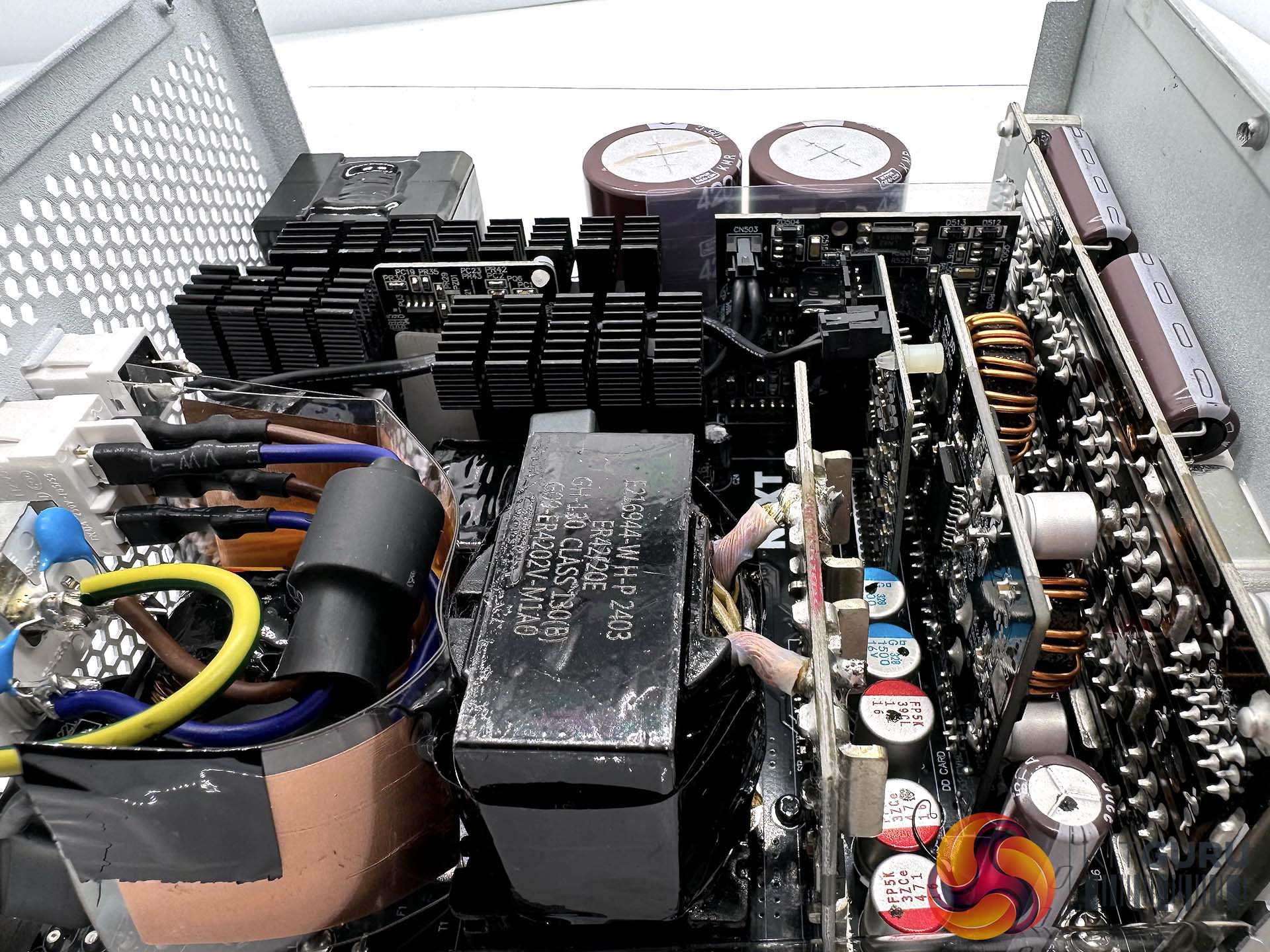
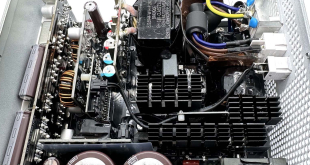
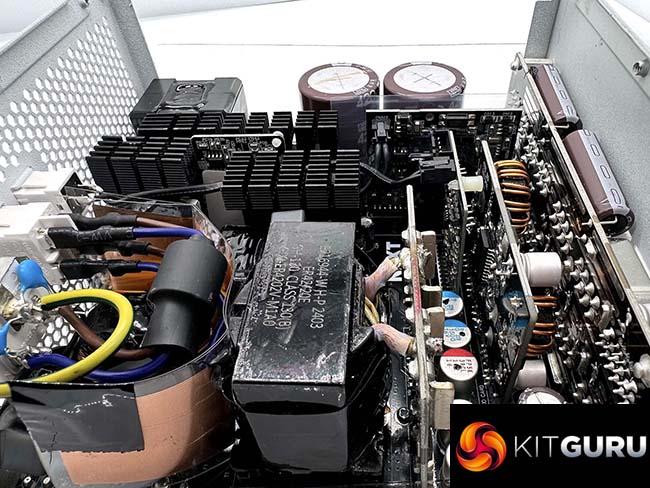
NZXT are using CWT as their OEM of choice for this unit. It is a fairly common place design – a half bridge topology on the primary side with an LLC resonant converter. On the secondary side a synchronous system rectifies the 12V rail via Infineon FETs along with DC-DC converters to generate the minor rails.
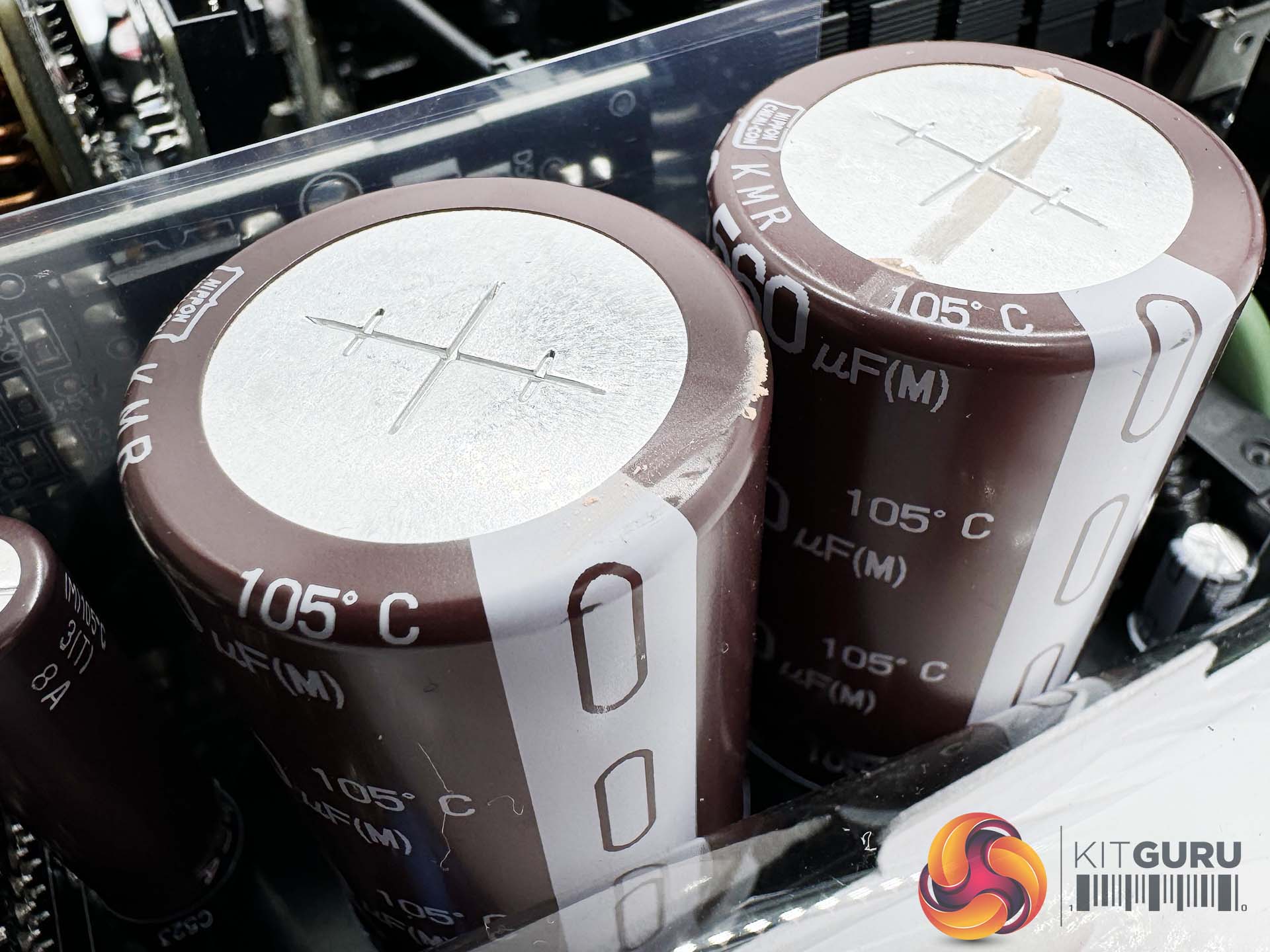
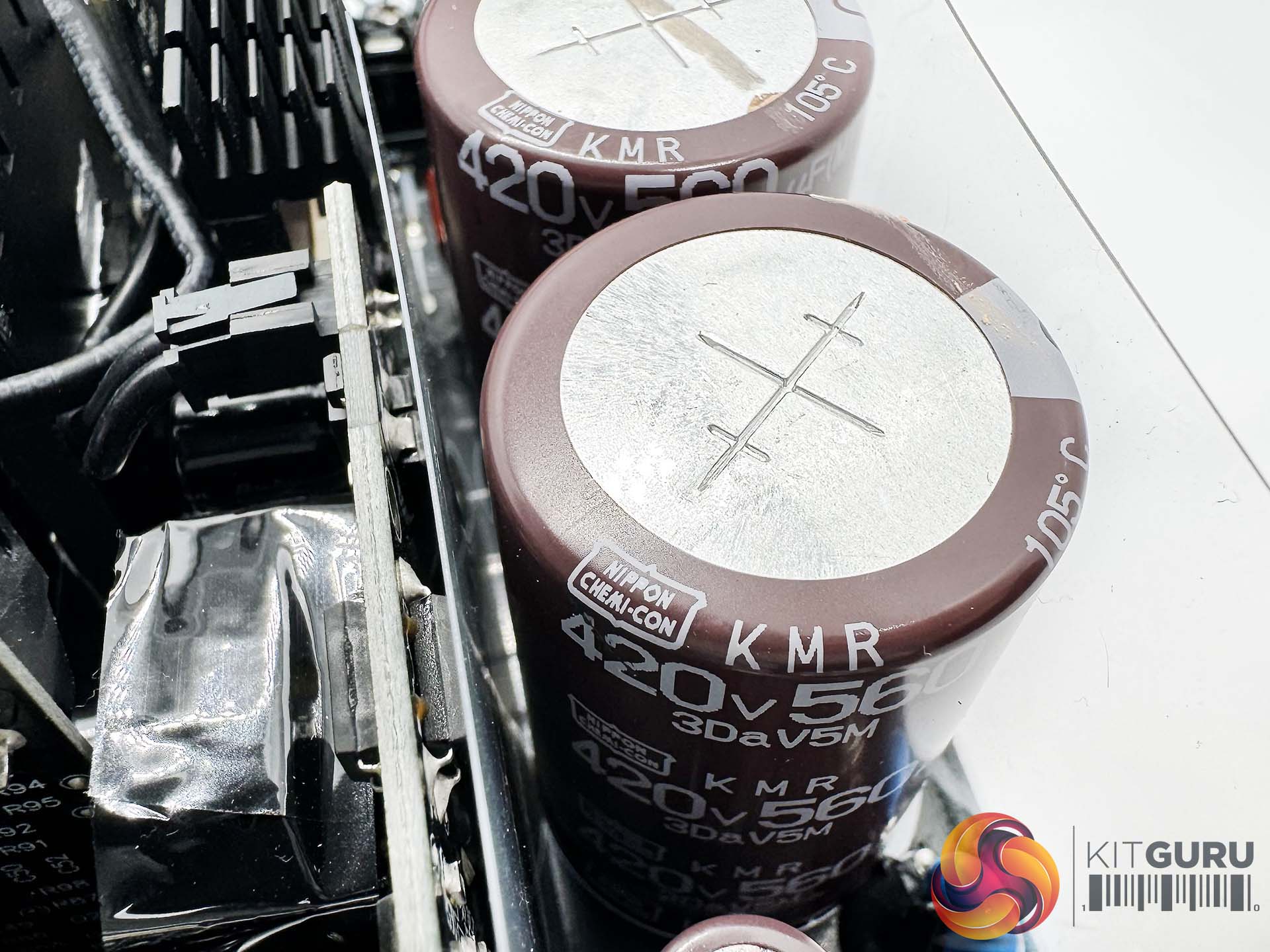
The soldering quality is high and the overall design uses high quality components throughout. We saw Nichicon primary capacitors in the 850W unit, but the 1000W adopts 105c KMR Nippon Chemi Con caps. The two primary caps are 420V 560uF for a total of 1120uF. Both Nichicon and Nippon Chemi Con are very high quality (as well as Rubycon, which also may be used).
Correctly testing power supplies is a complex procedure and KitGuru have configured a test bench which can deliver up to a 2,000 watt DC load.
We test ambient temperatures at 35c in our environment to greater reflect warmer internal chassis conditions.
We use combinations of the following hardware:
• SunMoon SM-268
• CSI3710A Programmable DC load (+3.3V and +5V outputs)
• CSI3711A Programmable DC load (+12V1, +12V2, +12V3, and +12V4)
• Extech Power Analyzer
• Extech MultiMaster MM570 digital multimeter
• SkyTronic DSL 2 Digital Sound Level Meter (6-130dBa)
• Digital oscilloscope (20M S/s with 12 Bit ADC)
• Variable Autotransformer, 1.4 KVA
We test in a single +12V configuration.
|
DC Output Load Regulation
|
||||||||||
|
Combined DC Load |
+3.3V
|
+5V
|
+12V
|
+5VSB
|
-12V | |||||
|
A
|
V
|
A
|
V
|
A
|
V
|
A
|
V
|
A | V | |
|
100W
|
0.90
|
3.33
|
0.90
|
5.02
|
7.35
|
12.11
|
0.50
|
5.01
|
0.20
|
-12.01
|
|
200W
|
1.60
|
3.33
|
1.64
|
5.02
|
15.13
|
12.10
|
1.00
|
5.00
|
0.20
|
-12.00
|
|
500W
|
3.21
|
3.33
|
3.24
|
5.01
|
38.60
|
12.08
|
1.50
|
5.01
|
0.20
|
-12.01
|
| 750W |
4.03
|
3.33
|
4.17
|
5.01
|
58.53
|
12.07
|
2.00
|
5.01
|
0.30
|
-12.01
|
|
1000W
|
5.45
|
3.33
|
5.51
|
5.01
|
78.13
|
12.06
|
2.50
|
5.01
|
0.30
|
-12.01
|
The load regulation of this power supply is excellent across the board.
| NZXT C1000 PSU | Maximum Load |
| 1115W |
The power supply managed to deliver 1115W before shutting down safely.
Next we want to try Cross Loading. This basically means loads which are not balanced. If a PC for instance needs 500W on the +12V outputs but something like 30W via the combined 3.3V and +5V outputs then the voltage regulation can fluctuate badly.
| Cross Load Testing | +3.3V | +5V | +12V | -12V | +5VSB | |||||
| A | V | A | V | A | V | A | V | A | V | |
| 885W | 2.0 | 3.33 | 2.0 | 5.01 | 72.0 | 12.02 | 0.2 | -12.01 | 0.50 | 5.01 |
| 240W | 20.0 | 3.32 | 23.0 | 5.01 | 2.0 | 12.03 | 0.2 | -12.01 | 0.50 | 5.01 |
This power supply handled our cross load test very well, holding stable results across the range.
We then used an oscilloscope to measure AC ripple and noise present on the DC outputs. We set the oscilloscope time base to check for AC ripple at both high and low ends of the spectrum. ATX12V V2.2 specification for DC output ripple and noise is defined in the ATX 12V power supply design guide.
|
ATX12V Ver 2.2 Noise/Ripple Tolerance
|
|
|
Output
|
Ripple (mV p-p)
|
|
+3.3V
|
50
|
|
+5V
|
50
|
|
+12V1
|
120
|
|
+12V2
|
120
|
|
-12V
|
120
|
|
+5VSB
|
50
|
Obviously when measuring AC noise and ripple on the DC outputs, the cleaner (less recorded) means we have a better end result. We measured this AC signal amplitude to see how closely the unit complied with the ATX standard.
| AC Ripple (mV p-p) | ||||
| DC Load | +3.3V | +5V | +12V | 5VSB |
| 100W | 5 | 6 | 10 | 4 |
| 250W | 5 | 8 | 11 | 5 |
| 500W | 7 | 8 | 14 | 7 |
| 750W | 9 | 10 | 19 | 8 |
| 1000W | 11 | 11 | 22 | 10 |
Noise suppression is similar to the 850W unit we already reviewed, giving some of the best results we have seen in recent years. This CWT platform is very good with suppressing ripple across the rails.
|
Efficiency (%)
|
|
|
100W
|
89.6
|
|
250W
|
91.5
|
|
500W
|
93.3
|
|
750W
|
92.4
|
|
1000W
|
90.2
|
The efficiency results are really good, and very similar to the results from the C850 tested a while ago. These are superb results for an 80 Plus Gold rated power supply
We take the issue of noise very seriously at KitGuru and this is why we have built a special home brew system as a reference point when we test noise levels of various components. Why do this? Well this means we can eliminate secondary noise pollution in the test room and concentrate on components we are testing. It also brings us slightly closer to industry standards, such as DIN 45635.
Today to test the Power Supply we have taken it into our acoustics room environment and have set our SkyTronic DSL 2 Digital Sound Level Meter (6-130dBa) one meter away from the unit. We have no other fans running so we can effectively measure just the noise from the unit itself.
As this can be a little confusing for people, here are various dBa ratings in with real world situations to help describe the various levels.
KitGuru noise guide
10dBA – Normal Breathing/Rustling Leaves
20-25dBA – Whisper
30dBA – High Quality Computer fan
40dBA – A Bubbling Brook, or a Refrigerator
50dBA – Normal Conversation
60dBA – Laughter
70dBA – Vacuum Cleaner or Hairdryer
80dBA – City Traffic or a Garbage Disposal
90dBA – Motorcycle or Lawnmower
100dBA – MP3 Player at maximum output
110dBA – Orchestra
120dBA – Front row rock concert/Jet Engine
130dBA – Threshold of Pain
140dBA – Military Jet takeoff/Gunshot (close range)
160dBA – Instant Perforation of eardrum
|
Noise (dBA)
|
|
|
100W
|
<28.0
|
|
250W
|
<28.0
|
|
500W
|
30.9
|
|
750W
|
33.9
|
| 1000W | 38.4 |
The high quality FDB fan is not very noticeable until load hits around 750 Watts demand and even then it is pretty un-intrusive. Even when tasked at delivering 1000W the fan is not really too audible over some other system fans running.
|
Temperature (c)
|
||
|
Intake
|
Exhaust
|
|
|
100W
|
37
|
41
|
|
250W
|
38
|
45
|
|
500W
|
40
|
52
|
|
750W
|
45
|
57
|
|
1000W
|
46
|
60
|
No problems from the high grade FDB Hong Hua fan, even at higher speeds. It maintains solid temperatures and is not running at full speed either even at 1000W load.
|
Maximum load
|
Efficiency
|
|
1115W
|
89.4
|
Pushing the PSU above its rated limits generates an efficiency of around 89.4. Not a practical situation in the real world of course.
The NZXT C1000 is a fantastic power supply and like the smaller C850 it performed without any issues during our tests over the last couple of weeks. The fully modular design and lovely white appearance will appeal to a wide audience of enthusiast system builders. Under load it is very quiet and the quality of power it delivers is first class.
Much of what we said in the NZXT C850 review is directly applicable here, so some of this closing text is copied from that review.
Technically this CWT partnered power supply is very good. It handled the cross load test well and has exhibited no issues under extended loads with high end components. In a similar fashion to the C850 ripple suppression rates as one of the best we have tested in years. Efficiency also scores highly, exceeding Gold certification in our testing. We know the unit also passed Cybenetics Gold approval, even if the logo is not visible on the front of the box. We assume the boxes were made before this approval was cleared. Cybenetics is a much more modern and reliable standard than 80 PLUS, so hopefully NZXT update this in the coming period.
While we can't find this unit for sale just yet in the United Kingdom, NZXT told us the price at launch will be £169.99 in the United Kingdom and based on what I was told they are not charging any extra for the white version with the matching white cables. According to pricing details we got from NZXT (below), the USA prices for the white versions of the three units are $5 more.
MSRP:
Black
C1200 Gold: $199.99/£184.99
C1000 Gold: $179.99/£169.99
C850 Gold: $144.99/£139.99
White
C1200 Gold: $204.99/£184.99
C1000 Gold: $184.99/£169.99
C850 Gold: $149.99/£139.99
Based on today's ‘average' costs for an 1000W Gold rated supply, this is priced at the higher end of the market. I do however personally feel the cost is justified. From first impressions of even the box artwork, unit build quality and white cabling, to the technical testing, this power supply is one of the best in its sector. The internal design and use of quality high grade Japanese components will ensure it will last a long time. NZXT also back this PSU up with a 10 year warranty for added peace of mind.
These units should hit the UK market at the end of September.
Discuss on our Facebook page HERE.
Pros:
- Capable of high levels of power for sustained periods.
- Quality 105C Nippon Chemi Con capacitors.
- Great build quality.
- Quiet operation thanks to Fluid Dynamic Bearing fan.
- Fully modular.
- 10 year warranty.
- White cabling – high quality cables too.
- Class leading load regulation.
Cons:
- It's a higher cost unit.
KitGuru says: Like the smaller C850 sibling in the range, the C1000 is one of the best units in its class. It is a carefully thought out design which delivers high quality power, even at full load. Noise suppression is class leading and the adoption of high grade Nippon Chemi Con capacitors ensures long life. For added peace of mind NZXT back this unit up with a full 10 year warranty.