KitGuru KitGuru.net – Tech News | Hardware News | Hardware Reviews | IOS | Mobile | Gaming | Graphics Cards


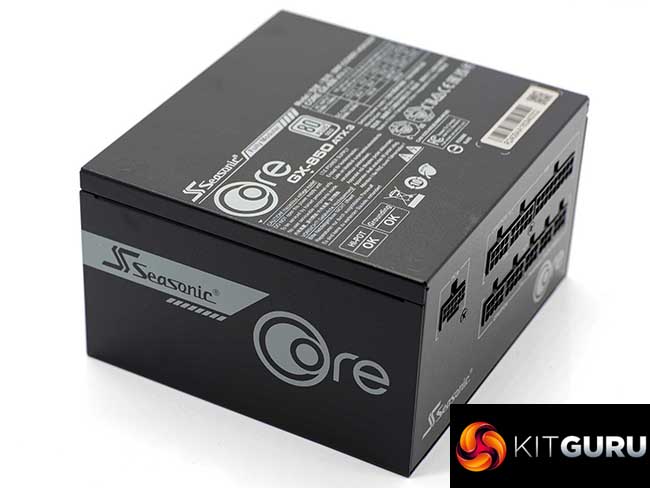
Seasonic have recently released a new range of power supplies targeting the mainstream audience. There are four supplies in this new range of Gold certified units (650W, 750W, 850W and 1000W), and today we look at the 850W model. These Core GX 80 Plus Gold power supplies are fully modular and are ATX 3/PCIe5 compliant.
In the words of Seasonic these units are ‘catering to a broad spectrum of PC enthusiasts and system builders'. Following the newest trends in graphics card design, the units in this family comply with the latest ATX 3.1 and PCIe GEN 5.1 standards'.
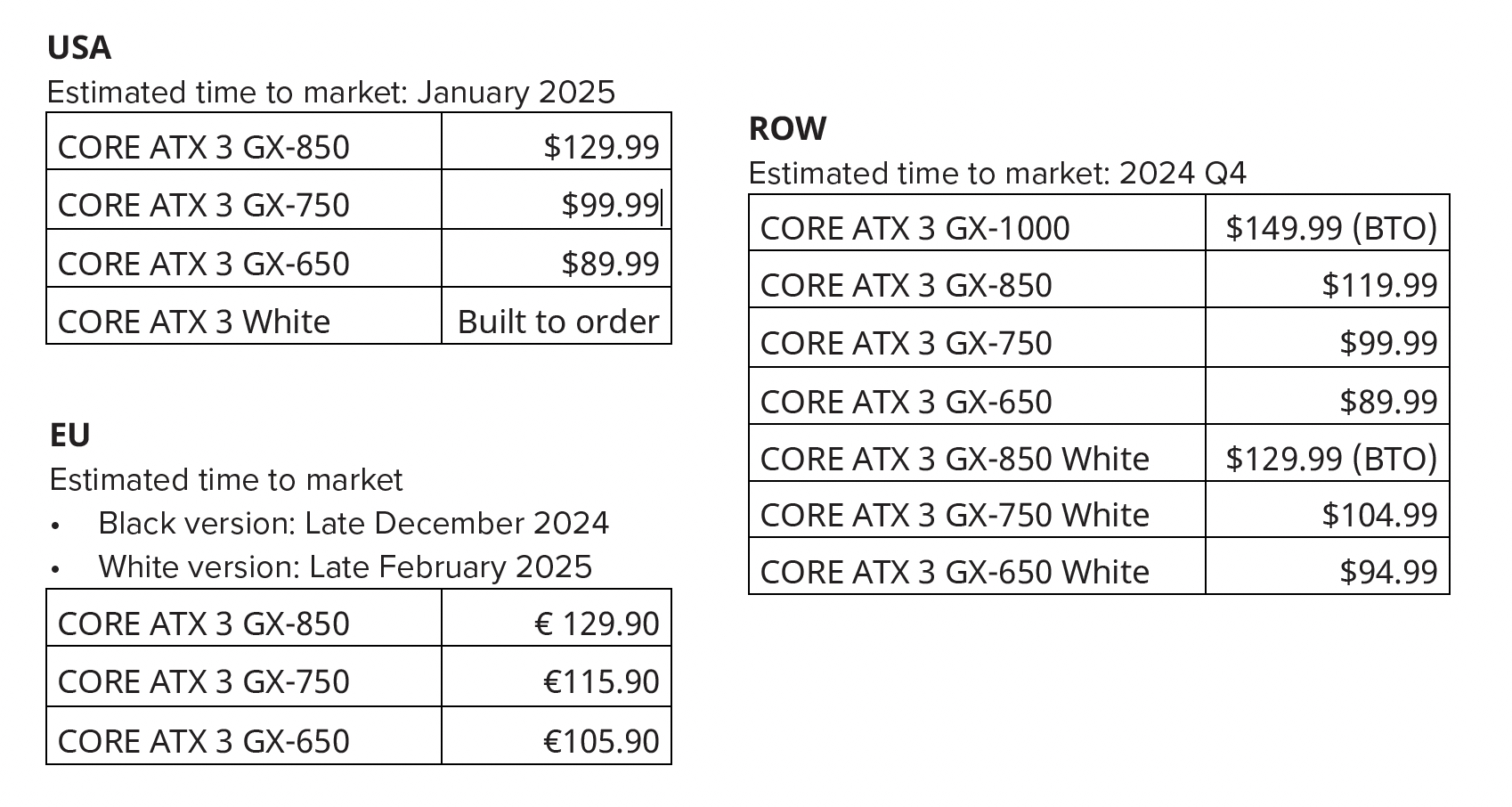
Seasonic are also planning on releasing white versions of these units and according to literature we received from the company the white versions will be released in Europe late February. North America release dates are January 2025 for black colour and ‘Build to order only' for white colour. They also say stock availability may vary depending on each country.
These power supplies are positioned as a mid tier unit in the Seasonic range with a 7 year warranty, below the Prime (12 year warranty) and Focus (10 year warranty) power supplies and above the G12 and B12 (both 5 year warranty).
Product overview:
- New Seasonic OptiSink design
- 80 PLUS® Gold Certified
- ATX 3 and PCIe 5 Standard
- 140 mm Compact Size
- Hydro-Dynamic Bearing (HDB) Silent Fan
- Fully Modular Braided Pattern Cables
- Passed 4+1 Dynamic Overload Tests
- Native 12V-2×6 16-Pin Connector and Modular Cable
- 7 Years Warranty
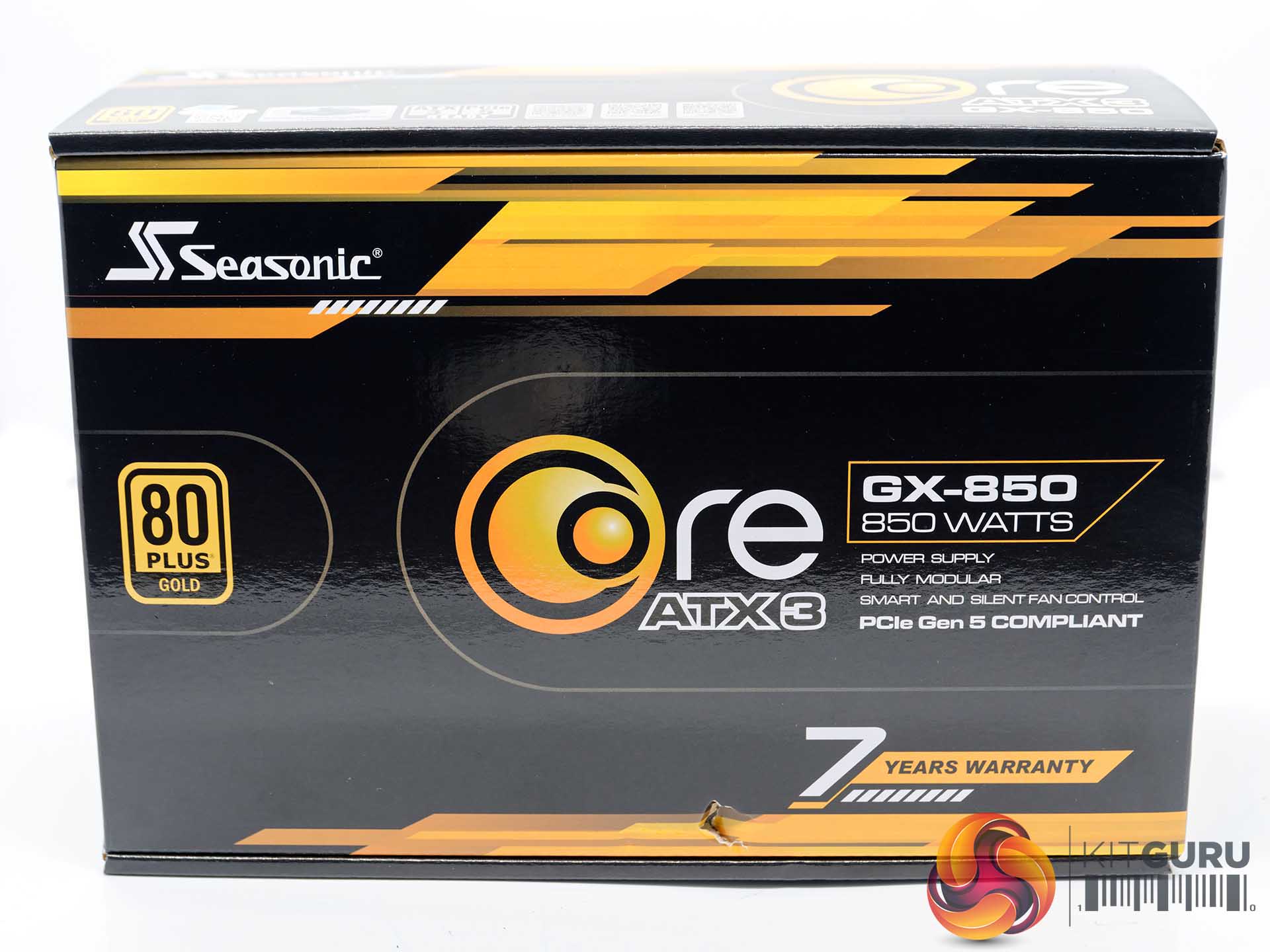
The Seasonic Core GX 850 ships in a brightly yellow accented box – no high resolution images of the power supply are on show, it is just a generic design with a modest 7 year warranty listed on the front and the 80 Plus Gold Certification badge on display. Yet again, no Cybenetics badge approval on the front which is surprising to see.
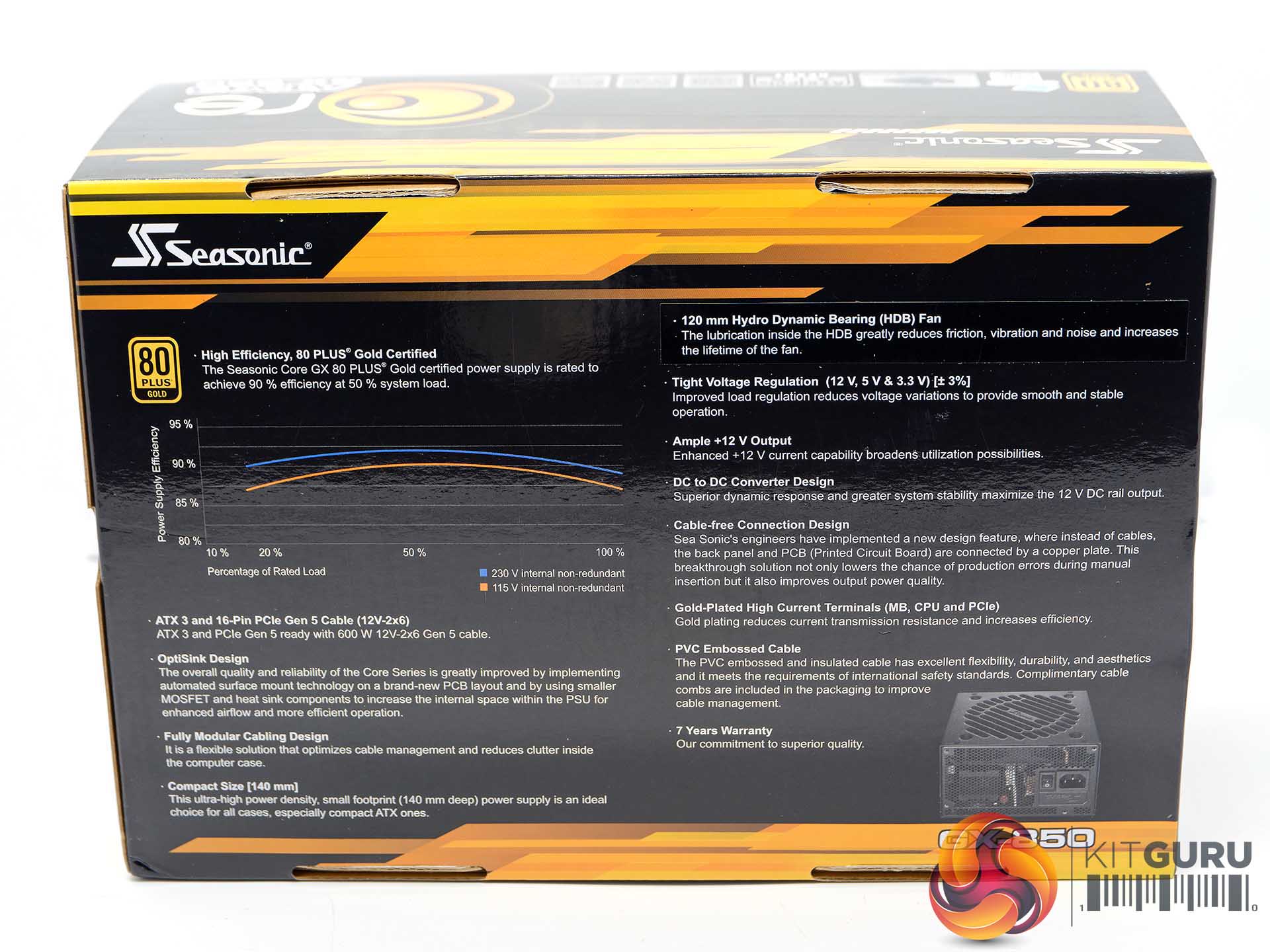
The rear of the box lists some key features – including an efficiency graph and the ‘optisink' design.
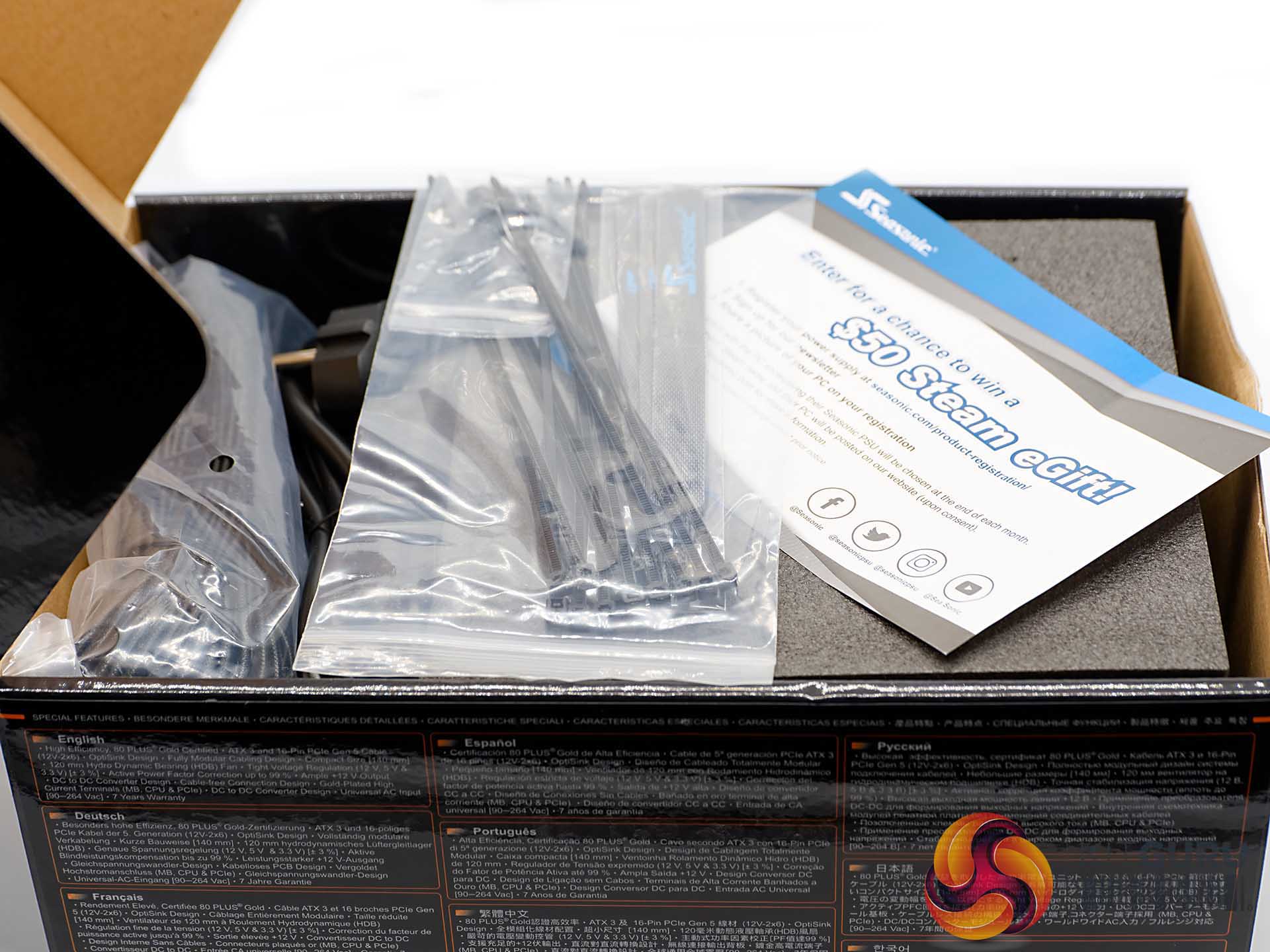
Inside the box, the power supply itself is protected between foam blocks. The accessories and cables are set to one side along with some literature on the product.
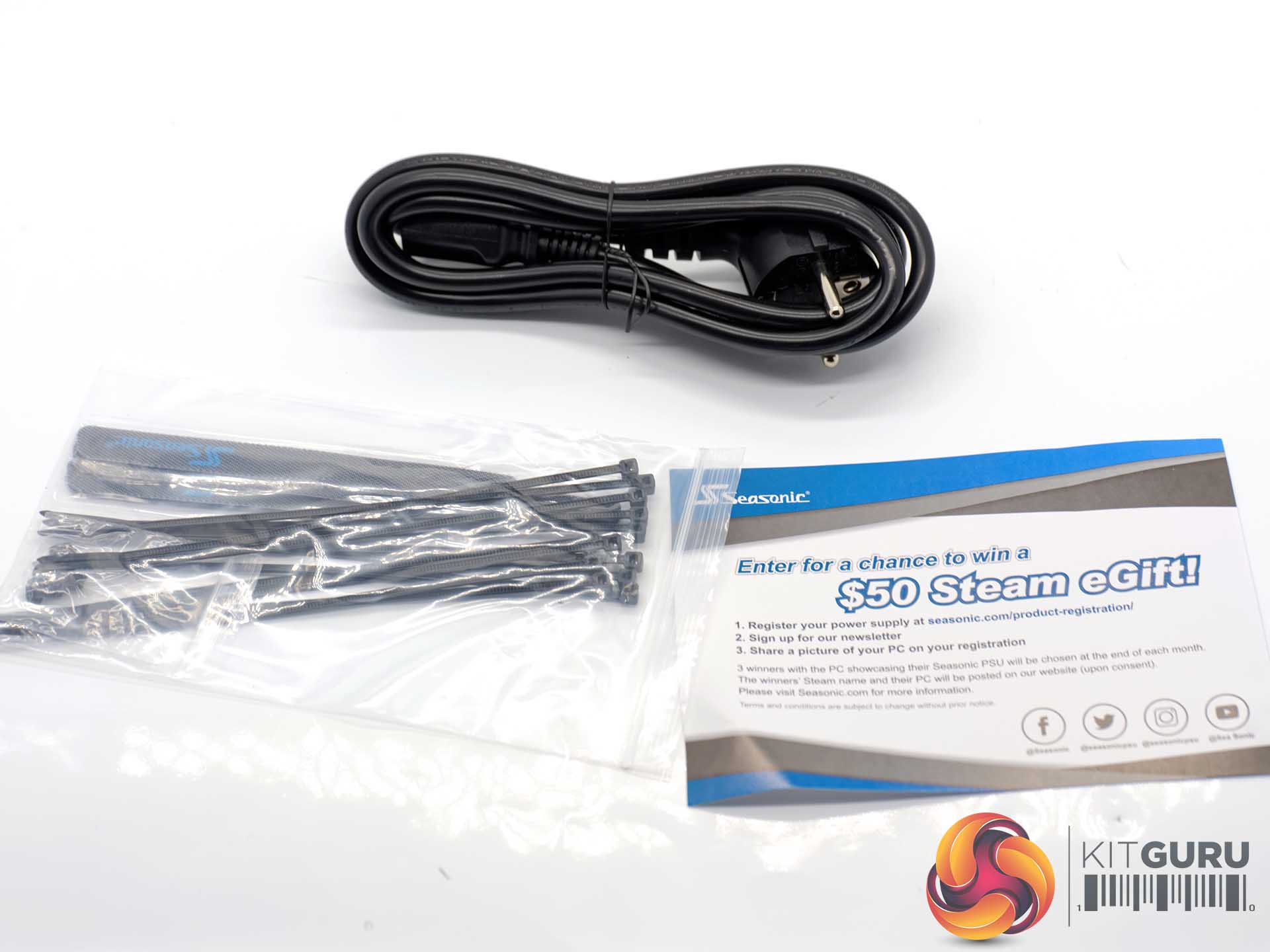
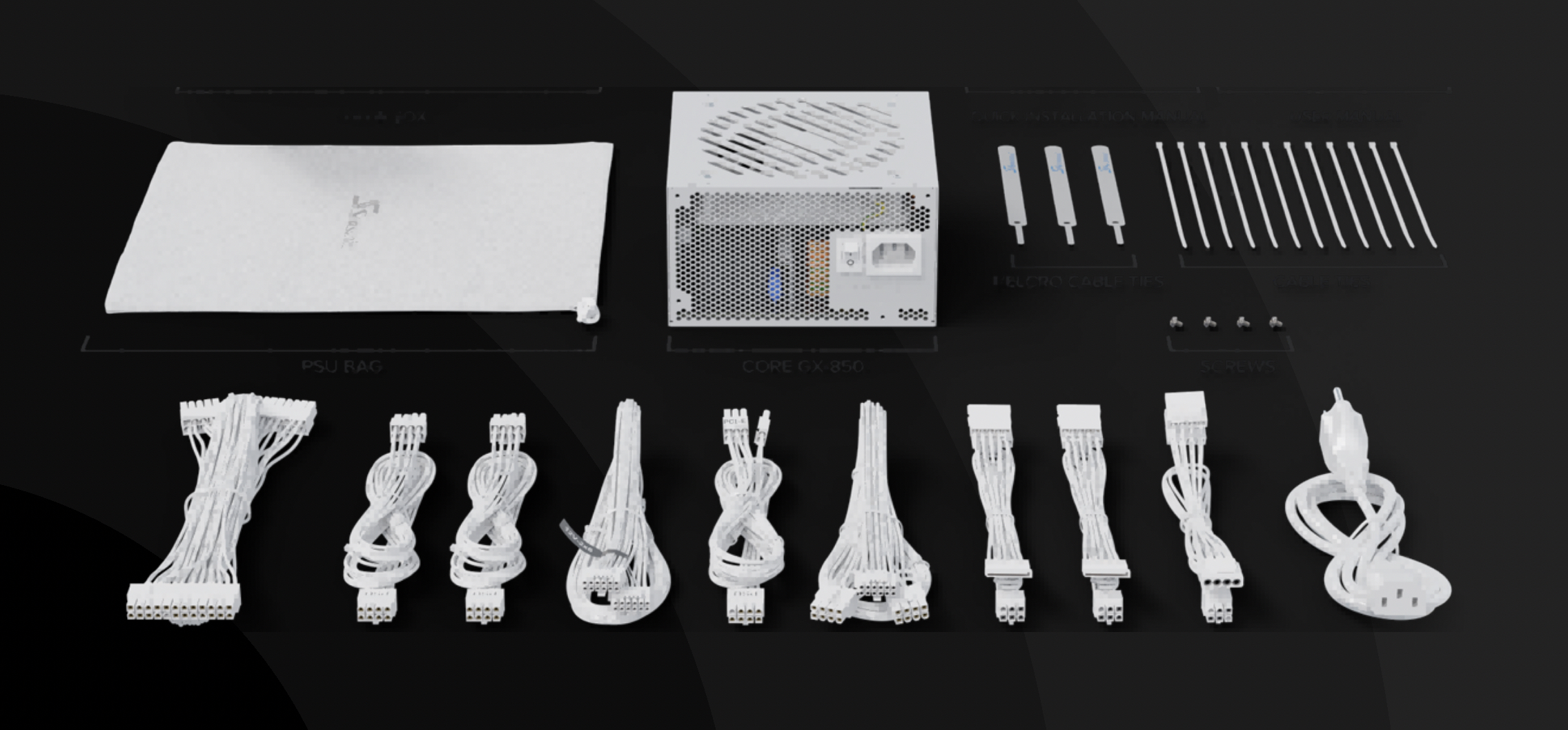
The box contains some cable ties, screws for mounting, a regional specific power cable and some literature.
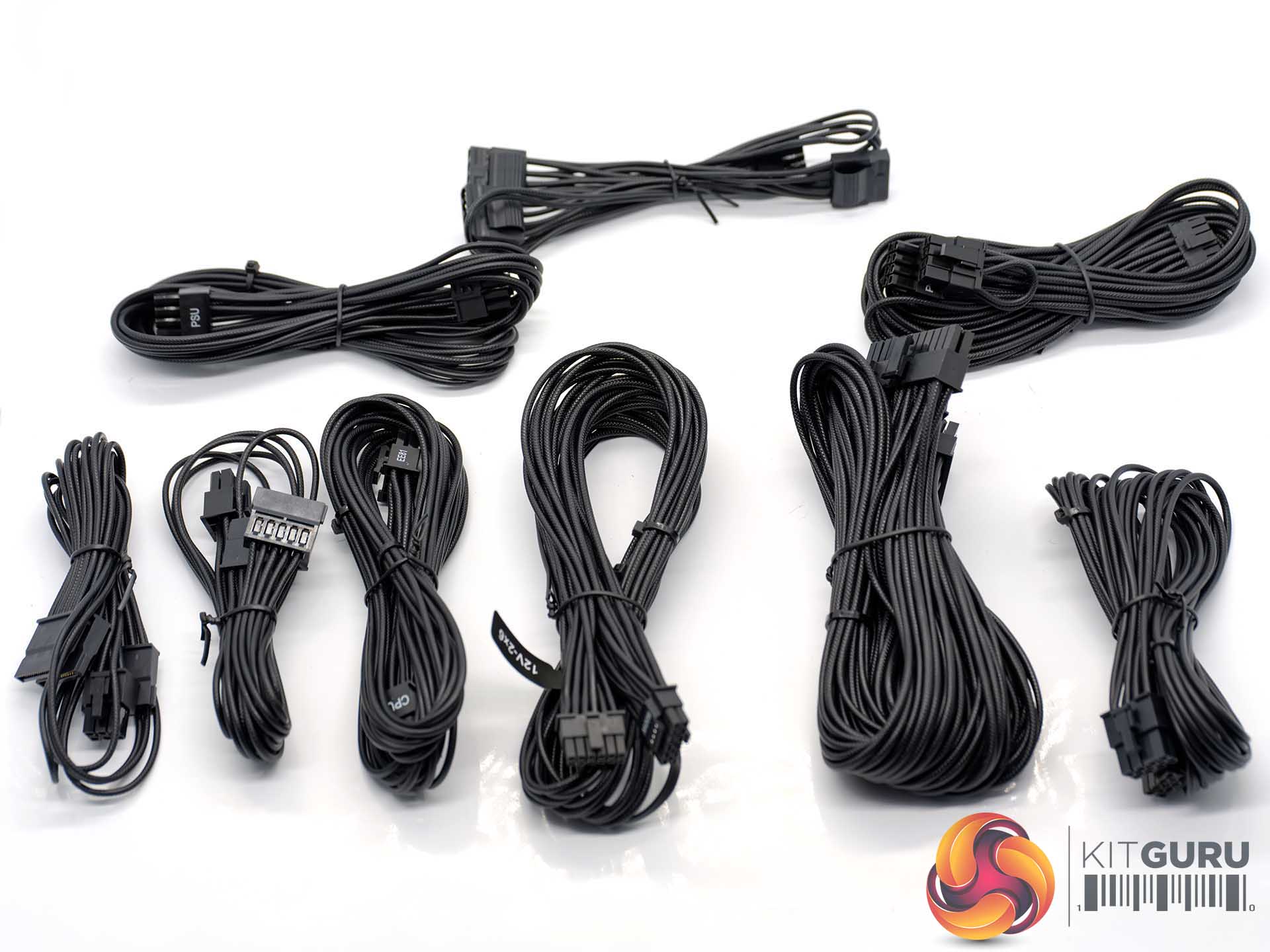
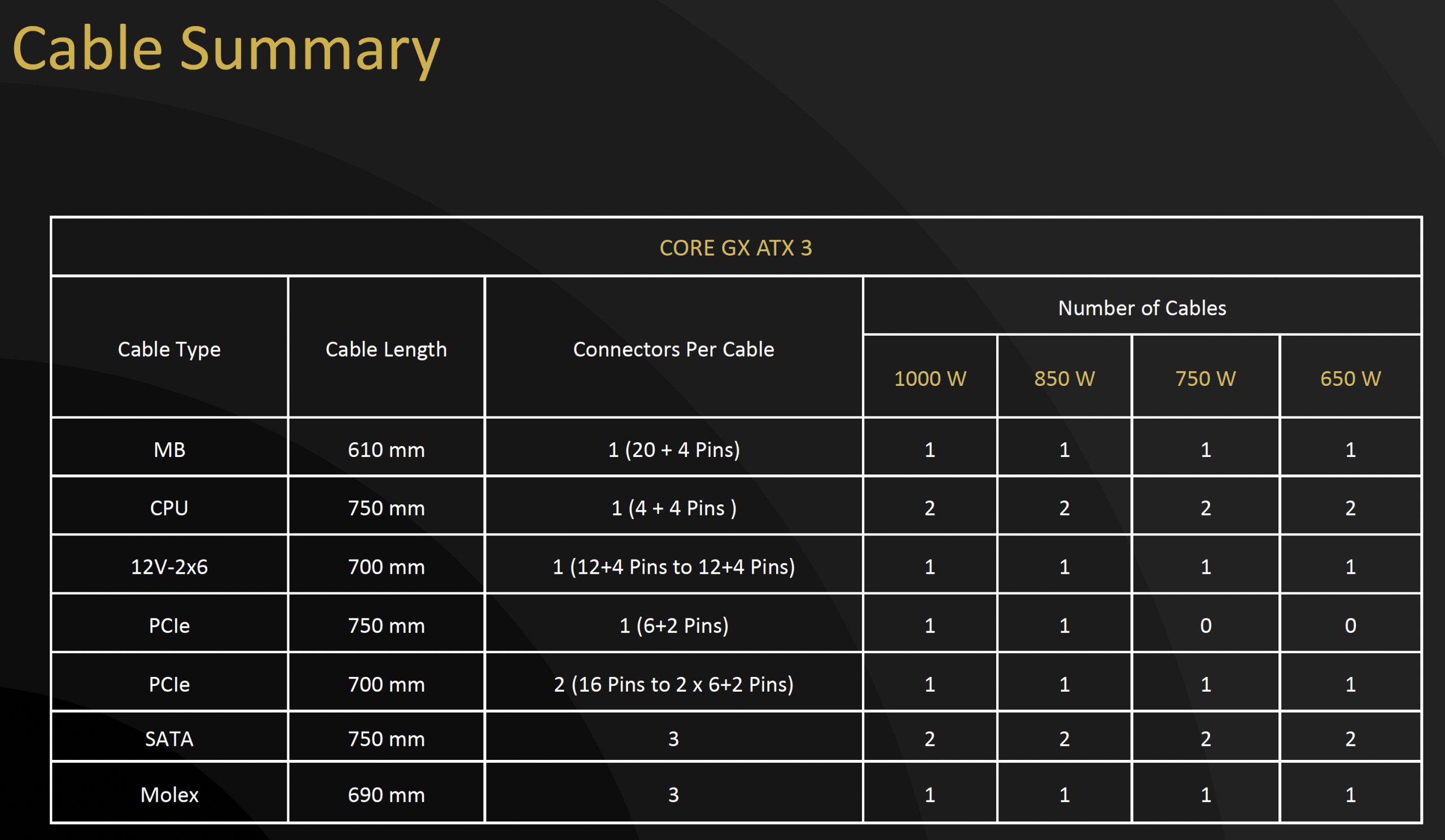
The table above shows a list of cables for each of the units in this range. The 850W power supply I am reviewing today seems to have enough cables to suit a wide variety of mid power demand gaming systems. The cables are individually braided and look pretty good.
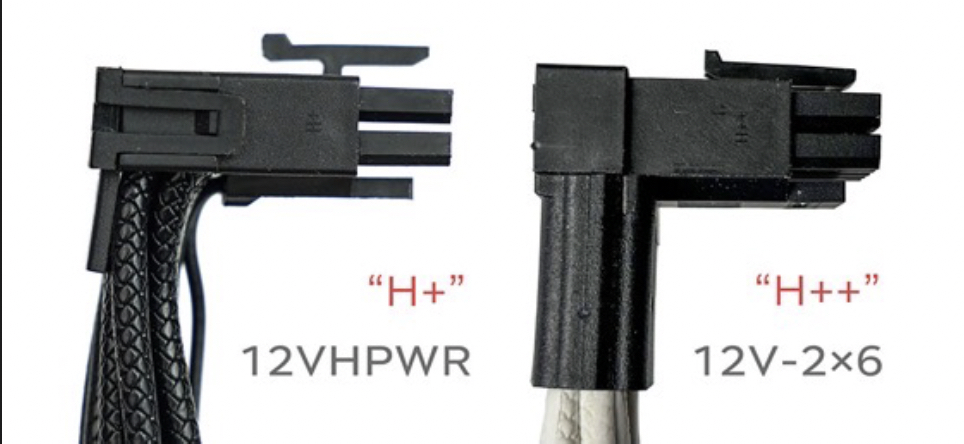
The 12VHPWR connector is marked with “H+” and the 12V-2×6 connector is marked with “H++” to indicate a pin/terminal that supports 9.2A or higher current. Both connector types support up to 600W output power.
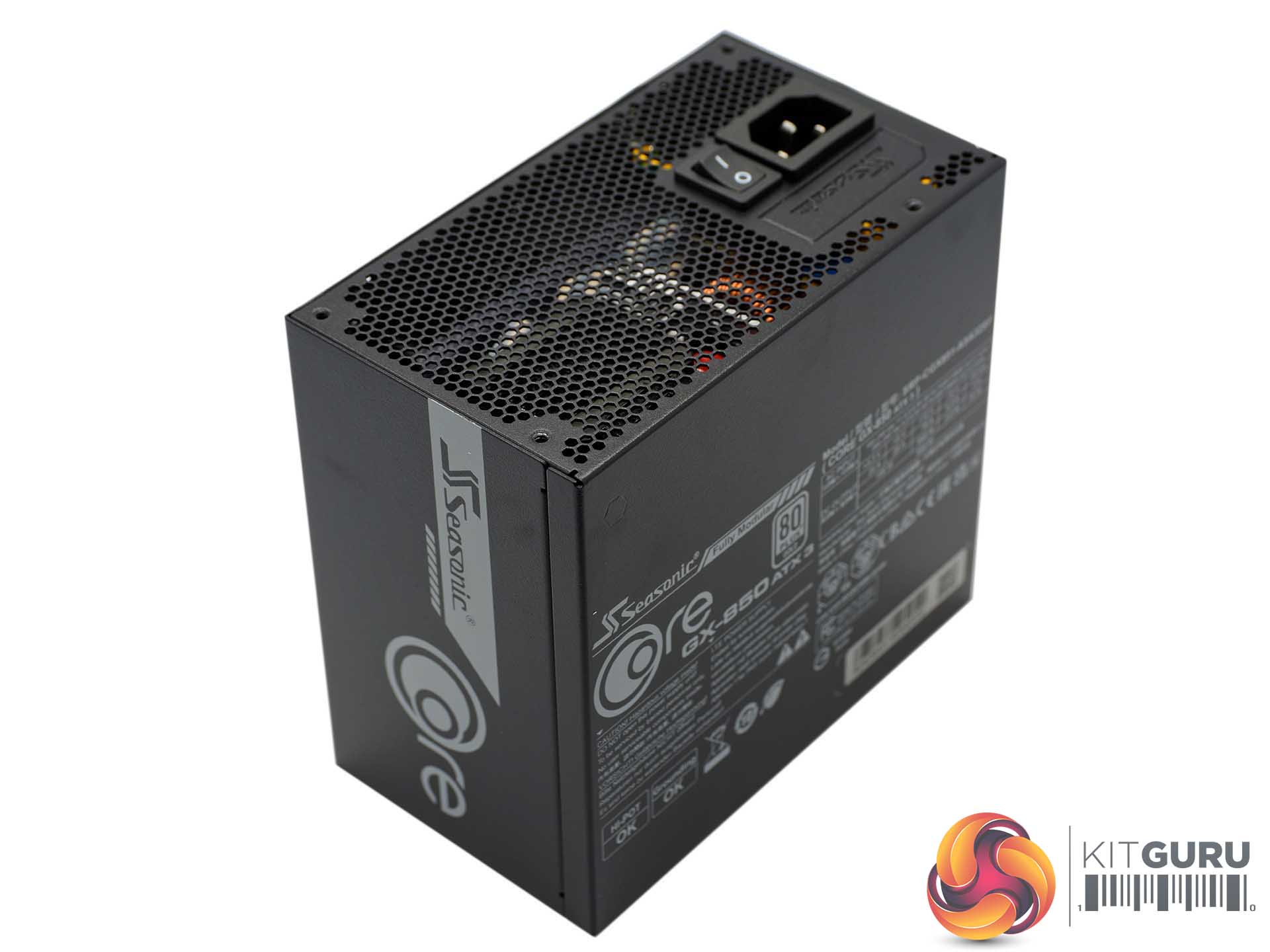
The Core GX 850 is a diminutive ATX unit measuring 140mm x 150 mm x 86 mm – making it ideal for many small form factor chassis designs.
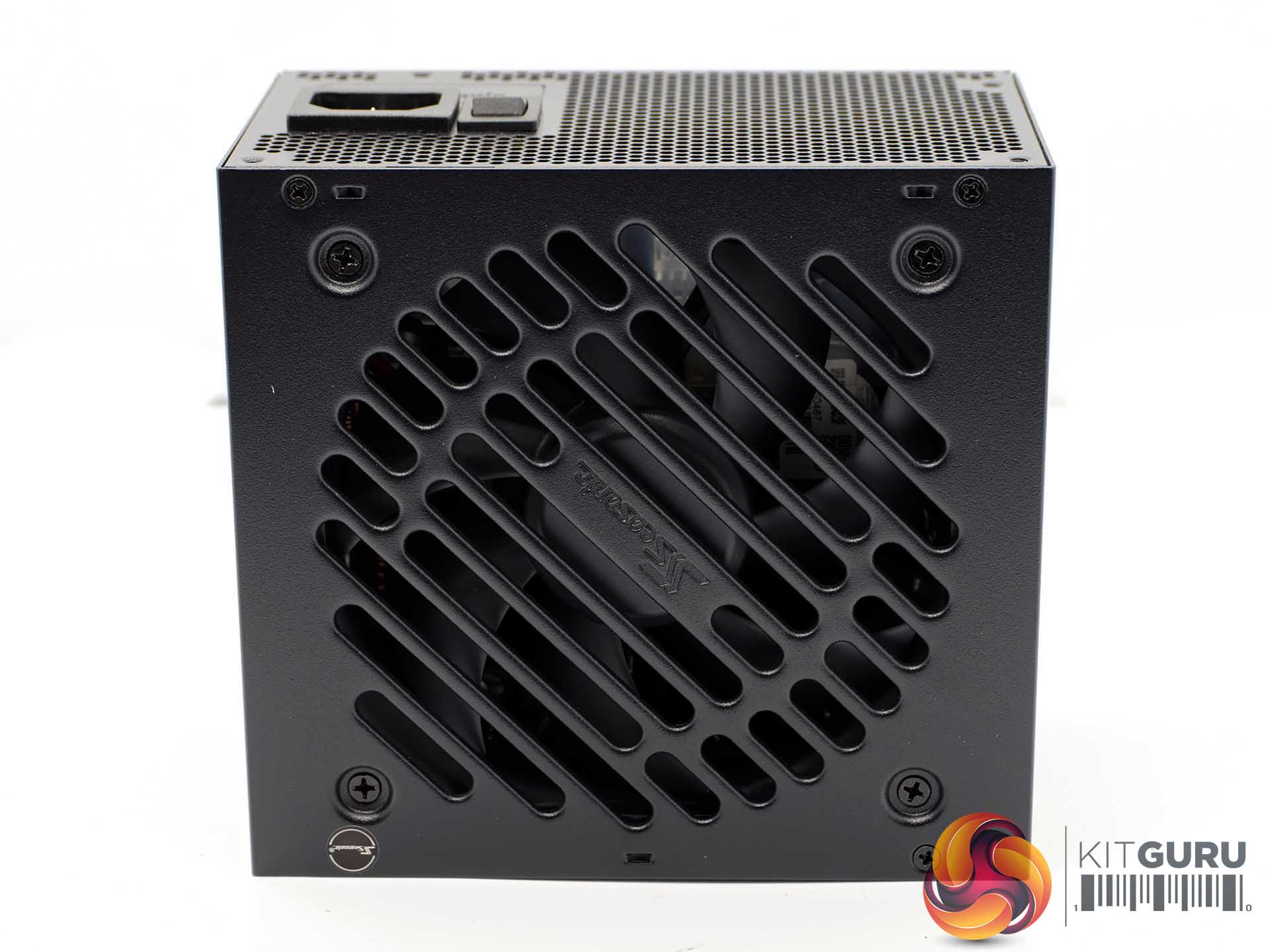
From the top down, the fan is hidden behind a ‘bean' shaped grille. I cant help but feel airflow might be a little restricted with this design, but we will take a look at that later in the review.
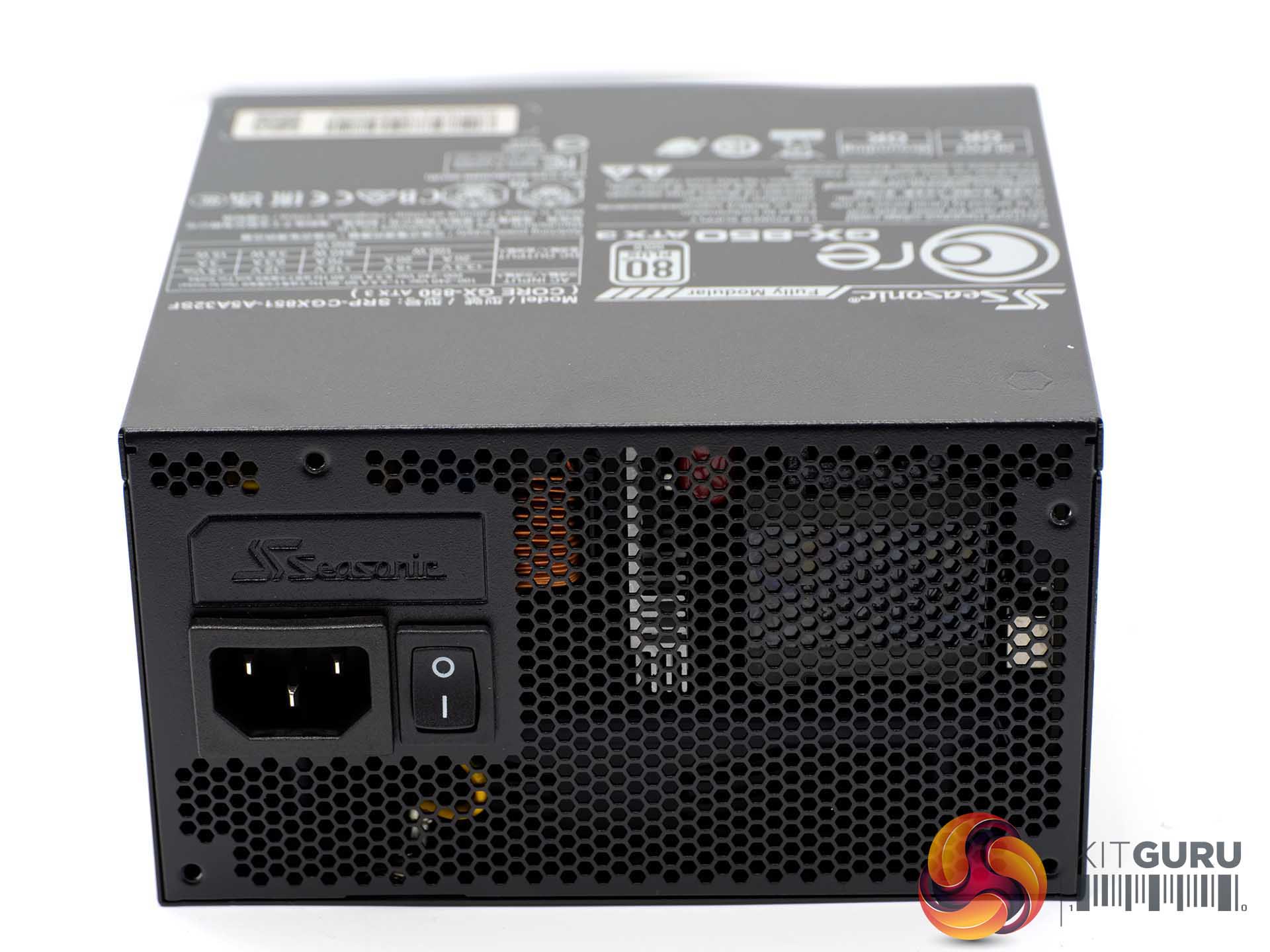
One side of the PSU is home to a vented panel with a power connector and switch. No Hybrid fan control is offered with this unit.
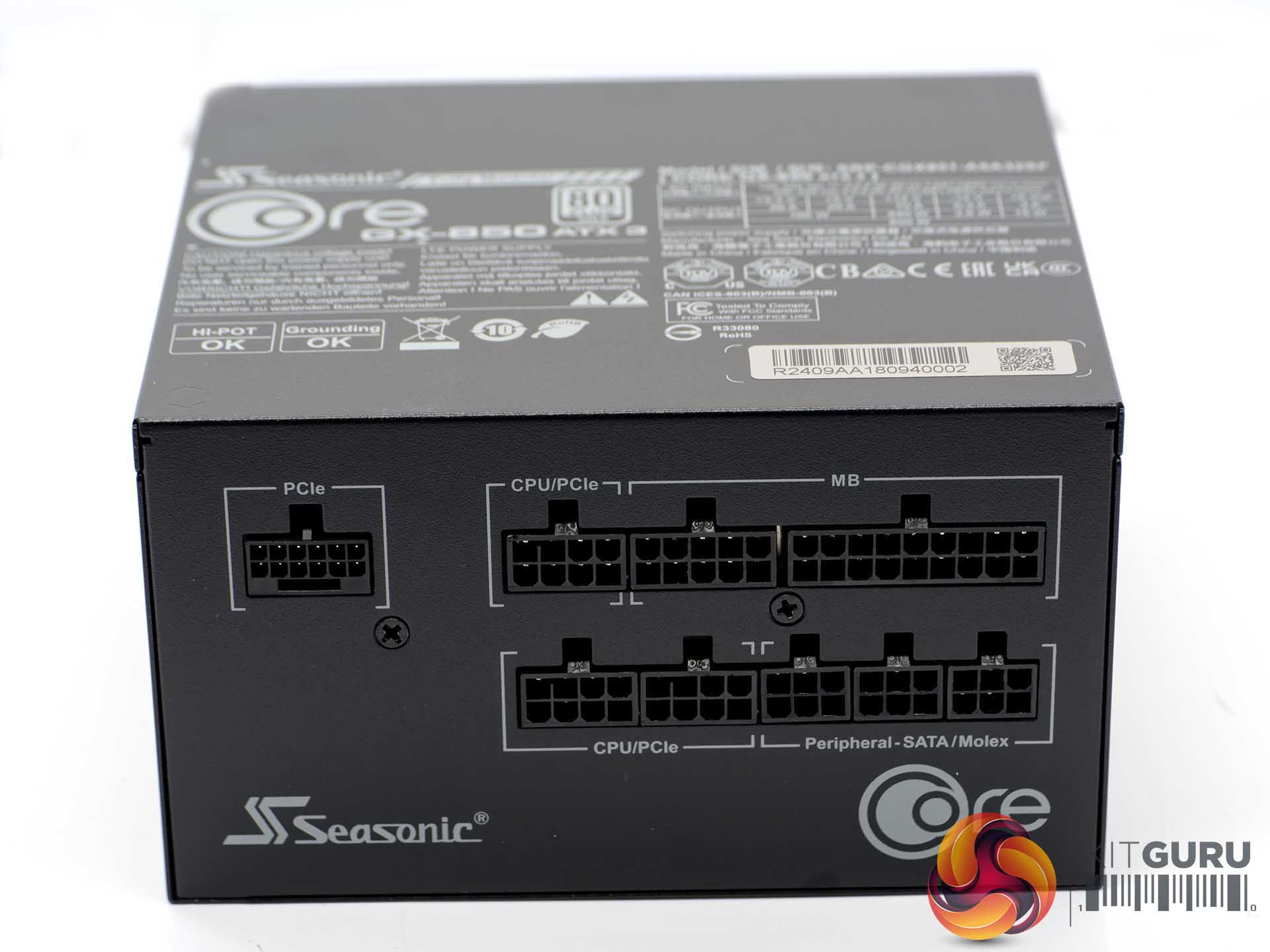
The other side of the power supply has the modular bay, across two rows – labelled for ease of use. Its a pretty straightforward design.
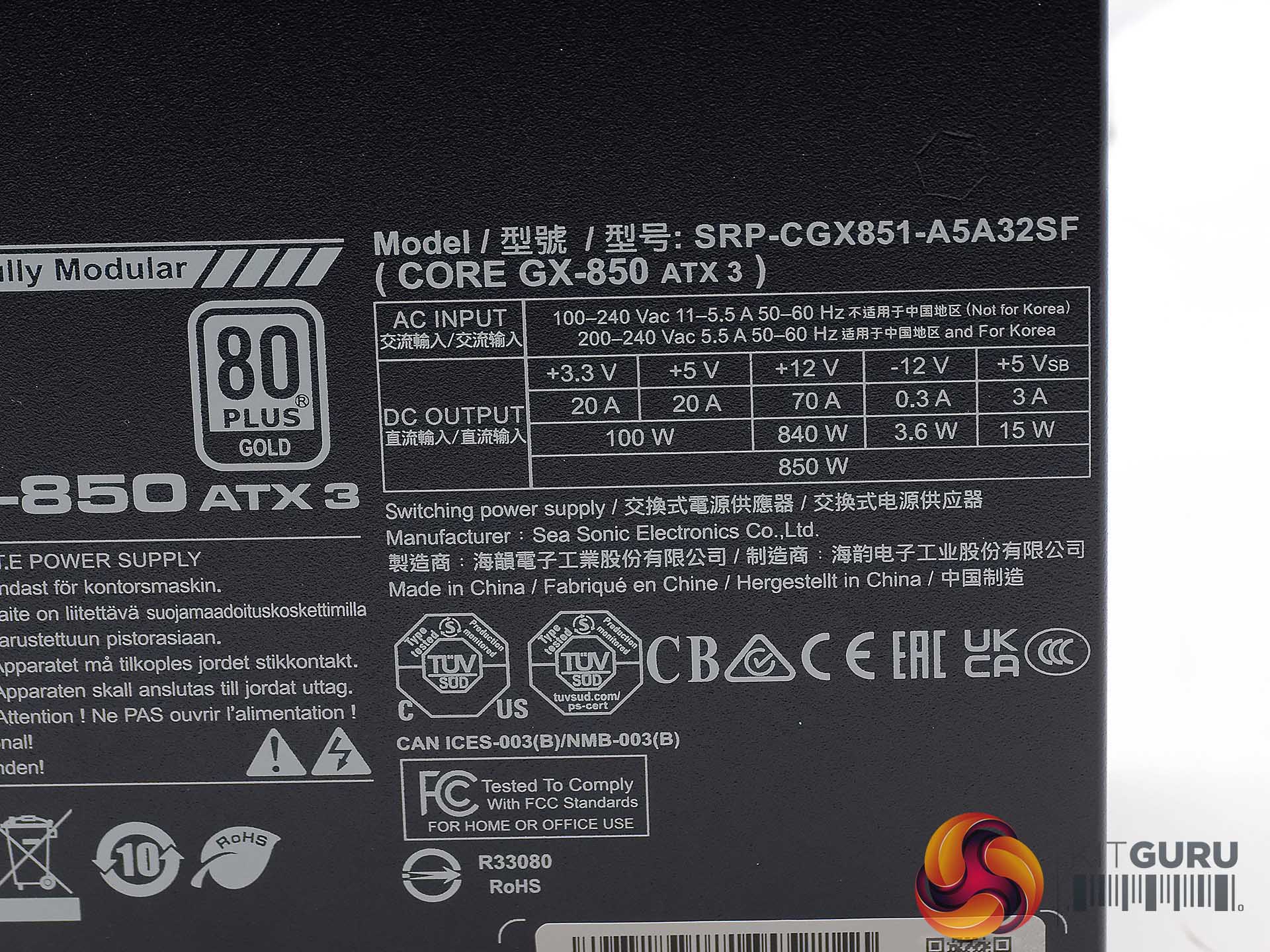
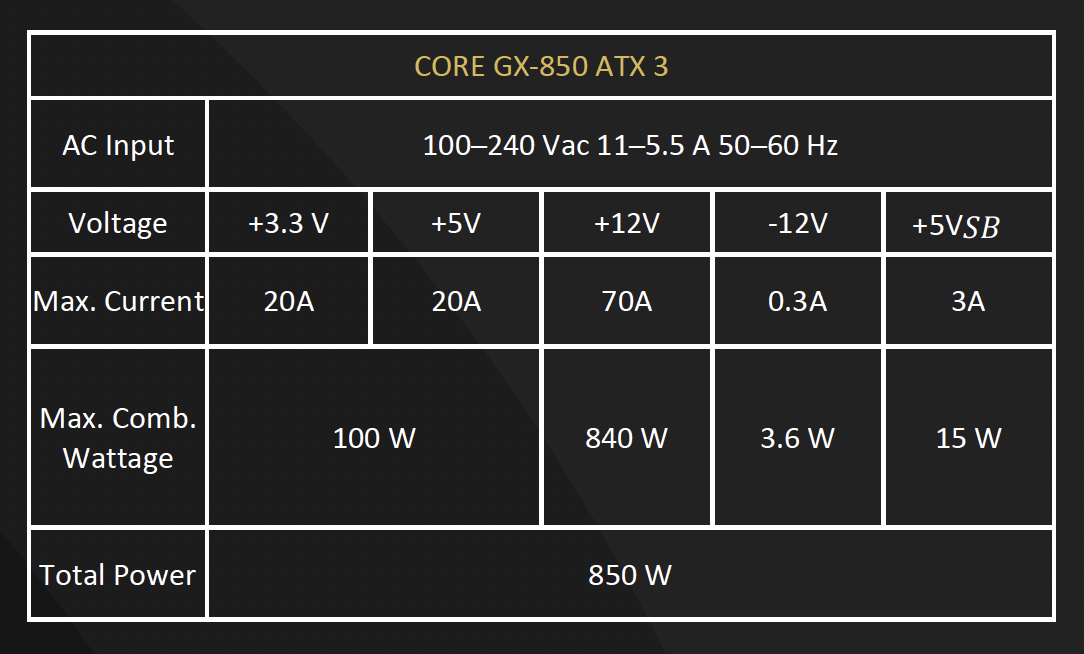
The +12V rail can deliver 70 Amps and the +3.3V and +5V can deliver 20A. For a total of 850W.
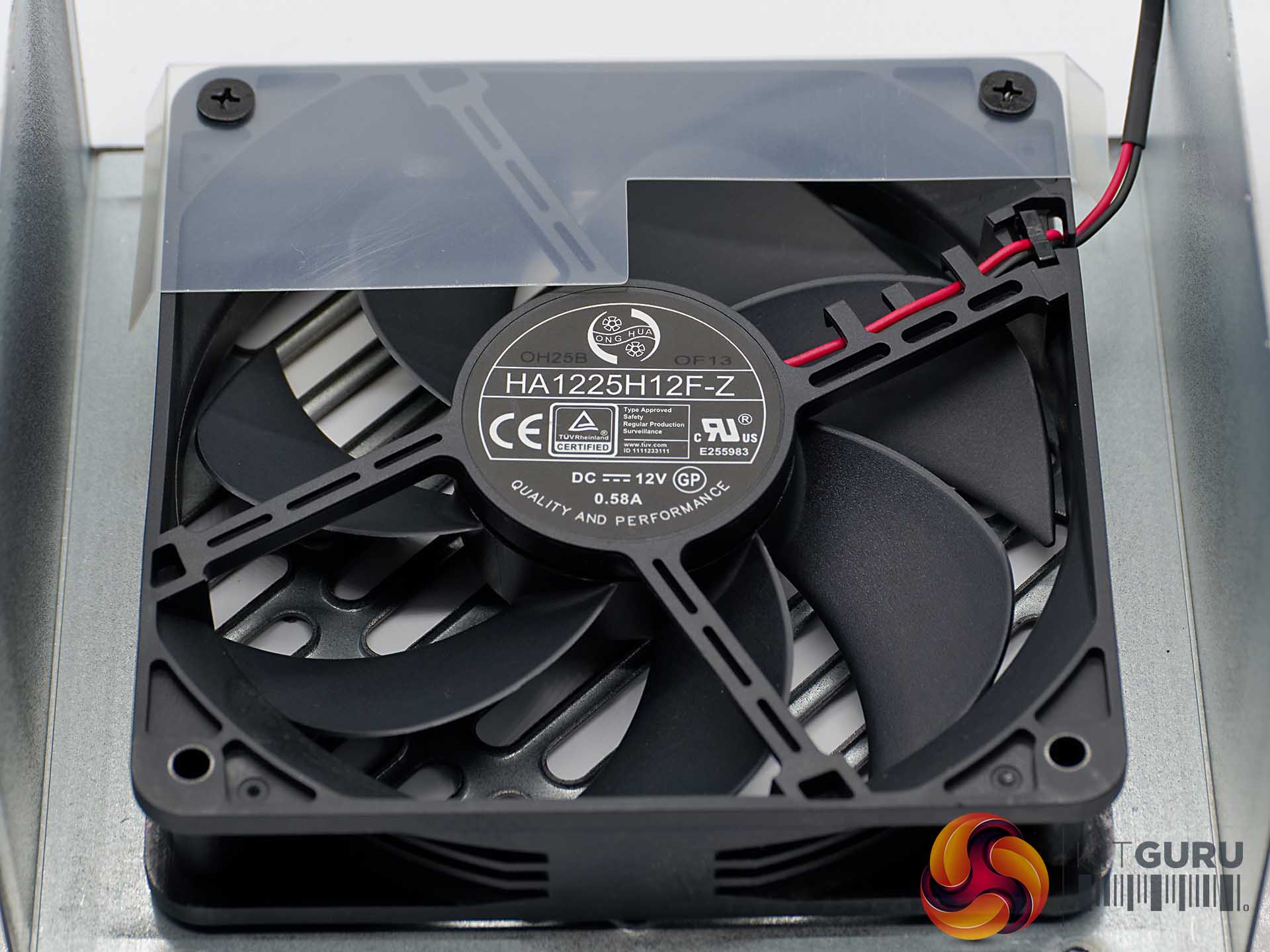
Seasonic are using one of their favourite brands for the fan – a Hong Hua 120mm Hydro (Fluid) Dynamic Bearing (HDB) rated 12V, 0.58A up to 2,200rpm. Model number HA1225H12F-Z. There is a sheet of plastic along the top to specifically force air flow across the components underneath. i wouldn't class this fan as a flagship fan by any stretch of the term (it was always loud in our testing in previous years) and its been around since at least 2017.
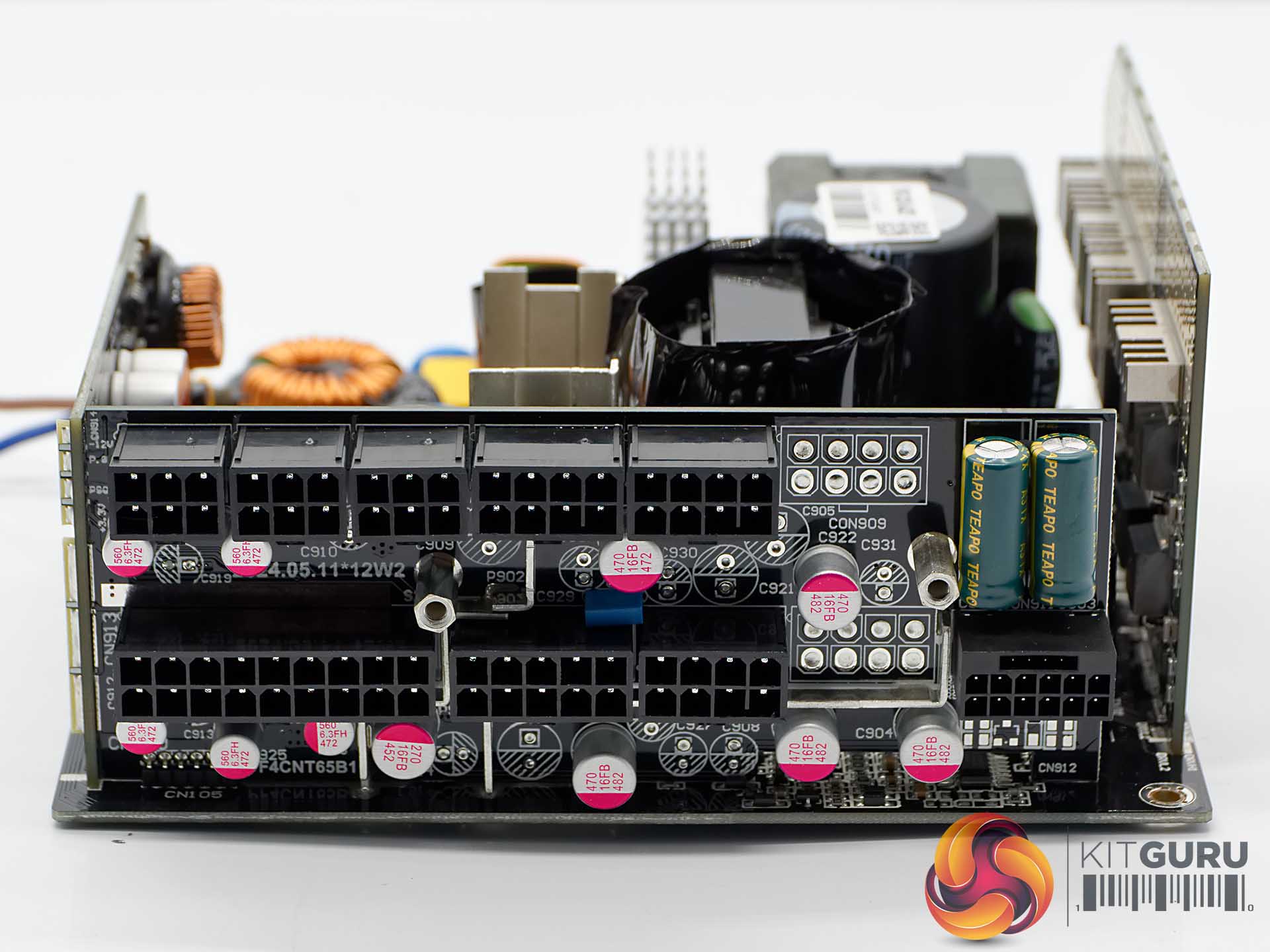
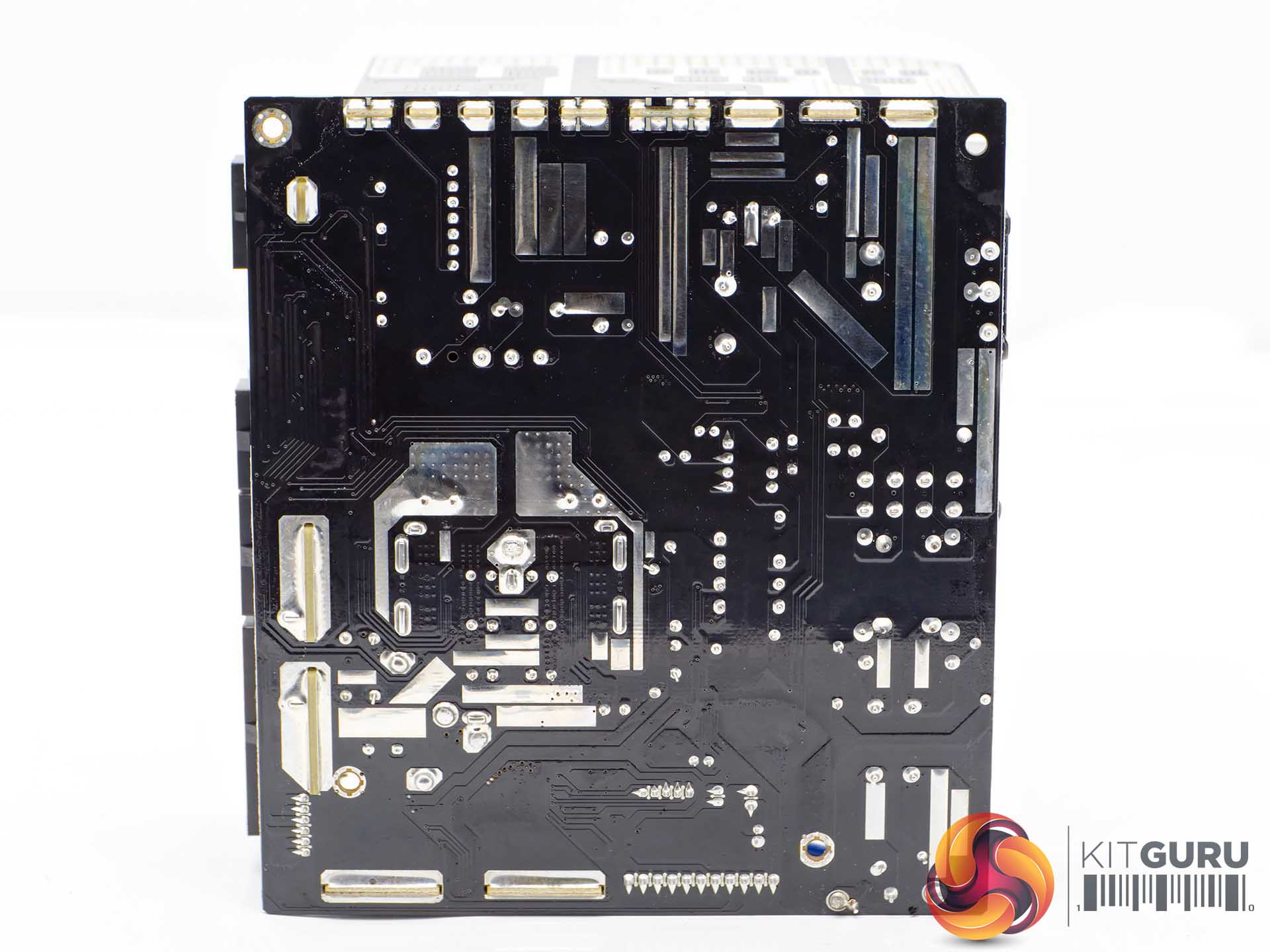
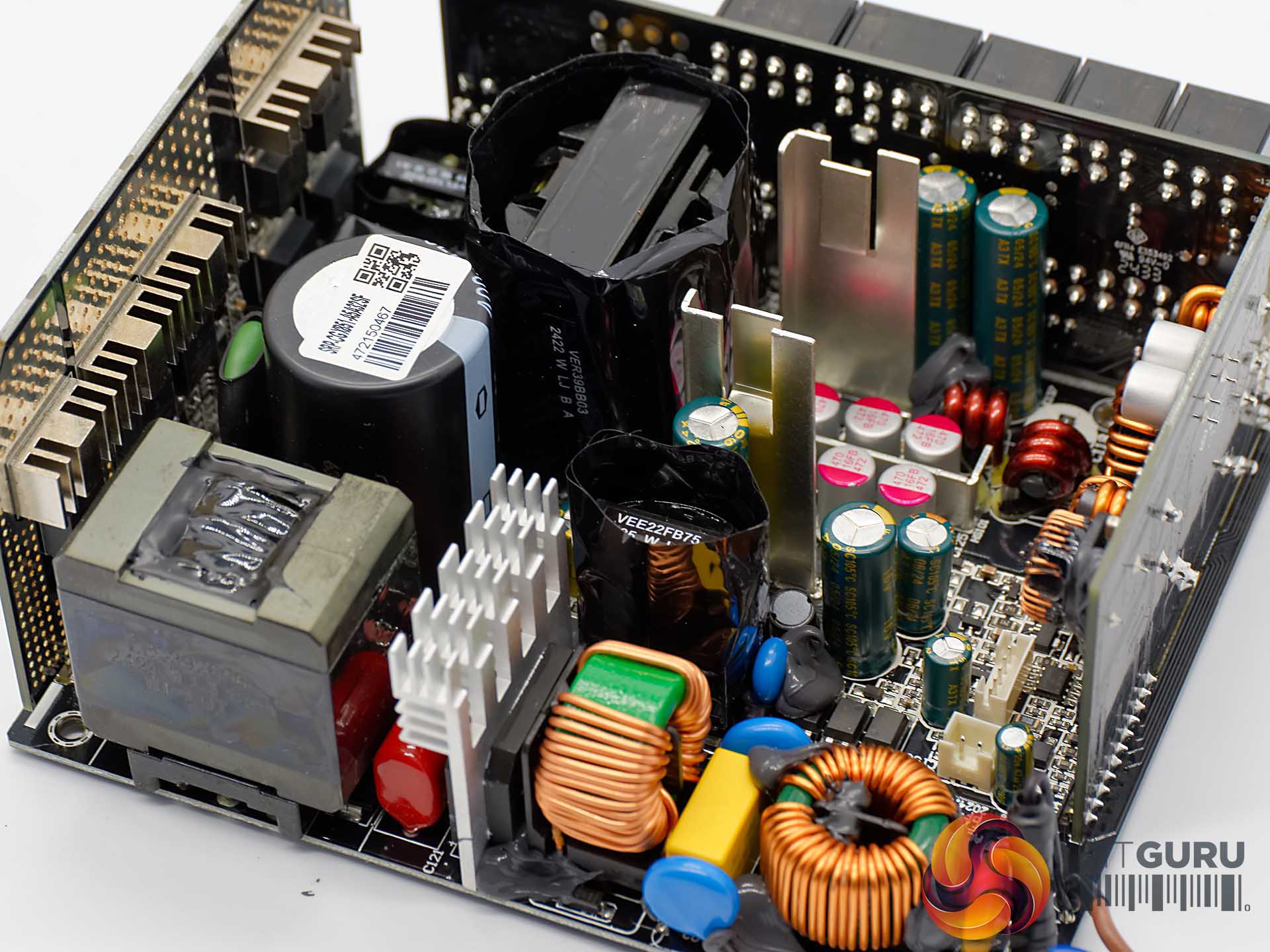
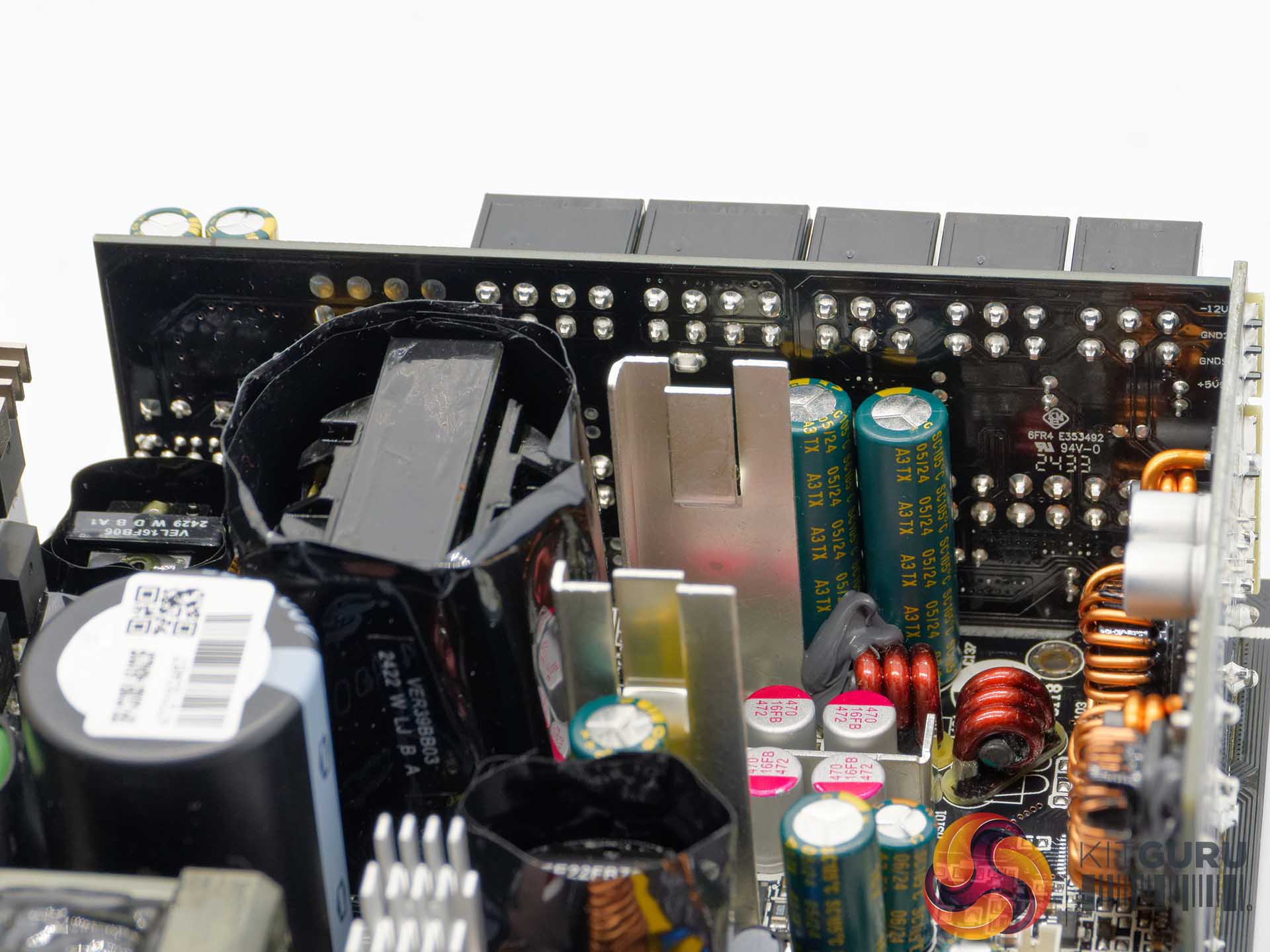
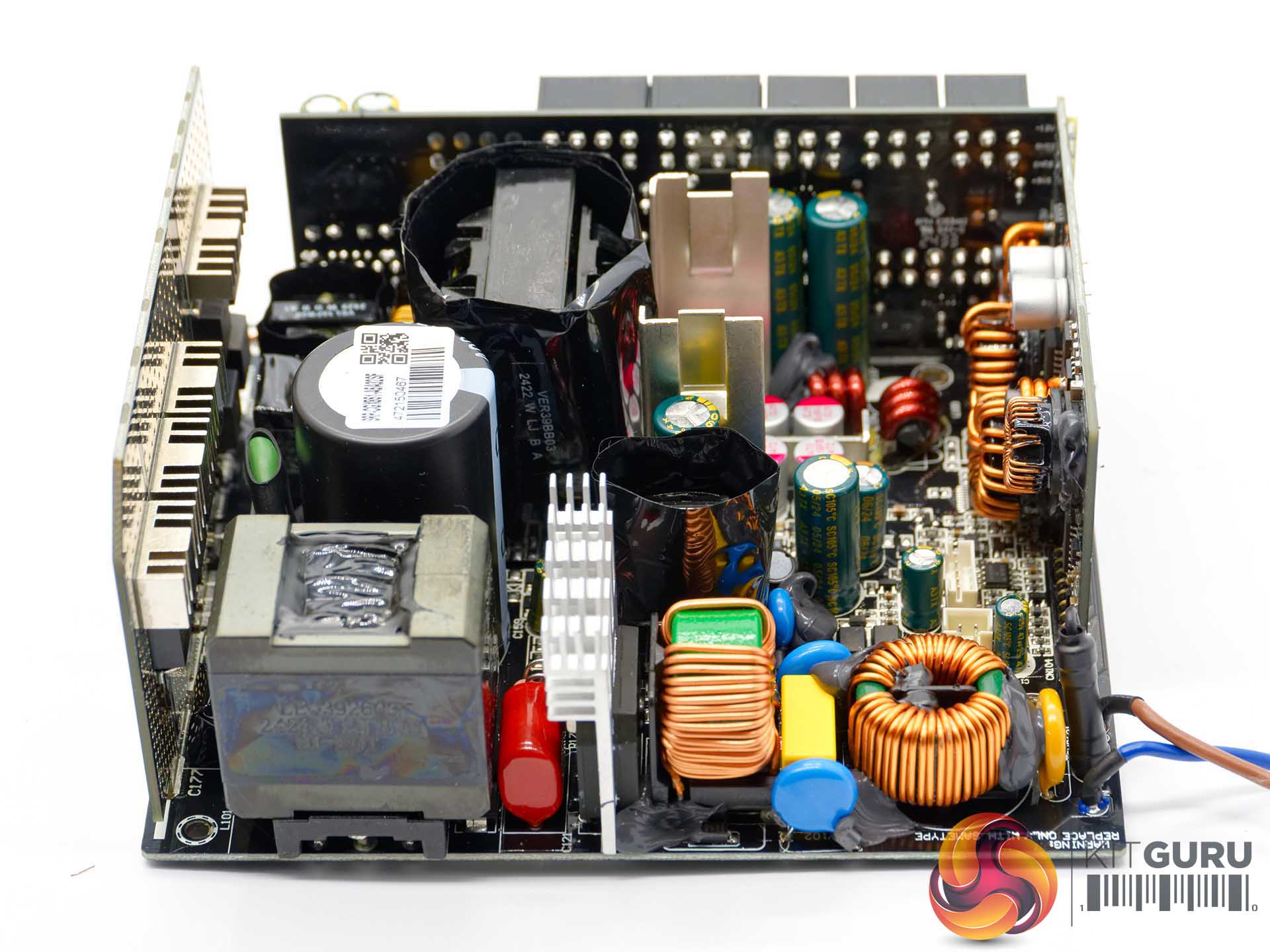
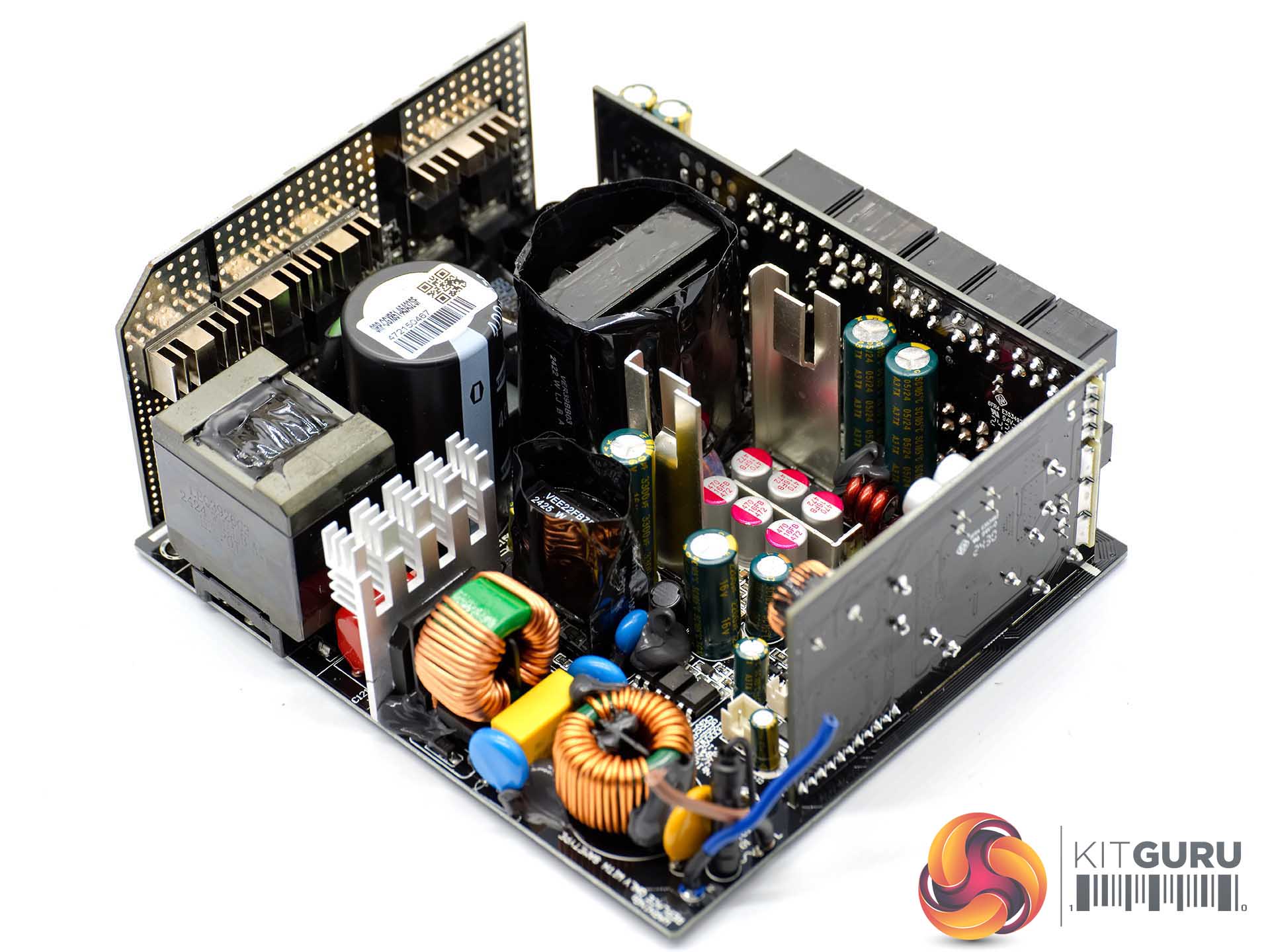
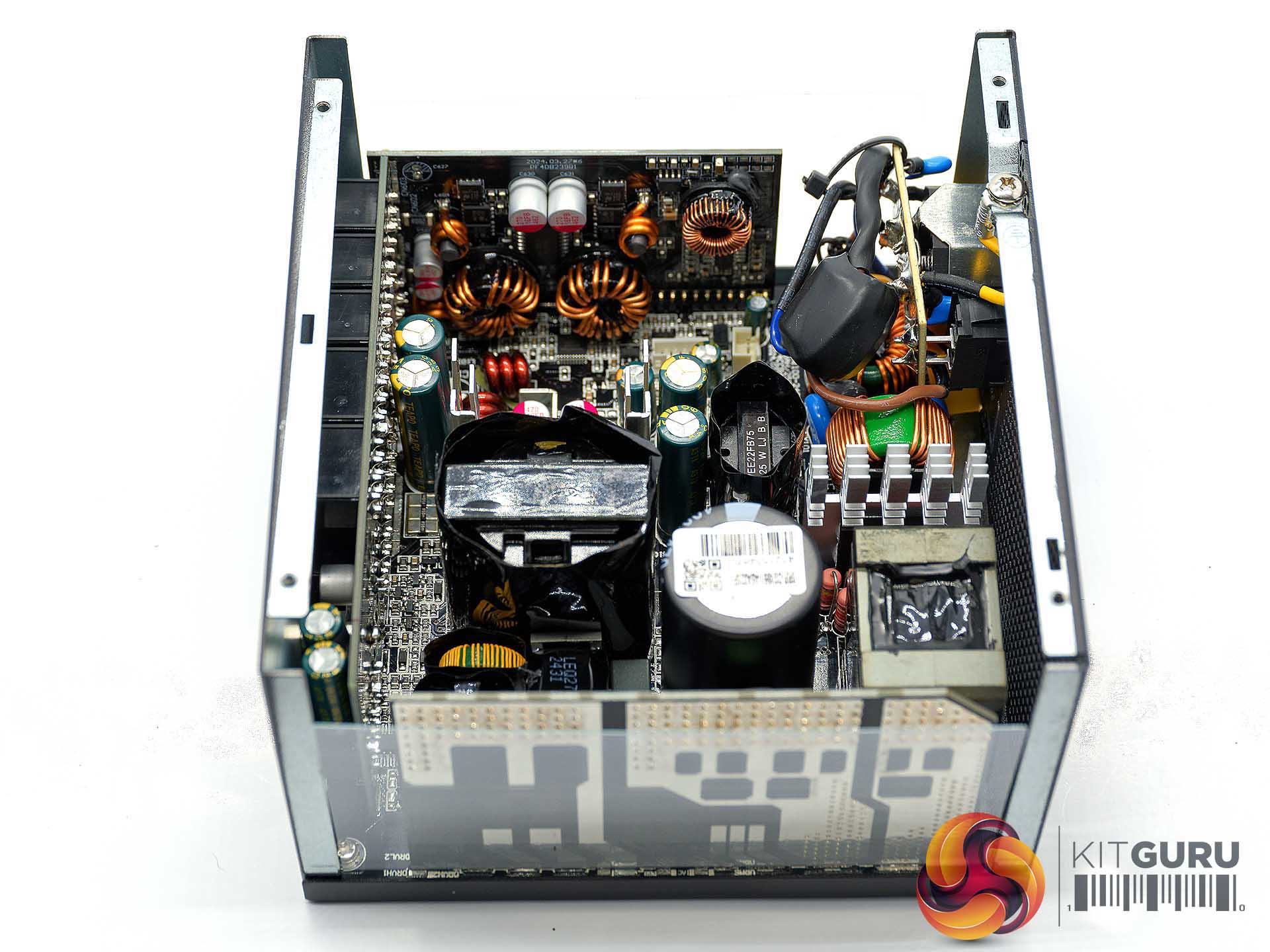
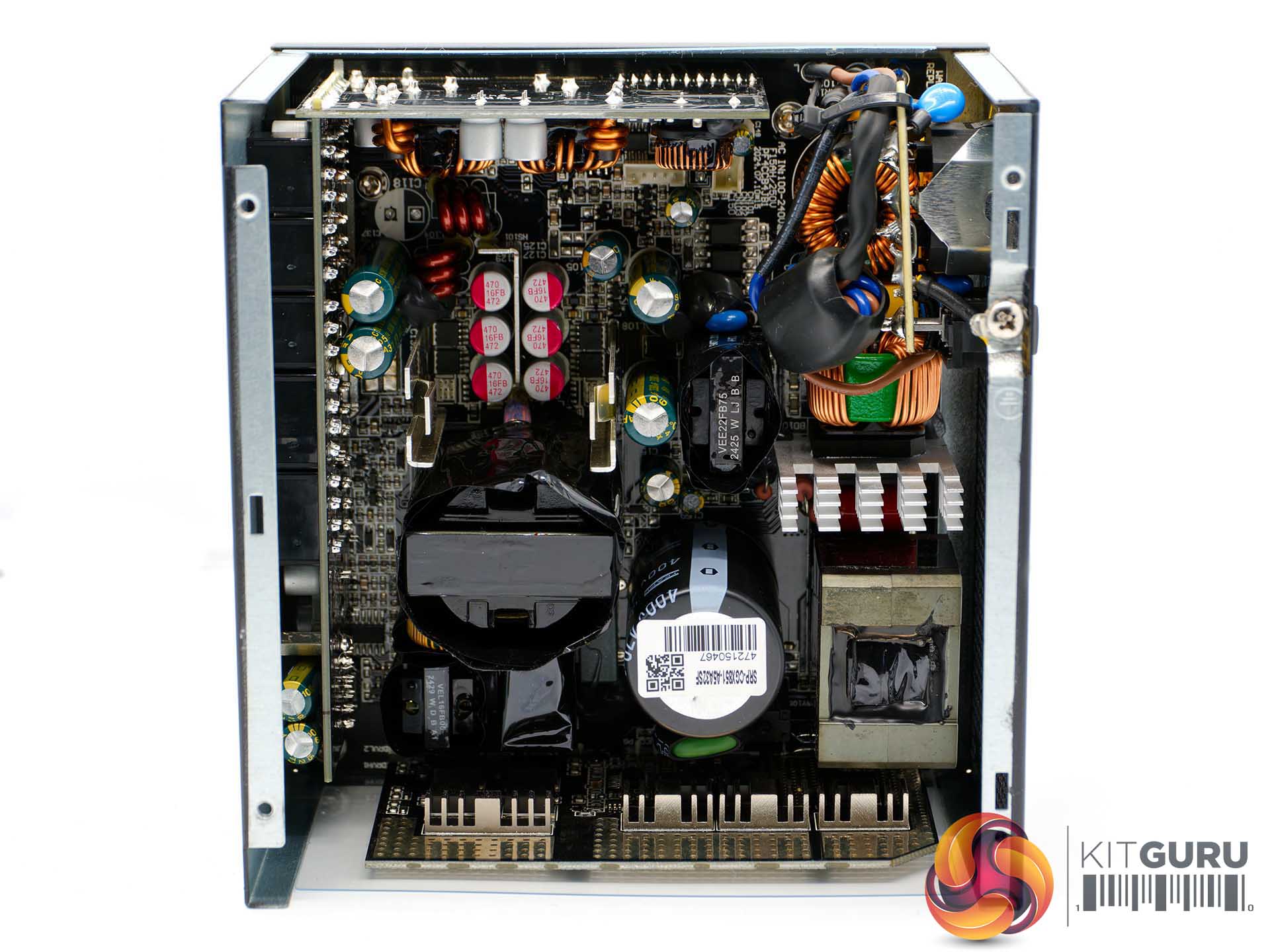
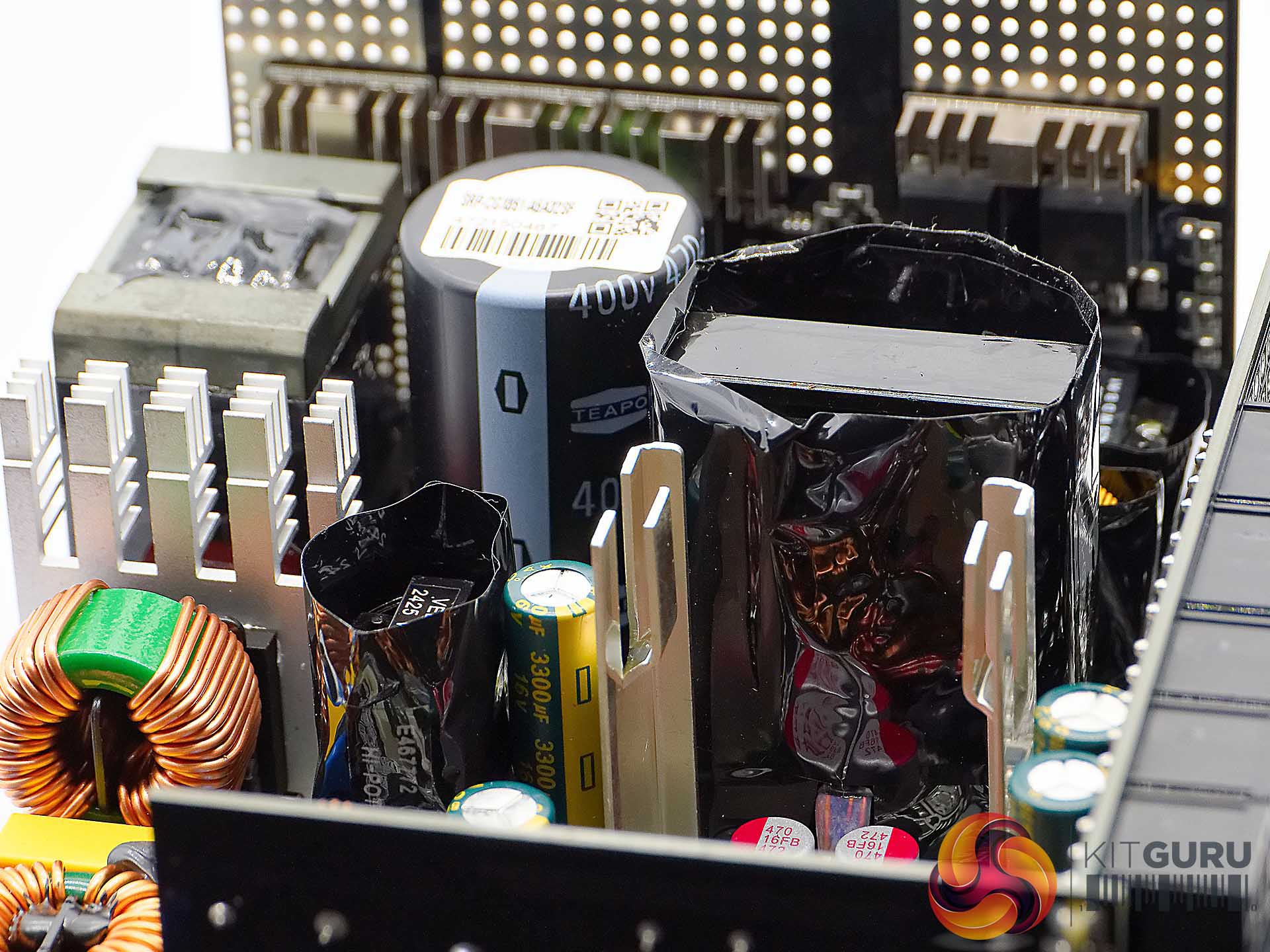
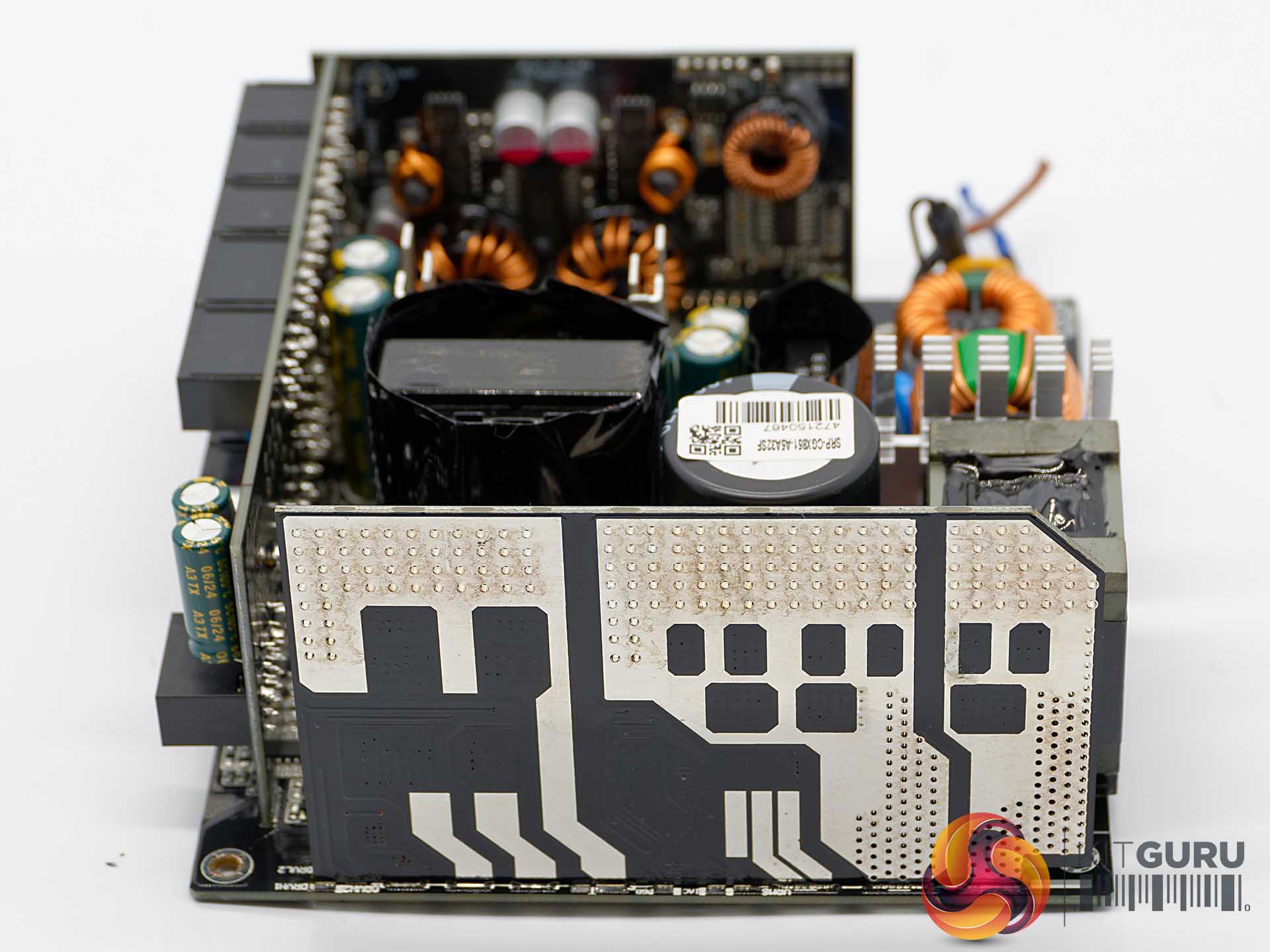
Seasonic are keen to promote their ‘Optisink Design'.
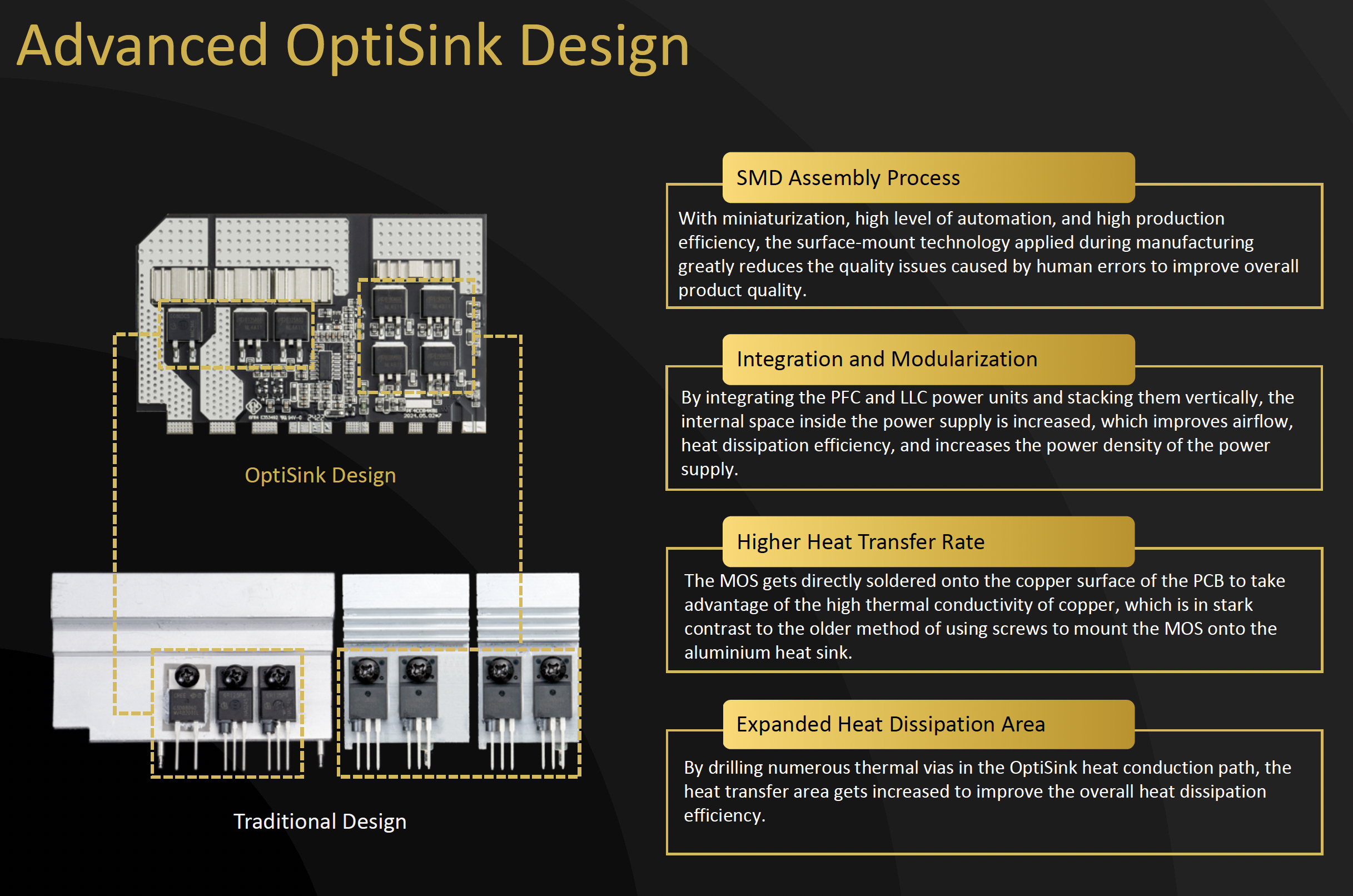
Saying it has a 48% more compact PCB design and 8 times higher heat conductivity. Seasonic also say that this design features enhancements in Active PFC, Full bridge LLC, synchronous rectification and the DC-DC converter. Improved heat dissipation and higher power output stability mark the utilisation of SMD components to increase the overall quality of the power supply.
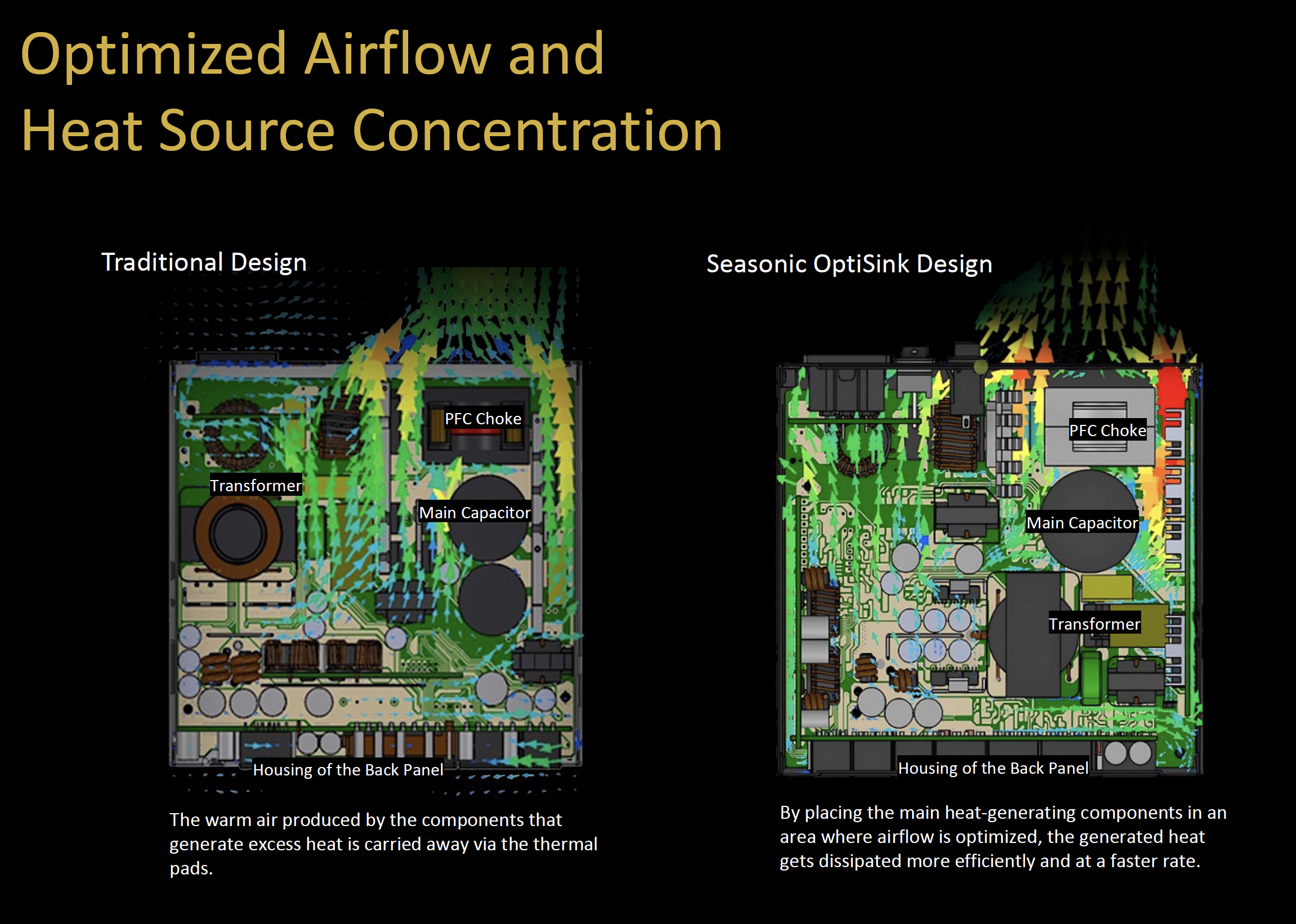
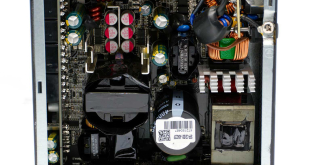
This Optisink design is a compact and integrated circuit layout where the PFC and LLC power units get combined and vertically stacked, shown above. This helps airflow inside the unit and heat dissipation.
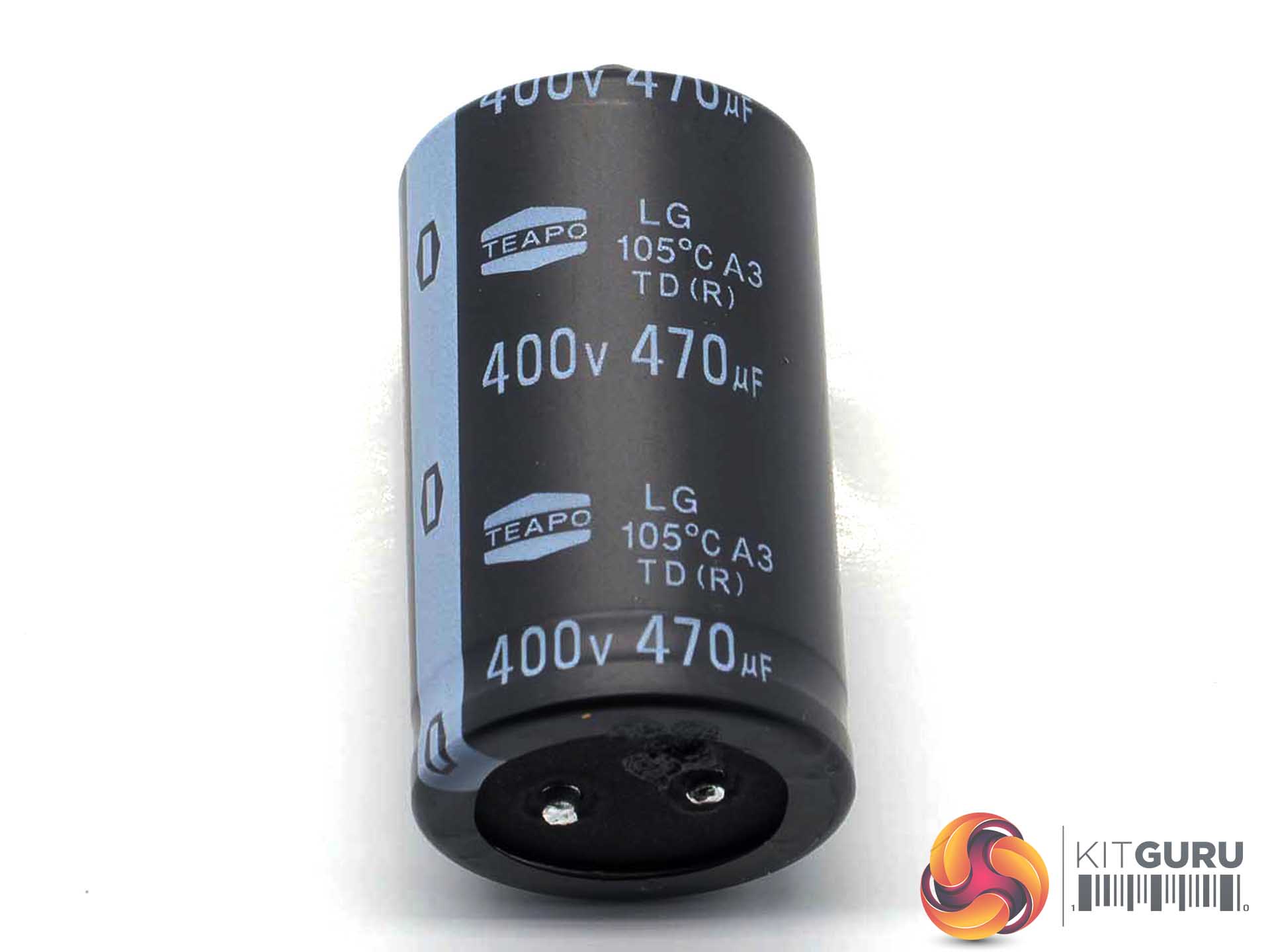
I can't remember the last time I saw a Seasonic power supply with a Chinese (Taiwanese) TEAPO cap inside – a brand who got the nickname ‘cheapo' back in the day. I am sure their standards are much higher now in 2024, but still, for me it is a little surprising to see Seasonic drop the higher grade Japanese caps in what they consider a mid range unit. This primary stage TEAPO cap is rated 105c, at 400v with an output of 470uF.
These units offer OPP, OVP, UVP, OCP, OTP and SCP protections.
Correctly testing power supplies is a complex procedure and KitGuru have configured a test bench which can deliver up to a 2,000 Watt DC load. We run at 35c in our environment to greater reflect warmer internal chassis conditions.
We use combinations of the following hardware:
• SunMoon SM-268
• CSI3710A Programmable DC load (+3.3V and +5V outputs)
• CSI3711A Programmable DC load (+12V1, +12V2, +12V3, and +12V4)
• Extech Power Analyzer
• Extech MultiMaster MM570 digital multimeter
• Extech digital sound level meter
• Digital oscilloscope (20M S/s with 12 Bit ADC)
• Variable Autotransformer, 1.4 KVA
We test in a single +12V configuration.
|
DC Output Load Regulation
|
||||||||||
|
Combined DC Load |
+3.3V
|
+5V
|
+12V
|
+5VSB
|
-12V | |||||
|
A
|
V
|
A
|
V
|
A
|
V
|
A
|
V
|
A | V | |
|
85W
|
0.95
|
3.33
|
0.92
|
5.00
|
6.00
|
12.06
|
0.50
|
5.01
|
0.20 | -12.01 |
|
170W
|
1.70
|
3.33
|
1.67
|
5.00
|
12.35
|
12.05
|
1.00
|
5.01
|
0.20 | -12.01 |
|
425W
|
3.00
|
3.33
|
3.05
|
5.00
|
32.20
|
12.04
|
1.50
|
5.00
|
0.30 | -12.00 |
| 640W | 4.05 | 3.33 | 4.05 | 5.00 | 49.00 | 12.01 | 2.00 | 5.01 | 0.30 | -12.01 |
|
850W
|
5.00
|
3.33
|
5.23
|
5.00
|
65.52
|
11.97
|
2.50
|
5.00
|
0.50 | -12.01 |
Load regulation is really good on all the rails.
Next we want to try Cross Loading. This basically means loads which are not balanced. If a PC for instance needs 500W on the +12V outputs but something like 30W via the combined 3.3V and +5V outputs then the voltage regulation can fluctuate badly.
| Cross Load Testing | +3.3V | +5V | +12V | -12V | +5VSB | |||||
| A | V | A | V | A | V | A | V | A | V | |
| 760W | 1.0 | 3.33 | 1.0 | 5.00 | 60.0 | 11.98 | 0.2 | -12.01 | 0.50 | 5.01 |
| 165W | 15.0 | 3.32 | 18.0 | 4.97 | 2.0 | 12.06 | 0.2 | -12.00 | 0.50 | 5.00 |
The power supply dealt with the demanding cross load test without issues.
We then used an oscilloscope to measure AC ripple and noise present on the DC outputs. We set the oscilloscope time base to check for AC ripple at both high and low ends of the spectrum.
ATX12V V2.2 specification for DC output ripple and noise is defined in the ATX 12V power supply design guide.
|
ATX12V Ver 2.2 Noise/Ripple Tolerance
|
|
|
Output
|
Ripple (mV p-p)
|
|
+3.3V
|
50
|
|
+5V
|
50
|
|
+12V1
|
120
|
|
+12V2
|
120
|
|
-12V
|
120
|
|
+5VSB
|
50
|
Obviously when measuring AC noise and ripple on the DC outputs the cleaner (less recorded) means we have a better end result. We measured this AC signal amplitude to see how closely the unit complied with the ATX standard.
| AC Ripple (mV p-p) | ||||
| DC Load | +3.3V | +5V | +12V | 5VSB |
| 100W | 7 | 5 | 14 | 9 |
| 225W | 13 | 6 | 17 | 12 |
| 450W | 18 | 11 | 21 | 13 |
| 675W | 22 | 14 | 23 | 14 |
| 850W | 25 | 18 | 28 | 15 |
Noise suppression is pretty good. The minor rails hit 25mV and 18mV for the +3.3V and +5V respectively. The +12V rail peaks around 30 mV under full load. A set of decent results.
|
Efficiency (%) 240V
|
|
|
100W
|
90.3
|
|
225W
|
92.6
|
|
450W
|
93.1
|
|
675W
|
92.5
|
| 850W | 90.7 |
The efficiency results are really good, peaking at around 93% between 45-55% load, and dropping to around 90.7% at full load. A strong set of results.
We take the issue of noise very seriously at KitGuru and this is why we have built a special home brew system as a reference point when we test noise levels of various components. Why do this? Well this means we can eliminate secondary noise pollution in the test room and concentrate on components we are testing. It also brings us slightly closer to industry standards, such as DIN 45635.
Today to test the power supply we have taken it into our acoustics room environment and have set our Digital Sound Level Noise Decibel Meter Style 2 one meter away from the unit. We have no other fans running so we can effectively measure just the noise from the unit itself.
As this can be a little confusing for people, here are various dBa ratings in with real world situations to help describe the various levels.
KitGuru noise guide
10dBA – Normal Breathing/Rustling Leaves
20-25dBA – Whisper
30dBA – High Quality Computer fan
40dBA – A Bubbling Brook, or a Refrigerator
50dBA – Normal Conversation
60dBA – Laughter
70dBA – Vacuum Cleaner or Hairdryer
80dBA – City Traffic or a Garbage Disposal
90dBA – Motorcycle or Lawnmower
100dBA – MP3 Player at maximum output
110dBA – Orchestra
120dBA – Front row rock concert/Jet Engine
130dBA – Threshold of Pain
140dBA – Military Jet takeoff/Gunshot (close range)
160dBA – Instant Perforation of eardrum
|
Noise (dBA)
|
|
|
100W
|
<28
|
|
225W
|
<28
|
|
450W
|
29.7
|
|
675W
|
34.6
|
| 850W | 37.3 |
The fan spins very slowly at lower power demands as the temperatures are low, so it didn't really become audible in our test environment until loads hit around 650W. At full load the fan ramps up quite a bit to help deal with rising temperatures. If you need a power supply to handle 850 watt load on a regular basis then you need to be looking at a much more powerful power supply, between 1250W and 1600W – to get close to the sweet spot of efficiency.
We arent sure if the weird, thick bean shaped grille on this unit is impacting air flow either.
|
Temperature (c)
|
||
|
Intake
|
Exhaust
|
|
|
100W
|
37
|
41
|
|
225W
|
38
|
43
|
|
450W
|
40
|
47
|
|
675W
|
45
|
55
|
|
850W
|
46
|
57
|
Temperatures inside the chassis remain relatively cool even at higher load levels.
The Seasonic Core GX 850 delivered very good results in our testing over the last few weeks and while it took me a little longer to get this review published over the Christmas period, we feel this power supply deserves a recommendation.
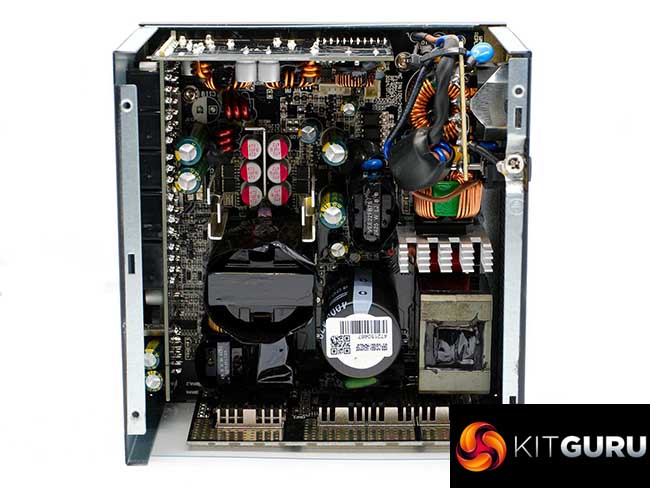
The GX is not a high end power supply range from Seasonic, instead it sits right in the middle of their stack, below the Prime and Focus units targeting demanding enthusiast users, and above the G12 and B12 supplies – which target the lower end audience and system integrators.
Technically the unit is solid and delivered quality power throughout the range. Load regulation is good and it passed the cross load test without issue. Ripple suppression was good, if not class leading – falling within safe industry rated parameters throughout the range.
Efficiency results were pretty good and the unit remained cool at all times – at the expense of rising noise as the load increased. Below 400 watts, the power supply would not be audible inside a modern day chassis, but when demand goes over 700 watts, the fan ramps up a lot to deal with rising heat. This isn't the best fan we have seen from Hong Hua, but i would imagine a little bit of cost cutting has to be undertaken to achieve more competitive price points for Seasonic.
On a similar note, I was surprised to see a TEAPO taiwanese capacitor in this unit as Seasonic mostly use Japanese capacitors from the likes of Nippon Chemi Con, Rubycon or Nichicon. Thankfully it is a 105c rated unit, and not 85C. Clearly this move to Chinese/Taiwanese caps is to save a few dollars per unit. We are unable to really test these capacitors long term and give them a solid rating, but we hope TEAPO standards are a little higher than a few that failed on us around 10 years ago. We are hopeful that standards have improved since then.
The Core GX range of power supplies come with a 7 year warranty, which is less than the Focus range at 10 years, and the Prime range at 12 years. Their lower G12 and B12 units only ship with a 5 year warranty so it appears Seasonic have a little more faith in this Core GX design than the budget products they still sell.
Right now we do not have confirmed UK pricing, but as we can see above, the EU pricing for this is around 130 euros. USA get a confirmed $130 price as well, so we will assume the UK will be paying between £120-£130 – as prices here are always higher than simple conversions. At this price it is a solid buy (closer to £120 would be good), but we can't help but feel people should shop around for the best deal they can find – THIS quick check on SCAN UK shows pricing is at the upper end of the 80 Plus Gold category for an 850W unit.
Pros:
- Technically solid.
- small footprint of 140mm.
- nice quality cables.
- load regulation.
- fully modular.
- solid build quality.
- 80 plus gold certified.
Cons:
- looks to be quite costly for the 80 Plus Gold sector.
- TEAPO Chinese/Taiwanese caps.
- only a 7 year warranty.
- 120mm fan can get a bit loud under heavier loud.
- white version might be hard to get in different parts of the world.
Kitguru says: Another fine performing power supply from Seasonic targeting the mid range audience.