KitGuru KitGuru.net – Tech News | Hardware News | Hardware Reviews | IOS | Mobile | Gaming | Graphics Cards


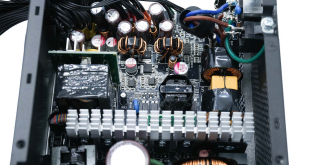
Today we look at a budget power supply from well-known PC case maker Sharkoon. The Rebel P15 range of power supplies are their newest units and they have released 650w, 750w and 850w versions at the end of 2025. These units are Cybenetics Gold rated, are ATX 3.1 compatible and ship with a quiet hybrid fan. The 750W unit we look at today is priced at only 65 euros so they are set to target a mass audience of enthusiast user on a limited budget.
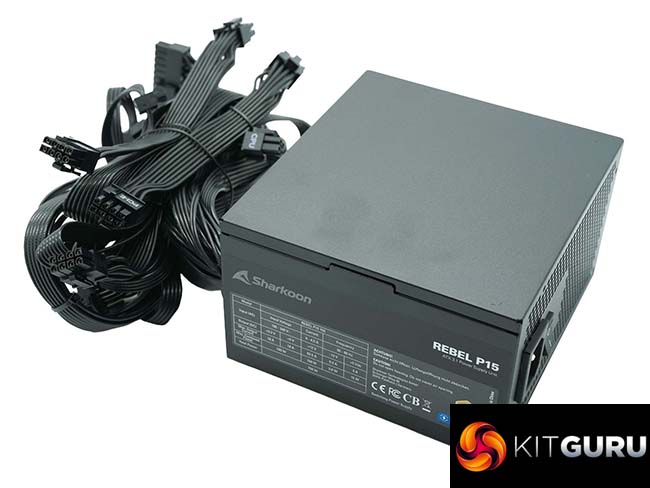
Sharkoon are targeting these units very aggressively, with prices set at 60 euros, 65 euros and 70 euros for the 650w, 750w and 850w respectively. We know Sharkoon are working with OEM Andyson on these units – we have found this OEM to be pretty decent in the lower end of the market, so we have high hopes the unit will perform to a reasonable standard, even with a very aggressive price point.
Features:
- CYBENETICS GOLD RATING
With its Cybenetics Gold certification, the Rebel P15 impresses with a high degree of energy efficiency, which not only reduces power consumption but also means a lower generation of heat. - FUTURE-PROOF ATX 3.1 COMPATIBILITY
The Rebel P15 is based on the current ATX 3.1 standard and thus provides a future-proof power supply that can handle even the highest performance requirements of the latest hardware systems. - MODERN GRAPHICS CARD CONNECTION
Thanks to its 12V 2×6 connector, the Rebel P15 is ideally prepared for current high-end graphics cards and ensures a stable, high-performing supply of power even under demanding loads. - QUIET HYBRID FAN
The 120 mm fan of the Rebel P15 is equipped with a hybrid magnetic bearing, which delivers long-lasting cooling performance with a minimum level of noise. - ALL-ROUND PROTECTION
Whether it‘s for overload or for overvoltage, the Rebel P15 has a complete range of protection mechanisms to ensure a high level of safety for the hardware system and its components. - CONVENIENT CABLING
Installing the Rebel P15 into your hardware build is made easier thanks to the textured, flexible design of the PSU‘s permanently attached cables. - WARRANTY
7 years. - MTBF
100,000 hours.
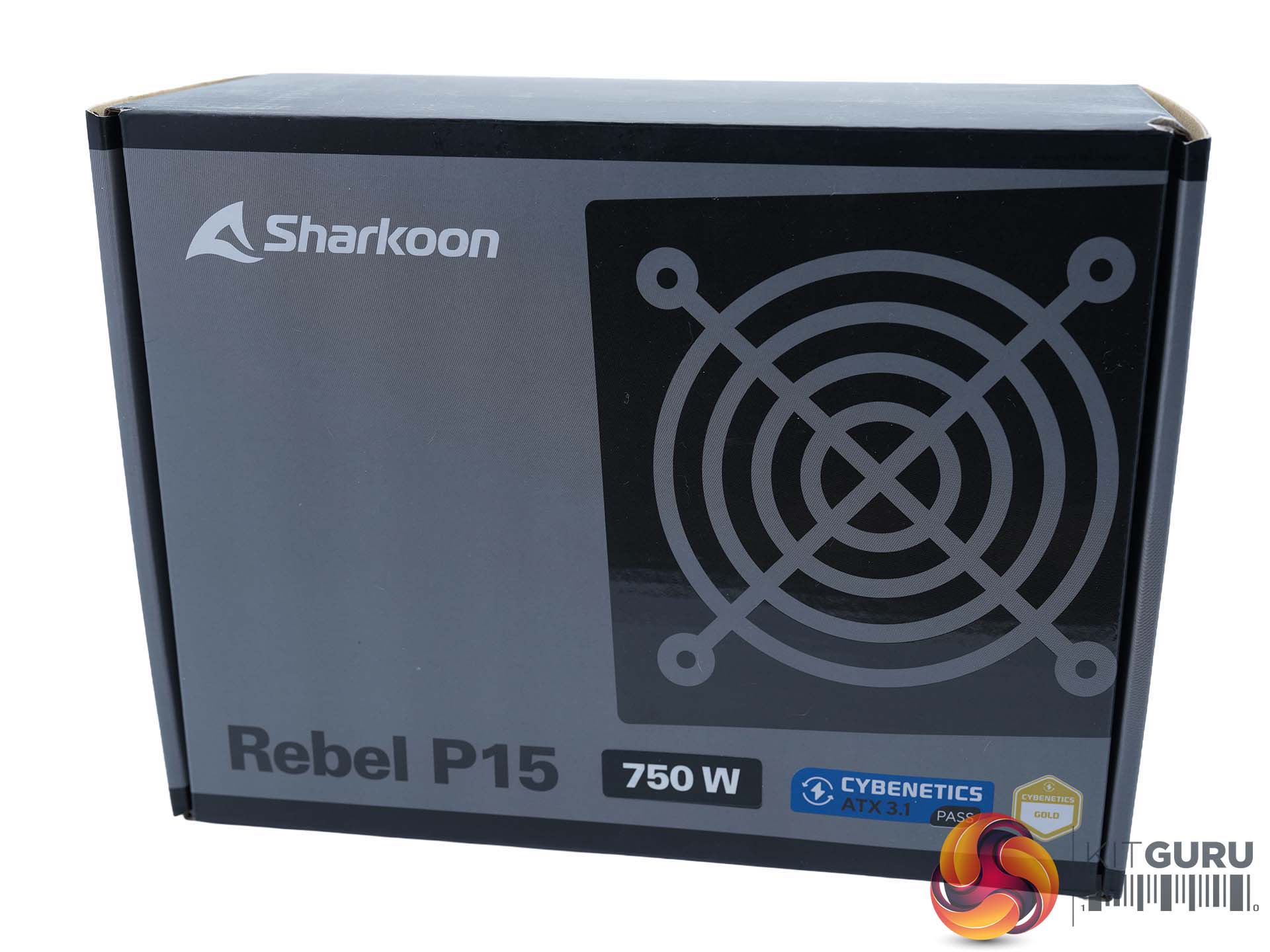
The Sharkoon Rebel P15 ships in a plain looking box, with no high resolution image of the product on the front – just a visual representation of a fan. It is good to see Cybenetics getting some focus on the box with their certification logos shown bottom right.
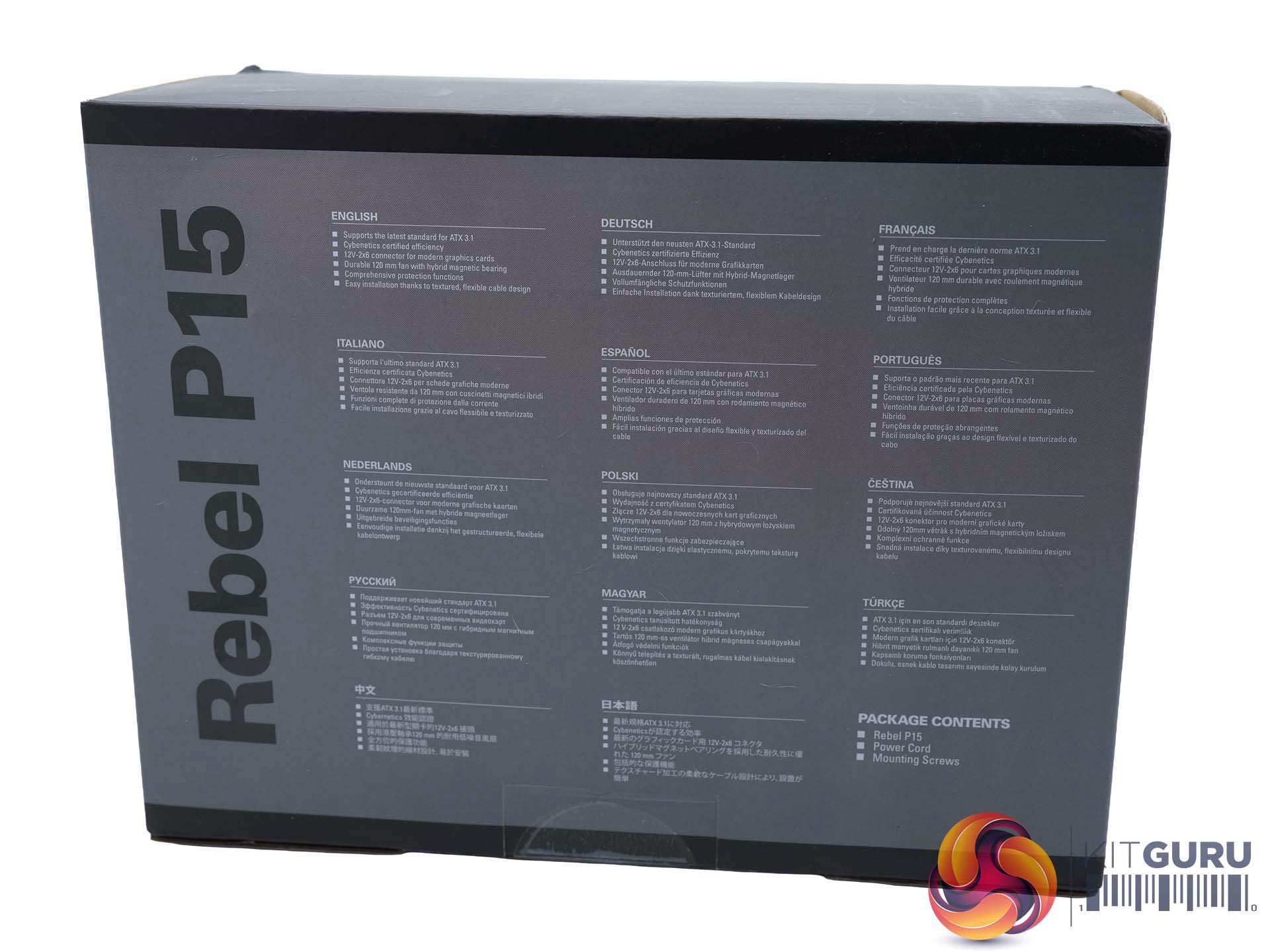
The rear of the box is pretty basic with just a list of key points shown in various languages.
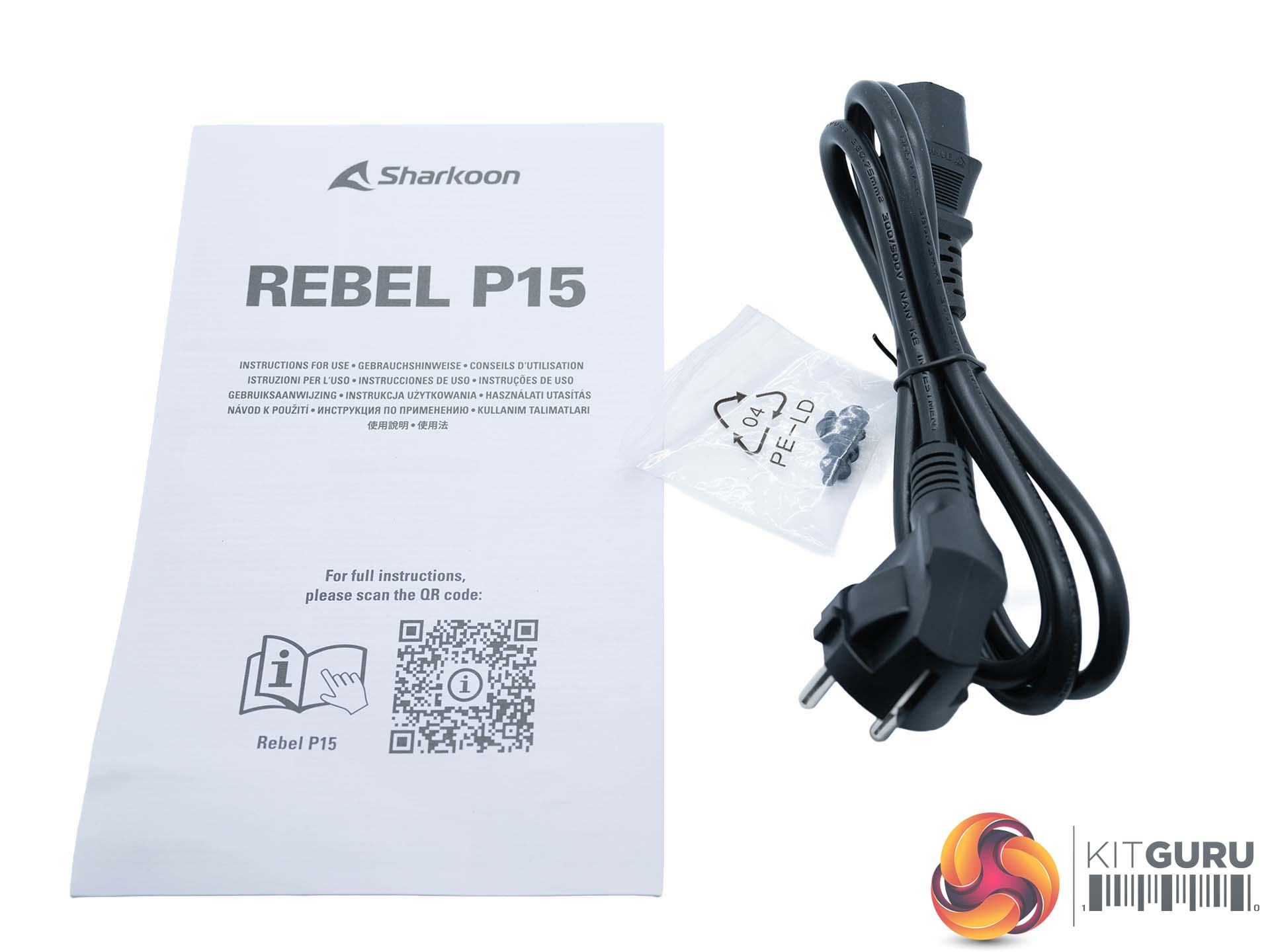
Inside the box is a very utilitarian list of accessories – a power cable, mounting screws and a little leaflet with a bar code to take you to their website. If you buy this unit in the UK you will assuredly get a UK power cable, our sample came from Sharkoon HQ in Europe (hence the power cable). UK stock is not available yet, but coming soon.
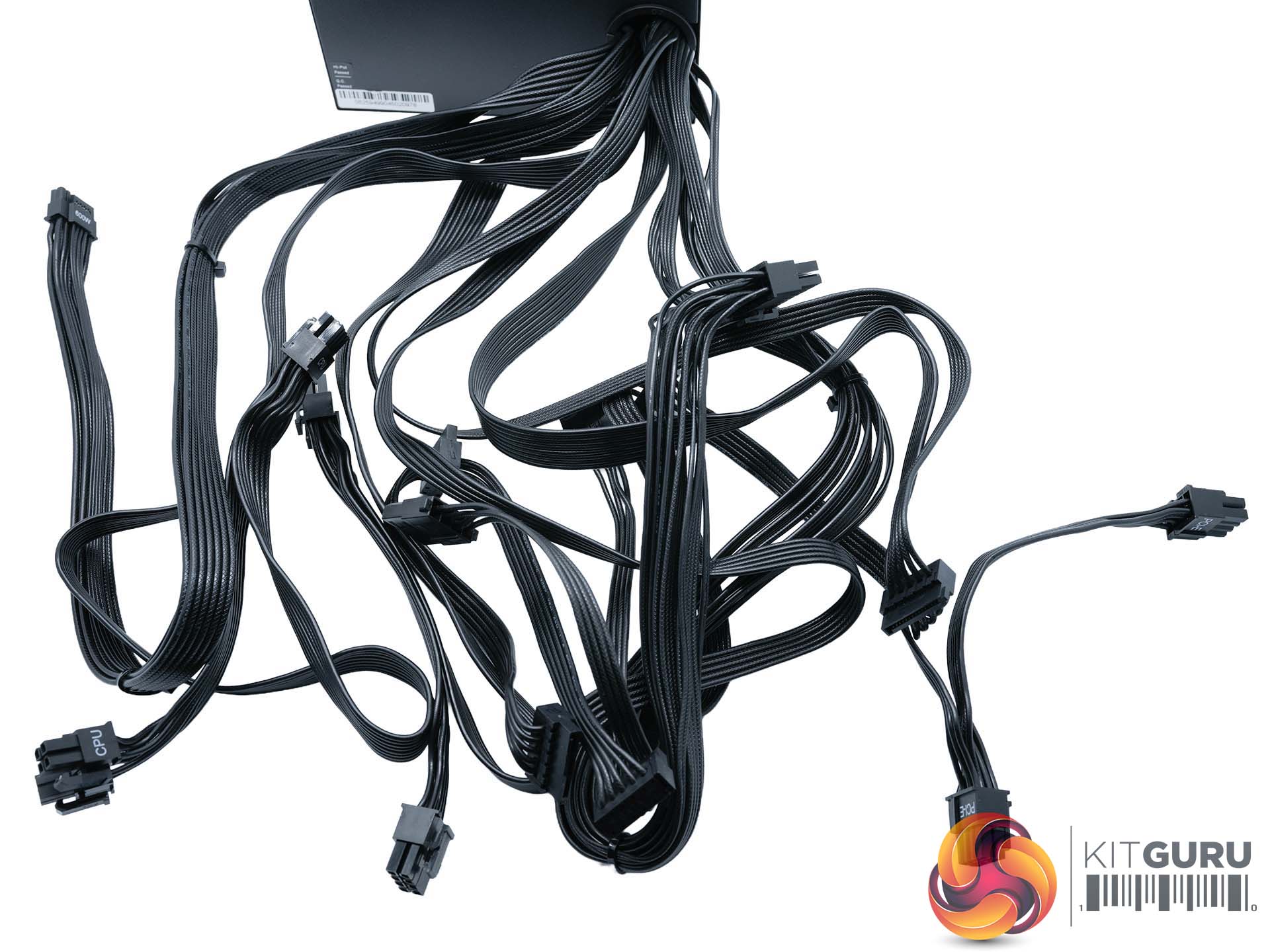
To reduce costs as much as possible, the ribbon style cables from this power supply are hardwired. It is rather tricky trying to get clean photos of the cables, so apologies for the messy photo above. The EPS and PCIe cables are 18AWG gauge. The 600W 12+4 pin PCIe cable is 16-26AWG. None of them have in-cable capacitors.
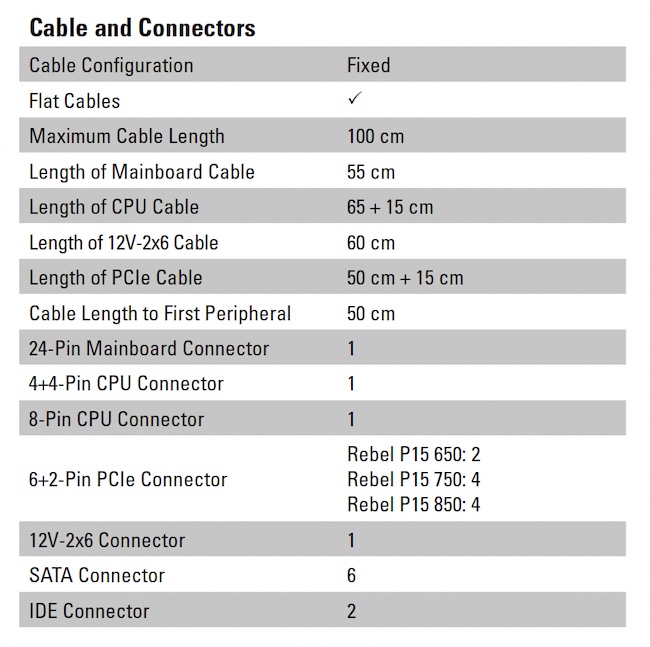
Considering the modest 750W output capacity and price point, the cabling is perfectly acceptable. There are enough cables to cater to the majority of low to mid range systems ideally paired with a supply such as this.
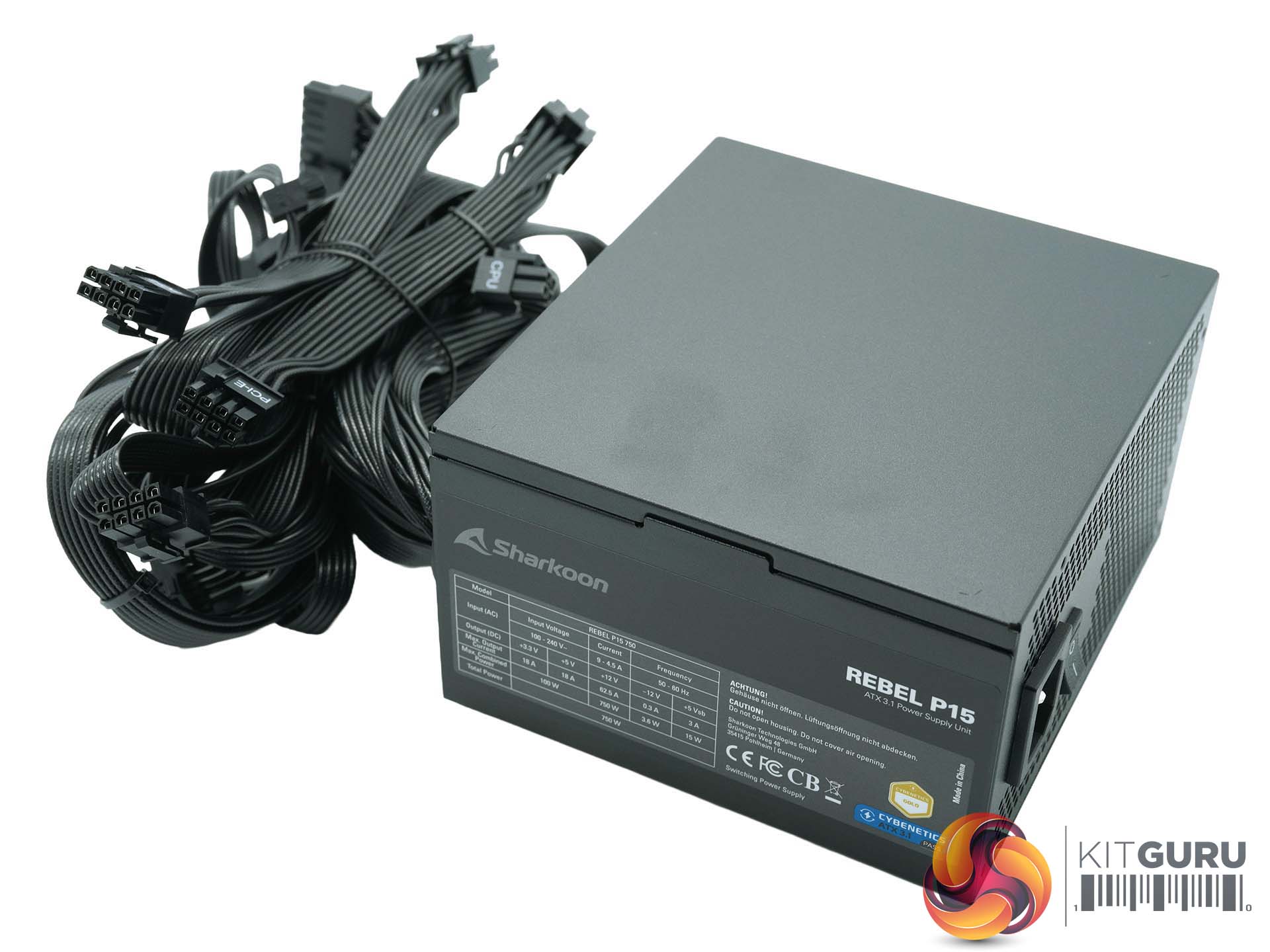
The Sharkoon Rebel P15 is a fairly basic looking unit, it's simple with no fancy markings or design touches. It is aimed at the budget sector. You can only get this unit in black and it measures 140 x 150 x 86 mm (LxWxH). The 750W model weighs 1.887kg.
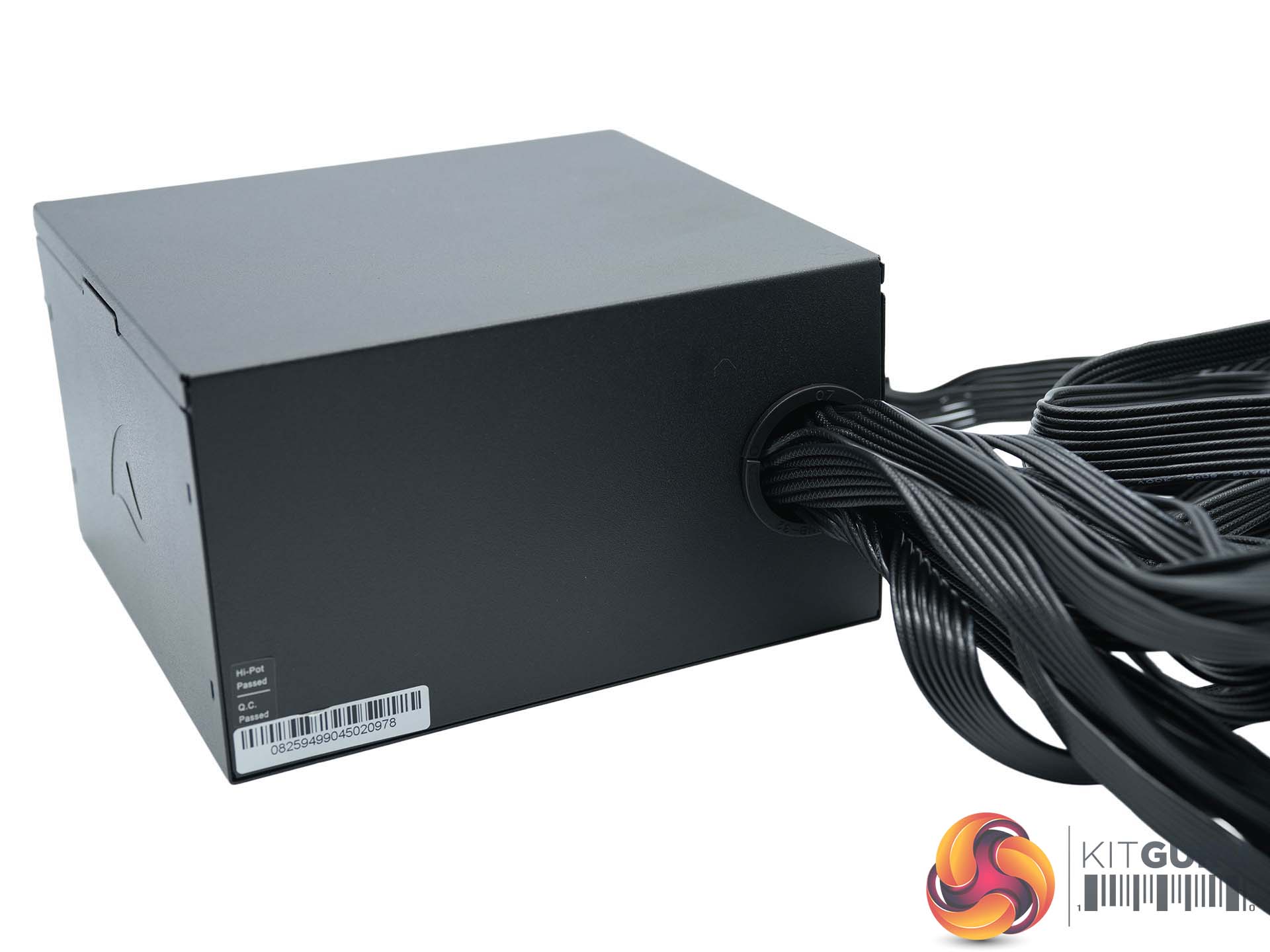
If we flip the unit around, we can see the hardwired cables running out of a hole on the other side. These are always a pain for cable management, but again, it's how they help save costs.
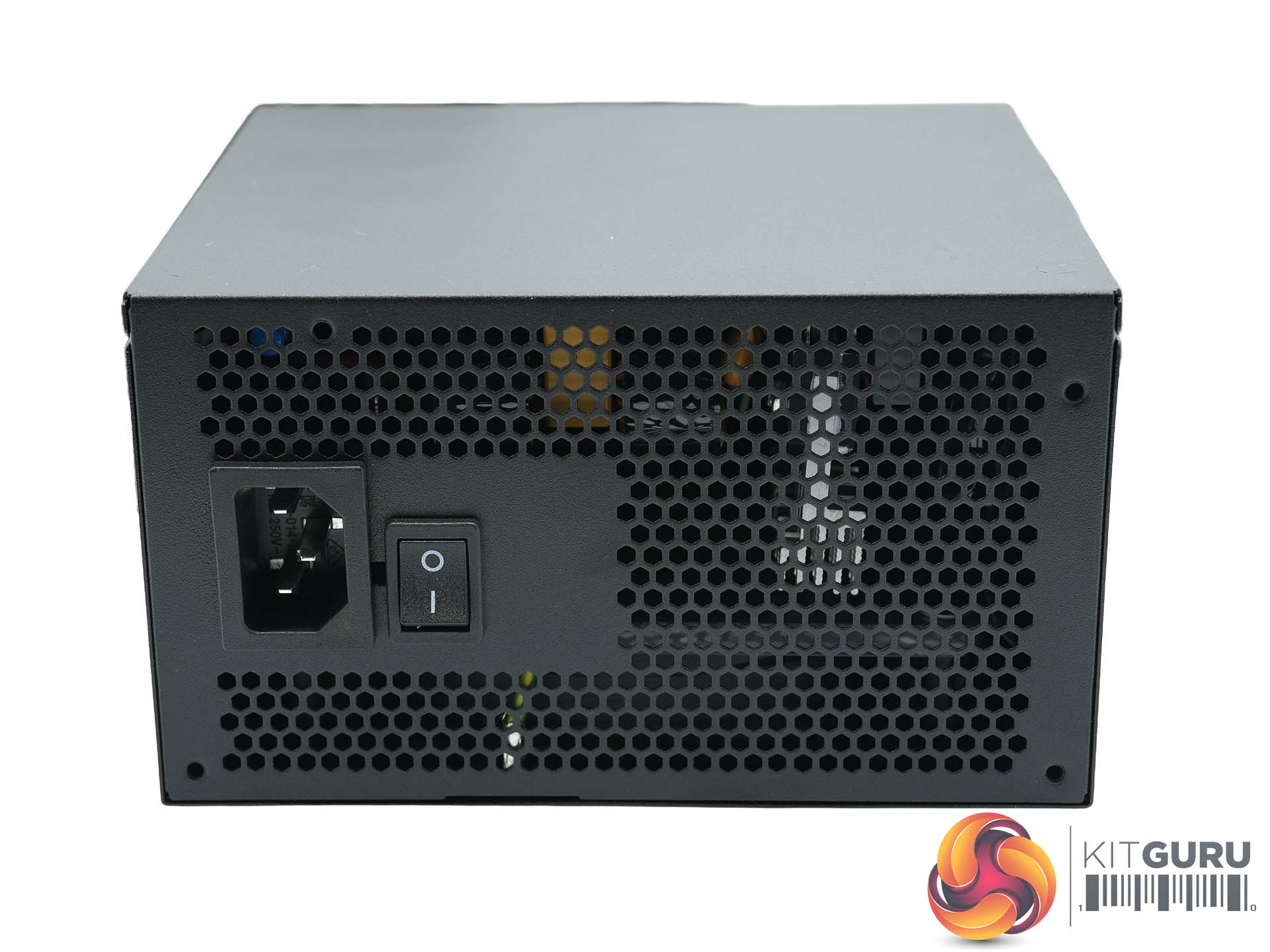
The power side of the unit is home to a connector and power switch along with a vented panel. Again, as simple as possible – no fancy zero RPM fan options or RGB lighting.
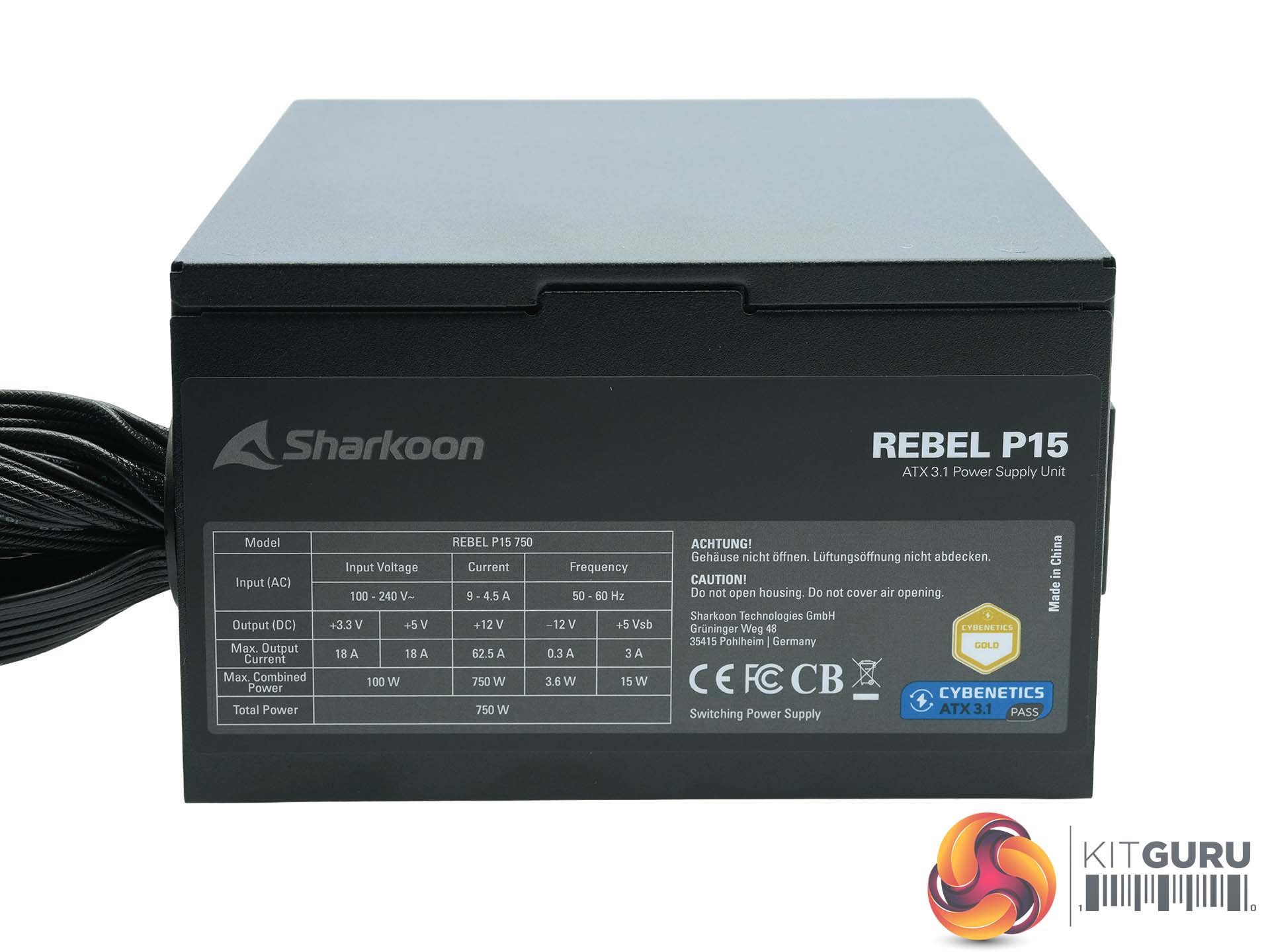
Sharkoon seem keen to highlight the Cybenetics certifications with the badges prominently highlighted beside the power section. The unit can deliver 18A from both +3.3V and +5V rails, and 62.5A from the +12V rail.
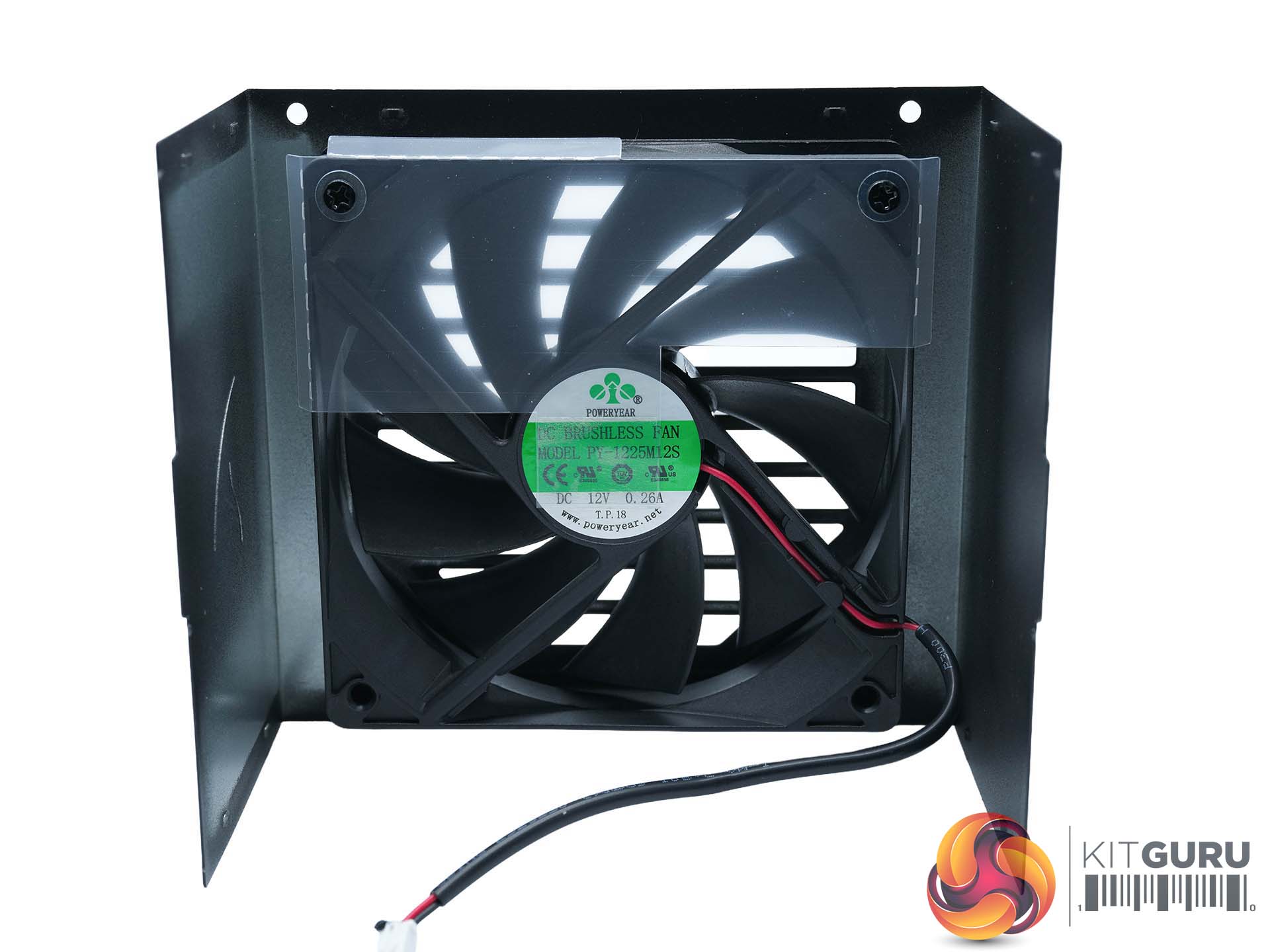
This power supply adopts a 120mm Sleeve bearing fan branded ‘PowerYear'. It is rated 12V 0.26A. The model number is PY-1225M12S. Current 0.26A at 12V draws 3.1 watts, which is modest but it should move a decent amount of air. Very little technical information exists about this fan but based on some research we are making an educated guess that the fan can peak at around 2,000 rpm at full tilt. Other information online lists the fan at 3,000 rpm, but we believe technically it would be closer to 2,000-2,200 rpm.
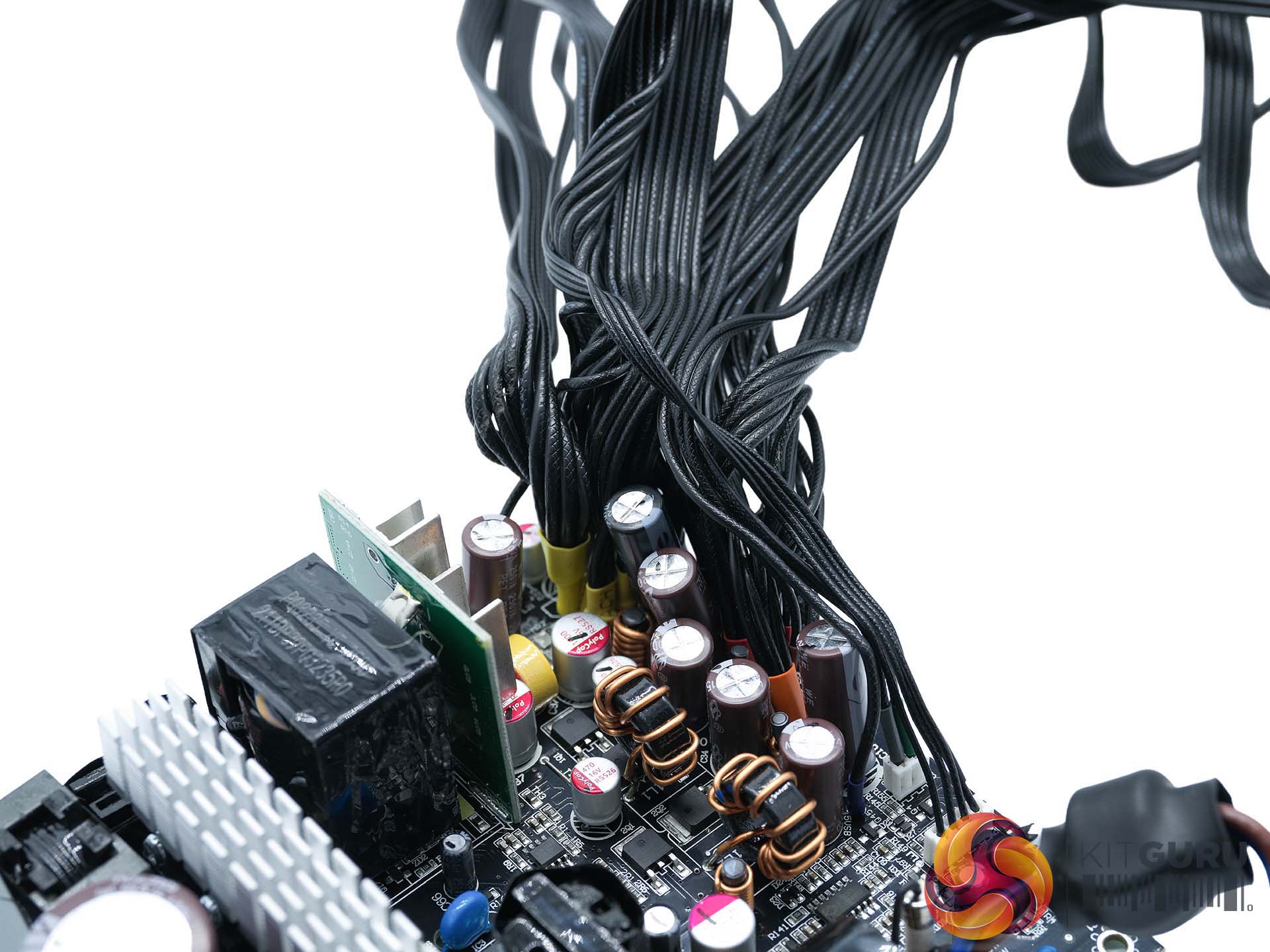
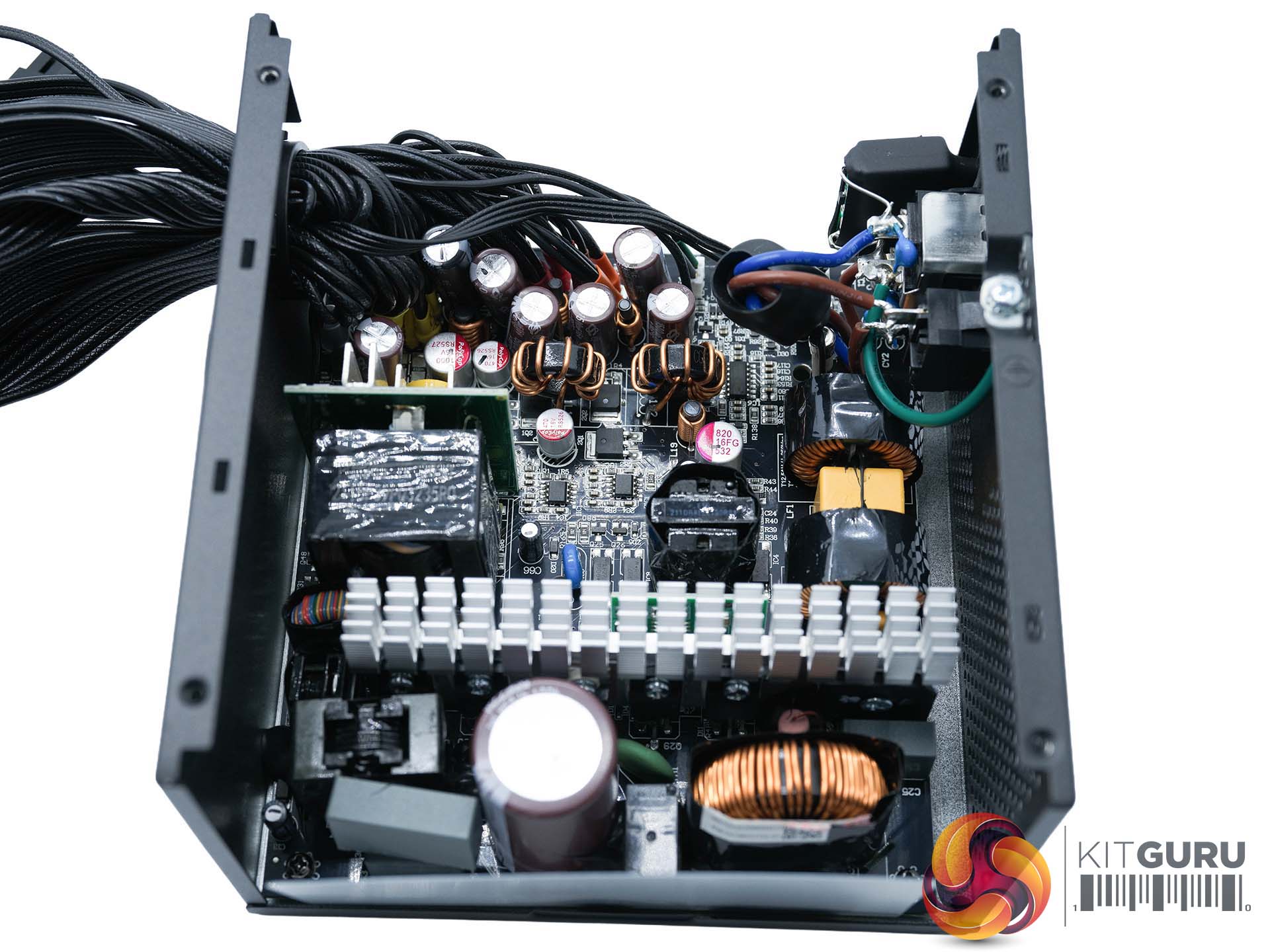
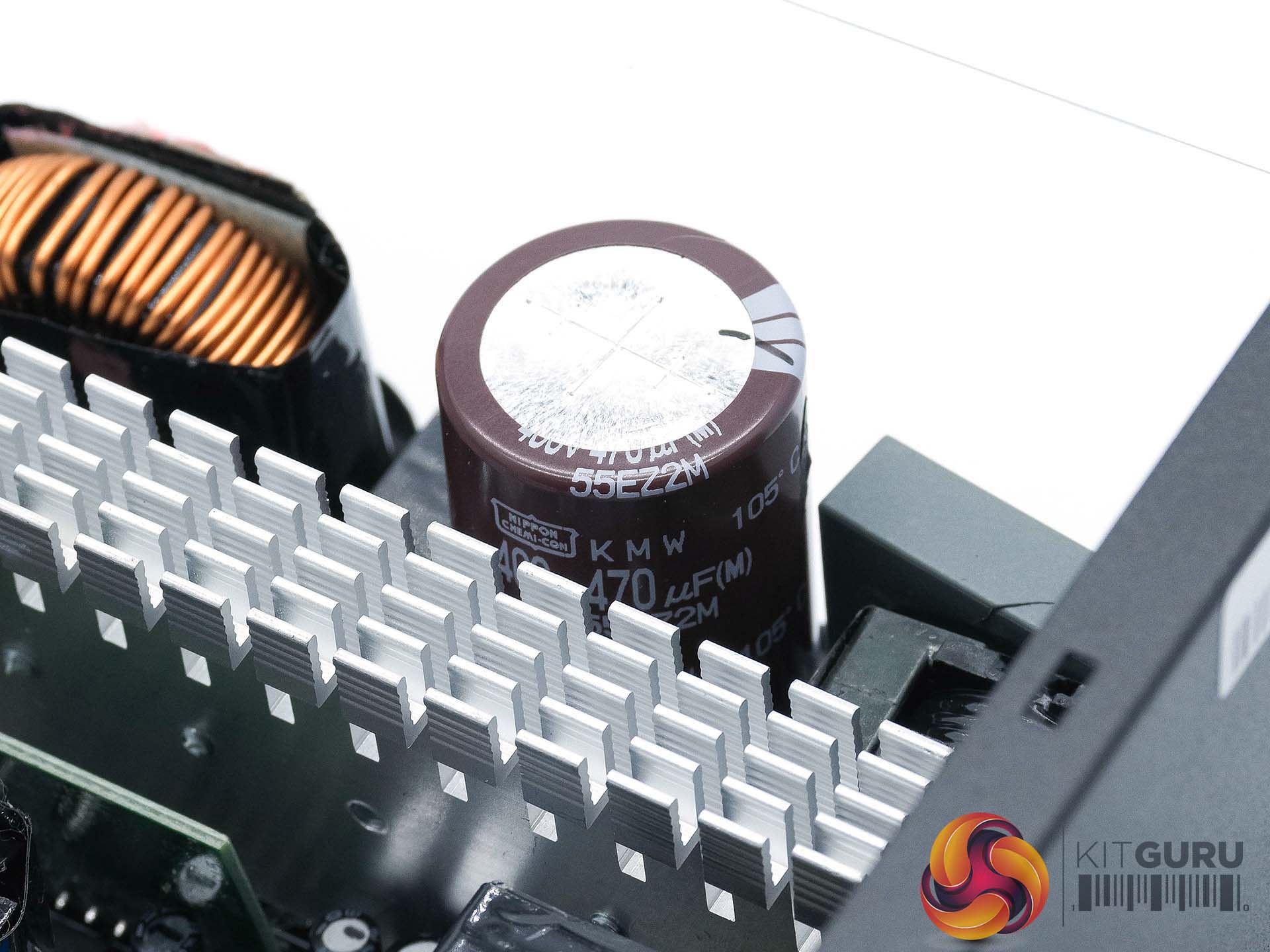
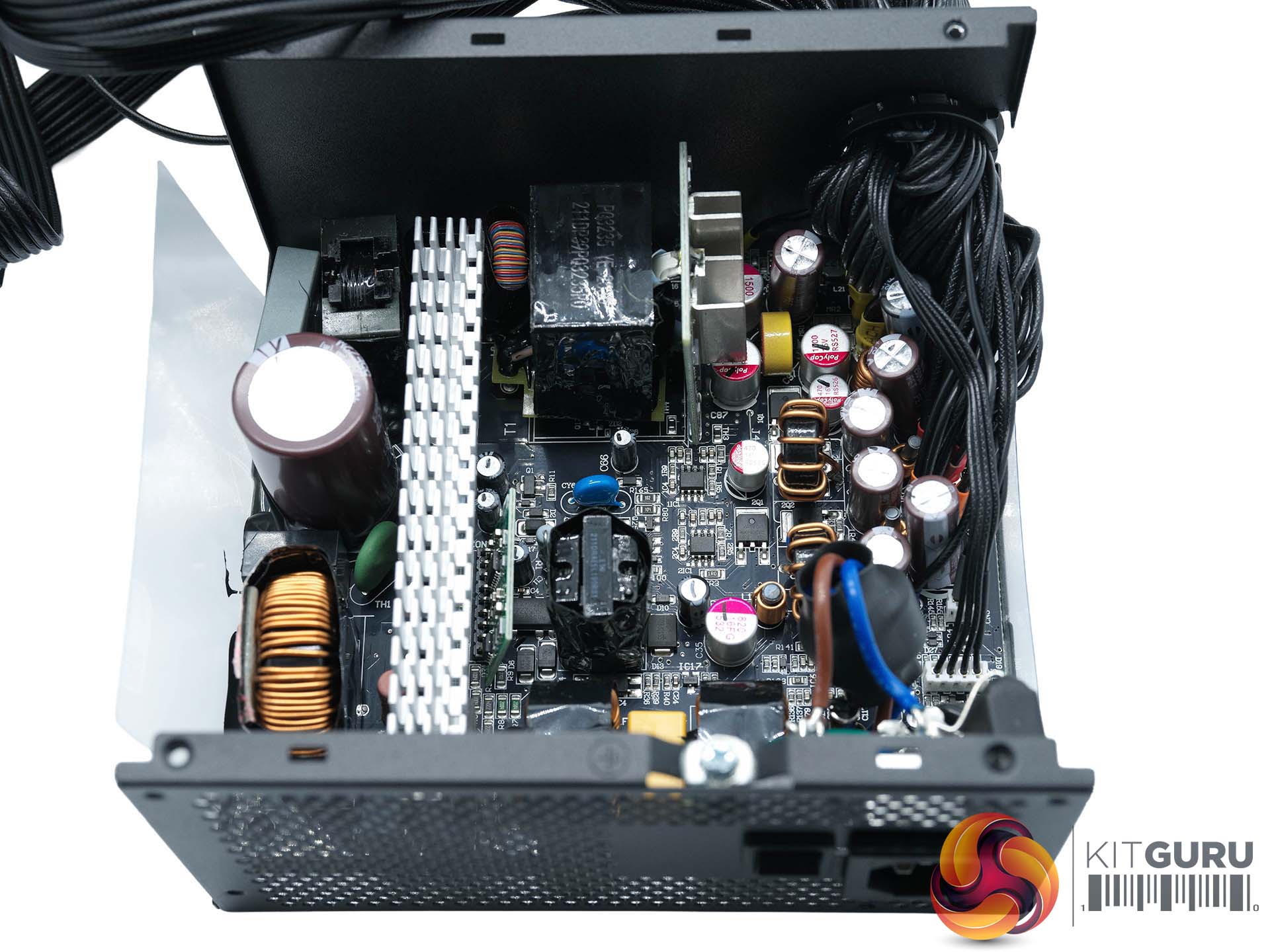
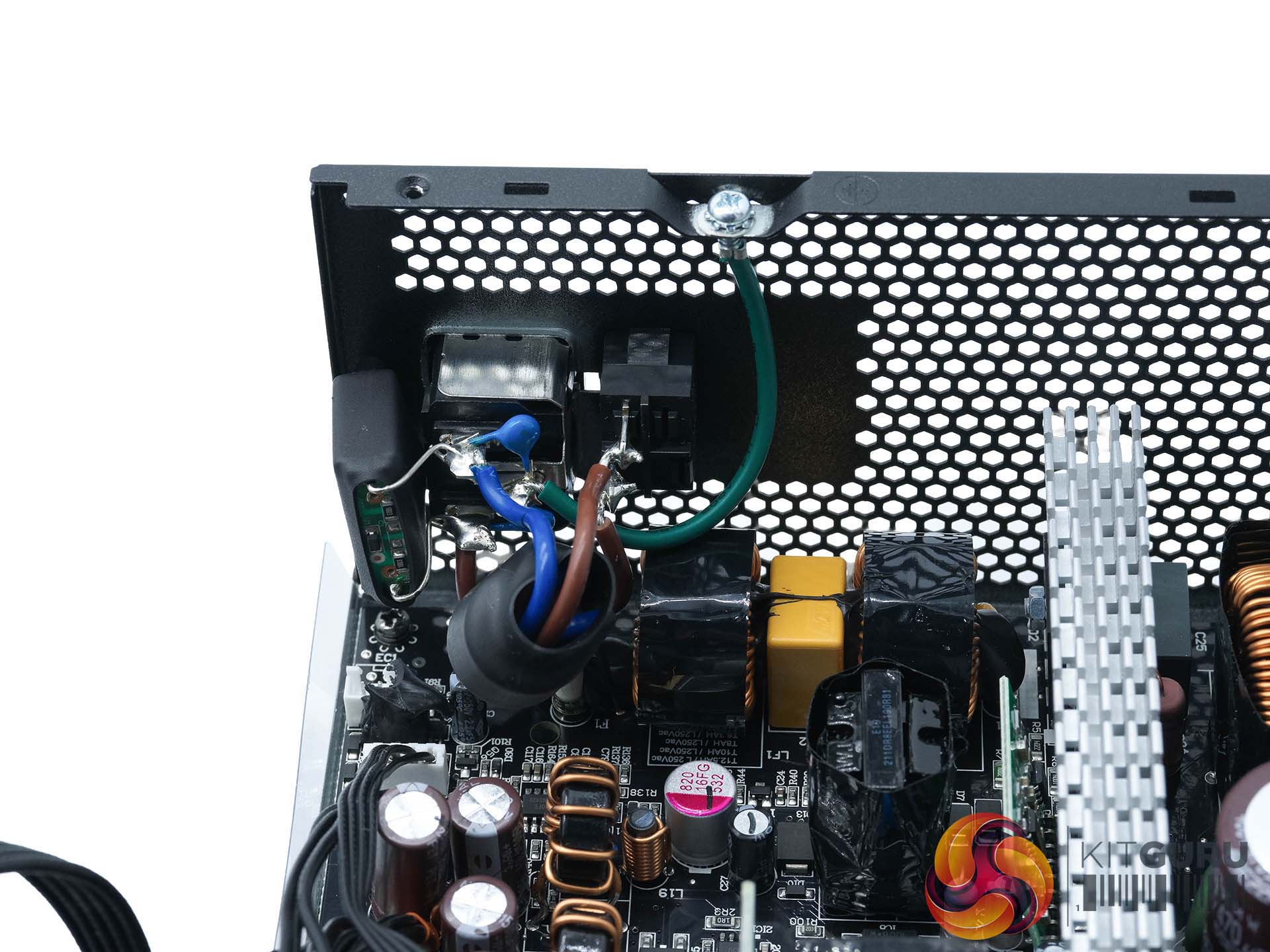
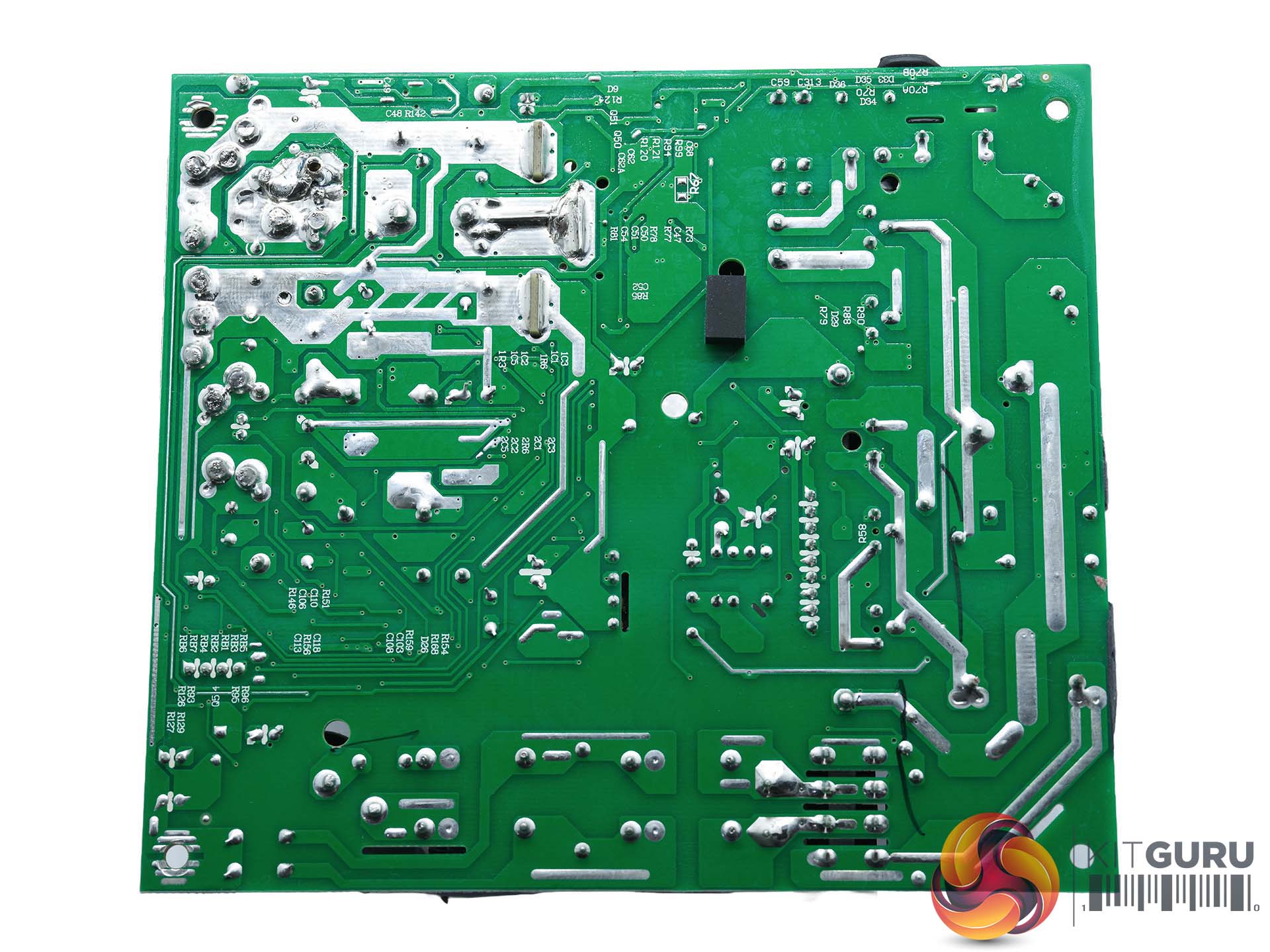
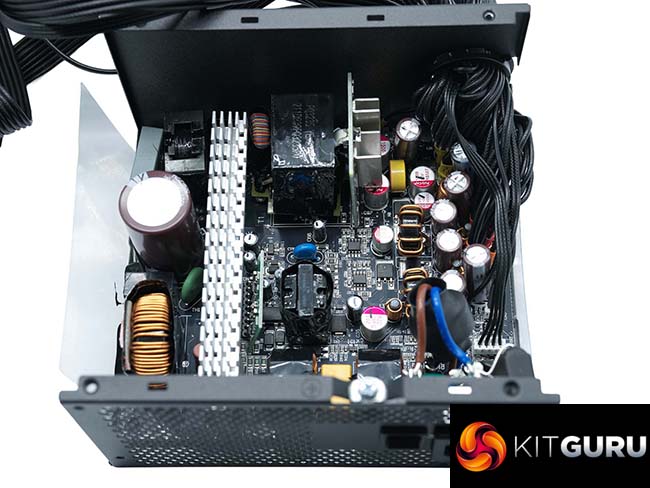
As mentioned earlier, this is an Andyson OEM design for Sharkoon, aimed to hit a very specific price point. I was pleasantly surprised to see that they have adopted a Japanese 105C rated capacitor in the primary stage from Nippon Chemi Con. This is from their KMW series rated 400V and 470uF. This is an excellent capacitor we have seen in much more expensive power supplies before.
This supply is an APFC, Half Bridge and LLC Resonant converter design on the primary side with Synchronous Rectification and DC-DC converters to generate the minor rails. It has OVP, OCP, UVP, SCP, OTP and OPP protections. The PCB is double sided and soldering quality is good. On the primary side we have 2x X Caps, 4x Y Caps, 2x CM Chokes and 1x MOV. It is a basic, but effective design, used now for many years.
Overall for the money, the design seems really well thought out, with some quality components in key positions.
Correctly testing power supplies is a complex procedure and KitGuru have configured a test bench which can deliver up to a 2,000 watt DC load.
Due to public requests we have changed our temperature settings recently – previously we rated with ambient temperatures at 25C, we have increased ambient temperatures by 10c (to 35c) in our environment to greater reflect warmer internal chassis conditions. We test at 230V.
We use combinations of the following hardware:
• SunMoon SM-268
• CSI3710A Programmable DC load (+3.3V and +5V outputs)
• CSI3711A Programmable DC load (+12V1, +12V2, +12V3, and +12V4)
• Extech Power Analyzer
• Extech MultiMaster MM570 digital multimeter
• Extech digital sound level meter
• Digital oscilloscope (20M S/s with 12 Bit ADC)
• Variable Autotransformer, 1.4 KVA
|
DC Output Load Regulation
|
||||||||||
|
Combined DC Load |
+3.3V
|
+5V
|
+12V
|
+5VSB
|
-12V | |||||
|
A
|
V
|
A
|
V
|
A
|
V
|
A
|
V
|
A | V | |
|
75W
|
0.95
|
3.34
|
0.93
|
5.09
|
5.13
|
12.21
|
0.50
|
5.01
|
0.20
|
-12.05
|
|
150W
|
1.65 |
3.34
|
1.66
|
5.07
|
10.61
|
12.21
|
1.00
|
5.01
|
0.20
|
-12.03
|
|
375W
|
3.00
|
3.34
|
3.02
|
5.07
|
28.11
|
12.20
|
1.50
|
5.01
|
0.30
|
-12.04
|
| 565W |
4.05
|
3.34
|
4.07
|
5.07
|
42.94
|
12.20
|
2.00
|
5.01 |
0.30
|
-12.03
|
|
750W
|
4.90
|
3.34
|
5.24
|
5.07
|
57.48
|
12.19
|
2.50
|
5.01
|
0.50
|
-12.06
|
Load regulation proves to be ok, some of the readings are a little on the high side, but nothing to cause concern.
Next we want to try Cross Loading. This basically means loads which are not balanced. If a PC for instance needs 500W on the +12V outputs but something like 30W via the combined 3.3V and +5V outputs then the voltage regulation can fluctuate badly.
| Cross Load Testing | +3.3V | +5V | +12V | -12V | +5VSB | |||||
| A | V | A | V | A | V | A | V | A | V | |
| 734W | 1.0 | 3.34 | 1.0 | 5.08 | 60.0 | 12.14 | 0.2 | -12.04 | 0.50 | 5.02 |
| 154W | 15.0 | 3.28 | 15.0 | 5.02 | 2.0 | 12.21 | 0.2 | -12.02 | 0.50 | 5.02 |
The unit passes the Cross Load tests – not the greatest results, but it performed within spec. When hit with 60 AMPS the +12V rail held at 12.14.
We then used an oscilloscope to measure AC ripple and noise present on the DC outputs. We set the oscilloscope time base to check for AC ripple at both high and low ends of the spectrum.
ATX12V V2.2 specification for DC output ripple and noise is defined in the ATX 12V power supply design guide.
|
ATX12V Ver 2.2 Noise/Ripple Tolerance
|
|
|
Output
|
Ripple (mV p-p)
|
|
+3.3V
|
50
|
|
+5V
|
50
|
|
+12V1
|
120
|
|
+12V2
|
120
|
|
-12V
|
120
|
|
+5VSB
|
50
|
Obviously when measuring AC noise and ripple on the DC outputs the cleaner (less recorded) means we have a better end result. We measured this AC signal amplitude to see how closely the unit complied with the ATX standard.
| AC Ripple (mV p-p) | ||||
| DC Load | +3.3V | +5V | +12V | 5VSB |
| 75W | 15 | 16 | 18 | 12 |
| 150W | 17 | 18 | 27 | 15 |
| 375W | 18 | 20 | 35 | 18 |
| 565W | 19 | 22 | 45 | 19 |
| 750W | 20 | 24 | 61 | 22 |
The unit passes the ripple tolerance tests falling inside industry rated parameters. These are far from the best results we have seen and the +12V results are a little high, but at 65 euros, it actually performed better than I expected.
|
Efficiency (%) 230V
|
|
|
75W
|
89.4
|
|
150W
|
91.4
|
|
375W
|
92.3
|
|
565W
|
91.6
|
|
750W
|
90.3
|
Efficiency is solid for an 80 Plus Gold unit, peaking at around >92% at 50% load. At full load the power supply maintains an >90% efficiency level, which is equally noteworthy.
We take the issue of noise very seriously at KitGuru and this is why we have built a special home brew system as a reference point when we test noise levels of various components. Why do this? Well this means we can eliminate secondary noise pollution in the test room and concentrate on components we are testing. It also brings us slightly closer to industry standards, such as DIN 45635.
Today to test the power supply we have taken it into our acoustics room environment and have set our Digital Sound Level Noise Decibel Meter Style 2 one meter away from the unit. We have no other fans running so we can effectively measure just the noise from the unit itself.
As this can be a little confusing for people, here are various dBa ratings in with real world situations to help describe the various levels.
KitGuru noise guide
10dBA – Normal Breathing/Rustling Leaves
20-25dBA – Whisper
30dBA – High Quality Computer fan
40dBA – A Bubbling Brook, or a Refrigerator
50dBA – Normal Conversation
60dBA – Laughter
70dBA – Vacuum Cleaner or Hairdryer
80dBA – City Traffic or a Garbage Disposal
90dBA – Motorcycle or Lawnmower
100dBA – MP3 Player at maximum output
110dBA – Orchestra
120dBA – Front row rock concert/Jet Engine
130dBA – Threshold of Pain
140dBA – Military Jet takeoff/Gunshot (close range)
160dBA – Instant Perforation of eardrum
|
Noise (dBA)
|
|
|
75W
|
<28.0
|
|
150W
|
<28.0
|
|
375W
|
30.5
|
|
565W
|
36.9
|
| 750W | 42.3 |
The fan in this unit is quiet at the lower end of the power scale, at over 500 watts demand it becomes clearly audible and it rises to a high level at full load. It is a cheaper sleeve bearing fan however, so this is to be expected.
|
Temperature (c)
|
||
|
Intake
|
Exhaust
|
|
|
75W
|
36
|
40
|
|
150W
|
38
|
44
|
|
375W
|
39
|
50
|
|
565W
|
45
|
57
|
|
750W
|
47
|
61
|
The fan works well to expel heat out the rear of the chassis. Again a decent set of results.
So if you came to just study the technical results in this review and nothing else, then the Sharkoon Rebel P15 750W power supply may seem disappointing – but really this unit is all about the aggressive pricing. At 65 euros Sharkoon are definitely targeting the price conscious enthusiast gamer who wants to know that even a small spend will get them a stable and reliable power supply.
The Rebel P15 750W is shipped in a very basic box, with very limited accessories. Sharkoon have not wasted any money on the packaging or accessories. Additionally, all the cables are hardwired, and there are no unique or eye catching selling points.
It is all as bare bones as possible. This is to help keep the price down and makes sense to me, after all there is a reasonably large audience in 2025 who will appreciate a solid little workhorse like this for powering a low to mid range system. Money is tight.
Technically the P15 750W delivers pretty good results, ripple suppression (while some way short of the leading units on the market) falls well within industry rated tolerances and the results highlight that Andyson have partnered up with Sharkoon to ensure power delivery is stable. The Rebel P15 achieves Gold rated efficiency – it also has the Cybenetics seal of approval as well to verify this. Cybenetics is a much more in depth and accurate certification system than 80 Plus, so it is great to see that Sharkoon have trusted this unit to be verified by Aris and his team.
Load regulation is decent and the P15 handled the cross load stress test fine as well. On a very positive note, I was stunned to see that this design has managed to incorporate a very high grade primary stage capacitor from Japanese company Nippon Chemi Con (470uF KMW series). I don't think there has ever been a unit I have tested less than 70 euros to adopt a 105c rated Cap from a leading Japanese brand. I tip my hat to Sharkoon for this.
Of course there are some negatives, the fan can get loud under higher loads, and while never painful it is clearly audible if you need more than 500 watts on a regular basis. It didn't bother me that much, but if you are specifically susceptible to fan noise, this might be more of a problem for you. All the cables are hardwired, which is a pain when building a system as you have to route and hide cables you might not even be using. But at this price point, compromises have to be made.
Right now stock of these products is filtering into the channel. Some of the models are currently available on Amazon DE and more will be hitting various locations in the coming month. UK stock is still to follow.
Pricing : P15 650W 60 euros / 750w 65 euros / 850w 70 euros.
Pros:
- Very aggressive price point.
- 7-year warranty.
- 105C-rated high grade Japanese primary capacitor (Nippon Chemi Con).
- Price point is worth two mentions.
- Cybenetics Gold Certifications.
- ATX 3.1 compatible.
- OVP, OCP, UVP, SCP, OTP, OPP protections.
Cons:
- Can get a little loud.
- Hard-wired cables.
- Basic, cost effective bundle.
KitGuru says: If you are working with very limited funds but don't want to take a risk on an unknown Asian brand then the Sharkoon Rebel P15 is one to be making the top of your shortlist. The 750W model we reviewed today costs 65 euros and has some high quality components inside, such as a 105C-rated Japanese Primary Capacitor from Nippon Chemi Con.