KitGuru KitGuru.net – Tech News | Hardware News | Hardware Reviews | IOS | Mobile | Gaming | Graphics Cards


We used CrystalDiskMark 8‘s custom settings to test the 4K random write performance of the drive through a range of queue depths. The setup for the tests is listed below.
Transfer Request Size: 4KB, Outstanding I/O: 1-32.
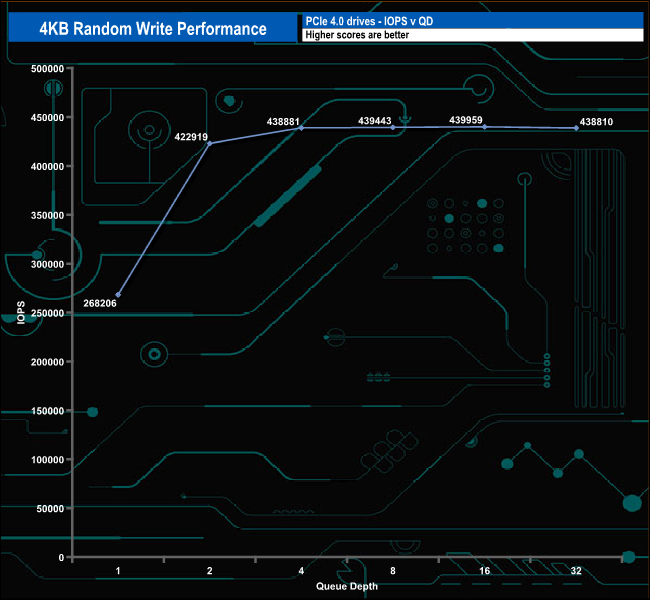
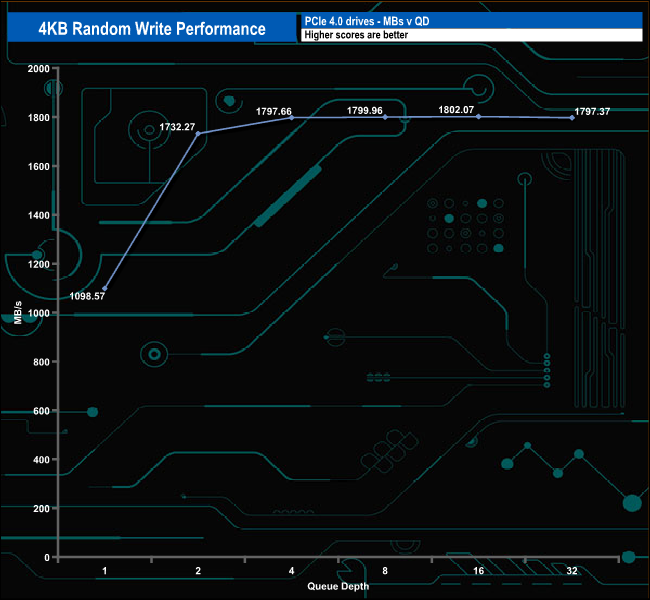
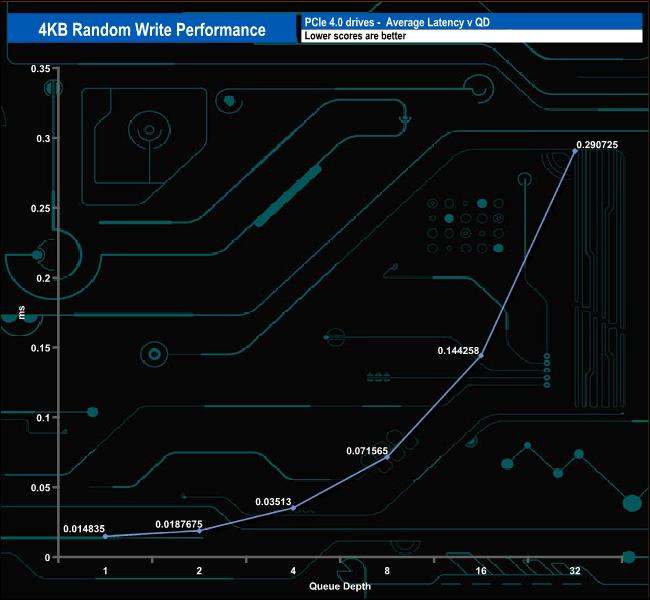
As with our 4-threaded random 4K read testing, we couldn't get close to the official rating of 1,440,000 IOPS in our random write tests. The best we saw was 439,959 IOPS (1,802.07MB/s) at QD16. The drive finished the test run at QD32 with the performance dropping off slightly at 438,810 IOPS (1,797.37MB/s).
4K Random Write v QD Performance.
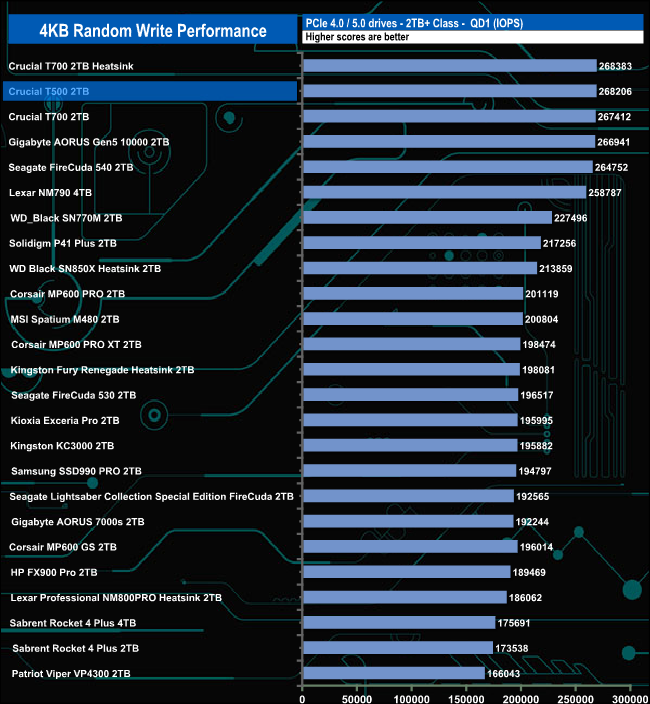
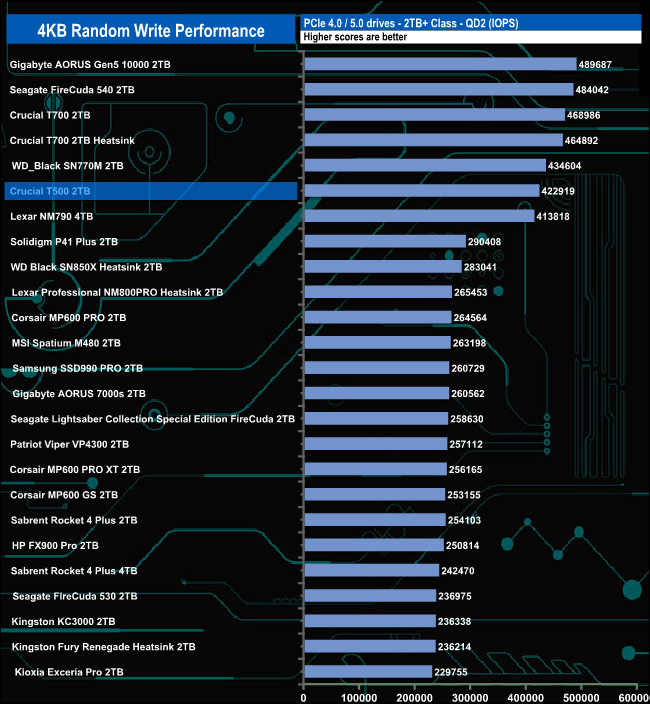
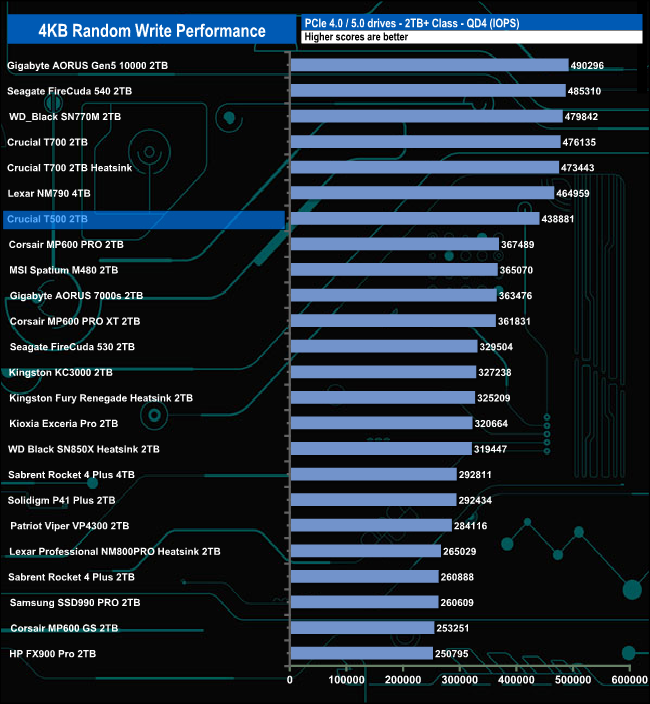
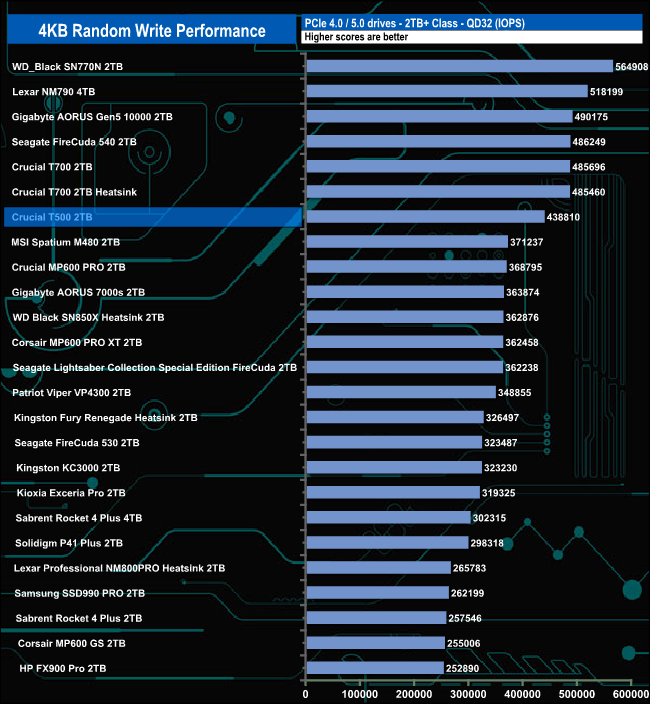
While we couldn't get close to the official maximum 4K write rating for the drive, at QD1 it's the fastest Gen4 drive we've seen to date when it comes to 4K random writes. Its score of 268,206 IOPS manages to split the two Gen5 Crucial T700 drives and sit in second place in the results chart. It doesn't last though because as the queue depth deepens, the drive drops slowly down the chart.