KitGuru KitGuru.net – Tech News | Hardware News | Hardware Reviews | IOS | Mobile | Gaming | Graphics Cards


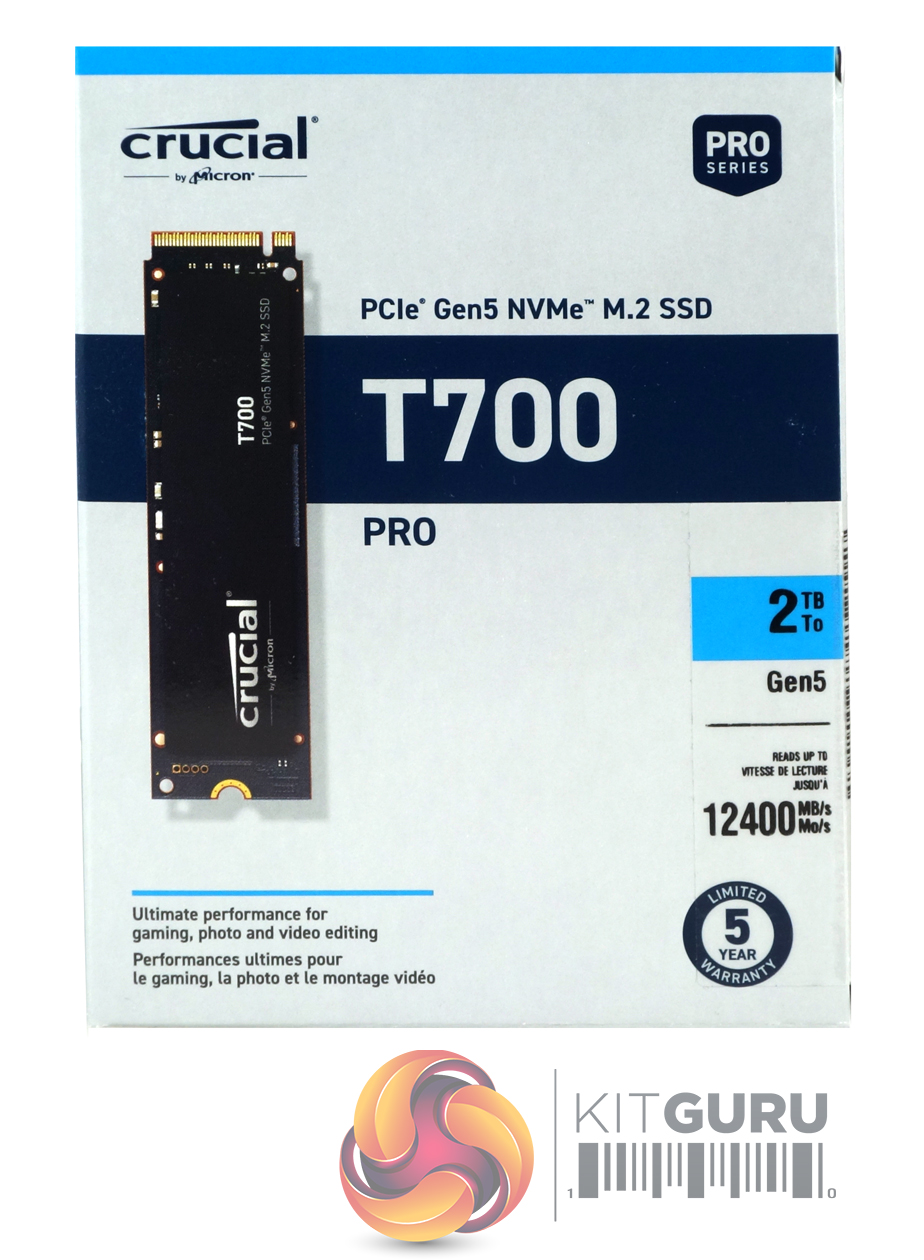
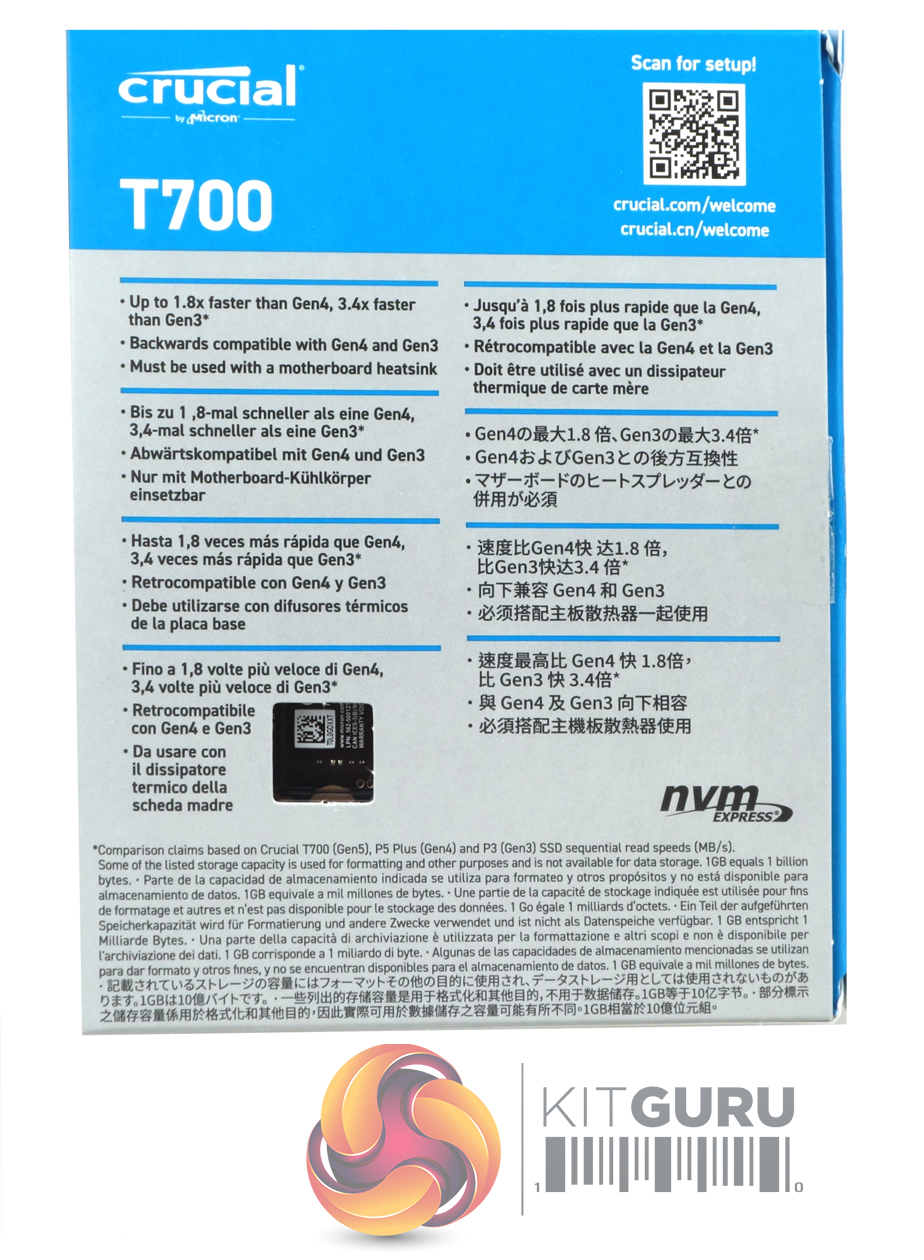
The T700 comes in a slim-line box with a good clear image of the drive on the front. To the right of this image is a longish sticker that displays the capacity of the drive, maximum Sequential read speed (12,400MB/s) and a logo stating the 5-year warranty. The rear of the box is home to some multi-lingual notes about the drive's speed, backward compatibility and warning about the need to use a motherboard heatsink/cooler.
Crucial's 2TB T700 is built on a dual-sided M.2 2280 format.
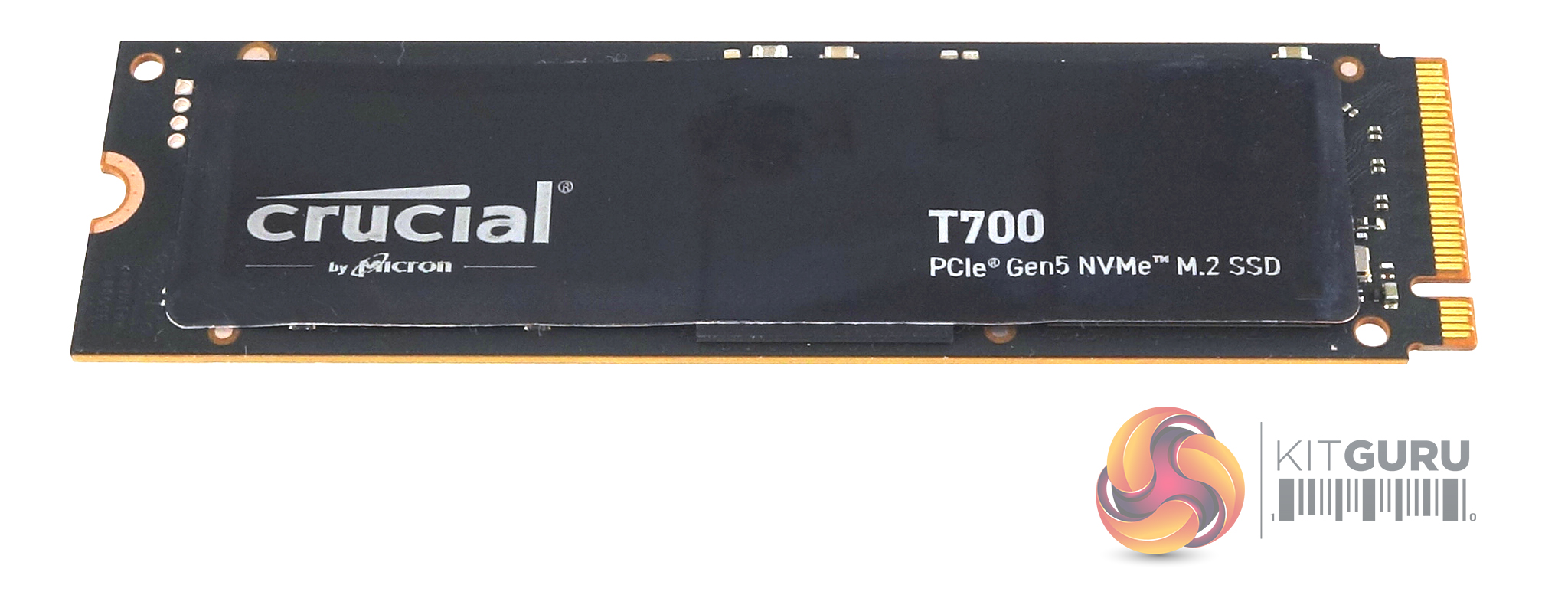

Under the top product label, which has a layer of copper built into it to help get rid of heat, there are two Micron 232-layer 3D TLC packages, an LPDDR4 DRAM IC and the Phison PS5026-E26 8-channel controller. Sitting under normal product stickers on the other side of the PCB are two more NAND packages.
Phison's PS5026-E26 is the first consumer Gen5 controller. Built on a 12nm process supporting up to 32TB of TLC or QLC NAND flash memory with data transfer speeds of up to 2400 MT/s. The controller uses dual Arm Cortex-R5 cores that work together with Phison’s specialized accelerators from its CoXProcessor 2.0 family. The controller supports Phison's 5th Generation LDPC ECC engine.