KitGuru KitGuru.net – Tech News | Hardware News | Hardware Reviews | IOS | Mobile | Gaming | Graphics Cards


CrystalDiskMark is a useful benchmark to measure the theoretical performance levels of hard drives and SSDs. We are using v8.0.
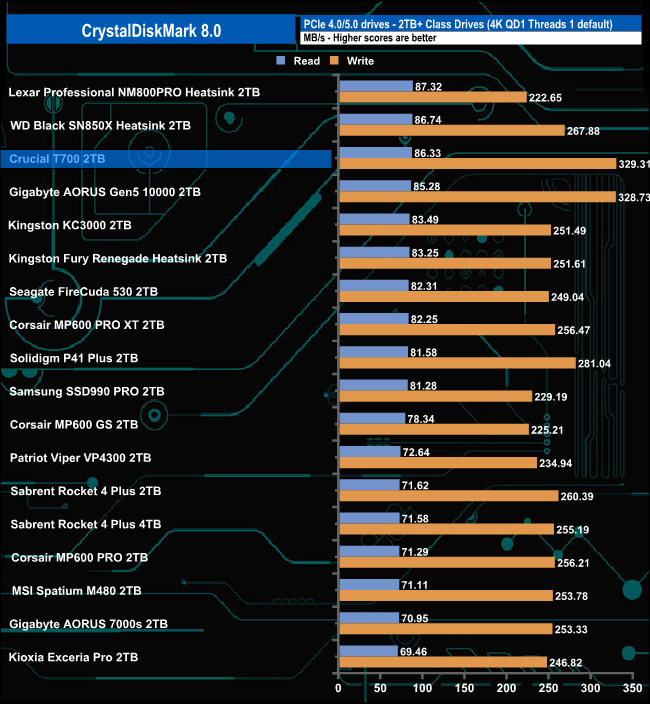
In CrystalDiskMark 8's 4K QD1 T1 test, the Crucial T700 sits just behind the Gen 4 Lexar Professional NM800 PRO and WD's Black SN850X when it comes to read performance but has a faster write speed than both of them.
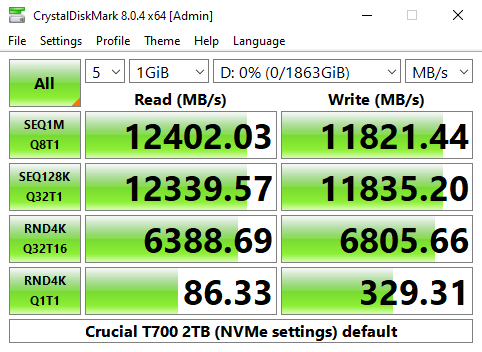
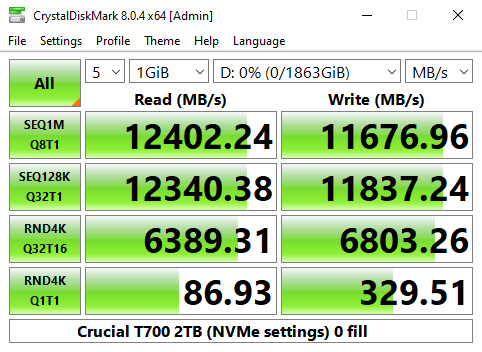
As can be seen from the benchmark result screens we can confirm the official Sequential read/write figures of 12,400MB/s and 11,800MB/s respectively with test result figures of 12,402MB/s for reads and 11,821MB/s for writes.
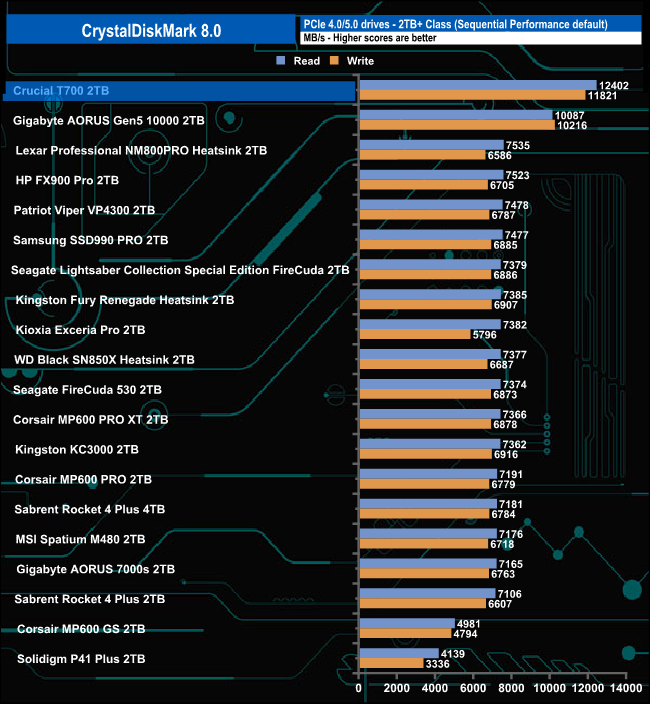
Those Sequential scores are the fastest we've seen to date for a consumer NVMe SSD and they give a hint of what's to come from Gen 5 drives in the coming months as other controllers and NAND come into play.
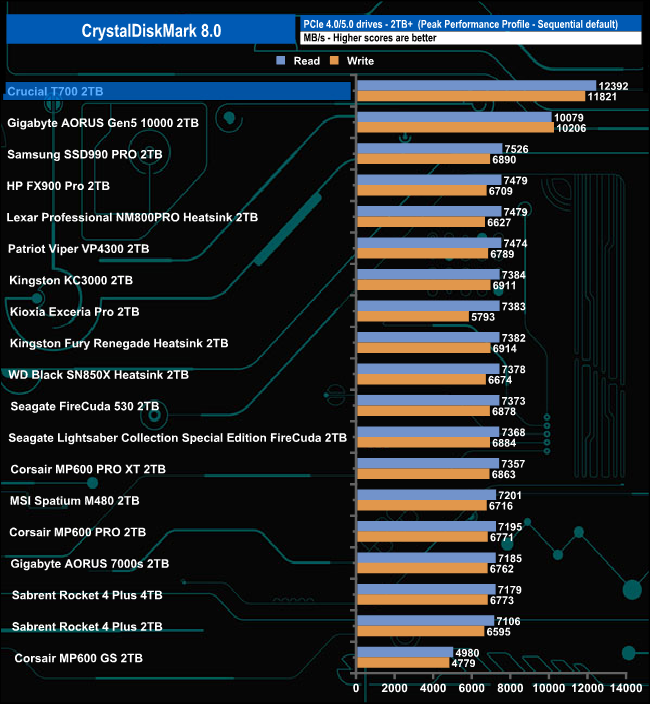
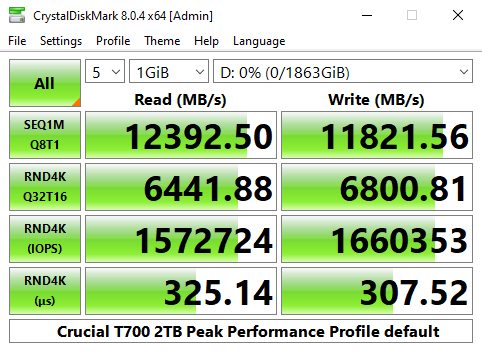
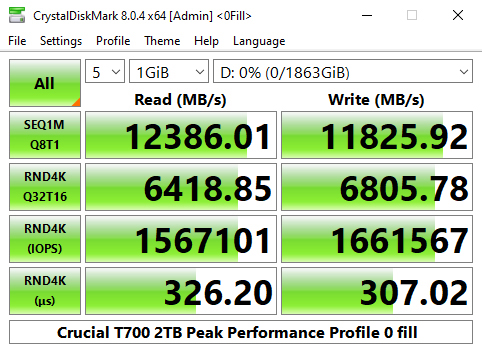
Using the Peak Performance profile of the CrystalDiskMark benchmark we could once again confirm the official Sequential performance figures.
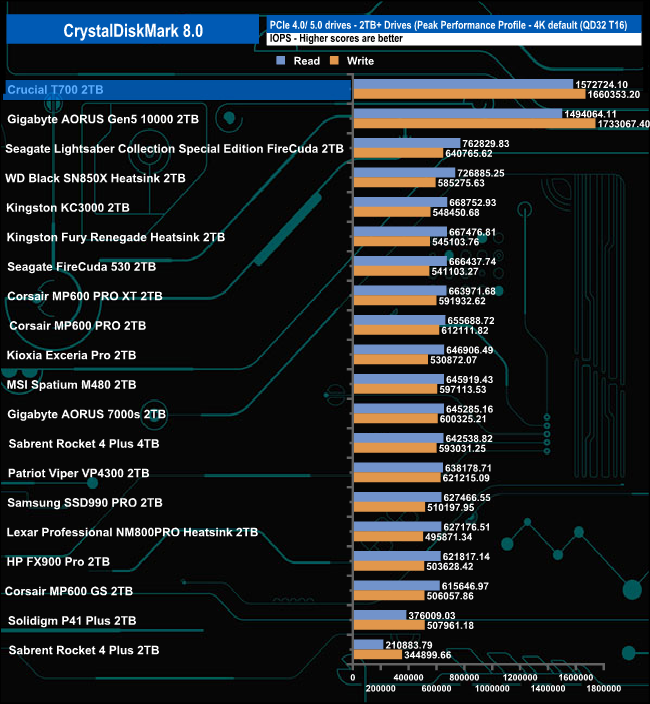
We could also confirm the official 4K random read/write figures of up to 1,500,000 IOPS for both with a read test result of 1,572,724 IOPS with writes even faster at 1,660,353 IOPS.
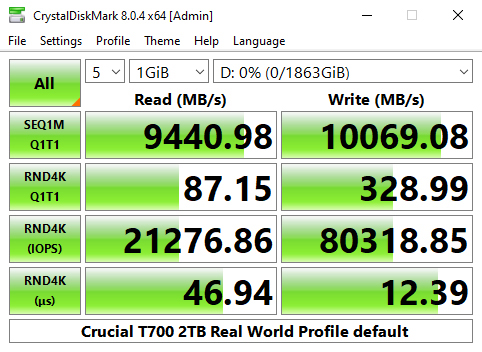
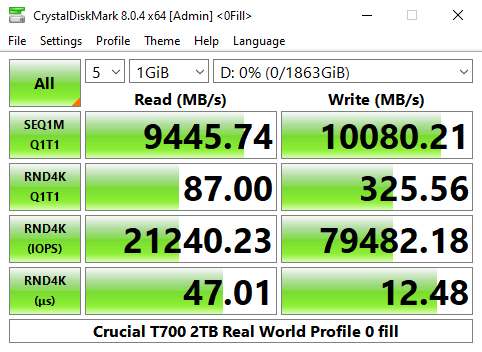
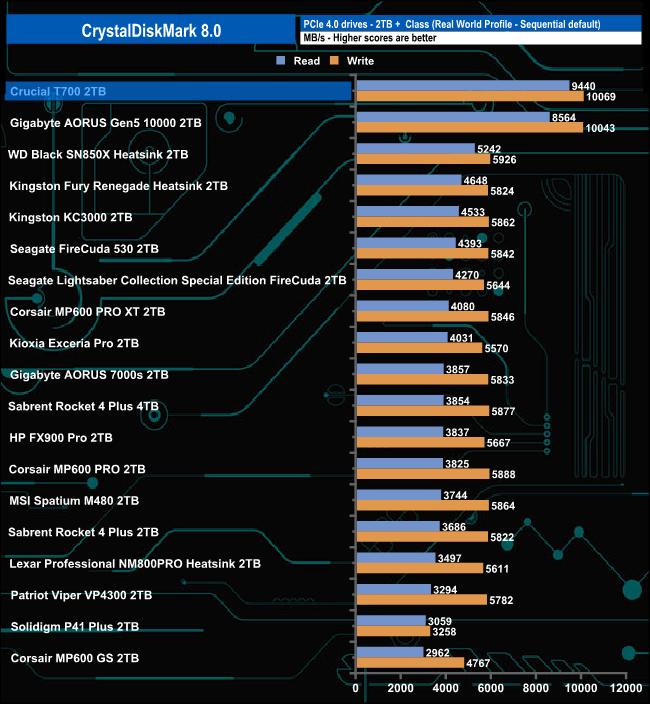
Crucial's T700 tops the Real World Profile chart with Sequential read/write scores of 9,440MB/s and 10,069MB/s, the fastest we've seen to date for this test.