KitGuru KitGuru.net – Tech News | Hardware News | Hardware Reviews | IOS | Mobile | Gaming | Graphics Cards


We used CrystalDiskMark 8‘s custom settings to test the Sequential read and write performance of the drive through a range of queue depths. The setup for the tests is listed below.
128KB Sequential Read / Write.
Transfer Request Size: 128KB, Thread(s): 1, Outstanding I/O: 1-32.
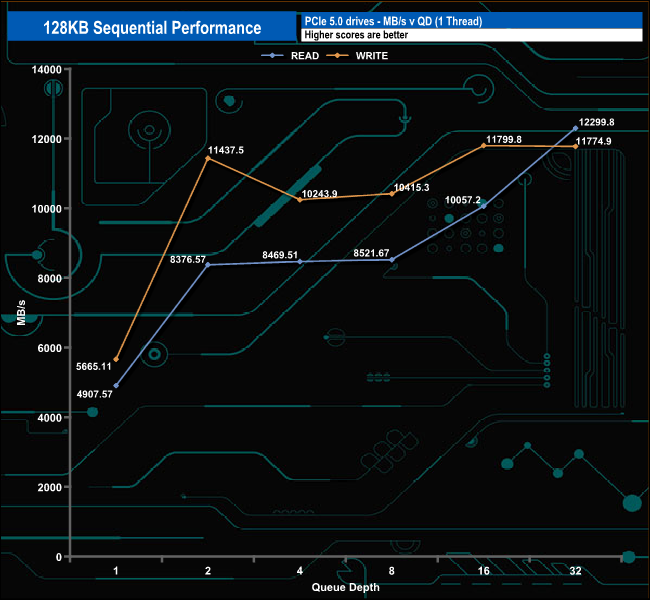
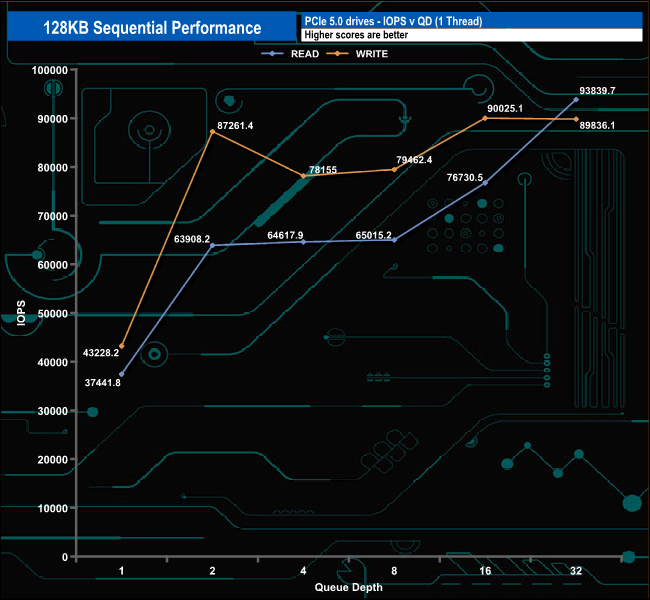
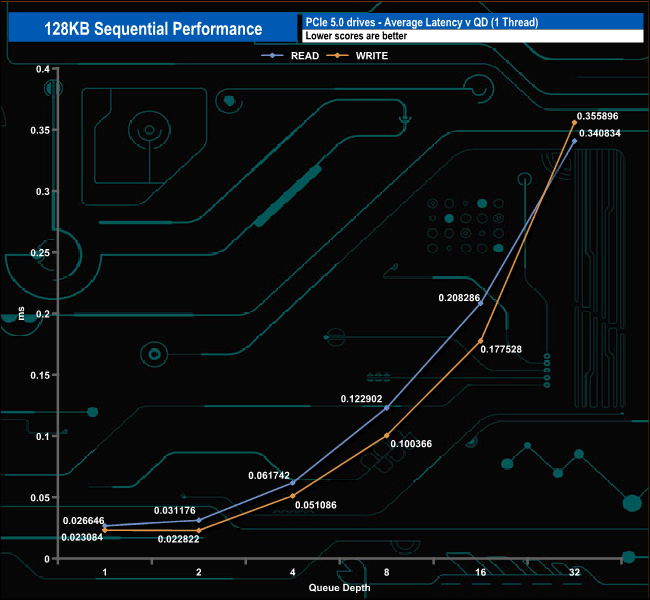
In this test, the read performance of the drive accelerates between QDs 1 and 2 before levelling off between QD2 and 8 before climbing again to finish the test run at 12,299MB/s. The write performance races away to peak at 11,437MB/s at QD2 before dropping back between QD's 4 and 8 before climbing again to finish the test run at QD32 with a test result of 11,774MB/s.
128KB Sequential Read v QD compared.
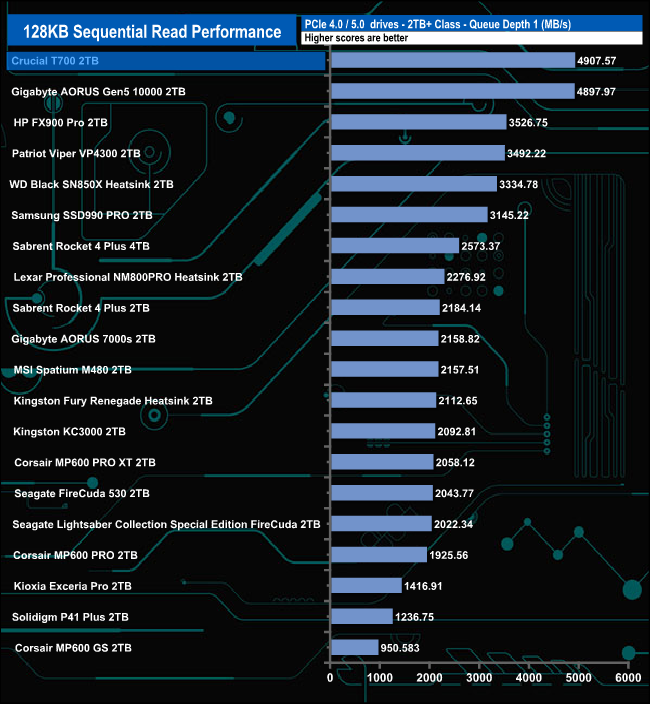
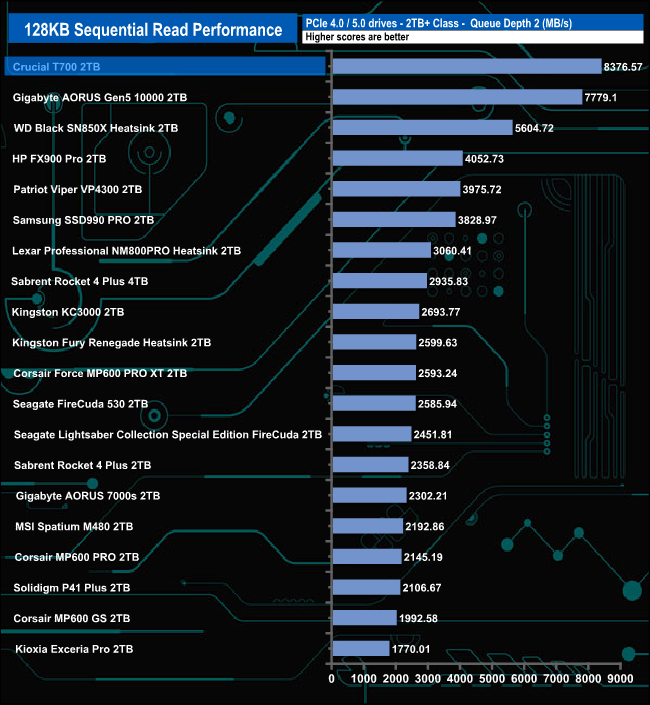
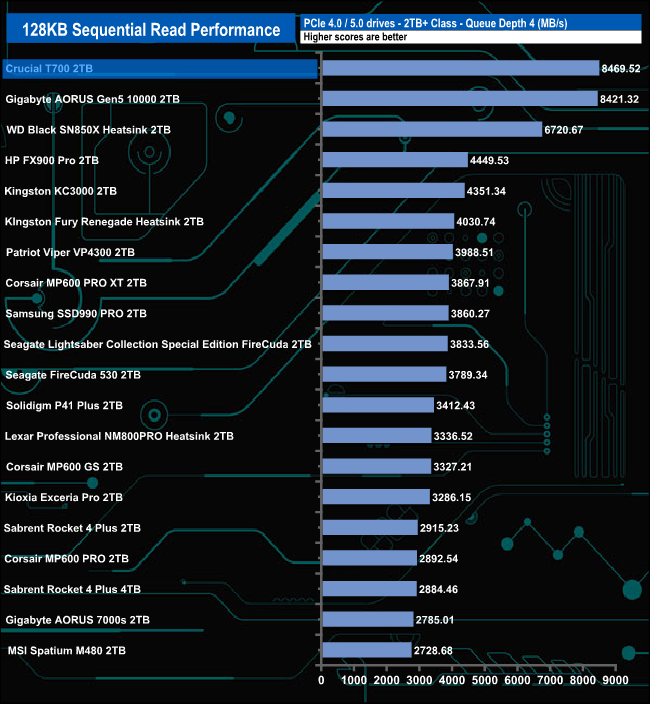
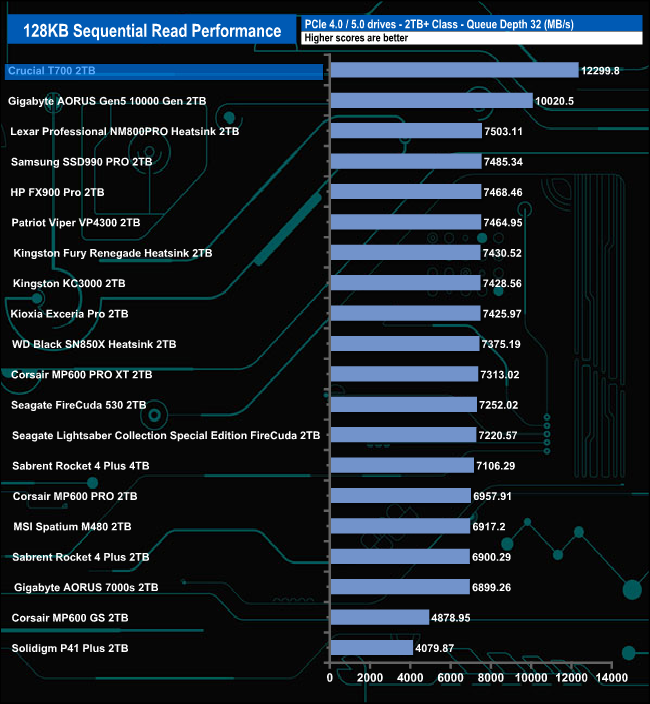
At QDs 1 and 4 the Crucial T700 and Gigabyte's AORUS Gen5 10000 are pretty much on the same pace. However, at QDs 2 and 32, the Crucial drive pulls away.
128KB Sequential Write v QD compared.
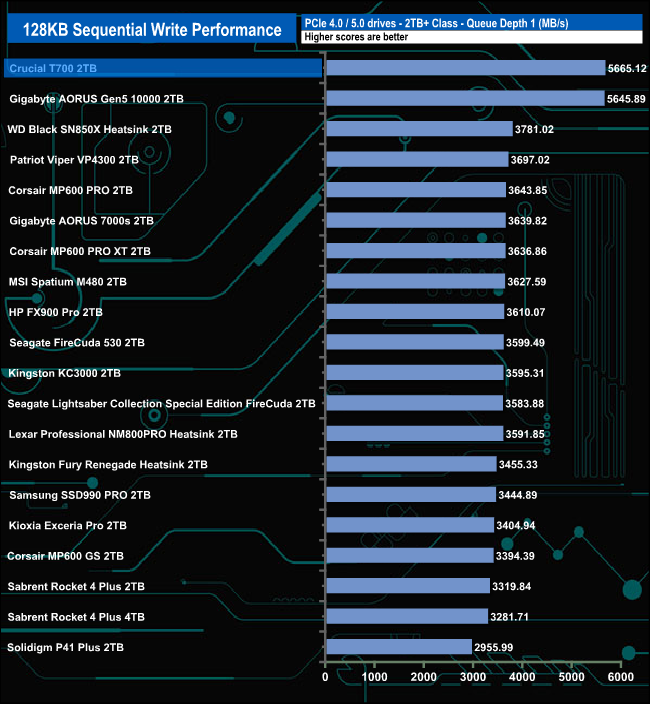
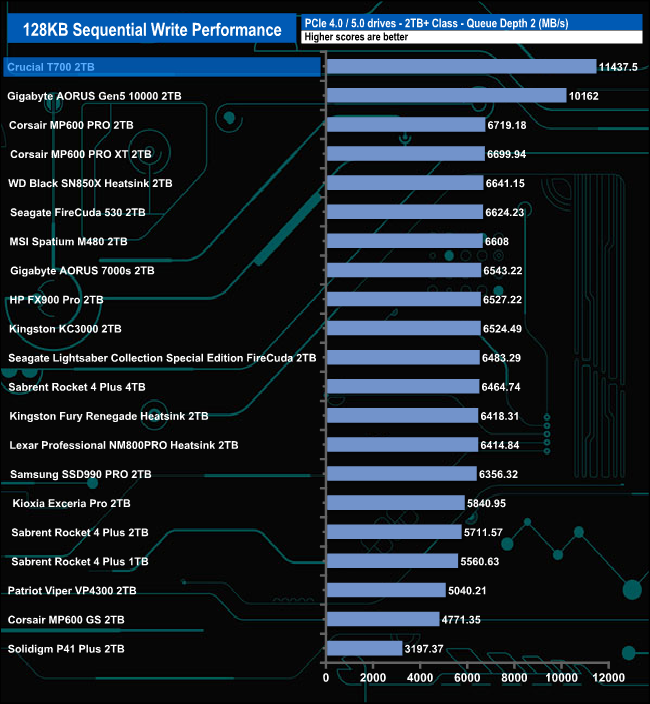
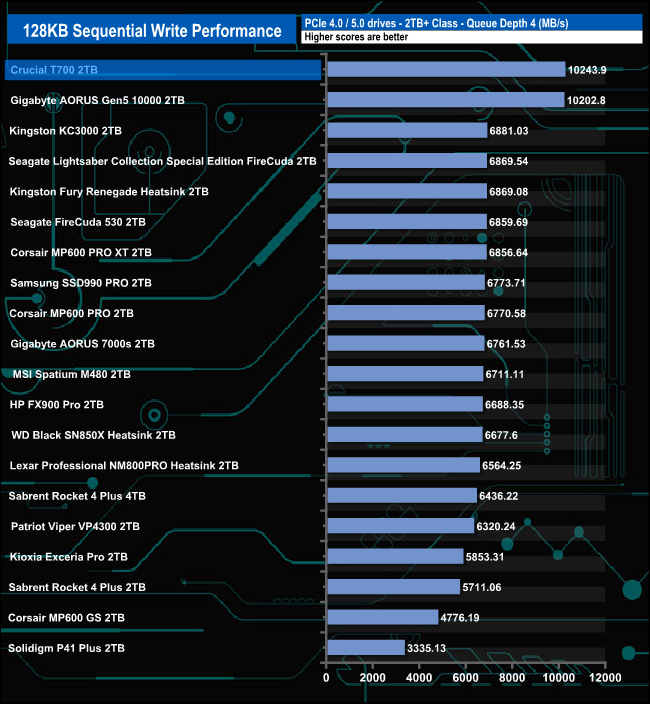
It's the same story when it comes to Sequential writes, with not much separating the two Gen 5 drives at QDs 1 and 4 with the Crucial drive pulling away in the other two tested queue depths.