KitGuru KitGuru.net – Tech News | Hardware News | Hardware Reviews | IOS | Mobile | Gaming | Graphics Cards


We used CrystalDiskMark 8‘s custom settings to test the 4K random write performance of the drive through a range of queue depths. The setup for the tests is listed below.
Transfer Request Size: 4KB, Outstanding I/O: 1-32.
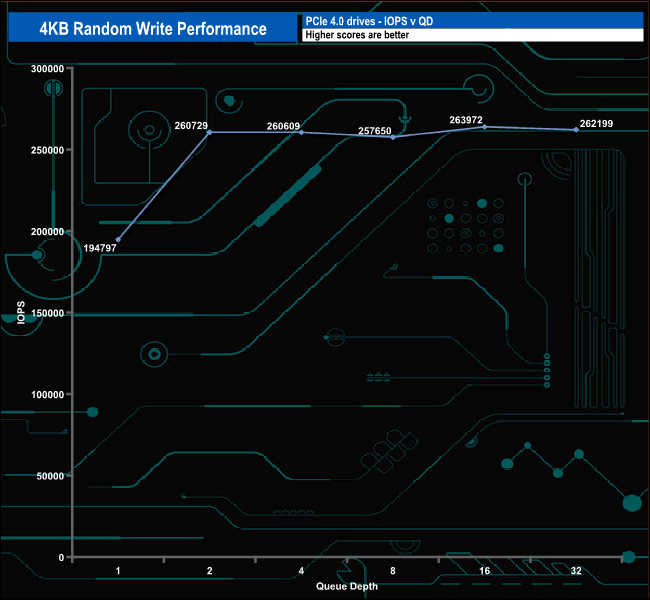
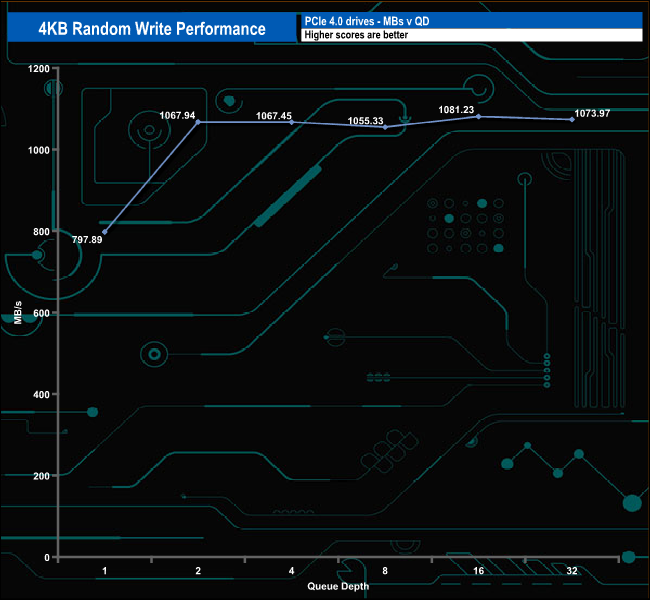
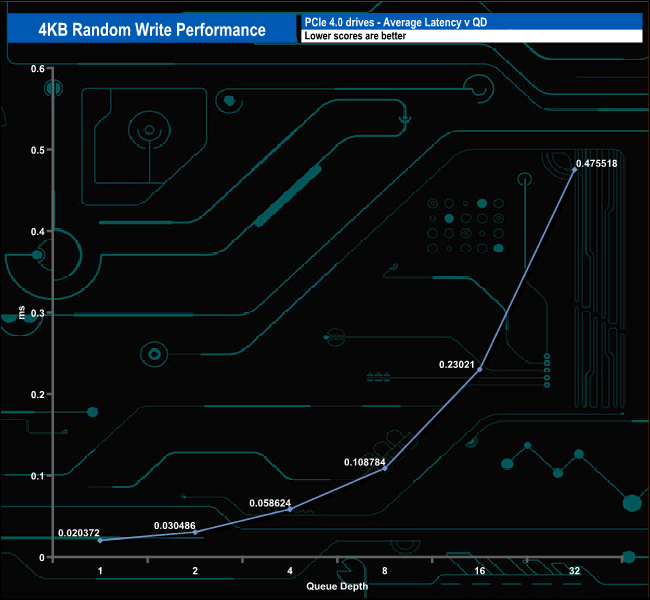
The best result we saw from our 4K random write results was 263,972 IOPS at QD16 before the performance dropped back at QD32 at 252,199 IOPS, both of these figures are nowhere near the official maximum.
4K Random Write v QD Performance compared.
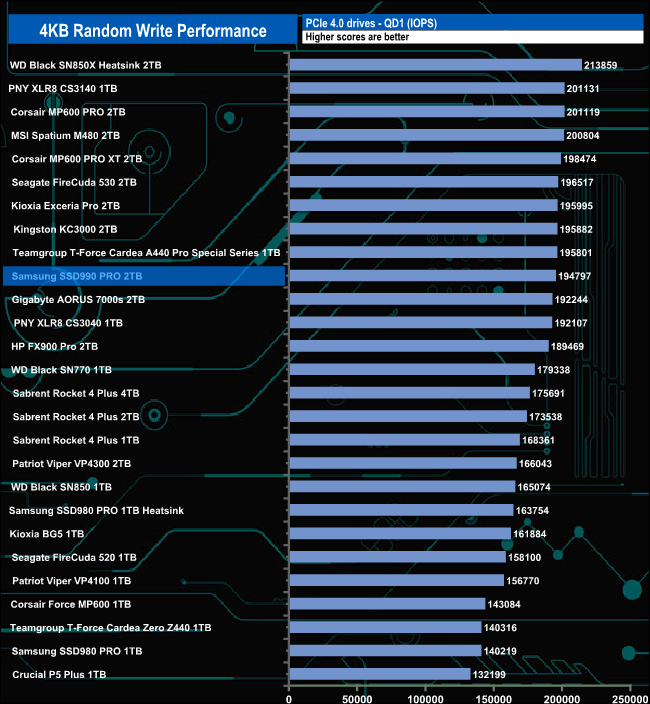
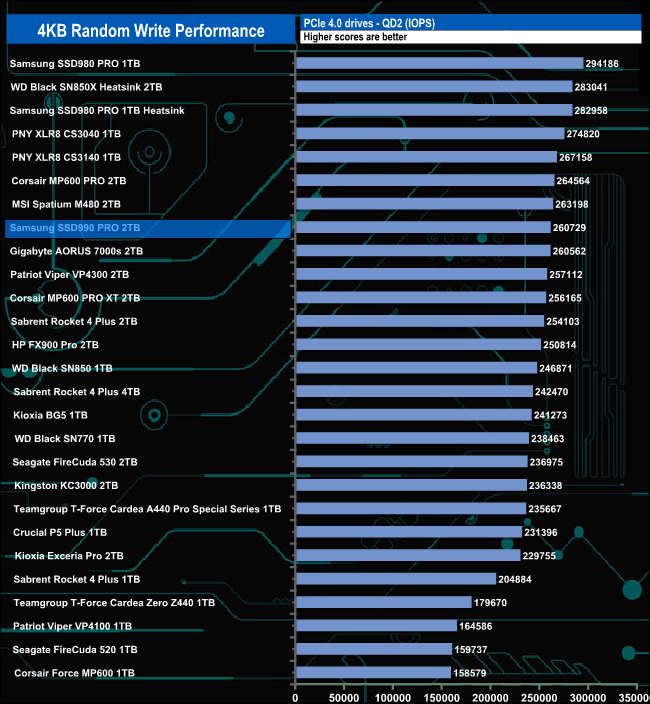
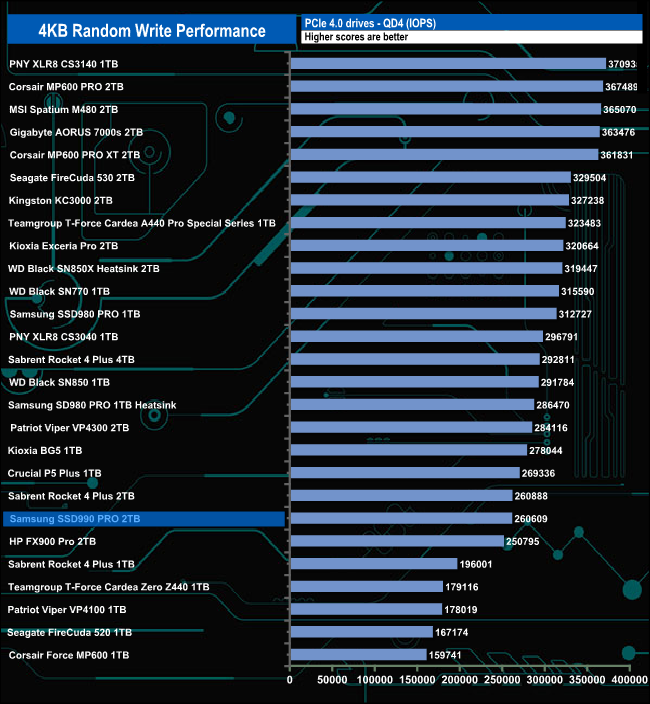
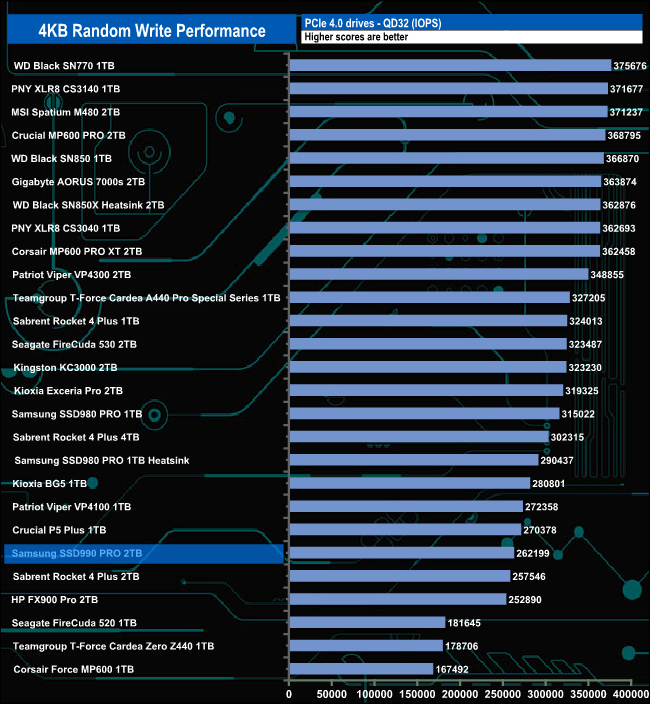
At shallower queue depths the drive sits in the top ten in our results chart but as the queue depth deepens the drive drops down the chart, eventually ending up in the bottom ten with the QD32 result of 262,199 IOPS.