KitGuru KitGuru.net – Tech News | Hardware News | Hardware Reviews | IOS | Mobile | Gaming | Graphics Cards


The 3DMark Storage Benchmark uses traces recorded from popular games and gaming-related activities to measure real-world gaming performance.
Traces used:
Battlefield V
Loading Battlefield™ V from launch to the main menu.
Call of Duty Black Ops 4
Loading Call of Duty®: Black Ops 4 from launch to the main menu.
Overwatch
Loading Overwatch® from launch to the main menu.
Game Move
Copying the Steam folder for Counter-Strike®: Global Offensive from an external SSD to the system drive.
Game Recording
Recording a 1080p gameplay video at 60 FPS with OBS (Open Broadcaster Software) while playing Overwatch®.
Installing Game
Installing The Outer Worlds® from the Epic Games Launcher.
Game Saving
Saving progress in The Outer Worlds game.
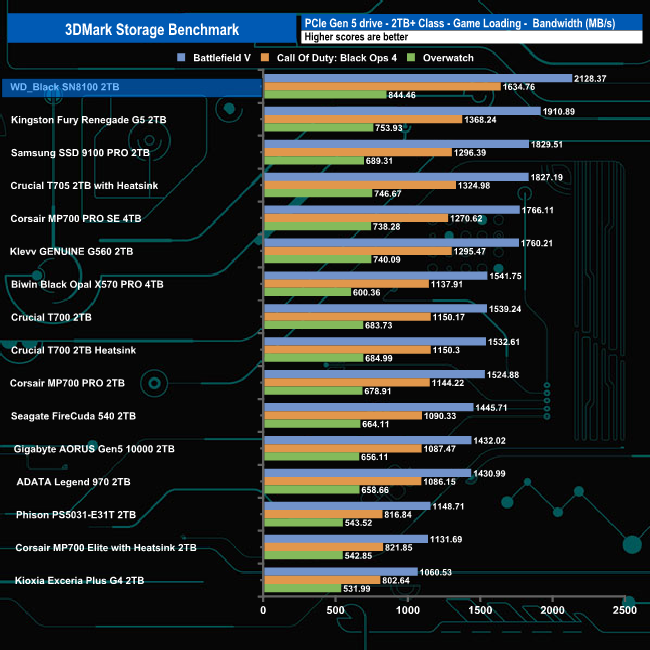
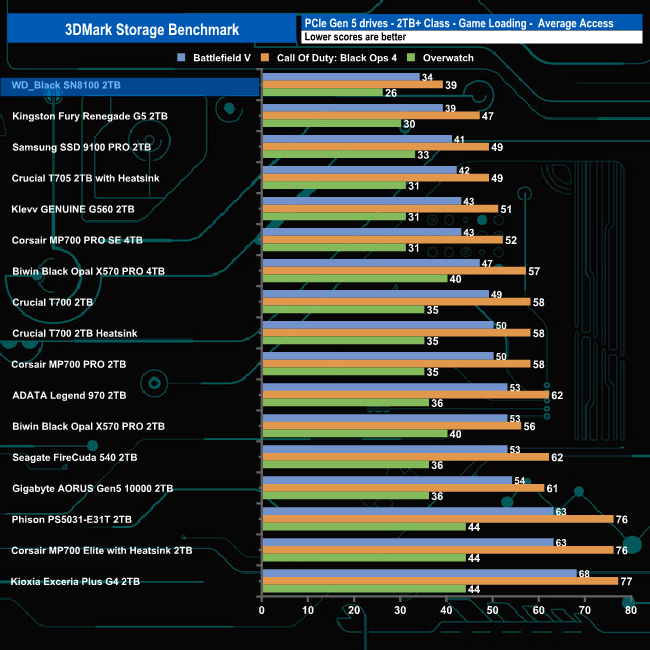
In 3DMark’s Storage Test, the WD_Black SN8100 had an average game loading bandwidth figure for the three games of 1,535.86MB/s, the fastest we've seen to date in this part of the test with an average access time figure of 33µs (0.033m/s), also the fastest figure we've seen to date for the game loading test traces.
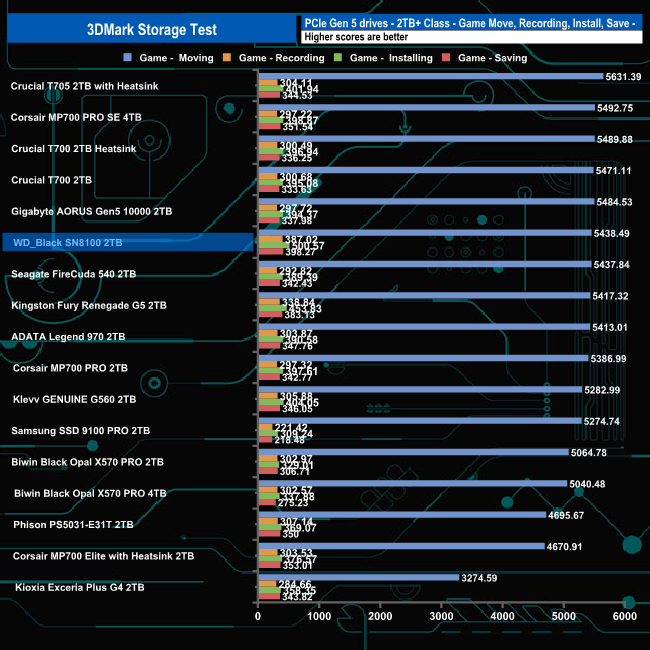
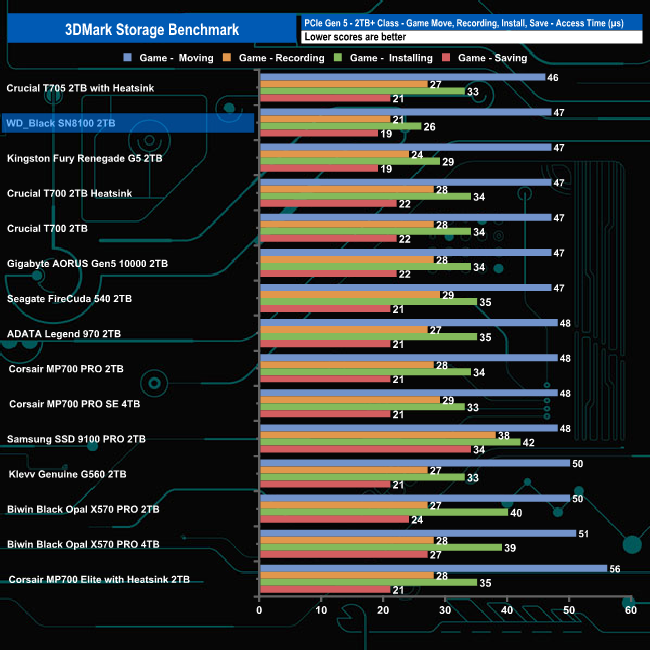
In the game, moving, recording, installing and saving test traces, the drive averaged 1,681.03MB/s (which puts the drive into sixth place) with an average access time of 28µs (0.028m/s) for the four tests.
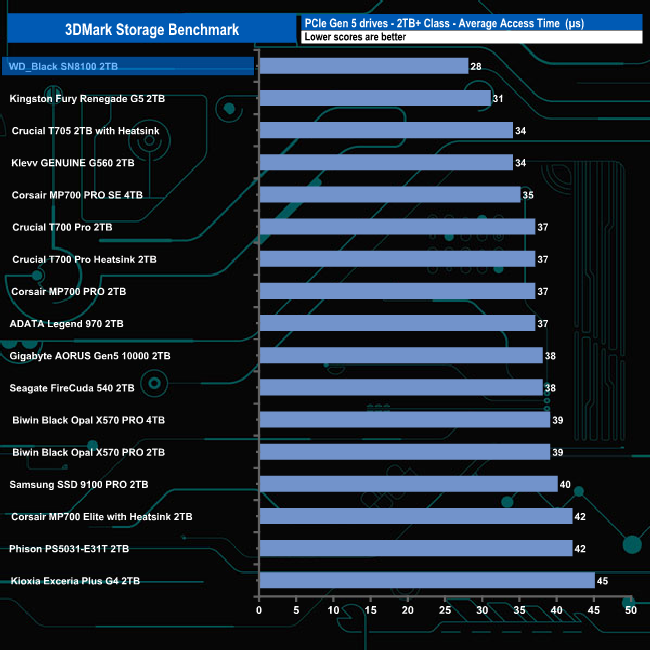
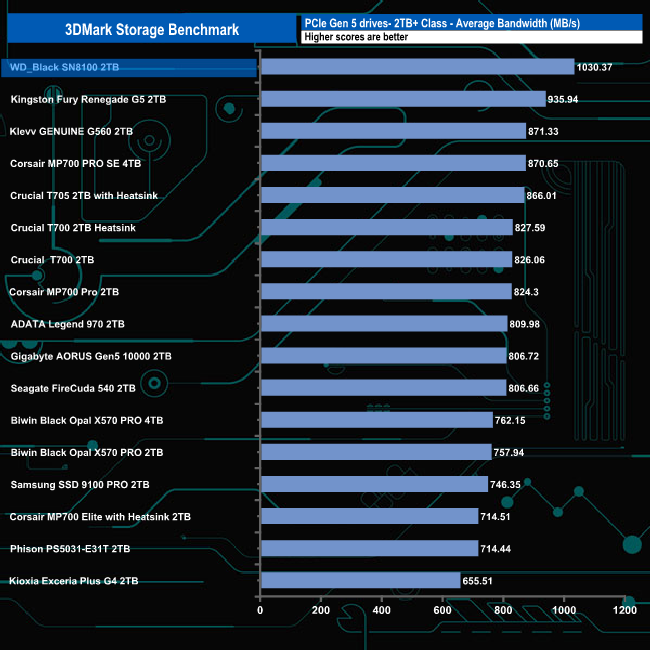
The overall average bandwidth figure for the 2TB WD_Black SN8100 for the complete benchmark run was 1,030MB/s (28µs total average access time), a result which sees the drive topping the table by 94.43MB/s from the Kingston Fury Renegade G5.