KitGuru KitGuru.net – Tech News | Hardware News | Hardware Reviews | IOS | Mobile | Gaming | Graphics Cards


If you happen to be the sort of person who walks through a department store and buys a £2500 gaming PC as a spur of the moment thing, we imagine you will be fairly happy with the Infinite X.
MSI has put an emphasis on cosmetics with a glass panel and RGB lighting, however the open frame where you mount the glass side panel looks shockingly unfinished. Balanced against that the Infinite X performs reasonably well and the man in the street will doubtless enjoy the RGB bling.
The problem, of course, is that enthusiasts will know better – you can get better hardware for less money from any PC builder worthy of the name. Using a better case will improve the cosmetics and will also ensure the air flow is filtered. A 240mm AIO liquid cooler will help the CPU temperature and it is a no-brainer to use faster DDR4. We respect the Delta brand but at this price we want at least an 80+ Gold rated power supply. Nothing less will do.
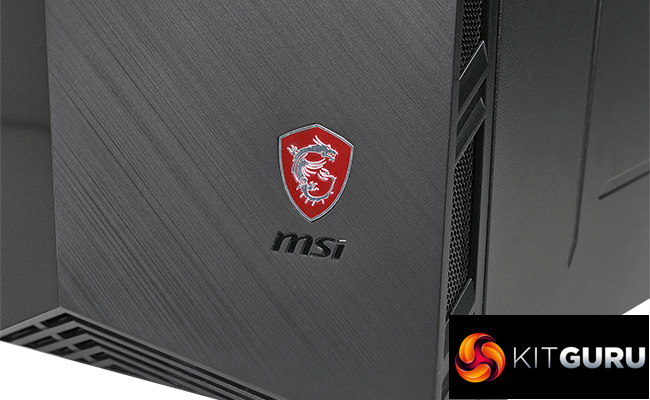
To put this in context, we were not surprised that when we removed the air flow shroud we also uncovered a bunch of messy cables. This doesn’t affect performance and in the great scheme of things it probably doesn’t matter but it feels like MSI simply doesn’t much care about the quality of the Infinite X.
Let us be absolutely clear the MSI Infinite X does a good job of playing games, however its natural market is the wealthy but ignorant PC gamer. We are confident that KitGuru readers do not fall in that category.
As we mentioned, this specific model with a GTX 1080 Ti is not available to purchase, but the 8RE model (with GTX 1080) is available for £2099.95 HERE.
Pros:
- Good gaming performance.
- Mystic lighting looks interesting.
Cons:
- Liquid cooler is only 120mm.
- DDR4-2400MHz is very slow.
- 550W Delta power supply is rated Bronze.
- Glass side panel is unfiltered.
- Cable management is rudimentary.
KitGuru says: It might appeal on the surface, but PC enthusiasts will know other systems can offer better hardware for less money.