KitGuru KitGuru.net – Tech News | Hardware News | Hardware Reviews | IOS | Mobile | Gaming | Graphics Cards


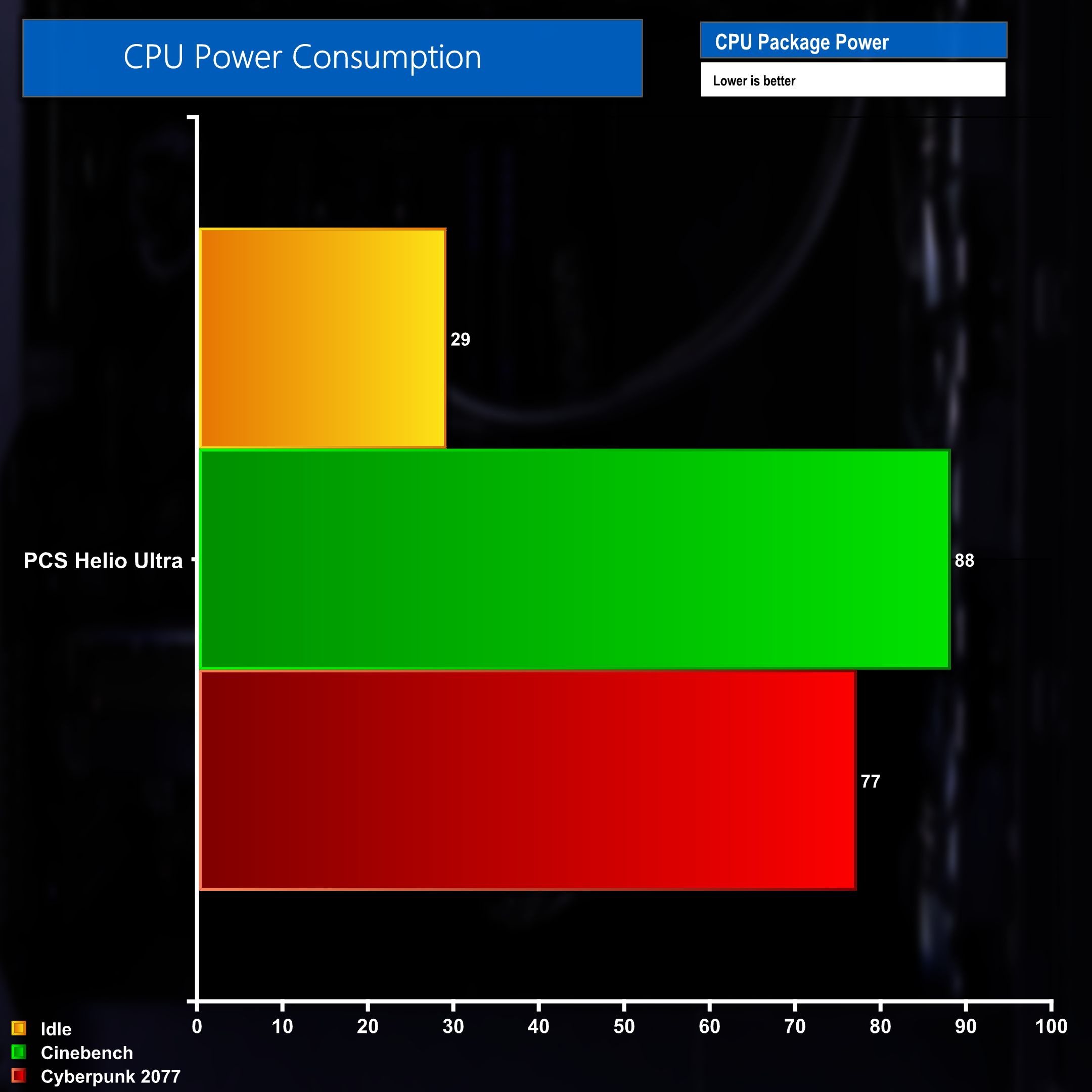
CPU package power consumption highlights the efficiency of the Ryzen 7 9700X. Using just 29W when idle, 88W during a Cinebench multicore benchmark and 77W when gaming in Cyberpunk 2077.
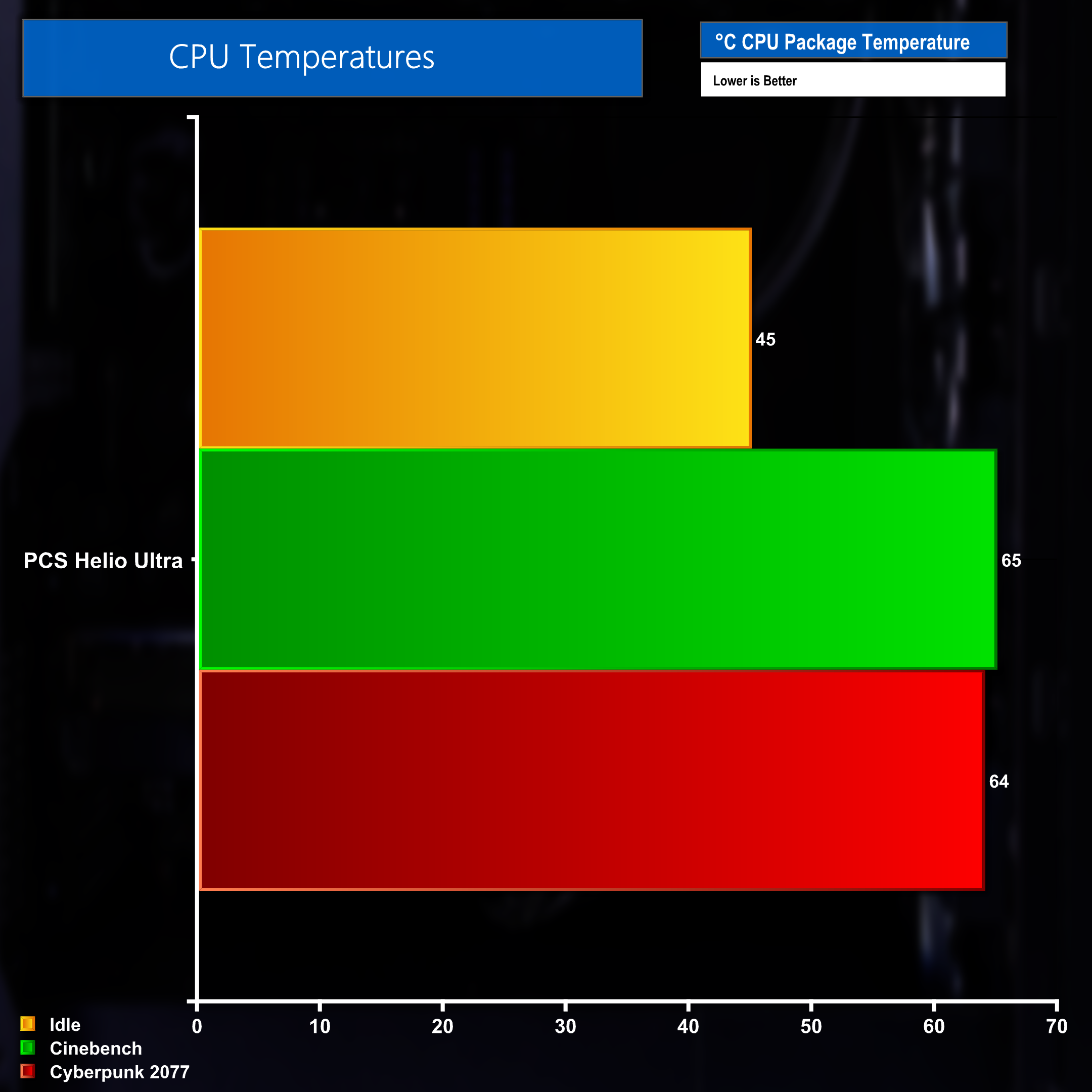
CPU temperatures reflected the power usage shown in the previous chart. The 9700X peaked at 65 degrees Celsius during a Cinebench R23 Multicore 30 minute stress test, following closely behind at 64 degrees when gaming. Idles temperatures were measured at 45 degrees. These figures show that the PCS Frostflow ARGB 240mm all in one cooler is more than capable of keeping the temperatures in check across various scenarios.
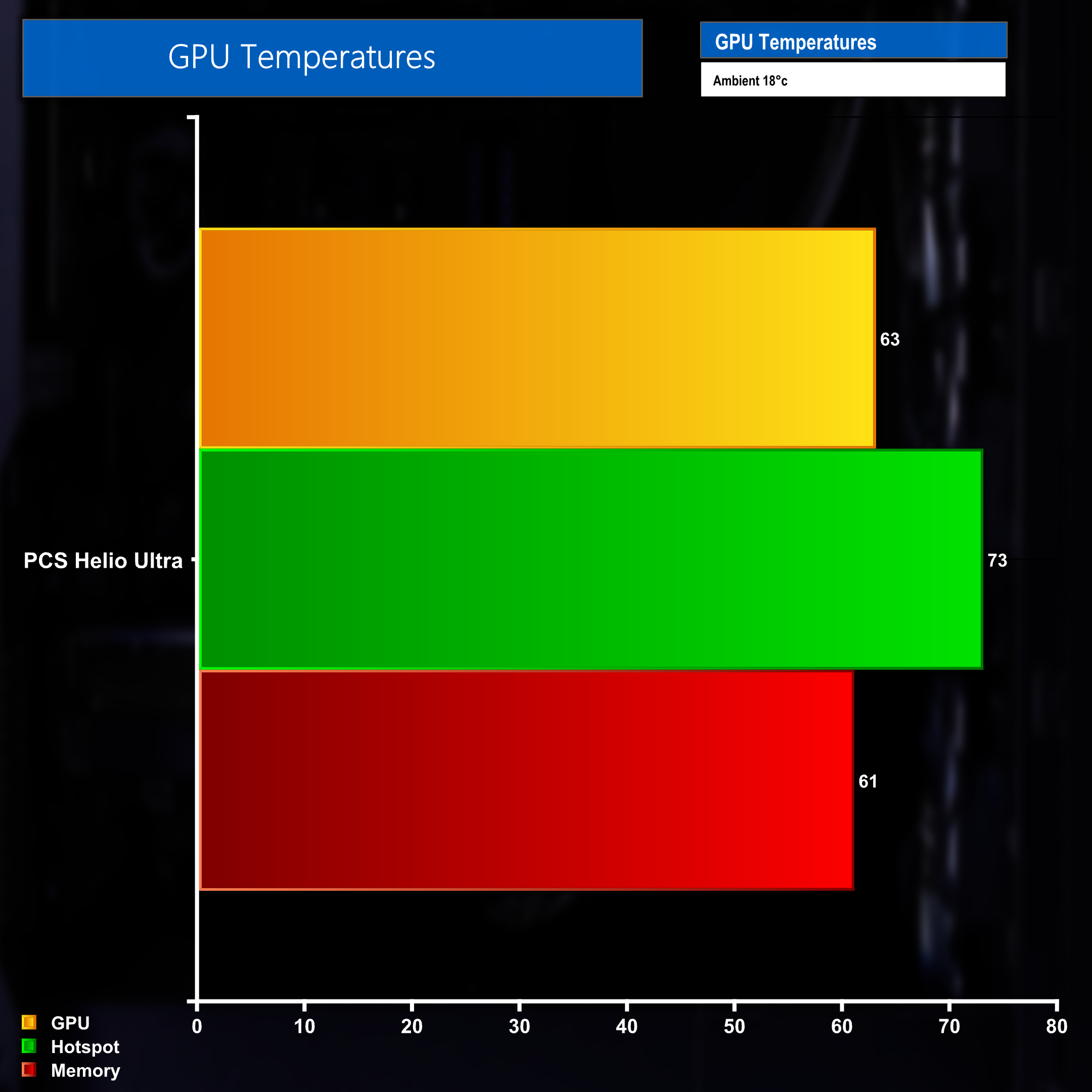
The Gigabyte RTX 4070 Super Aero OC graphics card found in the Helio Ultra ran quite cool during a prolonged gaming stress test in Cyberpunk 2077. The GPU sensor peaked at 63 degrees, while the hotspot and memory sensors reached 73 and 61 degrees respectively.

The Helio Ultra contains a total of 7 120mm fans (including 3 found on the the CPU coolers radiator) which leads to a peak of 40dB of system noise when gaming. This is when measured from roughly 15cm away from the case with a noise floor of roughly 30dB.
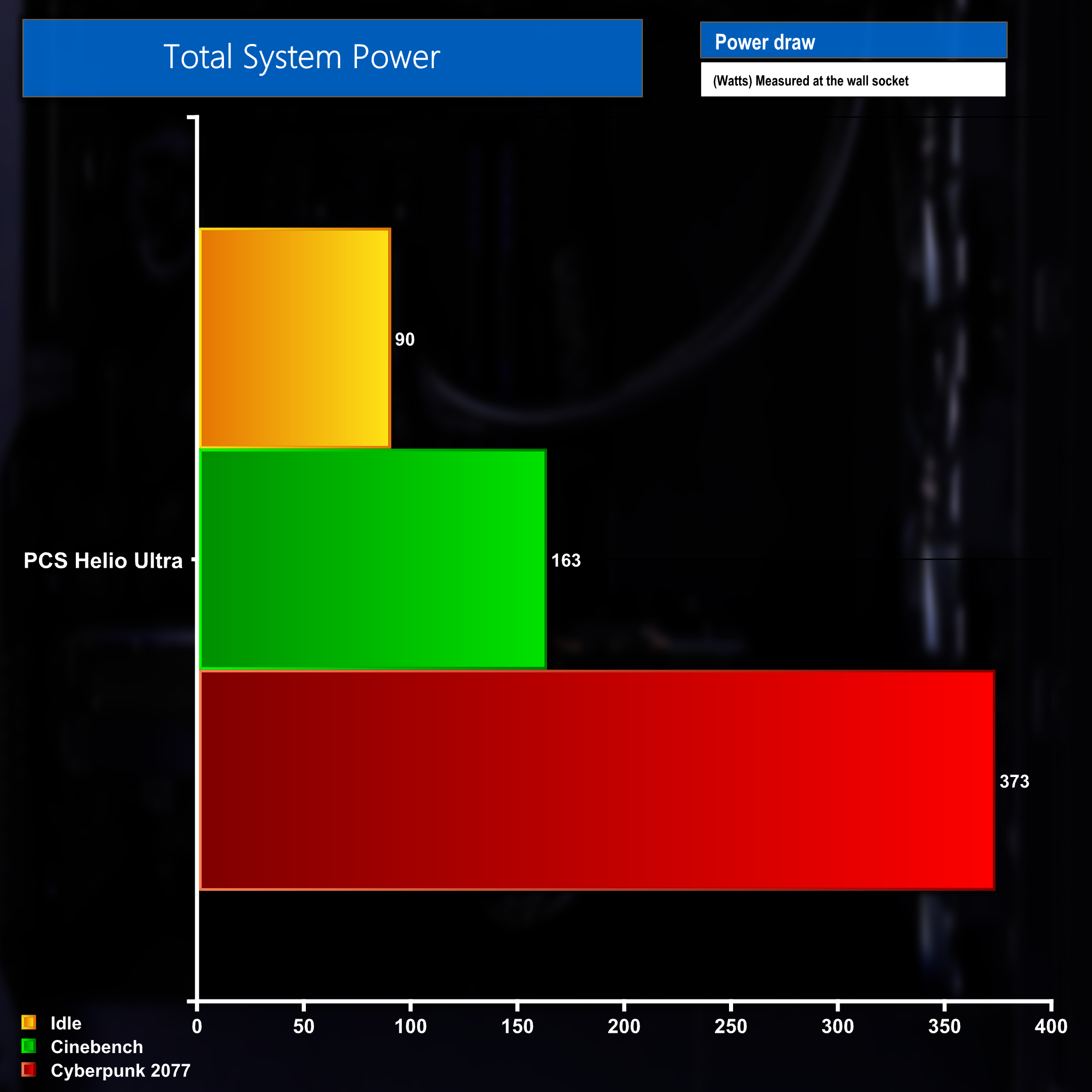
Total system power when measured at the wall socket is becoming a more important metric when considering rising energy prices across the UK. The Helio Ultra uses roughly 90W when idle, 163W when running CPU intensive workloads such as Cinebench R23 and 373W when gaming in demanding titles like Cyberpunk 2077.