KitGuru KitGuru.net – Tech News | Hardware News | Hardware Reviews | IOS | Mobile | Gaming | Graphics Cards


Those looking to push the memory overclocking limits of their RTX 50 series GPUs can now do so by extending the memory clock range. As the creator of MSI Afterburner explained, this can be done by replacing the software's database file.
As first reported by Uniko's Hardware, Unwinder, the creator of MSI Afterburner, has stated that you can bypass the artificial OC memory limit of the RTX 50 series GPUs using a modified database file that expands the software's overclocking capabilities. The current beta version (4.6.6 Beta 5) from late February doesn't have this new database file, but we expect to see a new MSI Afterburner version with the updated database file soon.
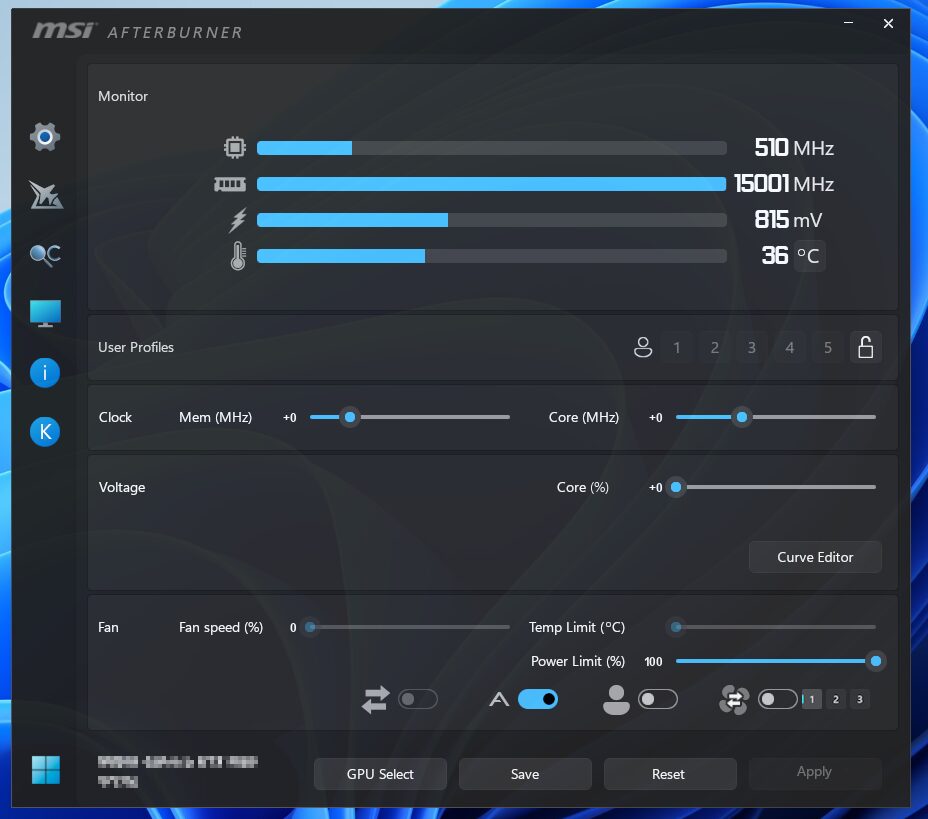
With the updated database file, users can increase the memory overclocking range by 3000 MHz, enabling memory clock speeds up to 36 Gbps. If you're interested in overclocking your RTX 50 series card using MSI Afterburner, do as follows:
- Download the modified MSI Afterburner hardware database file, specifically designed for MSI Afterburner 4.6.6 Beta 5 Build 16555. This patched file is incompatible with other versions of MSI Afterburner.
- Navigate to the MSI Afterburner installation directory (typically “C:\Program Files (x86)\MSI Afterburner”).
- For precaution, create a backup of the original MSI Afterburner hardware database file (MSIAfterburner.dat).
- Replace the original database file with the downloaded, patched MSIAfterburner.dat file.
After following these steps, you should be able to overclock your memory up to 36Gbps.
Discuss on our Facebook page, HERE.
KitGuru says: Do you own an RTX 50 series GPU? Have you overclocked its memory yet?