KitGuru KitGuru.net – Tech News | Hardware News | Hardware Reviews | IOS | Mobile | Gaming | Graphics Cards


Late last night the Steam client was updated to bring family options to all Steam accounts, many users and even a couple of news sites misinterpreted the patch notes and thought that the long awaited sharing feature had arrived but this was unfortunately not the case, for now we've just got parental controls.
These family options allow you to choose games that you want to be viewable in Steam's new family mode as well as restricting access to things like the Steam store, community and user generated content. To enable and configure these options, all you have to do is head over to the redesigned settings menu and work your way through the set up wizard on the family tab. Once all of your options are configured you'll have to set a pin code so that once you've activated family mode, the user can't just get out of it and access your full account.
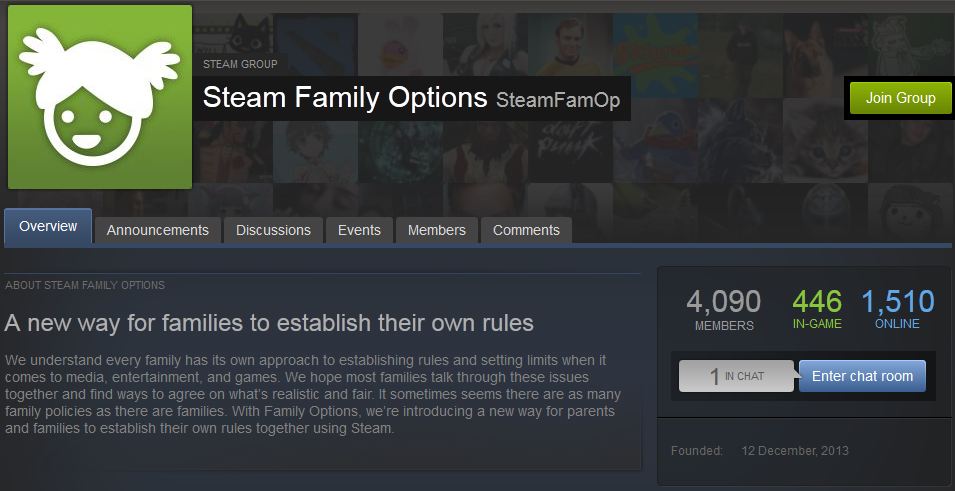
Along with these new options, Valve launched a new community group for this feature. Hopefully this sets the stage for game sharing as while this will be good for homes where there is a shared PC it's not ideal for homes where everyone has their own and might not want to borrow either a sibling's or a parent's Steam account or machine to play a game.
KitGuru Says: While I have no need for this feature right now, I can see why others would find it useful. Game sharing on the other hand is something I think everyone can get a little excited about, do any of you guys use a shared PC in your house? Will you find this new feature useful?