KitGuru KitGuru.net – Tech News | Hardware News | Hardware Reviews | IOS | Mobile | Gaming | Graphics Cards


Intel has officially retired its budget-oriented Laminar RS1 CPU cooler, ending an era of affordable (and often underwhelming) thermal solutions.
The Laminar RS1 has been a staple of the company's low-end CPU offerings, bundled with Pentium and Celeron processors. While not entirely deserving of its negative reputation, the RS1's cooling capacity was undeniably limited, struggling to keep pace with the thermal demands of modern desktop CPUs. As such, Intel discontinued the RS1 cooler and replaced it with the RM1 cooler on the CPUs that were still bundled with the now-discontinued cooler.
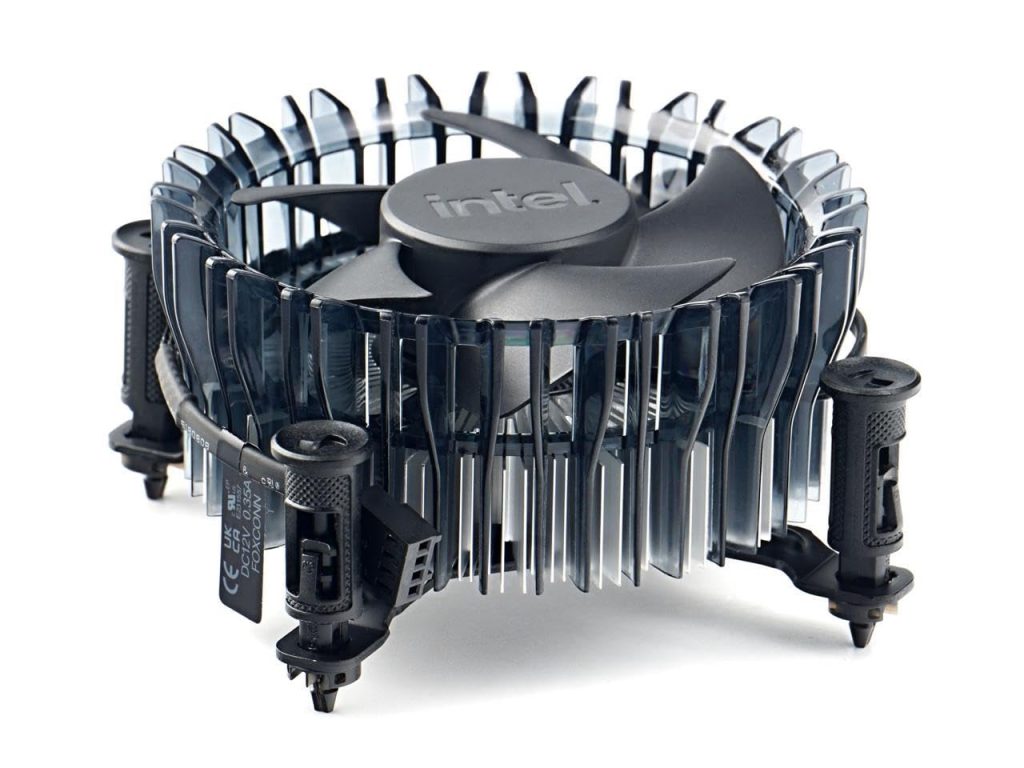
The RS1 and the RM1 are fairly similar looking, with the latter having a blue ring around the fan. The RM1, typically bundled with Core i3 to i7 65W processors, offers better cooling performance thanks to its larger heatsink and more powerful fan.
Unlike the RS1 that the RM1 has replaced, the latter will probably still be used on higher-end CPUs. As such, Intel should continue to pack it with future generations of CPUs, including the upcoming Core Ultra 200 non-K series processors.
KitGuru says: Have you ever used an Intel RS1 CPU cooler with any build? Should Intel replace it with a more capable solution or stop bundling stock coolers on entry-level CPUs altogether?