KitGuru KitGuru.net – Tech News | Hardware News | Hardware Reviews | IOS | Mobile | Gaming | Graphics Cards


The eternal debate over the impact of piracy on game sales just got more interesting with a newly published study showing the financial implications of DRM protection. The research, titled “The Revenue Effects of Denuvo Digital Rights Management on PC Video Games”, was authored by UNC research associate William Volckmann and published in the peer-reviewed journal Entertainment Computing, offers valuable insights into the influence of Denuvo's DRM on game sales.
Volckmann's study (via ArsTechnica) delves into 86 Denuvo-protected games released on Steam between September 2014 and the end of 2022, examining the impact of DRM protection on sales in pre- and post-piracy scenarios. Notably, the study also acknowledges the challenges in quantifying the financial implications directly due to the absence of publicly accessible sales data for most games. As a result, Volckmann used a proxy measure combining the number of new Steam user reviews and the average active player count (for single-player games only) to estimate relative sales decline following a crack's release.
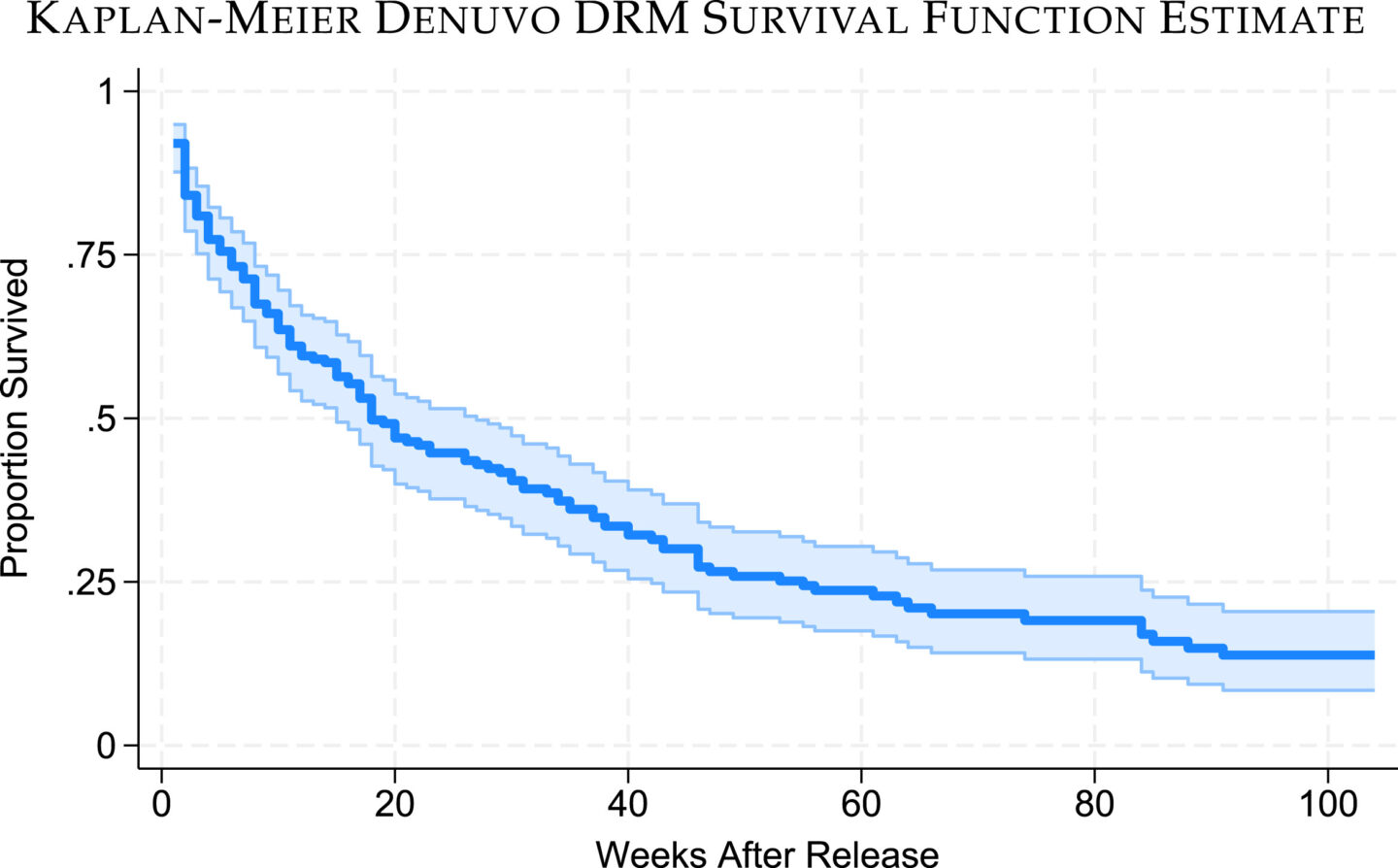
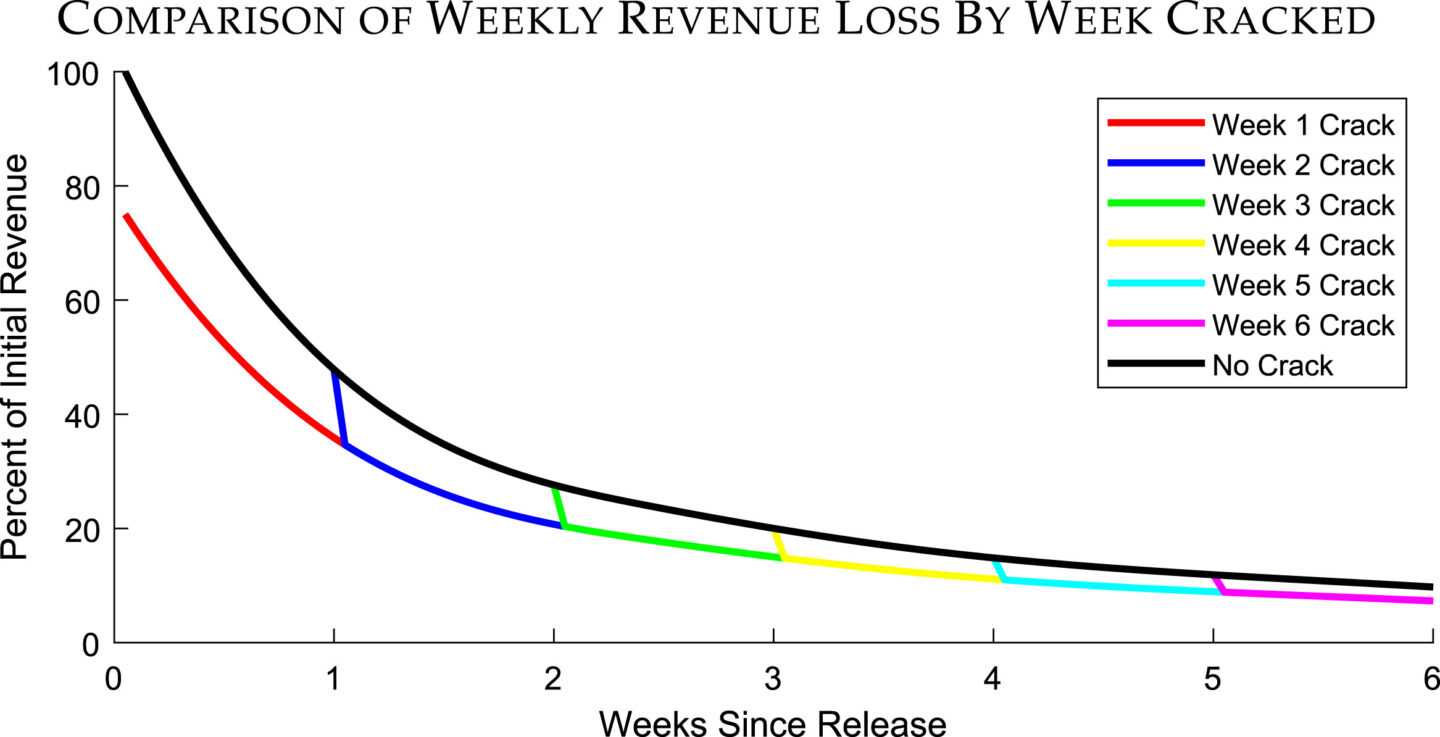
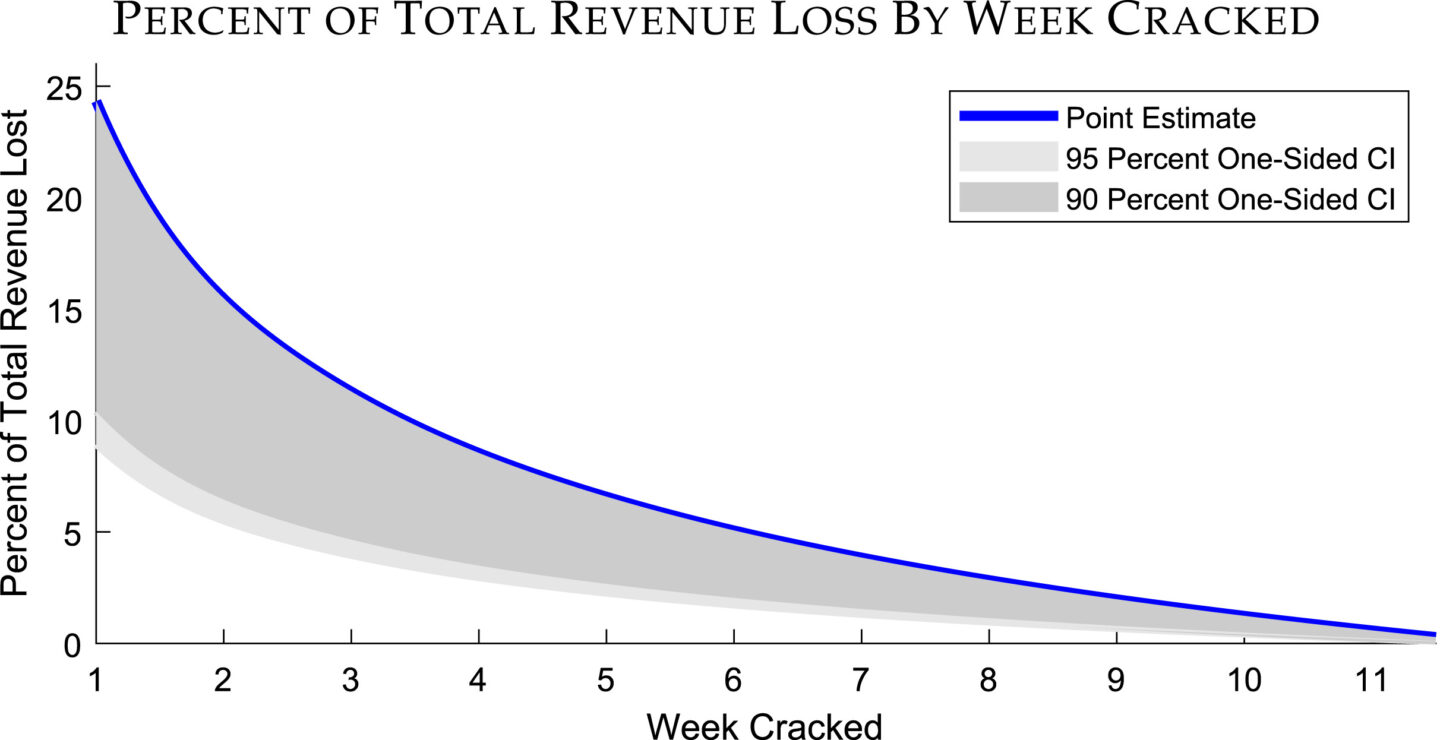
As for the actual results of the study, it has been found that the availability of a crack resulted in an average proportionate loss of revenue of around 19% on each week after release, indicating a substantial impact on a game's sales performance. Moreover, the research underscores the impact of the speed of crack releases on a game's revenue, revealing that a Denuvo-protected game cracked in the first week after release can expect to earn roughly 20% less income compared to if the DRM remained intact. The study also suggests that after 12 weeks, new sales become negligible, indicating that removing unpopular DRM schemes at this stage may result in minimal losses and potential gains from DRM-averse consumers.
Volckmann's findings are consistent with Denuvo-maker Irdeto's stance on the role of DRM in protecting a game's critical post-launch window. The study indicates that Denuvo's protection usually remains uncracked within the first 12 weeks, estimating that in a world without DRM, such games would generate 20% less income on average.
Discuss on our Facebook page, HERE.
KitGuru says: A few companies (Square Enix, for example) are known for removing Denuvo months after releasing a game. However, most take around a year or so to do it. This study shows that publishers and developers can do it considerably sooner.