KitGuru KitGuru.net – Tech News | Hardware News | Hardware Reviews | IOS | Mobile | Gaming | Graphics Cards


While many of us primarily know MSI for its gaming hardware, the company has also been gaining ground in the productivity and creator markets with bespoke PCs and laptops. The latest is an all-in-one PC called the MSI PRO 22XT 10M, packing an Intel Core i5 powered system behind a 1080p, IPS panel.
Thanks to the 23.8” IPS panel, users will get better colour accuracy and wider viewing angles compared to a TN or VA panel. The display also doubles as a 10-point finger touch screen. As you would expect, there is an OSD for making adjustments to the image, as well as a VESA mount if you have a third-party stand or monitor arm. Finally on the display front, there is an additional HDMI output, so you can hook up a second display to this all-in-one machine.
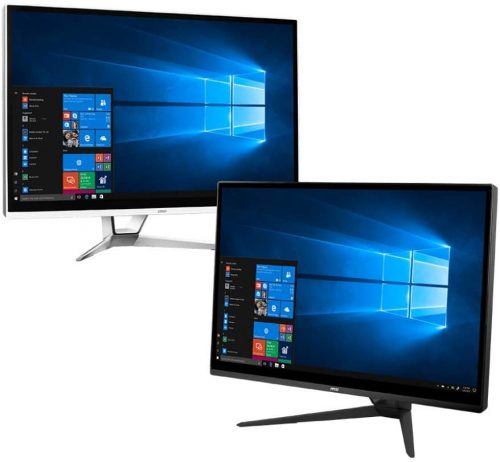
Under the hood, you can expect to find an Intel Core i5-10400 (2.9GHz-4.3GHz 6 core), 8GB DDR4 2666MHz memory and a 256 GB PCIe GEN3x4 M.2 SSD. There is no dedicated GPU option available for this model.
Aside from all of that, you get built-in WiFi and Bluetooth support, as well as USB 3.2 Type C. Currently, the MSI PRO 22XT 10M is available on Amazon for £927.
KitGuru Says: Are many of you interested in all-in-one PCs like this one?