 KitGuru KitGuru.net – Tech News | Hardware News | Hardware Reviews | IOS | Mobile | Gaming | Graphics Cards


Without any doubts, gaming notebooks are getting more and more popular these days because of many industry trends. As a result, they are gradually gaining technologies we typically find on desktop computers. In the recent years laptops gained unlocked microprocessors, overclocking memory and multi-GPU technologies. This year Nvidia Corp. will add its highly acclaimed G-Sync to the list.
Nvidia and its partners are working to add G-Sync technology, which dynamically matches a GPU’s rendering rate with display’s refresh rate, to mobile computers, reports SweClockers. One of the first notebooks to support Nvidia’s G-Sync is Aorus X7 Pro, which sports two GeForce GTX 970M graphics adapters in SLI mode. At present, the GPU developer is polishing off its drivers and plans to add the feature officially in the course of the first quarter of 2015.
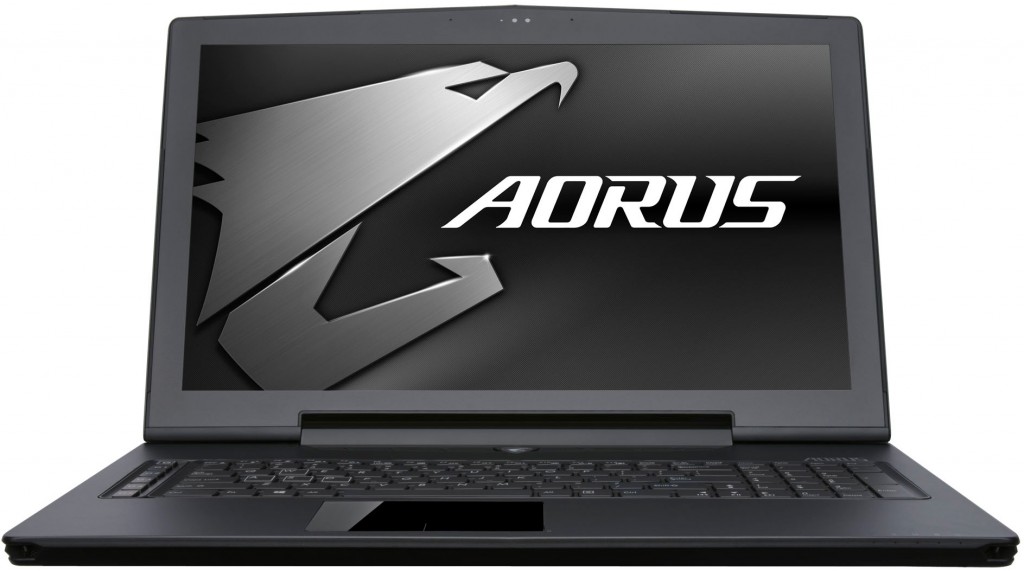
The report does not reveal a lot of details about the implementation of the technology, which is something very important. Nvidia and its partners use a custom proprietary display scaler to enable the G-Sync on desktops and plan to continue doing so in the future. Theoretically, Nvidia could add the chip to laptops too in order to unify the implementation of the technology on different platforms. Still, on notebooks everything could be done in a very different way. Virtually all modern laptop displays are connected to graphics adapters using embedded DisplayPort (eDP) technology, which supports a feature called Panel Self-Refresh, something that allows to control refresh-rate of the monitor. Using PSR, Nvidia could add G-Sync to loads of existing gaming notebooks, it is just a matter of time and testing.
AMD uses PSR to implement its FreeSync technology on desktops. In fact, the first demonstrations of FreeSync were conducted on notebook computers since the technology was all there.
Discuss on our Facebook page, HERE.
KitGuru Says: If Nvidia decides to use PSR instead of a proprietary display scaler, it will mean that it will support VESA’s Adaptive-Sync technology. If the company decides to use a proprietary chip instead of an industry-standard one, then this will naturally make G-Sync-enabled mobile PCs more expensive.

So this is a dilemma for Nvidia. Are they going to make laptops that use GSync less competitive by increasing the price by $100 or more, or are they going to laugh in the face of Nvidia fanboys who rush to buy expensive GSync monitors with inferior TN panels?
and in this market is where amd solution for refresh comes on top: you only need the software because the hardware is already there (at least in laptops), on the other hand the nvidia solution “may be” slightly better and IMO a proper way to adress the issue of refresh, but expensive is still expensive, no matter if i think it’s the proper way to go, either way im eager to see where all this ends in 3-4 years from now
When implementing an open standard (with hardware that is already there) becomes an “issue” there is something seriously wrong with your company.