KitGuru KitGuru.net – Tech News | Hardware News | Hardware Reviews | IOS | Mobile | Gaming | Graphics Cards


The Lemokey X0 is a one-handed QMK mechanical gaming keypad with 35 keys and a 1000Hz polling rate. What sets this keypad apart is the convenience of the Launcher online app, which allows users to customise each key to improve their gaming experience. Furthermore, its inclusion of a silicone palm rest, shine-through keycaps, and more make it an ideal companion for gaming sessions.
Supporting QMK, the X0 offers infinite customisation options to optimise the gaming experience. With the Lemokey Launcher online app, users can remap keys, create macro commands, and set shortcuts to fit their needs. The Lemokey X0 is available with Keychron red linear switches (pre-lubed) and brown tactile switches
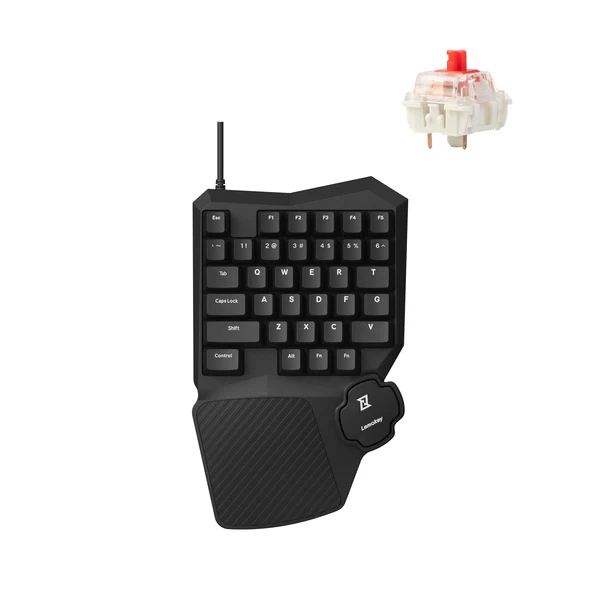
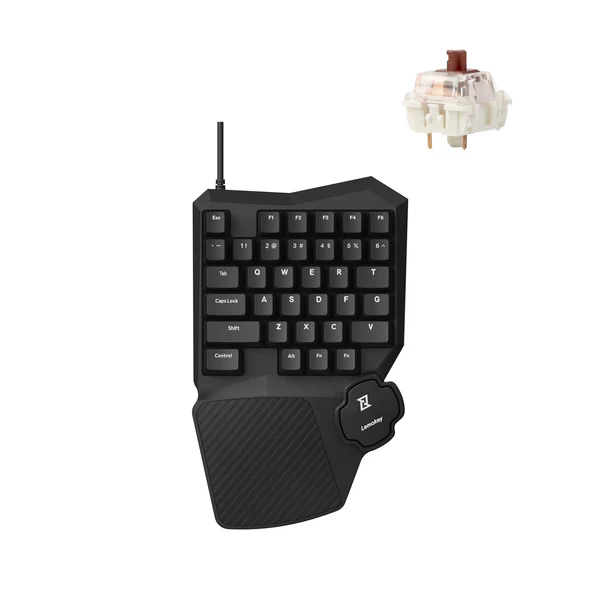
The X0 sports an ARM-based MCU with 256K Flash, providing developers with extensive options. Straight out of the box, the X0 operates at a 1000 Hz polling rate to ensure minimal delay. In terms of design, the X0's one-handed, 35-key layout reduces desk space. N-key rollover functionality guarantees reliable recognition of every keypress, ensuring no missed moves.
The north-facing red LED illumination with 14 preset effects pairs perfectly with the shine-through lettering of the ABS double-shot keycaps. Beyond gaming, the X0's customisable macros cater to professional applications such as video and audio editing, CAD, and graphic design. Ergonomically designed, the X0 has a built-in silicone palm rest and an ergo space bar, aligning with the natural curvature of the human fingers to enhance comfort. Priced at $32.99, the Lemokey X0 is considerably cheaper than most alternatives.
Discuss on our Facebook page, HERE.
KitGuru says: Have you ever owned a one-handed keyboard? Would you consider getting a Lemokey X0?