KitGuru KitGuru.net – Tech News | Hardware News | Hardware Reviews | IOS | Mobile | Gaming | Graphics Cards


Nvidia released their new Maxwell cards last month and on launch day we focused on the Asus and Gigabyte GTX960. Today we supplement our initial findings by looking at the new Palit GTX960 Super JetStream. This card is supplied in a highly overclocked state, with a bright red custom cooler. At £179.99 inc vat, is this a card you should be shortlisting for a new system build?
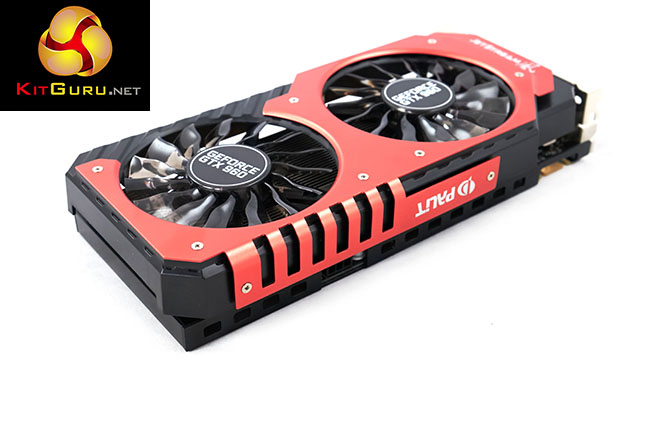
The Palit GTX960 Super JetSteam is bright red, and rather attractive – and not unlike the recent release of MSI Gaming 4G cards. How does it compare to other GTX960 hardware we have already tested, and how does it slot into the market? We hope to answer those questions today.
How does the technology behind the GTX960 stack up?
| GPU | GeForce GTX 750ti (Maxwell) | GeForce GTX 960 (Maxwell) | Geforce GTX 970 (Maxwell) | GeForce GTX 980 (Maxwell) |
| Streaming Multiprocessors | 5 | 8 | 13 | 16 |
| CUDA Cores | 640 | 1024 | 1664 | 2048 |
| Base Clock | 1020 mhz | 1126 mhz | 1050 mhz | 1126 mhz |
| GPU Boost Clock | 1085 mhz | 1178 mhz | 1178 mhz | 1216 mhz |
| Total Video memory | 2GB | 2GB | 4GB | 4GB |
| Texel fill-rate | 40.8 Gigatexels/Sec | 72.1 Gigatexels/Sec | 109.2 Gigatexels/Sec | 144.1 Gigatexels/Sec |
| Memory Clock | 5400 mhz | 7010 mhz | 7000 mhz | 7000 mhz |
| Memory Bandwidth | 86.4 GB/sec | 112.16 GB/sec | 224 GB/s | 224 GB/sec |
| Bus Width | 128bit | 128bit | 256bit | 256bit |
| ROPs | 16 | 32 | 64 | 64 |
| Manufacturing Process | 28nm | 28nm | 28nm | 28nm |
| TDP | 60 watts | 120 watts | 145 watts | 165 watts |
Nvidia’s GTX960 GM206 ships with 1,024 CUDA cores – significantly more than the 640 CUDA cores available on the GTX750ti, but half the amount featured on the flagship GTX980 (2,048).
A bone of contention within the enthusiast audience will be the somewhat limited 128bit memory interface – identical to the GTX750ti. Nvidia are keen to point out however that the Maxwell memory architecture is approximately 33% more efficient than Kepler. We do delve into this a little deeper on the architecture page later in the review.
The reference clock speeds are set at 1,126mhz (1,178mhz boost), with 32 ROPs and 64 texture units. PALIT have tweaked their Super JetStream edition to 1,279mhz (1,342mhz boost) with 2GB of GDDR5 memory running at 1,800mhz (7.2Gbps effective).
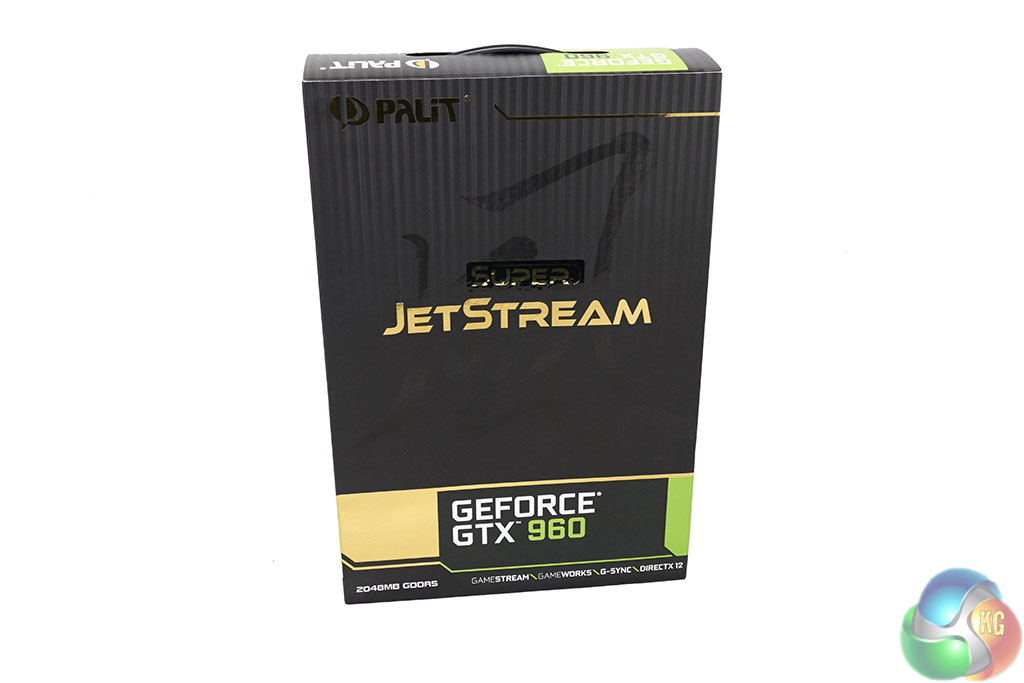
Not the most striking box artwork if we were being honest – still I would imagine a very small percentage of people still shop in a physical retail store, so its almost irrelevant.
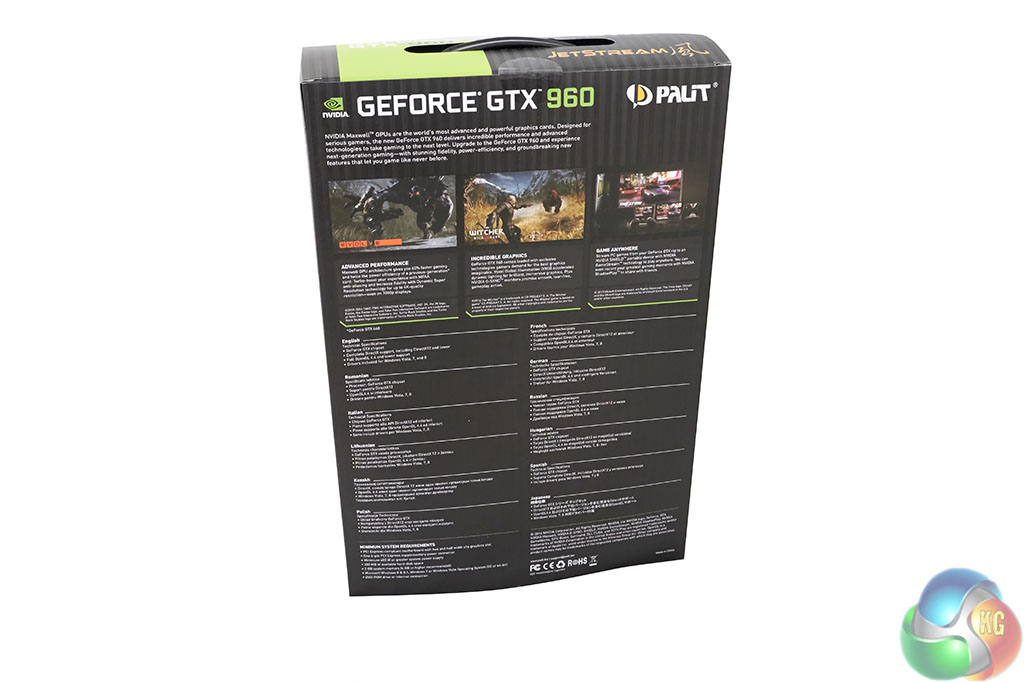
Some details and clever game marketing take up space on the back of the box.
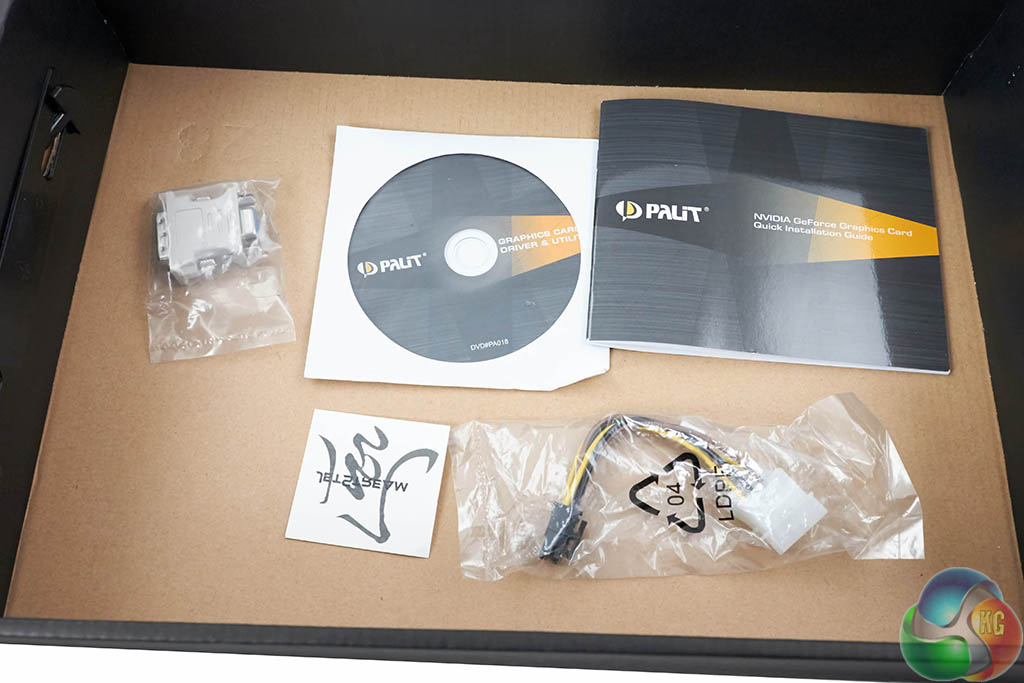
The Palit GTX960 Super JetStream ships with some converter cables, a tattoo style sticker, a leaflet and a software CD.
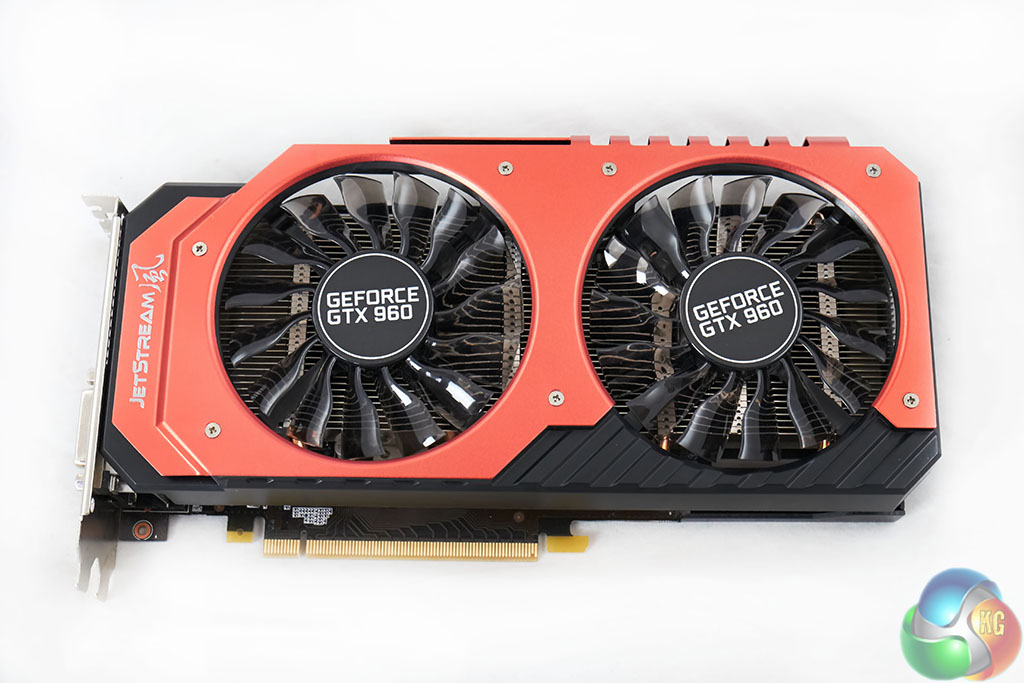
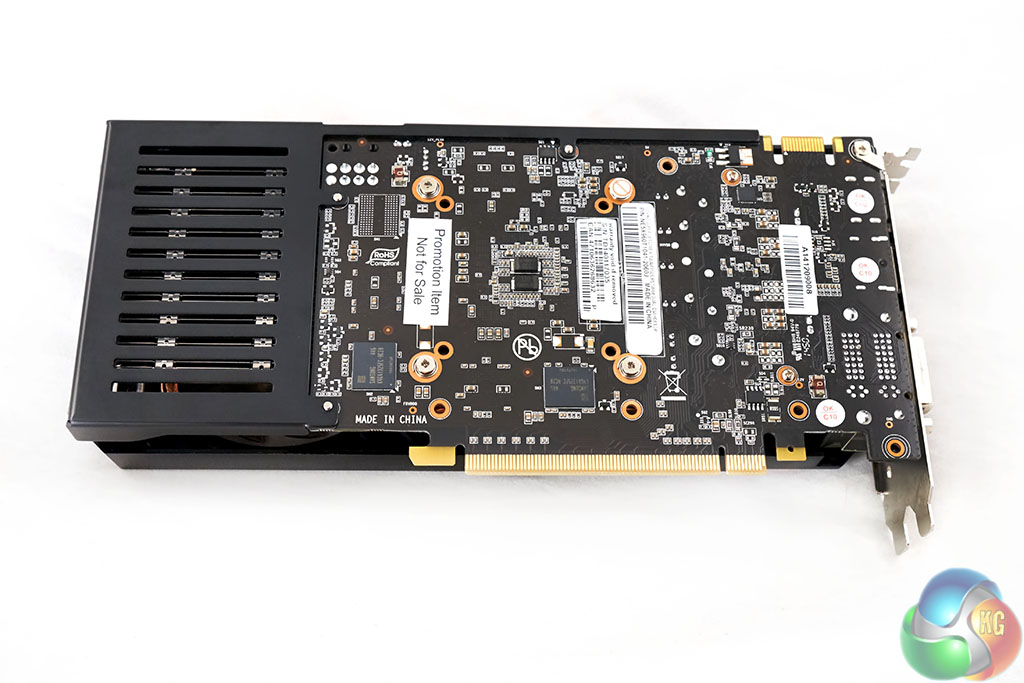
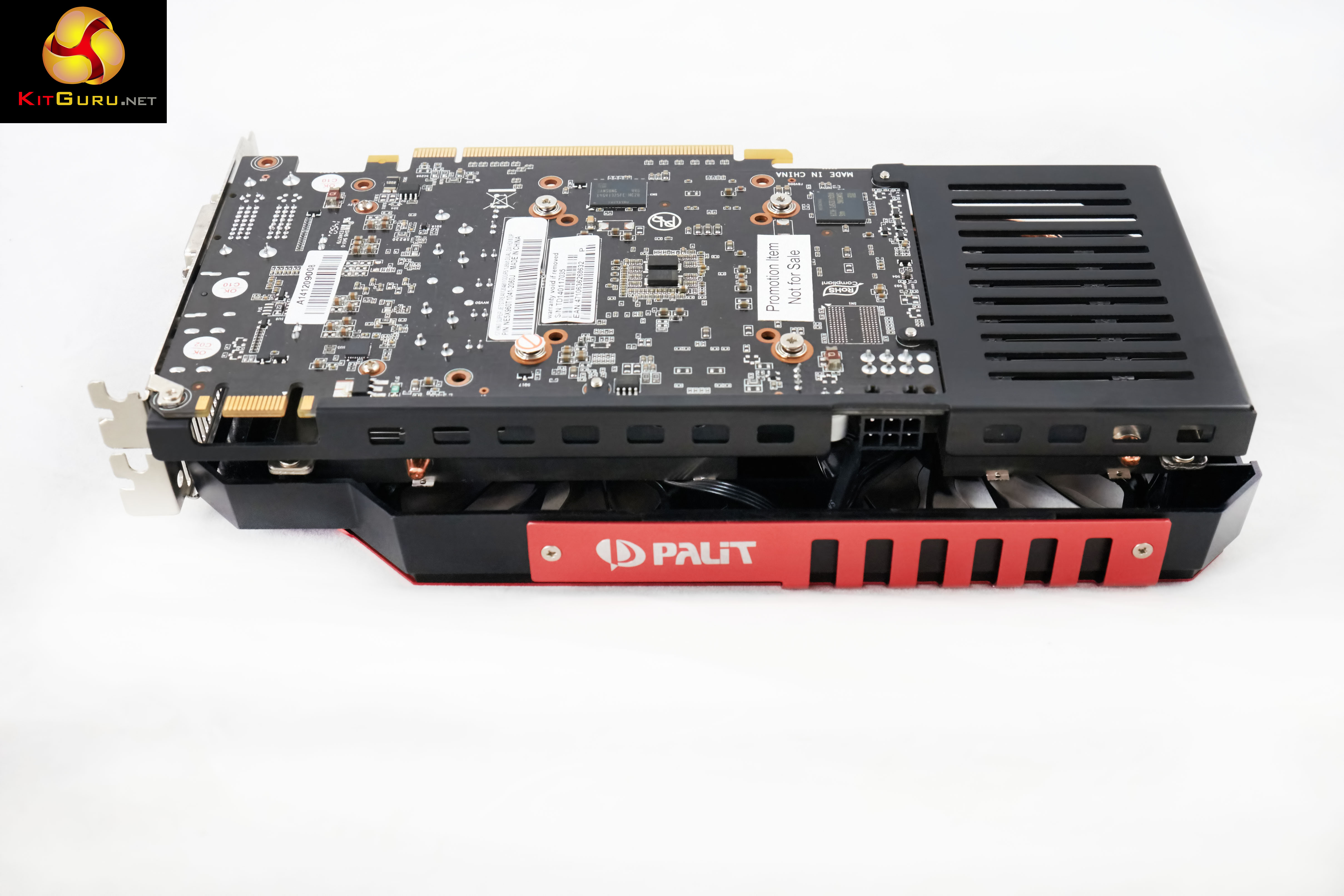
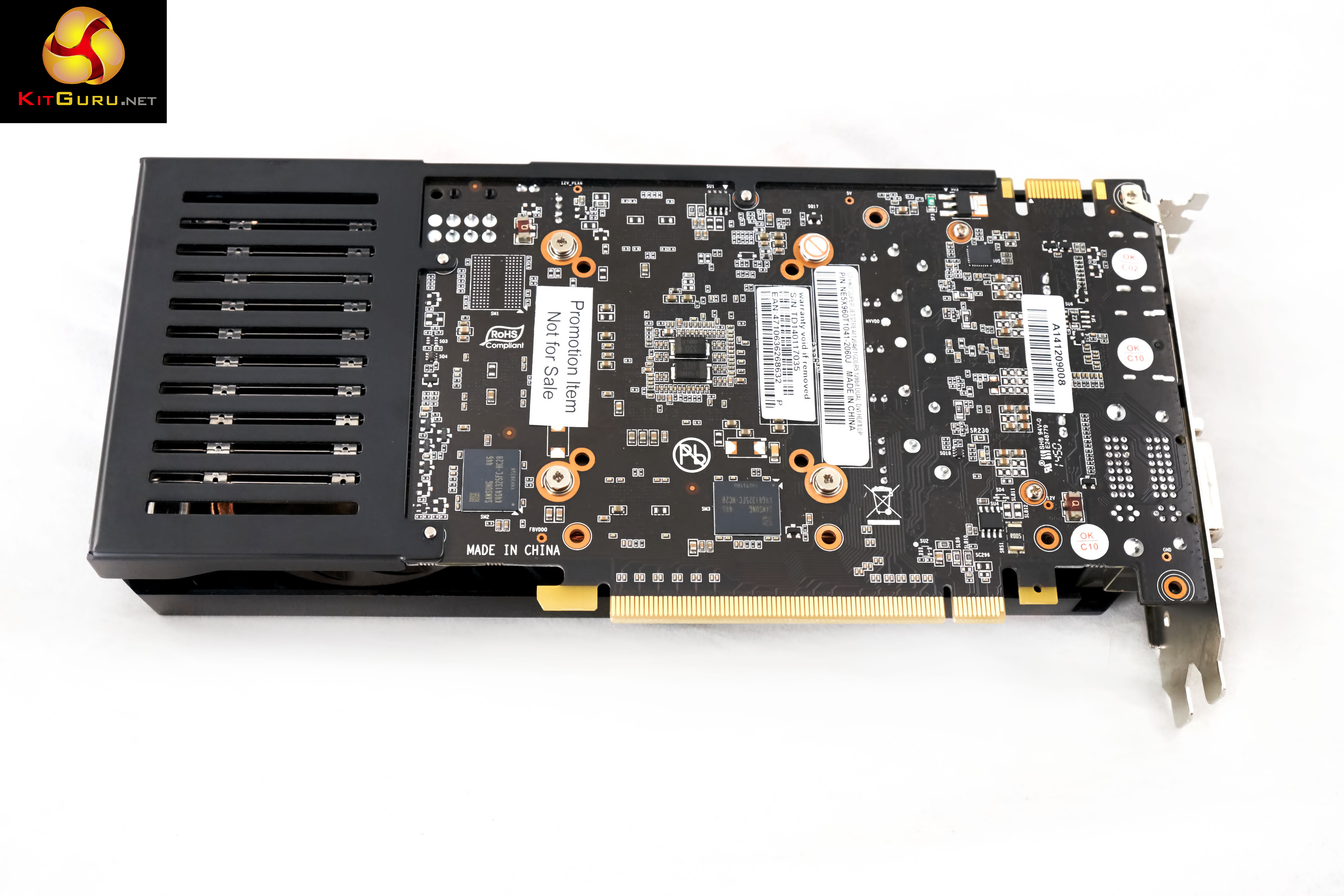
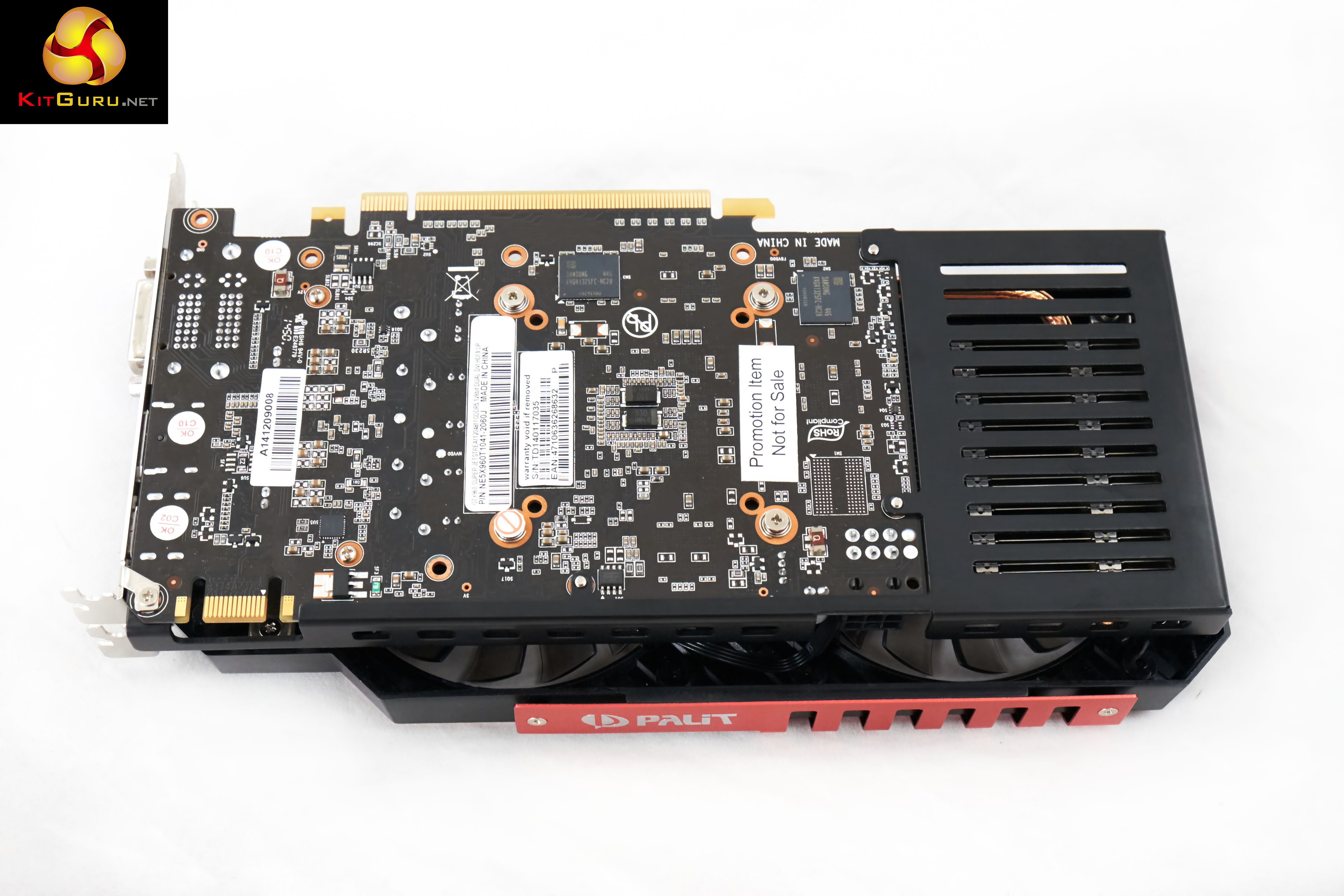
The is built around a small PCB, which is extended with a metal extension plate. We will get a closer look at this when we take the card apart.

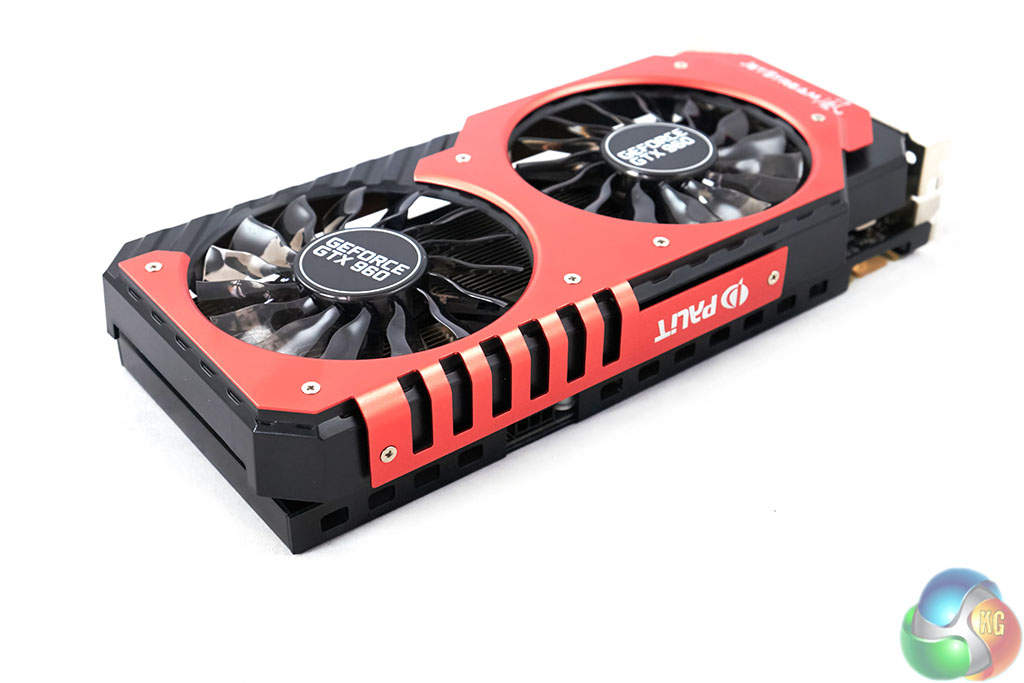
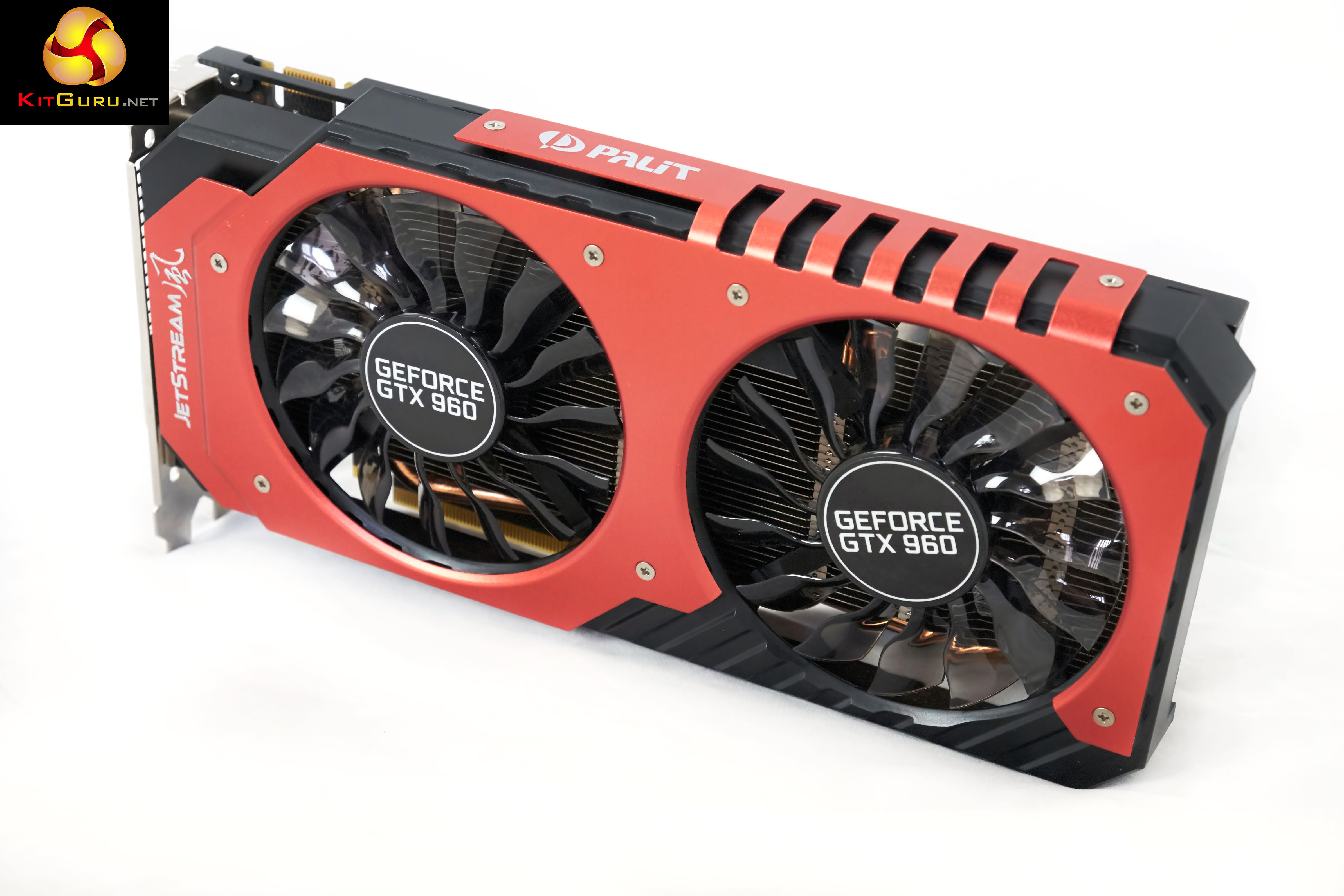
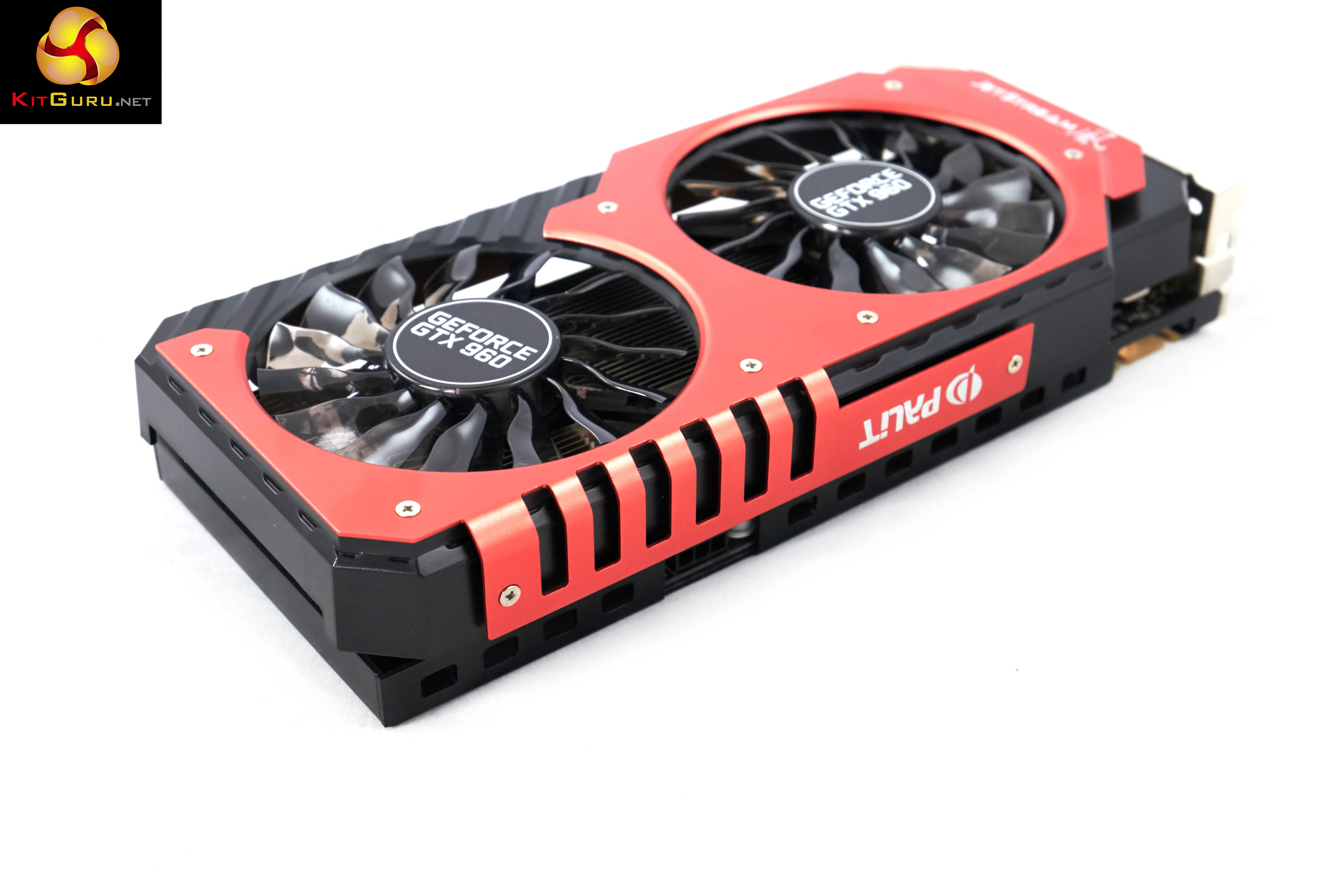
The Palit GTX960 Super JetStream should appeal to a wide audience, the bright red colouring is effective and attractive.
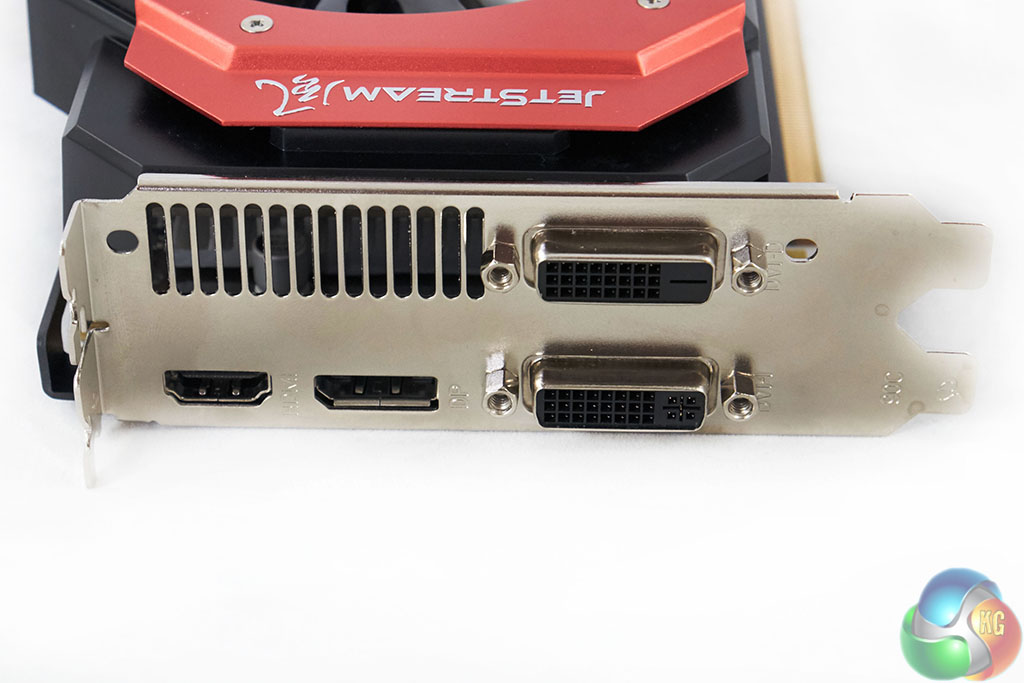
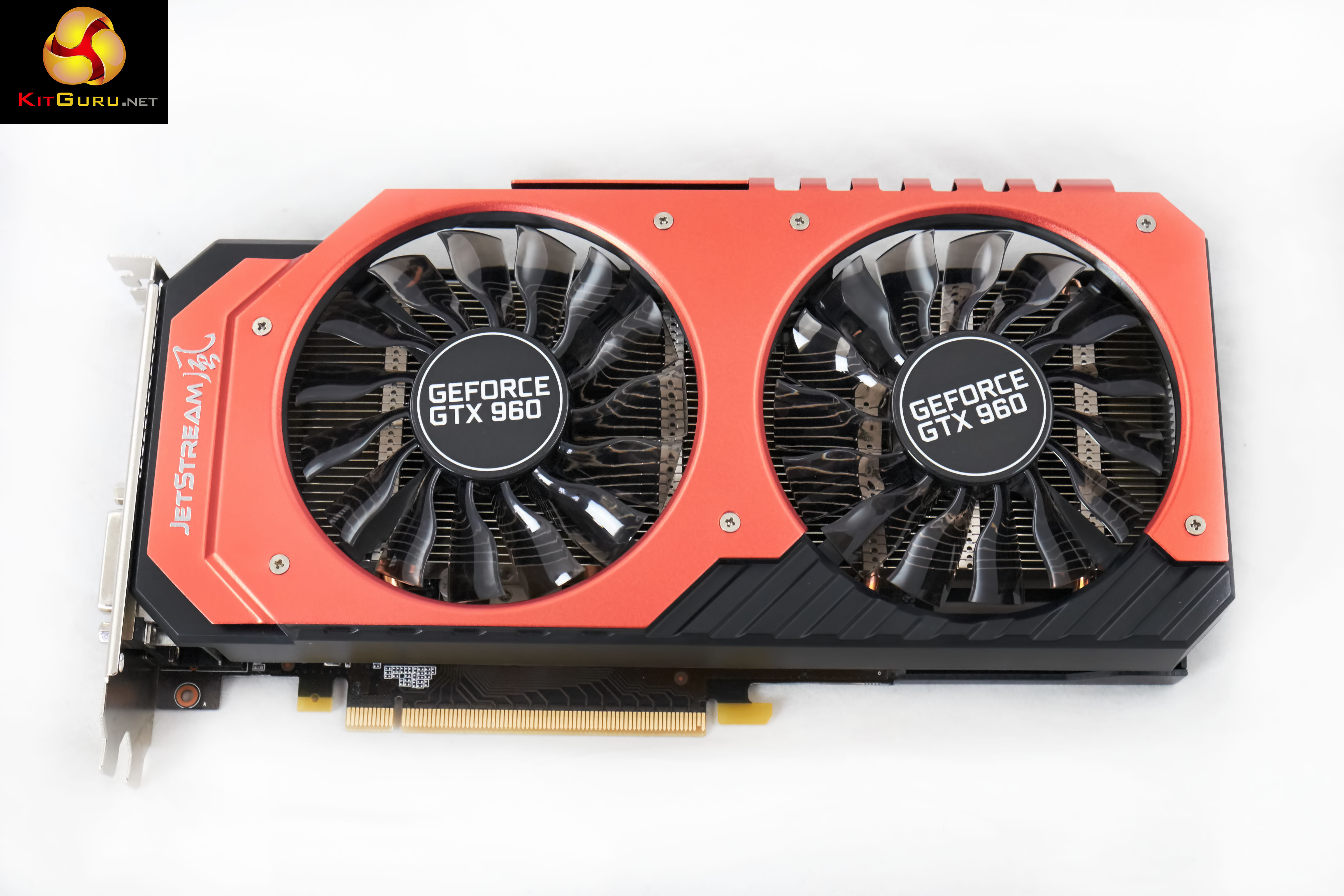
The card ships with dual DVI connectors (DVI-I and DVI-D), and a full sized HDMI and Displayport connector. This HDMI port will handle 4K resolutions at up to 60hz.
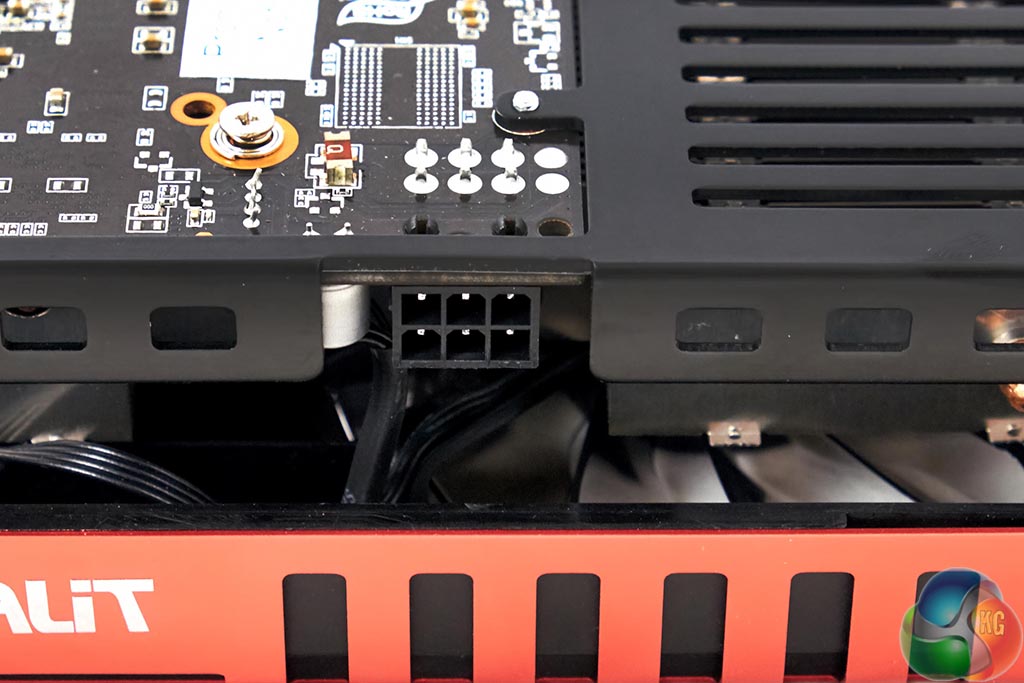
The Palit GTX960 Super JetStream takes power from a single 6 pin power connector, adhering to Nvidia's reference design.
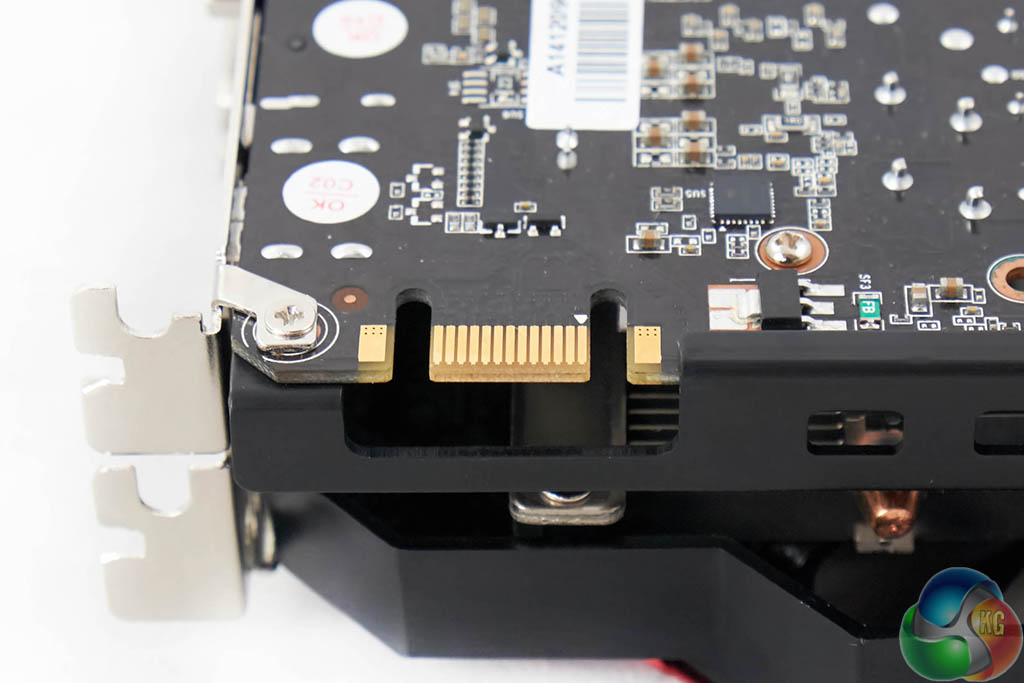
The solution is SLI capable, with one connector available for dual card configurations.
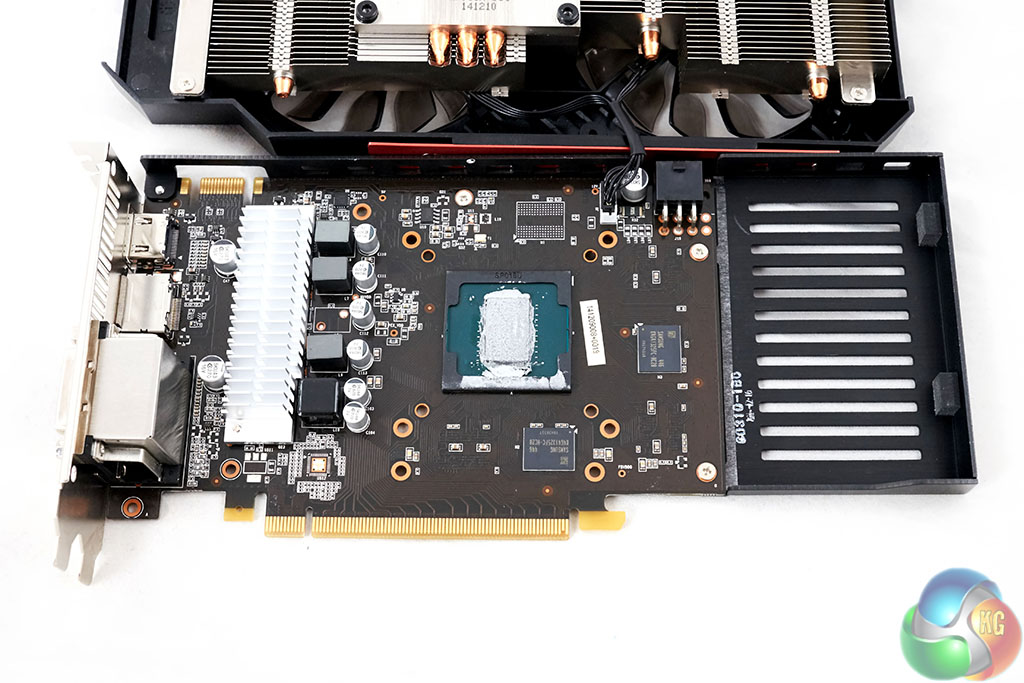
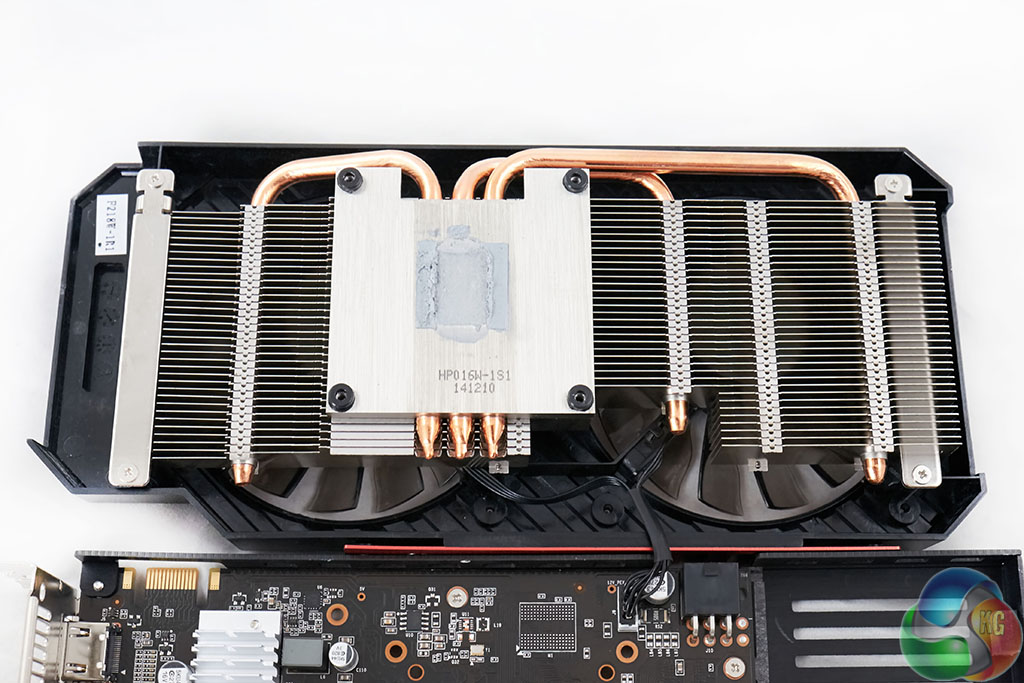
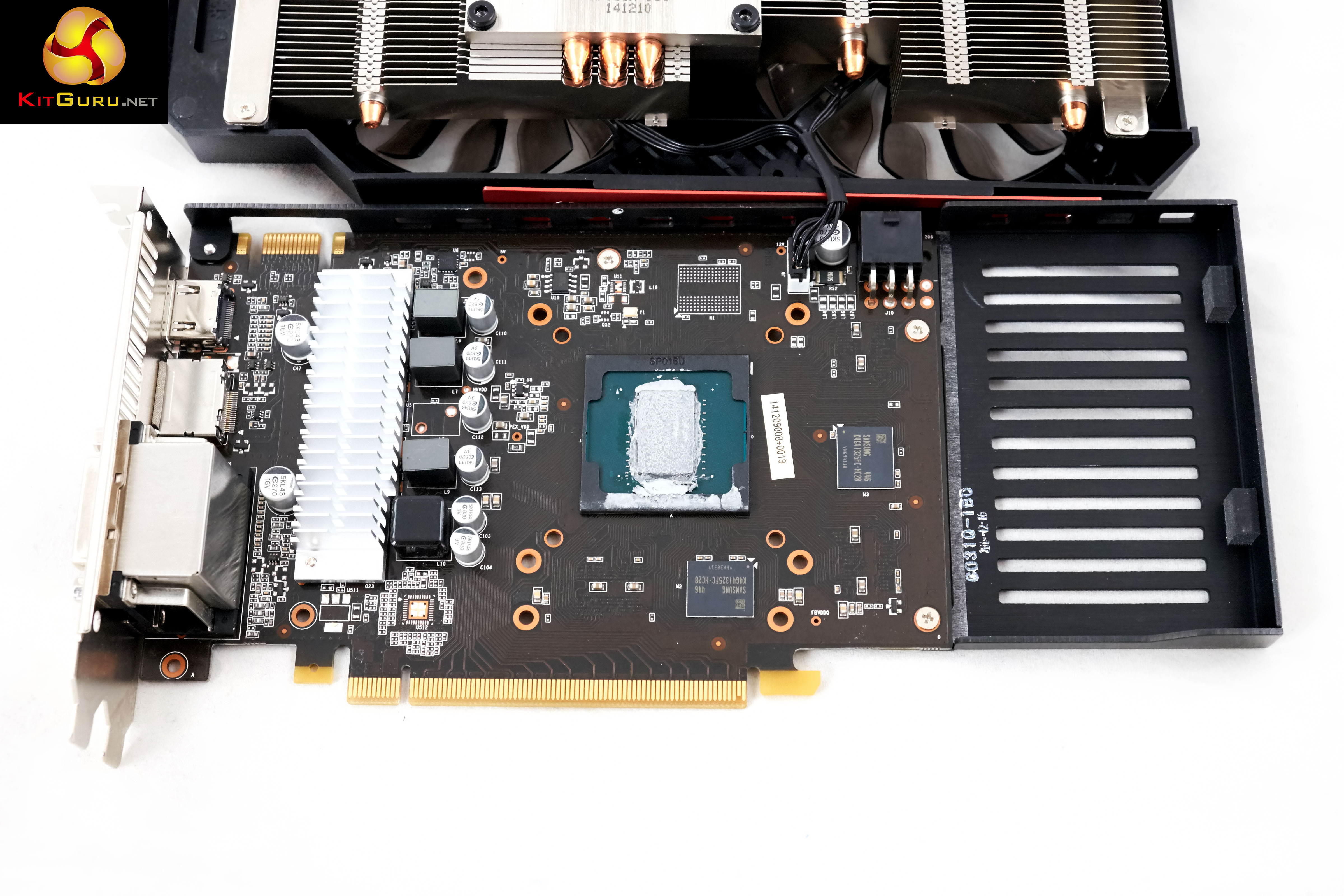
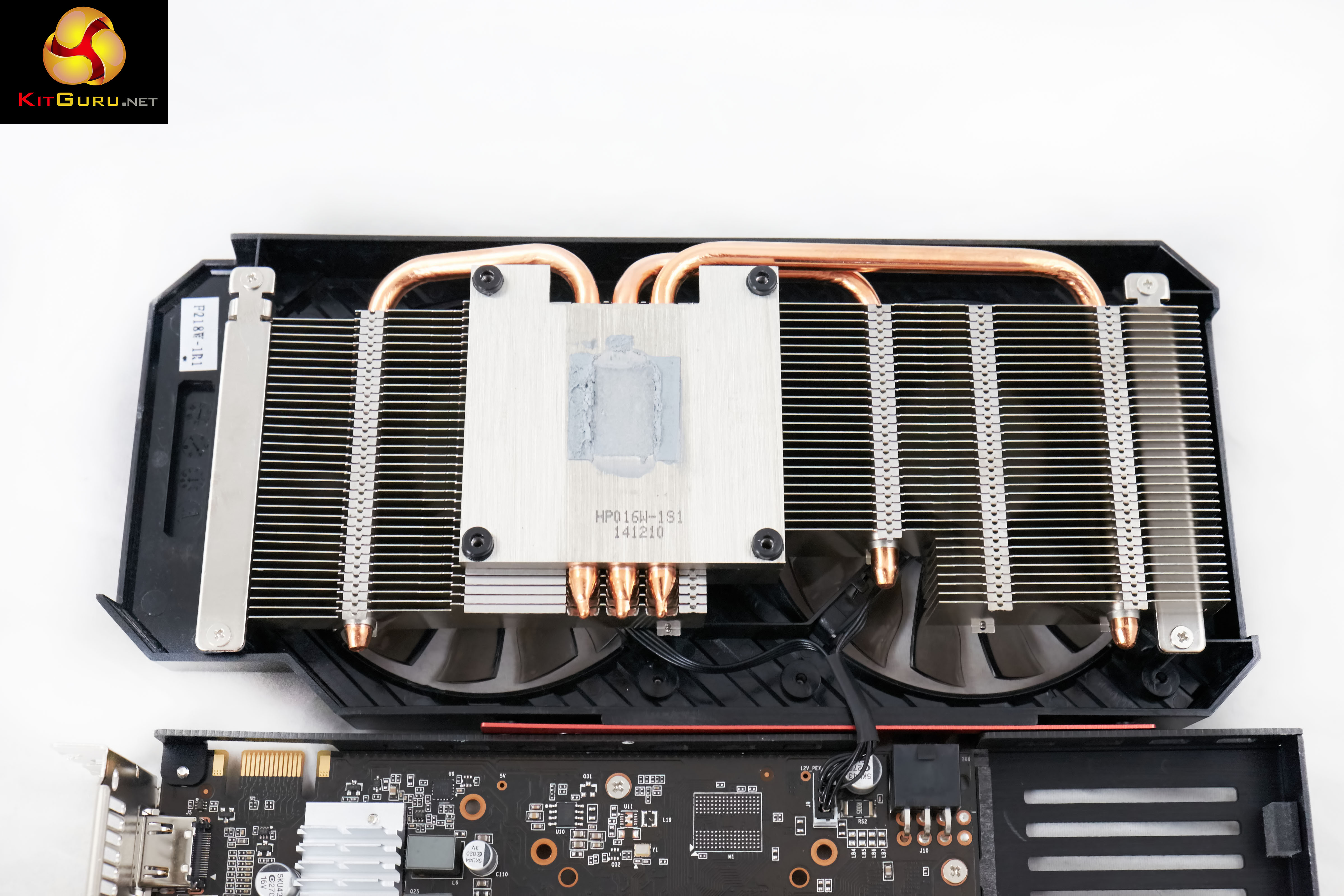
The cooler is comprised of three thick copper heatpipes which run into racks of aluminum fins on either side. It is not a direct touch design.
The new GTX960 incorporates Nvidia's GM206 GPU. The GM206 features all the primary architectural innovations we discussed when the GTX980 launched last year. The Maxwell GPU uses a new SM design that has been designed to enhance efficiency.
The Maxwell SMM is partitioned into four 32 CUDA core processing blocks (128 CUDA cores per SM), and each of these has its own dedicated resources for instruction buffering and scheduling. Nvidia's design is based around keeping the GPU CUDA cores fully utilised more often to improve workload efficiency, and to reduce wasted power.
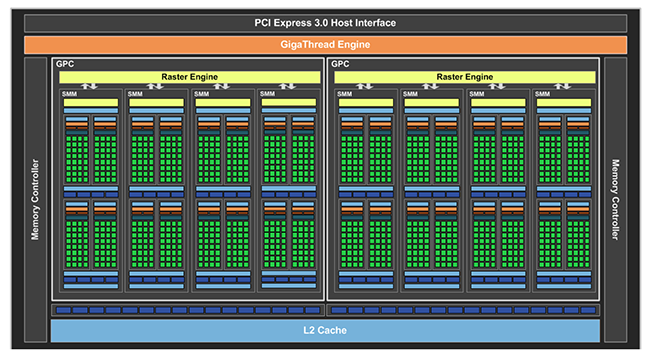
Each of the GM206 SMM units have their own 96kb shared memory, and the L1/texturing caching functions are combined into a 24kb pool of memory per pair of processing blocks (48kb per SMM). Previous Kepler GPU's had a smaller 64kb shared memory function which was also shared as a L1 cache.
Nvidia have calculated that each GM206 CUDA core can deliver 1.4 more performance per core compared to the GM106 Kepler core, with a 2x performance ratio per watt.
While many will negatively focus on the 128 bit memory interface of the new GTX960, Nvidia have added a new memory compression engine.
This third generation colour compression engine offers new modes for colour related compression which will have a positive impact on how the GPU effectively uses available memory bandwidth. Nvidia say that the GM206 uses approximately 25% fewer bytes per frame compared to previous generation Kepler products. Nvidia claim that the 128 bit, 7Gbps memory interface in GM206 is able to provide more bandwidth than its direct predecessor, the GK106. (148.8GB/sec effective in GTX 960 vs 144.2GB/sec in GTX 660).
The GTX960 will support resolutions up to 5k with up to four simultaneous displays, and support for up to four 4k MST displays. The card also fully supports HDMI 2.0.
While the GTX750ti seems an ideal partner for a media center build, Nvidia also claim in their literature that the GTX960 is a good choice for the same task. The GM206 has support for H.265 (HEVC) encoding and decoding. The GTX980 NVENC video engine offers native support for H.265 encode only, no decode. GM206 also fully supports HDCP 2.2 content protection over HDMI.
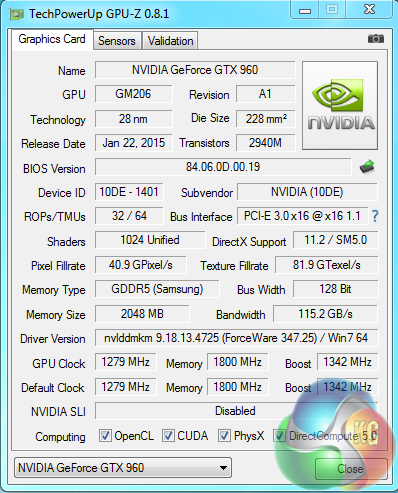
Based on the reference Nvidia specifications of 1,125mhz (core) and 1,750mhz memory (7Gbps effective) Palit have overclocked the GM206 core by 13.7 percent to 1,279mhz. They have even tweaked the memory by 50mhz, to 1,800mhz (7.2Gbps effective). The rest of the hardware we have already discussed on the opening page of this review. The GM206 is built on the 28nm process and it has 32 ROPS, 64 texture units and 1,024 CUDA cores. The 2GB of GDDR5 memory is connected via a 128bit memory interface.
As the majority of our readers are likely to buy a GTX960 to run in a highly overclocked state, we felt we would break with tradition and get the overclocking section out of the way, first. Throughout this review we will run all tests with the Palit GTX960 Super JetStream in its ‘out of box' state, and with our final maximum overclocked tweaked settings.
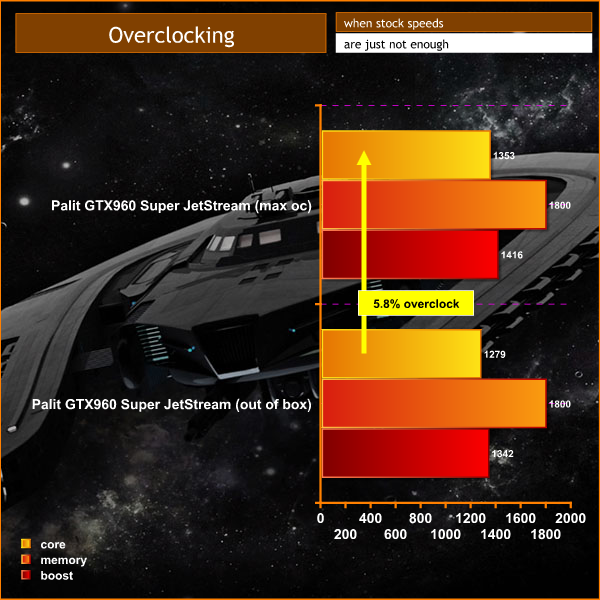
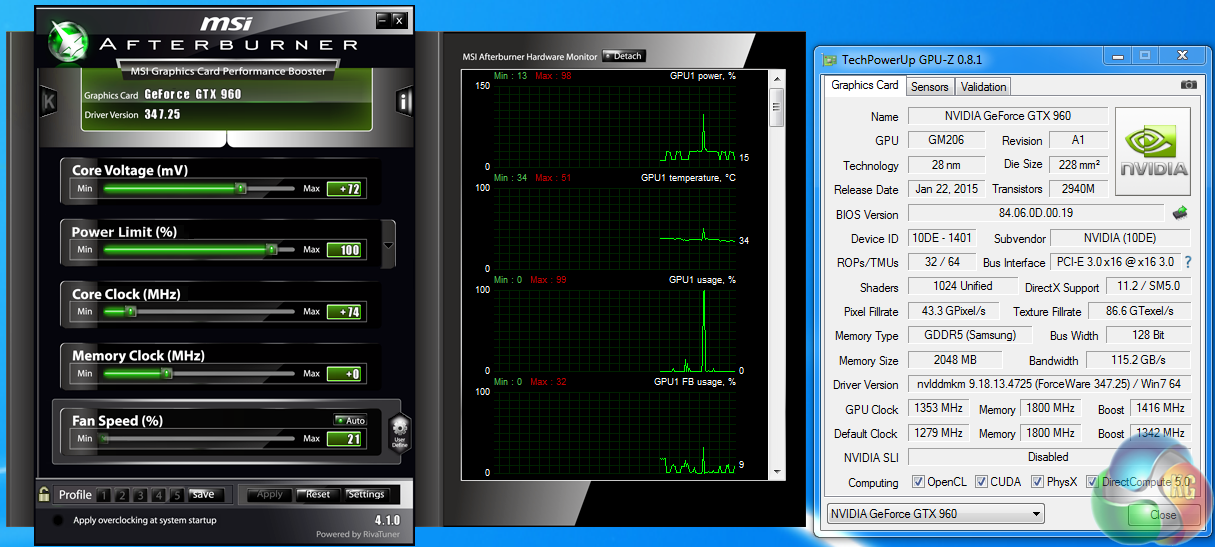
We managed to push the core to 1,353mhz, and the turbo to 1,416mhz. This is close to a 6% increase over the overclocked speeds that Palit supply the Super Jetstream at.
We didn't push the memory any higher as it has a minimal impact on game performance.
To be fair to Palit, they have already overclocked the GM206 core by 13.7%, so our additional 6% translates into a total of 20% extra over the reference Nvidia design.
On this page we present some high resolution images of the product taken with a Fuji XT1 camera. These will take much longer to open due to the dimensions, especially on slower connections. If you use these pictures on another site or publication, please credit Kitguru.net as the owner/source.
For the review today we are using the latest Nvidia 347.25 drivers which were supplied with the GTX960 cards by Nvidia themselves. We retested all Nvidia hardware with these drivers for this review, to keep things on a completely even footing. The AMD cards were all retested in the last week with the latest Catalyst OMEGA 14.12 driver.
If you want to read more about our test system, or are interested in buying the same Kitguru Test Rig, check out our article with links on this page. We are using an Asus PB287Q monitor for this review today.
We test all the hardware today at high image quality settings and with anti aliasing when possible. Years ago gamers would have to make sacrifices to get smooth frame rates at 1080p – but it is 2015 and we all expect very high image quality even from these ‘mid range' boards. We include higher cost cards such as the R9 290 and GTX770 to get an idea of performance positioning in the market.
Comparison cards:
Asus GTX760 Strix OC Edition (1,253mhz core / 1800 mhz memory)
Asus R9 290 Direct CU II OC (1000 mhz core / 1,260 mhz memory)
Gigabyte GTX770 OC (1,137mhz core / 1,753 mhz memory)
Sapphire Dual X R9 285 (965 mhz core / 1,400 mhz memory)
XFX R9 280X DD (1,000 mhz core / 1,500 mhz memory)
Asus Direct CU II GTX 760 OC (1,006mhz core / 1,502mhz memory)
Asus GTX750TI Strix OC Edition (1,124mhz core / 1,350mhz memory)
Software:
Windows 7 Enterprise 64 bit
Unigine Heaven Benchmark
Unigine Valley Benchmark
3DMark Vantage
3DMark 11
3DMark
Fraps Professional
Steam Client
FurMark
Games:
Grid AutoSport
Tomb Raider
Metro Last Light Redux
Thief 201
Total War Rome 2: Emperor Edition
All the latest BIOS updates and drivers are used during testing. We perform generally under real world conditions, meaning KitGuru tests games across five closely matched runs and then average out the results to get an accurate median figure. If we use scripted benchmarks, they are mentioned on the relevant page.
Game descriptions edited with courtesy from Wikipedia. Thanks to Vasilij Petrov for his concept spaceship model.
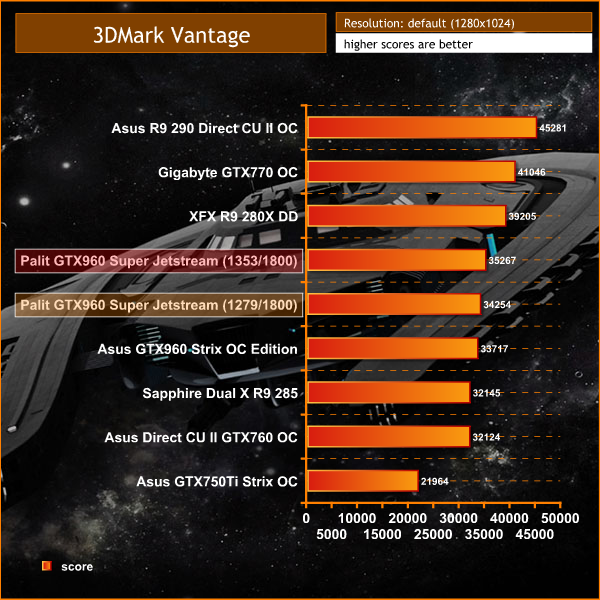
Futuremark released 3DMark Vantage, on April 28, 2008. It is a benchmark based upon DirectX 10, and therefore will only run under Windows Vista (Service Pack 1 is stated as a requirement) and Windows 7. This is the first edition where the feature-restricted, free of charge version could not be used any number of times. 1280×1024 resolution was used with performance settings.
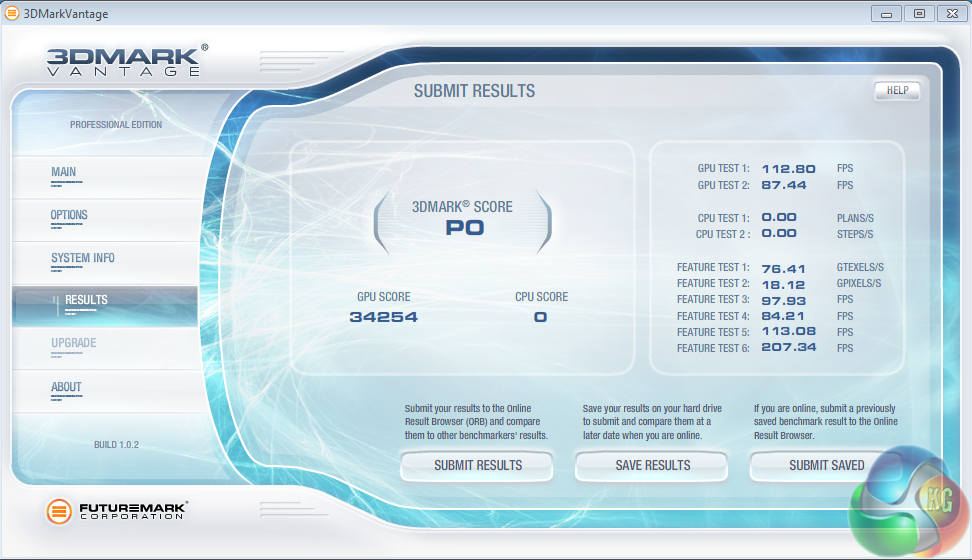
The Palit GTX960 Super JetStream scores 34,254 points at the out of the box speeds.
3DMark 11 is designed for testing DirectX 11 hardware running on Windows 7 and Windows Vista the benchmark includes six all new benchmark tests that make extensive use of all the new features in DirectX 11 including tessellation, compute shaders and multi-threading. After running the tests 3DMark gives your system a score with larger numbers indicating better performance. Trusted by gamers worldwide to give accurate and unbiased results, 3DMark 11 is the best way to test DirectX 11 under game-like loads.
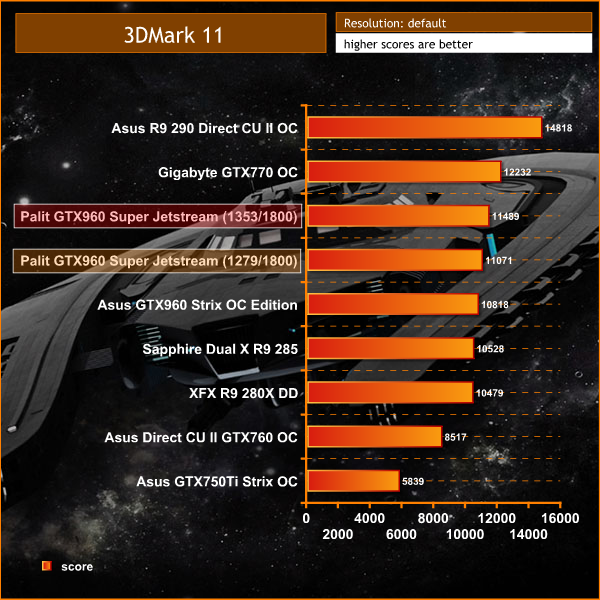
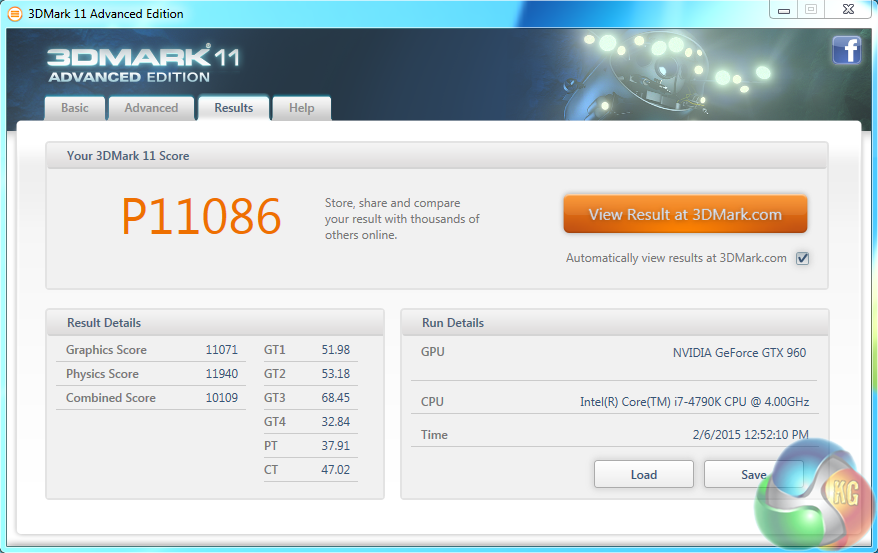
Good results from the Palit solution, just edging out the Asus GTX960 Strix OC.
3DMark is an essential tool used by millions of gamers, hundreds of hardware review sites and many of the world’s leading manufacturers to measure PC gaming performance.
Futuremark say “Use it to test your PC’s limits and measure the impact of overclocking and tweaking your system. Search our massive results database and see how your PC compares or just admire the graphics and wonder why all PC games don’t look this good.
To get more out of your PC, put 3DMark in your PC.”
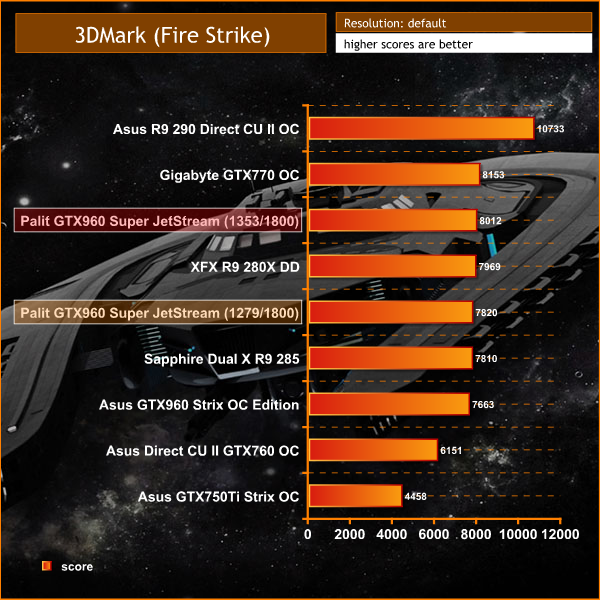
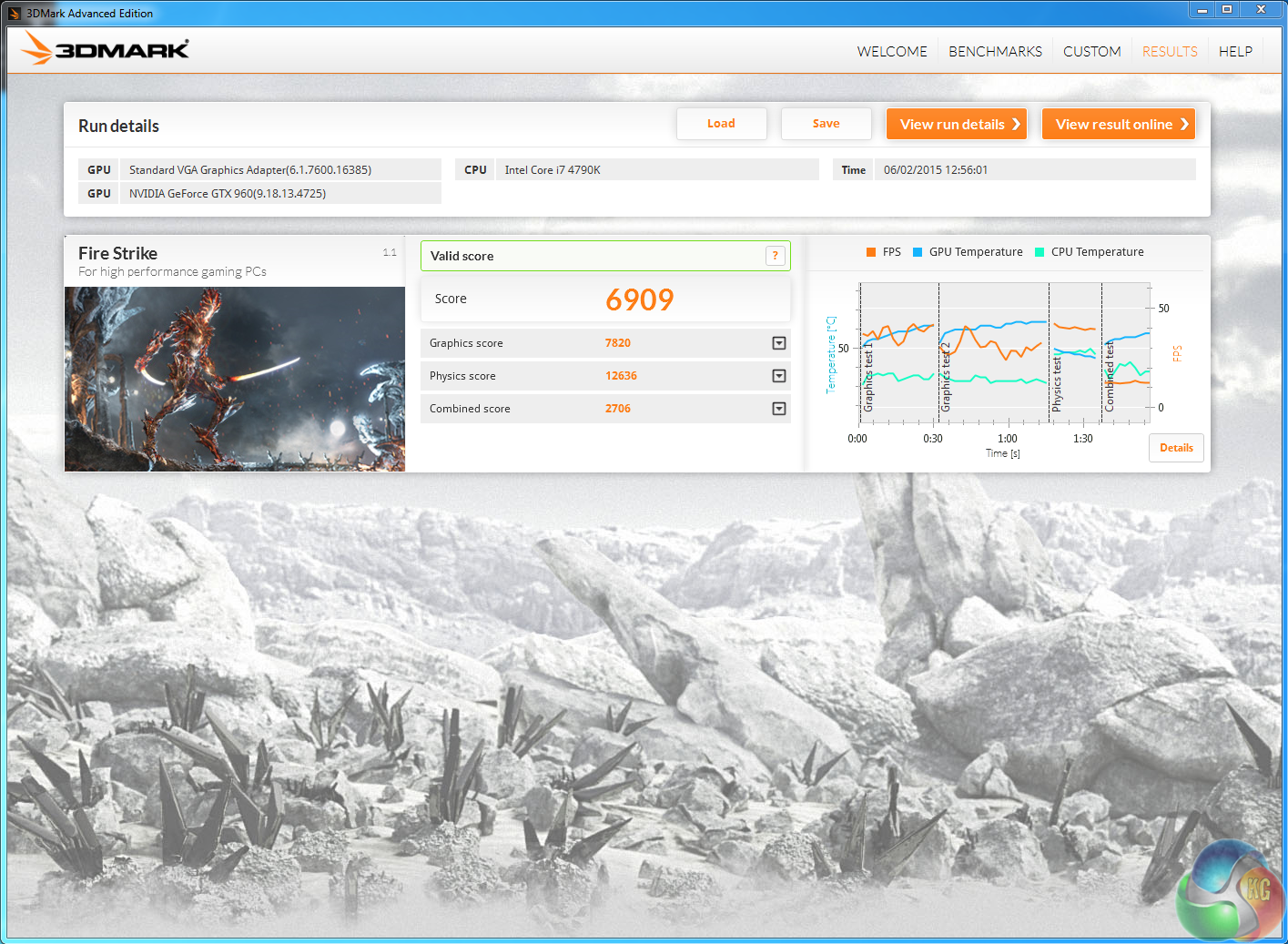
Performance is very closely matched against the R9 285 and R9 280X. When overclocked the GTX960 Super JetStream is able to almost catch the GTX770 OC.Unigine provides an interesting way to test hardware. It can be easily adapted to various projects due to its elaborated software design and flexible toolset. A lot of their customers claim that they have never seen such extremely-effective code, which is so easy to understand.
Heaven Benchmark is a DirectX 11 GPU benchmark based on advanced Unigine engine from Unigine Corp. It reveals the enchanting magic of floating islands with a tiny village hidden in the cloudy skies. Interactive mode provides emerging experience of exploring the intricate world of steampunk. Efficient and well-architected framework makes Unigine highly scalable:
- Multiple API (DirectX 9 / DirectX 10 / DirectX 11 / OpenGL) render
- Cross-platform: MS Windows (XP, Vista, Windows 7) / Linux
- Full support of 32bit and 64bit systems
- Multicore CPU support
- Little / big endian support (ready for game consoles)
- Powerful C++ API
- Comprehensive performance profiling system
- Flexible XML-based data structures

We set Quality to ‘Ultra', Tessellation to ‘Normal', Anti Aliasing to 4 times and the resolution to 1920×1080 (1080p).
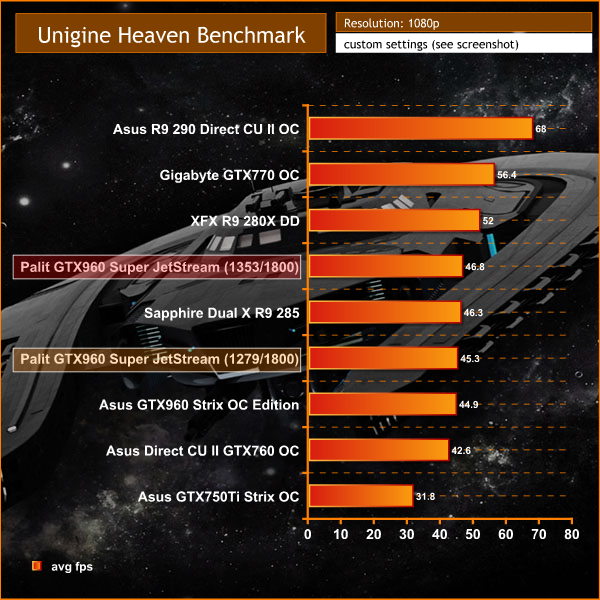
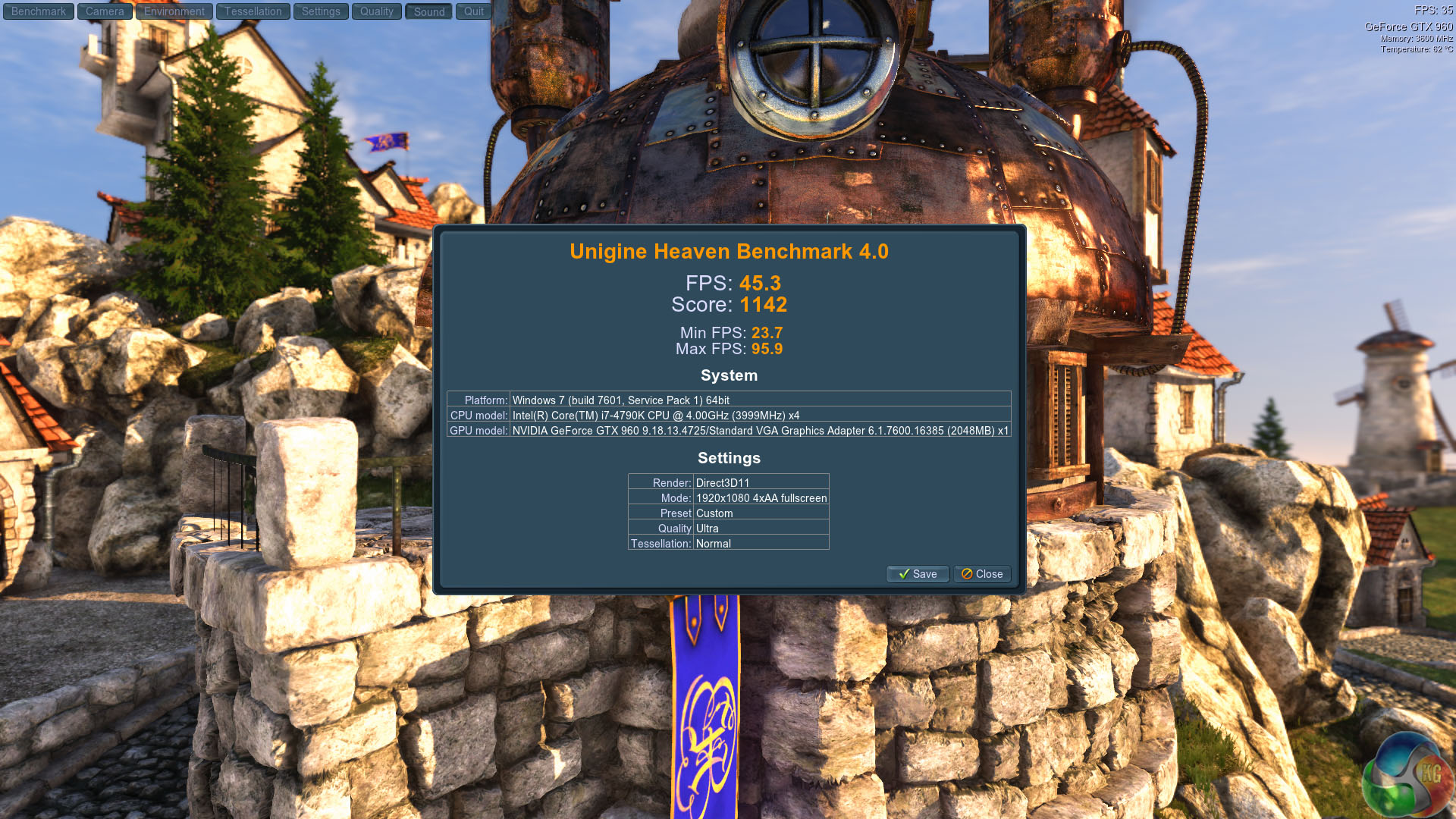
Very evenly matched against Sapphire's Dual X R9 285.Tomb Raider received much acclaim from critics, who praised the graphics, the gameplay and Camilla Luddington’s performance as Lara with many critics agreeing that the game is a solid and much needed reboot of the franchise. Much criticism went to the addition of the multiplayer which many felt was unnecessary. Tomb Raider went on to sell one million copies in forty-eight hours of its release, and has sold 3.4 million copies worldwide so far. (Wikipedia).
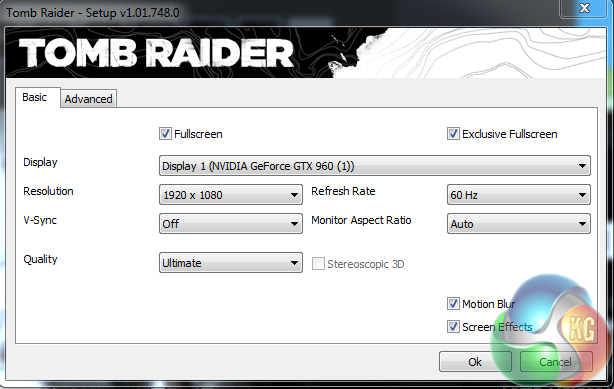
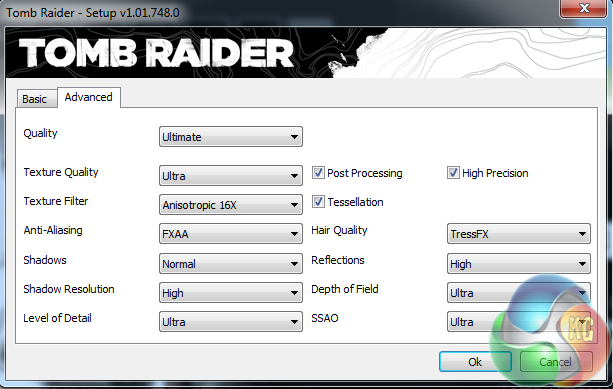
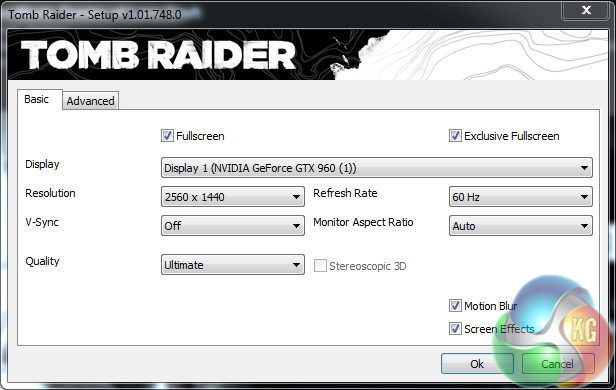
We test at both 1080p and 1440p with the ULTIMATE quality image profile enabled.
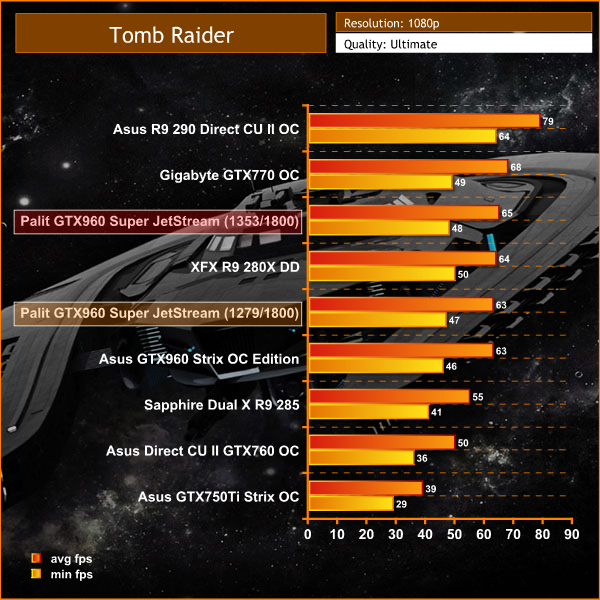
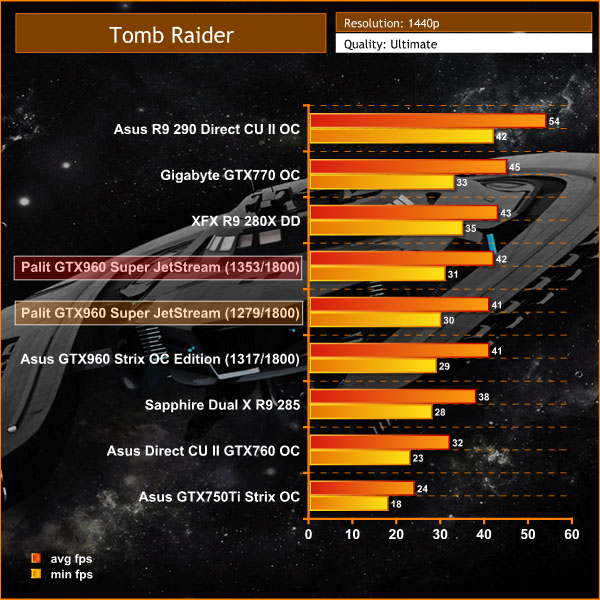
The Palit GTX960 Super JetStream maintains playable frame rates at both 1080p and 1440p resolutions.
Grid Autosport (styled as GRID Autosport) is a racing video game by Codemasters and is the sequel to 2008′s Race Driver: Grid and 2013′s Grid 2. The game was released for Microsoft Windows, PlayStation 3 and Xbox 360 on June 24, 2014. (Wikipedia).
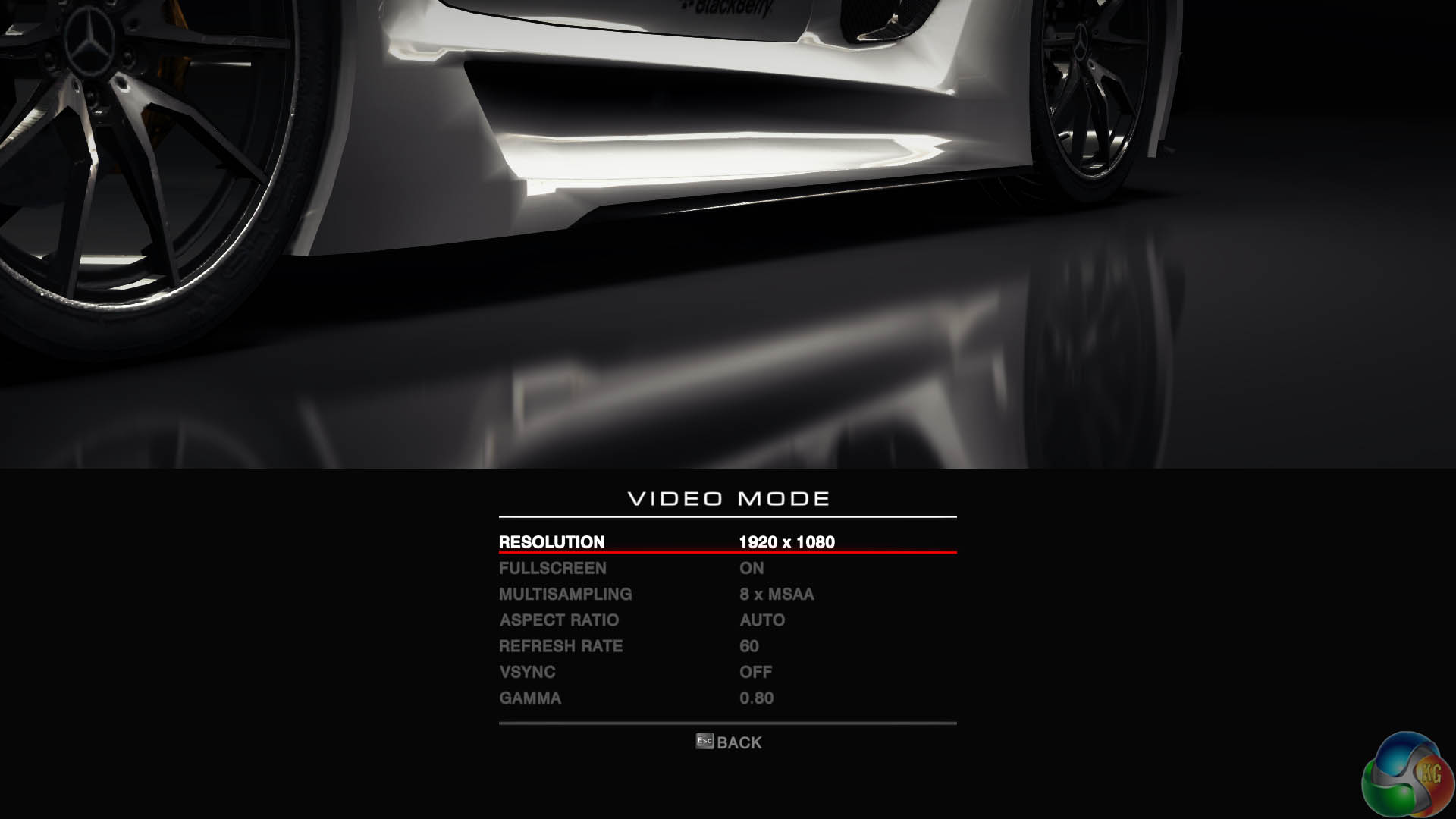
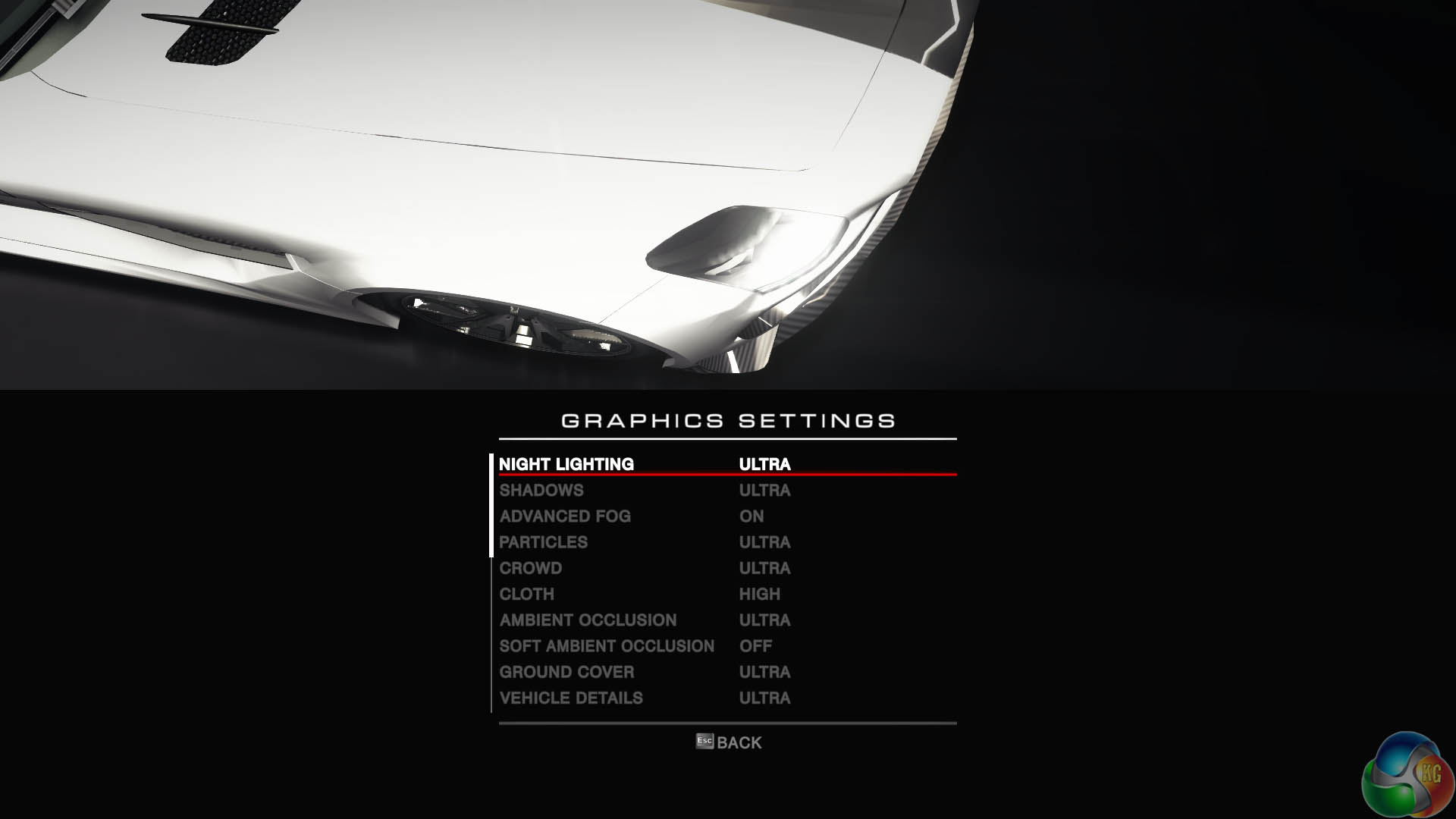
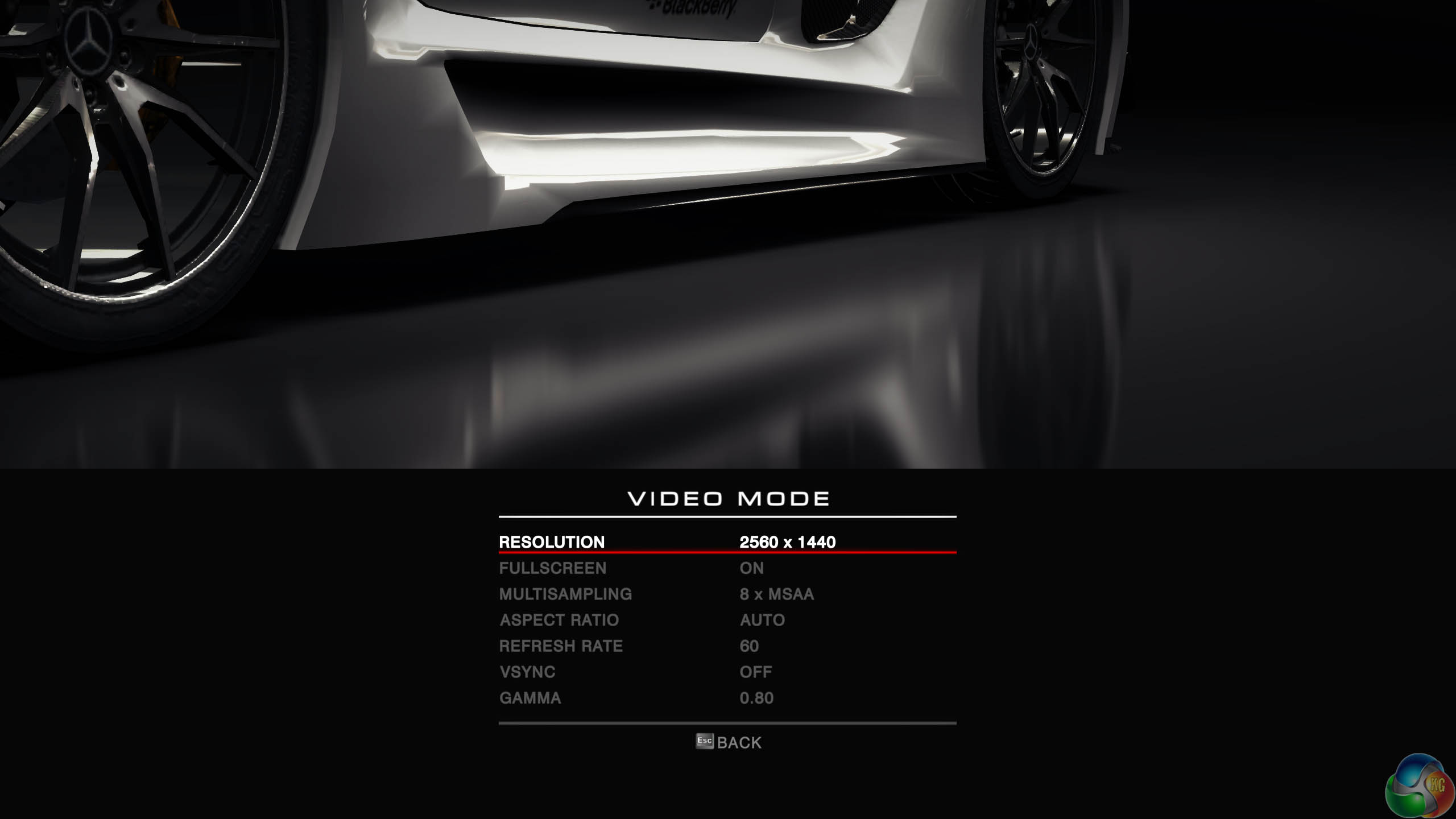
We test at both 1080p and 1440p, with the game engines ‘ULTRA' image quality profile and with 8 times Anti Aliasing enabled.
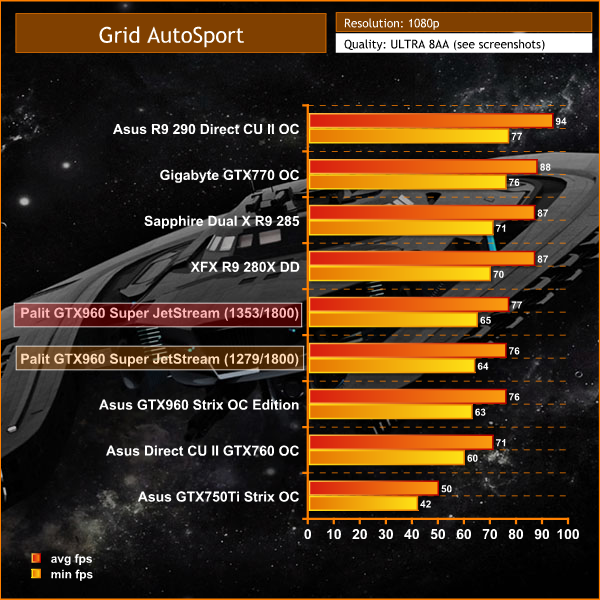
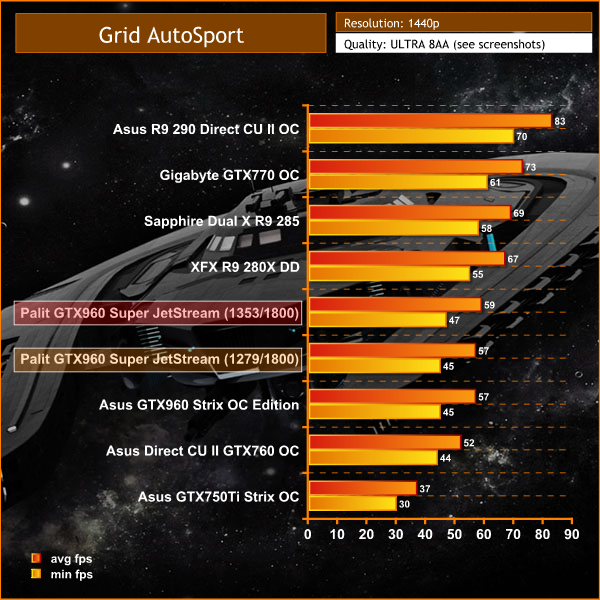
The game runs well at both 1080p and 1440p resolutions. 1080p holds a 60+ frame rate at all times. If you don't mind 30 frames per second then the GTX750 TI Strix OC is still a good, inexpensive option.
Thief is set in a dark fantasy world inspired by Victorian, gothic, and steampunk aesthetics. Garrett, a master thief who has been away from his hometown for a long time, returns to it, a place known only as The City, and finds it ruled with an iron grip by a tyrant called The Baron. While The City is ravaged by a plague, the rich continue to live in isolation and good fortune while the poor are forming numerous mobs against the authorities, Garrett intends to use the volatile situation to his favor. (Wikipedia).
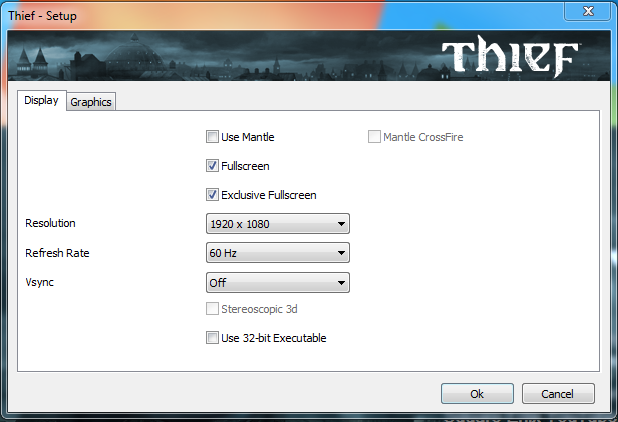
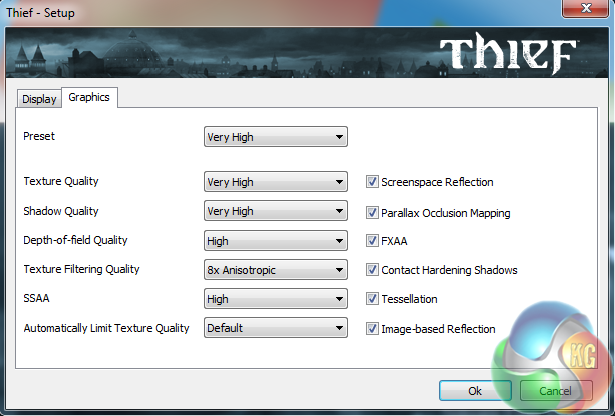
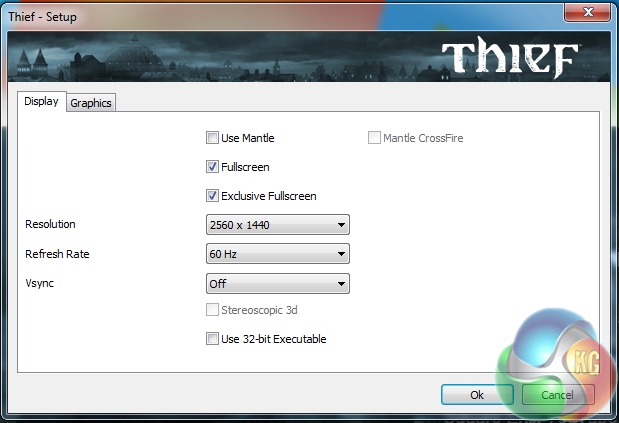
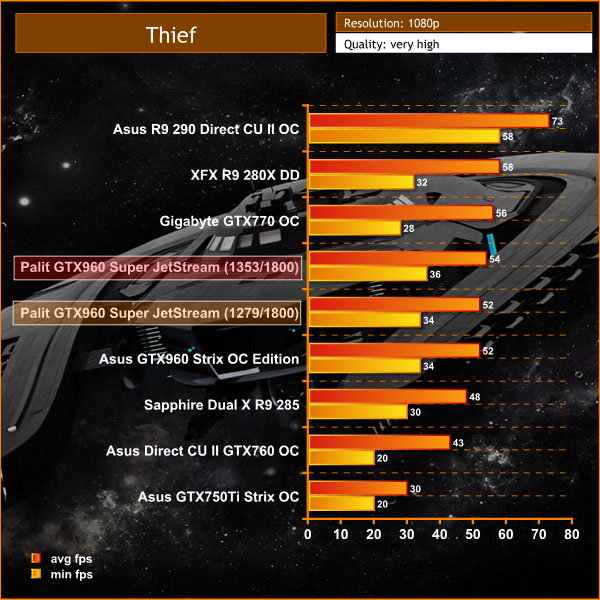
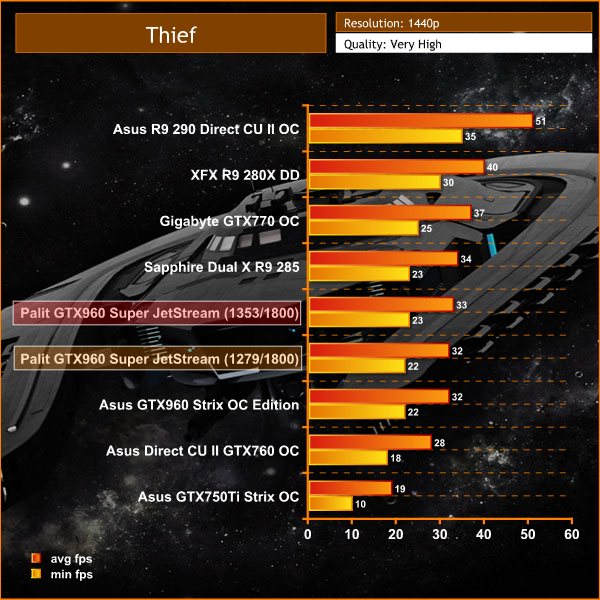
1440p proves too much for the GTX960 – unless we were willing to reduce image quality. 1080p runs well however.
On May 22, 2014, a Redux version of Metro Last Light was announced. It was released on August 26, 2014 in North America and August 29, 2014 in Europe for the PC, PlayStation 4 and Xbox One. Redux adds all the DLC and graphical improvements. A compilation package, titled Metro Redux, was released at the same time which includes Last Light and 2033. (Wikipedia). We test with following settings: quality high, SSAA on, 16AF, Tessellation normal.
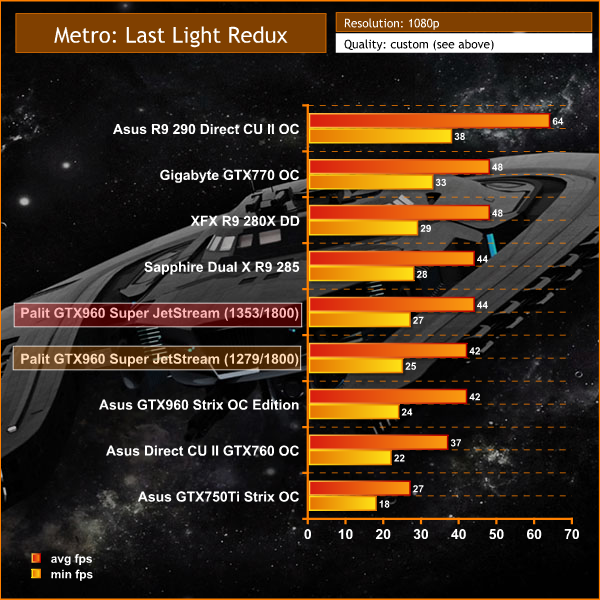
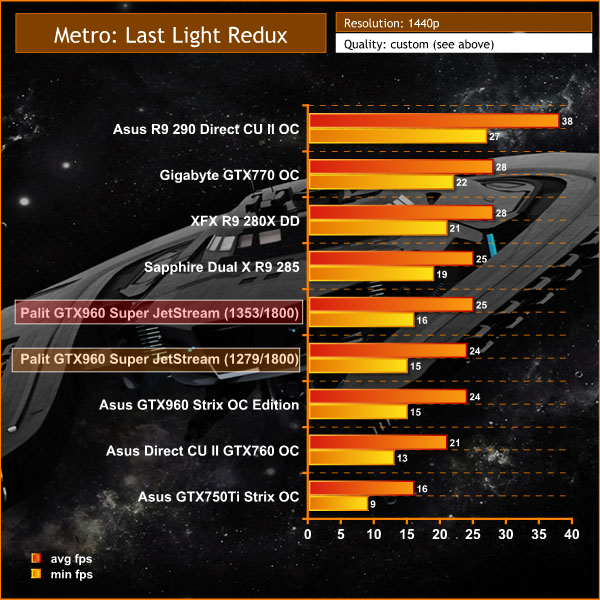
This is an incredibly demanding engine and one that can bring lesser hardware to its knees. The Palit GTX960 Super JetStream can hold a reasonable frame rate at 1080p, although many people would reduce image quality to increase minimum frame rates. At 1440p the game is pretty much unplayable.
Total War: ROME II Emperor Edition. Emperor Edition collects together all free content to date, which includes wide-ranging revisions, additions to game features and adds a brand new Campaign Pack expansion, ‘Imperator Augustus’.
We test the game at 1080p with the image quality settings at the maximum – ‘EXTREME'. Unless we drop image quality settings noticeably, this game needs more powerful hardware to run smoothly at 1440p.
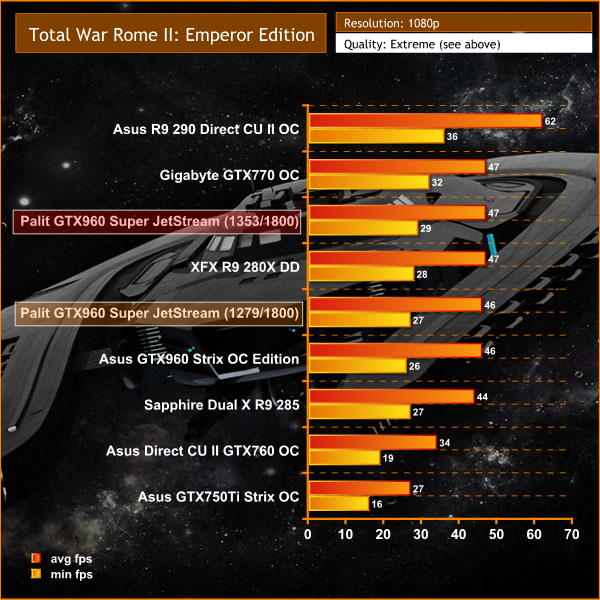
The Asus GTX960 Strix OC manages to hold smooth frame rates (above 25fps) throughout this test, although ideally if you want a solid 30fps+ you would need to pay a little extra money for a more powerful solution such as the GTX770OC, or R9 290.
The tests were performed in a controlled air conditioned room with temperatures maintained at a constant 23c – a comfortable environment for the majority of people reading this.Idle temperatures were measured after sitting at the desktop for 30 minutes. Load measurements were acquired by playing Crysis Warhead for 30 minutes and measuring the peak temperature. We also have included Furmark results, recording maximum temperatures throughout a 30 minute stress test. All fan settings were left on automatic.
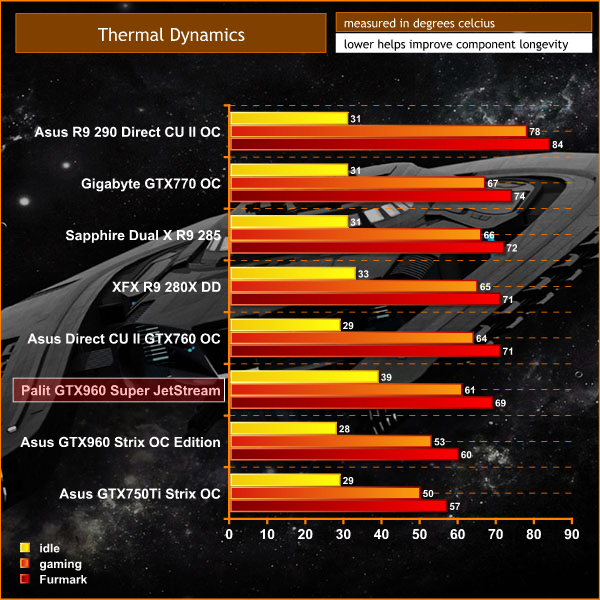
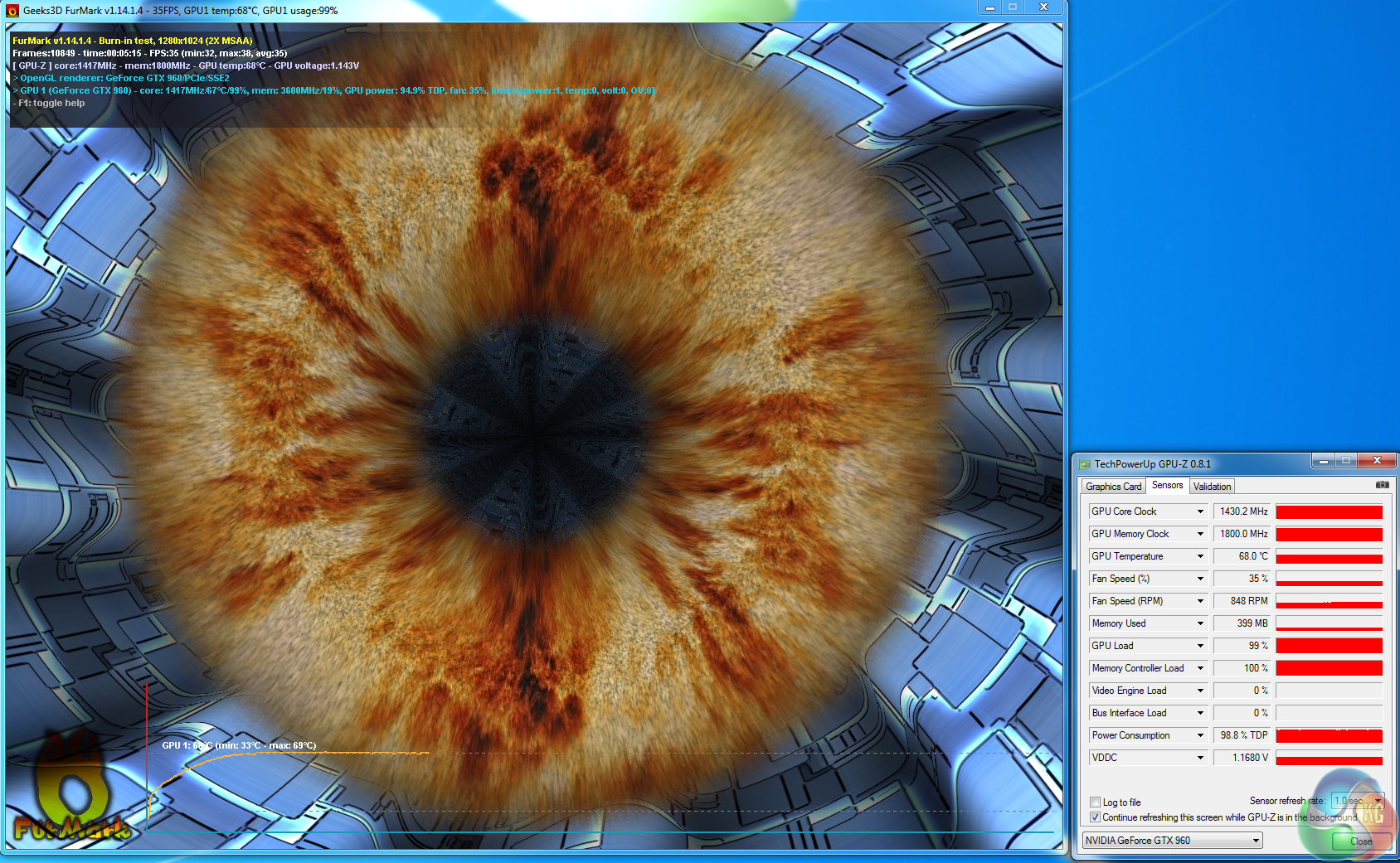
The Maxwell architecture shines in this test although I was surprised to see the Palit card running quite a bit hotter than the ASUS GTX960 Strix OC Edition, between 8 and 9 degrees Celsius which is certainly noticeable.
We have built a system inside a Lian Li chassis with no case fans and have used a fanless cooler on our CPU. The motherboard is also passively cooled. This gives us a build with almost completely passive cooling and it means we can measure noise of just the graphics card inside the system when we run looped 3dMark tests.
We measure from a distance of around 1 meter from the closed chassis and 4 foot from the ground to mirror a real world situation. Ambient noise in the room measures close to the limits of our sound meter at 28dBa. Why do this? Well this means we can eliminate secondary noise pollution in the test room and concentrate on only the video card. It also brings us slightly closer to industry standards, such as DIN 45635.
KitGuru noise guide
10dBA – Normal Breathing/Rustling Leaves
20-25dBA – Whisper
30dBA – High Quality Computer fan
40dBA – A Bubbling Brook, or a Refrigerator
50dBA – Normal Conversation
60dBA – Laughter
70dBA – Vacuum Cleaner or Hairdryer
80dBA – City Traffic or a Garbage Disposal
90dBA – Motorcycle or Lawnmower
100dBA – MP3 player at maximum output
110dBA – Orchestra
120dBA – Front row rock concert/Jet Engine
130dBA – Threshold of Pain
140dBA – Military Jet takeoff/Gunshot (close range)
160dBA – Instant Perforation of eardrum
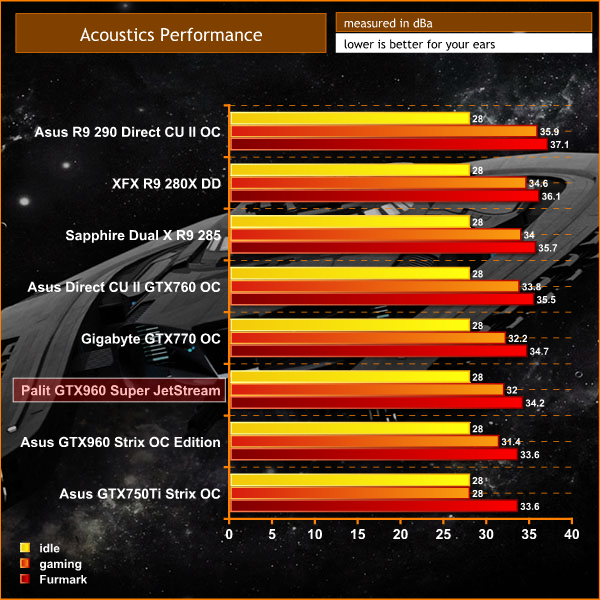
The results are very good, the card is basically silent when gaming – inaudible over even a single chassis fan.
We normally test power demand direct from the VGA card input, with our Keithley Integra unit. Today however we decided to go with a more traditional approach – measuring system wide load, minus the monitor. The system we are using for this review today is detailed HERE.
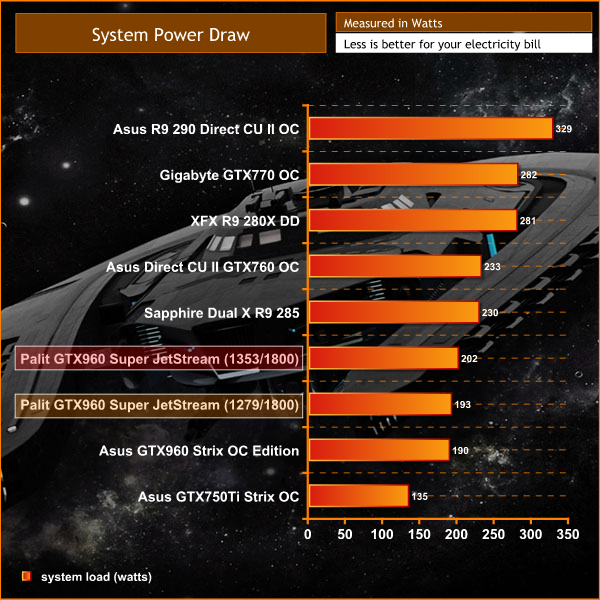
The Palit GTX960 Super JetStream system demands 193 watts at the wall, 3 watts more than the ASUS Strix OC Edition.
Nvidia's mid range GTX960 has been some time coming – almost a year after Maxwell was introduced with the GTX750ti. The GTX960 specifically targets the gaming audience with a budget restriction of £200. For many this is the gaming ‘sweet spot'.
The Palit GTX960 Super JetStream which we reviewed today is priced at £180 and while pretty much equal in performance to AMD's R9 285, it does drain 40 watts less power at the socket. This means it can run much quieter – as the cooler has less work to do, and the fans can spin slower.
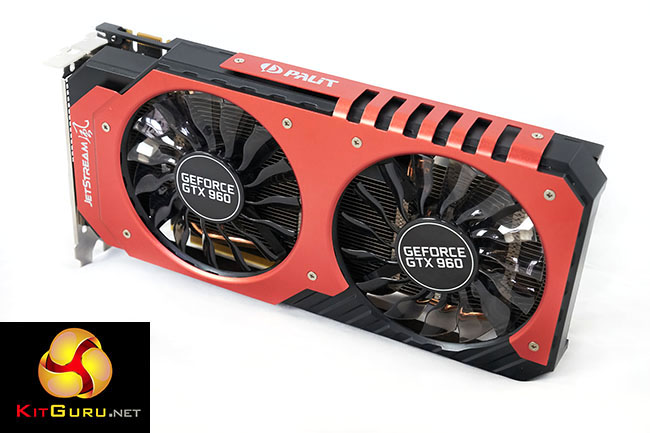
The Palit GTX960 Super Jetstream performs very well, although I have to say, the Asus GTX960 Strix OC is clearly the superior graphics card – it is quieter, and runs cooler (8-9c cooler). The Palit cooler is certainly capable enough of maintaining a good thermal curve, but ASUS have a clear performance edge which proves difficult to ignore.

You can buy the Palit GTX960 Super JetStream direct from Overclockers UK for £179.99 inc vat. Palit also have a reference version for £158.99 inc vat and a ‘Jetstream' version with lower clocks for £169.99 inc vat.
Discuss on our Facebook page, over HERE.
Pros:
- Maxwell architecture is very efficient.
- good looking card.
- quiet under load
- low power consumption.
- overclocks quite well.
Cons:
- ASUS GTX960 Strix OC is the superior solution.
Kitguru says: The Palit GTX960 Super JetStream is a good card which delivers solid performance for the price.