KitGuru KitGuru.net – Tech News | Hardware News | Hardware Reviews | IOS | Mobile | Gaming | Graphics Cards


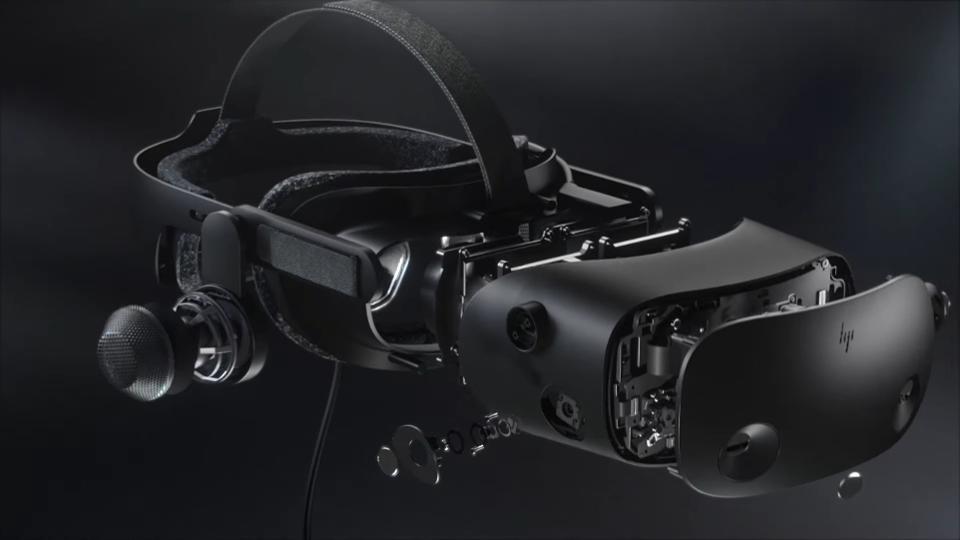
It has been a couple of months since HP officially unveiled its ‘next-gen' VR headset. Built in collaboration with Valve and Microsoft, the HP Reverb G2 is due to release this year and now thanks to an early retail listing, we have a more specific date to circle in the calendar.
For those that missed the initial announcement, the HP Reverb G2 sports a display with 2160×2160 resolution and a 114-degree field of view. It also adds spatial audio through floating speakers, very similar to what is found on the Valve Index. In fact, a lot of the design is reminiscent of Valve's headset.
There is one fundamental difference though and that is the inside-out tracking. All of the tracking sensors are within the headset itself, avoiding the need for external sensors. In addition, Oculus Touch style controllers are used, rather than something similar to Valve's newer, five-finger tracking ‘Knuckles' controllers.
Back when the headset was announced, it was pitched with a price tag of $599 USD but no pricing for Europe was given and neither was a specific release window- likely due to complications brought on by the COVID-19 pandemic.
Since then, HP has opened up pre-orders in eight territories, including the UK. A partnered retailer, SystemActive, went live with pre-orders and included a previously unknown launch date. According to the listing, the HP Reverb G2 will begin shipping on the 15th of September, priced at £525.
Discuss on our Facebook page, HERE.
KitGuru Says: The HP Reverb G2 is looking like a solid headset and on paper, should offer better visuals than the Oculus Rift S for around $100 more. Are any of you looking to pick up a VR headset this year?