KitGuru KitGuru.net – Tech News | Hardware News | Hardware Reviews | IOS | Mobile | Gaming | Graphics Cards


MediaTek has been very successful with the Dimensity series of smartphone SoCs and now wants to replicate that with the Kompanio series in the Chromebook market. With that objective, MediaTek announced the new Kompanio 1380 for premium Chromebooks.
Based on the 6nm process node, the Kompanio 1380 was designed to offer good performance and impressive battery life in compact designs. Inside it, there are eight cores, from which four are Arm Cortex-A78 cores that can clock up to 3GHz, and the other four are Cortex-A55. In addition, you can also find a five-core Arm Mali-G57 GPU and quad-channel 2133MHz LPDDR4X memory for increased bandwidth.
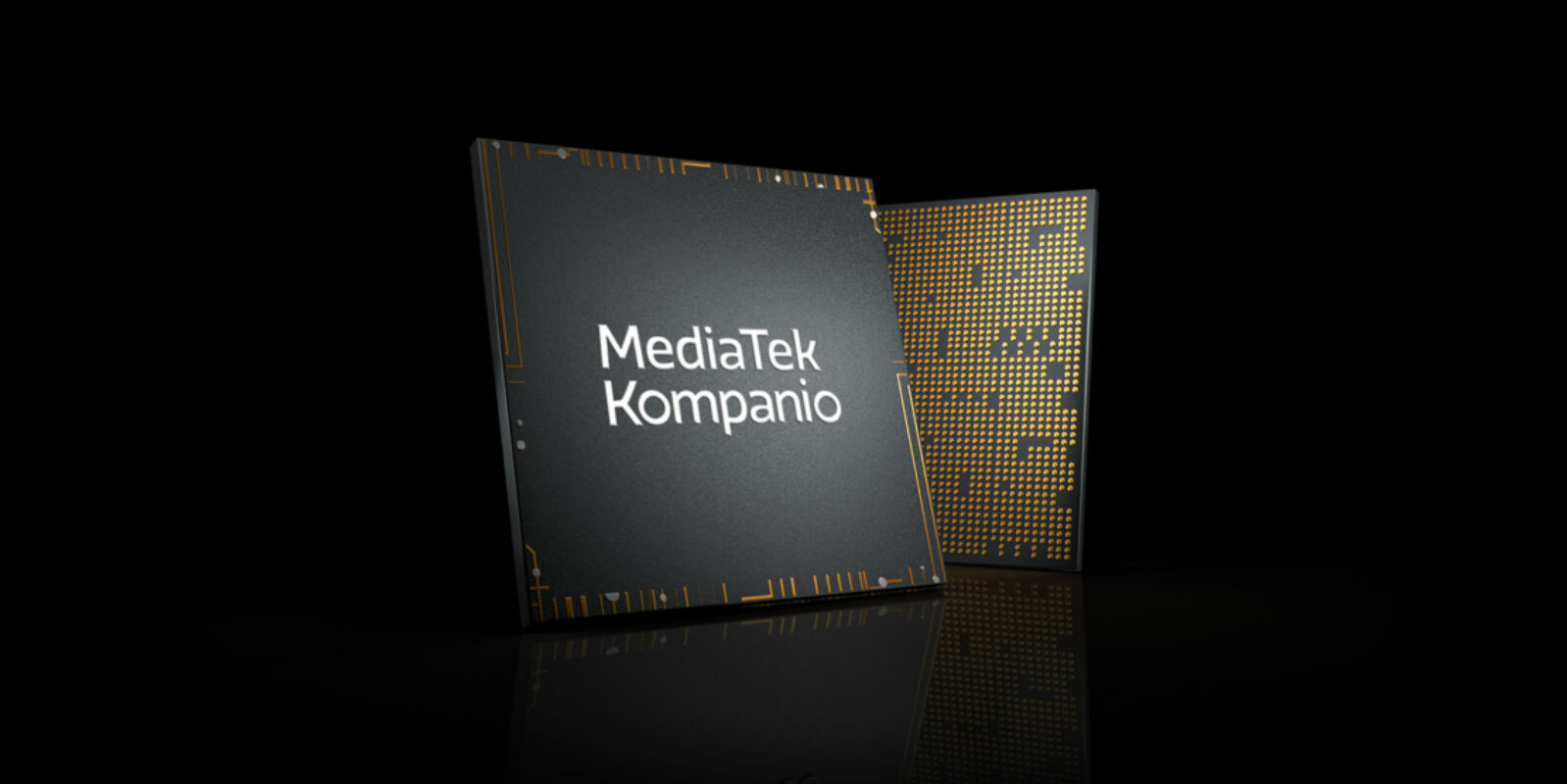
The new Kompanio SoC features the MediaTek APU 3.0, a multi-core AI processor created to enhance AI-camera and AI-voice applications while optimising power consumption to extend battery life. The SoC features a dedicated audio digital signal processor (DSP) with voice-on-wakeup (VoW) capabilities compatible with multiple voice assistant services.
MediaTek's latest Chromebook SoC supports up to two 4K60 HDR displays or a 4K 60Hz display and two 4K 30Hz displays. The chip also supports AV1 hardware decoding, Wi-Fi 6/6E and Bluetooth 5 connectivity.
The first product to launch with the MediaTek Kompanio 1380 will be the Acer Chromebook Spin 513. However, the chip manufacturer claims we will soon see other Chromebook laptops and tablets equipped with this SoC.
KitGuru says: MediaTek has already proved to be a worthy contender to Qualcomm in the smartphone market, but in the Chromebook market, things are different. Besides Qualcomm, there's also Intel, and as you may know, Alder Lake is also coming to Chromebooks. With that in mind, we'll be looking forward to seeing performance comparisons in the months to come.