KitGuru KitGuru.net – Tech News | Hardware News | Hardware Reviews | IOS | Mobile | Gaming | Graphics Cards


Asustor's second-generation Flashstor 6 NAS is a much more capable beast than the original. It brings much more capable hardware, with upgrades to the CPU, LAN, memory, and SSD architecture capabilities. It also sees improvements made to USB support. Today we find out if it is worth the £979 asking price.
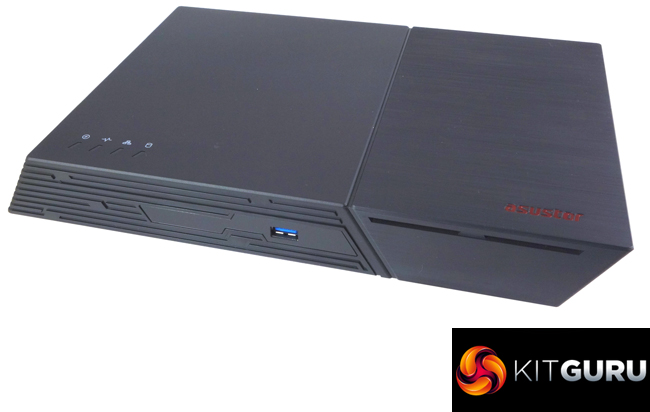
The original Flashstor 6 is powered by an Intel Celeron N5105, a quad-cored CPU clocked at 2GHz (2.9GHz boost). For the new Gen 2 version, Asustor has moved over to AMD as the NAS is powered by a Ryzen Embedded V3C14 processor. The V3C14 is built on a 6nm process and has 4 cores, 8 threads and supports up to 20 lanes of PCIe Gen4. Two 10GbE ports and a pair of USB 4.0 ports are also supported. The V3C14 is rated at up to 2.3GHz (3.8GHz boost).
As for memory support, the FlashStor 6 Gen 2 comes with 8GB of DDR5-4800 which is an impressive upgrade on the original FlashStor 6's 4GB of DDR4-2933. The Gen 2 supports up to 64GB of memory via two SO-DIMM slots. Asustor has also improved SSD support with the Gen 2 as it now supports Gen4 SSDss rather than the Gen3 of the original units.
Physical Specifications
- Processor: AMD Ryzen V3C14 (2.3GHz burst up 3.80 GHz).
- Memory: 8GB DDR5-4800.
- Gigabit Ethernet Ports: 1 x 10GbE.
- Rear panel connectors: 1 x 10GbE RJ45, 2 x USB 3.2 Gen 2, 2 x USB 4.0.
- Front panel connectors: 1 x USB 3.2 Gen2.
- RAID support: JBOD, RAID 0,1,5,6 and 10.
- Cooling: Active, 1 x 80mm system fan, 1 x CPU fan.
- Drive Bays Supported: 6 (Gen4 SSD).
- Internal File System support: EXT4, Btrfs.
- Dimensions (D x W x H): 193 x 308.26 x 48.3 mm.
- Weight: 1.4kg.