KitGuru KitGuru.net – Tech News | Hardware News | Hardware Reviews | IOS | Mobile | Gaming | Graphics Cards


Bitspower has added to its range of PC cooling fans with a new Touchaqua Notos 120 series featuring integrated addressable RGB lighting, optimised for use with liquid cooling radiators and available in single or multipack quantities.
The Touchaqua Notos 120 series is a new line of 120mm fans from Bitspower with added ARGB lighting. The fans have a speed range of 800 – 1800 RPM that can be adjusted via PWM and a maximum noise output of 28 dBA. Touchaqua Notos 120 fans are equipped with vibration cancellation rubber pads to further reduce noise.
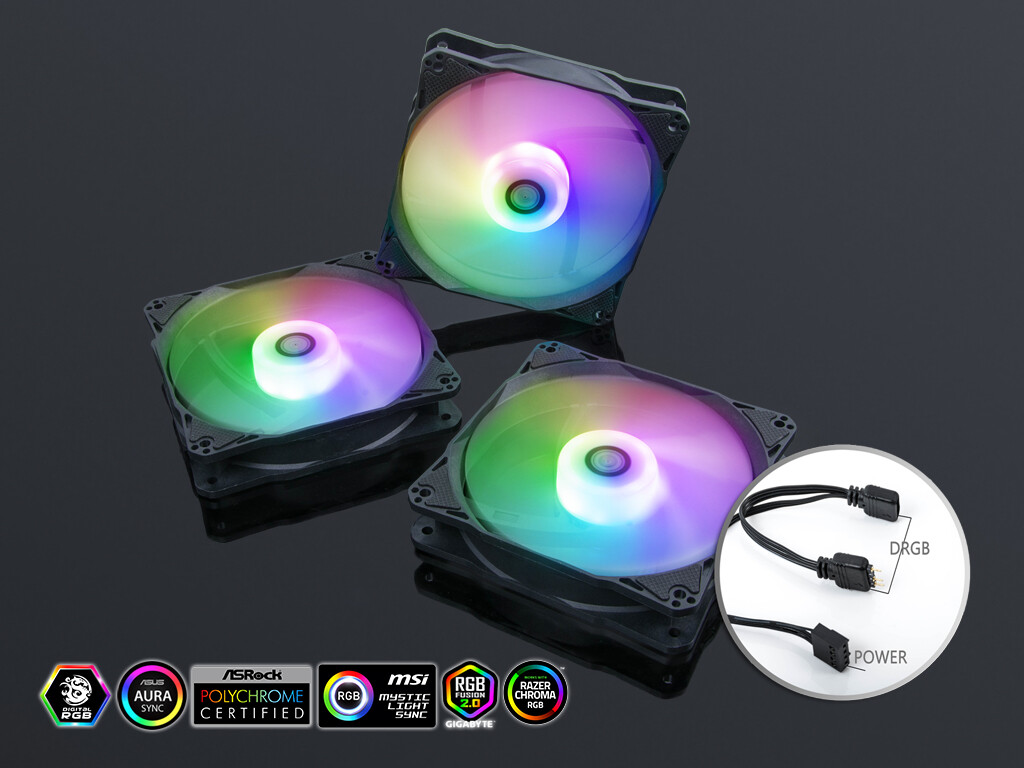
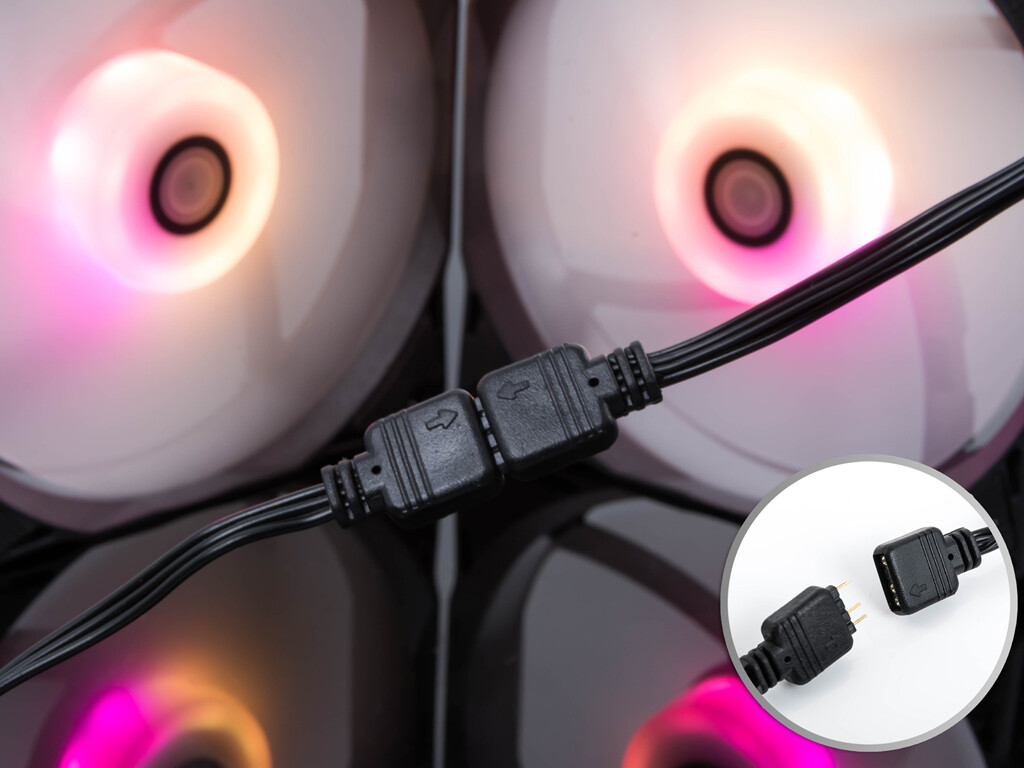
Bitspower has equipped the Touchaqua Notos 120 series with digital RGB LED lighting around the centre hub to produce stunning lighting effects, the fans can be daisy-chained together to add more fans into the system and are certified to be configured and synchronised with motherboard RGB lighting software such as ASUS AURA Sync, GIGABYTE RGB Fusion, MSI Mystic Light Sync, ASRock Polychrome, and Razer Chroma.
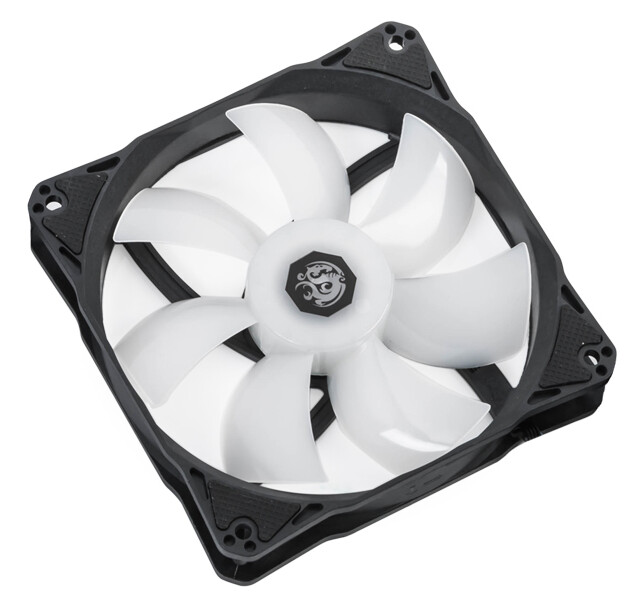
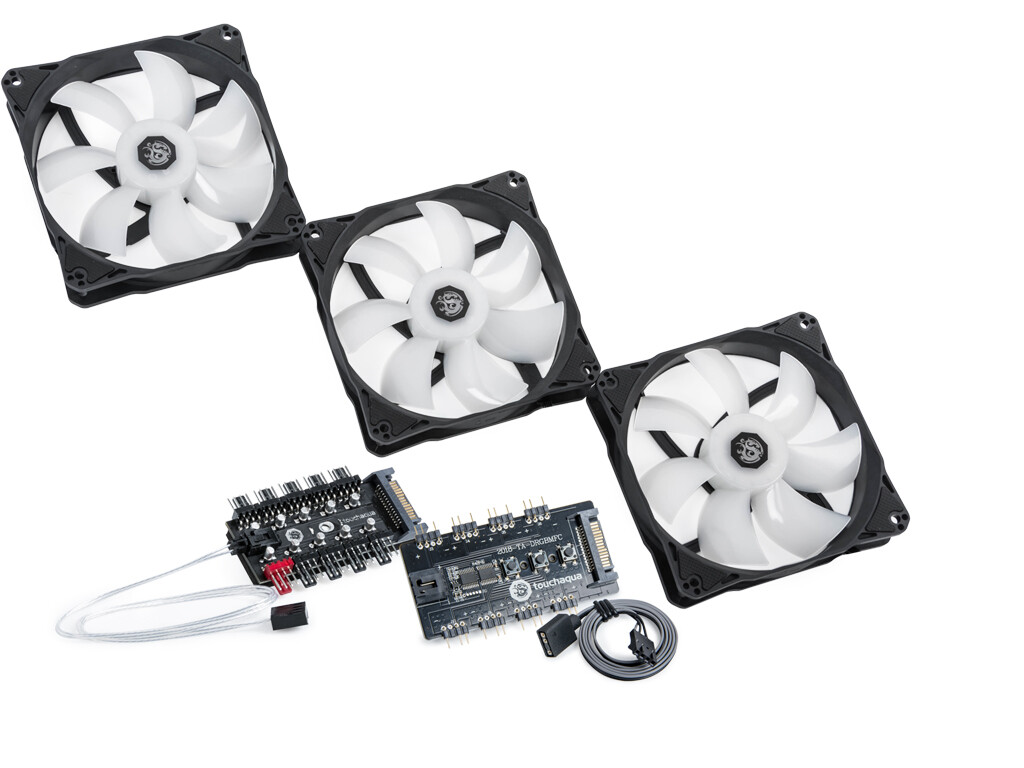
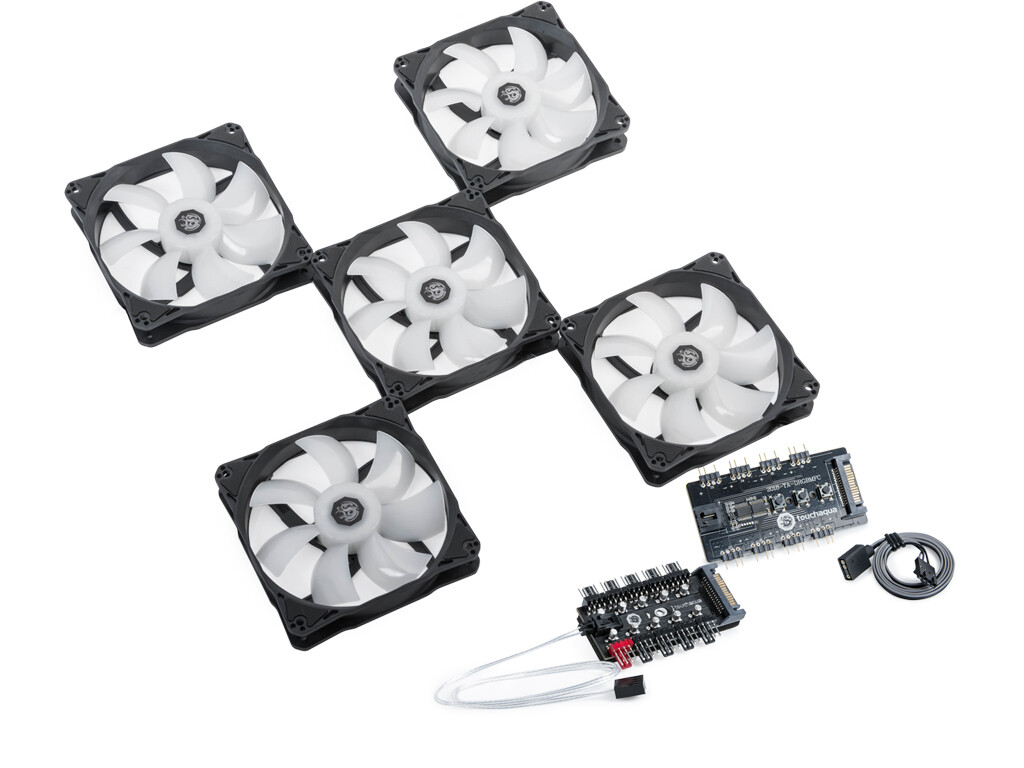
Touchaqua Notos 120 fans are available in either single quantities, as well as multi-packs of three pieces or five. Multipack kits included a BPTA-DRGBMFC lighting controller that is powered by a SATA power connector and features onboard buttons to control RGB lighting colours and patterns. Also included in the multi-packs is a Bitspower BPTA-PFANMFH fan-controller module featuring 10 PWM fan headers.
Single Touchaqua Notos 120 fans and the multi-pack kits are available to purchase from Bitspower now, priced at NT$ 310 for singles, NT$ 1,240 for three packs and NT$ 2,170 for the five pack kit.
Discuss on our Facebook page HERE.
KitGuru says: These new ARGB fans from Bitspower look rather nice and its good to see that Bitspower use standard 3-pin RGB headers and traditional 4-pin fan cables for maximum compatibility, rather than a proprietary connection.