KitGuru KitGuru.net – Tech News | Hardware News | Hardware Reviews | IOS | Mobile | Gaming | Graphics Cards


Expect to see a new wave of Chromebooks coming. AMD has just announced the new Ryzen 5000C APUs for Google's ChromeOS-based laptops, featuring a 15W TDP and up to eight Zen 3 cores.
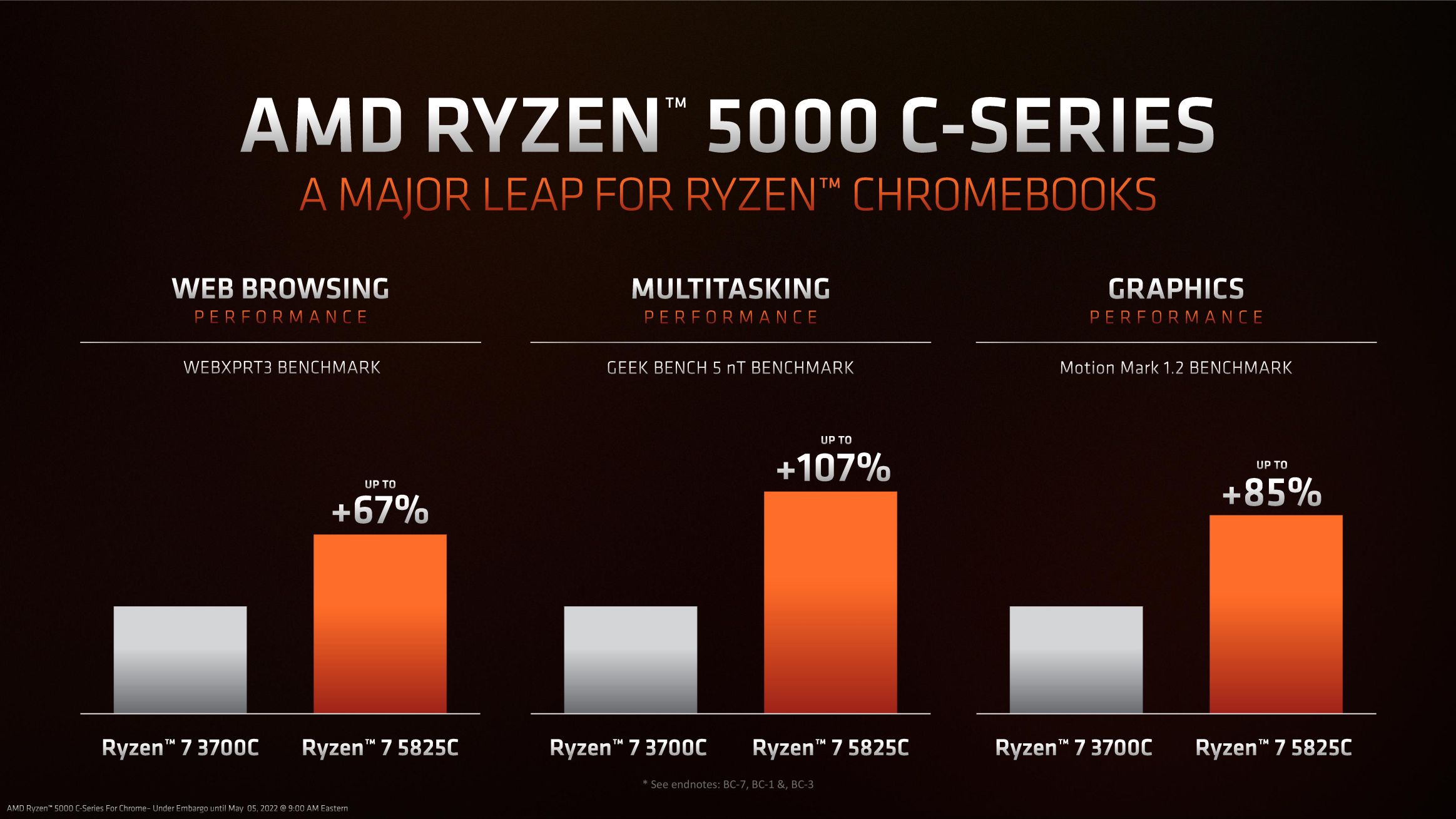
Designed to deliver at least 8 hours of battery life and the highest core count for Chromebook devices, the new Ryzen 5000C chips bring considerable improvements over their predecessors, including Wi-Fi 6E and Bluetooth 5.2. Offering up to 67% more web browsing performance, up to 107% more multitasking performance, and up to 85% more graphics performance, these new APUs alone might be enough reason to upgrade your Chromebook.
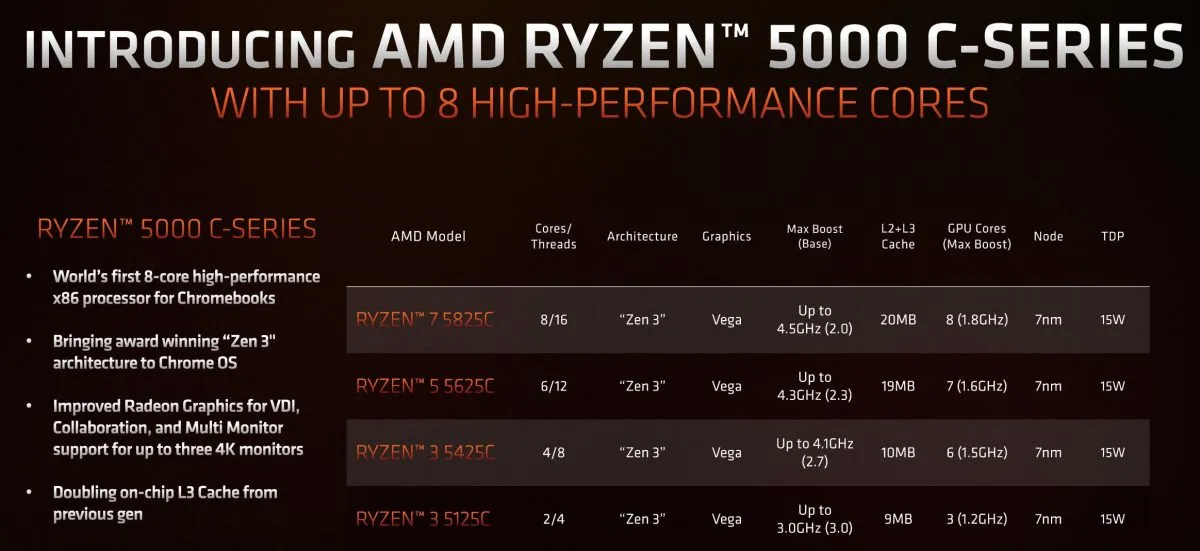
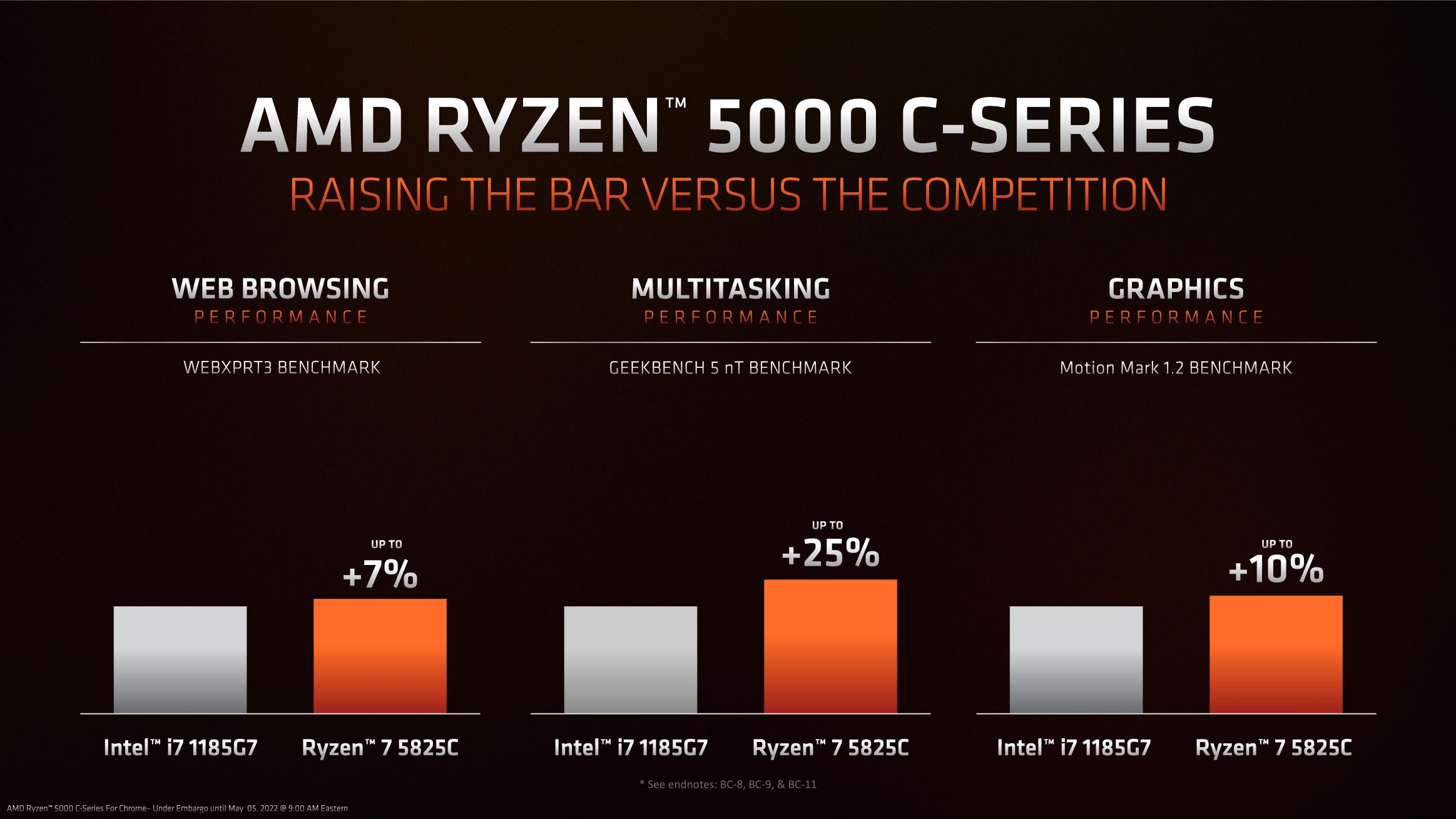
AMD also compared its flagship Ryzen 5000C APU, an 8C/16T chip with a maximum clock of 4.5GHz and an 8-core Vega GPU that boosts up to 1.8GHz, with the Core i7-1185G7. Here, the Ryzen chip showed better web browsing (up to 7%) and multitasking performance (up to 25%), as well as faster graphics (up to 10%).
AMD's newly announced APUs will debut on the HP Elite C645 G2 Chromebook in June. Moreover, Acer will also release the Chromebook Spin 514 featuring up to the Ryzen 7 5825C later this year. Other OEMs are also expected to release Chromebooks with AMD Ryzen 5000C chips.
KitGuru says: Do you own a Chromebook? Are you planning to upgrade?