KitGuru KitGuru.net – Tech News | Hardware News | Hardware Reviews | IOS | Mobile | Gaming | Graphics Cards


In the last few days, new information regarding the upcoming Intel LGA socket 17xx came to light alongside the first photos of the socket itself. The socket is currently listed for sale on a Chinese retailer, and according to the photos on the listing, the socket's cover shows it's also compatible with the LGA-18xx. Although this socket has already been mentioned, we are still unsure what CPUs will be compatible with it.
The first picture of the Intel LGA 17xx/18xx socket's cover was shared by @momomo_us. Also known as ‘socket V', the first time we heard about this was in late May, back when details of the mounting mechanism leaked.
Although it hasn't been confirmed, there are already a few rumours about how the LGA 18xx socket will be used. Some say the LGA 18xx socket is for Meteor Lake-S processors, but considering Intel plans to use the LGA 17xx socket for three generations (Alder Lake-S, Raptor Lake-S, and Meteor Lake-S) we aren't sure on that theory. Another possibility is that the 18xx socket will be used on Xeon Workstation processors.
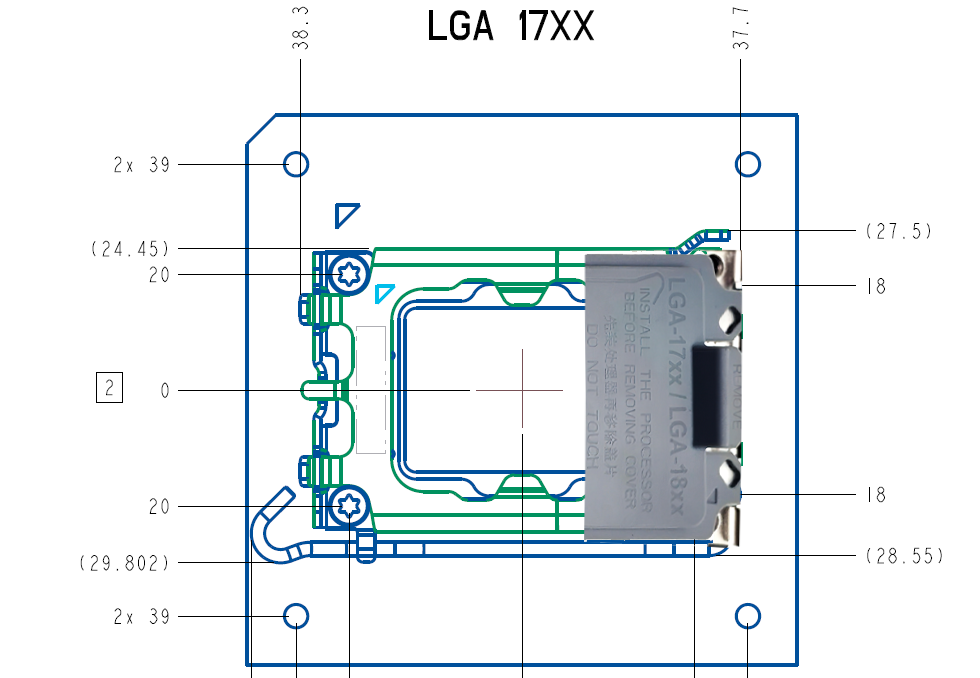
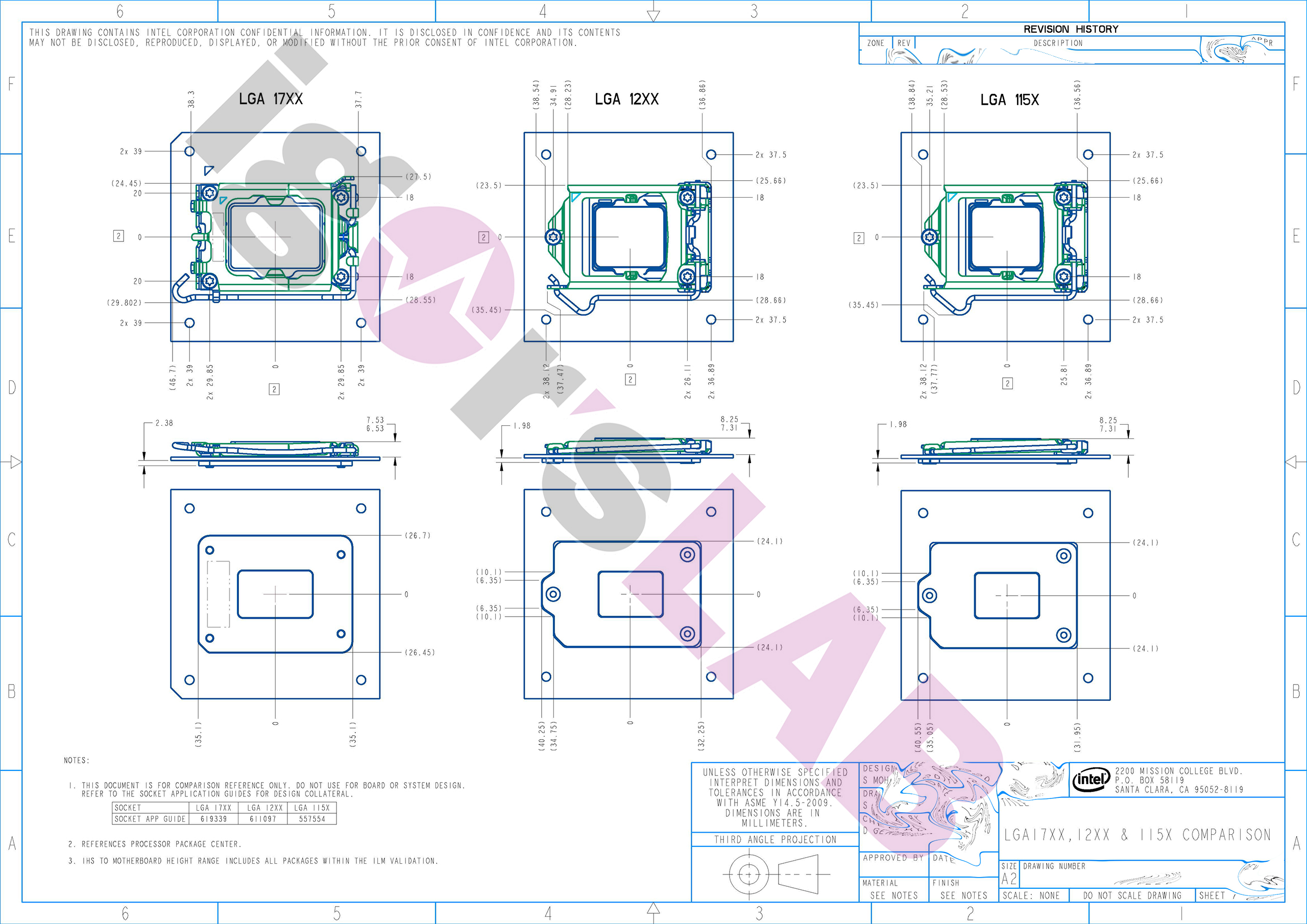
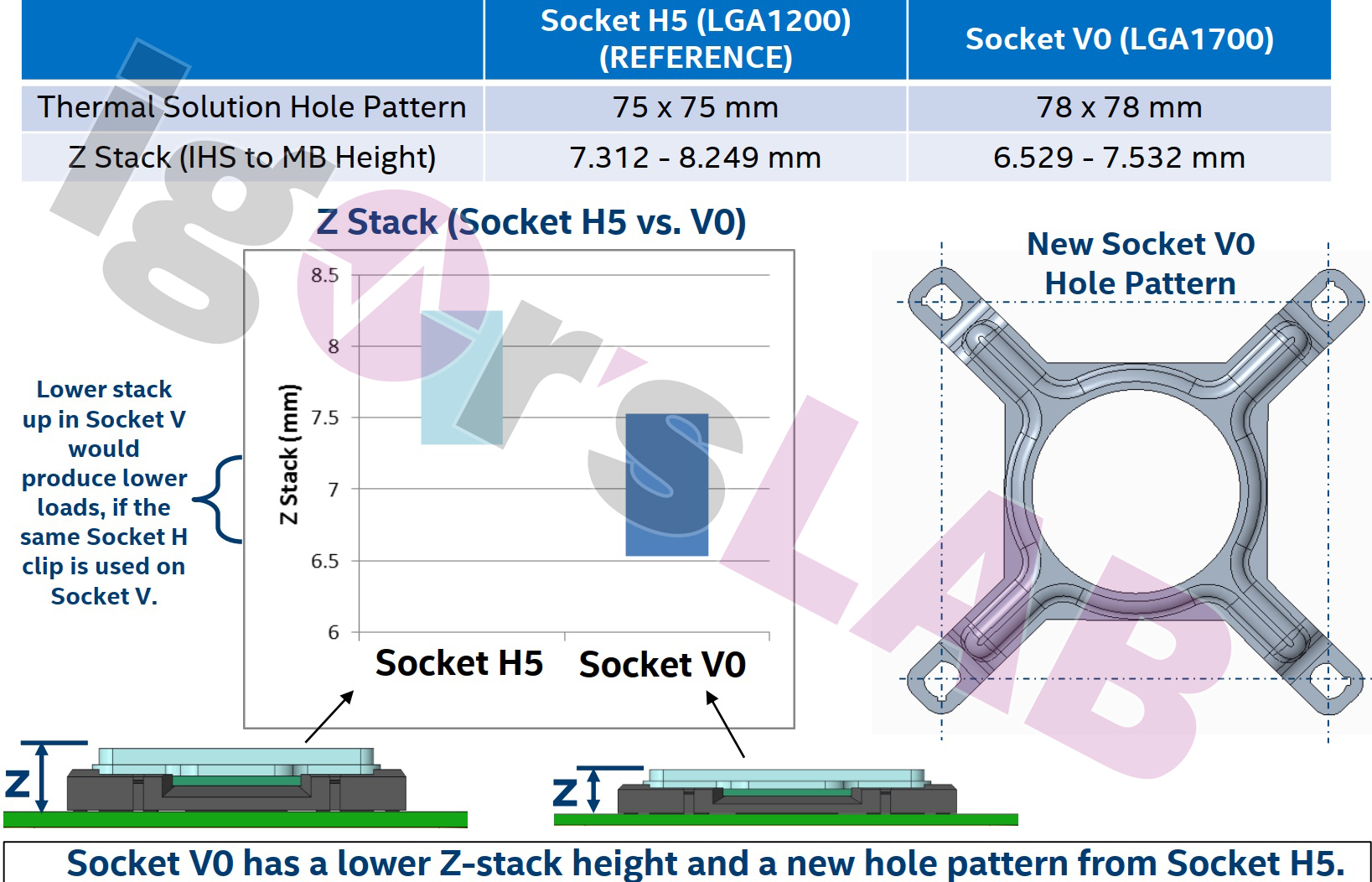
Image credit: Igor'sLAB
In a new report, Igor'sLAB detailed a bit more about the upcoming socket and confirmed the rumoured rectangular shape we've seen in multiple leaks. Besides that, dimensions of the whole socket were shared, including the backplate, hole pattern, and other parts, the dimensions of the CPU's IHS, and even the motherboard “leave-out” areas.
Although this information might only be interesting for a few, it can benefit cooler manufacturers and allow them to start designing cooling solutions for the upcoming platform. That's if they don't have the information already, which, according to Igor, they shouldn't.
KitGuru says: Considering the massive number of differences between the new socket and older ones, even if cooler manufacturers release an adaptive bracket, reusing an older cooling solution might not be viable for those planning to upgrade their system with an Alder Lake-S CPU.